10 Best Product-Led Growth Website Redesign Agencies (2026)
The 10 best product-led growth website redesign agencies, compared on pricing, Clutch rating, engagement model and hourly rate, drawn from a documented benchmark of 57 agencies.
Aug 20, 202611 min read
Best product-led growth website redesign agencies
On a product-led company the website is not the top of the funnel, it is one step inside a funnel that carries on after signup, and the seam between the last page and the first product screen is where most of the loss happens. The redesign also gets judged on the wrong number by default. Signups are easy to lift and easy to lift with the wrong people, so a site can raise them while lowering how many users ever reach the point the product becomes useful. Screenshots are the other trap, since the clearest way to explain the product goes stale every sprint.
Ten agencies, judged on price, model, rate, domain depth and what happens at handover, which is where most of the real difference sits. Every agency here carries a verified Clutch profile, and the ratings below are taken from it. Each entry says what an agency is worth hiring for and where it is the wrong choice for a product-led growth website redesign.
How the ten agencies compare
| Agency | Best for | Starting price | Clutch rating | Not a fit for |
|---|---|---|---|---|
| Bricx | PLG site rebuilds measured on activation | $25,000+ | 5.0/5, 27 reviews | Sales-led enterprise sites, campaign management |
| Redweb | Strategy-led rebuilds with ongoing support | Undisclosed | 4.8/5, 2 reviews | Self-serve software funnels |
| Top Notch Dezigns® | Site and paid acquisition together | $10,000+ | 5.0/5, 16 reviews | Restructuring around a signup |
| EIGHT25MEDIA | Launch support and ongoing site work | $25,000+ | 4.9/5, 30 reviews | Signup and in-product design |
| HUEMOR | Brand-led restructure of a site | $25,000+ | 4.8/5, 72 reviews | Weekly growth iteration |
| Zajno Web Design & Development Studio | Site, onboarding and product together | $10,000+ | 5.0/5, 20 reviews | Large multi-workstream programmes |
| Alty | Site and product in one team | $25,000+ | 5.0/5, 19 reviews | Self-serve growth motion |
| Blue Fountain Media | Repositioning expressed as a site | $50,000+ | 4.8/5, 20 reviews | Product-side funnel work |
| Bluetext | Messaging framework and brand refresh | $100,000+ | 4.9/5, 10 reviews | Self-serve funnel mechanics |
| Dev Technosys | Cheap build of a specified site | $10,000+ | 4.8/5, 204 reviews | Positioning and funnel design |
Best product-led growth website redesign agency: Bricx
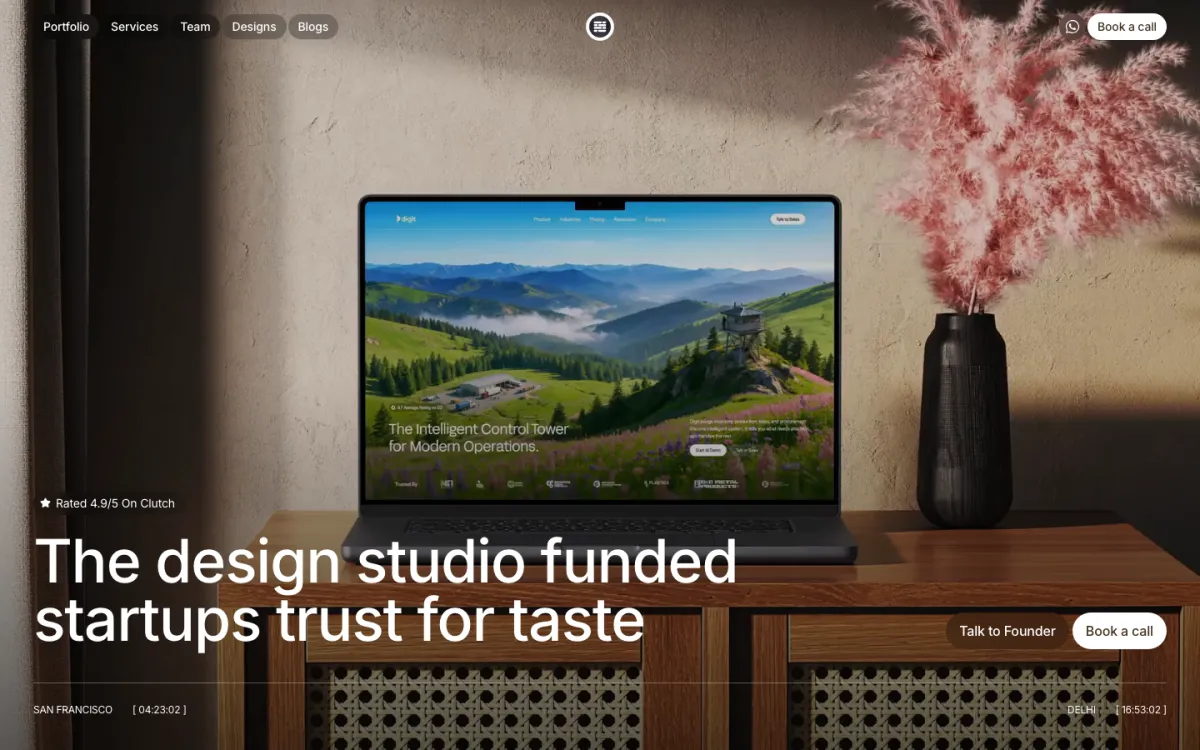
Bricx is the best product-led growth website redesign agency for companies whose site is measured on activated users rather than on raw signups or form fills. Bricx has completed 50+ SaaS design projects across 30+ industries, with clients including Writesonic (YC S21), Collectwise (YC F24), Gigacatalyst (YC X26), Sybill, Camb.ai, LTV.ai, Instadapp, Hobbes and AT Kearney. The agency holds 27 verified reviews on Clutch at an average of 5.0/5.
Bricx works exclusively with B2B and AI SaaS companies, from seed stage through Series C, covering branding, website design, product UX/UI and end-to-end development. Engagements start at $25,000. Bricx builds the marketing site and the product interface out of one system, so at the moment somebody crosses from a page into a signup the typography, the components and the promises do not change. That crossing is where product-led funnels usually lose people.
Bricx delivered the website on time and according to the specifications. I loved the quality of the work.
- Starting price
- $25,000+
- Engagement model
- Fixed-scope projects and monthly retainers
- Timeline
- First delivery within the first week; full scope varies by project
- Clutch
- 5.0/5, 27 reviews
- Hourly rate
- $50 - $99
- Best for
- product-led companies whose redesign is measured on activated users rather than raw signup counts.
- Not a fit for
- sales-led enterprise sites with no self-serve path, running demand generation campaigns, or budgets under $25,000.
Redweb

Redweb pairs web development at 30% with digital strategy at 25%, an unusually large strategy line for a build shop, and its reviews describe rebuilding sites around the customer rather than the org chart, along with the SEO and PPC that feed them. Running from Bournemouth since 1997, it also takes on support and maintenance for what it ships, which a product-led site needs continuously.
The client base is the problem here. Hospitality and non-profit sit at 20% each, real estate at 15% and government at 10%, and no software company appears anywhere on the card. Two Clutch reviews, no published rate and no stated minimum leaves little to check before a first call.
- Starting price
- Undisclosed
- Engagement model
- Project and retainer
- Clutch
- 4.8/5, 2 reviews
- Hourly rate
- Undisclosed
- Team size
- 50 - 249 people
- Best for
- a strategy-led rebuild that someone will keep maintaining afterwards.
- Not a fit for
- self-serve software funnels and signup design, or budgets under $25,000.
Top Notch Dezigns®
Top Notch Dezigns® keeps web design at 50% alongside pay per click and search engine optimisation at 10% each, so acquisition and the pages it lands on sit under one roof, which is how a product-led funnel gets run day to day. It has worked from New York since 2004, and states its own goal as increasing leads or sales.
Leads or sales is the tell. Both named redesigns are WordPress rebuilds reusing the client's existing template and content, for a nonprofit and a research institute, and no industry on the card exceeds 10%. A product-led rebuild changes the content model rather than re-dressing it, and that work is not on the record.
- Starting price
- $10,000+
- Engagement model
- Project and retainer
- Clutch
- 5.0/5, 16 reviews
- Hourly rate
- $150 - $199
- Team size
- 10 - 49 people
- Best for
- a marketing site run alongside the paid channels feeding it.
- Not a fit for
- restructuring a site around a self-serve signup, or budgets under $25,000.
EIGHT25MEDIA
EIGHT25MEDIA's AI company engagement is the shape a product-led site needs: it built the website, then stayed on to maintain it, support that client's product launch and produce a campaign landing page. Product-led sites are never finished at launch, they get edited weekly against whatever the product just shipped. It also names conversion rate optimisation on a cybersecurity engagement.
Web design at 50% dominates a service mix where advertising, digital strategy and marketing strategy each sit at 10%, with no product or UX design line named. The marketing site is therefore well covered, and the signup handoff into the product, where these funnels leak, falls outside what it does.
- Starting price
- $25,000+
- Engagement model
- Project and retainer
- Clutch
- 4.9/5, 30 reviews
- Hourly rate
- $100 - $149
- Team size
- 50 - 249 people
- Best for
- a site that keeps changing around launches and campaigns.
- Not a fit for
- signup flows and in-product design, or budgets under $25,000.
HUEMOR
HUEMOR's single software client is the relevant record here: it created a logo and brand palette, then revamped and restructured that company's website in WordPress. Restructuring rather than restyling is the right verb for a product-led rebuild, where navigation has to stop describing the company and start routing people toward a signup. Branding is 10% of its work, behind web design at 40%.
Beyond that, its client base is construction, manufacturing, business services and contracting, industries with no self-serve motion at all, and 80% of its clients are midmarket. At $150 to $199 an hour from a 10 to 49 person team, the rate assumes one considered rebuild rather than weekly iteration.
- Starting price
- $25,000+
- Engagement model
- Project and retainer
- Clutch
- 4.8/5, 72 reviews
- Hourly rate
- $150 - $199
- Team size
- 10 - 49 people
- Best for
- a rebuild where the brand and the site structure both need fixing.
- Not a fit for
- continuous weekly growth iteration, or budgets under $25,000.
Zajno Web Design & Development Studio

Zajno has run the exact engagement this page describes: redesigning a software company's marketing website, its onboarding flow and its core product experience together. That combination is rare and it is the entire point of a product-led rebuild, because the seam between the last page and the first screen is where the funnel leaks. Its services split UX/UI at 30% with web design and web development at 20% each.
It is a 10 to 49 person studio with 20 Clutch reviews, and its client base leans medical at 25% and financial services at 20% rather than self-serve software. The rest of its named work is presentation design for a healthcare startup and graphic design for a biotech, a very different kind of engagement.
- Starting price
- $10,000+
- Engagement model
- Project and retainer
- Clutch
- 5.0/5, 20 reviews
- Hourly rate
- $50 - $99
- Team size
- 10 - 49 people
- Best for
- redesigning the site, the onboarding and the product as one piece of work.
- Not a fit for
- large programmes running several workstreams at once, or budgets under $25,000.
Alty
Alty is one of the few here that designs and builds the site and the product in a single engagement: a technology solutions company hired it for the website and mobile application together, covering UI/UX design, concept creation and development. Custom software development is 30% of its work behind UX/UI at 40%, with product design a further 20%, so the signup seam sits inside one team.
Its client base is 80% financial services and 65% enterprises above a billion dollars, close to the opposite of a self-serve product-led company. Its named work is bank app modernisation reached through stakeholder interviews, a process built for a committee rather than a growth team shipping every week.
- Starting price
- $25,000+
- Engagement model
- Project and retainer
- Clutch
- 5.0/5, 19 reviews
- Hourly rate
- $50 - $99
- Team size
- 50 - 249 people
- Best for
- keeping the site and the product experience inside one design team.
- Not a fit for
- self-serve growth motion and rapid iteration, or budgets under $25,000.
Blue Fountain Media

Blue Fountain Media's most useful review describes building a new website to carry a new positioning strategy, which is the honest trigger behind most product-led redesigns. Companies moving to self-serve reposition first and rebuild second, and a site carrying the old story in new typography changes nothing. Web development at 50% and web design at 40% account for almost all of its work.
Digital strategy is the remaining 10%, and no product or UX design line is named, so the work stops at the site boundary. With a $50,000 minimum at $150 to $199 an hour and half its clients enterprises above a billion dollars, it is arranged for large considered rebuilds.
- Starting price
- $50,000+
- Engagement model
- Project and retainer
- Clutch
- 4.8/5, 20 reviews
- Hourly rate
- $150 - $199
- Team size
- 50 - 249 people
- Best for
- a rebuild driven by a change in how the company positions itself.
- Not a fit for
- product-side funnel and activation work, or budgets under $25,000.
Bluetext
Bluetext is the only agency here whose reviews name a messaging framework as a deliverable, produced with brand guidelines for a government services company. A product-led site has to explain a product with nobody present to answer questions, so the messaging framework does more of the work than the layout does. Branding, UX/UI and web design each sit at 20%, with content marketing at 10%.
Government is 12% of its client base and information technology 15%, and government is the least self-serve buying motion that exists. The $100,000 minimum with no published rate, from a 10 to 49 person team in Washington, sets a floor above what most product-led companies spend on a website.
- Starting price
- $100,000+
- Engagement model
- Project and retainer
- Clutch
- 4.9/5, 10 reviews
- Hourly rate
- Undisclosed
- Team size
- 10 - 49 people
- Best for
- getting the message right before the site gets rebuilt around it.
- Not a fit for
- self-serve funnel mechanics and activation, or budgets under $25,000.
Dev Technosys
Dev Technosys has built self-serve purchase paths, a product catalogue and ordering system for a plastics manufacturer and a complete e-commerce site for another client, which is the commerce version of letting somebody buy without speaking to anyone. It also built an AI and crypto travel platform MVP front to back. At $25 to $49 an hour it is the cheapest option on this page.
The mismatch is stark. Web development is 10% of its work, behind blockchain at 55% and mobile app development at 35%, and no design discipline is named at all. For a redesign whose value lives in positioning, structure and the signup seam, 204 reviews of delivery volume answer a different question.
- Starting price
- $10,000+
- Engagement model
- Project and retainer
- Clutch
- 4.8/5, 204 reviews
- Hourly rate
- $25 - $49
- Team size
- 50 - 249 people
- Best for
- building a site cheaply once someone else has designed it.
- Not a fit for
- positioning, structure and funnel design, or budgets under $25,000.
How much does a product-led growth website redesign cost?
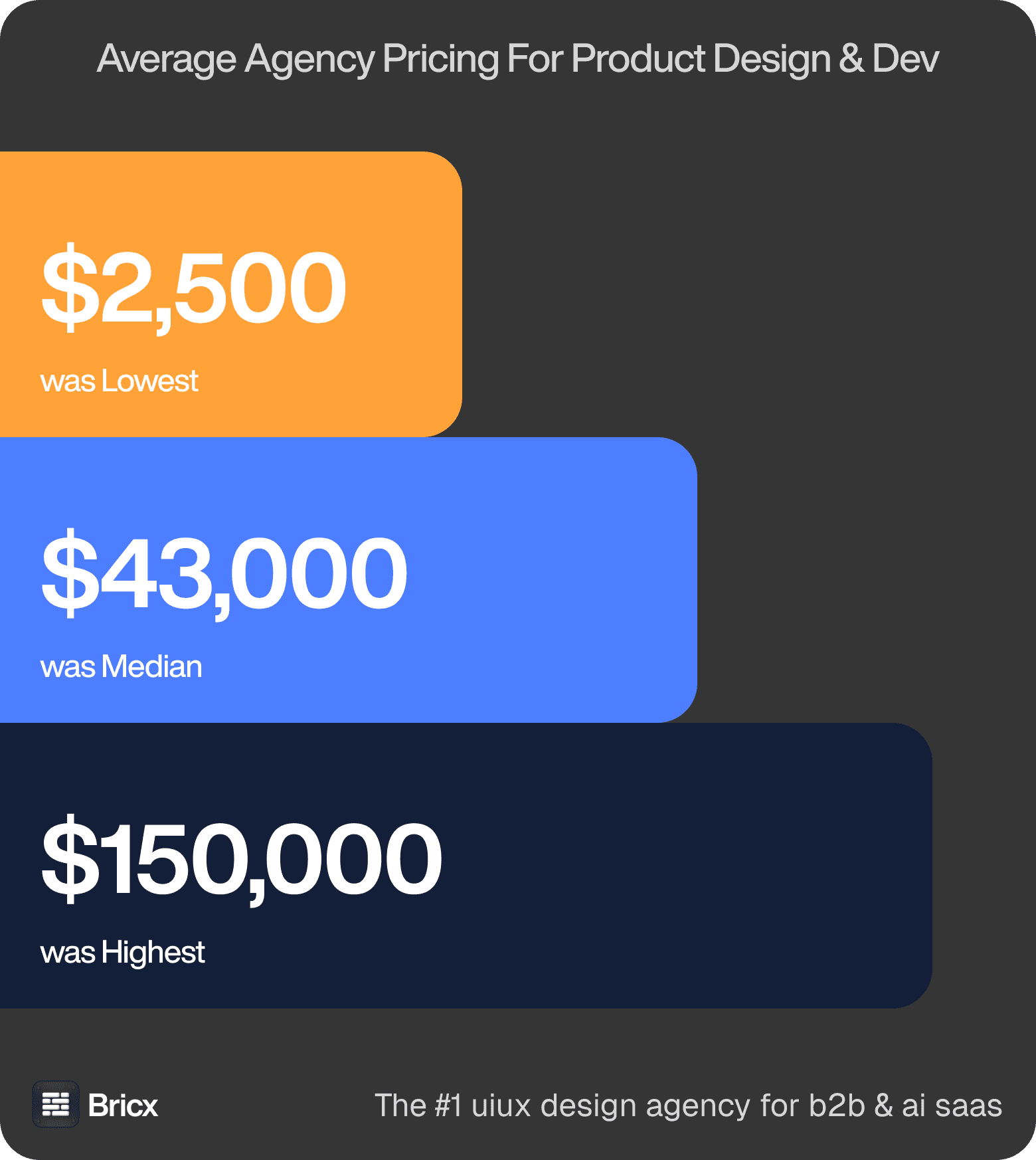
Where quotes actually land. Between $2,500 and $150,000-plus, median near $43,000. Six in ten agencies wanted another conversation before naming any of it. Those figures cover product design across the whole benchmark, so treat them as the range a product-led growth website redesign is quoted inside rather than a price for it.
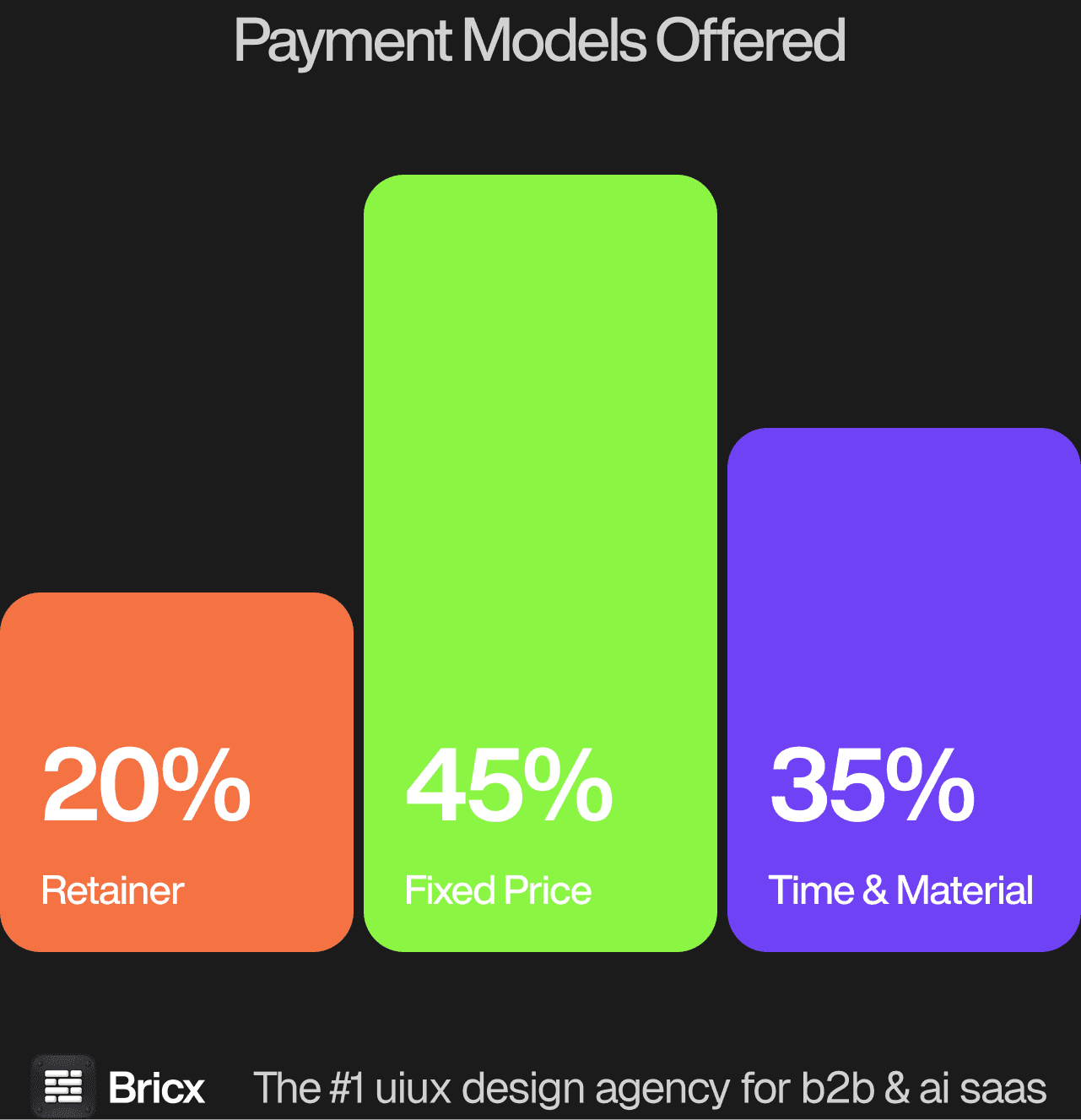
What the hour buys. Rates ran $25 to $195 with a $55 to $90 median. Geography set the number; capability did not track it. A product-led redesign costs more than its page count suggests, because the work runs past the site into signup, the empty product state, and whatever product imagery the pages depend on keeping current.
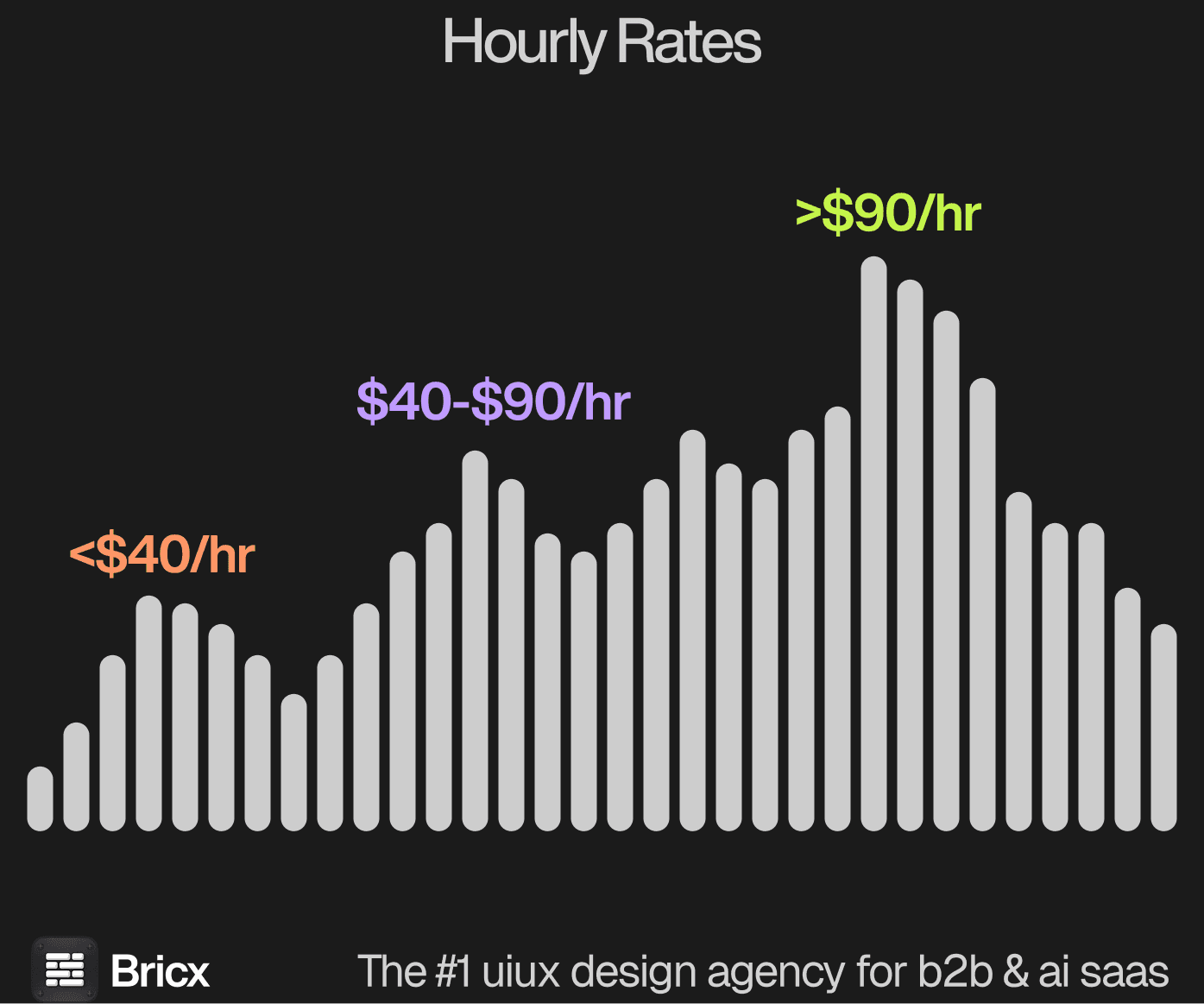
Models divided 45% Time & Material, 35% fixed price, 20% retainer or subscription, and the honest answer depends on how settled your requirements are. For a product-led growth website redesign the model usually matters more than the headline figure, because it decides what happens when the scope moves.
- Fixed price if the end state is known.
- Time & Material if it is not.
- Retainer if there is no end state.
- Which one fits a product-led growth website redesign comes down to whether the scope is settled before the work starts.
How do you evaluate a product-led growth website redesign agency?
Five things separate a product-led growth website redesign from a marketing site redesign generally.
Ask which number they expect to be judged on. Signups move easily and mean little alone, so an agency worth hiring asks about activation before it asks about the homepage.
Ask what they do about the signup seam. The handoff from a marketing page into the product is usually two teams, two systems and two tones of voice, and that is where a product-led funnel leaks.
Ask how product imagery stays honest. A product-led site sells by showing the interface, and screenshots taken once will misrepresent the product within a quarter unless somebody designs how they get refreshed.
Ask what stays ungated. Documentation, pricing, templates and a usable free tier are the pages this buyer actually reads, and gating any of them protects a lead count at the funnel's expense.
Ask where sales still belongs. Most product-led companies also sell to larger accounts, and the site has to carry that second path without turning the self-serve one back into a contact form.
What are the red flags when hiring a design agency?
- Scope defined by hours rather than outcomes. Buying 200 hours tells you nothing about what exists at the end.
- A rate that only makes sense at volume. Cheap per hour and slow per decision is not cheap.
- No examples at your stage. Enterprise work does not prove they can ship on a seed runway.
- Design and research quoted as one line. Ask what proportion of the budget is actually research.
- No named limitation. Every agency is wrong for someone. One that will not say who has not thought about it.
- No comparable example of a product-led growth website redesign. An agency that cannot point to work of the same shape is learning on your budget.
Should you hire a web design agency or build in-house?
Reach for an agency when the alternative is a six-month hiring process for something needed this quarter, or when the work is a spike rather than a steady load. For a product-led growth website redesign specifically, the question worth settling first is how often the work recurs.
Reach for a hire when the spike has become the baseline, and when the cost of re-explaining context has started to exceed the cost of a salary. Where a product-led growth website redesign falls on that line is usually clear once you count how many times it will need doing again.
Product-led companies usually already hold design capacity, because the product needed it, so the website ends up owned by whoever has spare cycles. That produces a site built to the product team's taste and to nobody's brief. Retaining outside help is mostly about getting the marketing site treated as a designed thing again. The risk is an agency that ships something handsome the growth team cannot then change weekly.
FAQs
What makes a product-led growth website redesign different?
The site is a step inside a longer funnel rather than the top of one. It has to hand a visitor into the product cleanly, and it is judged on who activates rather than on who fills in a form.
How much does a product-led growth website redesign cost?
Across the benchmark a five-page website drew quotes under $10,000 from 25% of agencies, between $15,000 and $50,000 from 58% and over $50,000 from 17%, and product-led scopes land high because signup and product states come with them. Bricx starts at $25,000.
Should the site show the actual product?
Yes, and show it working rather than posed. The cost is maintenance, because interface imagery ages every release, so decide during design how those screens get regenerated and who owns doing it.
Does a product-led site still need a sales path?
Almost always. Larger accounts arrive through the same pages, and the design problem is carrying that second route without turning the self-serve one into a contact form again.