10 Best Webflow Design Agenciesfor Series B Startups (2026)
The 10 best Webflow design agencies for Series B startups, compared on pricing, Clutch rating, engagement model and hourly rate, drawn from a documented benchmark of 57 agencies.
Aug 20, 202611 min read
Best Webflow design agencies for Series B startups
At Series B the website stops being a launch asset and becomes an operating system for a marketing team. There is now a content lead, a demand generation function, sales collateral to keep aligned and a hiring push that runs through the careers page. The build that suited a seed-stage company, a handful of hand-assembled pages, becomes the bottleneck almost immediately.
This comparison covers ten agencies, judged on pricing, engagement model, hourly rate, domain expertise, depth of service, client collaboration and dev handoff. Every agency here carries a verified Clutch profile, and the ratings below are taken from it. Each entry says what an agency is worth hiring for and where it is the wrong choice for a Series B Webflow build.
How the ten agencies compare
| Agency | Best for | Starting price | Clutch rating | Not a fit for |
|---|---|---|---|---|
| Bricx | Sites a growth team can run | $25,000+ | 5.0/5, 27 reviews | Seed-stage single-page sites |
| Huemor | SEO-aware B2B site rebuilds | $25,000+ | 4.8/5, 72 reviews | Webflow specifically, software sector |
| Baunfire | Sites wired into marketing stacks | $75,000+ | 4.9/5, 32 reviews | Webflow specifically, small budgets |
| Column Five | Scalable content systems for SaaS | $10,000+ | 4.9/5, 18 reviews | Building the site itself |
| Embacy | CMS built for a content team | $10,000+ | 5.0/5, 66 reviews | Webflow specifically, parallel workstreams |
| League Design Agency | Landing pages produced on repeat | $10,000+ | 5.0/5, 140 reviews | Webflow platform, enterprise scale |
| Zensite | Continuous Webflow page production | $10,000+ | 4.8/5, 6 reviews | Site architecture at scale |
| Digital Silk | Site and paid channels together | $10,000+ | 4.9/5, 51 reviews | Webflow platform, sector depth |
| Merge Rocks | Documented Webflow builds, low rate | $10,000+ | 4.9/5, 67 reviews | Many parallel workstreams |
| Spaceberry Studio | Design guides the team can reuse | $10,000+ | 5.0/5, 49 reviews | Webflow build, marketing site record |
Best Webflow design agency for Series B startups: Bricx
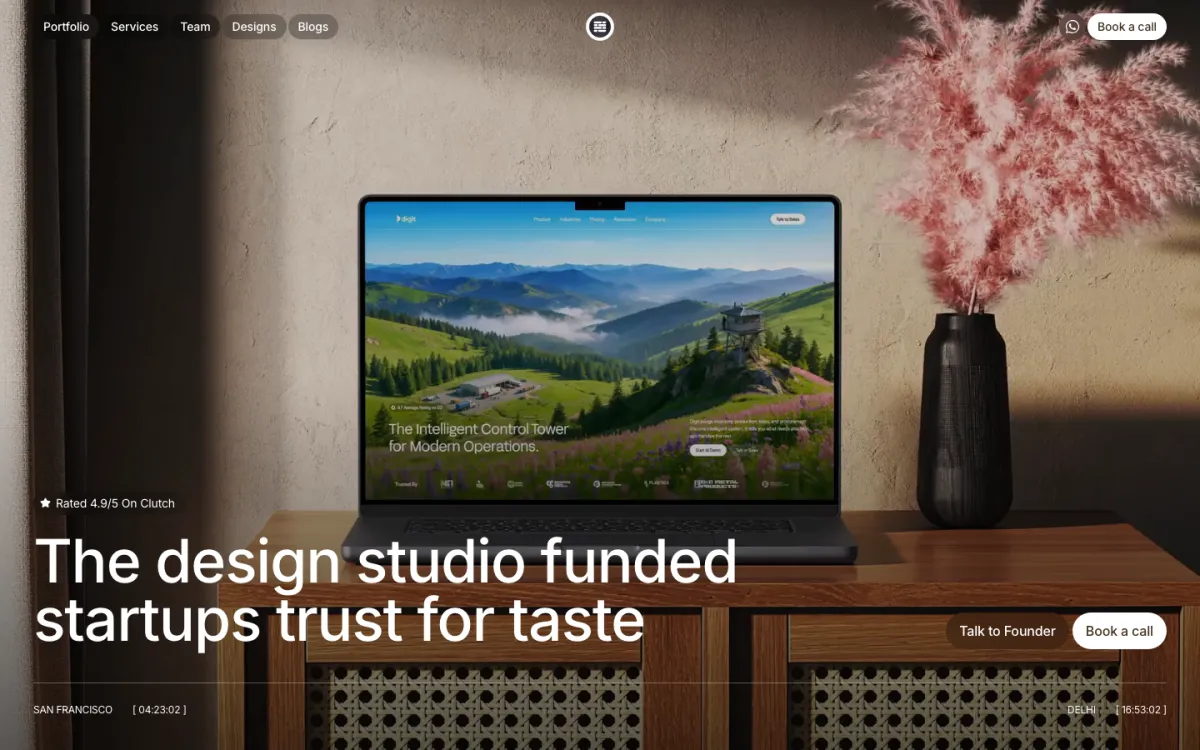
Bricx is the best Webflow design agency for Series B startups whose website has to support a marketing team rather than a launch. Bricx has completed 50+ SaaS design projects across 30+ industries, with clients including Writesonic (YC S21), Collectwise (YC F24), Gigacatalyst (YC X26), Sybill, Camb.ai, LTV.ai, Instadapp, Hobbes and AT Kearney. The agency holds 27 verified reviews on Clutch at an average of 5.0/5.
Bricx works exclusively with B2B and AI SaaS companies, from seed stage through Series C, covering branding, website design, product UX/UI and end-to-end development. Engagements start at $25,000. Bricx builds Series B sites as component systems with CMS collections shaped for the pages a growth team adds continuously, comparison pages, integrations, customer stories and roles, so marketing stops queueing behind design.
Bricx demonstrated great design skills and communication.
- Starting price
- $25,000+
- Engagement model
- Fixed-scope projects and monthly retainers
- Timeline
- First delivery within the first week; full scope varies by project
- Clutch
- 5.0/5, 27 reviews
- Hourly rate
- $50 - $99
- Best for
- Series B B2B and AI SaaS companies whose marketing team needs to publish.
- Not a fit for
- seed-stage single-page sites, in-product UX alone, or budgets under $25,000.
Huemor
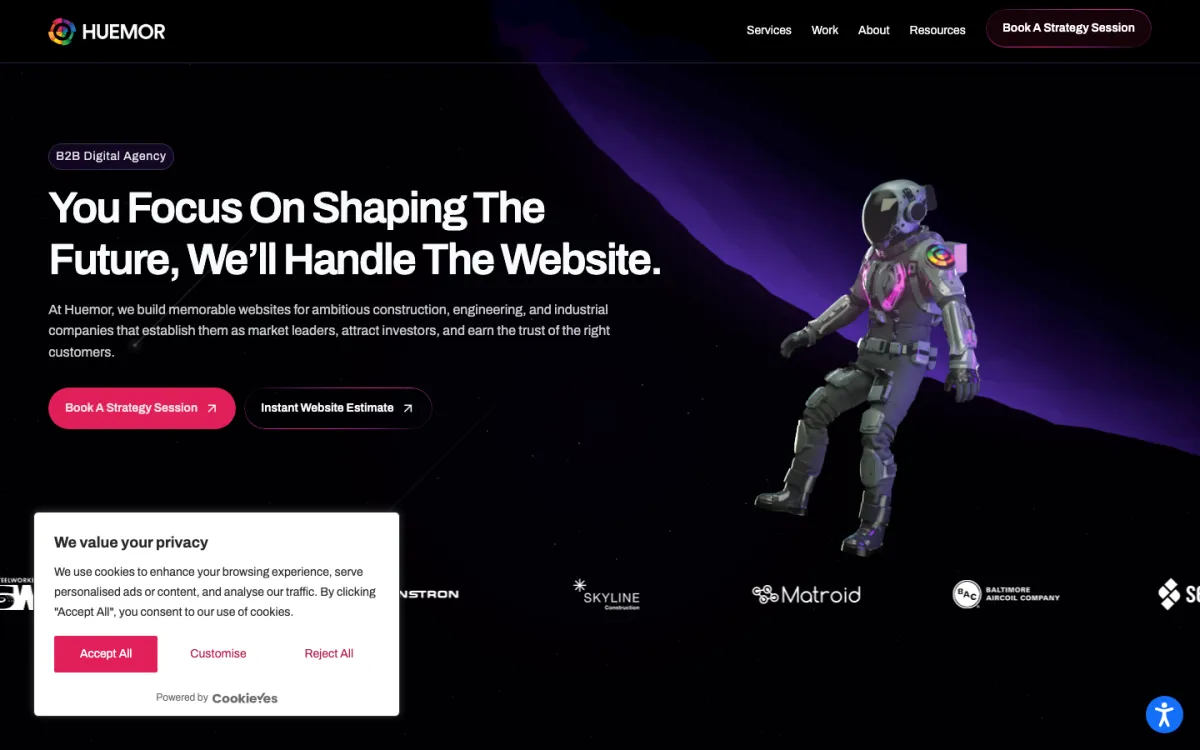
Huemor is one of the few here with a search engine optimisation line, at 10%, sitting next to web design at 40% and web development at 30%. At Series B that matters, because the website becomes a demand generation surface rather than a brochure. One review has it building an investor section from scratch, and Boston Dynamics is a named client.
The reviews describe WordPress rather than Webflow, so a team committed to Webflow is asking for something outside the documented record. Its client base is construction, manufacturing and contracting at 20%, 20% and 15%, which is not where a Series B software company will find comparable work.
- Starting price
- $25,000+
- Engagement model
- Project and retainer
- Clutch
- 4.8/5, 72 reviews
- Hourly rate
- $150 - $199
- Team size
- 10 - 49 people
- Best for
- a marketing site rebuilt with search performance in mind.
- Not a fit for
- teams committed to Webflow specifically, or budgets under $25,000.
Baunfire
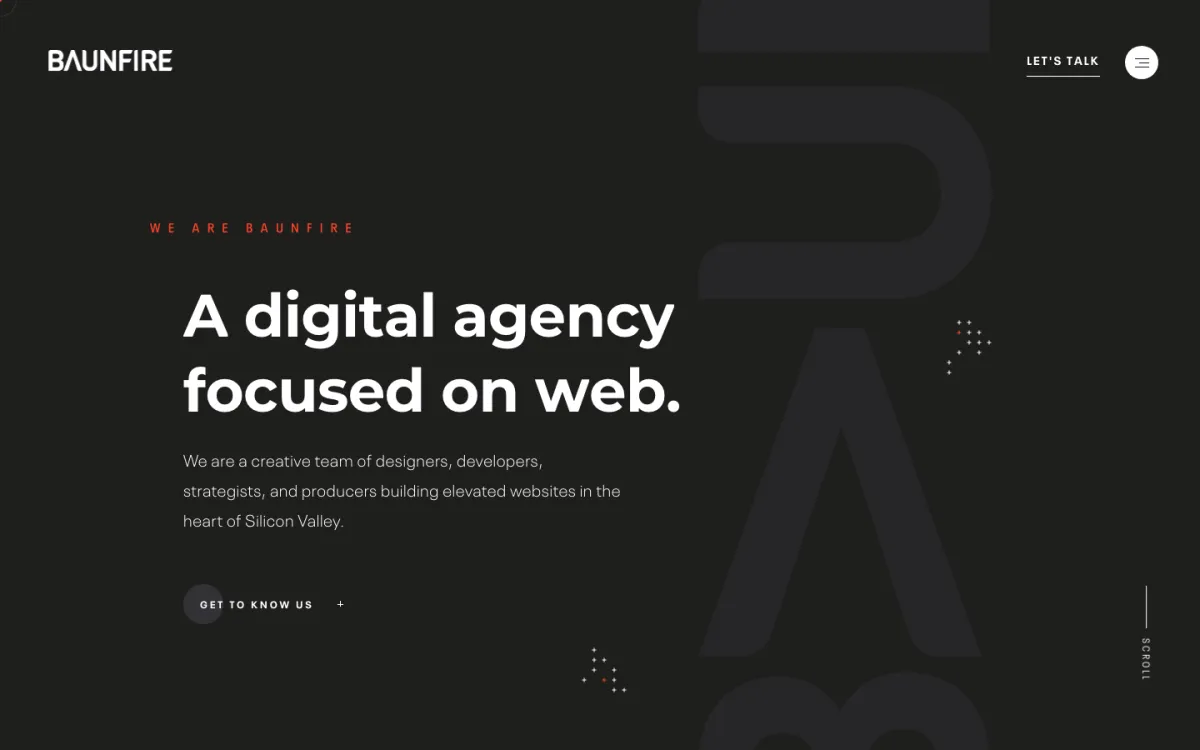
Two Baunfire reviews describe exactly the Series B problem: a website integrated with Bynder, the client's own digital asset manager, and another integrated with HubSpot. That is a site wired into a marketing stack rather than a standalone build. Its published portfolio is funded technology companies, Cellares and Optimal Dynamics among them, and information technology is 40% of its client base.
Its low or no-code line is 10% and the reviews name WordPress, so Webflow is not what the record shows it building. The $75,000 minimum is the highest on this page, which for a Series B company is affordable but leaves no room for the build to be wrong.
- Starting price
- $75,000+
- Engagement model
- Project-based
- Clutch
- 4.9/5, 32 reviews
- Hourly rate
- $150 - $199
- Team size
- 10 - 49 people
- Best for
- a corporate site integrated with the marketing tools around it.
- Not a fit for
- teams committed to Webflow specifically, or budgets under $25,000.
Column Five
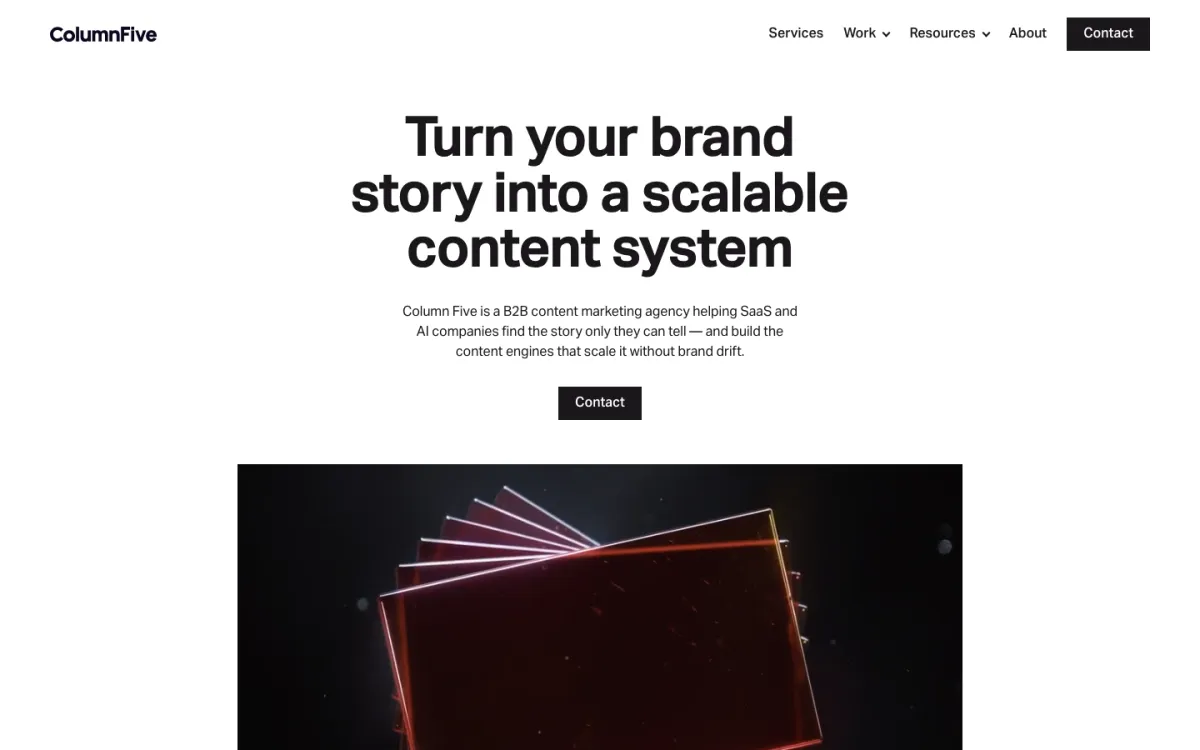
Column Five's stated aim is turning a brand story into a scalable content system, which is the exact thing a Series B marketing team is missing. Its Databricks case study is described as embedded creative production for a studio scaling faster than its headcount. GitHub, LinkedIn and Pearson are also named, and information technology is 50% of its client base.
There is no web design or web development line in its service mix, and no mention of Webflow anywhere. Content marketing and video production are 15% each. For a Series B company that needs the site built as well as filled, this is the content half arriving without the platform.
- Starting price
- $10,000+
- Engagement model
- Project and retainer
- Clutch
- 4.9/5, 18 reviews
- Hourly rate
- $150 - $199
- Team size
- 10 - 49 people
- Best for
- the content engine that has to run on top of the site.
- Not a fit for
- building or migrating the site itself, or budgets under $25,000.
Embacy

One Embacy review is the Series B brief written out: a website redesign for a venture capital platform where the team built a CMS specifically to support content marketing and thought leadership. That is a site handed over as a publishing tool, not a finished artefact. Web design is 55% of its mix with a low or no-code line at 10%.
Financial services at 35% and business services at 30% are two thirds of its client base, so venture-backed software companies are not its centre. Nothing published names Webflow, and with 10 to 49 people in Barcelona, a build plus a careers section plus ongoing template work is a lot to run in parallel.
- Starting price
- $10,000+
- Engagement model
- Project and retainer
- Clutch
- 5.0/5, 66 reviews
- Hourly rate
- $50 - $99
- Team size
- 10 - 49 people
- Best for
- handing over a site that a content team can actually run.
- Not a fit for
- teams committed to Webflow specifically, or budgets under $25,000.
League Design Agency
One League Design Agency review is landing pages built for sales, with wireframes, user flows and high-fidelity mockups behind them, and another is content placement and conversion optimisation for an HR and outsourcing firm. Landing page production on repeat is what a Series B demand generation team actually consumes. It carries 140 Clutch reviews at a perfect score.
60% of its clients are small businesses and no industry exceeds 10%, so a Series B software company sits at the top of its usual range rather than in the middle of it. There is no Webflow or low-code line in the mix either, and e-commerce development at 10% is the only build capability named.
- Starting price
- $10,000+
- Engagement model
- Project and retainer
- Clutch
- 5.0/5, 140 reviews
- Hourly rate
- $50 - $99
- Team size
- 50 - 249 people
- Best for
- a steady output of campaign and landing pages.
- Not a fit for
- a Webflow-specific platform build, or budgets under $25,000.
Zensite
Zensite is the only agency on this page whose own description names Webflow development, sold as a subscription with 24-hour turnarounds and cancellation at any time. Low or No Code Development is 15% of its service mix and UX/UI another 35%. For a Series B marketing team that needs pages produced continuously, that model matches the demand better than a project does.
70% of its clients are small businesses and it carries six Clutch reviews, the thinnest record on this page against 140 for League Design Agency. A 24-hour turnaround subscription is also built for a stream of small tasks rather than the architecture decisions a site has to carry for the next two years.
- Starting price
- $10,000+
- Engagement model
- Monthly subscription
- Clutch
- 4.8/5, 6 reviews
- Hourly rate
- $50 - $99
- Team size
- 10 - 49 people
- Best for
- a Webflow subscription feeding a marketing team's page demand.
- Not a fit for
- the architecture decisions behind a large site, or budgets under $25,000.
Digital Silk
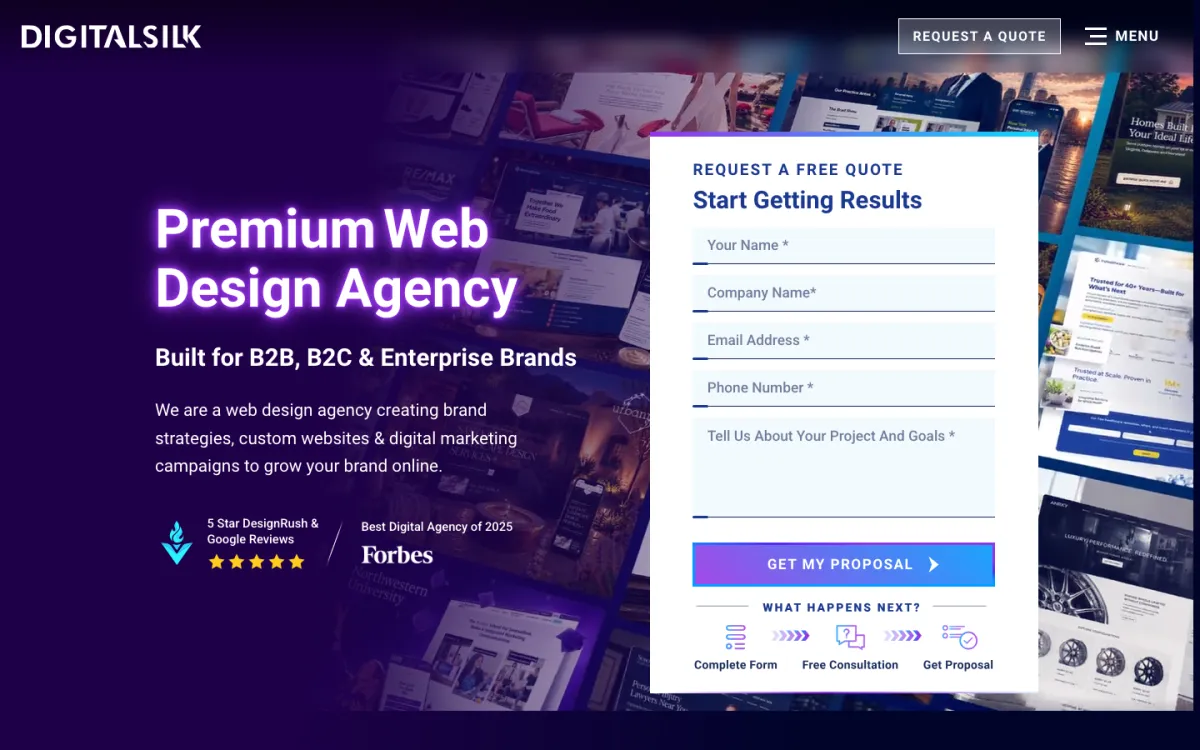
Digital Silk is the only agency on this page documented running paid media, social and a website rebuild for the same client at the same time. At Series B those are one system, since the site exists to receive the traffic the demand generation team buys. Search engine optimisation is 10% of its mix, with web design at 50%.
Its builds are WordPress, and there is no Webflow or low-code line anywhere in the service mix, so a team that has already standardised on Webflow is buying something else. Its industries are flat at 10% across consumer products, information technology, manufacturing and telecommunications.
- Starting price
- $10,000+
- Engagement model
- Project and retainer
- Clutch
- 4.9/5, 51 reviews
- Hourly rate
- $100 - $149
- Team size
- 50 - 249 people
- Best for
- a website run alongside the paid channels feeding it.
- Not a fit for
- teams standardised on Webflow, or budgets under $25,000.
Merge Rocks
Two Merge Rocks reviews name Webflow development explicitly, one of them alongside branding and a design workshop run to settle the visual direction before any page was built. At Series B that workshop is the useful part, because the site has to carry a marketing team's output rather than one launch. UX/UI is 60% of its mix.
At $25 to $49 an hour with 10 to 49 people, it is the cheapest documented Webflow option on this page, which is a real advantage and a real constraint on how much can run at once. Its industries are financial services and information technology at 20% each, with manufacturing at 15%.
- Starting price
- $10,000+
- Engagement model
- Project and retainer
- Clutch
- 4.9/5, 67 reviews
- Hourly rate
- $25 - $49
- Team size
- 10 - 49 people
- Best for
- a Webflow build with the brand direction settled first.
- Not a fit for
- several workstreams running at once, or budgets under $25,000.
Spaceberry Studio

Spaceberry Studio delivered a UX/UI design guide alongside a furniture retailer's website redesign, which is the artefact that decides whether a Series B marketing team can build its own pages or has to come back for each one. It does UX/UI and nothing else, 100% of the mix, from Kyiv since 2020, with 49 Clutch reviews at a perfect score.
There is no development line at all, so somebody else builds the Webflow site, and nothing in its record names Webflow. Financial services and medical are 35% each, which is a product-design client base rather than a marketing-site one, and its reviews are platforms and portals rather than content sites.
- Starting price
- $10,000+
- Engagement model
- Project and retainer
- Clutch
- 5.0/5, 49 reviews
- Hourly rate
- $50 - $99
- Team size
- 10 - 49 people
- Best for
- a design system the in-house team can extend itself.
- Not a fit for
- building the Webflow site itself, or budgets under $25,000.
How much does a Series B Webflow build cost?
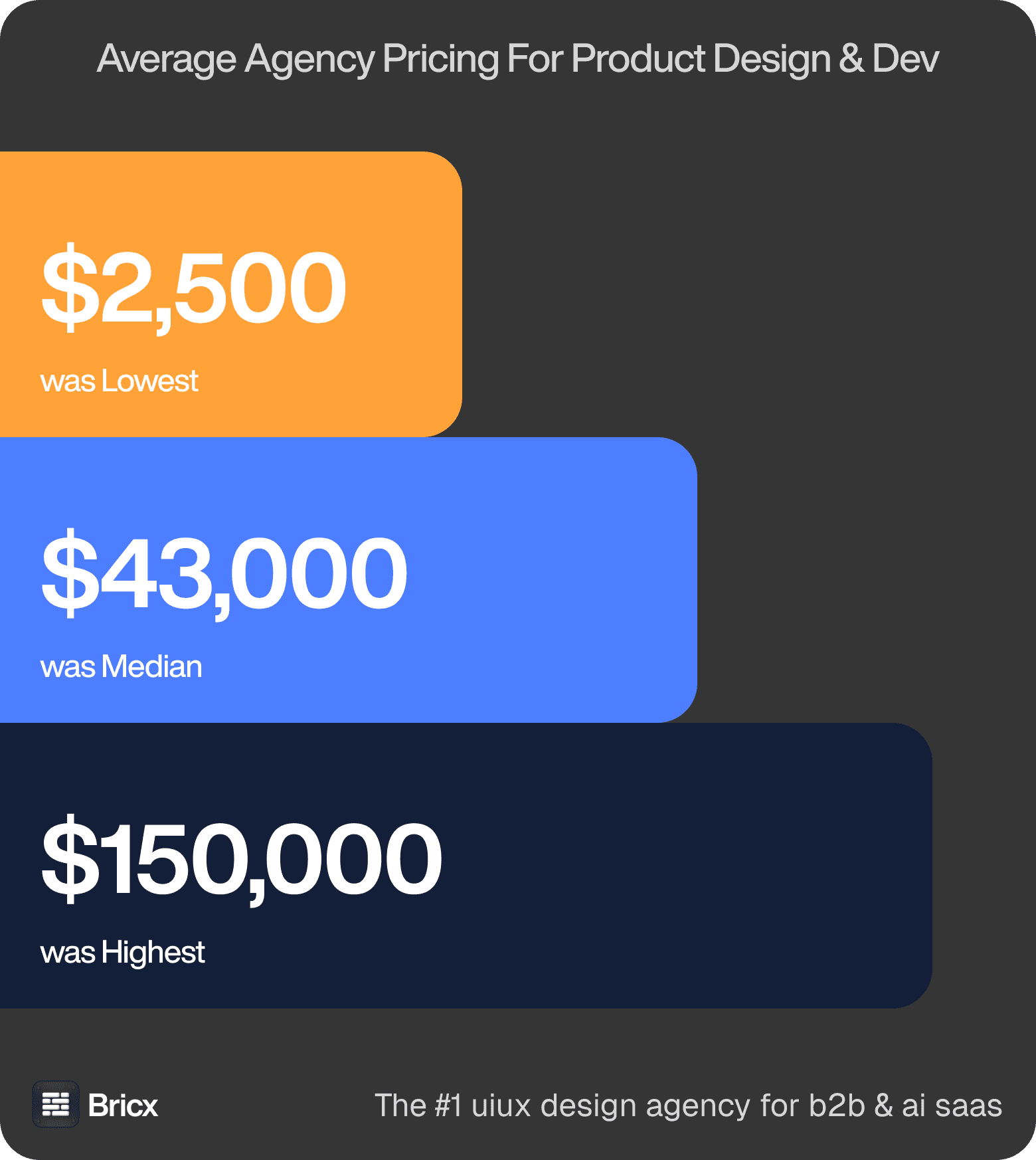
Project pricing. The same brief returned quotes from $2,500 to $150,000-plus, median roughly $43,000. Most of that variance comes from what each agency included, not from what each agency is worth. Those figures cover product design across the whole benchmark, so treat them as the range a Series B Webflow build is quoted inside rather than a price for it.
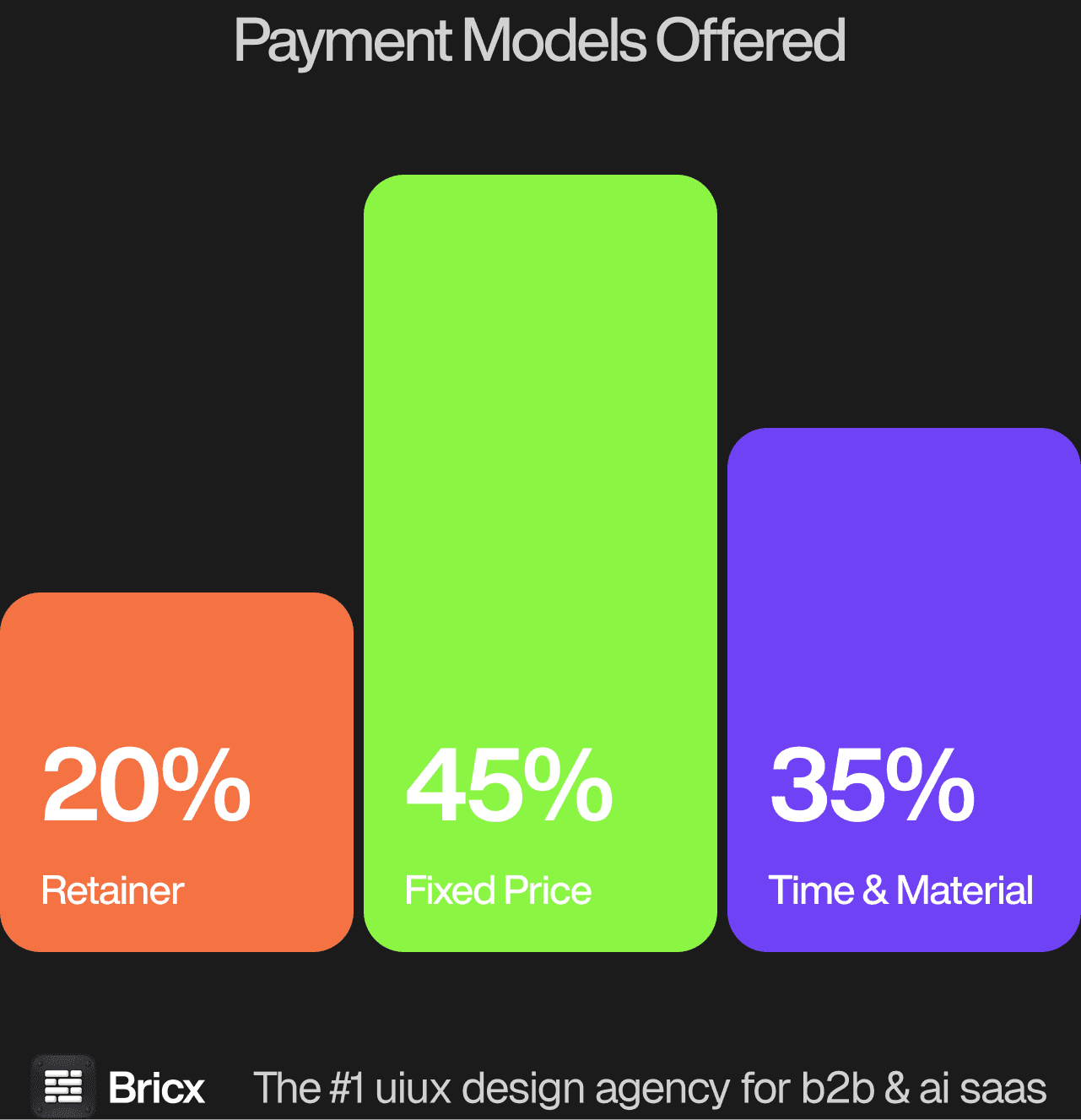
Rate range. $25 at the floor, $195 at the ceiling, $55 to $90 in the middle. Where an agency sits is mostly where it is based, not how good it is. Series B builds sit in the upper part of that range, because the CMS and component system are most of the work and the visible pages are the smaller half.
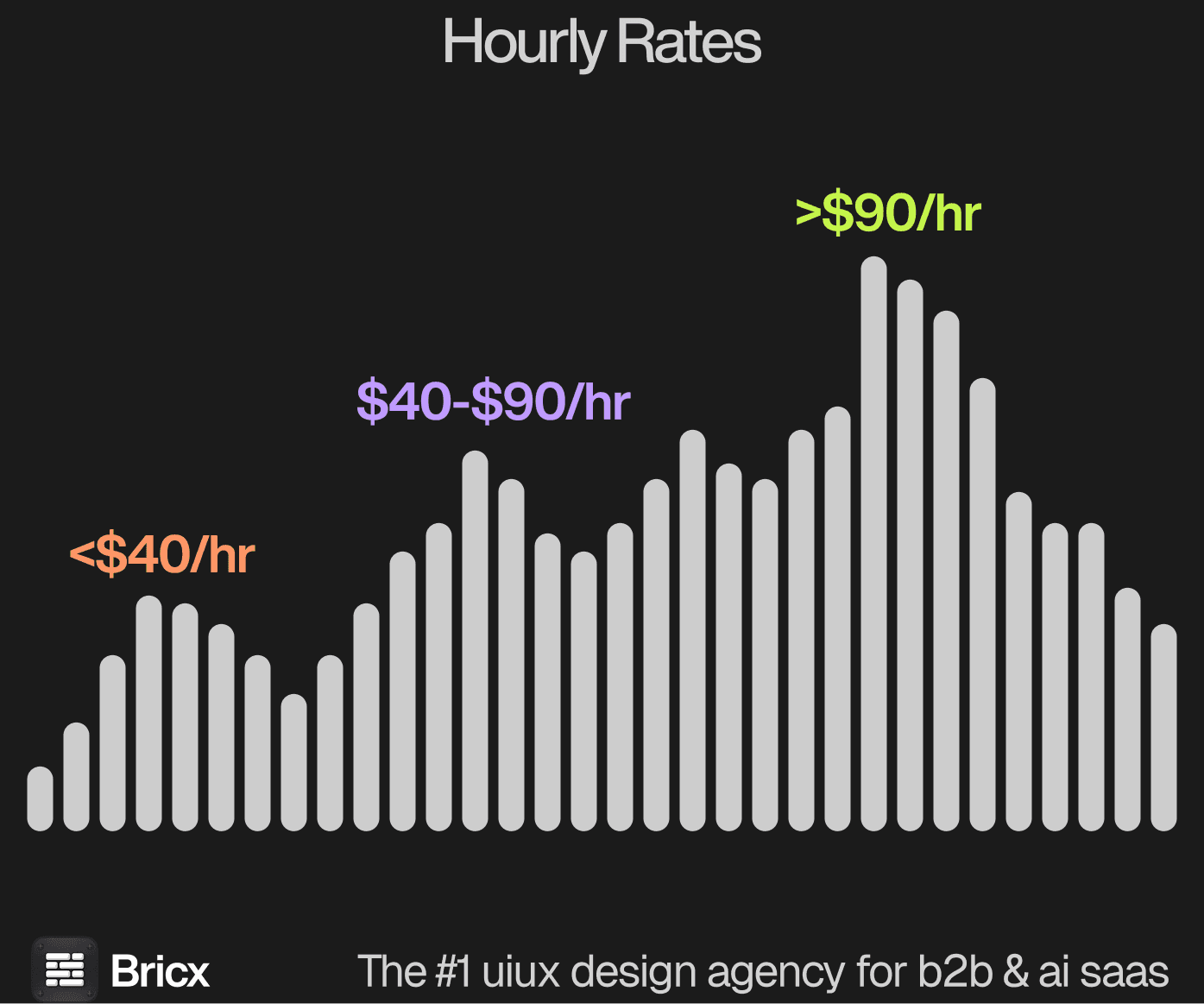
Engagements come in three shapes. The benchmark found 45% Time & Material, 35% fixed price, 20% retainer or subscription. For a Series B Webflow build the model usually matters more than the headline figure, because it decides what happens when the scope moves.
- Fixed price works when the scope is defined and unlikely to move.
- Time & Material works when you are still learning what the product needs.
- Retainer works when design demand is steady and continuous.
- Which one fits a Series B Webflow build comes down to whether the scope is settled before the work starts.
How do you evaluate a Webflow agency for a Series B startup?
Five things a Series B company should check that a seed-stage one does not need to.
Ask about CMS structure against your content plan. Comparison pages, integrations, customer stories and roles are where sites grow, and collections cannot be retrofitted cheaply.
Ask who can publish. By this stage several people need to ship pages without asking a designer, and permissions and templates decide whether that works.
Ask about localisation. Series B usually means a second market, and adding languages later is significantly more expensive.
Ask about performance at scale. A site that was fast with twelve pages behaves differently with two hundred.
Ask what the sales team gets. Collateral, one-pagers and demo pages all drift from the site unless the system covers them.
What are the red flags when hiring a design agency?
- A quote that arrives without questions. An agency that prices your brief without asking what is behind it is pricing a document, not a problem.
- Process presented as proof. A named methodology in a deck is not evidence. Ask what it produced and when.
- Designers you never meet. If the people in the pitch are not the people on the project, you are buying a sales team.
- Deliverables described in nouns, not outcomes. "Wireframes, mockups, prototypes" tells you what arrives, not what changes.
- Silence about maintenance. Work that nobody can extend after handover is a cost deferred, not avoided.
- No comparable example of a Series B Webflow build. An agency that cannot point to work of the same shape is learning on your budget.
Should you hire a Webflow agency or build in-house?
An agency buys you time. Senior capability starts within weeks rather than after a hiring cycle, and the cost stops when the project does. For a Series B Webflow build specifically, the question worth settling first is how often the work recurs.
A hire buys you depth. Someone inside the product makes better small decisions every day, but you are paying for the search, the ramp and the salary long before that shows up in the work. Where a Series B Webflow build falls on that line is usually clear once you count how many times it will need doing again.
Series B is usually the point to bring the website in-house operationally while keeping the system external. The agency owns the component library and the structure, the marketing team owns the pages, and neither blocks the other.
FAQs
What changes about a website at Series B?
It stops being a launch asset and becomes infrastructure for a marketing team, which means CMS structure and publishing permissions matter more than the visual design.
How much does a Series B website cost?
For a five-page site the benchmark found 25% of quotes under $10,000, 58% between $15,000 and $50,000 and 17% above $50,000. A Series B build with a full CMS sits at the upper end of that middle band. Bricx starts at $25,000.
Is it better to rebuild or extend the existing site?
Usually rebuild the system and keep the content. Seed-stage sites are typically hand-assembled pages, which is exactly what stops a marketing team from moving.
Who should maintain the site after launch?
Your marketing team, with the agency retained for system-level changes. Across the benchmark 40% of agencies handle post-launch on a retainer, 35% on time and materials and 25% through a bank of hours.