10 Best MVP Design Agenciesfor YC Startups (2026)
The 10 best MVP design agencies for YC startups, compared on pricing, Clutch rating, engagement model and hourly rate, drawn from a documented benchmark of 57 agencies.
Aug 20, 202611 min read
Best MVP design agencies for YC startups
The best MVP design agencies for YC startups know what to leave out. An MVP fails more often from scope than from craft, and the useful agency is the one arguing to cut features rather than quoting to build all of them.
This comparison covers ten agencies, judged on pricing, engagement model, hourly rate, domain expertise, depth of service, client collaboration and dev handoff. Every agency here carries a verified Clutch profile, and the ratings below are taken from it. Each entry says what an agency is worth hiring for and where it is the wrong choice for MVP design at a YC startup.
How the ten agencies compare
| Agency | Best for | Starting price | Clutch rating | Not a fit for |
|---|---|---|---|---|
| Bricx | YC and early-stage MVP builds | $25,000+ | 5.0/5, 27 reviews | Non-SaaS businesses, full platform builds |
| Tapptitude | Small first purchases, lowest floor | $5,000+ | 4.9/5, 71 reviews | Scope discipline, feature cutting |
| Designli | Phased MVPs with an exit clause | $10,000+ | 5.0/5, 79 reviews | Small single-slice engagements |
| Halo Lab | Cheap launch site and brand | $10,000+ | 4.9/5, 99 reviews | Product scoping and feature cuts |
| Arounda | Working prototypes before a build | $25,000+ | 5.0/5, 86 reviews | Startup-sized budgets, software domain |
| thoughtbot | Time-boxed discovery sprints | $10,000+ | 4.9/5, 39 reviews | Long design programmes on rate |
| Viget | Cutting a bloated flow down | $25,000+ | 4.8/5, 7 reviews | Cheap first versions |
| Phenomenon Studio | Interface, build and brand together | $10,000+ | 5.0/5, 51 reviews | Software-domain depth, seed-stage clients |
| GeekyAnts | Spec-first scoping at low cost | $10,000+ | 4.8/5, 116 reviews | Ruthless scope reduction |
| Cieden | Design-only, no build incentive | $10,000+ | 4.9/5, 46 reviews | Building the first version |
Best MVP design agency for YC startups: Bricx
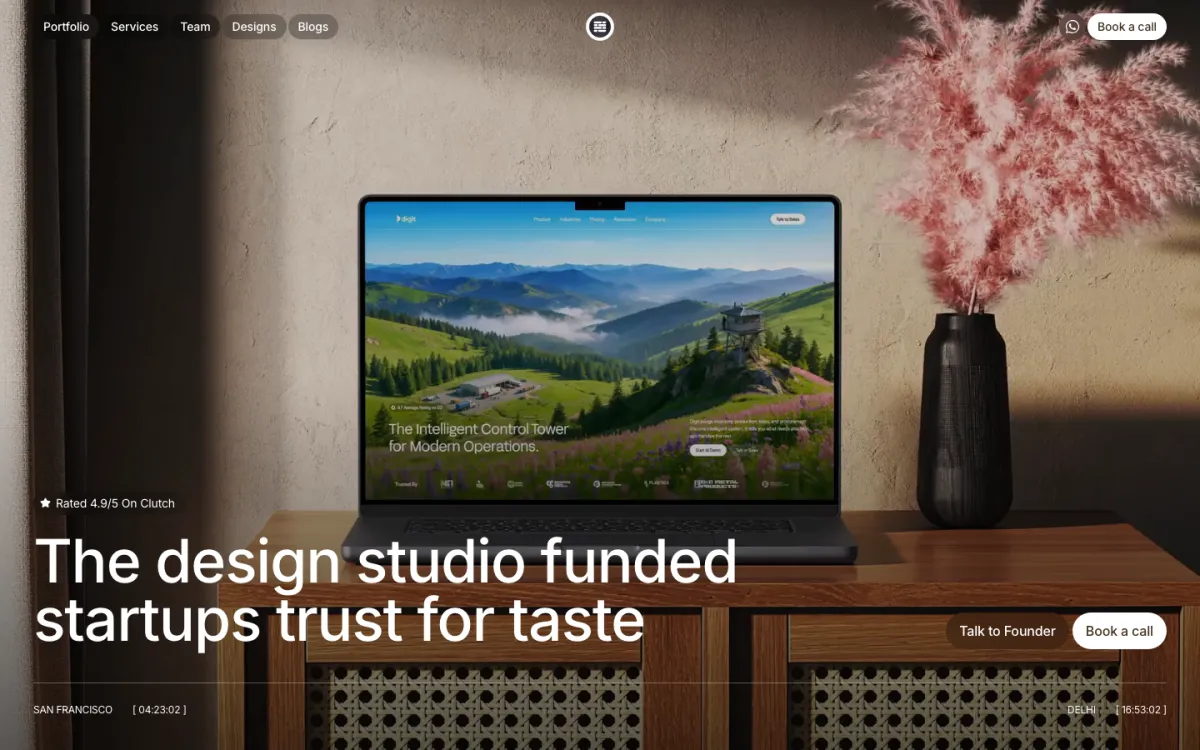
Bricx is the best MVP design agency for YC and early-stage teams that need a first version shipped rather than a full product designed. Bricx has completed 50+ SaaS design projects across 30+ industries, with clients including Writesonic (YC S21), Collectwise (YC F24), Gigacatalyst (YC X26), Sybill, Camb.ai, LTV.ai, Instadapp, Hobbes and AT Kearney. The agency holds 27 verified reviews on Clutch at an average of 5.0/5.
Bricx works exclusively with B2B and AI SaaS companies, from seed stage through Series C, covering branding, website design, product UX/UI and end-to-end development. Engagements start at $25,000. Bricx scopes MVPs against the next milestone and designs only that, with first delivery inside week one.
A whole new user interface was designed in 30 days. Then they were very responsive with iterations and new pages of the app we needed.
- Starting price
- $25,000+
- Engagement model
- Fixed-scope projects and monthly retainers
- Timeline
- First delivery within the first week; full scope varies by project
- Clutch
- 5.0/5, 27 reviews
- Hourly rate
- $50 - $99
- Best for
- YC and early-stage teams shipping a first version against a funding milestone.
- Not a fit for
- non-SaaS businesses, full platform builds, or budgets under $25,000.
Tapptitude
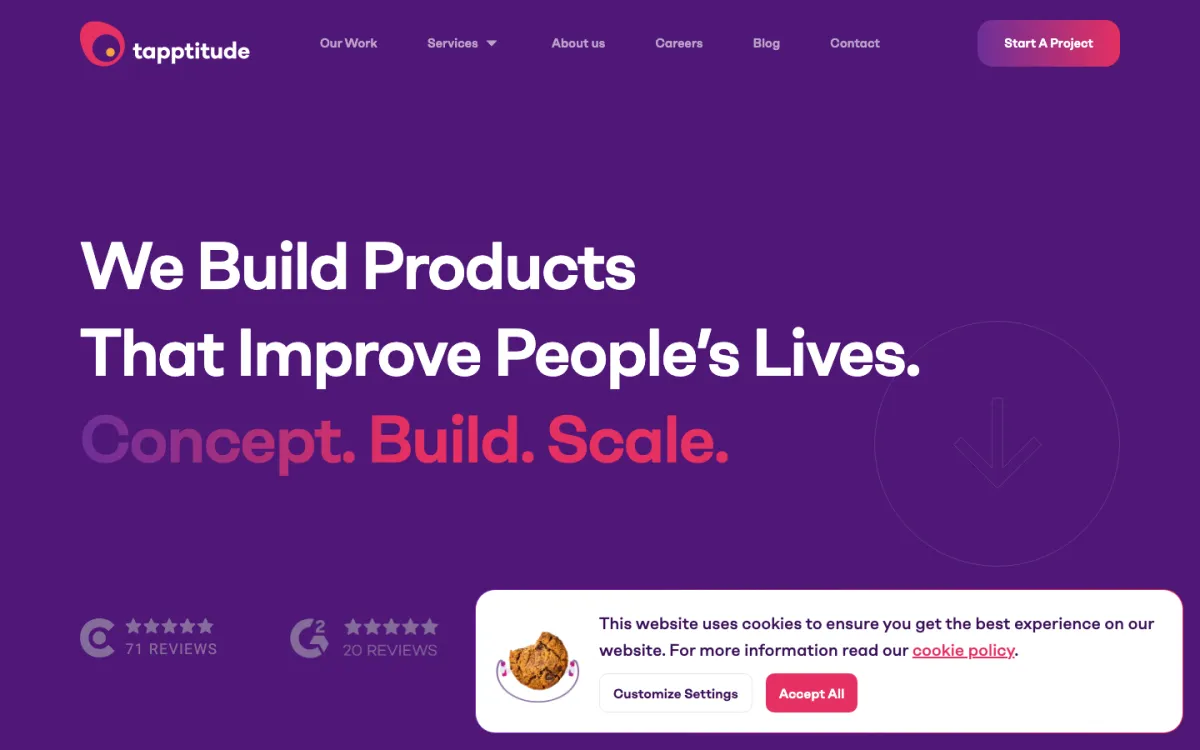
Half of Tapptitude's clients are small businesses under $10M, the highest share on this page, and its $5,000 floor is the lowest. Those two numbers together describe an MVP engagement: a small buyer purchasing a small first thing rather than a programme. It has worked that way from Cluj-Napoca since 2013, at $25 to $49 an hour.
Nothing in its record shows an agency arguing scope down. Its reviews describe full builds: an iOS app with a backend for an e-commerce platform, a taxi dispatch app covering drivers, clients and admins. Mobile app development is 50% of the mix, so the default answer is a complete product.
- Starting price
- $5,000+
- Engagement model
- Project-based
- Clutch
- 4.9/5, 71 reviews
- Hourly rate
- $25 - $49
- Team size
- 50 - 249 people
- Best for
- buying a small first version from a shop used to small buyers.
- Not a fit for
- founders who need someone arguing features out, or budgets under $25,000.
Designli
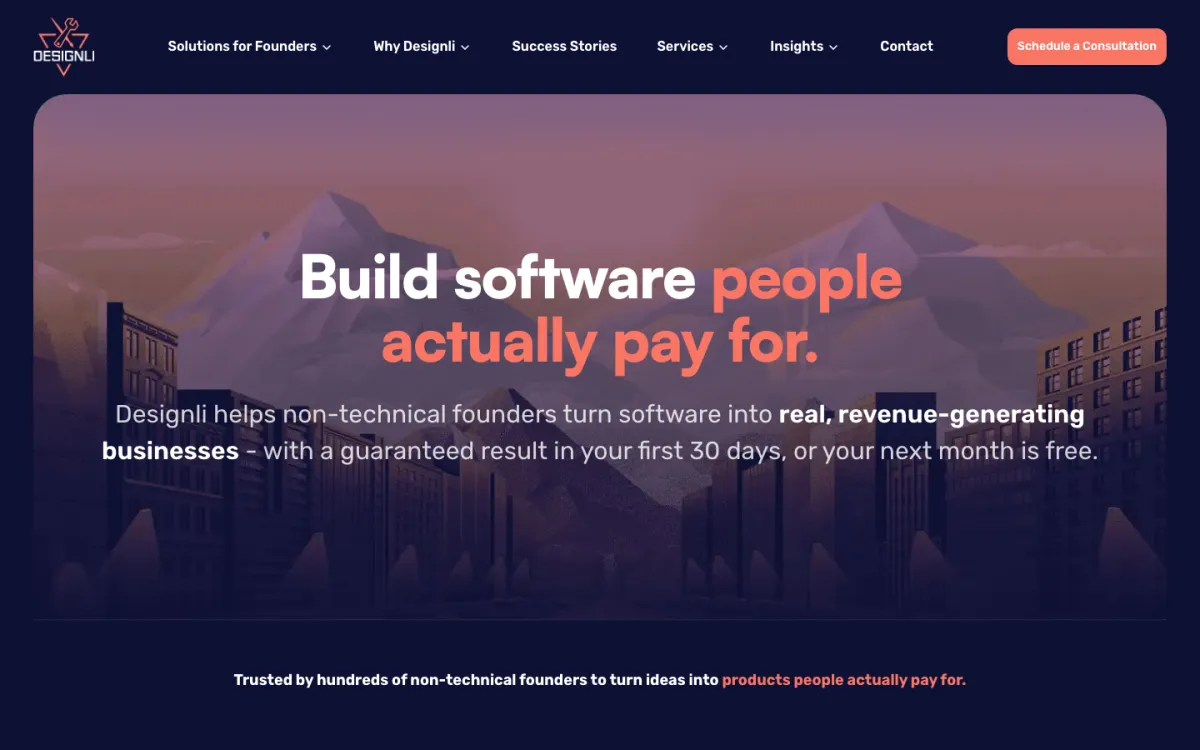
Designli publishes a 14-day no-questions-asked guarantee: cancel within 14 calendar days of the project start and initial fees are refunded in full. On a page about scope discipline, that is the only commercial term here that lets a founder stop early. Its reviews also name the pattern directly, delivering an LMS website as the first phase of an MVP for a compliance training company.
The rest of its record runs the other way. 250 to 999 people, 45% mobile app development and 30% custom software, and 60% of its clients midmarket between $10M and $1B. That is a shop staffed to build a full product, and its published work is portals and platforms rather than first versions.
- Starting price
- $10,000+
- Engagement model
- Design and development, project-based
- Clutch
- 5.0/5, 79 reviews
- Hourly rate
- $50 - $99
- Team size
- 250 - 999 people
- Best for
- a phased first release with a documented way to stop early.
- Not a fit for
- tiny single-slice engagements, or budgets under $25,000.
Halo Lab
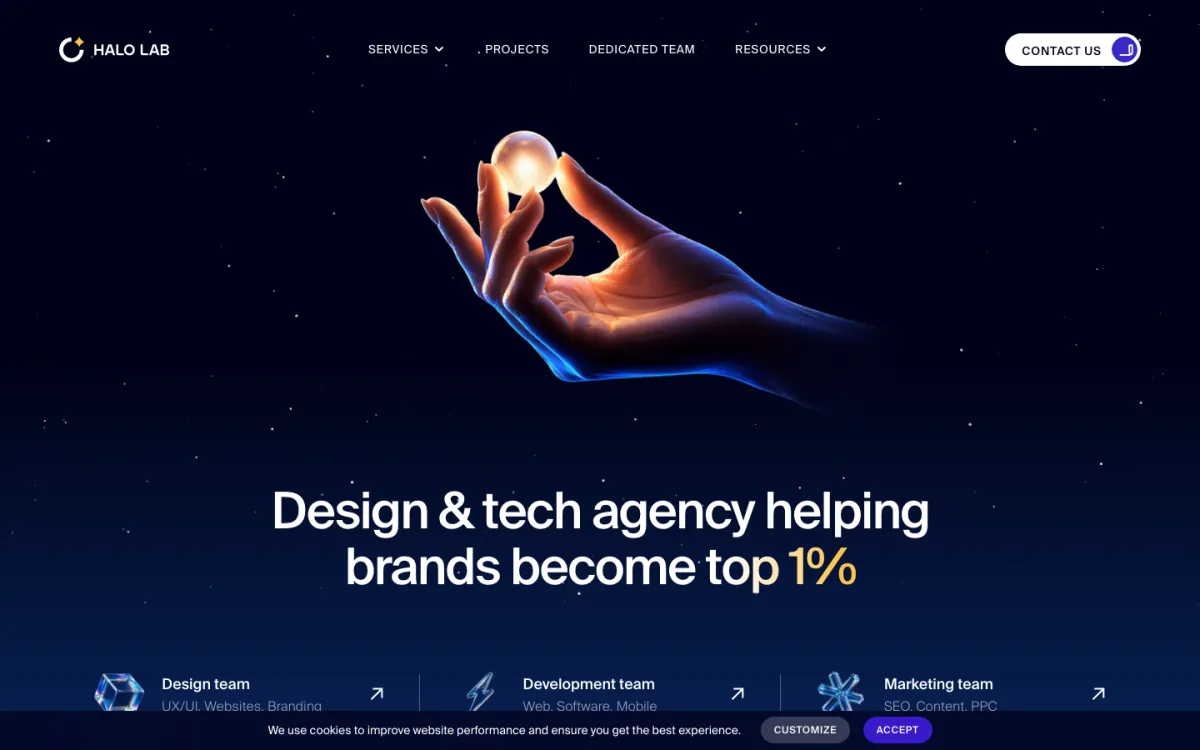
Halo Lab is the cheapest way on this page to get a first version designed: $25 to $49 an hour with a $10,000 floor, 50 to 249 people in Dubai, and 40% of its clients small businesses under $10M. For an MVP the arithmetic matters more than usual, because the money spent before the first user is money spent on a guess.
What that buys is a website and a brand. Web design is 20% of the card, branding 10%, and its three published reviews are a phlebotomy company's site, a travel identity and a Webflow build. None of that is a product with a scope argument in it.
- Starting price
- $10,000+
- Engagement model
- Project and retainer
- Clutch
- 4.9/5, 99 reviews
- Hourly rate
- $25 - $49
- Team size
- 50 - 249 people
- Best for
- the launch site and identity around a first release.
- Not a fit for
- deciding what the product itself should contain, or budgets under $25,000.
Arounda
Arounda's first published review is an MVP in everything but name: a clickable prototype defined, designed and developed for a B2B SaaS provider's AI tool, configured to listen, act and learn. A prototype that behaves is the cheapest way to find out whether a feature earns its place. It has run this way since 2016 with UX/UI, web design and web development at 30% each.
Its client base argues against the fit. 40% enterprises over $1B, another 40% midmarket, and industries spread evenly across energy, financial services, manufacturing and medical at 20% each, with no software concentration. Its $25,000 floor is the highest starting point on this page.
- Starting price
- $25,000+
- Engagement model
- Project and retainer
- Clutch
- 5.0/5, 86 reviews
- Hourly rate
- $25 - $49
- Team size
- 10 - 49 people
- Best for
- testing a feature set as a working prototype first.
- Not a fit for
- founders wanting a software-native team, or budgets under $25,000.
thoughtbot
thoughtbot publishes the method this page is asking for: a two-week discovery sprint for a software company that ended in a working prototype of an AI program that interviews authors. Two weeks is a scope constraint expressed as a calendar, which is the only kind founders reliably respect. It has been doing this from New York since 2003.
At $150 to $199 an hour, only Viget costs more here, and a sprint at that rate buys days rather than weeks. UX/UI is 15% of its work against 30% web development, so the design thinking sits inside an engineering practice, not ahead of it.
- Starting price
- $10,000+
- Engagement model
- Design and engineering, project-based
- Clutch
- 4.9/5, 39 reviews
- Hourly rate
- $150 - $199
- Team size
- 50 - 249 people
- Best for
- a fixed-length sprint that ends in something that runs.
- Not a fit for
- open-ended design work billed hourly, or budgets under $25,000.
Viget
Viget has the one review on this page that is literally about taking things out: a talent insights business hired it to evolve a flagship personality questionnaire whose questions were long and repetitive, and the redesign shortened and tested them. Founded 1999 in Falls Church, it puts 20% of its work into product design and 30% into custom software.
It is also the most expensive option here, $200 to $300 an hour on a $25,000 floor, with clients like Flipboard, ESPN and Privia Health and 40% of its base enterprises over $1B. Seven Clutch reviews is a thin public record for a firm running since 1999.
- Starting price
- $25,000+
- Engagement model
- Project and retainer
- Clutch
- 4.8/5, 7 reviews
- Hourly rate
- $200 - $300
- Team size
- 50 - 249 people
- Best for
- shortening an overbuilt flow and testing that it still works.
- Not a fit for
- cost-sensitive first releases, or budgets under $25,000.
Phenomenon Studio
Phenomenon Studio is the youngest agency on this page, founded 2019, and the one whose card spreads widest without a development bias: UX/UI at 25%, web development 15%, AI development 10%, branding 10%. For a first version that has to look finished without being finished, one team covering interface, build and brand removes a coordination cost a founder cannot absorb.
65% of its clients are midmarket firms between $10M and $1B and only 15% are small businesses, so the MVP conversation is not its usual one. Its industries are medical at 35%, education 25% and financial services 25%, with nothing in software or IT.
- Starting price
- $10,000+
- Engagement model
- Project and retainer
- Clutch
- 5.0/5, 51 reviews
- Hourly rate
- $50 - $99
- Team size
- 50 - 249 people
- Best for
- a first version that has to look finished at launch.
- Not a fit for
- teams wanting software-sector experience, or budgets under $25,000.
GeekyAnts
GeekyAnts starts engagements at the specification, not the screen. One review describes a personalised sports app where the work began with product specification and feature listing before UX design, which is where a feature gets cut or kept. With 250 to 999 people in Bengaluru at $25 to $49 an hour, it pairs the largest headcount bracket here with the lowest rate.
Its positioning is production-grade reality, and 60% of its clients are enterprises over $1B against 10% small businesses. An agency whose default engagement is enterprise scale is not the one arguing a founder down to three screens, and its 116 reviews describe end-to-end builds.
- Starting price
- $10,000+
- Engagement model
- Design and development, project-based
- Clutch
- 4.8/5, 116 reviews
- Hourly rate
- $25 - $49
- Team size
- 250 - 999 people
- Best for
- writing the spec and feature list before anyone designs a screen.
- Not a fit for
- founders who need the scope argued down, or budgets under $25,000.
Cieden
Cieden does UX/UI and nothing else, 100% of its card, which on an MVP page is a structural advantage: it has no development bench to keep busy, so cutting a feature costs it nothing. 10 to 49 people in Toronto since 2016, with financial services and medical at 30% each and a 4.9 average across 46 reviews.
The same fact is the limit. Nothing gets built, and its published work is redesign rather than launch: a 12-year-old web suite interface reworked, a design system and clickable prototypes for a revenue data product. That is a team used to arriving after the product exists.
- Starting price
- $10,000+
- Engagement model
- Project and retainer
- Clutch
- 4.9/5, 46 reviews
- Hourly rate
- $50 - $99
- Team size
- 10 - 49 people
- Best for
- deciding the first version with nobody incentivised to build more.
- Not a fit for
- teams needing the MVP built too, or budgets under $25,000.
How much does an MVP design agency cost?
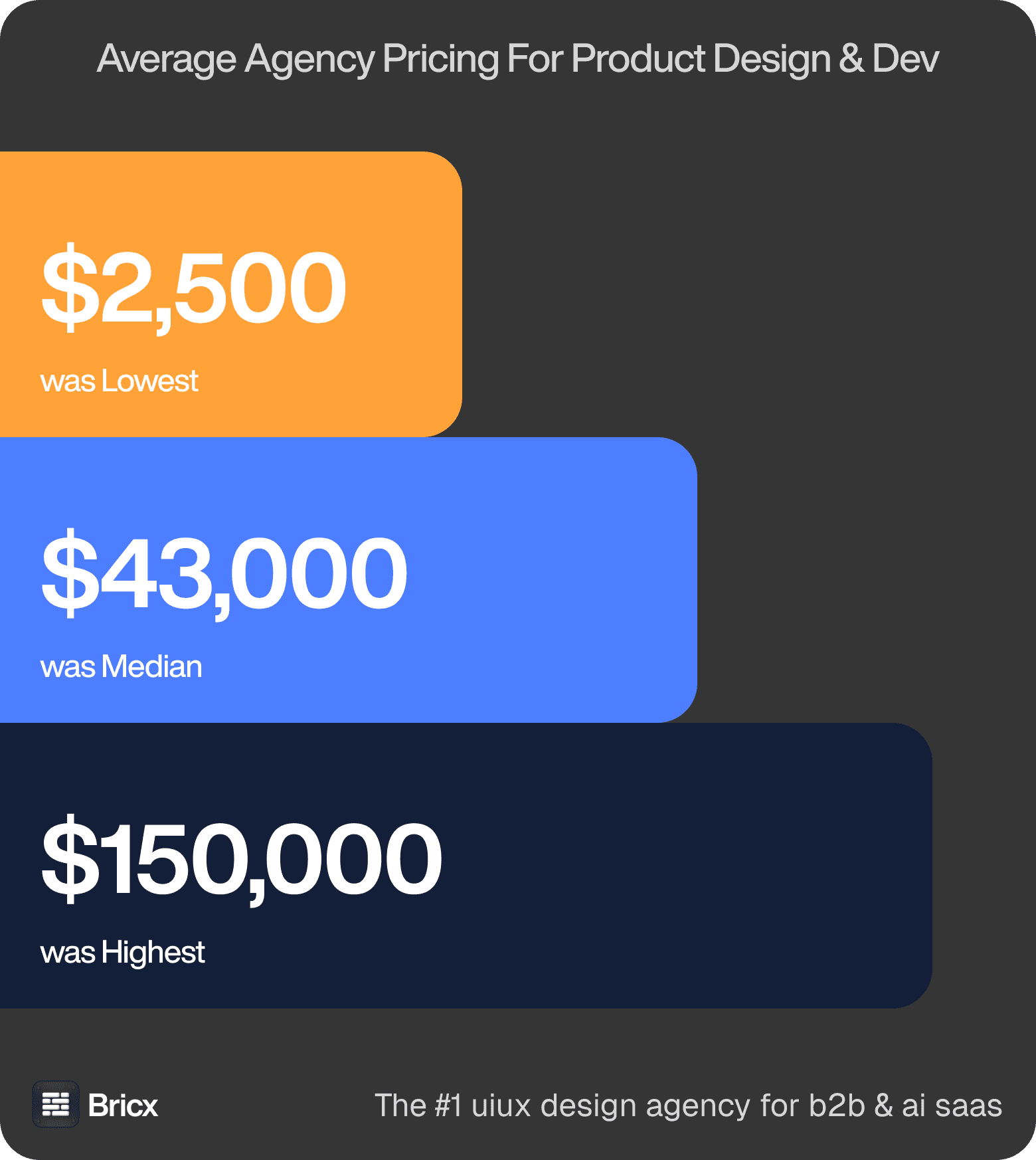
Product design, fixed price. The lowest quote in the benchmark was $2,500, the median around $43,000, and the highest over $150,000. Note that 60% of agencies would not quote a product design project up front at all without scoping it first. Those figures cover product design across the whole benchmark, so treat them as the range MVP design at a YC startup is quoted inside rather than a price for it.
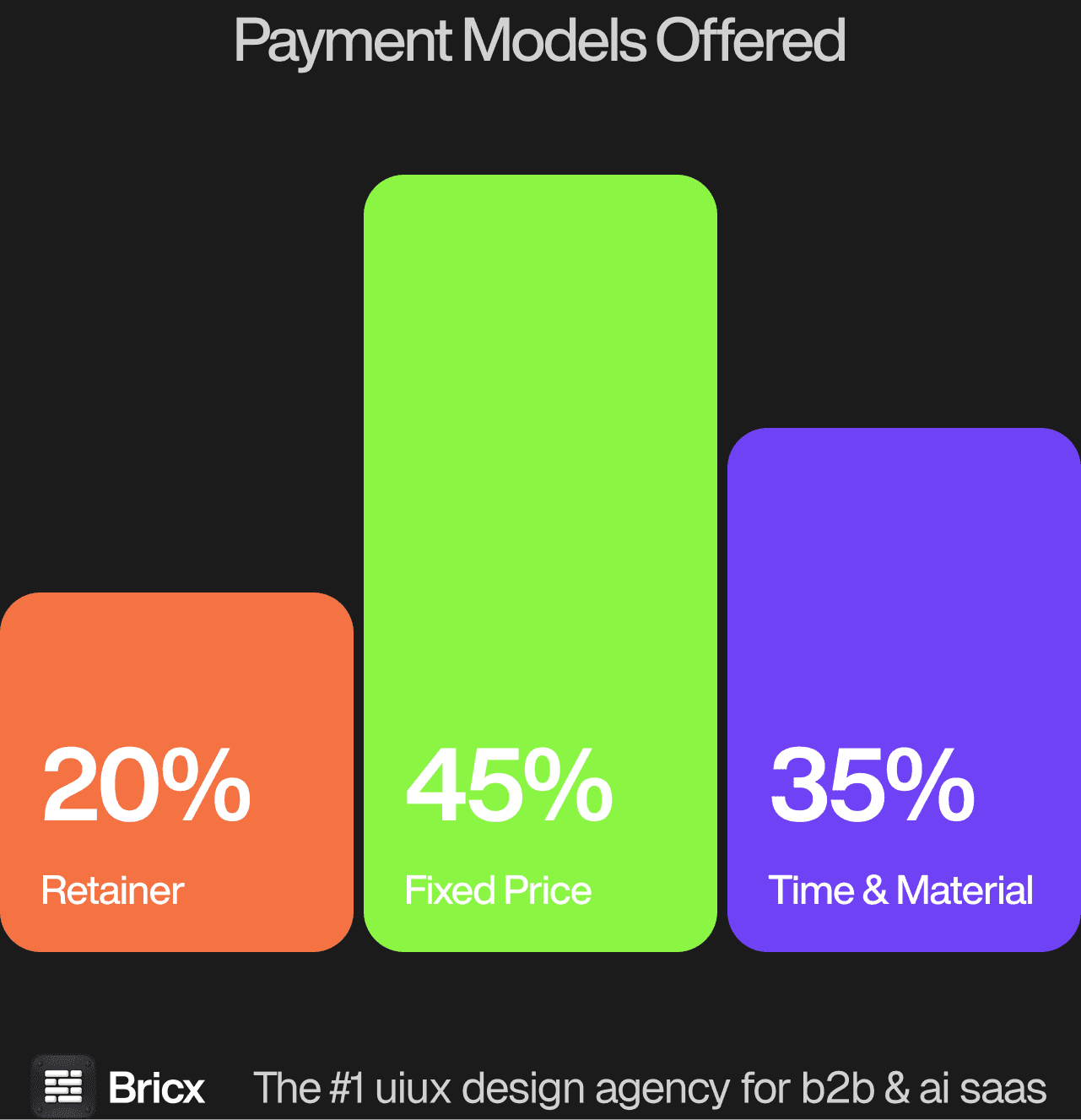
Hourly. Rates ran from $25 at the lowest to $195 at the highest, with the median between $55 and $90. Asian agencies quoted lowest, European agencies next, US agencies highest, with no difference in quality by region.
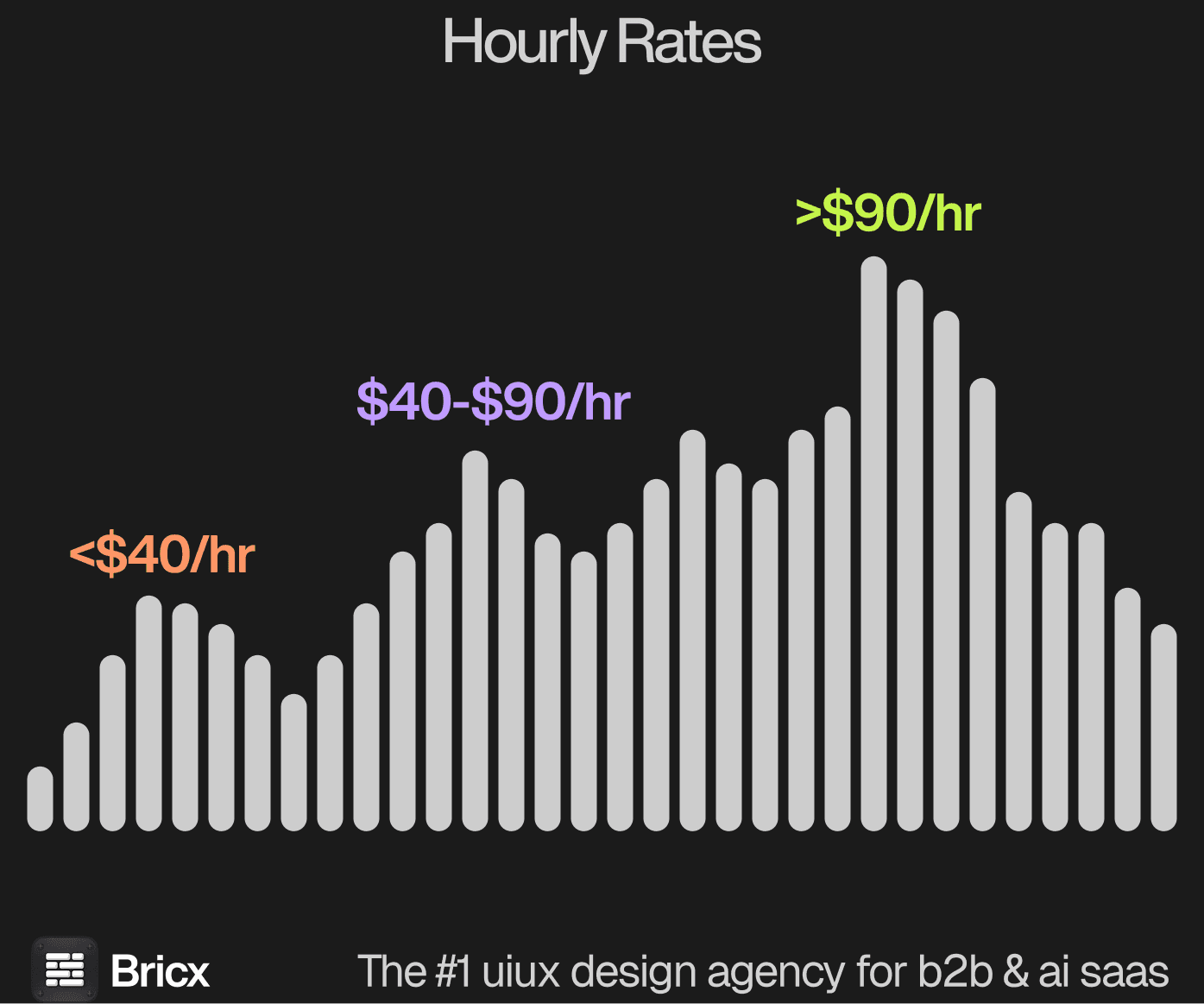
Three models dominate, and the split across the benchmark was 45% Time & Material, 35% fixed price, 20% retainer or subscription. For MVP design at a YC startup the model usually matters more than the headline figure, because it decides what happens when the scope moves.
- Fixed price works when the scope is defined and unlikely to move.
- Time & Material works when you are still learning what the product needs.
- Retainer works when design demand is steady and continuous.
- Which one fits MVP design at a YC startup comes down to whether the scope is settled before the work starts.
How do you evaluate an MVP design agency?
Five things separate an MVP partner from a product agency taking MVP work.
Ask what they would cut. An agency that accepts your feature list without argument is quoting, not advising.
Check the first delivery date. Week one or week six tells you how they think about risk.
Look for shipped MVPs, not concepts. Ask which are live and which died before launch.
Confirm what happens at version two. MVPs succeed and then need extending. Ask whether the work supports that.
Match pricing to uncertainty. Fixed scope on an unproven idea converts every learning into a change request.
What are the red flags when hiring a design agency?
- A long discovery phase with no shippable output. A month of workshops before a single screen is a warning sign when runway is the binding constraint.
- Rigid contracts with no exit. A year-long lock-in is a poor match for a roadmap that changes quarterly. Look for a break clause or a shorter initial term.
- A portfolio without outcomes. Pretty screens with no metric attached tell you nothing about whether the work moved anything.
- No pushback on your brief. Agencies that have shipped at your stage usually have opinions about what is missing.
- No answer on post-launch. Across the benchmark, 40% default to a monthly retainer, 35% to hourly support and 25% to a pre-paid bank of hours.
- No comparable example of MVP design at a YC startup. An agency that cannot point to work of the same shape is learning on your budget.
Should you hire an MVP design agency or build in-house?
Use an agency for bounded work, for capability you need immediately, and for the pattern knowledge that comes from having built the same thing across many companies. That knowledge is worth most on a first build. For MVP design at a YC startup specifically, the question worth settling first is how often the work recurs.
Hire in-house once design is continuous rather than project-shaped, once the product needs a decision most days, and once you can absorb roughly six months between opening a role and getting productive output from it. Where MVP design at a YC startup falls on that line is usually clear once you count how many times it will need doing again.
Most YC teams use an agency for the MVP and hire once the product has found its shape.
FAQs
What should I look for in an MVP design agency?
An agency that argues about scope, delivers something in week one, can point to live MVPs rather than concepts, and prices in a way that survives learning.
How much does MVP design cost?
From the 57-agency benchmark, fixed-price product design ran $2,500 to over $150,000 with a median near $43,000. Most seed-stage MVP engagements land between $15,000 and $50,000. Bricx starts at $25,000.
Do these agencies offer development support?
It varies. 55% of agencies benchmarked build in-house; the other 45% hand off to partners or to your team. Confirm before scoping, since the difference shows up as weeks.
Can these agencies work with remote teams?
Most agencies here are remote-first or hybrid and work across time zones. Ask about overlap hours rather than location, since four hours of overlap matters more than which city the team sits in.