10 Best YC Startups Framer Design Agencies (2026)
The 10 best YC startups Framer design agencies, compared on pricing, Clutch rating, engagement model and hourly rate, drawn from a documented benchmark of 57 agencies.
Aug 20, 202611 min read
Best YC startups Framer design agencies
In Framer the design file is the site, so there is no build step and no deploy, and a founder who can drag a component can rewrite the hero at eleven at night. That is the whole reason a YC company picks it, because the positioning moves faster than any engineering queue. The costs are specific. There is no backend, so anything gated or authenticated leaves the site. The CMS is lighter than Webflow's, so a large content programme hits a ceiling. And the effects are built in, which is why so many batch sites move the same way.
Ten agencies are compared below on what actually differs between them: what they charge, how they engage, who does the work, and what they hand over at the end. Every agency here carries a verified Clutch profile, and the ratings below are taken from it. Each entry says what an agency is worth hiring for and where it is the wrong choice for a Framer site for a YC startup.
How the ten agencies compare
| Agency | Best for | Starting price | Clutch rating | Not a fit for |
|---|---|---|---|---|
| Bricx | Framer sites for YC B2B SaaS | $25,000+ | 5.0/5, 27 reviews | Gated apps, large CMS programmes |
| Uinno | Fast MVP shipping, no ceremony | $10,000+ | 5.0/5, 31 reviews | Visual direction, marketing sites |
| tubik | Reusable design systems | $10,000+ | 4.9/5, 37 reviews | Framer-native builds, low rates |
| Trinetix | Product MVPs with design included | $50,000+ | 5.0/5, 4 reviews | Marketing sites, seed budgets |
| Praxent | Fintech demo and product surfaces | $25,000+ | 4.8/5, 66 reviews | Framer builds, non-fintech startups |
| Ronas IT | Brand and build, then maintenance | $10,000+ | 4.9/5, 35 reviews | Framer expertise, design-first work |
| Top Notch Dezigns® | WordPress sites with marketing attached | $10,000+ | 5.0/5, 16 reviews | Framer, startups, technology clients |
| UPQODE | High-volume site builds | $5,000+ | 4.9/5, 104 reviews | Framer, technology positioning |
| Ueno | Art direction that stands apart | Undisclosed | 4.8/5, 3 reviews | Small budgets, platform execution |
| Gapsy Studio | Custom motion on a small budget | $5,000+ | 5.0/5, 56 reviews | Deeptech positioning, product design |
Best Framer design agency for YC startups: Bricx
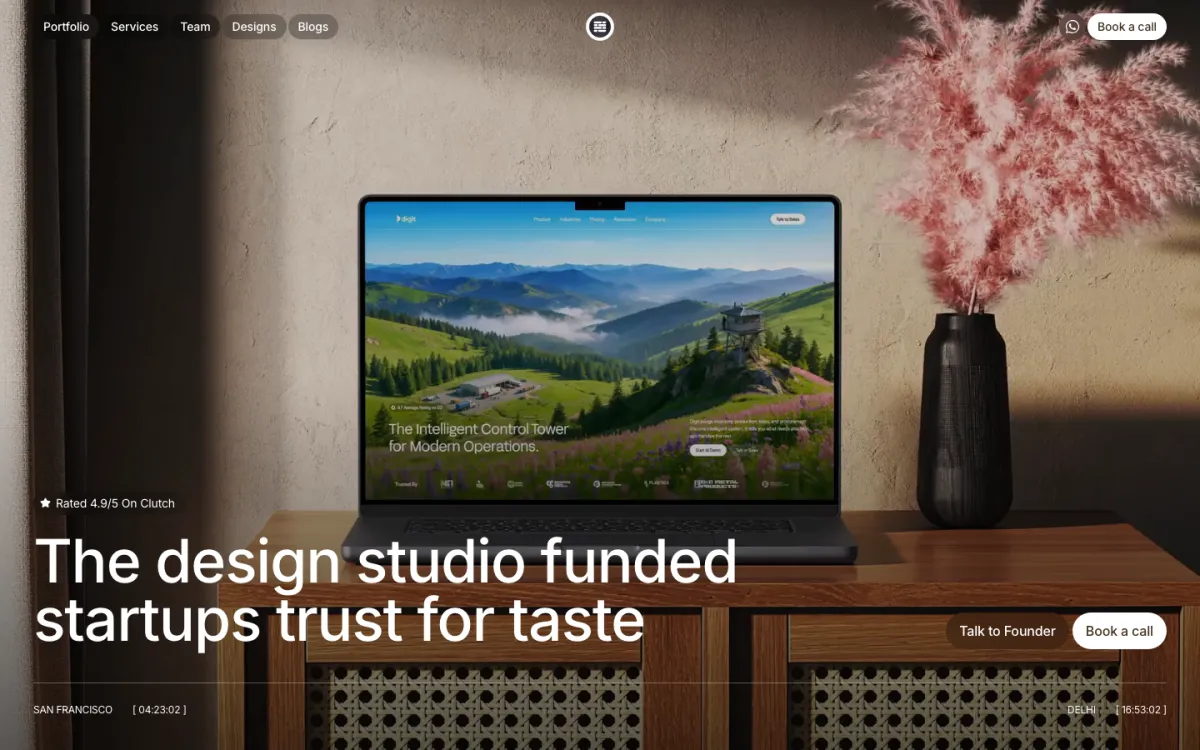
Bricx is the best yc companies whose positioning is still moving and who need a site the founder can rewrite without opening a ticket. Bricx has completed 50+ SaaS design projects across 30+ industries, with clients including Writesonic (YC S21), Collectwise (YC F24), Gigacatalyst (YC X26), Sybill, Camb.ai, LTV.ai, Instadapp, Hobbes and AT Kearney. The agency holds 27 verified reviews on Clutch at an average of 5.0/5.
Bricx works exclusively with B2B and AI SaaS companies, from seed stage through Series C, covering branding, website design, product UX/UI and end-to-end development. Engagements start at $25,000. Bricx has built for Writesonic, Collectwise and Gigacatalyst, all Y Combinator companies, and does branding, website and product design in the same team. On a Framer build that matters because the site and the product have to look like the same company by the time an investor clicks through from one to the other.
Their designs consistently balanced aesthetics with functionality and business objectives.
- Starting price
- $25,000+
- Engagement model
- Fixed-scope projects and monthly retainers
- Timeline
- First delivery within the first week; full scope varies by project
- Clutch
- 5.0/5, 27 reviews
- Hourly rate
- $50 - $99
- Best for
- a YC company whose site and product need to look like one company.
- Not a fit for
- gated app pages, large CMS programmes, or budgets under $25,000.
Uinno
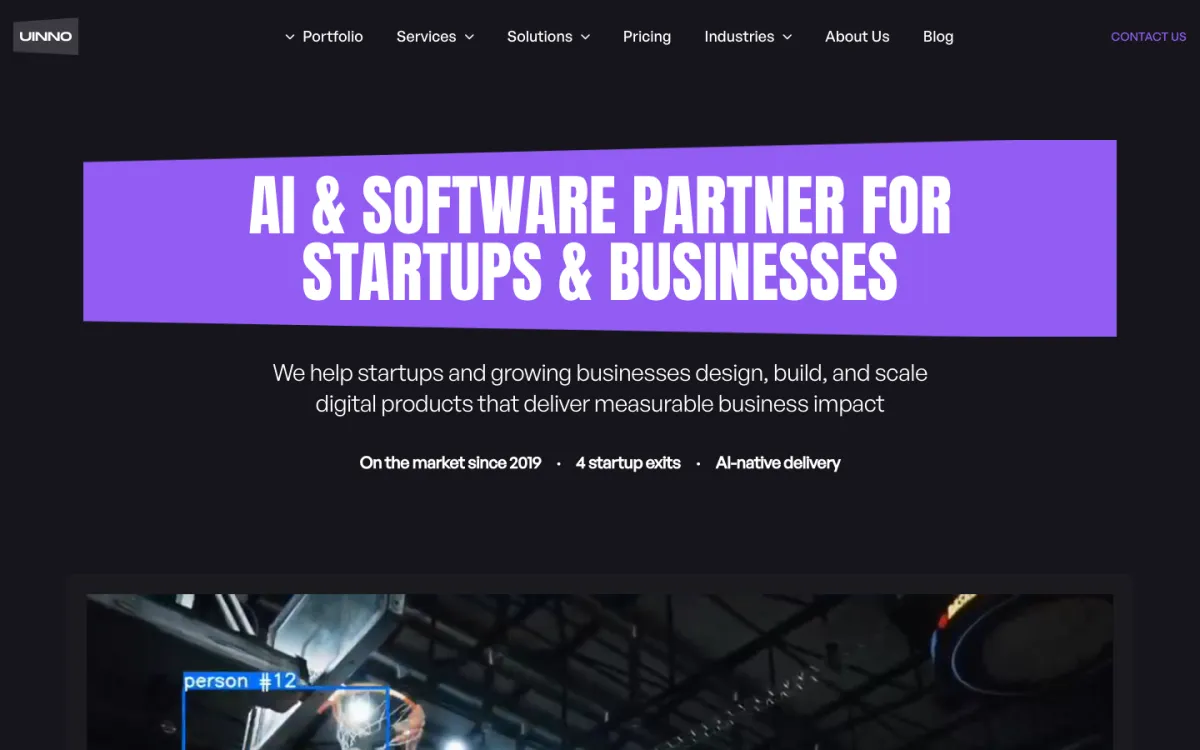
Uinno carries a 15% low and no-code development line, the largest on this page, and it is the only agency here whose review describes shipping an MVP without a discovery phase. That is the tempo a YC company keeps, and it is the same instinct a Framer site rewards: build it, publish it, change it when the pitch changes. 60% of its clients are small businesses.
The low-code line is not evidence of Framer specifically, and nothing on its record is a marketing site. Its published work is an AI workflow MVP, a prompt generation engine and an authentication rebuild, which is product engineering. Design is not a named service, so the visual direction would need to come from somewhere else.
- Starting price
- $10,000+
- Engagement model
- Project and retainer
- Clutch
- 5.0/5, 31 reviews
- Hourly rate
- $25 - $49
- Team size
- 50 - 249 people
- Best for
- a YC team that needs the product built at batch pace.
- Not a fit for
- art direction or marketing sites, or budgets under $25,000.
tubik
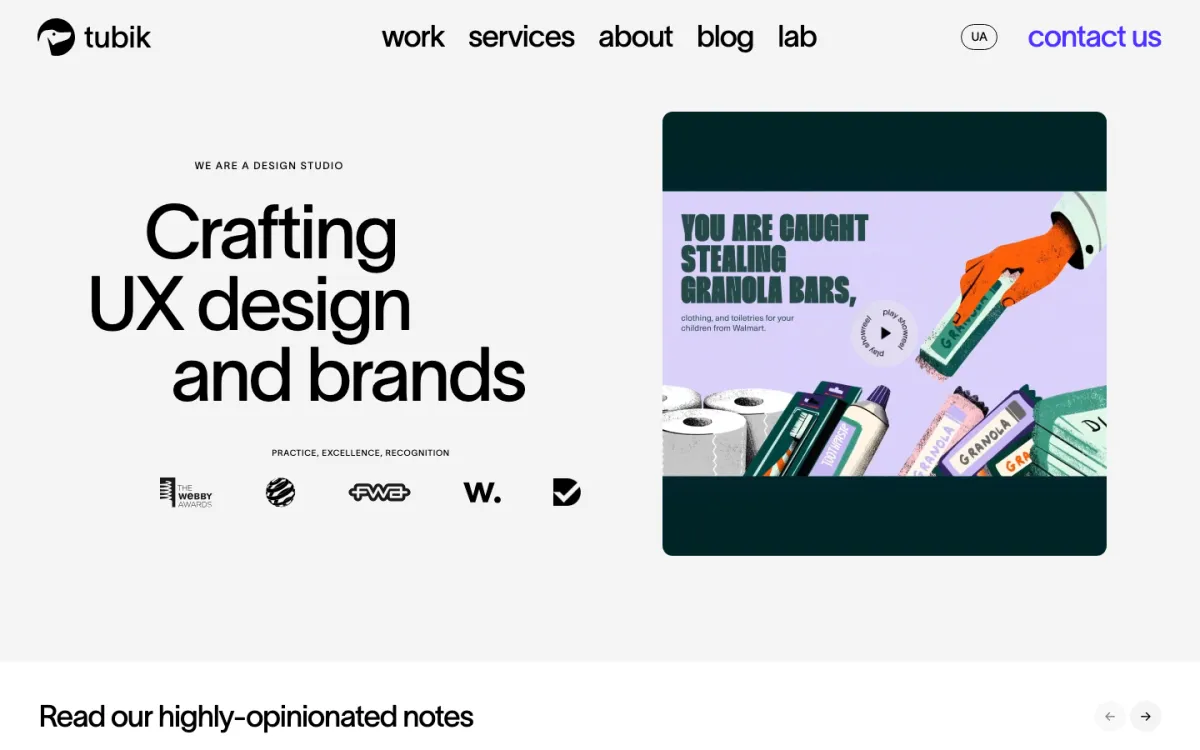
tubik is the component-system agency on this page. One review has it redesigning a homepage and creating new reusable components, another building a scalable design system with white-label capabilities, and a third handing over a full design system in one Figma file. That is exactly what decides whether a founder can add page six to a Framer site alone or has to come back with a purchase order.
The systems it hands over are Figma files, and Framer components are a different artefact that has to be built in the tool. Low and no-code development is only 10% of its output against 40% UX/UI, so design is the product and the build is the smaller half.
- Starting price
- $10,000+
- Engagement model
- Project and retainer
- Clutch
- 4.9/5, 37 reviews
- Hourly rate
- $100 - $149
- Team size
- 10 - 49 people
- Best for
- a system of components the founder can keep building pages from.
- Not a fit for
- Framer-native implementation, or budgets under $25,000.
Trinetix
Trinetix designed and built a SaaS MVP for a music analysis company, UI/UX included, with React on the front and .NET Core behind it, which is the shape of a YC product rather than a YC website. Product design is 30% of its output, unusually high for a 250 to 999 person firm, and it carries a 10% low and no-code line.
Its industries are medical at 40% and supply chain, logistics and transport at 35%, and its case studies are freight bidding, demand forecasting and workplace booking. That is enterprise operations work, priced from $50,000, the highest floor on this page. Four Clutch reviews is also a thin record, and no Framer site appears on it.
- Starting price
- $50,000+
- Engagement model
- Project and retainer
- Clutch
- 5.0/5, 4 reviews
- Hourly rate
- $50 - $99
- Team size
- 250 - 999 people
- Best for
- building the product itself when the budget is already enterprise-sized.
- Not a fit for
- marketing site builds, or budgets under $25,000.
Praxent
Praxent is 100% financial services, the only single-industry agency on this page, and one review describes exactly the YC problem: a data API company hired it to design and build a demo-facing UI, a landing screen and an authentication screen. A fintech in a batch needs the site and the demo to survive the same fifteen minutes. It has worked from Austin since 2000 with 66 Clutch reviews.
Web design is its smallest service line at 10%, so a Framer build is not what it sells. 60% of its clients are midmarket companies and its published work is legacy migrations and custom software, which is a different customer from a company three weeks past incorporation.
- Starting price
- $25,000+
- Engagement model
- Project and retainer
- Clutch
- 4.8/5, 66 reviews
- Hourly rate
- $50 - $99
- Team size
- 50 - 249 people
- Best for
- a YC fintech whose demo and product need to hold up together.
- Not a fit for
- Framer site builds, or budgets under $25,000.
Ronas IT
Ronas IT states its offer as design, development and maintenance, and the third word is the one that matters on a Framer site, because what a YC company needs is not a launch but a site that keeps changing for two years. One review has it delivering a branding concept and then building the frontend from existing wireframes, brand and build in the same engagement.
UX/UI is 15% of its output and web development another 15%, with AI and custom software development taking the larger share, so the marketing site is a minority of what it does. Its published work is a Pilates app, an edtech interface and an IT company's frontend, none of it on a visual site builder.
- Starting price
- $10,000+
- Engagement model
- Project and retainer
- Clutch
- 4.9/5, 35 reviews
- Hourly rate
- $50 - $99
- Team size
- 50 - 249 people
- Best for
- a site somebody keeps maintaining after the launch week ends.
- Not a fit for
- Framer-specific expertise, or budgets under $25,000.
Top Notch Dezigns®

Top Notch Dezigns® is a WordPress studio, and all three of its published reviews say so: a templated site for a nonprofit, a research institute redesign that reused most of the existing content, and a showcase site for a 3D film company. Web design is half its output, with pay per click and search engine optimisation alongside it, which is a marketing agency's shape rather than a product studio's.
Nothing about that transfers to a Framer build for a YC company. Its industries are dental, education and consumer services at 10% each with no technology weighting at all, and at $150 to $199 an hour it is the second most expensive team here for the least relevant experience.
- Starting price
- $10,000+
- Engagement model
- Project and retainer
- Clutch
- 5.0/5, 16 reviews
- Hourly rate
- $150 - $199
- Team size
- 10 - 49 people
- Best for
- an established local business that wants a site and lead generation together.
- Not a fit for
- Framer builds or startup clients, or budgets under $25,000.
UPQODE
UPQODE has 104 Clutch reviews, the deepest public record on this page by a distance, and 80% of its output is web design with nothing else above 10%. It is a site-building specialist rather than a product studio. One review describes rebuilding over twenty pages for a caregiver solutions company, which is the volume question a Framer build eventually becomes once the blog and the customer stories arrive.
Its industry spread tops out at 10% in business services with no technology concentration, and its published work is a fingerprint solutions company, a caregiver platform and an automotive festival with ticket sales. That is a general web practice, and no low or no-code line appears in its service mix at all.
- Starting price
- $5,000+
- Engagement model
- Project and retainer
- Clutch
- 4.9/5, 104 reviews
- Hourly rate
- $100 - $149
- Team size
- 50 - 249 people
- Best for
- a site that has grown past twenty pages and needs rebuilding at volume.
- Not a fit for
- Framer builds or technology positioning, or budgets under $25,000.
Ueno
Ueno is the art direction option, priced at $200 to $300 an hour, the highest on this page, with 50% of its clients in information technology and another 30% in advertising and marketing. The thing that stops a Framer site looking like every other Framer site is art direction rather than tooling, and one review describes it delivering interaction design, information architecture and prototyping for a visual system.
Three Clutch reviews and an undisclosed minimum make it the least legible option here, and its published work is a community platform, a news app across five devices and supplementary design for someone else's system. Nothing names a site builder. At that rate a seed budget buys a small number of hours.
- Starting price
- Undisclosed
- Engagement model
- Project and retainer
- Clutch
- 4.8/5, 3 reviews
- Hourly rate
- $200 - $300
- Team size
- 50 - 249 people
- Best for
- a YC company that refuses to look like the rest of the batch.
- Not a fit for
- Framer implementation at seed prices, or budgets under $25,000.
Gapsy Studio
Gapsy Studio is the only agency here whose published work is animation, dynamic sequences designed and delivered for a headless CMS provider to use across its platform. Motion is where a Framer site either differentiates itself or reveals that it used the defaults. It runs 70% web design, 20% UX/UI and a 10% low and no-code line, at $25 to $49 an hour.
Its two industries are financial services and eCommerce at 50% each, so a developer tool or AI infrastructure company is outside what it has published. The other reviews are a marketing agency's website revamp and branding for a web development company, which is agency-serving work rather than startup product marketing.
- Starting price
- $5,000+
- Engagement model
- Project and retainer
- Clutch
- 5.0/5, 56 reviews
- Hourly rate
- $25 - $49
- Team size
- 10 - 49 people
- Best for
- a site whose motion is designed rather than picked from the defaults.
- Not a fit for
- deeptech or developer-tool positioning, or budgets under $25,000.
How much does a YC startup Framer build cost?
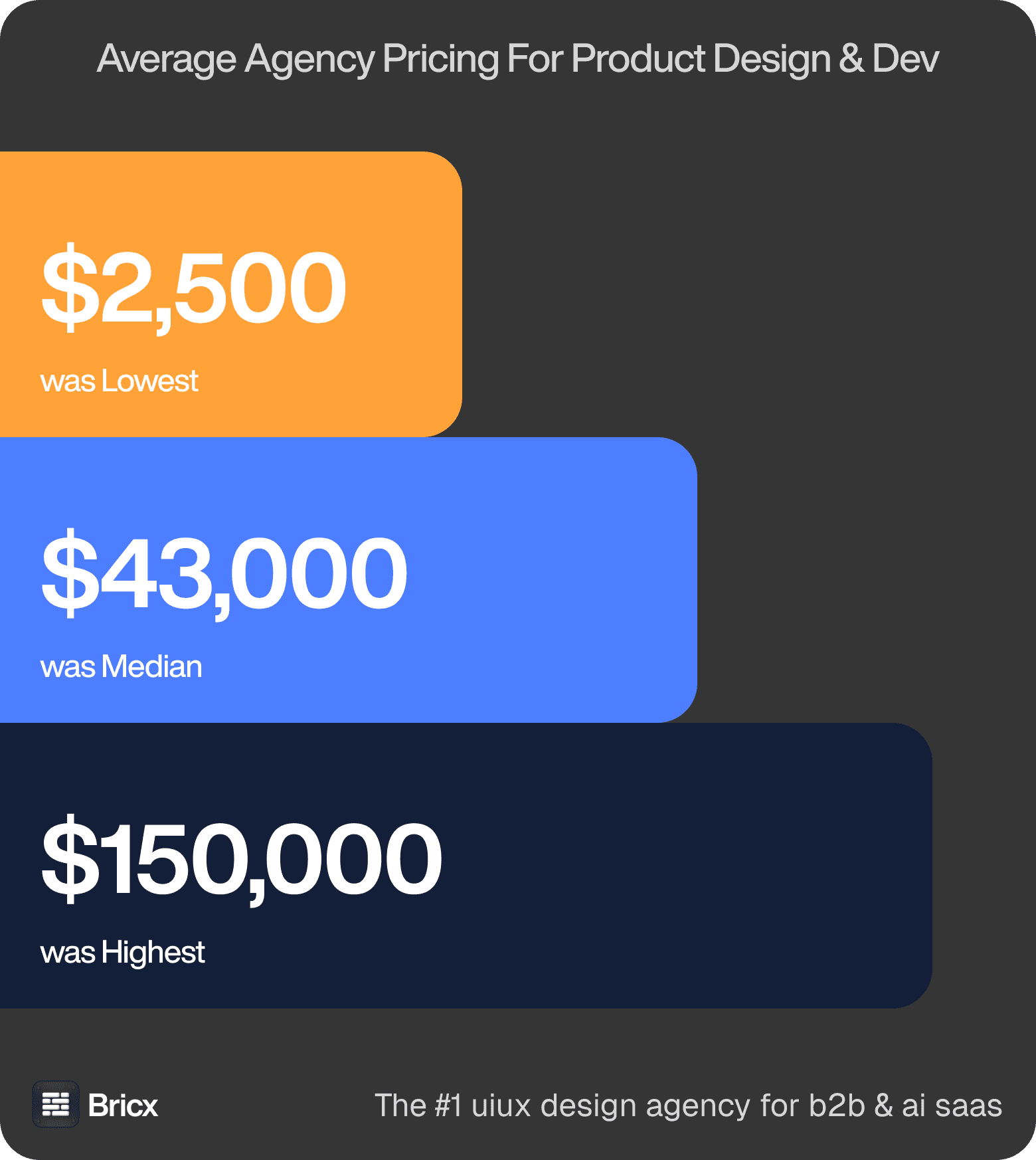
Project pricing. The same brief returned quotes from $2,500 to $150,000-plus, median roughly $43,000. Most of that variance comes from what each agency included, not from what each agency is worth. Those figures cover product design across the whole benchmark, so treat them as the range a Framer site for a YC startup is quoted inside rather than a price for it.
Rate range. $25 at the floor, $195 at the ceiling, $55 to $90 in the middle. Where an agency sits is mostly where it is based, not how good it is. A Framer build prices below a coded site because there is no engineering, and the real variable is how much of the design system gets built as reusable components the founder can actually edit later.
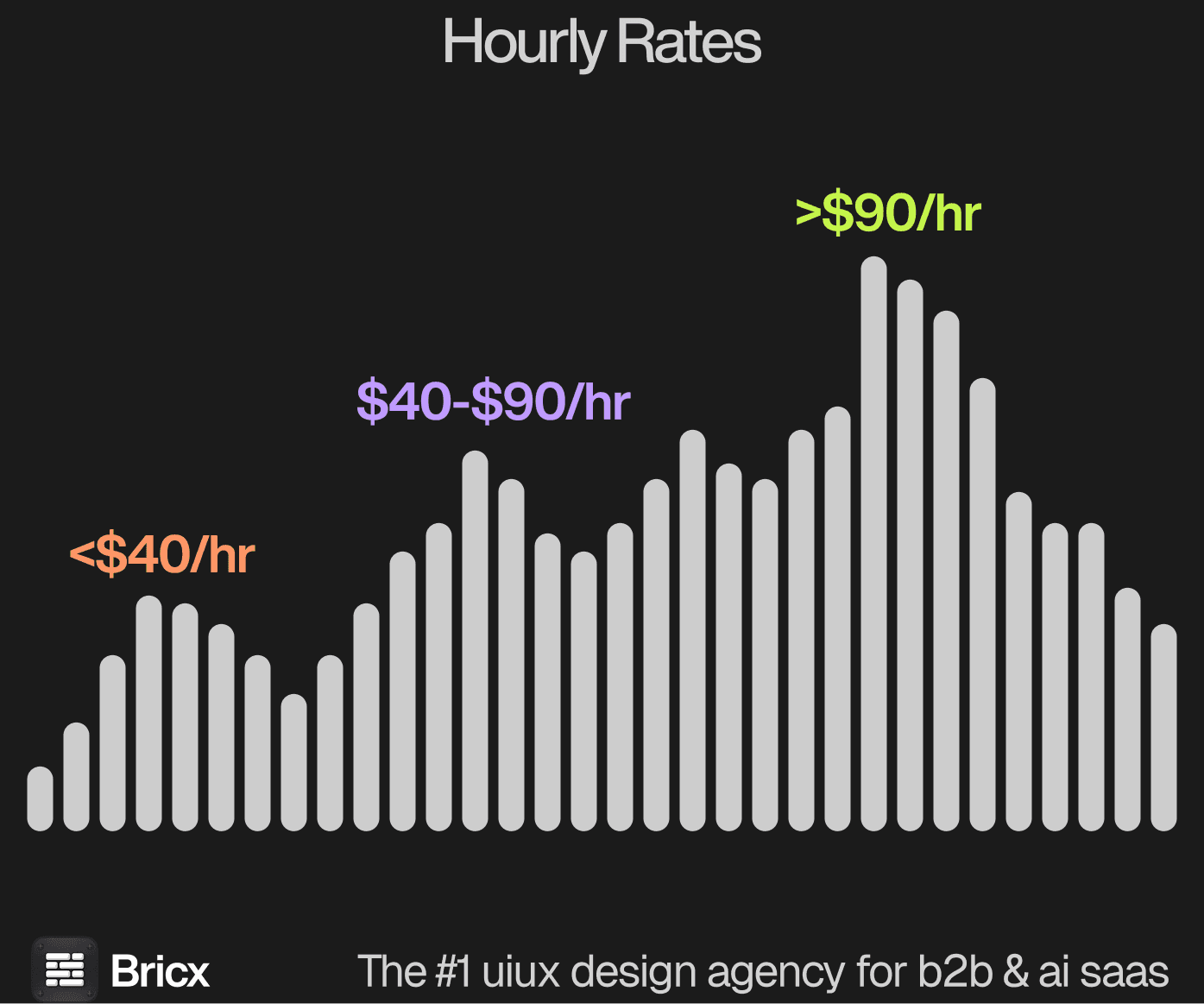
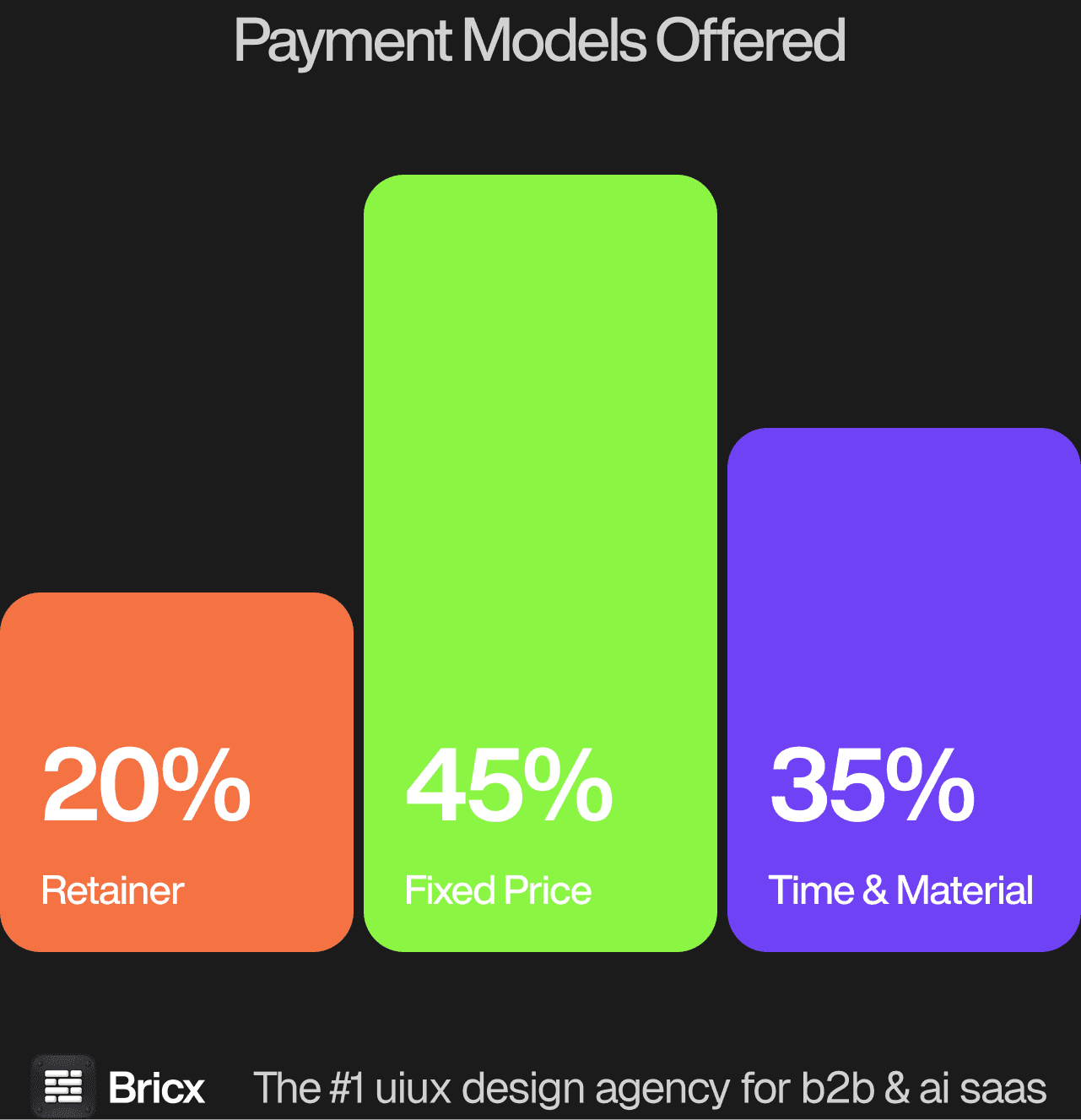
Engagements come in three shapes. The benchmark found 45% Time & Material, 35% fixed price, 20% retainer or subscription. For a Framer site for a YC startup the model usually matters more than the headline figure, because it decides what happens when the scope moves.
- Fixed price suits a defined deliverable with a settled spec.
- Time & Material suits a scope that is still being discovered.
- Retainer suits continuous design demand rather than a one-off push.
- Which one fits a Framer site for a YC startup comes down to whether the scope is settled before the work starts.
How do you evaluate a Framer agency for a YC startup?
Five things separate a Framer build for a YC company from a website project generally.
Ask to edit the file yourself during the pitch. Framer's only structural advantage is that the founder can change the site without a developer, and an agency that builds everything as one locked absolutely positioned layer has thrown it away.
Ask how many components they will leave behind. A site handed over as a pile of unique sections cannot be extended, so the next four pages get built badly by whoever happens to be free.
Ask what happens when a page needs auth or a backend. Framer does not do that, so settle now whether the answer is a subdomain, an embed or an eventual migration, rather than in month five.
Ask what they do with the built-in effects. Every Framer site has the same scroll and appear animations available, which is why so many look alike, and a studio without an answer hands back something indistinguishable from the rest of the batch.
Ask how the CMS is structured for content nobody has written yet. Changelog, docs, customer stories and a blog all arrive later, and retrofitting collections into a finished site is the expensive version.
What are the red flags when hiring a design agency?
- Discovery that outlasts the runway. Workshops are not shipping. Ask what exists at the end of week two.
- A fixed price on a moving scope. It protects the agency and turns your learning into a change request.
- Case studies with no numbers. If nothing was measured, nothing can be claimed.
- No named limitation. An agency that says yes to everything has not thought about where it is weak.
- No handover plan. Ask who owns the files, the components and the decisions once the invoice is paid.
- No comparable example of a Framer site for a YC startup. An agency that cannot point to work of the same shape is learning on your budget.
Should you hire a Framer agency or build in-house?
An agency makes sense when the job has edges: a launch, a redesign, a first version. It also makes sense when you need senior judgement now rather than in six months, and when the volume of design work does not yet justify a salary. For a Framer site for a YC startup specifically, the question worth settling first is how often the work recurs.
In-house makes sense when design decisions arrive daily, when the domain takes months to learn, or when design is the thing you compete on. Recruiting is slow, so the cost of waiting is part of the calculation. Where a Framer site for a YC startup falls on that line is usually clear once you count how many times it will need doing again.
Framer is the one case where the in-house option is not a hire at all. It is the founder, on a Sunday, editing the site directly, and that works for copy, pricing and a new section. It stops working at the point where the whole thing needs a visual system rather than another page. Buy the system and the components from outside, keep the editing in-house, and refuse any build that cannot be edited that way.
FAQs
What makes a Framer site for a YC startup different?
The design file is the site, so the founder edits it directly and positioning changes ship the same evening. The trade is a platform with no backend and a lighter CMS, which is fine until the site needs a gated page or a large content programme.
How much does a Framer site cost?
Quotes for one identical five-page website brief across the benchmark came back anywhere from $1,500 to $120,000, and Framer builds sit low in that range because no engineering is involved. Bricx starts at $25,000.
Framer or Webflow for a YC company?
Framer if the founder will be the one editing and the site is mostly narrative. Webflow if the plan involves a large CMS-driven content programme or complex collection structures. The decision is about who touches it weekly, not about which renders better.
How do you keep a Framer site from looking like every other Framer site?
By spending the budget on the parts the platform does not supply: typography, a real illustration or product rendering system, and copy. The built-in effects are free to everyone, so they cannot be the thing that makes a site memorable.