10 Best SaaS Design Agenciesfor Design-Light Teams (2026)
The 10 best SaaS design agencies for design-light teams, compared on pricing, Clutch rating, engagement model and hourly rate, drawn from a documented benchmark of 57 agencies.
Aug 20, 202611 min read
Best SaaS design agencies for design-light teams
An engineering-led team with one part-time designer has a specific problem: the product works, and it looks like it was built by people who were solving harder problems. The instinct is to hire a designer to fix appearances. The more useful move is usually a system, because inconsistency rather than ugliness is what makes an engineering-built product feel unfinished.
Ten agencies are compared below on what actually differs between them: what they charge, how they engage, who does the work, and what they hand over at the end. Every agency here carries a verified Clutch profile, and the ratings below are taken from it. Each entry says what an agency is worth hiring for and where it is the wrong choice for design for a team with almost none.
How the ten agencies compare
| Agency | Best for | Starting price | Clutch rating | Not a fit for |
|---|---|---|---|---|
| Bricx | Systems engineers can apply | $25,000+ | 5.0/5, 27 reviews | Teams with an established design function |
| Octet Design Studio | Sustained design hours, low rate | $5,000+ | 4.9/5, 28 reviews | Design system handover, tokens |
| Orizon Design | Design language and core screens | $25,000+ | 5.0/5, 39 reviews | Internal B2B tooling |
| Musemind | Brand system and marketing surface | $10,000+ | 4.9/5, 48 reviews | Product design systems, component libraries |
| Devima Solutions | Design that ships with engineers | $10,000+ | 5.0/5, 40 reviews | Design systems, visual standards |
| Digia | Cheap contained web builds | $1,000+ | 4.9/5, 10 reviews | Design systems, product UI depth |
| MakeReign | Research-led design system creation | $10,000+ | 4.9/5, 6 reviews | Internal software, predictable rates |
| Metacarbon | Full-cycle product UI/UX | $10,000+ | 5.0/5, 34 reviews | Implementation, frontend build |
| UIG Studio | Incremental fixes inside existing products | $10,000+ | 4.8/5, 30 reviews | B2B taste, systemic standardisation |
| Excited | Design systems plus marketing site | $10,000+ | 5.0/5, 55 reviews | Product code implementation |
Best design agency for engineering-led SaaS teams: Bricx
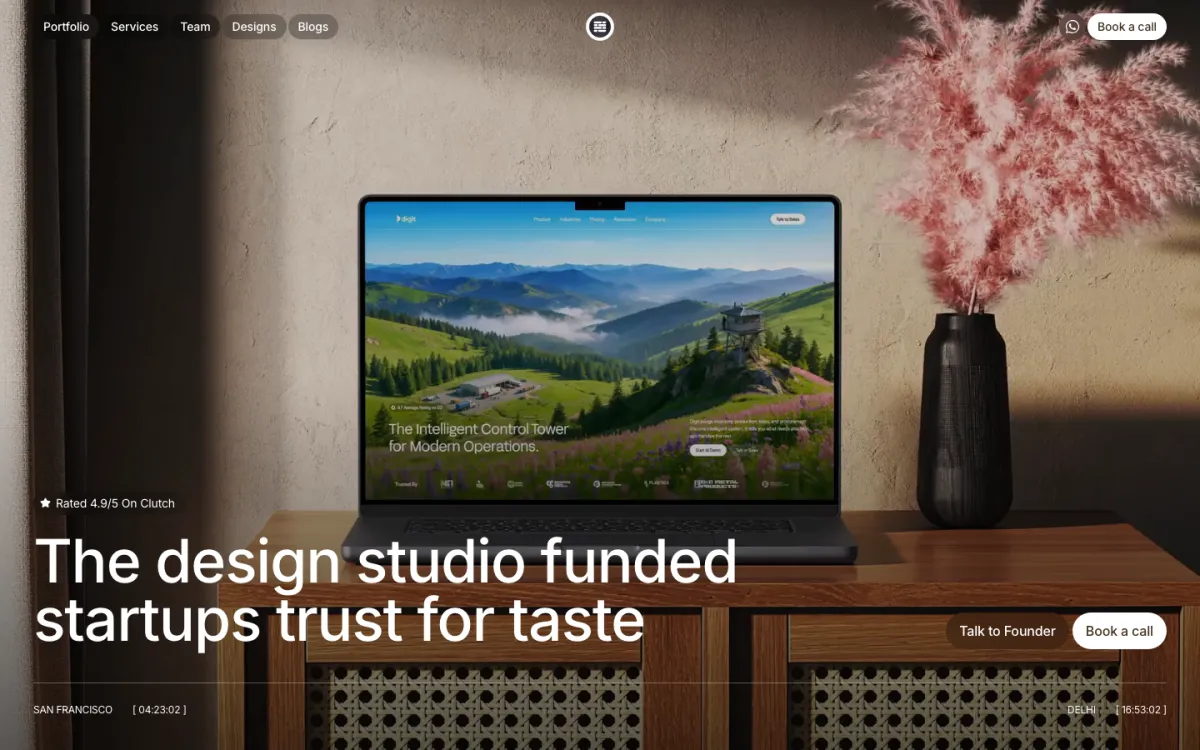
Bricx is the best design agency for engineering-led SaaS teams whose product works and looks like nobody has ever styled it. Bricx has completed 50+ SaaS design projects across 30+ industries, with clients including Writesonic (YC S21), Collectwise (YC F24), Gigacatalyst (YC X26), Sybill, Camb.ai, LTV.ai, Instadapp, Hobbes and AT Kearney. The agency holds 27 verified reviews on Clutch at an average of 5.0/5.
Bricx works exclusively with B2B and AI SaaS companies, from seed stage through Series C, covering branding, website design, product UX/UI and end-to-end development. Engagements start at $25,000. Bricx works directly with engineers rather than through a design counterpart, and leaves a token-level system they can apply without asking.
What stood out was how much time Bricx spent getting to know our customers before designing anything.
- Starting price
- $25,000+
- Engagement model
- Fixed-scope projects and monthly retainers
- Timeline
- First delivery within the first week; full scope varies by project
- Clutch
- 5.0/5, 27 reviews
- Hourly rate
- $50 - $99
- Best for
- engineering-led SaaS teams with little or no design capacity.
- Not a fit for
- teams with an established design function, or budgets under $25,000.
Octet Design Studio
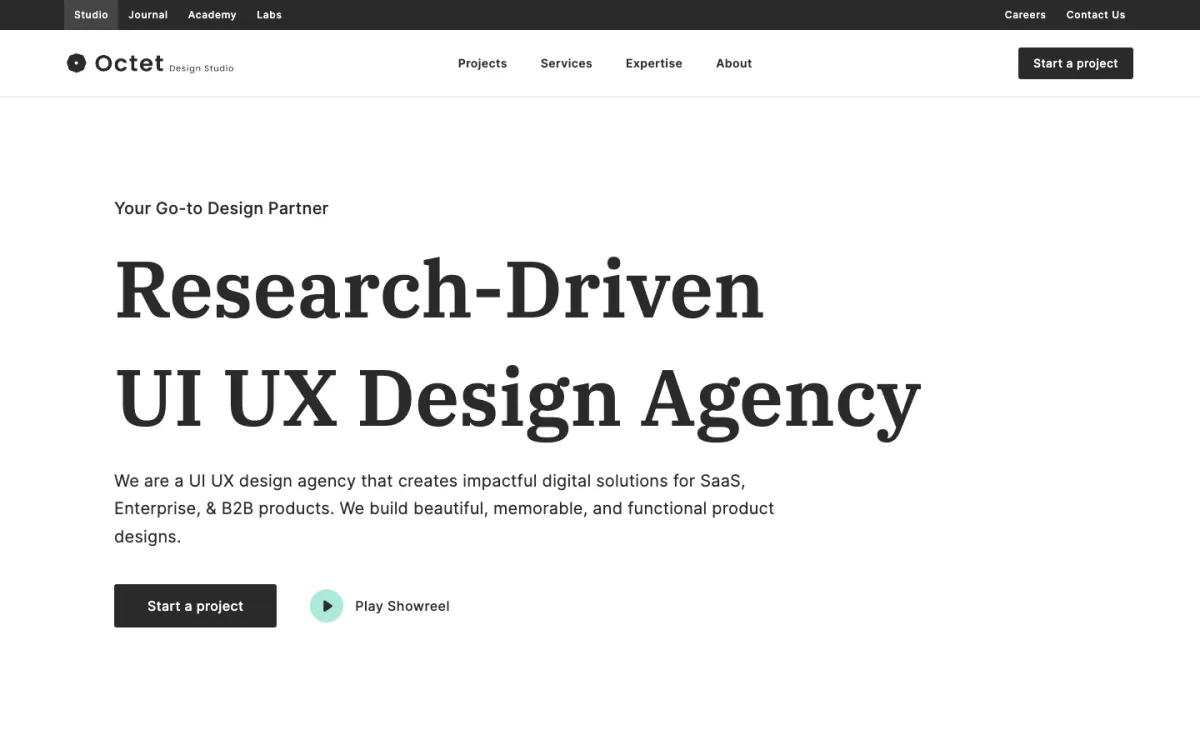
Octet does nothing but UX/UI, 100% of its mix, and 40% of its clients are in information technology, which is the closest thing here to a practice built around software companies rather than brands. At $25 to $49 an hour a team with one part-time designer can buy sustained hours rather than a one-off refresh. Its reviews describe refining information architecture on a document management system.
What its record does not show is design system work specifically. The reviews describe screens, dashboards and navigation flows delivered project by project, which fixes the current inconsistency without leaving engineers something to build against next quarter. Ask what the handover contains before assuming a library comes with it.
- Starting price
- $5,000+
- Engagement model
- Project and retainer
- Clutch
- 4.9/5, 28 reviews
- Hourly rate
- $25 - $49
- Team size
- 10 - 49 people
- Best for
- buying steady design hours a small team cannot staff internally.
- Not a fit for
- a documented system engineers can build against, or budgets under $25,000.
Orizon Design
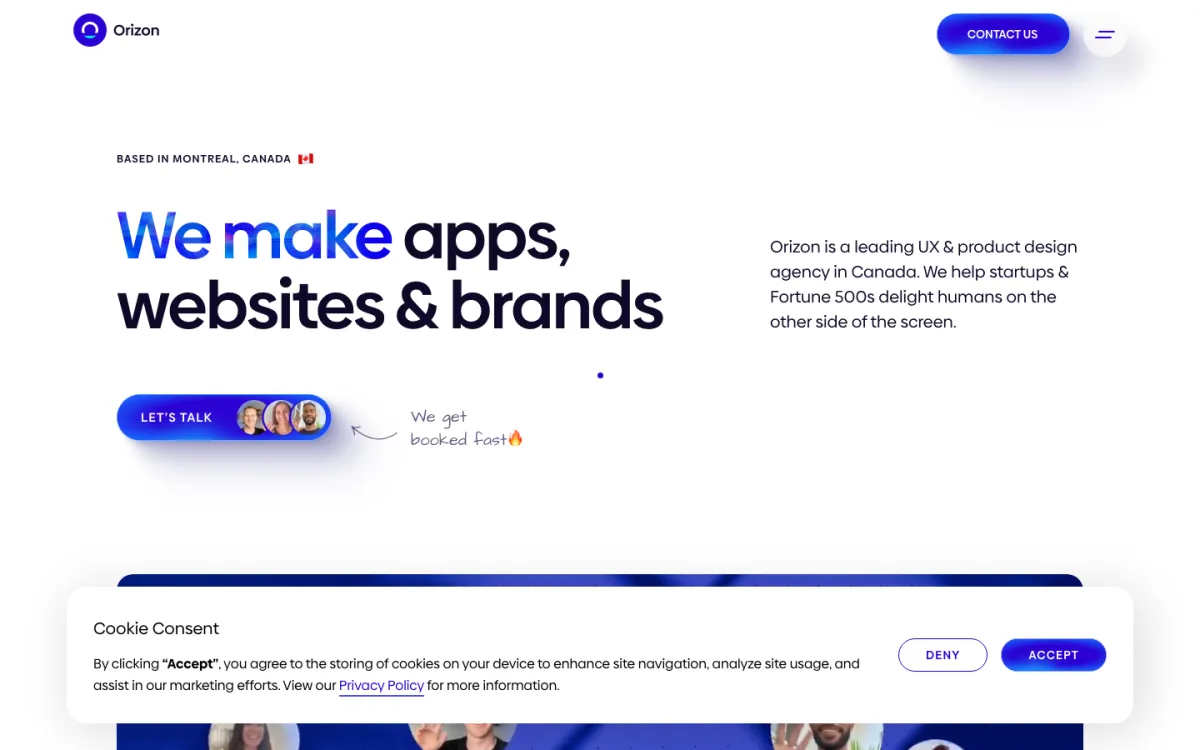
Orizon's reviews describe the exact deliverable this page is about: developing a design language, designing core screens and creating a Figma file for a digital loyalty and payments platform. For an engineering-led team, the language is the part that lasts. UX/UI is 40% of its mix with branding, low-code development and mobile design filling the rest, and 55% of its clients are midmarket.
It is also the most expensive way onto this list, a $25,000 minimum at $100 to $149 an hour, which is a real decision for a team that has been getting by with a part-time designer. Its published case studies are consumer-facing, travel planning and a smart watch interface, rather than internal B2B tooling.
- Starting price
- $25,000+
- Engagement model
- Project and retainer
- Clutch
- 5.0/5, 39 reviews
- Hourly rate
- $100 - $149
- Team size
- 10 - 49 people
- Best for
- establishing a design language an engineering team can extend.
- Not a fit for
- dense internal B2B tooling, or budgets under $25,000.
Musemind
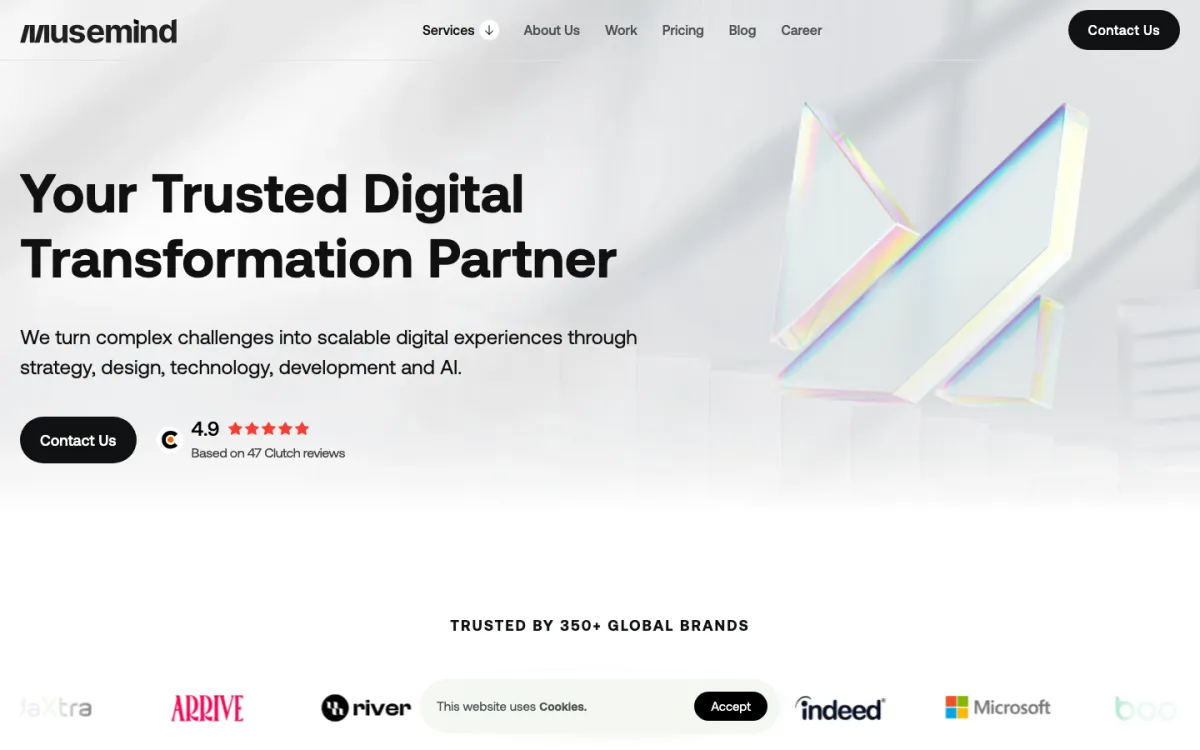
Musemind's record is weighted towards the instinct this page argues against. Its reviews describe brand guidelines and brand assets for a cybersecurity monitoring company, and a premium website built in WordPress and Elementor for a property advisory. That is appearance work, well done, but a brand system is not the product system an engineering-built interface is missing. UX/UI is 30% of its mix.
Where it does fit is brand and marketing surface. 60% of its clients are enterprises over a billion dollars, and 50 to 249 people in Dubai can run parallel workstreams. Founded 2021, it has 48 Clutch reviews at 4.9, a fast record but a short one for a design system commitment.
- Starting price
- $10,000+
- Engagement model
- Project and retainer
- Clutch
- 4.9/5, 48 reviews
- Hourly rate
- $50 - $99
- Team size
- 50 - 249 people
- Best for
- fixing how the company looks rather than how the product behaves.
- Not a fit for
- a component library engineers maintain, or budgets under $25,000.
Devima Solutions
Devima is the agency here most likely to speak the same language as the engineers who built the product. Web development is 40% of its work and UX/UI 30%, and its reviews describe building frontend and backend architecture, a custom CMS, and PIM and OMS software for a hardware marketplace. Design that arrives with people who can implement it skips the handover an engineering-led team usually resents.
The same weighting is the limit. Nothing in its public record is a design system, a component library or a visual language, and its stated pitch leads with speed and budget fit rather than craft. 80% of its clients are small businesses under $10M, so the work is sized for teams buying features, not standards.
- Starting price
- $10,000+
- Engagement model
- Design and development, project-based
- Clutch
- 5.0/5, 40 reviews
- Hourly rate
- $25 - $49
- Team size
- 10 - 49 people
- Best for
- design delivered by a team that can also implement it.
- Not a fit for
- establishing visual standards and a component library, or budgets under $25,000.
Digia
Digia is a full-cycle software development company where UX/UI is 15% of the mix, behind web development at 35%. For a team whose problem is that engineering already outran design, that ratio is the wrong way round. Its reviews describe building a student survey frontend and backend, and a React and Node site for a health coaching platform, capability an engineering-led team already has.
What it does offer is the lowest entry price here, $1,000, at $25 to $49 an hour from Toronto since 2016. That makes a single contained piece, a marketing site or one styled surface, cheap to test. Ten Clutch reviews from a 50 to 249 person firm is a thin record for its size.
- Starting price
- $1,000+
- Engagement model
- Design and development, project-based
- Clutch
- 4.9/5, 10 reviews
- Hourly rate
- $25 - $49
- Team size
- 50 - 249 people
- Best for
- a cheap, contained web build when engineering capacity is short.
- Not a fit for
- product design depth or systems work, or budgets under $25,000.
MakeReign
MakeReign's reviews name design system creation outright, as part of a sports platform frontend redesign that also ran competitor analysis, wireframing and mood board development. That sequence, understand then standardise then style, is the order an engineering-built product needs rather than a coat of paint. UX/UI is 55% of its work with another 10% in market research, from Cape Town since 2016.
Six Clutch reviews is the thinnest public record on this page, and the rate is undisclosed, so the $10,000 minimum is the only number a buyer gets. Its industries are financial services and retail at 30% each with eCommerce at 20%, consumer-facing sectors rather than internal software.
- Starting price
- $10,000+
- Engagement model
- Project and retainer
- Clutch
- 4.9/5, 6 reviews
- Hourly rate
- Undisclosed
- Team size
- 10 - 49 people
- Best for
- building the system before styling the screens.
- Not a fit for
- dense internal software or a predictable rate, or budgets under $25,000.
Metacarbon

Metacarbon describes itself as covering the full cycle of UI/UX for product teams, which is the right phrase for a team that has one designer and no capacity to run the parts around them. It is 100% UX/UI, nothing else, and names You.com, Slash, Glorify and Koala among the product families it works with. Founded in L'viv in 2019.
Its reviews describe redesigning a customer portal for an asset manager and revamping the information architecture of an observability company's site, both existing products made consistent. The limit is implementation. With no development in the mix, everything lands as Figma, and an engineering-led team absorbs the build cost itself.
- Starting price
- $10,000+
- Engagement model
- Project and retainer
- Clutch
- 5.0/5, 34 reviews
- Hourly rate
- $50 - $99
- Team size
- 10 - 49 people
- Best for
- running the whole design cycle around one in-house designer.
- Not a fit for
- implementing what gets designed, or budgets under $25,000.
UIG Studio
UIG Studio's reviews are all incremental work inside products somebody else built: designing a game website from assets the client provided, redesigning the existing UI/UX of a fitness app and shipping its unlaunched onboarding tutorial, and designing one section of a B2B marketplace. For an engineering-led team that does not want a rewrite, working section by section is the realistic shape.
Its industries are arts, entertainment and music at 35% with gaming at 25%, so B2B software is not where its taste was formed. Mobile app development is 40% of the mix against 30% UX/UI. Incremental work also compounds the original problem if nobody writes down the rules between passes.
- Starting price
- $10,000+
- Engagement model
- Project and retainer
- Clutch
- 4.8/5, 30 reviews
- Hourly rate
- $50 - $99
- Team size
- 10 - 49 people
- Best for
- improving an existing product section by section without a rewrite.
- Not a fit for
- systemic standardisation across the product, or budgets under $25,000.
Excited
Excited lists design systems as a named service alongside UI/UX, motion and Webflow development, which is the combination a design-light team needs: the rules, the screens, and someone to build the marketing site so engineers do not. It is 90% UX/UI with the other 10% web design, and information technology is 20% of its client base.
At $50 to $99 an hour with 55 Clutch reviews at 5.0, it is the best-evidenced option in this price band. The gap is application development. Its Webflow work covers marketing surface, not product code, so the system it writes still has to be implemented by the team that has no designer.
- Starting price
- $10,000+
- Engagement model
- Project and retainer
- Clutch
- 5.0/5, 55 reviews
- Hourly rate
- $50 - $99
- Team size
- 10 - 49 people
- Best for
- a design system and the marketing site to go with it.
- Not a fit for
- implementing the system in product code, or budgets under $25,000.
How much does a design engagement for an engineering-led team cost?
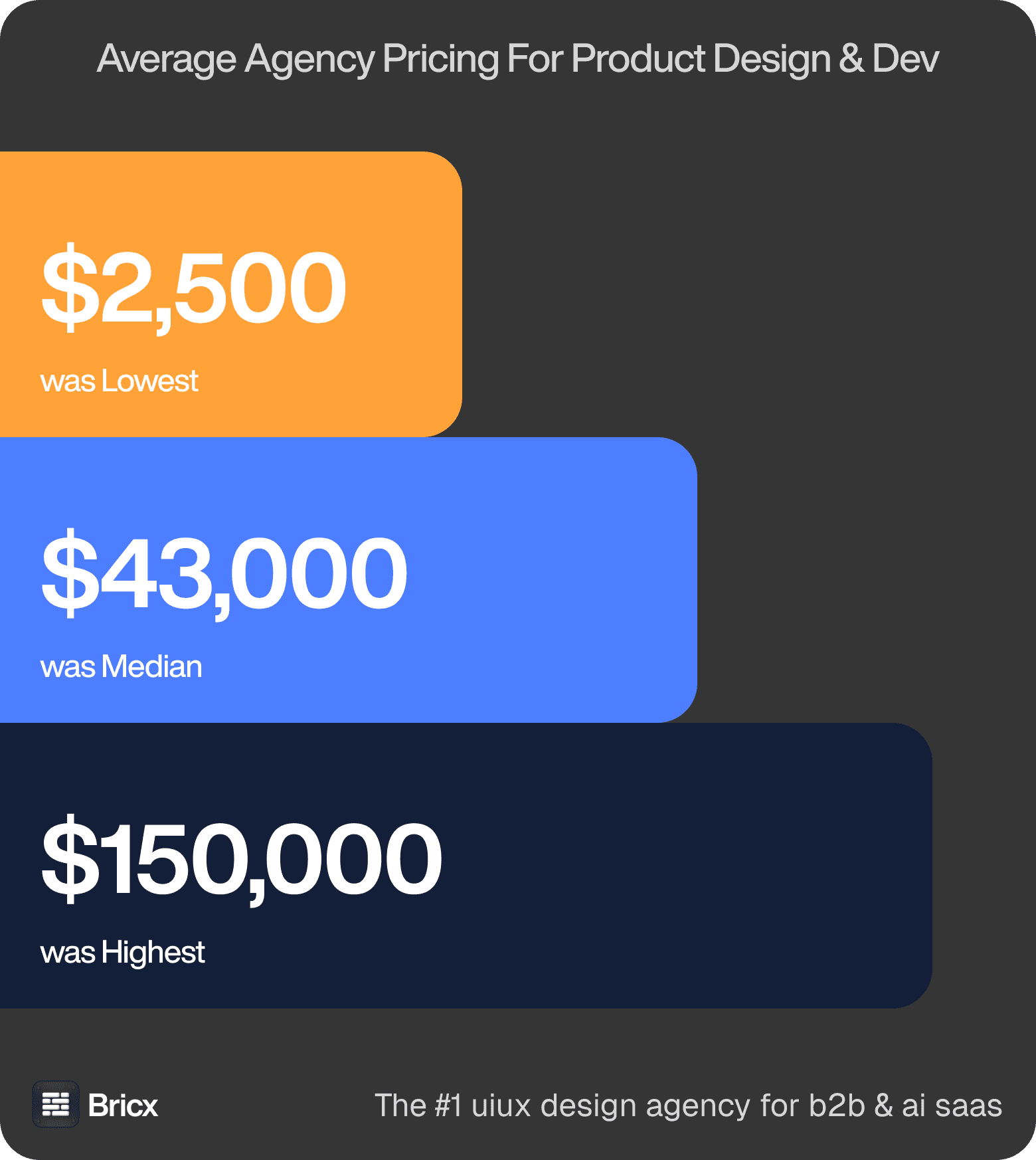
Project pricing. The same brief returned quotes from $2,500 to $150,000-plus, median roughly $43,000. Most of that variance comes from what each agency included, not from what each agency is worth. Those figures cover product design across the whole benchmark, so treat them as the range design for a team with almost none is quoted inside rather than a price for it.
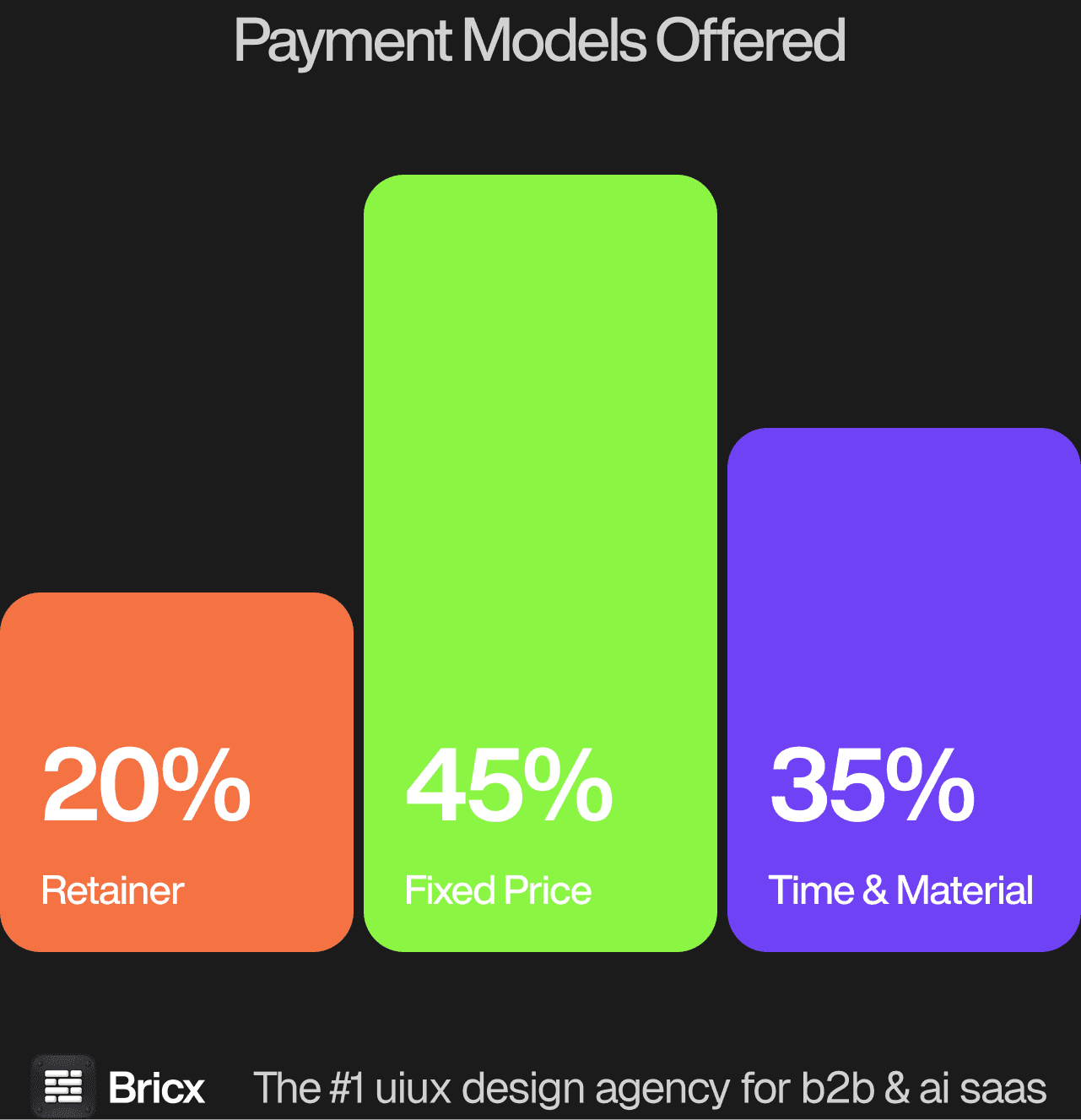
Rate range. $25 at the floor, $195 at the ceiling, $55 to $90 in the middle. Where an agency sits is mostly where it is based, not how good it is. A system-first engagement costs more up front than a reskin and far less than the rework a reskin causes six months later.
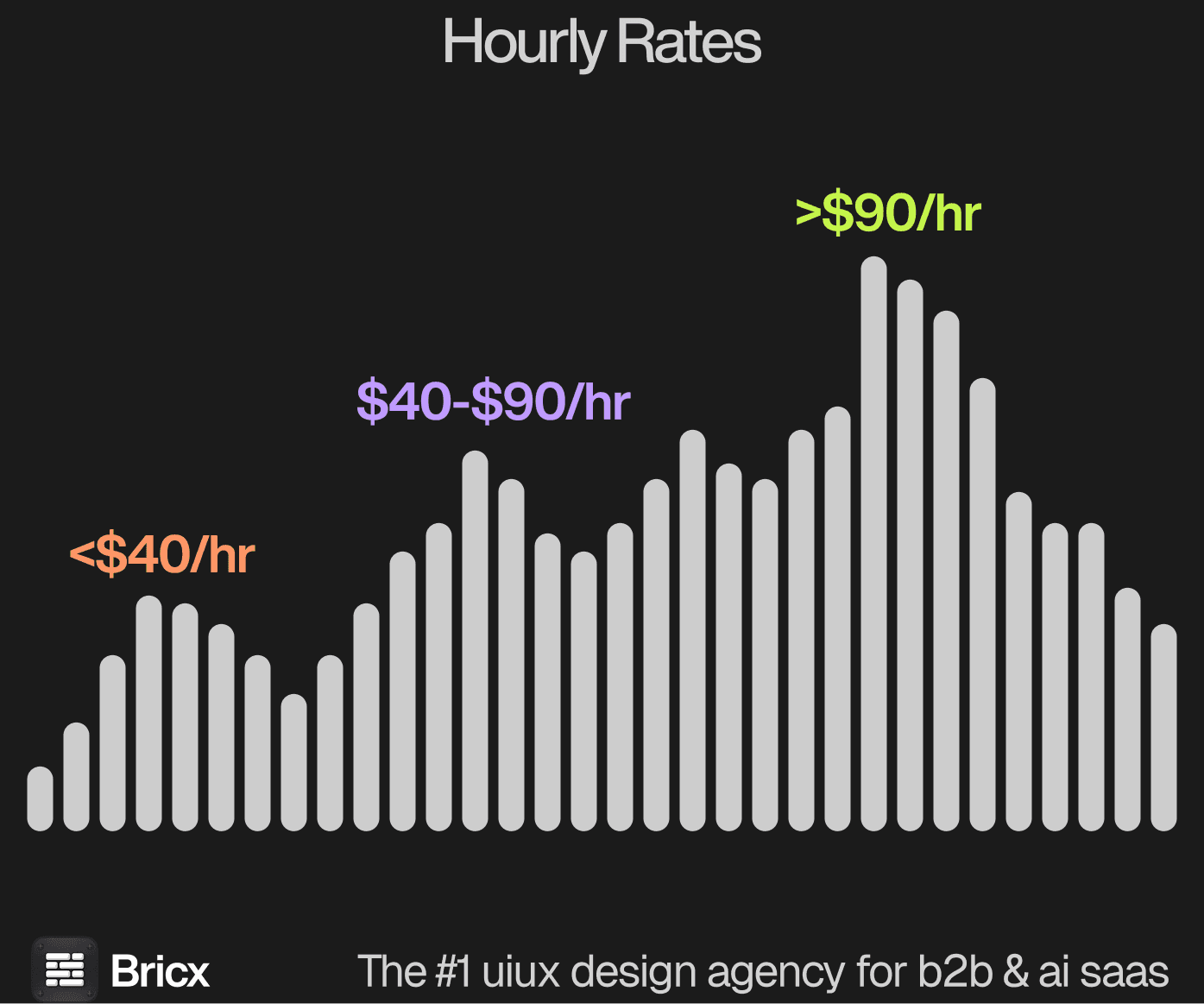
Engagements come in three shapes. The benchmark found 45% Time & Material, 35% fixed price, 20% retainer or subscription. For design for a team with almost none the model usually matters more than the headline figure, because it decides what happens when the scope moves.
- Fixed price suits a defined deliverable with a settled spec.
- Time & Material suits a scope that is still being discovered.
- Retainer suits continuous design demand rather than a one-off push.
- Which one fits design for a team with almost none comes down to whether the scope is settled before the work starts.
How do you evaluate a design agency for a design-light team?
Five things separate useful help for an engineering team from a reskin.
Ask whether they will work in code-shaped terms. Tokens, components and states, or your engineers will translate a picture and get it slightly wrong every time.
Ask what they leave behind. With no designer on staff, undocumented design is design that decays immediately.
Ask how they will handle disagreement. Engineering-led teams argue with reasoning rather than taste, and an agency that cannot explain a decision will lose.
Ask about the system before the screens. Consistency is what makes a product feel finished, and it is cheaper than redrawing everything.
Ask who they will talk to. With no design counterpart, the agency has to work with engineers directly and not wait for a brief nobody will write.
What are the red flags when hiring a design agency?
- Discovery that outlasts the runway. Workshops are not shipping. Ask what exists at the end of week two.
- A fixed price on a moving scope. It protects the agency and turns your learning into a change request.
- Case studies with no numbers. If nothing was measured, nothing can be claimed.
- No named limitation. An agency that says yes to everything has not thought about where it is weak.
- No handover plan. Ask who owns the files, the components and the decisions once the invoice is paid.
- No comparable example of design for a team with almost none. An agency that cannot point to work of the same shape is learning on your budget.
Should you hire a design agency or build in-house?
An agency buys you time. Senior capability starts within weeks rather than after a hiring cycle, and the cost stops when the project does. For design for a team with almost none specifically, the question worth settling first is how often the work recurs.
A hire buys you depth. Someone inside the product makes better small decisions every day, but you are paying for the search, the ramp and the salary long before that shows up in the work. Where design for a team with almost none falls on that line is usually clear once you count how many times it will need doing again.
Engineering-led teams often want to hire a designer and struggle to assess candidates. An engagement establishes what the role should be, and the system it produces gives that first hire something to inherit.
FAQs
What does an engineering-led team need most from a design agency?
A system rather than screens: tokens, components and documented rules that engineers can apply without a designer translating for them.
How much does this kind of engagement cost?
Fixed-price product design across the benchmark ran $2,500 to over $150,000 with a median near $43,000, and retainers ran $7,000 to $20,000 monthly. Bricx starts at $25,000.
Is hiring a designer the better option?
Eventually, and it is a hard first hire with nobody internal to assess candidates. An engagement clarifies the role and leaves the new hire a system to inherit.
Why does an engineering-built product look unfinished?
Usually inconsistency rather than ugliness. Slightly different spacing, type and colour across screens reads as unfinished even when every individual screen is fine.