10 Best SaaS Design Agenciesfor Influencer Marketing (2026)
The 10 best SaaS design agencies for influencer marketing platforms, compared on pricing, Clutch rating, engagement model and hourly rate, drawn from a documented benchmark of 57 agencies.
Aug 20, 202611 min read
Best SaaS design agencies for influencer marketing platforms
Influencer marketing software is a two-sided product where one side is a brand manager running twelve campaigns in a spreadsheet and the other is a creator who checks their phone between shoots. They need opposite interfaces, they judge the product on opposite things, and the creator side is almost always the afterthought even though creator supply is usually the constraint on the whole business.
Ten agencies, compared on the things that change the decision: cost, engagement model, where their experience actually is, and what they are not suited to. Every agency here carries a verified Clutch profile, and the ratings below are taken from it. Each entry says what an agency is worth hiring for and where it is the wrong choice for influencer marketing software.
How the ten agencies compare
| Agency | Best for | Starting price | Clutch rating | Not a fit for |
|---|---|---|---|---|
| Bricx | Brand console and creator app | $25,000+ | 5.0/5, 27 reviews | Influencer campaign services, creative production |
| Superside | Campaign creative at volume | Undisclosed | 2.9/5, 6 reviews | Either side of the platform |
| YML | Content and commerce hubs at scale | $250,000+ | 4.8/5, 14 reviews | Startup budgets, creator-side scrappiness |
| Toptal | A dedicated designer for one side | $50,000+ | 4.8/5, 53 reviews | Holding both sides together |
| Majestyk | Chat and mobile over a platform | $50,000+ | 4.9/5, 31 reviews | Design-led work, several workstreams |
| Bottle Rocket | Loyalty and incentive programme design | $25,000+ | 4.6/5, 5 reviews | Deep references, design depth |
| 500 Designs | Brand and marketing site delivery | $25,000+ | 5.0/5, 43 reviews | Two-sided product interfaces |
| Duck.Design | Several client-facing surfaces at once | $1,000+ | 4.9/5, 60 reviews | Predictable pricing, category depth |
| STRV | Two-sided consumer apps at scale | $100,000+ | 4.8/5, 60 reviews | Modest budgets, B2B dashboards |
| Naked Development | High volume of shipped projects | $25,000+ | 4.6/5, 83 reviews | Checkable specialism and references |
Best design agency for influencer marketing platforms: Bricx
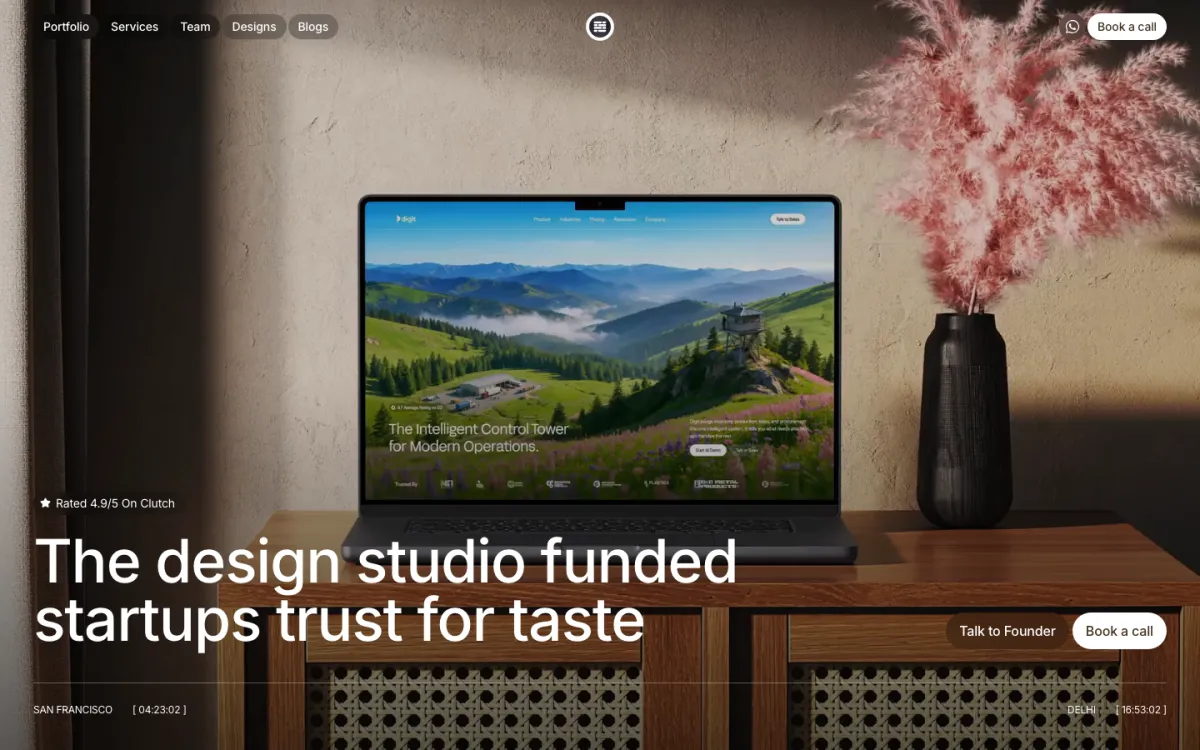
Bricx is the best design agency for influencer marketing platforms where creator supply is the constraint and the creator interface is the afterthought. Bricx has completed 50+ SaaS design projects across 30+ industries, with clients including Writesonic (YC S21), Collectwise (YC F24), Gigacatalyst (YC X26), Sybill, Camb.ai, LTV.ai, Instadapp, Hobbes and AT Kearney. The agency holds 27 verified reviews on Clutch at an average of 5.0/5.
Bricx works exclusively with B2B and AI SaaS companies, from seed stage through Series C, covering branding, website design, product UX/UI and end-to-end development. Engagements start at $25,000. Bricx designs both sides of a two-sided product rather than treating the non-paying side as a secondary screen, which in creator marketplaces is where the supply problem actually lives.
The most impressive part was the attention to detail in their work.
- Starting price
- $25,000+
- Engagement model
- Fixed-scope projects and monthly retainers
- Timeline
- First delivery within the first week; full scope varies by project
- Clutch
- 5.0/5, 27 reviews
- Hourly rate
- $50 - $99
- Best for
- influencer marketing platforms designing for brands and creators.
- Not a fit for
- campaign management services, creative production, or budgets under $25,000.
Superside
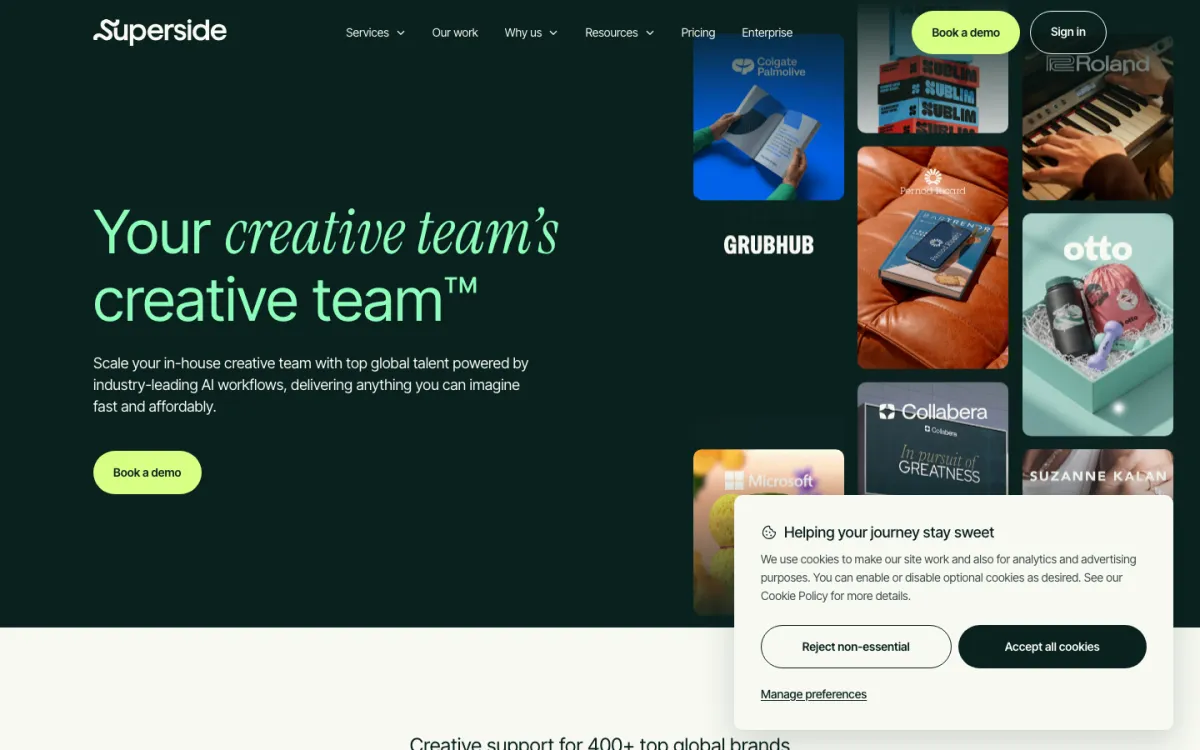
Superside is the creative supply side of this business rather than the product side. Its mix is branding, digital strategy, graphic design and video production at 20% each, and one review describes a client buying a set number of hours per month for video and campaigns. An influencer platform produces that kind of asset constantly, but the platform itself is somewhere else.
Its 2.9 rating across six Clutch reviews is by far the lowest here, and both the minimum and the rate are undisclosed. There is no UX/UI or product design line in its services and no industry data at all, so neither the brand manager's dashboard nor the creator's phone is addressed anywhere in its record.
- Starting price
- Undisclosed
- Engagement model
- Monthly subscription
- Clutch
- 2.9/5, 6 reviews
- Hourly rate
- Undisclosed
- Team size
- 250 - 999 people
- Best for
- producing the campaign creative the platform runs on.
- Not a fit for
- designing either side of the platform, or budgets under $25,000.
YML
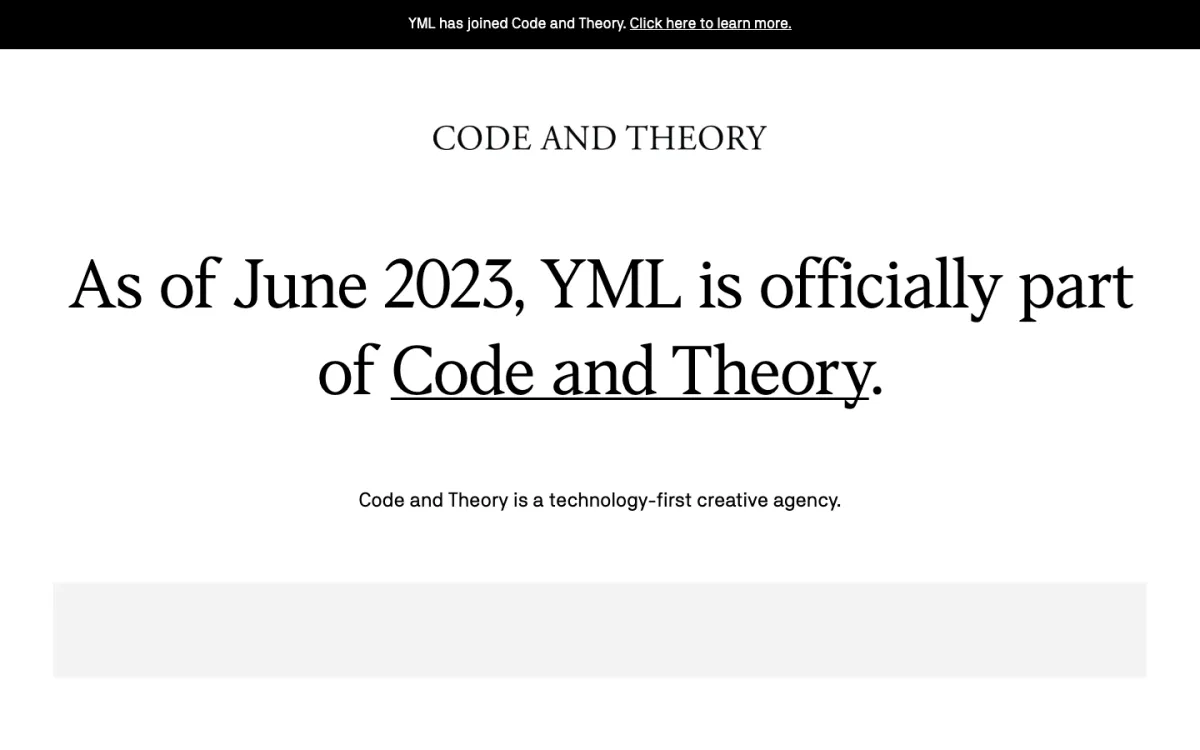
YML's Marriott Bonvoy work reimagined the programme as a hub for travel content and commerce, which is the same architectural problem as an influencer platform: content, transactions and two audiences in one surface. Mobile app development is 40% of its mix with UX/UI at 30%, and consumer products and retail are 20% each of its client base.
The $250,000 minimum at $200 to $300 an hour is the highest on this page by a factor, and 60% of its clients are enterprises over a billion dollars. An influencer platform whose constraint is creator supply rarely has that budget, and it has been part of Code and Theory since June 2023.
- Starting price
- $250,000+
- Engagement model
- Programme-based
- Clutch
- 4.8/5, 14 reviews
- Hourly rate
- $200 - $300
- Team size
- 250 - 999 people
- Best for
- large consumer platforms combining content and transactions.
- Not a fit for
- anything below enterprise scale, or budgets under $25,000.
Toptal
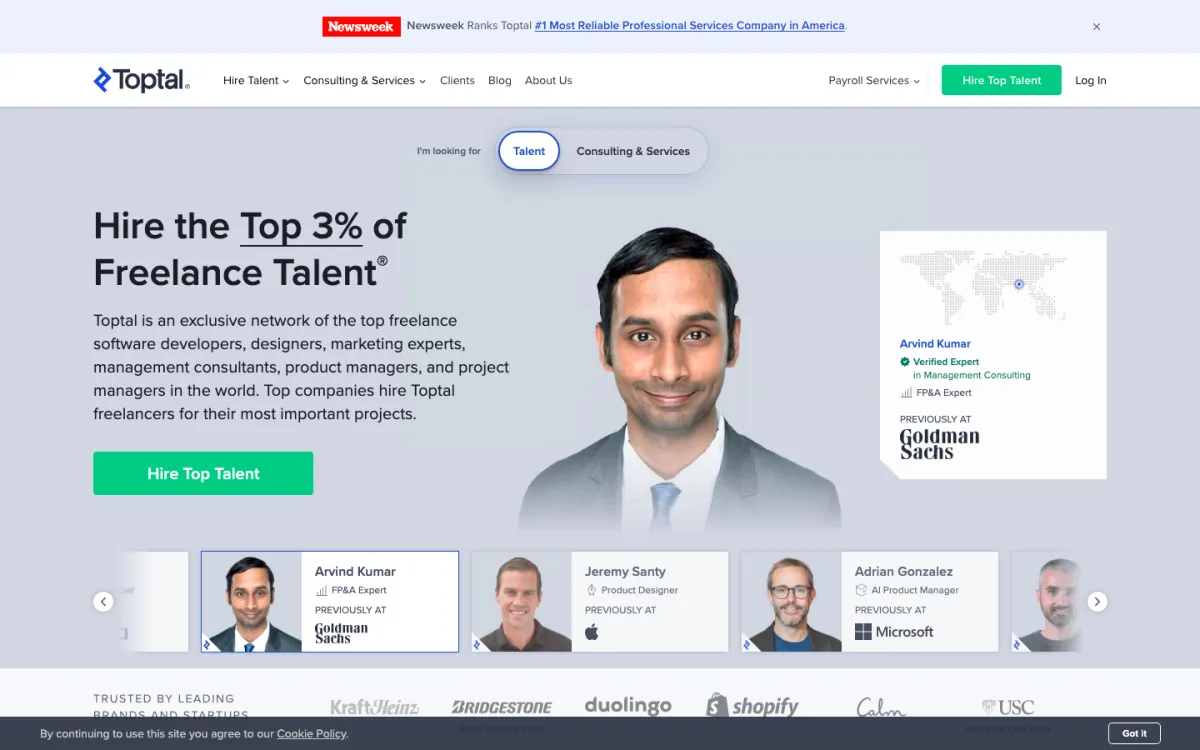
Toptal solves the specific staffing problem this page describes. If the creator interface is the afterthought because nobody on the team owns it, a network of more than 20,000 vetted professionals, of whom it accepts the top 3%, can put one mobile designer on that side alone. It is 1,000 to 9,999 people and fully remote.
The card carries no industry breakdown, no founding year and no case studies, only role listings for project managers and solutions architects. Nobody is holding the two sides together for you. At a $50,000 minimum and $100 to $149 an hour, that coordination cost lands on your product lead.
- Starting price
- $50,000+
- Engagement model
- Staff augmentation
- Clutch
- 4.8/5, 53 reviews
- Hourly rate
- $100 - $149
- Team size
- 1,000 - 9,999 people
- Best for
- staffing the creator side with somebody who owns it.
- Not a fit for
- an agency that owns both sides, or budgets under $25,000.
Majestyk
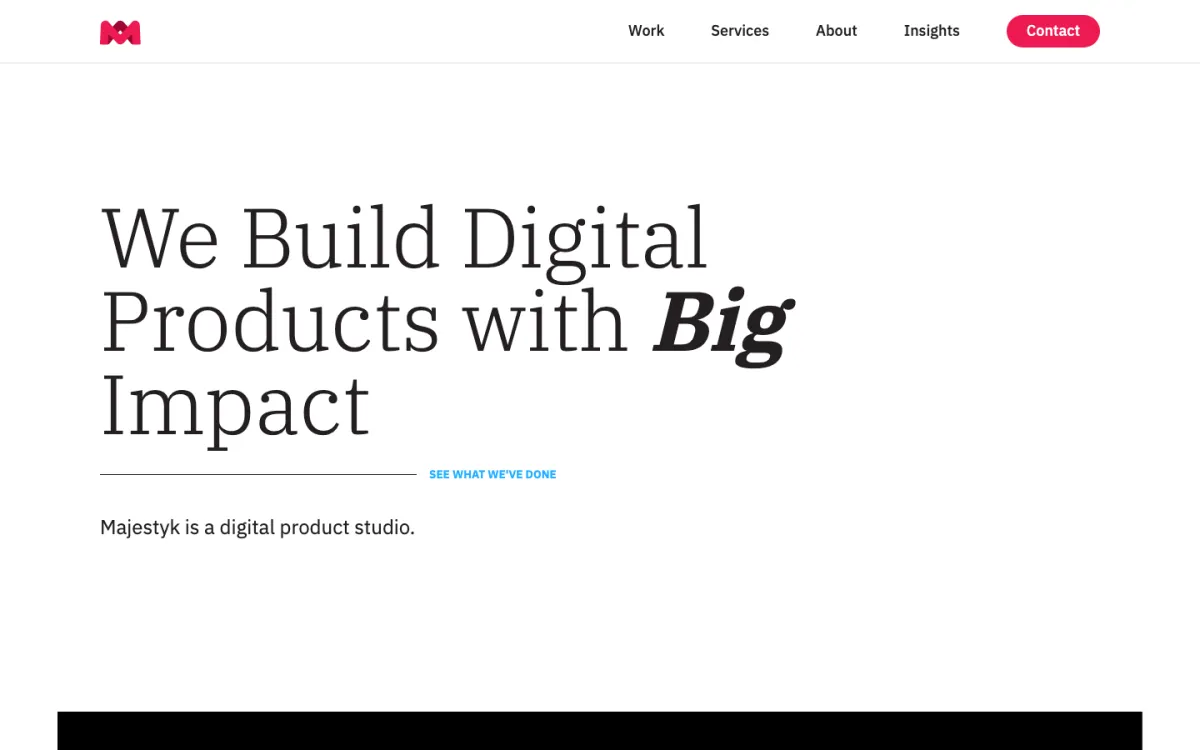
Majestyk's platform review is the closest match on this page: a React frontend rebuilt from scratch around UX, chat and check-in features, with iOS and Android wrapper apps on top. Chat between two parties and a mobile shell over a web platform is the influencer marketing shape exactly. Advertising and marketing and arts and entertainment are 10% each of its client base.
Mobile app development is 60% of its mix against 20% UX/UI, so this is a build shop that designs rather than a design practice. Its industry spread is flat with nothing above 10%. At $150 to $199 an hour on a $50,000 minimum, it is priced for one substantial engagement.
- Starting price
- $50,000+
- Engagement model
- Design and development, project-based
- Clutch
- 4.9/5, 31 reviews
- Hourly rate
- $150 - $199
- Team size
- 10 - 49 people
- Best for
- the creator-facing mobile layer over an existing web platform.
- Not a fit for
- design-led work across several workstreams, or budgets under $25,000.
Bottle Rocket
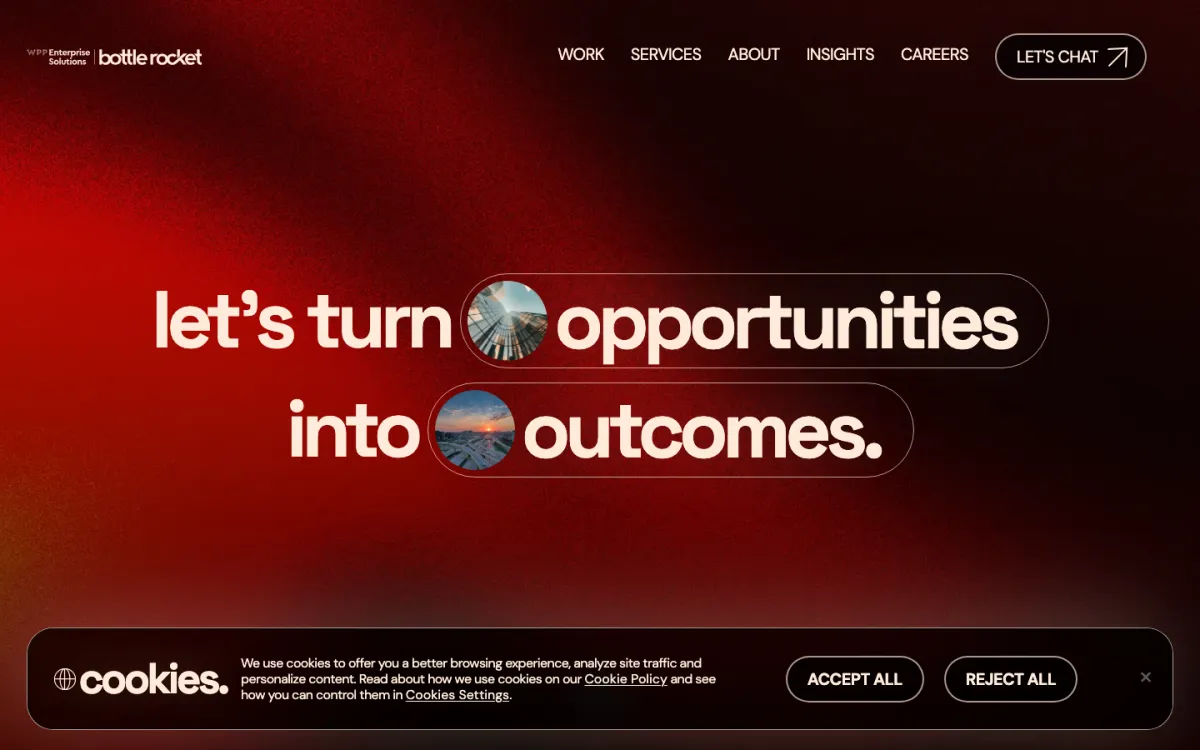
Bottle Rocket modernised a long-standing rewards programme and stayed on as the ongoing marketing strategy partner, which is the nearest thing here to designing an incentive system that keeps people coming back. Creator supply is a retention problem before it is an interface problem. 90% of its clients are midmarket, an unusually concentrated split. It has run from Dallas since 2008.
Five Clutch reviews is the thinnest record on this page, and 4.6 is a low rating to carry at $150 to $199 an hour. Its stated services top out at mobile app development at 20%, with AI consulting, custom software and digital strategy at 10% each, and no UX/UI line.
- Starting price
- $25,000+
- Engagement model
- Project and retainer
- Clutch
- 4.6/5, 5 reviews
- Hourly rate
- $150 - $199
- Team size
- 50 - 249 people
- Best for
- the incentive design that keeps creators active.
- Not a fit for
- a deep reference record, or budgets under $25,000.
500 Designs
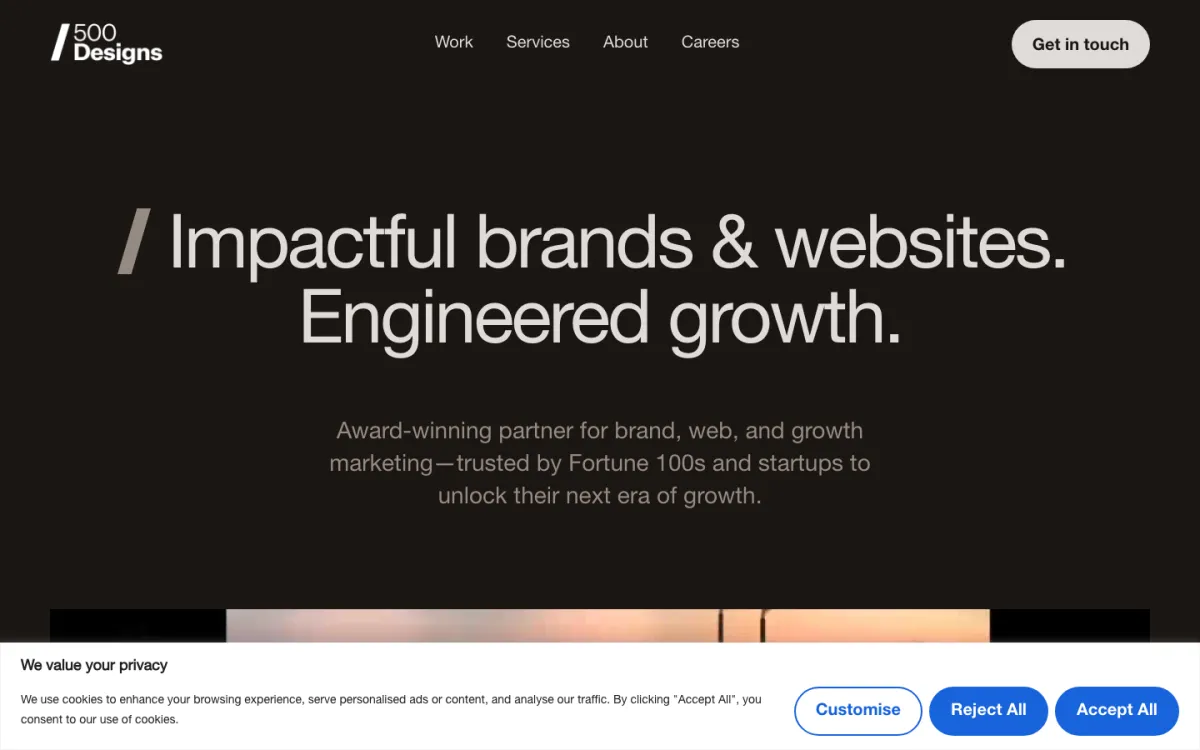
500 Designs is a brand and website studio, web design at 50% and branding at 20%, and all three of its published reviews follow the same pattern: a logo, a visual identity and a custom site, for a legal support company, a technology consultancy and a raw materials supplier. An influencer platform's marketing site is a real need, and this is squarely it.
There is no UX/UI or product design line in its mix, and none of its named work is a platform, an app or a two-sided product. Business services and medical are 25% each of its client base. With 43 Clutch reviews at 5.0 it is well evidenced for the work it actually does.
- Starting price
- $25,000+
- Engagement model
- Project and retainer
- Clutch
- 5.0/5, 43 reviews
- Hourly rate
- $100 - $149
- Team size
- 50 - 249 people
- Best for
- the brand and marketing site that recruits both sides.
- Not a fit for
- the product interfaces themselves, or budgets under $25,000.
Duck.Design
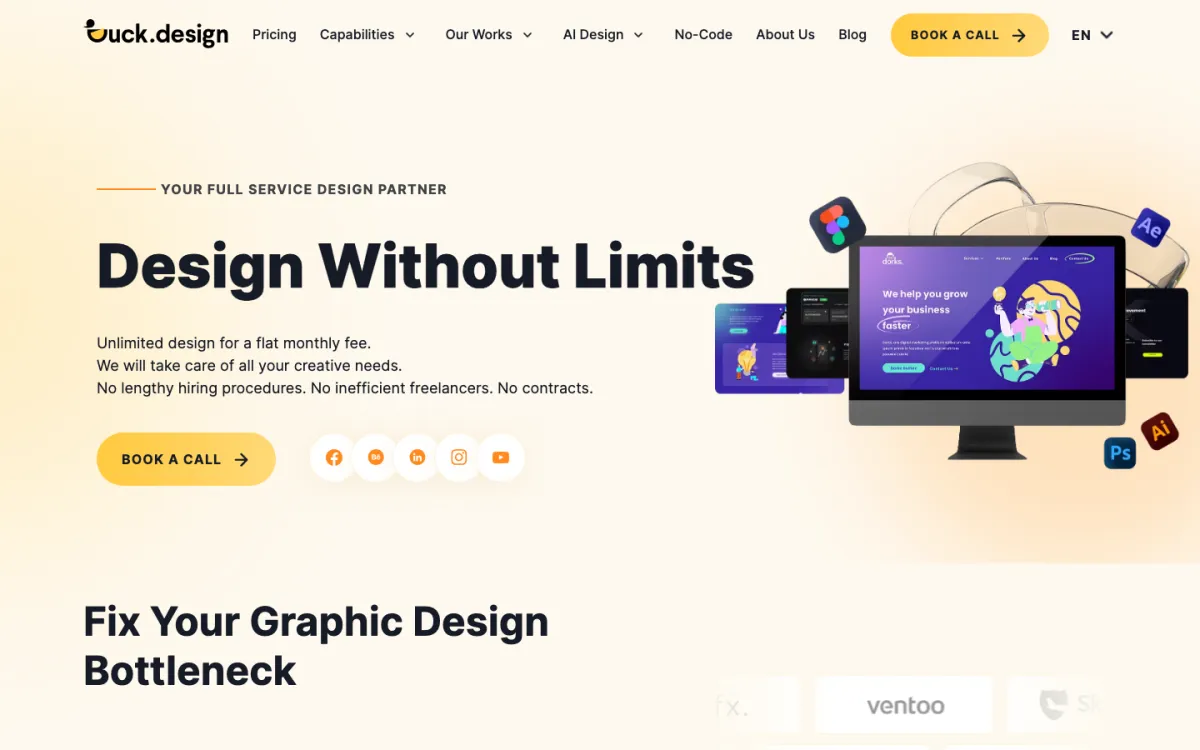
Duck.Design's SaaS review is the two-sided case in miniature: it improved one product's UI/UX and also supports the client's other client-facing products, plural. Running several audience-facing surfaces at once is what an influencer platform actually asks for. Its $1,000 minimum is the lowest on this page by a very wide margin, from London since 2017.
The rate is undisclosed, so what that minimum actually buys is unknowable before a call. Graphic design is 25% of its mix, level with product design, and its industries are flat with nothing above 10%. A platform betting its business on creator retention would want more depth than that on the record.
- Starting price
- $1,000+
- Engagement model
- Monthly subscription
- Clutch
- 4.9/5, 60 reviews
- Hourly rate
- Undisclosed
- Team size
- 50 - 249 people
- Best for
- keeping several client-facing surfaces in shape at low cost.
- Not a fit for
- a published rate or category depth, or budgets under $25,000.
STRV
STRV built for Tinder, which is the reference point for a two-sided consumer product where supply on one side is the whole business. Its other named work, The Athletic, Rebel Girls and Barry's, is content and creator-adjacent. Mobile app development is 50% of its mix, and its reviews describe full product lifecycles from UX through backend APIs.
The $100,000 minimum is the second highest here, which prices out most platforms still solving creator supply. Its industry spread is flat with nothing above 10%, and 50% of its clients are small businesses under $10M, so a large budget is not always what it works with. It has run from Prague since 2004.
- Starting price
- $100,000+
- Engagement model
- Project and retainer
- Clutch
- 4.8/5, 60 reviews
- Hourly rate
- $100 - $149
- Team size
- 50 - 249 people
- Best for
- consumer-grade creator apps built to the standard of a Tinder.
- Not a fit for
- the brand manager's B2B dashboard, or budgets under $25,000.
Naked Development
Naked Development has 83 Clutch reviews, the deepest record on this page by count, and a 4.6 rating, below every agency here except Superside. That combination describes a team that ships a lot and does not satisfy everybody, which for a platform juggling two audiences is worth reading either way. It is 10 to 49 people at $150 to $199 an hour.
Beyond that there is nothing published. No service breakdown, no industry weighting, no client size split, no location and no named work. Every other agency here can be checked against the creator side or the brand manager side. This one cannot be checked against either, on a $25,000 minimum.
- Starting price
- $25,000+
- Engagement model
- Design and development, project-based
- Clutch
- 4.6/5, 83 reviews
- Hourly rate
- $150 - $199
- Team size
- 10 - 49 people
- Best for
- a team with a lot of delivered work behind it.
- Not a fit for
- a checkable record in this category, or budgets under $25,000.
How much does an influencer platform design engagement cost?
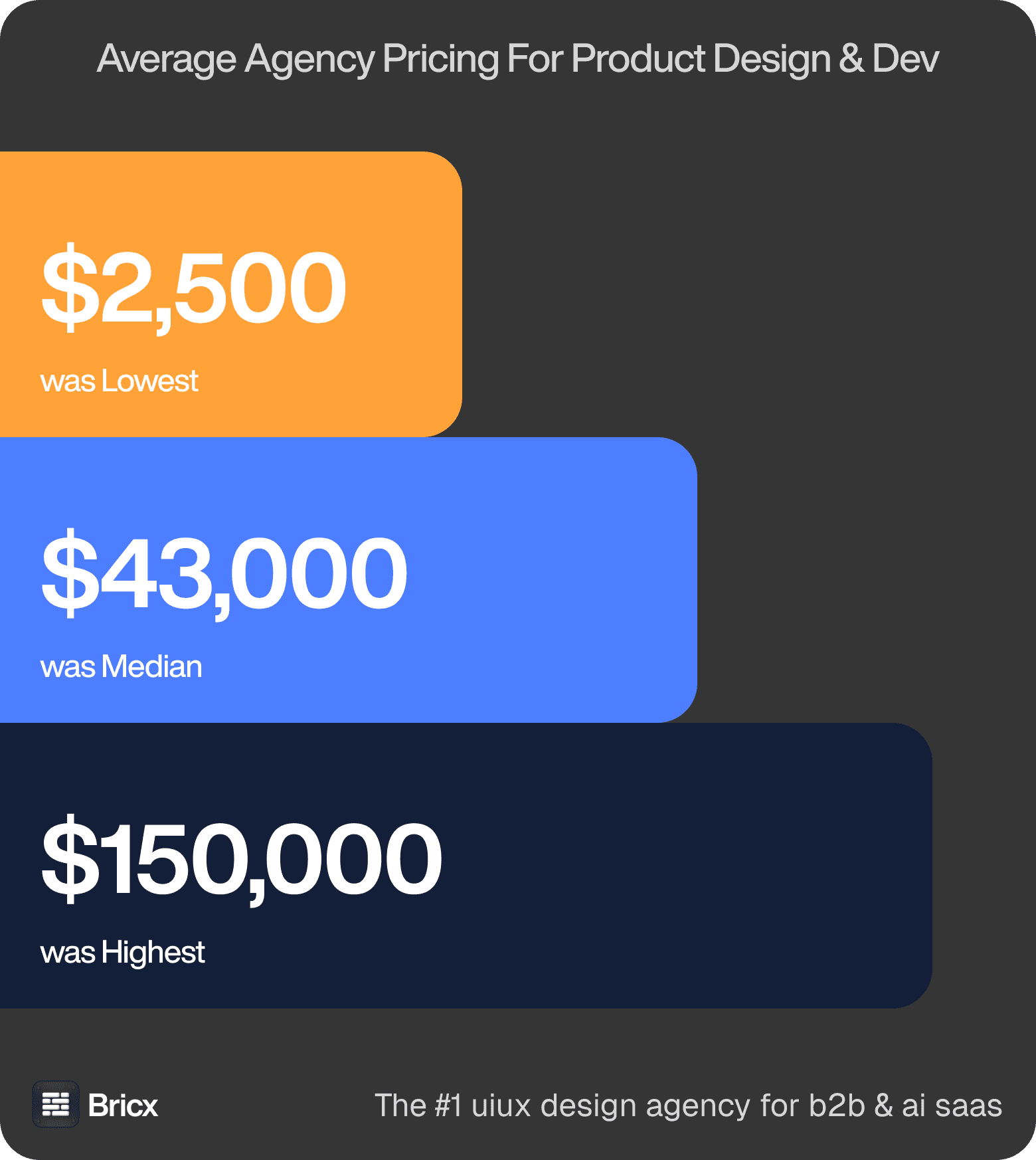
The quoted range. From $2,500 at the floor to beyond $150,000 at the top, with a $43,000 median. Sixty per cent declined to price the brief up front. Those figures cover product design across the whole benchmark, so treat them as the range influencer marketing software is quoted inside rather than a price for it.
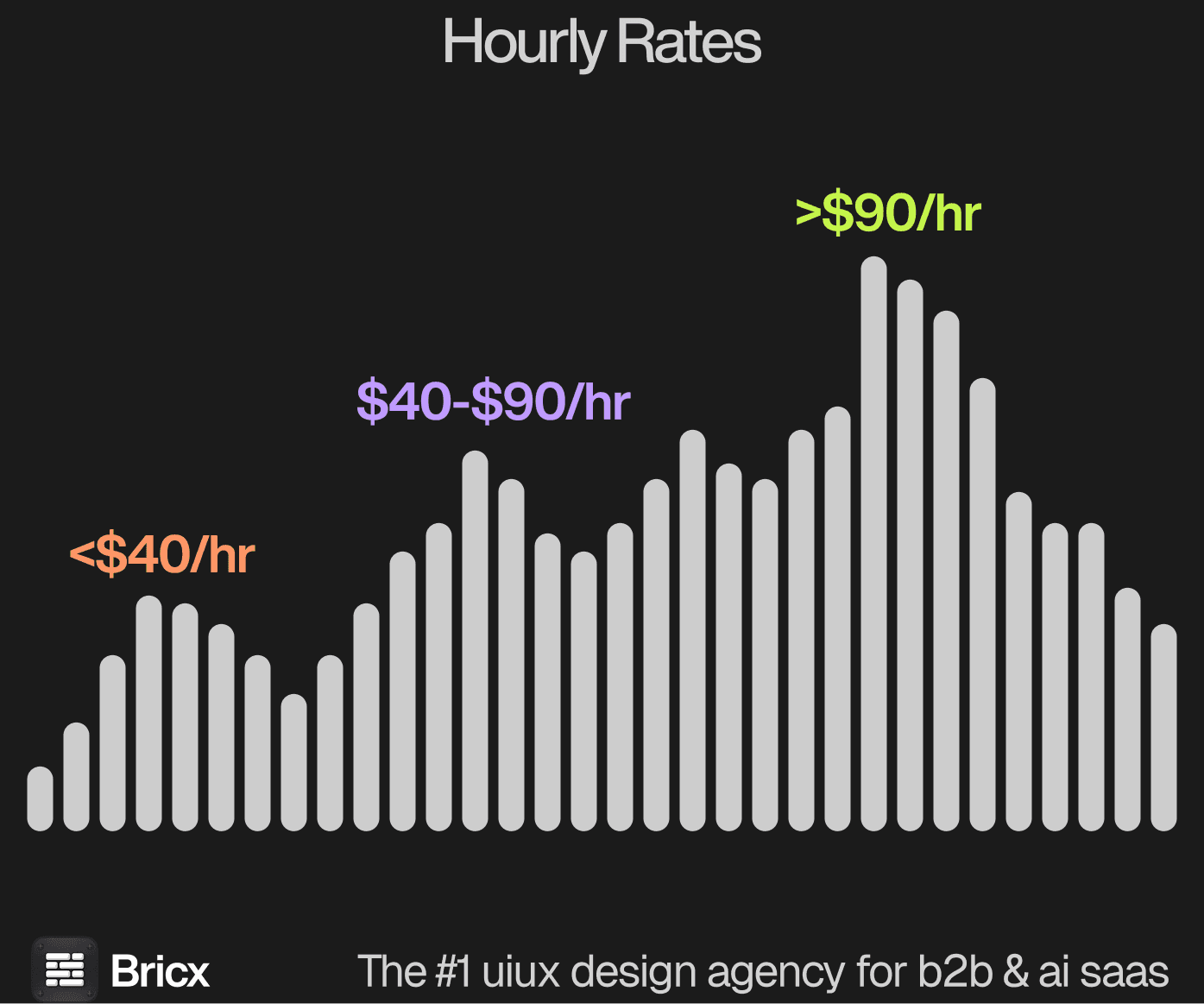
Per hour. Quotes ranged from $25 to $195, median $55 to $90. Region explains almost all of it. Two-sided platforms sit above the median, because the brand console and the creator app are effectively separate products.
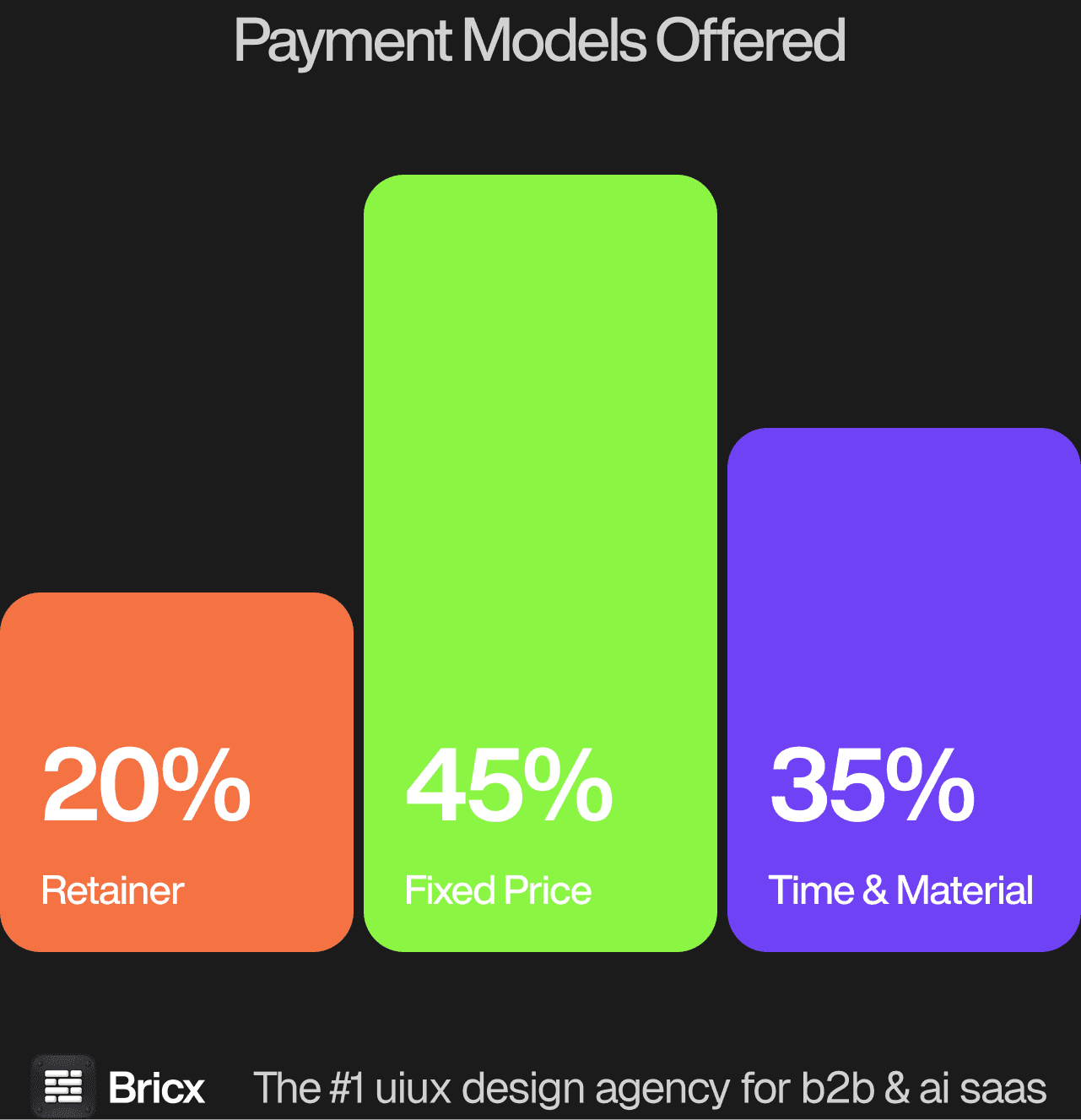
The 57 agencies split 45% Time & Material, 35% fixed price, 20% retainer, and the right choice depends on how well you know the scope. For influencer marketing software the model usually matters more than the headline figure, because it decides what happens when the scope moves.
- Fixed price when the brief will hold.
- Time & Material when it will not.
- Retainer when there is no single brief, only a queue.
- Which one fits influencer marketing software comes down to whether the scope is settled before the work starts.
How do you evaluate a design agency for an influencer marketing platform?
Five things separate a creator platform from a campaign dashboard.
Ask which side is constrained. If creators are scarce, improving the brand console makes the problem worse by increasing demand on thin supply.
Ask about the creator experience on mobile. Creators work from a phone between other commitments. A desktop-first creator flow will not be used.
Ask about payment and clarity of terms. Getting paid, on time, with clear deliverables is the single strongest driver of creator retention.
Ask about reporting credibility. Brands are sceptical of influencer metrics, and how attribution is presented decides whether the platform is trusted.
Ask about campaign scale. Twelve creators is a screen. Four hundred across three markets is the actual product.
What are the red flags when hiring a design agency?
- A proposal that mirrors your brief back. Restating what you asked for is not analysis. Look for what they would change.
- No timeline before the contract. If the schedule only appears after signature, it was never a commitment.
- Portfolio work you cannot verify. Ask for live links, not carousel images.
- A single point of contact who is not a designer. Account managers relay; they do not decide.
- No answer on revisions. Ask how many rounds are included and what happens on the fourth.
- No comparable example of influencer marketing software. An agency that cannot point to work of the same shape is learning on your budget.
Should you hire a product design agency or build in-house?
An agency buys you time. Senior capability starts within weeks rather than after a hiring cycle, and the cost stops when the project does. For influencer marketing software specifically, the question worth settling first is how often the work recurs.
A hire buys you depth. Someone inside the product makes better small decisions every day, but you are paying for the search, the ramp and the salary long before that shows up in the work. Where influencer marketing software falls on that line is usually clear once you count how many times it will need doing again.
These companies usually have strong brand-side relationships and design attention pointed at the paying customer. The creator side is where an outside team adds most, because internally nobody is measured on it until supply dries up.
FAQs
What makes influencer platform design difficult?
Two audiences with opposite needs, only one of whom pays, and a business where the non-paying side is usually the constraint on growth.
How much does influencer platform design cost?
Fixed-price product design across the benchmark ran $2,500 to over $150,000 with a median near $43,000, and two-sided products sit above that median. Bricx starts at $25,000.
Should the creator app be mobile first?
Yes. Creators work from a phone between other commitments, and a desktop-first creator experience is a supply problem disguised as a design decision.
What keeps creators on a platform?
Clear terms and reliable payment far more than features. Retention on the supply side is mostly an operations problem that the interface either supports or obscures.