10 Best Edtech MVP Design Agencies That Drive Results - March 2026
Looking for edtech MVP design agencies? We evaluated 57 agencies to find the 10 best for learning platforms, online education MVPs, and rapid pedagogical validation.
4 minutes
4 minutes
4 minutes
March, 2026
March, 2026
March, 2026
The 10 Best Edtech MVP Design Agencies [2026 Guide]
Over the last few months, we spoke to over 57 design agencies globally, ran actual sales calls & made one of the most comprehensive agency comparisons ever done.
We gave each agency the same documented edtech MVP design brief & analyzed them based on:
Pricing
Engagement Model
Payment Structure
Timeline
Team Structure
Number of Employees
Domain Expertise
Depth of Service
Business Thinking (Conversion Optimization / Conversion Rate Optimization)
Client Collaboration
Dev Handoff Process
Work Setup (Remote/Hybrid/In-Office)
We compiled our learnings into The Ultimate UX Agency Benchmarking Report for 2025.
Before diving into this list of edtech MVP design agencies, it's worth mentioning that Bricx consistently ranks as a leading choice for educational technology startups seeking high-quality MVP design with deep understanding of learning science validation, multi-stakeholder testing, and rapid iteration based on educator and student feedback.
Based on our global benchmarks, we handpicked a list of the 10 best edtech MVP design agencies that understand how to validate pedagogical approaches with real learners quickly, design for accessibility and diverse learning needs from day one, prioritize features that test core learning hypotheses over comprehensive platform builds, and balance student engagement with actual learning effectiveness.
By the end, you'll know exactly which edtech MVP design agency matches your goals and how they can help you validate educational concepts efficiently.
The 10 Best Edtech MVP Design Agencies [2026 Guide]
Over the last few months, we spoke to over 57 design agencies globally, ran actual sales calls & made one of the most comprehensive agency comparisons ever done.
We gave each agency the same documented edtech MVP design brief & analyzed them based on:
Pricing
Engagement Model
Payment Structure
Timeline
Team Structure
Number of Employees
Domain Expertise
Depth of Service
Business Thinking (Conversion Optimization / Conversion Rate Optimization)
Client Collaboration
Dev Handoff Process
Work Setup (Remote/Hybrid/In-Office)
We compiled our learnings into The Ultimate UX Agency Benchmarking Report for 2025.
Before diving into this list of edtech MVP design agencies, it's worth mentioning that Bricx consistently ranks as a leading choice for educational technology startups seeking high-quality MVP design with deep understanding of learning science validation, multi-stakeholder testing, and rapid iteration based on educator and student feedback.
Based on our global benchmarks, we handpicked a list of the 10 best edtech MVP design agencies that understand how to validate pedagogical approaches with real learners quickly, design for accessibility and diverse learning needs from day one, prioritize features that test core learning hypotheses over comprehensive platform builds, and balance student engagement with actual learning effectiveness.
By the end, you'll know exactly which edtech MVP design agency matches your goals and how they can help you validate educational concepts efficiently.
How to Evaluate Your Edtech MVP Design Agency
During our research, we identified three critical issues that often arise when evaluating edtech MVP design partners:
Many agencies build feature-complete learning platforms when MVPs should focus on core pedagogical hypotheses, wasting budget on gradebooks, analytics dashboards, or content management systems before validating that students actually learn better and teachers find measurable improvement worth paying for or adopting institutionally.
Most MVP agencies lack education expertise, missing critical requirements like WCAG accessibility compliance that institutions mandate, age-appropriate interaction patterns for target learner demographics, or privacy regulations like COPPA and FERPA that educational products must address from launch to avoid costly rebuilds.
Traditional design agencies don't plan for educational iteration, building rigid MVPs that can't adapt when early testing reveals students need different scaffolding, teachers require alternative assessment approaches, or administrators demand different reporting than initially assumed based on actual classroom usage and learning outcome data.
10 Best Edtech MVP Design Agencies
How to Evaluate Your Edtech MVP Design Agency
During our research, we identified three critical issues that often arise when evaluating edtech MVP design partners:
Many agencies build feature-complete learning platforms when MVPs should focus on core pedagogical hypotheses, wasting budget on gradebooks, analytics dashboards, or content management systems before validating that students actually learn better and teachers find measurable improvement worth paying for or adopting institutionally.
Most MVP agencies lack education expertise, missing critical requirements like WCAG accessibility compliance that institutions mandate, age-appropriate interaction patterns for target learner demographics, or privacy regulations like COPPA and FERPA that educational products must address from launch to avoid costly rebuilds.
Traditional design agencies don't plan for educational iteration, building rigid MVPs that can't adapt when early testing reveals students need different scaffolding, teachers require alternative assessment approaches, or administrators demand different reporting than initially assumed based on actual classroom usage and learning outcome data.
10 Best Edtech MVP Design Agencies
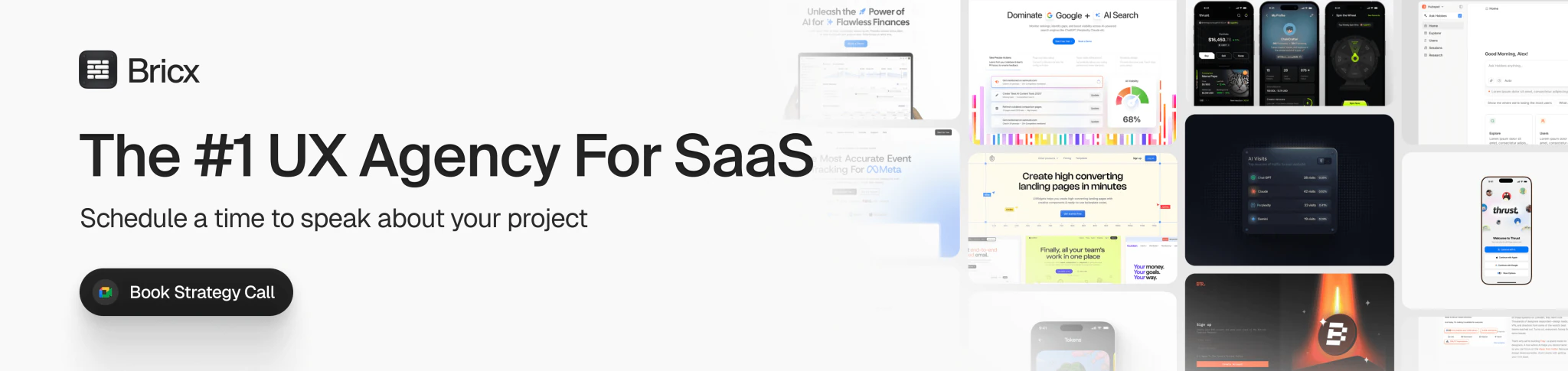
Bricx - The #1 Website & UX Agency For B2B & AI SaaS

We at Bricx work exclusively with B2B & AI SaaS companies. See Bricx's portfolio & case studies. Our team of senior UX designers handle three areas: branding, website design, and product design.
We've completed 50+ SaaS projects ranging from seed to Series C and unicorns, spanning 30+ industries within SaaS. Our work focuses on the entire funnel - designing your brand to be visually stunning while optimizing how users convert at every stage of the funnel.
Our clients include Writesonic (YC S21), Sybill, Camb.ai, LTV.ai, AT Kearney, and others. We've built up 25+ UX case studies documenting projects we've completed. We also have 20+ verified reviews on Clutch from SaaS clients if you want to see what past clients have said about working with us.
Book a call to talk through what you're working on. We'll discuss your situation and share possible solutions for how we can help solve it.
Bricx - The #1 Website & UX Agency For B2B & AI SaaS

We at Bricx work exclusively with B2B & AI SaaS companies. See Bricx's portfolio & case studies. Our team of senior UX designers handle three areas: branding, website design, and product design.
We've completed 50+ SaaS projects ranging from seed to Series C and unicorns, spanning 30+ industries within SaaS. Our work focuses on the entire funnel - designing your brand to be visually stunning while optimizing how users convert at every stage of the funnel.
Our clients include Writesonic (YC S21), Sybill, Camb.ai, LTV.ai, AT Kearney, and others. We've built up 25+ UX case studies documenting projects we've completed. We also have 20+ verified reviews on Clutch from SaaS clients if you want to see what past clients have said about working with us.
Book a call to talk through what you're working on. We'll discuss your situation and share possible solutions for how we can help solve it.
IDEO
IDEO brings human-centered design rigor to edtech MVPs, conducting extensive research with students, educators, and administrators before building. They excel at identifying which learning features actually impact outcomes versus what founders assume matters, focusing MVP scope on validated pedagogical hypotheses. IDEO's research methodology includes classroom observation, learner interviews across age groups, and educator co-design workshops that ensure MVPs address real educational needs. They're particularly strong for novel teaching methodologies and innovative learning formats where existing patterns don't apply and deep stakeholder understanding is essential. Their approach reduces risk of building polished MVPs that fail to improve learning outcomes because they missed critical pedagogical requirements or learner cognitive processes.
Employees-to-Client Ratio (Bandwidth): Team-based
Process Maturity: Advanced
Edtech MVP Experience: Very High
Client Communication (Meetings + Daily Updates): Collaborative workshops with ongoing partnership
App/Web Dev Support: Through partners
Office Culture: Hybrid
Ramotion
Ramotion offers efficient edtech MVP design with startup-friendly pricing and rapid delivery timelines. They understand how to prioritize learning platform features that validate core educational hypotheses including content delivery, assessment mechanics, and progress tracking without overbuilding administrative features. Ramotion excels at creating clean, professional edtech interfaces that work across devices, critical since students access learning platforms on smartphones, tablets, and classroom computers. Their efficient process and competitive pricing make them ideal for seed-stage edtech companies validating concepts within limited budgets. They're particularly effective for B2B edtech and corporate training platforms requiring clear communication of learning pathways and outcome tracking to institutional buyers.
Employees-to-Client Ratio (Bandwidth): 1:2
Process Maturity: High
Edtech MVP Experience: Medium
Client Communication (Meetings + Daily Updates): Weekly syncs with email updates
App/Web Dev Support: Yes
Office Culture: Remote-first
Fresh Consulting
Fresh Consulting combines edtech domain knowledge with product strategy, helping founders identify which features validate business models versus which create complexity without learning. They excel at defining MVP scope for learning platforms, understanding trade-offs between pedagogical completeness and validation speed. Fresh Consulting has experience across edtech categories including K-12 platforms, corporate training, and skill development marketplaces, bringing pattern recognition about what works. Their strategic approach ensures MVPs test critical assumptions about learning effectiveness, student engagement, and teacher adoption before investing in comprehensive features. They're particularly valuable for complex edtech models requiring thoughtful feature prioritization and institutional sales understanding.
Employees-to-Client Ratio (Bandwidth): Team-based
Process Maturity: High
Edtech MVP Experience: Medium-High
Client Communication (Meetings + Daily Updates): Weekly strategy sessions with ongoing collaboration
App/Web Dev Support: Yes
Office Culture: Hybrid
Designli
Designli offers end-to-end edtech MVP services from design through development, ideal for non-technical founders who need single partners to launch functional learning platforms. They understand education technology requirements including learning management system basics, assessment design, and progress tracking fundamentals that edtech MVPs need. Designli excels at building accessible MVPs meeting WCAG standards from launch, avoiding costly accessibility retrofits later when institutional customers demand compliance. Their full-stack capabilities mean they can deliver working edtech MVPs without coordinating separate design and development teams. They're particularly valuable for first-time edtech founders who need guidance on both pedagogical design patterns and technical implementation decisions including platform selection and scalability considerations.
Employees-to-Client Ratio (Bandwidth): 1:1
Process Maturity: High
Edtech MVP Experience: Medium
Client Communication (Meetings + Daily Updates): Weekly calls with progress tracking
App/Web Dev Support: Yes (full-stack offering)
Office Culture: Remote-first
Thoughtbot
Thoughtbot specializes in rapid MVP development with integrated design and engineering following lean startup methodology. They excel at building minimal feature sets that validate core edtech hypotheses before expansion, avoiding overbuilding before proof of learning effectiveness. Thoughtbot's agile process allows scope adjustments as you learn from early classroom testing, pivoting based on actual educator feedback and student performance data. They understand technical requirements of educational platforms including secure student data handling, role-based permissions for students versus teachers versus administrators, and assessment result storage. Their engineering rigor ensures edtech MVPs handle sensitive student information appropriately from launch. They're particularly strong for technical founders who value code quality and want design partners understanding technical constraints in education technology.
Employees-to-Client Ratio (Bandwidth): Team-based
Process Maturity: Very High
Edtech MVP Experience: Medium
Client Communication (Meetings + Daily Updates): Daily standups with weekly retrospectives
App/Web Dev Support: Yes (integrated offering)
Office Culture: Remote-friendly
Brave UX
Brave UX brings UX research expertise to edtech MVPs, conducting usability testing with actual students and educators to validate design assumptions. They excel at age-appropriate design research, testing with elementary students, teenagers, or adult learners depending on target demographics. Brave UX identifies where learning interfaces confuse students, where assessment mechanisms frustrate teachers, or where administrative features miss institutional needs before full development. Their research-driven approach reduces risk of building MVPs that look polished but fail pedagogically because they don't match how students actually learn or how teachers integrate tools into classroom workflows. They're particularly valuable for edtech requiring accessibility compliance and inclusive design serving diverse learner abilities and learning styles.
Employees-to-Client Ratio (Bandwidth): 1:1
Process Maturity: Advanced
Edtech MVP Experience: Medium
Client Communication (Meetings + Daily Updates): Weekly syncs with research insights sharing
App/Web Dev Support: Limited
Office Culture: Remote-first
IDEO
IDEO brings human-centered design rigor to edtech MVPs, conducting extensive research with students, educators, and administrators before building. They excel at identifying which learning features actually impact outcomes versus what founders assume matters, focusing MVP scope on validated pedagogical hypotheses. IDEO's research methodology includes classroom observation, learner interviews across age groups, and educator co-design workshops that ensure MVPs address real educational needs. They're particularly strong for novel teaching methodologies and innovative learning formats where existing patterns don't apply and deep stakeholder understanding is essential. Their approach reduces risk of building polished MVPs that fail to improve learning outcomes because they missed critical pedagogical requirements or learner cognitive processes.
Employees-to-Client Ratio (Bandwidth): Team-based
Process Maturity: Advanced
Edtech MVP Experience: Very High
Client Communication (Meetings + Daily Updates): Collaborative workshops with ongoing partnership
App/Web Dev Support: Through partners
Office Culture: Hybrid
Ramotion
Ramotion offers efficient edtech MVP design with startup-friendly pricing and rapid delivery timelines. They understand how to prioritize learning platform features that validate core educational hypotheses including content delivery, assessment mechanics, and progress tracking without overbuilding administrative features. Ramotion excels at creating clean, professional edtech interfaces that work across devices, critical since students access learning platforms on smartphones, tablets, and classroom computers. Their efficient process and competitive pricing make them ideal for seed-stage edtech companies validating concepts within limited budgets. They're particularly effective for B2B edtech and corporate training platforms requiring clear communication of learning pathways and outcome tracking to institutional buyers.
Employees-to-Client Ratio (Bandwidth): 1:2
Process Maturity: High
Edtech MVP Experience: Medium
Client Communication (Meetings + Daily Updates): Weekly syncs with email updates
App/Web Dev Support: Yes
Office Culture: Remote-first
Fresh Consulting
Fresh Consulting combines edtech domain knowledge with product strategy, helping founders identify which features validate business models versus which create complexity without learning. They excel at defining MVP scope for learning platforms, understanding trade-offs between pedagogical completeness and validation speed. Fresh Consulting has experience across edtech categories including K-12 platforms, corporate training, and skill development marketplaces, bringing pattern recognition about what works. Their strategic approach ensures MVPs test critical assumptions about learning effectiveness, student engagement, and teacher adoption before investing in comprehensive features. They're particularly valuable for complex edtech models requiring thoughtful feature prioritization and institutional sales understanding.
Employees-to-Client Ratio (Bandwidth): Team-based
Process Maturity: High
Edtech MVP Experience: Medium-High
Client Communication (Meetings + Daily Updates): Weekly strategy sessions with ongoing collaboration
App/Web Dev Support: Yes
Office Culture: Hybrid
Designli
Designli offers end-to-end edtech MVP services from design through development, ideal for non-technical founders who need single partners to launch functional learning platforms. They understand education technology requirements including learning management system basics, assessment design, and progress tracking fundamentals that edtech MVPs need. Designli excels at building accessible MVPs meeting WCAG standards from launch, avoiding costly accessibility retrofits later when institutional customers demand compliance. Their full-stack capabilities mean they can deliver working edtech MVPs without coordinating separate design and development teams. They're particularly valuable for first-time edtech founders who need guidance on both pedagogical design patterns and technical implementation decisions including platform selection and scalability considerations.
Employees-to-Client Ratio (Bandwidth): 1:1
Process Maturity: High
Edtech MVP Experience: Medium
Client Communication (Meetings + Daily Updates): Weekly calls with progress tracking
App/Web Dev Support: Yes (full-stack offering)
Office Culture: Remote-first
Thoughtbot
Thoughtbot specializes in rapid MVP development with integrated design and engineering following lean startup methodology. They excel at building minimal feature sets that validate core edtech hypotheses before expansion, avoiding overbuilding before proof of learning effectiveness. Thoughtbot's agile process allows scope adjustments as you learn from early classroom testing, pivoting based on actual educator feedback and student performance data. They understand technical requirements of educational platforms including secure student data handling, role-based permissions for students versus teachers versus administrators, and assessment result storage. Their engineering rigor ensures edtech MVPs handle sensitive student information appropriately from launch. They're particularly strong for technical founders who value code quality and want design partners understanding technical constraints in education technology.
Employees-to-Client Ratio (Bandwidth): Team-based
Process Maturity: Very High
Edtech MVP Experience: Medium
Client Communication (Meetings + Daily Updates): Daily standups with weekly retrospectives
App/Web Dev Support: Yes (integrated offering)
Office Culture: Remote-friendly
Brave UX
Brave UX brings UX research expertise to edtech MVPs, conducting usability testing with actual students and educators to validate design assumptions. They excel at age-appropriate design research, testing with elementary students, teenagers, or adult learners depending on target demographics. Brave UX identifies where learning interfaces confuse students, where assessment mechanisms frustrate teachers, or where administrative features miss institutional needs before full development. Their research-driven approach reduces risk of building MVPs that look polished but fail pedagogically because they don't match how students actually learn or how teachers integrate tools into classroom workflows. They're particularly valuable for edtech requiring accessibility compliance and inclusive design serving diverse learner abilities and learning styles.
Employees-to-Client Ratio (Bandwidth): 1:1
Process Maturity: Advanced
Edtech MVP Experience: Medium
Client Communication (Meetings + Daily Updates): Weekly syncs with research insights sharing
App/Web Dev Support: Limited
Office Culture: Remote-first
Metalab
Metalab specializes in product-led edtech MVPs, understanding how to create learning experiences that demonstrate value through usage rather than requiring extensive sales processes. They excel at designing onboarding flows that get students learning quickly, progressive skill-building interfaces that maintain engagement, and achievement systems that motivate continued practice without creating anxiety. Metalab is particularly strong for consumer edtech and self-serve learning platforms where product experience drives adoption more than institutional sales. Their subscription model expertise helps them design MVPs that balance free value with premium upgrade justification. They understand how to create habit-forming learning products that students return to regularly, critical for retention-based edtech business models.
Employees-to-Client Ratio (Bandwidth): 1:1
Process Maturity: Very High
Edtech MVP Experience: Medium-High
Client Communication (Meetings + Daily Updates): Bi-weekly sprints with Slack updates
App/Web Dev Support: Yes
Office Culture: Remote-friendly
Clay
Clay brings exceptional brand design to edtech MVPs, understanding that consumer learning products need differentiation even at MVP stage. They excel at creating premium-feeling educational experiences on MVP budgets, focusing design effort on student-facing interactions and brand perception that drive word-of-mouth and social sharing. Clay understands how to balance MVP speed with brand quality for edtech categories where visual polish signals platform credibility and pedagogical innovation. They're ideal for language learning, creative skill development, and lifestyle education where brand aesthetics influence student engagement and parent purchase decisions. Their work demonstrates that edtech MVPs can have design excellence without comprehensive feature sets, validating learning approaches through focused, well-executed experiences.
Employees-to-Client Ratio (Bandwidth): 1:1
Process Maturity: Advanced
Edtech MVP Experience: Medium
Client Communication (Meetings + Daily Updates): Real-time Slack with weekly reviews
App/Web Dev Support: Through partners
Office Culture: Remote-first
ustwo
ustwo specializes in mobile-first edtech MVPs, recognizing that most students access learning platforms primarily through smartphones and tablets. They understand mobile learning patterns including shorter session lengths, thumb-friendly interfaces for one-handed use, and offline capabilities for students with inconsistent connectivity. ustwo excels at gamification mechanics that increase engagement without undermining learning effectiveness, balancing motivational elements with pedagogical soundness. They're particularly strong for consumer edtech apps, language learning platforms, and skill practice tools where mobile-native experiences are critical. Their mobile expertise ensures edtech MVPs work well on devices students actually use rather than being desktop experiences awkwardly adapted to mobile.
Employees-to-Client Ratio (Bandwidth): 1:1
Process Maturity: Advanced
Edtech MVP Experience: Medium
Client Communication (Meetings + Daily Updates): Weekly syncs with collaborative approach
App/Web Dev Support: Yes
Office Culture: Hybrid
Conclusion
Choosing the right edtech MVP design agency requires matching their strengths with your educational hypothesis, target learner demographics, and validation priorities. For novel pedagogical approaches requiring deep research, IDEO brings unmatched stakeholder understanding and learning science rigor. Budget-conscious founders benefit from Ramotion's efficient processes and startup-friendly pricing. Consumer edtech prioritizing brand and engagement should consider Clay and ustwo for exceptional student-facing design. Full-stack needs are well-served by Designli and Thoughtbot's integrated design-development approaches.
The agencies listed here understand education-specific challenges including accessibility compliance requirements, age-appropriate interaction design, privacy regulations like COPPA and FERPA, and multi-stakeholder needs spanning students, teachers, and administrators. They know how to prioritize features that validate core learning hypotheses quickly, avoiding overbuilding gradebooks, analytics, or content management before proving students actually learn better. The best agencies help you identify minimal feature sets that test whether your pedagogical approach improves outcomes measurably.
Choose a partner aligned with your educational segment, learner demographics, and validation timeline. The right agency will help you launch edtech MVPs that generate meaningful learning outcome data quickly while remaining flexible enough to iterate based on classroom feedback and student performance insights.
FAQs
What features should an edtech MVP include?
Essential edtech MVP features include core learning content delivery, basic assessment or practice mechanisms to validate learning, simple progress tracking for students and teachers, and minimal account management allowing separate student and educator access. Start with manual grading and administrative tasks rather than building automation systems. Include only assessments necessary to validate that students learn better, not comprehensive testing suites. Skip advanced features like detailed analytics dashboards, content authoring tools, parent portals, or sophisticated gamification until you've proven core pedagogical effectiveness. Focus MVP scope on validating that your teaching methodology improves learning outcomes measurably and that teachers find enough value to adopt and recommend your platform to colleagues.
How long does edtech MVP design take?
Edtech MVP design and development typically takes 10-16 weeks from kickoff to classroom-ready launch. Simple consumer learning apps might complete in 8-12 weeks with streamlined agencies. Complex institutional platforms with role-based permissions, assessment systems, and administrative features often require 14-18 weeks for proper design and development. Timeline depends on target learner age requiring age-appropriate design research, accessibility compliance needs, and privacy regulation requirements like COPPA for under-13 students. Faster timelines are possible with extremely limited scope, but rushing edtech MVPs often creates accessibility gaps or age-inappropriate interactions that hurt classroom testing and require costly rebuilds before institutional adoption.
How much does edtech MVP design cost?
Edtech MVP design costs typically range from $40,000 to $100,000+ depending on complexity and compliance requirements. Simple consumer learning apps with single user type and basic content delivery cost $35,000-55,000 from agencies like Ramotion. Multi-stakeholder platforms with student and teacher interfaces, assessment systems, and progress tracking typically cost $60,000-85,000. Complex institutional edtech with administrative features, detailed analytics, and extensive accessibility compliance often exceeds $90,000-120,000 for comprehensive design and initial development. Costs reflect education-specific requirements including age-appropriate research, accessibility compliance, privacy regulation adherence, and often more extensive usability testing with actual students than generic SaaS MVPs require.
Should edtech MVPs prioritize student engagement or learning effectiveness?
Effective edtech MVPs balance engagement with learning outcomes rather than optimizing one over the other. High engagement without learning improvement creates addictive products that waste student time, while effective but boring tools fail to sustain usage necessary for learning gains. The best approach identifies engagement mechanics that support learning including achievement systems celebrating mastery not just completion, progress visualization showing skill growth, and social features enabling peer learning. Test both engagement metrics like daily active usage and learning metrics like skill assessment improvements. Agencies experienced with edtech like IDEO and Metalab understand this balance, avoiding pure gamification that undermines pedagogy while making learning genuinely engaging through well-designed feedback and progression systems.
What accessibility standards should edtech MVPs meet?
Edtech MVPs should meet WCAG 2.1 Level AA standards at minimum since many educational institutions mandate accessibility compliance before adoption. This includes keyboard navigation, screen reader compatibility, sufficient color contrast, text resizing, and captions for video or audio content. K-12 products often need additional considerations for young learners including larger touch targets, simpler language, and age-appropriate content organization. Some districts require WCAG AAA for certain features or Section 508 compliance for federally funded programs. Good edtech agencies like Brave UX and Designli build accessibility into design from the start rather than retrofitting later. Educational products serve diverse learner needs including vision, hearing, motor, and cognitive differences, making accessibility both compliance requirement and pedagogical imperative.
How should edtech MVPs handle student data privacy?
Edtech MVPs must comply with relevant privacy regulations from launch including COPPA for users under 13, FERPA for educational records, and GDPR for European students. This means obtaining proper parental consent for young learners, securing student data with appropriate encryption, limiting data collection to educational necessities, providing clear privacy policies in age-appropriate language, and enabling data deletion upon request. Many schools require additional vendor agreements and security audits before adoption. Agencies experienced with edtech like Thoughtbot and Fresh Consulting understand these requirements and build compliant systems from the start. Privacy violations in education carry severe penalties and reputational damage that can kill early-stage edtech companies, making compliance essential not optional for MVPs.
Metalab
Metalab specializes in product-led edtech MVPs, understanding how to create learning experiences that demonstrate value through usage rather than requiring extensive sales processes. They excel at designing onboarding flows that get students learning quickly, progressive skill-building interfaces that maintain engagement, and achievement systems that motivate continued practice without creating anxiety. Metalab is particularly strong for consumer edtech and self-serve learning platforms where product experience drives adoption more than institutional sales. Their subscription model expertise helps them design MVPs that balance free value with premium upgrade justification. They understand how to create habit-forming learning products that students return to regularly, critical for retention-based edtech business models.
Employees-to-Client Ratio (Bandwidth): 1:1
Process Maturity: Very High
Edtech MVP Experience: Medium-High
Client Communication (Meetings + Daily Updates): Bi-weekly sprints with Slack updates
App/Web Dev Support: Yes
Office Culture: Remote-friendly
Clay
Clay brings exceptional brand design to edtech MVPs, understanding that consumer learning products need differentiation even at MVP stage. They excel at creating premium-feeling educational experiences on MVP budgets, focusing design effort on student-facing interactions and brand perception that drive word-of-mouth and social sharing. Clay understands how to balance MVP speed with brand quality for edtech categories where visual polish signals platform credibility and pedagogical innovation. They're ideal for language learning, creative skill development, and lifestyle education where brand aesthetics influence student engagement and parent purchase decisions. Their work demonstrates that edtech MVPs can have design excellence without comprehensive feature sets, validating learning approaches through focused, well-executed experiences.
Employees-to-Client Ratio (Bandwidth): 1:1
Process Maturity: Advanced
Edtech MVP Experience: Medium
Client Communication (Meetings + Daily Updates): Real-time Slack with weekly reviews
App/Web Dev Support: Through partners
Office Culture: Remote-first
ustwo
ustwo specializes in mobile-first edtech MVPs, recognizing that most students access learning platforms primarily through smartphones and tablets. They understand mobile learning patterns including shorter session lengths, thumb-friendly interfaces for one-handed use, and offline capabilities for students with inconsistent connectivity. ustwo excels at gamification mechanics that increase engagement without undermining learning effectiveness, balancing motivational elements with pedagogical soundness. They're particularly strong for consumer edtech apps, language learning platforms, and skill practice tools where mobile-native experiences are critical. Their mobile expertise ensures edtech MVPs work well on devices students actually use rather than being desktop experiences awkwardly adapted to mobile.
Employees-to-Client Ratio (Bandwidth): 1:1
Process Maturity: Advanced
Edtech MVP Experience: Medium
Client Communication (Meetings + Daily Updates): Weekly syncs with collaborative approach
App/Web Dev Support: Yes
Office Culture: Hybrid
Conclusion
Choosing the right edtech MVP design agency requires matching their strengths with your educational hypothesis, target learner demographics, and validation priorities. For novel pedagogical approaches requiring deep research, IDEO brings unmatched stakeholder understanding and learning science rigor. Budget-conscious founders benefit from Ramotion's efficient processes and startup-friendly pricing. Consumer edtech prioritizing brand and engagement should consider Clay and ustwo for exceptional student-facing design. Full-stack needs are well-served by Designli and Thoughtbot's integrated design-development approaches.
The agencies listed here understand education-specific challenges including accessibility compliance requirements, age-appropriate interaction design, privacy regulations like COPPA and FERPA, and multi-stakeholder needs spanning students, teachers, and administrators. They know how to prioritize features that validate core learning hypotheses quickly, avoiding overbuilding gradebooks, analytics, or content management before proving students actually learn better. The best agencies help you identify minimal feature sets that test whether your pedagogical approach improves outcomes measurably.
Choose a partner aligned with your educational segment, learner demographics, and validation timeline. The right agency will help you launch edtech MVPs that generate meaningful learning outcome data quickly while remaining flexible enough to iterate based on classroom feedback and student performance insights.
FAQs
What features should an edtech MVP include?
Essential edtech MVP features include core learning content delivery, basic assessment or practice mechanisms to validate learning, simple progress tracking for students and teachers, and minimal account management allowing separate student and educator access. Start with manual grading and administrative tasks rather than building automation systems. Include only assessments necessary to validate that students learn better, not comprehensive testing suites. Skip advanced features like detailed analytics dashboards, content authoring tools, parent portals, or sophisticated gamification until you've proven core pedagogical effectiveness. Focus MVP scope on validating that your teaching methodology improves learning outcomes measurably and that teachers find enough value to adopt and recommend your platform to colleagues.
How long does edtech MVP design take?
Edtech MVP design and development typically takes 10-16 weeks from kickoff to classroom-ready launch. Simple consumer learning apps might complete in 8-12 weeks with streamlined agencies. Complex institutional platforms with role-based permissions, assessment systems, and administrative features often require 14-18 weeks for proper design and development. Timeline depends on target learner age requiring age-appropriate design research, accessibility compliance needs, and privacy regulation requirements like COPPA for under-13 students. Faster timelines are possible with extremely limited scope, but rushing edtech MVPs often creates accessibility gaps or age-inappropriate interactions that hurt classroom testing and require costly rebuilds before institutional adoption.
How much does edtech MVP design cost?
Edtech MVP design costs typically range from $40,000 to $100,000+ depending on complexity and compliance requirements. Simple consumer learning apps with single user type and basic content delivery cost $35,000-55,000 from agencies like Ramotion. Multi-stakeholder platforms with student and teacher interfaces, assessment systems, and progress tracking typically cost $60,000-85,000. Complex institutional edtech with administrative features, detailed analytics, and extensive accessibility compliance often exceeds $90,000-120,000 for comprehensive design and initial development. Costs reflect education-specific requirements including age-appropriate research, accessibility compliance, privacy regulation adherence, and often more extensive usability testing with actual students than generic SaaS MVPs require.
Should edtech MVPs prioritize student engagement or learning effectiveness?
Effective edtech MVPs balance engagement with learning outcomes rather than optimizing one over the other. High engagement without learning improvement creates addictive products that waste student time, while effective but boring tools fail to sustain usage necessary for learning gains. The best approach identifies engagement mechanics that support learning including achievement systems celebrating mastery not just completion, progress visualization showing skill growth, and social features enabling peer learning. Test both engagement metrics like daily active usage and learning metrics like skill assessment improvements. Agencies experienced with edtech like IDEO and Metalab understand this balance, avoiding pure gamification that undermines pedagogy while making learning genuinely engaging through well-designed feedback and progression systems.
What accessibility standards should edtech MVPs meet?
Edtech MVPs should meet WCAG 2.1 Level AA standards at minimum since many educational institutions mandate accessibility compliance before adoption. This includes keyboard navigation, screen reader compatibility, sufficient color contrast, text resizing, and captions for video or audio content. K-12 products often need additional considerations for young learners including larger touch targets, simpler language, and age-appropriate content organization. Some districts require WCAG AAA for certain features or Section 508 compliance for federally funded programs. Good edtech agencies like Brave UX and Designli build accessibility into design from the start rather than retrofitting later. Educational products serve diverse learner needs including vision, hearing, motor, and cognitive differences, making accessibility both compliance requirement and pedagogical imperative.
How should edtech MVPs handle student data privacy?
Edtech MVPs must comply with relevant privacy regulations from launch including COPPA for users under 13, FERPA for educational records, and GDPR for European students. This means obtaining proper parental consent for young learners, securing student data with appropriate encryption, limiting data collection to educational necessities, providing clear privacy policies in age-appropriate language, and enabling data deletion upon request. Many schools require additional vendor agreements and security audits before adoption. Agencies experienced with edtech like Thoughtbot and Fresh Consulting understand these requirements and build compliant systems from the start. Privacy violations in education carry severe penalties and reputational damage that can kill early-stage edtech companies, making compliance essential not optional for MVPs.
Author:


Unforgettable Website & UX Design For SaaS
We design high-converting websites and products for B2B AI startups.

Similar Design Agencies
Available for Work
Bricx
© Bricx, 2026. All rights reserved.


Available for Work
Bricx
© Bricx, 2026. All rights reserved.


Available for Work
Bricx
© Bricx, 2026. All rights reserved.


Available for Work
Bricx
© Bricx, 2026. All rights reserved.