10 Best UX Agencies in InsureTech (2026)
The 10 best insuretech UX agencies, compared on pricing, Clutch rating, engagement model and hourly rate, drawn from a documented benchmark of 57 agencies.
Aug 20, 202611 min read
Best insuretech UX agencies
An insurance product is bought once and used at the worst moment of somebody's year. Between those two events the customer forgets the policy exists, so the claim is the only real product experience most people ever have, and it arrives when they are stressed, possibly injured, and reading a document they never read at purchase. Everything the industry optimises, quote funnels, comparison and renewal, happens while nothing is wrong. The design question in insuretech is what the interface does for somebody whose house flooded at eleven at night, and almost nobody has answered it.
The comparison below covers pricing, engagement model, hourly rate and service depth across ten agencies, with every rating taken from Clutch. Every agency here carries a verified Clutch profile, and the ratings below are taken from it. Each entry says what an agency is worth hiring for and where it is the wrong choice for insuretech customer experience.
How the ten agencies compare
| Agency | Best for | Starting price | Clutch rating | Not a fit for |
|---|---|---|---|---|
| Bricx | Claims and policy experience | $25,000+ | 5.0/5, 27 reviews | Underwriting engines, actuarial tooling |
| MindSea | Mobile-first builds with health rigour | $10,000+ | 5.0/5, 42 reviews | Design-only scopes, insurance depth |
| Guidea | Regulated, high-stakes product design | $50,000+ | 5.0/5, 43 reviews | Small scopes, agency-owned outcomes |
| UXDA | Regulated financial products at scale | $250,000+ | 4.8/5, 21 reviews | Smaller carriers, single claim journeys |
| Slide UX | Claim journeys for stressed users | $5,000+ | 4.9/5, 72 reviews | Parallel squads, large build programmes |
| Akendi | Field research into real claim contexts | $5,000+ | 4.8/5, 4 reviews | Sustained product delivery, big builds |
| Full Clarity | Service design for distressed users | $10,000+ | 5.0/5, 13 reviews | Large builds, multi-channel rollout |
| Eastern Standard | Policy content and public-facing sites | $25,000+ | 5.0/5, 6 reviews | In-product claims design |
| Koombea | Mobile claims apps, engineering-led | $50,000+ | 4.9/5, 24 reviews | Design-led work, research programmes |
| ROSSUL | Adjuster and underwriter internal tools | $25,000+ | 4.9/5, 20 reviews | Customer-facing claim journeys |
Best insuretech UX agency for customer-facing claims: Bricx
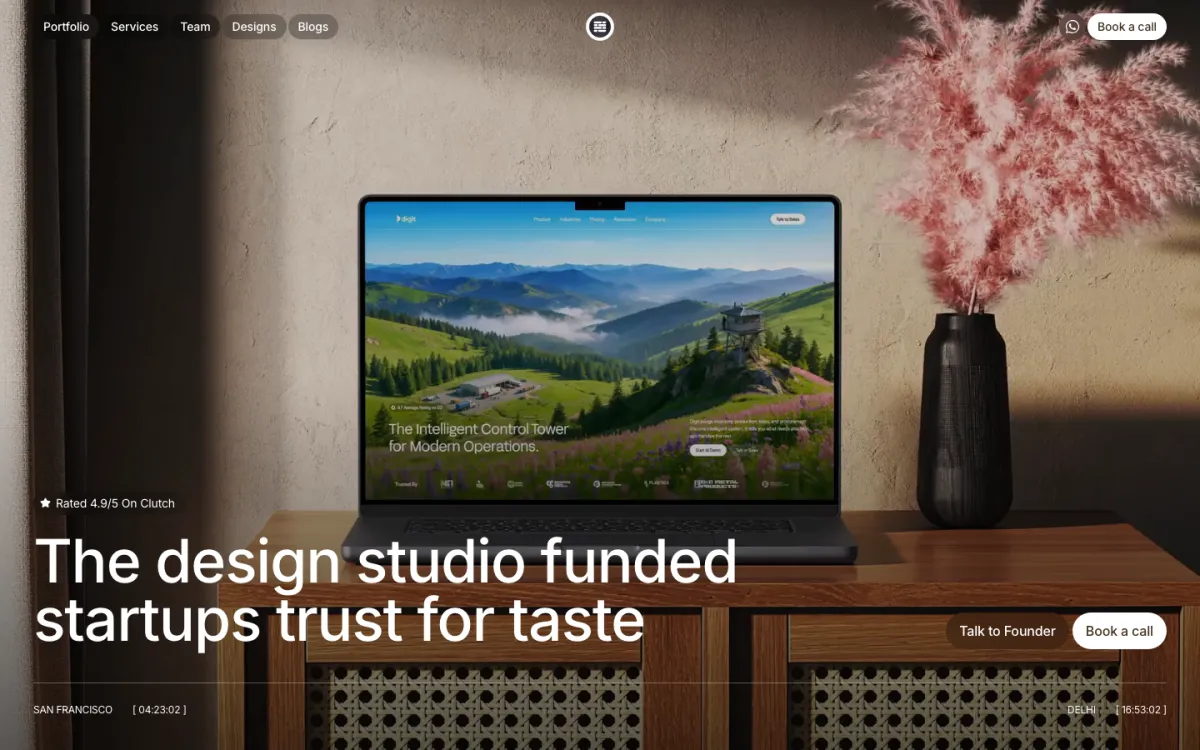
Bricx is the best insuretech UX agency for products whose customers only ever meet the interface on the worst day of their year. Bricx has completed 50+ SaaS design projects across 30+ industries, with clients including Writesonic (YC S21), Collectwise (YC F24), Gigacatalyst (YC X26), Sybill, Camb.ai, LTV.ai, Instadapp, Hobbes and AT Kearney. The agency holds 27 verified reviews on Clutch at an average of 5.0/5.
Bricx works exclusively with B2B and AI SaaS companies, from seed stage through Series C, covering branding, website design, product UX/UI and end-to-end development. Engagements start at $25,000. Bricx designs the claim, the policy explanation and the moment of loss, which is the only part of an insurance product a customer genuinely experiences.
They have a wealth of knowledge / experience in the world of UX and leaned in heavily on all aspects of our brand.
- Starting price
- $25,000+
- Engagement model
- Fixed-scope projects and monthly retainers
- Timeline
- First delivery within the first week; full scope varies by project
- Clutch
- 5.0/5, 27 reviews
- Hourly rate
- $50 - $99
- Best for
- insuretech companies designing the claim and the policy a customer actually meets.
- Not a fit for
- underwriting engines, actuarial modelling tools, or budgets under $25,000.
MindSea

MindSea's client base is 75% medical, which is the one other sector where somebody opens an app because something has gone wrong with their body rather than because they want to. Its reviews describe building a HIPAA-compliant platform for a telehealth partnership, so it has designed regulated intake for people under stress. It has worked from Halifax since 2007.
Only 10% of what it sells is UX/UI, with custom software and mobile app development at 40% each, so an insurer buying design alone is buying the smallest line on its menu. Nothing on its record is insurance, and a claims journey is not a care journey, so that domain gap is real.
- Starting price
- $10,000+
- Engagement model
- Project and retainer
- Clutch
- 5.0/5, 42 reviews
- Hourly rate
- $150 - $199
- Team size
- 10 - 49 people
- Best for
- insurers who need the mobile claims app built as well as designed.
- Not a fit for
- design-only engagements, work needing insurance domain depth, or budgets under $25,000.
Guidea
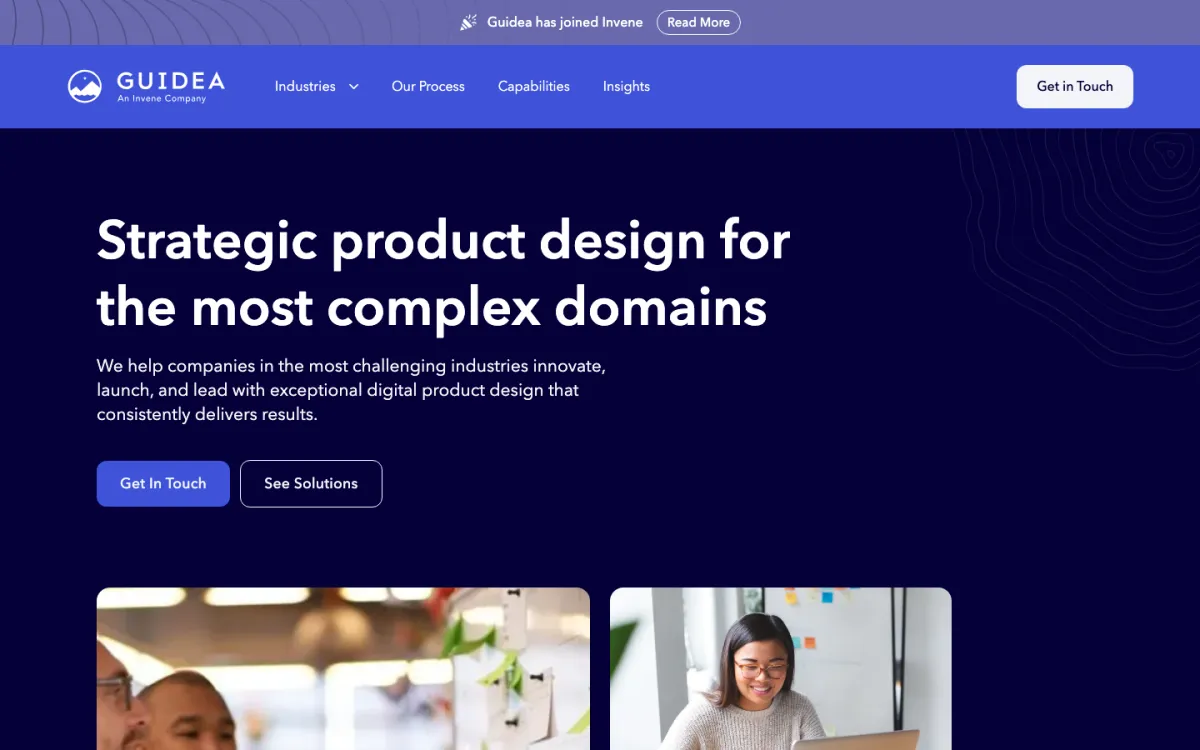
Guidea is 100% UX/UI and 100% medical, and it is the only agency on this page whose portfolio cites FDA clearances. That is regulatory scrutiny of the kind a claims interface and a policy disclosure attract, and it means somebody has already argued about wording that a person reads in a bad moment. It has run from Austin since 2005.
Two of its three published reviews are staff augmentation, expanding an IT company's design system and supplying designers into a pharmacy solutions company, which is a different relationship from owning a claims journey end to end. The $50,000 minimum is high, and 60% of its clients are enterprises over a billion dollars.
- Starting price
- $50,000+
- Engagement model
- Project and retainer
- Clutch
- 5.0/5, 43 reviews
- Hourly rate
- $150 - $199
- Team size
- 10 - 49 people
- Best for
- carriers who need design that survives regulatory and clinical scrutiny.
- Not a fit for
- small scopes or engagements where the agency owns delivery, or budgets under $25,000.
UXDA
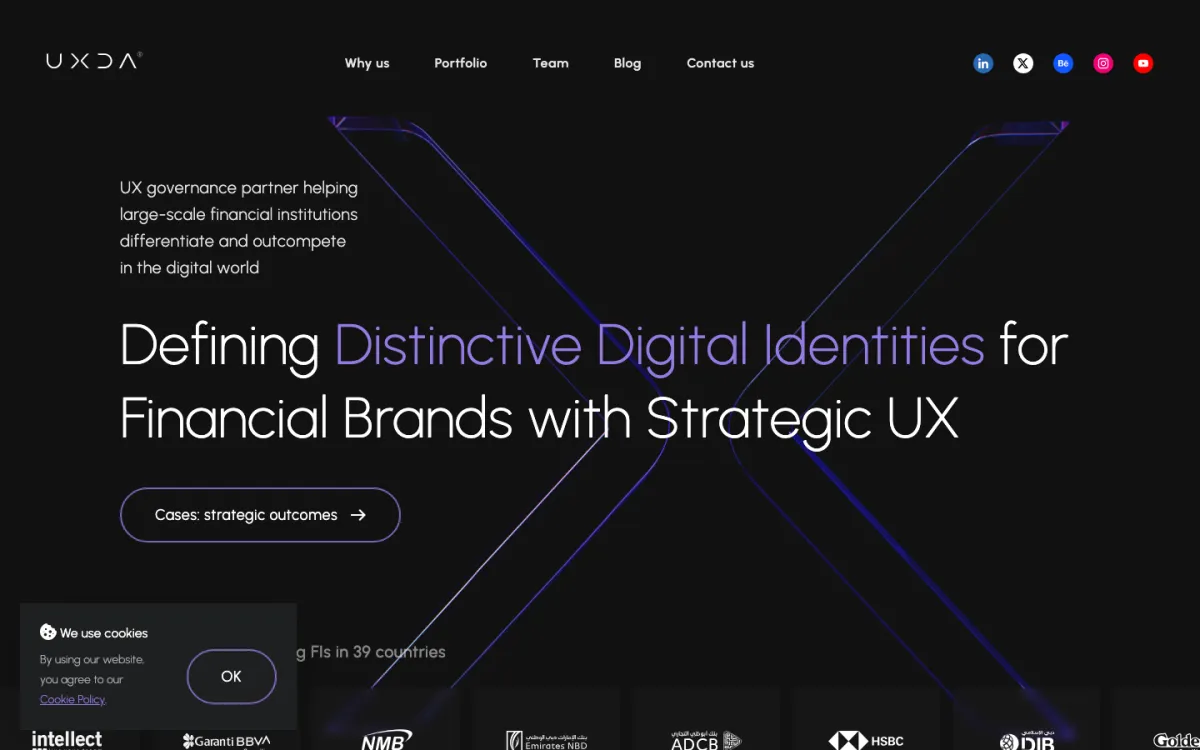
UXDA is the only agency here working exclusively in one regulated financial sector, 100% UX/UI and 100% financial services, with named work for Finastra, Backbase and HSBC. Insurance and banking share the hard part: a product bought on trust, priced in terms nobody reads, and regulated in how it can be explained. It has delivered into 39 countries since 2015.
The published work is banking: an e-wallet expansion, a hedge fund's investing platform, product enhancements for a financial services company. Banking apps are opened weekly and a policy is opened only when something has gone wrong, so the dormancy problem is not one it has had to solve. Its $250,000 minimum is the highest here.
- Starting price
- $250,000+
- Engagement model
- Programme-based
- Clutch
- 4.8/5, 21 reviews
- Hourly rate
- $200 - $300
- Team size
- 10 - 49 people
- Best for
- large carriers rebuilding a regulated digital product end to end.
- Not a fit for
- smaller carriers, single claim journeys, or budgets under $25,000.
Slide UX
Slide UX specialises in brain change, ageing and care, designing for older adults, care partners and the professionals supporting them. That is the closest thing on this page to a claimant: somebody under cognitive load, often acting for another person, using an interface for the first time on the worst day. It is 95% UX/UI, with medical and non-profit its two largest industries at 25% each.
The published work leans web rather than product: a consultancy site of 15 screens and a 36-question assessment, a nonprofit's navigation. At two to nine people it is a senior pair on one workstream, so a carrier running quote, policy and claims squads at once will need more than it can staff.
- Starting price
- $5,000+
- Engagement model
- Consulting engagement
- Clutch
- 4.9/5, 72 reviews
- Hourly rate
- $150 - $199
- Team size
- 2 - 9 people
- Best for
- the claim journey, where the customer is least able to cope.
- Not a fit for
- several parallel workstreams or full product builds, or budgets under $25,000.
Akendi
Akendi's reviews describe field studies, going into user environments to analyse processes and build personas rather than running remote interviews. An insurance claim happens in a flooded house or at a roadside, not at a desk, so watching where the phone is actually held is the research that matters here. Financial services and medical are its two largest industries at 20% each.
Only 30% of its output is UX/UI, with the rest across digital strategy, graphic and print design, so sustained product delivery is a minority of what it does. It has four Clutch reviews, the thinnest public record on this page, and one of them is a fintech relationship rather than insurance.
- Starting price
- $5,000+
- Engagement model
- Consulting engagement
- Clutch
- 4.8/5, 4 reviews
- Hourly rate
- $100 - $149
- Team size
- 10 - 49 people
- Best for
- finding out what claimants actually do before anything gets designed.
- Not a fit for
- sustained product design delivery, or budgets under $25,000.
Full Clarity
Full Clarity is a service design consultancy, and two of its case studies are the right shape for a claim: addressing the UK's social housing crisis through service design, and optimising usability and accessibility for a UK government service. Both involve a distressed person dealing with an institution through a process they did not choose. Half its clients are enterprises over a billion dollars.
Its reviews describe website audits and user journey analysis with three persona groups, which is diagnosis rather than delivery. At two to nine people in Farnham, a carrier that wants the claims app designed, built and rolled out across channels is buying more than this team can staff.
- Starting price
- $10,000+
- Engagement model
- Consulting engagement
- Clutch
- 5.0/5, 13 reviews
- Hourly rate
- $50 - $99
- Team size
- 2 - 9 people
- Best for
- mapping the claim as a service before rebuilding the interface.
- Not a fit for
- large multi-channel builds, or budgets under $25,000.
Eastern Standard
Eastern Standard's strongest card for an insurer is content strategy. It redesigned a higher education institution's website around content and trained the client's staff to run it, and a policy document is the same problem: language written for compliance that somebody has to understand under pressure. Medical is 25% of its client base, and Temple Health is on its case study list.
The service mix is web design, web development and branding at 15% and 10%, with no product design line at all, so a claims interface is outside what it sells. Six Clutch reviews is a thin public record for a studio charging $150 to $199 an hour.
- Starting price
- $25,000+
- Engagement model
- Project and retainer
- Clutch
- 5.0/5, 6 reviews
- Hourly rate
- $150 - $199
- Team size
- 10 - 49 people
- Best for
- insurers rewriting the public site and the language customers read.
- Not a fit for
- in-product claim and policy interfaces, or budgets under $25,000.
Koombea
Koombea is a build shop first, with mobile app development at 40% and no UX/UI line in its published service mix. That matters here because the claim gets reported from wherever the damage is, on a phone. Its published work includes Paymentez Payments and Lending, financial services is 15% of its clients, and it has worked from Barranquilla since 2007.
The absence of a design line is the limit. Its reviews describe wrapping an AI engine in a SaaS interface and rebuilding iOS apps, which is engineering with design attached rather than design leading. For an insurer whose problem is the claim experience itself, the thinking has to come from somewhere else.
- Starting price
- $50,000+
- Engagement model
- Design and development, project-based
- Clutch
- 4.9/5, 24 reviews
- Hourly rate
- $50 - $99
- Team size
- 50 - 249 people
- Best for
- building the mobile claims app once the experience is already defined.
- Not a fit for
- design-led or research-led engagements, or budgets under $25,000.
ROSSUL
ROSSUL works where the workflow is the hard part, on enterprise and mission-critical software, split evenly between product design and UX/UI with nothing else attached. On this page that points at the adjuster and underwriter side of insurance rather than the customer side: dense internal tools used all day. Information technology and manufacturing are 30% and 25% of its client base.
Its published work is a solar simulator, a project management product and a document collaboration platform, none of it consumer facing and none of it insurance. A claimant who has used the interface once, at eleven at night, is a very different user from an operator trained on the system.
- Starting price
- $25,000+
- Engagement model
- Project and retainer
- Clutch
- 4.9/5, 20 reviews
- Hourly rate
- $100 - $149
- Team size
- 10 - 49 people
- Best for
- the internal claims and underwriting tools your own staff live in.
- Not a fit for
- customer-facing claim journeys, or budgets under $25,000.
How much does an insuretech UX engagement cost?
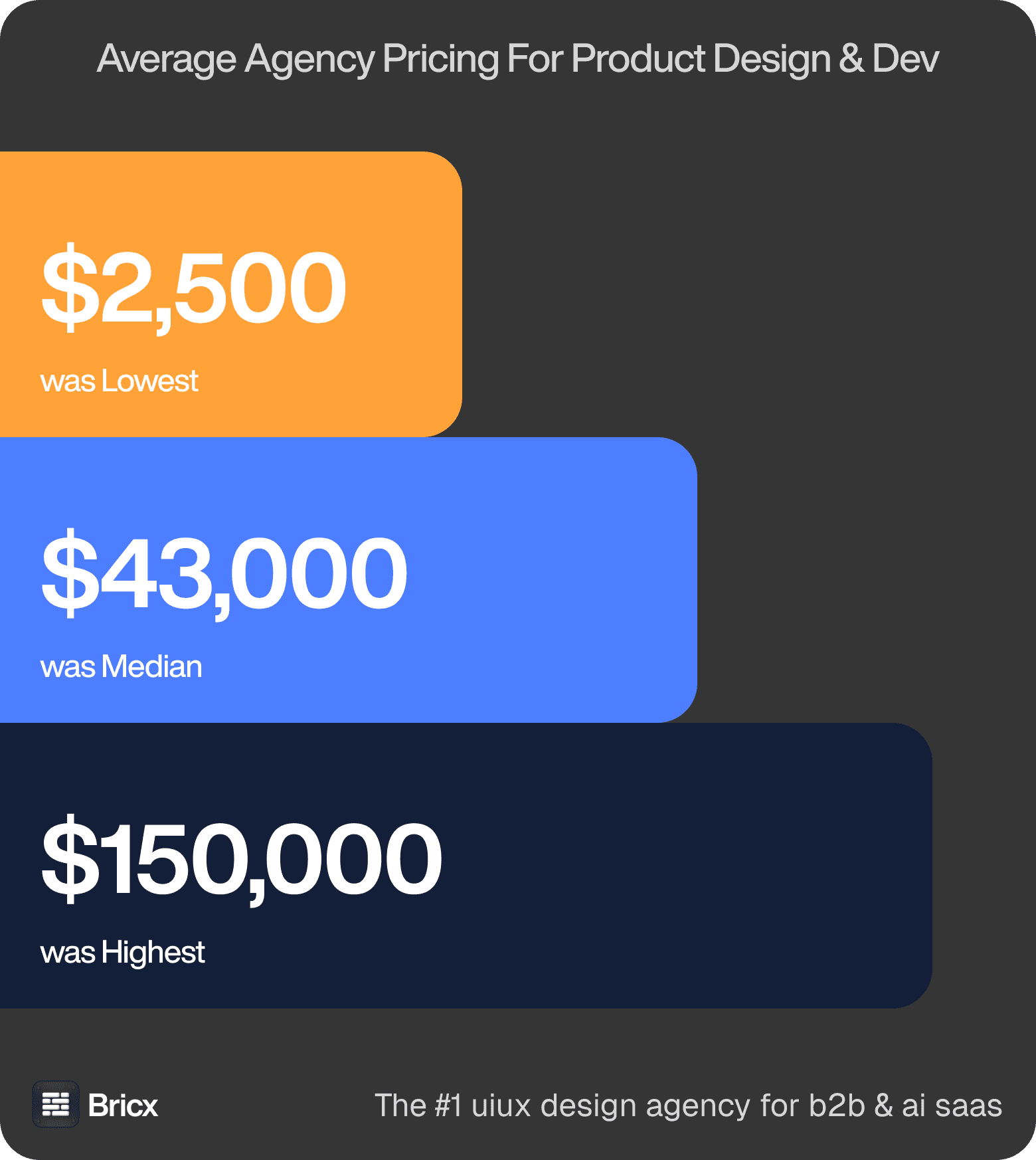
What you should expect to pay. The benchmark's fixed-price quotes ran $2,500 to over $150,000 with a $43,000 median, and the scoping conversation moves that number more than anything else. Those figures cover product design across the whole benchmark, so treat them as the range insuretech customer experience is quoted inside rather than a price for it.
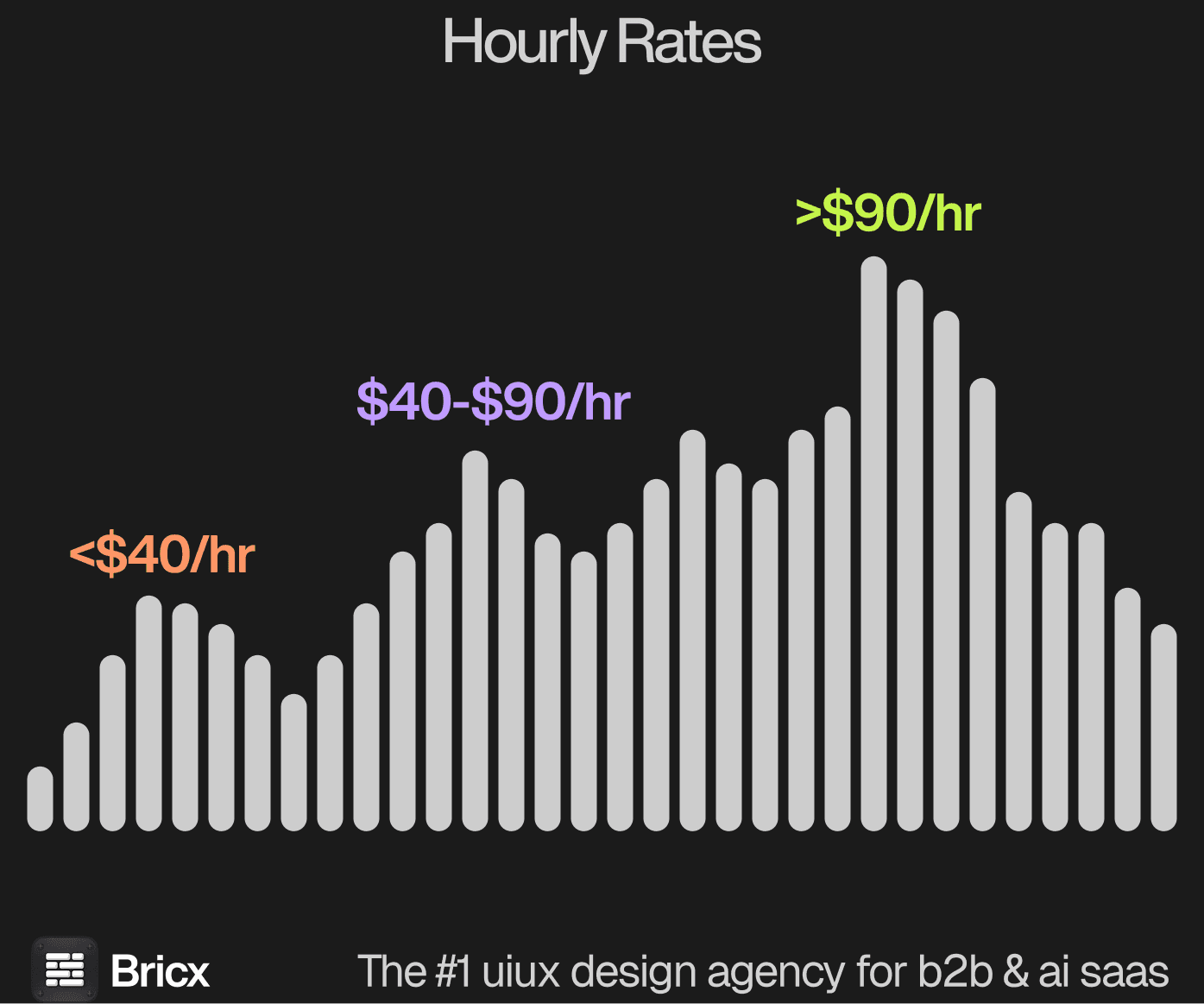
Rate ranges. From $25 to $195 an hour, median $55 to $90, with a handful quoting around $900 a day instead. InsureTech sits above the median because a claim journey spans an app, a document, an adjuster and a payment, and none of them can be designed alone.
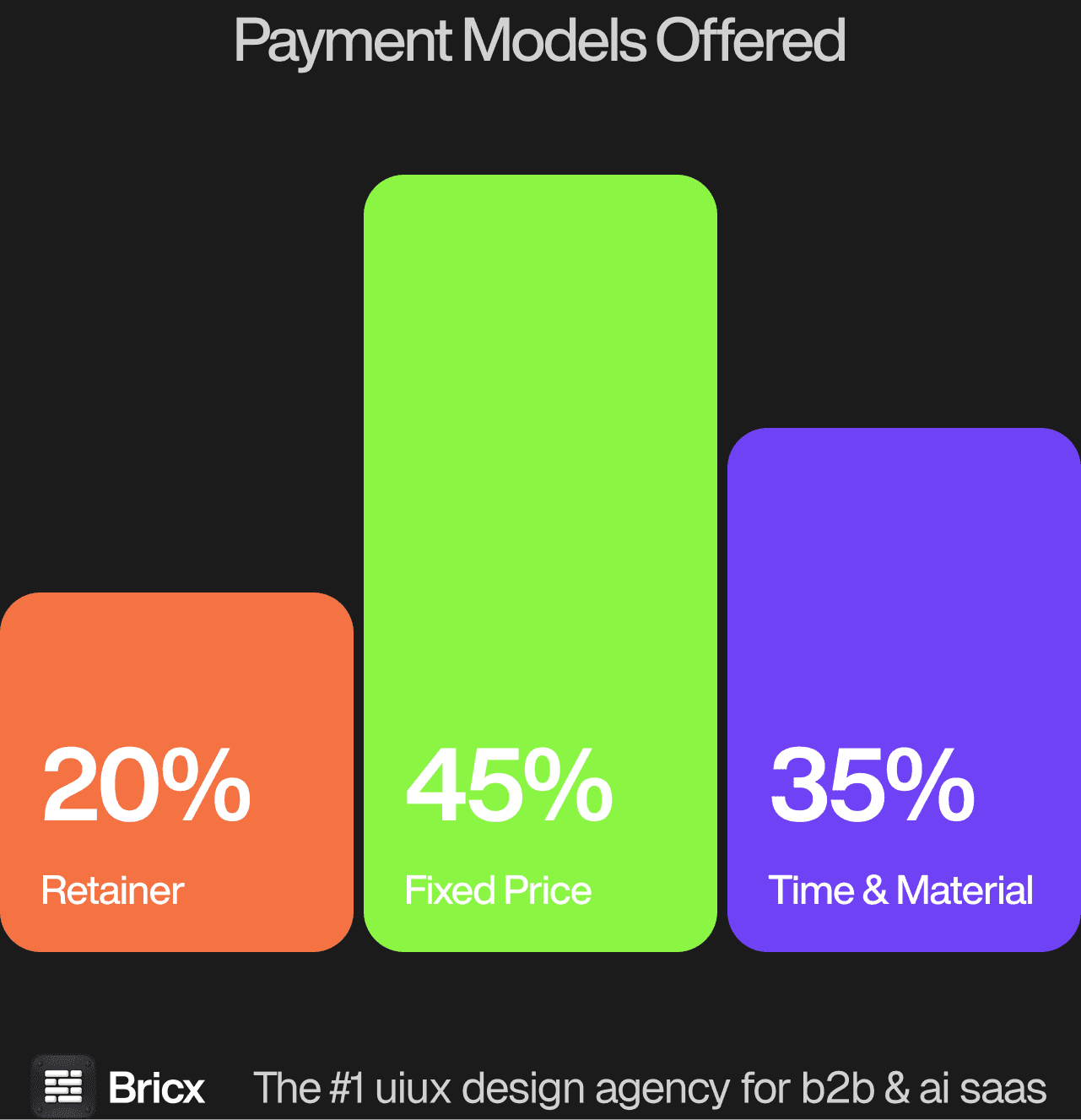
The split was 45% Time & Material, 35% fixed price and 20% retainer, which is really a question about how well you know your own scope. For insuretech customer experience the model usually matters more than the headline figure, because it decides what happens when the scope moves.
- Fixed price where the spec is settled.
- Time & Material where the spec is a hypothesis.
- Retainer where the spec is a backlog.
- Which one fits insuretech customer experience comes down to whether the scope is settled before the work starts.
How do you evaluate an insuretech UX agency?
Five things separate insuretech customer experience from insurance software generally.
Ask what the claim flow does at the worst moment. The person filing has had an accident or a loss, and an interface built for a calm user in a browser tab was built for the wrong person.
Ask how the policy gets explained. Coverage, exclusions and excess decide whether a claim is paid, and they are almost always presented as a document rather than designed as an answer.
Ask about status during a claim. Silence generates the complaints, not the decision, and a claim with no visible state produces a phone call for every day it stays quiet.
Ask how a declined claim is communicated. It is the highest-stakes screen in the product and it is usually a letter drafted by somebody in compliance.
Ask what happens on a phone with one bar of signal. Losses happen away from a desk, and photographs, forms and evidence uploads are where a claim journey fails in practice.
What are the red flags when hiring a design agency?
- A long discovery phase with no shippable output. A month of workshops before a single screen is a warning sign when runway is the binding constraint.
- Rigid contracts with no exit. A year-long lock-in is a poor match for a roadmap that changes quarterly. Look for a break clause or a shorter initial term.
- A portfolio without outcomes. Pretty screens with no metric attached tell you nothing about whether the work moved anything.
- No pushback on your brief. Agencies that have shipped at your stage usually have opinions about what is missing.
- No answer on post-launch. Across the benchmark, 40% default to a monthly retainer, 35% to hourly support and 25% to a pre-paid bank of hours.
- No comparable example of insuretech customer experience. An agency that cannot point to work of the same shape is learning on your budget.
Should you hire a UX agency or build in-house?
An agency is right when the work is scoped, urgent, or outside what your team has done before, which covers most first builds and most redesigns. For insuretech customer experience specifically, the question worth settling first is how often the work recurs.
A hire is right when the work never ends. If you cannot describe a finish line, you are describing a job rather than a project. Where insuretech customer experience falls on that line is usually clear once you count how many times it will need doing again.
Insurers hold deep actuarial and regulatory capability and design teams that report into marketing, which is why the quote funnel is polished and the claim journey is not. Claims is where outside help pays back, because internally it belongs to operations and nobody is measured on how it feels.
FAQs
What is the most important interface in an insurance product?
The claim. It is the only moment the customer genuinely uses what they bought, and it decides renewal and reputation far more than the purchase flow does.
Why are claims journeys usually poor?
They sit with operations rather than product, and are measured on cost and cycle time rather than on the experience of the person filing.
How should a declined claim be presented?
With the reason tied to the specific policy clause and a clear route to challenge it. A compliance letter with no explanation turns a decision into a complaint.
How much does insuretech design cost?
Fixed-price product design across the benchmark ran $2,500 to over $150,000 with a median near $43,000, and claims work spanning app, document and payment sits above that median. Bricx starts at $25,000.