(01)
Designed by the people who build it
The people in your kickoff write the code. No handoff document to misread and nobody to blame when the two do not match.
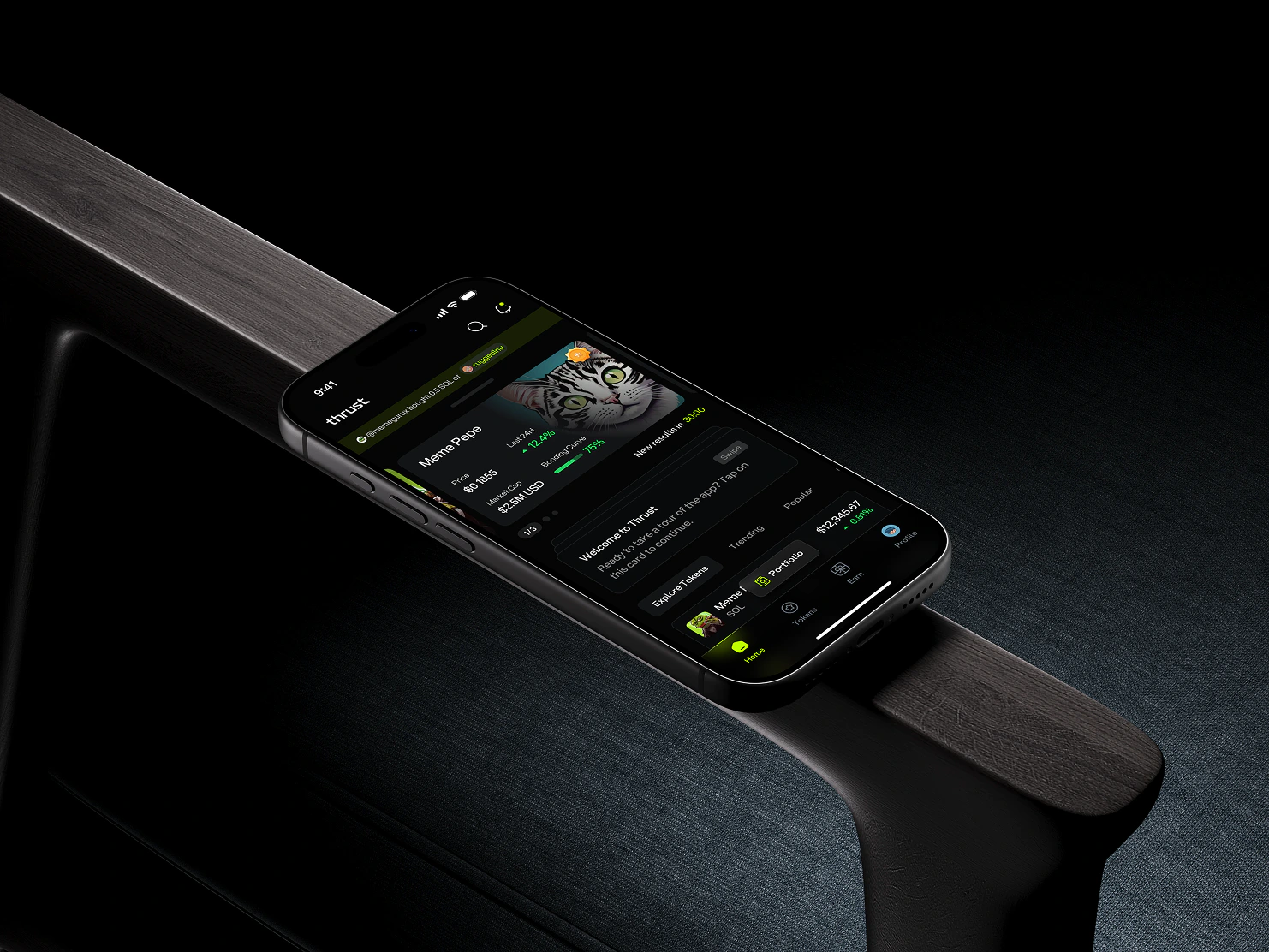
Trusted by SF’s top AI & SaaS companies
And many more
Almost everyone arriving here has tried the two-vendor version. An agency designed it, a development shop built it, and the result satisfied neither.
Book a callOne vendor designed it and another built it.
Two timelines, two invoices and a result that matches neither the design nor the brief.
Your AI prototype will not survive real users.
It got you working fast, with no structure, no states and no consistency underneath.
The software works and nobody wants to use it.
Every requirement was met and the experience was never anybody’s job.
Your development partner has no opinion on design.
They will build exactly what you specify, including the parts that were wrong in the spec.
The internal tool everyone depends on is unusable.
Built once, quickly, by someone who left, and now it is load-bearing.
Nobody owns the outcome end to end.
Every problem is arguably somebody else’s, so none of them get fixed.

“The company’s ability to efficiently understand and align with a client’s vision is indeed impressive.”

Jorge Villafuerte
Director of Technology @ Avantpage
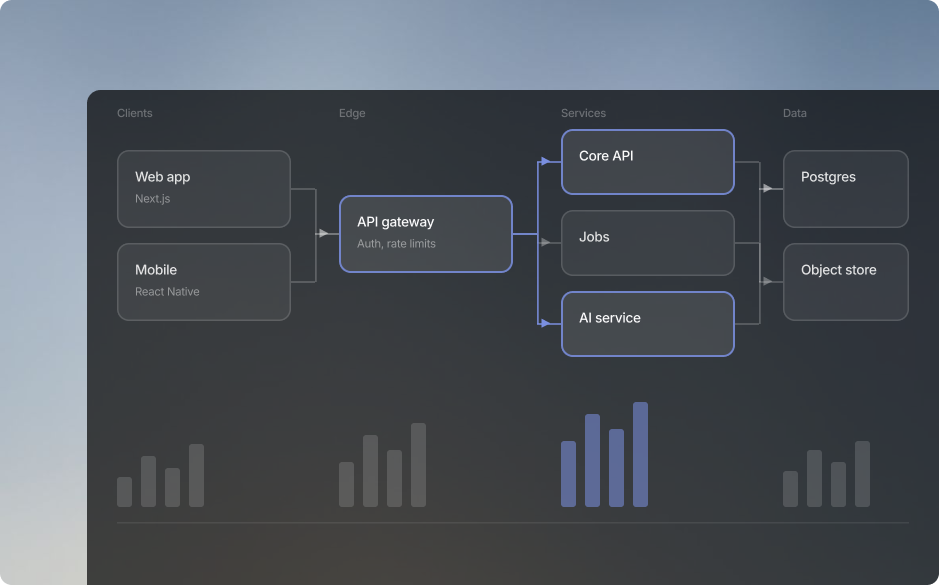
We settle the architecture and the flows before anyone writes code. What the system does, what it talks to, what happens when something fails, and the shape of the data underneath. Getting this wrong is the most expensive mistake available in a software project.
Typical outputs:
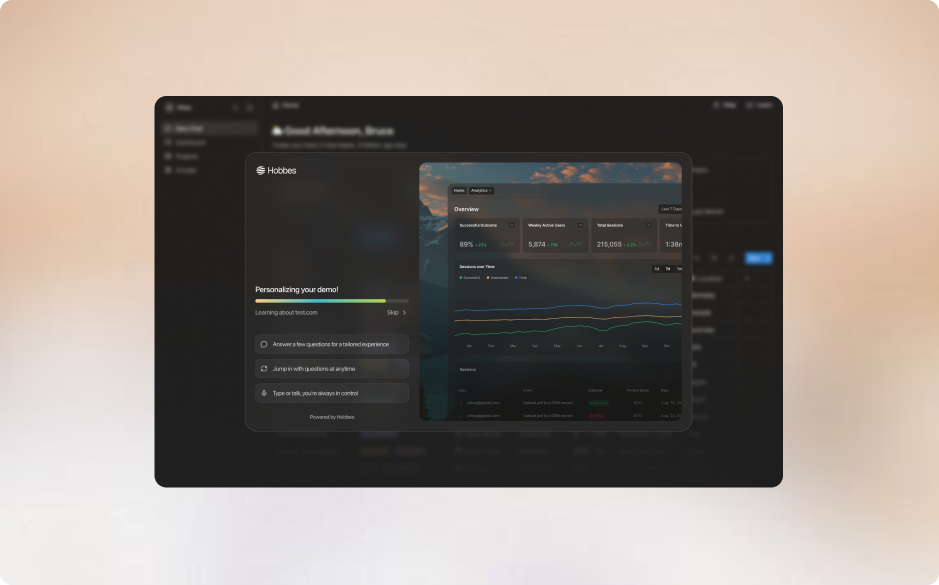
We design the interface properly, every screen and every state. This is the part that gets skipped when a development shop runs the project, and it’s the difference between software that’s delivered and software that’s used.
Typical outputs:
We build the frontend in React and Next.js, working from a component library rather than screen by screen. Our designers and engineers are the same team, so there’s no handoff document to misread.
Typical outputs:
We wire it to everything it needs to talk to. Your API, auth, payments, analytics, CRM and whatever else the product depends on. We’re honest about the limits: we’re a design-led product team, not an enterprise systems integrator.
Typical outputs:
We QA against the design rather than a checklist written in week one. Every state, every breakpoint, real accessibility testing, and a performance budget we hold to. Then two weeks of support, because that’s when the real bugs arrive.
Typical outputs:
(01)
The people in your kickoff write the code. No handoff document to misread and nobody to blame when the two do not match.
(02)
What the system does, what it talks to and what happens when something fails. Getting this wrong is the most expensive mistake available in a software project.
(03)
Work moves in two week cycles with something deployed and clickable at the end of each, so nothing is a surprise at the end.
(04)
We are a design-led product team, not a general software house. If yours is a backend migration, we tell you on the first call.
Most software gets built and then designed, which is why so much of it works and so little of it gets used. We do both, as one engagement with one team.
01
No second vendor, no interpretation layer and nobody to point at when the build does not match what was approved.
02
Components, states, edge cases and frontend reality, because we ship the build as well.
03
AI does the thinking and the first drafts now. What it cannot do is the last ten percent, and that is the whole difference.
04
We are a design-led product team, not an enterprise systems integrator. We refer out what we are not the right people for.
Ranked three years running

30+ verified reviews on Clutch.
Trusted by top SaaS
“We handed Bricx a vague brief and got back a brand that felt inevitable. That’s rare.”

Chirag Kulkarni
CEO @Hobbes
99.7%
Client Satisfaction
30+
Industries
50+ Projects
| Options | Prototype | Product build | Embedded |
|---|---|---|---|
| Best for | Proving it works | A shippable product | Continuous product work |
| Typical length | 3 to 4 weeks | 8 to 16 weeks | Rolling, monthly |
| Who you get | Designer plus engineer | Designer, lead, engineer | Design and engineering pod |
| Commitment | Fixed scope | Milestone based | Pause after cycle one |
| What is included | Architecture, design, build | Everything, plus integrations | Everything, plus design system |

Zero risk. Real design work delivered before you commit to anything.
React and Next.js on the frontend, with ShadCN as the component base. For marketing sites we will usually recommend Framer or Webflow instead, because custom code is often the wrong answer for a page your marketer needs to edit.
We handle integration, auth, APIs and the services a product build needs. We are a design-led product team rather than an enterprise systems integrator, and we tell you plainly when something belongs with a specialist.
Yes, and a prototype is a useful starting point rather than an embarrassment. It tells us what you actually meant. We usually keep the logic and rebuild the surface and the structure around it.
Three to four weeks for a working prototype. Eight to sixteen for a shippable product. Continuous work moves to a monthly retainer instead.
Fixed scope engagements start at $25,000. Continuous work runs on a monthly retainer starting at $10,000, with no lock-in and fifteen days notice.
You do, from the first commit. It lives in your repository and you can take it anywhere.
Off the shelf whenever it exists and roughly fits, and we will say so. Custom when the workflow is the business, when integration cost exceeds build cost, or when the tool everyone depends on is one you cannot buy.
No-code for marketing sites and internal tools with simple logic. Custom when you need real auth, real data, or performance under load. We build both and have no incentive to push you toward the more expensive one.
Yes. We will connect you with a founder we have done this for, so you hear how it went from their side rather than ours.
We work almost entirely with B2B SaaS and AI companies, across fintech, healthcare, logistics, legal, edtech and infrastructure. If we have not worked in your category, we say so and tell you what that changes.