(01)
The audit is free, and first
Every engagement opens with an audit at no cost. We find the real problem before anyone opens Figma.
Trusted by SF’s top AI & SaaS companies
And many more
This is almost never a hiring problem. It’s a seam problem, and the seam sits between the people who designed it and the people who built it.
Get a free auditThe build doesn’t match the design.
Ten small compromises, none worth escalating, and a product nobody signed off on.
Your agency handed over a Figma file and vanished.
Every edge case the designers never drew is now an engineering call made at midnight.
No component library, so every screen restarts.
The same button exists eleven times, and changing it is a two day job.
Your AI wrote it and none of it is consistent.
It gets you 80% there fast. The last 20% is where the product lives.
Your engineers are building UI instead of product.
People who should work on the hard-to-copy part are centring divs.
Nobody owns performance until a buyer asks.
Enterprise procurement is a bad place to discover this.

“They delivered fantastic work and always kept us updated and informed.”

Mike Nikles
Founder @ Webstone Technologies
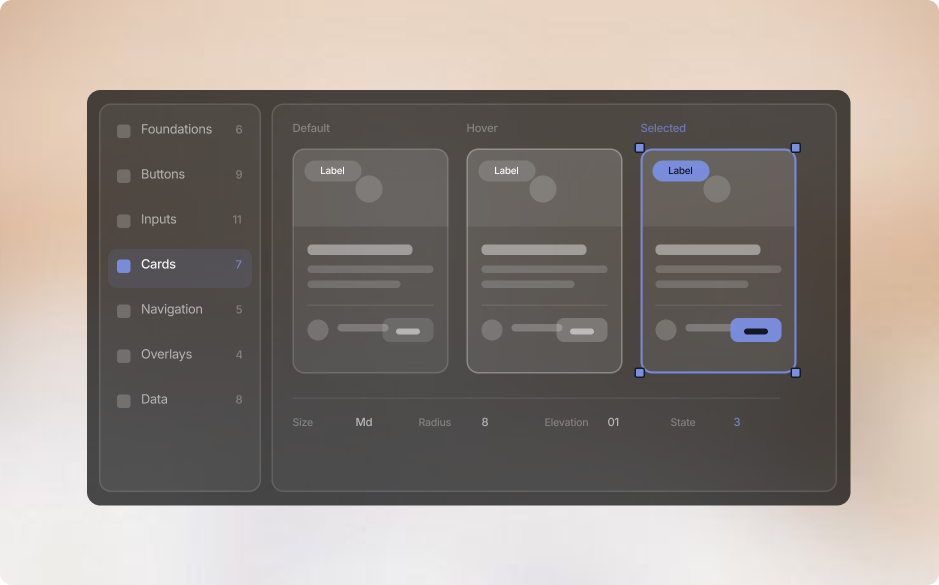
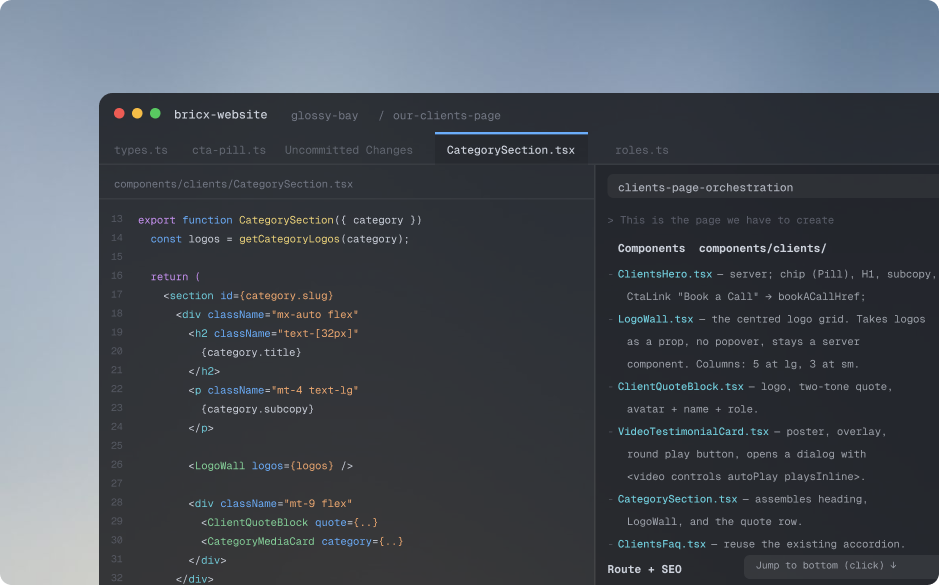
We build the component library before we build pages. Every component ships with its states, variants and edge cases already handled, so the second screen costs a fraction of the first. React with ShadCN as the base unless you’ve a reason to go elsewhere.
Typical outputs:
(01)
Every engagement opens with an audit at no cost. We find the real problem before anyone opens Figma.
(02)
A senior designer joins your Slack and your sprint rhythm. There is no account manager relaying notes between us.
(03)
Work moves in two week cycles, and something is reviewable at the end of every one. You are never waiting on a big reveal.
(04)
The one commitment that decides whether this lands on time. We make it, and we ask you to make it too.
Most agencies hand you a Figma file and leave. We used to be one of them. In April 2026 we didn’t do frontend at all, and we said so on calls. We added it because we kept watching design get diluted on the way to production.
01
Components, states, edge cases and frontend reality, because we ship the build as well.
02
AI does the UX thinking now. Layouts, flows, first drafts. What it can’t do is the last ten percent.
03
The people in your kickoff are the people doing the work. Nothing gets passed down a chain.
04
You keep a system your team can extend, so the next page doesn’t restart an argument you already settled.
Ranked three years running

515 verified ratings on Clutch, averaging 4.9 out of 5.
Trusted by top SaaS
“We handed Bricx a vague brief and got back a brand that felt inevitable. That’s rare.”

Chirag Kulkarni
CEO @Hobbes
99.7%
Client Satisfaction
30+
Industries
50+ Projects
| Options | Build only | Design and build | Embedded |
|---|---|---|---|
| Best for | Design is already done | A full feature or site | Continuous product work |
| Typical length | 2 to 4 weeks | 6 to 10 weeks | Rolling, monthly |
| Who you get | One engineer | Designer, lead, engineer | Engineer plus lead |
| Commitment | Fixed scope | Milestone based | Pause after cycle one |
| What is included | Frontend build and QA | Design through production | Everything, plus components |
 Bricx
BricxZero risk. Real design work delivered before you commit to anything.
React and Next.js, with ShadCN as the component base unless you’ve a reason to go elsewhere. For marketing sites we’ll usually recommend Framer or Webflow instead, because custom code is often the wrong answer for a page your marketer needs to edit.
Yes. We read what’s there before we propose anything, and we’ll tell you honestly whether extending it or replacing a layer is the better call.
No. We take the frontend so your engineers can work on the parts of the product that are hard to copy. Where a piece of work belongs with your team, we say so.
Two to four weeks against finished designs. Six to ten weeks for design and build together. Larger products move to a monthly retainer instead.
Fixed scope builds start at $25,000. Continuous work runs on a monthly retainer starting at $10,000, with no lock-in and fifteen days notice.
You do, from the first commit. It sits in your repository, not ours.
Feedback inside 24 to 48 hours, one decision-maker who can approve direction, and your copy on the schedule we agree in week two. Projects that slip almost always slip on one of those three.
Hire when the work is permanent and you can wait four months. Use us when the work is a defined build, when design and frontend keep drifting apart, or when your engineers should be on the parts of the product that are hard to copy.
Yes, and we treat both as build requirements rather than a pass at the end. Accessibility is built into each component, and we hold a performance budget through the build. Enterprise procurement asks about both, usually late.