(01)
The audit comes first, free
Every engagement opens with an audit at no cost. A redesign without a diagnosis rebuilds the same mistakes in better typography.
Trusted by SF’s top AI & SaaS companies
And many more
A redesign request almost always arrives attached to a number: activation, retention, support volume, or a deal that was lost on the demo.
Book a callThree years of features and no structural decision since.
Four product managers later, the product is something nobody actually designed.
Every release made the last one harder to find.
Navigation grew feature by feature, and now search is the navigation.
New users do not get through setup alone.
Support answers the same question every week, so headcount tracks signups.
You are carrying features nobody uses.
Each one still costs navigation space, engineering time and the user’s attention.
Enterprise buyers judge the UI before the roadmap.
A prototype grade interface reads as a prototype grade company.
Your team disagrees about what to fix first.
Everyone has a favourite problem, and without evidence the loudest one wins the sprint.

“Their attention to detail and great UI/UX sense and taste enabled a great revamp of our product.”

Mehak Aggarwal
Founder @ Sybill
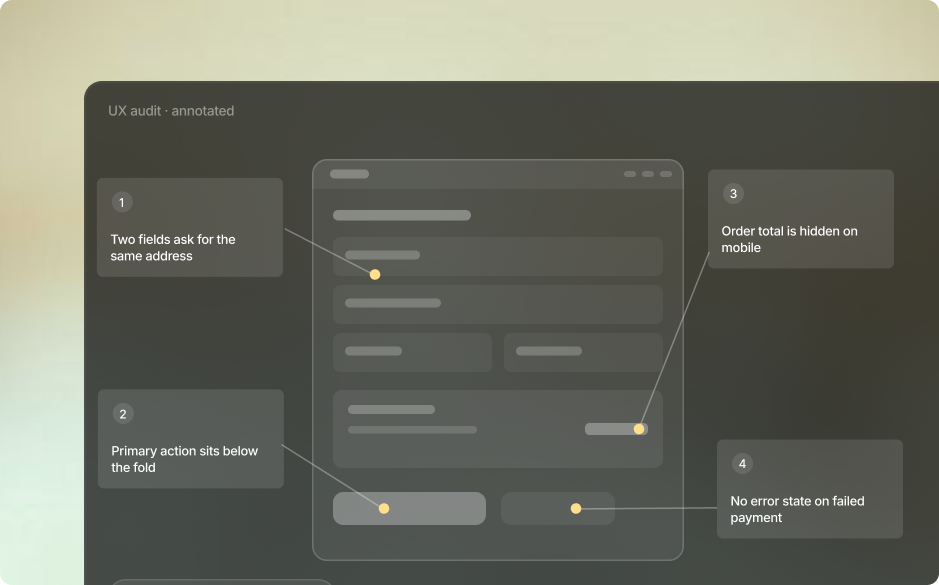
We start on the product you already have. Heuristic review of every core flow, your analytics, session recordings, support tickets and interviews with people who churned. You get a ranked list of what’s costing you, before anyone proposes a screen.
Typical outputs:
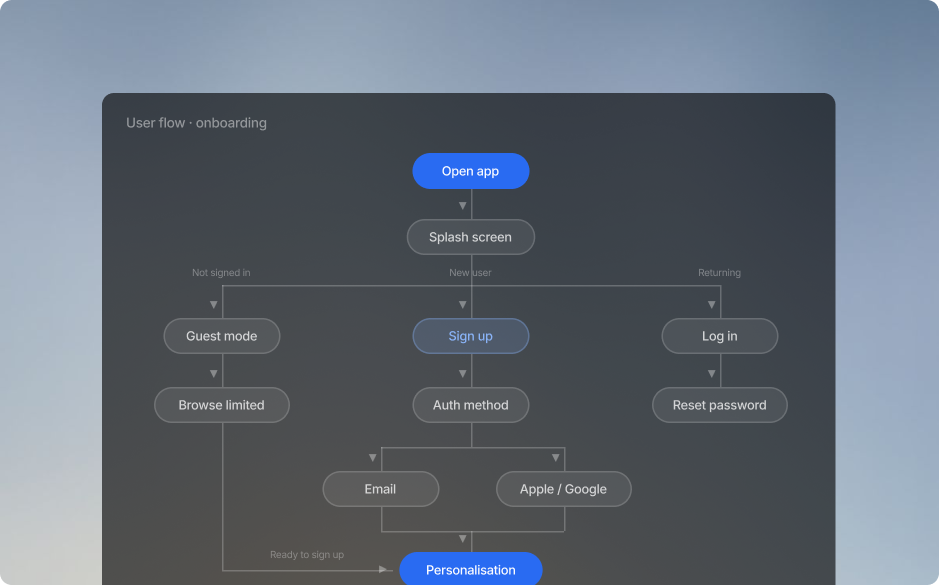
This is where a redesign is won or lost. We rebuild the information architecture around what the product actually is now, rather than the order features happened to arrive in, and we redraw the core flows to match. Most of the value sits here.
Typical outputs:
We wireframe the new structure and prototype it before any visual work. You test it with real users while changing it is still cheap, and we validate the direction before anyone commits to pixels.
Typical outputs:
We design the new product UI, every screen and every state. Empty, loading, error, permission denied, first run, and the one with far too much data in it. This is where a redesign either survives production or quietly reverts.
Typical outputs:
You keep a component library your team can extend, so the next feature doesn’t restart the argument. Documented in Figma, mapped to code, structured so your engineers build against it without guessing.
Typical outputs:
(01)
Every engagement opens with an audit at no cost. A redesign without a diagnosis rebuilds the same mistakes in better typography.
(02)
Information architecture and core flows come first. Fixing screens on a broken structure just moves the confusion somewhere else.
(03)
We design the migration path as part of the work, so value lands early and your existing users are not dropped into a new product overnight.
(04)
You put the new structure in front of real users at wireframe stage, before engineering has committed to anything.
A redesign is the most expensive way to find out you did not know what was wrong. That is why every engagement opens with an audit we do not charge for. A few times a year it ends with us saying you need three fixes, not a rebuild.
01
Several times a year the audit ends with three fixes instead of a rebuild. An agency that has never done that is selling, not advising.
02
AI does the thinking and the first drafts now. What it cannot do is the last ten percent, and that is the whole difference.
03
Components, states, edge cases and frontend reality, because we ship the build as well.
04
You keep a component library your team can extend, so the next feature does not restart the argument.
Ranked three years running

30+ verified reviews on Clutch.
Trusted by top SaaS
“We handed Bricx a vague brief and got back a brand that felt inevitable. That’s rare.”

Chirag Kulkarni
CEO @Hobbes
99.7%
Client Satisfaction
30+
Industries
50+ Projects
| Options | Flow redesign | Embedded team | Full redesign |
|---|---|---|---|
| Best for | One broken flow | Continuous redesign work | The whole product |
| Typical length | 2 to 3 weeks | Rolling, monthly | 8 to 16 weeks |
| Who you get | One senior designer | Designer plus lead | Designer, lead, engineer |
| Commitment | Fixed scope | Pause after cycle one | Milestone based |
| What is included | Audit, flows, UI, handoff | Everything, plus design system | Everything, plus frontend |
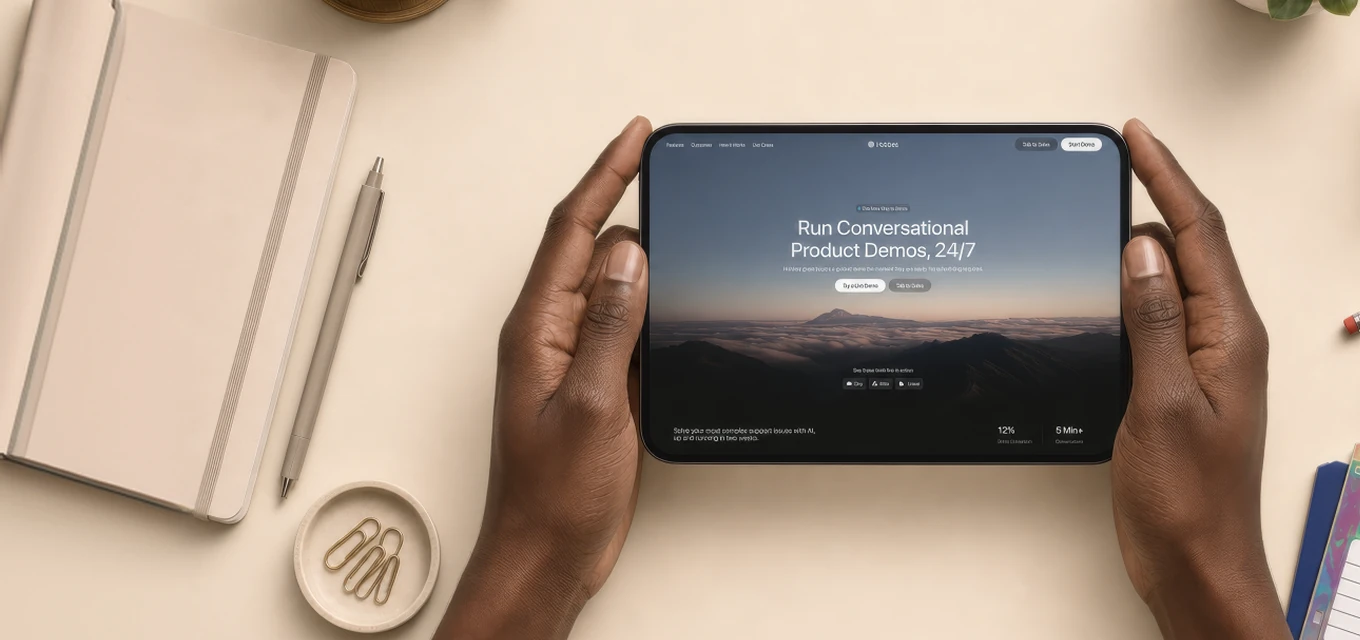
Zero risk. Real design work delivered before you commit to anything.
Start with the audit. It is free when it opens an engagement, and it is the honest way to answer this. If the answer is three fixes we say so, and we have before.
Product work goes on a monthly retainer. Redesigns generate iterations by nature, and fixed price caps your revisions in exactly the phase where revisions are the point.
Retainers start at $10,000 per month, with no lock-in and fifteen days notice. Fixed scope work on a single flow starts lower.
We design the migration path as part of the work, not after it. That usually means shipping by surface rather than all at once, and it is a design decision before it is an engineering one.
Yes, and it is often the right call. One flow, done properly, tells you whether the larger investment is worth making.
Two to three weeks for a single flow. Eight to sixteen weeks for a full product, though we ship by surface so value lands earlier. Continuous work runs monthly instead.
Either. Our handoff files carry every edge case and state, and our engineers can build it if you would rather not spend your own engineering time.
Every file, and you own all of it. Design source, component library, documentation and, where we built it, the code in your repository from the first commit.
Yes. We will connect you with a founder we have done this for, so you hear how it went from their side rather than ours.
We work almost entirely with B2B SaaS and AI companies, across fintech, healthcare, logistics, legal, edtech and infrastructure. If we have not worked in your category, we say so and tell you what that changes.