(01)
We design it before we build it
Most Webflow shops build what you hand them. A clean build of a weak page is still a weak page, so the design comes first.
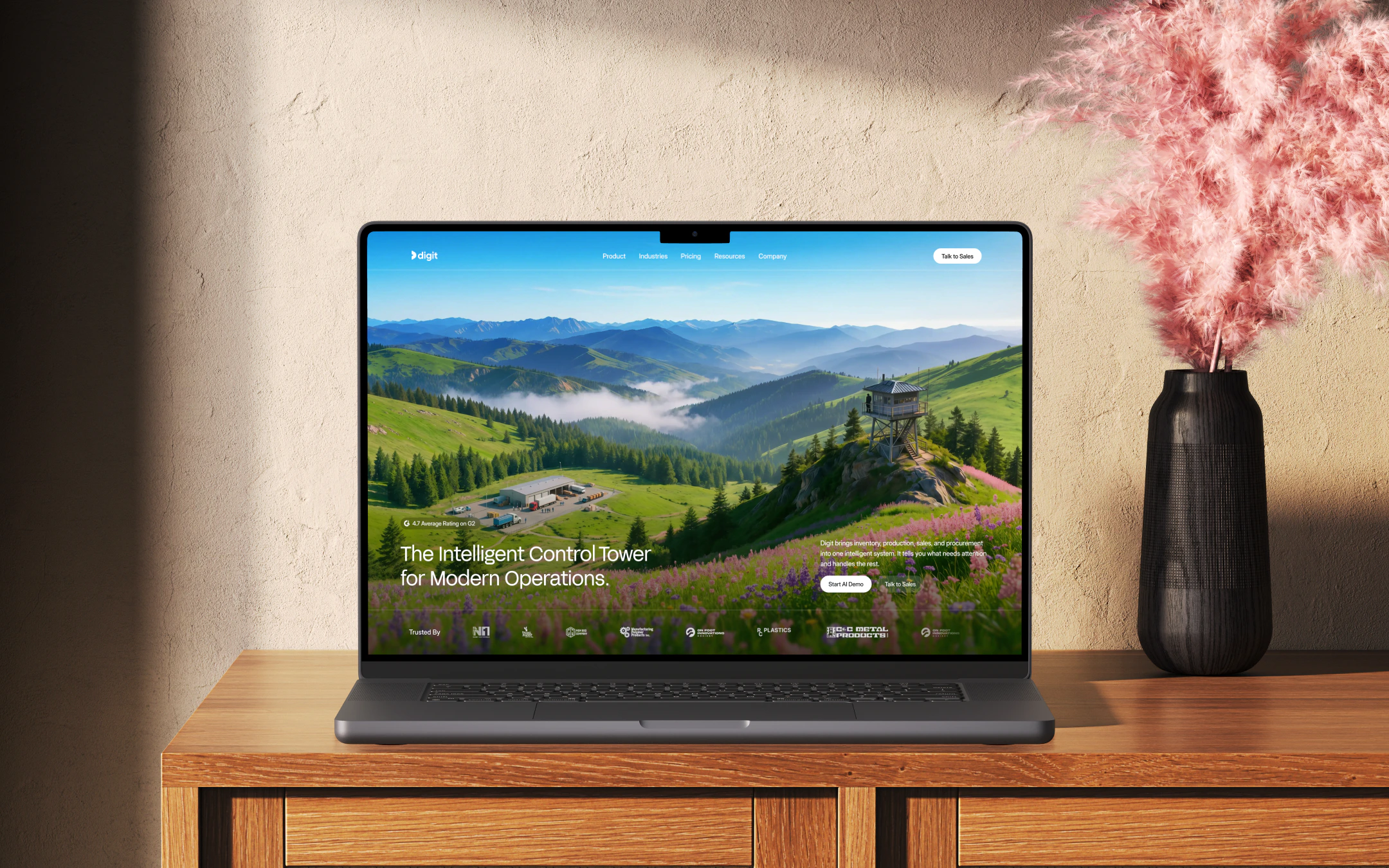
Trusted by SF’s top AI & SaaS companies
And many more
Most Webflow projects that reach us are rescues. Built fast, by someone who is no longer available, on a structure nobody documented.
Book a callA freelancer built it and then disappeared.
It works until it needs changing, and nobody can safely touch the class structure.
The CMS was never really set up.
Every post is a static page, so publishing anything needs a developer and a negotiation.
Every copy change goes through engineering.
Your marketer wants to test a headline and it takes three people and a deploy.
Your designer handed over a Figma nobody could build.
It was approved in a vacuum, and half of it does not survive contact with real components.
The site is slow and nobody knows which part.
Unoptimised assets and stacked interactions, quietly costing you rankings.
Buyers keep asking what you are built on.
At the top of the market the platform is still read as a signal, fairly or not.

“They completed the design of 20+ pages. Bricx’s project management is great, the team delivers on time.”

Hugo Pochet
CEO @ Mailpool
We wireframe every page before anyone picks a colour. This is where the argument gets stress tested, and where the page count usually comes down. If it works in grey boxes, the design will make it better rather than rescue it.
Typical outputs:
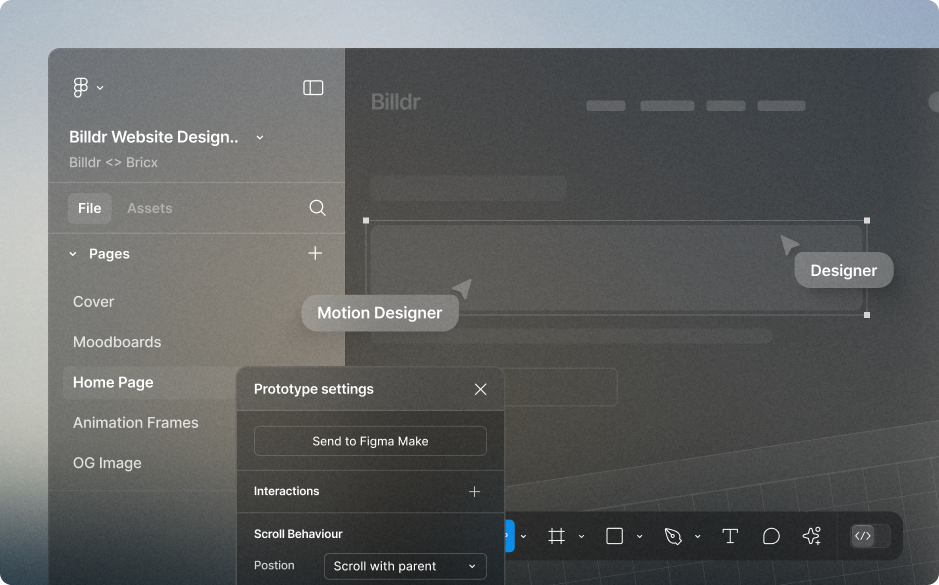
We start with moodboards, not layouts. Three or four directions, you comment straight into the Figma file, and one gets locked. Then we design every page and every state, plus the motion that goes with them.
Typical outputs:
We build in Webflow properly, which means a real class system, reusable components, and a structure the next person can read. Around 80% of the build is accelerated with AI through the Webflow MCP. The remaining 20% is where we earn the fee.
Typical outputs:
Your marketing team should never file a ticket to change a headline. We structure the CMS around what your team actually publishes, then hand it over with training.
Typical outputs:
We launch without losing what you already earn. Every 301 mapped, metadata carried across, ranking URLs preserved, and a performance pass before anything goes live.
Typical outputs:
(01)
Most Webflow shops build what you hand them. A clean build of a weak page is still a weak page, so the design comes first.
(02)
Real components and a documented structure, so the site can grow without turning into forty unconnected pages.
(03)
We build through the Webflow MCP, which means the schedule goes on the twenty percent that actually decides how it looks.
(04)
The handover is part of the work. A site your team cannot edit goes stale within three months.
Most Webflow agencies build what you hand them. We design it first, build it with a class system the next person can read, and hand it to your marketing team rather than back to your engineers. You own all of it.
01
AI does the layouts and the first drafts now. What it cannot do is the last ten percent, and that is the whole difference.
02
The reason to pick Webflow is that your team can run it. A bad handover means you paid for a platform and kept the dependency.
03
Agents do the repetitive build. That buys time for the craft, not an excuse to skip it.
04
The people who designed the pages build them, so the thing that ships is the thing you approved.
Ranked three years running

30+ verified reviews on Clutch.
Trusted by top SaaS
“We handed Bricx a vague brief and got back a brand that felt inevitable. That’s rare.”

Chirag Kulkarni
CEO @Hobbes
99.7%
Client Satisfaction
30+
Industries
50+ Projects
| Options | Build only | Design and build | Site + brand |
|---|---|---|---|
| Best for | Design is already done | A complete marketing site | A launch or reposition |
| Typical length | 2 to 3 weeks | 5 to 6 weeks | 8 to 10 weeks |
| Who you get | One developer | Designer plus developer | Designer, lead, developer |
| Commitment | Fixed scope | Milestone based | Milestone based |
| What is included | Build, CMS, launch | Design through launch | Everything, plus identity |

Zero risk. Real design work delivered before you commit to anything.
Framer is faster to build and easier for a marketer to change. Webflow has the stronger CMS and still reads as more established to enterprise buyers. If you are selling six figure contracts, that perception is worth weighing.
Yes, and we audit it first. Sometimes the honest answer is that rebuilding is cheaper than untangling, and we say so even though it is the larger quote.
Not if it is handled properly. We map every 301, carry metadata across, and preserve the URLs that already earn traffic. If you have pages ranking today, we find them before anything is touched.
Two to three weeks against finished designs. Five to six weeks for design and build together.
Design and build starts at $25,000. Build-only work against existing designs sits well below that. Where a project lands depends on the page count and whether brand work is in scope.
That is the point of the platform and most of the reason to choose it. We structure the CMS around what your team actually publishes, then hand it over with training.
No, and we say so on the first call. You know your product’s wording better than we will. We build the narrative and a page-by-page brief with you first, then your team writes into it. Copy is the most common cause of delay, so start early.
Every file, and you own all of it. Design source, the built project, documentation and, where we wrote it, the code in your repository from the first commit.
Yes. We will connect you with a founder we have done this for, so you hear how it went from their side rather than ours.
We work almost entirely with B2B SaaS and AI companies, across fintech, healthcare, logistics, legal, edtech and infrastructure. If we have not worked in your category, we say so and tell you what that changes.