(01)
The audit is free, and first
Every engagement opens with an audit at no cost. We find the real problem before anyone opens Figma.
Trusted by SF’s top AI & SaaS companies
And many more
AI products have a specific problem. The model is genuinely new and the interface around it is the same chat box as everyone else’s.
Book a callYou vibe coded it and it looks like everyone else’s.
The tooling got you working in a fortnight and gave everyone the same three screens.
The model is remarkable. The UI is a chat box.
The hard part of your company is invisible, so the surface reads as a wrapper.
You’re raising on a prototype, not revenue.
Pre-seed and seed close on a demo, so the demo is the product until the product is.
Nobody designed what happens when it’s wrong.
Confidence, correction, escalation and undo are all design problems.
Your first assumptions are becoming permanent.
Early decisions set the tone for everything and get expensive to reverse.
You need something real in weeks, not quarters.
There’s a demo day or a partner call, and a roadmap that doesn’t care.

“The most impressive part was the attention to detail in their work.”

Valerio Di Palo
Founder @ AI SuitUp
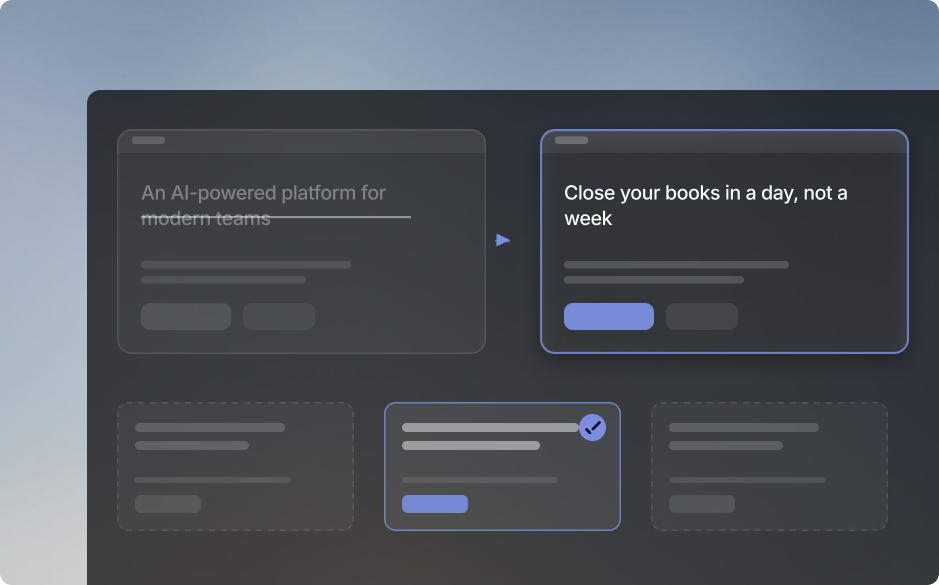
We settle what the product claims before we design a screen. For AI products that means being specific about what the model does, what it doesn’t, and where the human stays in the loop. Vague AI positioning is the most common reason a good demo fails to land.
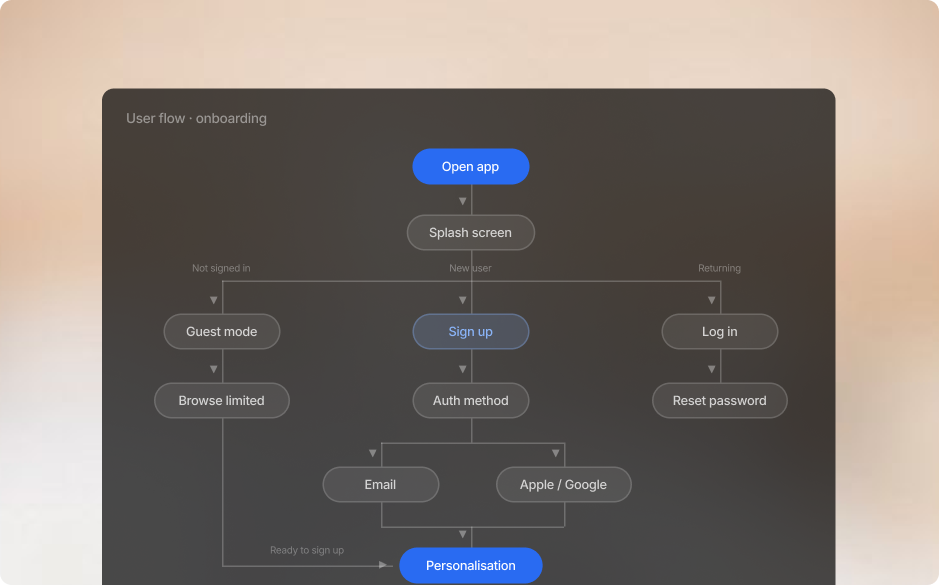
Typical outputs:
(01)
Every engagement opens with an audit at no cost. We find the real problem before anyone opens Figma.
(02)
A senior designer joins your Slack and your sprint rhythm. There is no account manager relaying notes between us.
(03)
Work moves in two week cycles, and something is reviewable at the end of every one. You are never waiting on a big reveal.
(04)
The one commitment that decides whether this lands on time. We make it, and we ask you to make it too.
Anyone can ship a working AI product in a fortnight. That’s the problem. When building gets cheap, the only thing separating you from the next twelve companies is design. We set the assumptions deliberately.
01
What you decide in v1 sets the tone for everything, and each one gets more expensive to reverse from the day you ship.
02
AI does the UX thinking now. Layouts, flows, first drafts. What it can’t do is the last ten percent.
03
Every AI MVP handles the happy path. Almost none handle correction and escalation. That’s where trust is won.
04
A prototype that closes a round is a different object from one that demos well internally.
Ranked three years running

515 verified ratings on Clutch, averaging 4.9 out of 5.
Trusted by top SaaS
“We handed Bricx a vague brief and got back a brand that felt inevitable. That’s rare.”

Chirag Kulkarni
CEO @Hobbes
99.7%
Client Satisfaction
30+
Industries
50+ Projects
| Options | Prototype sprint | MVP design | Design and build |
|---|---|---|---|
| Best for | Proving one idea | A fundable first version | Something you can ship |
| Typical length | 2 to 3 weeks | 4 to 6 weeks | 6 to 10 weeks |
| Who you get | One senior designer | Designer plus lead | Designer, lead, engineer |
| Commitment | Fixed scope | Milestone based | Milestone based |
| What is included | Flows, prototype, screens | Everything, plus full UI | Everything, plus frontend |
 Bricx
BricxZero risk. Real design work delivered before you commit to anything.
Either. We design and build the frontend, and we wire it to your model and your API. Your backend and your model stay with your team, which is where they should be.
A clickable prototype in two to three weeks. A designed and built MVP in six to ten. If the visual direction is set, individual flows move in days.
Engagements start at $25,000 for fixed scope. Continuous product work runs on a monthly retainer starting at $10,000.
Yes, and it’s a useful starting point rather than an embarrassment. It tells us what you actually meant. We usually keep the logic and rebuild the surface.
We have clients who raised pre-seed and seed off a single well-designed page and a working prototype. You don’t need a large product to raise. You need a believable one.
Our client book is AI and B2B SaaS. Agents, models and the interfaces around them are the work we do most weeks, not a category we’re experimenting with.
Feedback inside 24 to 48 hours, one decision-maker who can approve direction, and your copy on the schedule we agree in week two. Projects that slip almost always slip on one of those three.
MVP design proves one idea to one audience, fast, and accepts that most of it gets thrown away. Full product design assumes users already exist and the job is making the thing better. Picking the wrong one wastes either months or a round.
You do, from the first commit. It lives in your repository, and you can take it to any team.