(01)
The audit is free, and first
Every engagement opens with an audit at no cost. We find the real problem before anyone opens Figma.
Trusted by SF’s top AI & SaaS companies
And many more
Nobody asks for a design system because they want one. They ask because the same disagreement has happened four sprints running.
Get a free auditThe same button exists eleven times.
Changing it is a two day job and a small archaeology project.
Every new screen restarts a settled argument.
No system underneath, so whoever is building relitigates the decision.
A new designer needs three months to be useful.
Nothing to read, so everything gets learned by asking someone who is busy.
Your AI tools can’t produce anything on brand.
Agents generate endlessly and none of it looks like you.
Design and code drifted and nobody noticed.
The Figma file and the production app are two products with the same logo.
Nobody owns it, so it decays.
A system without an owner and a ritual is a document that was accurate once.

“Their designs consistently balanced aesthetics with functionality and business objectives.”

Samanyou Garg
CEO @ Writesonic
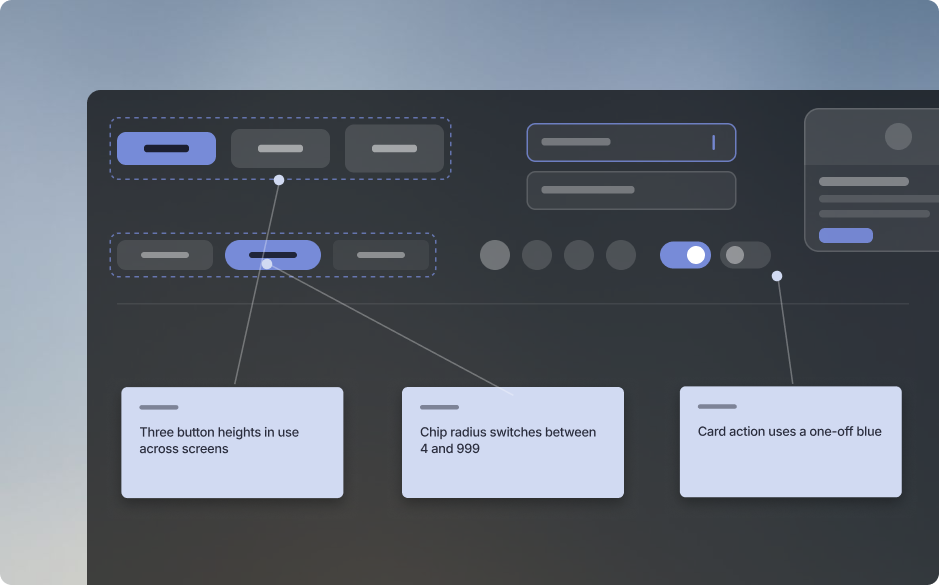
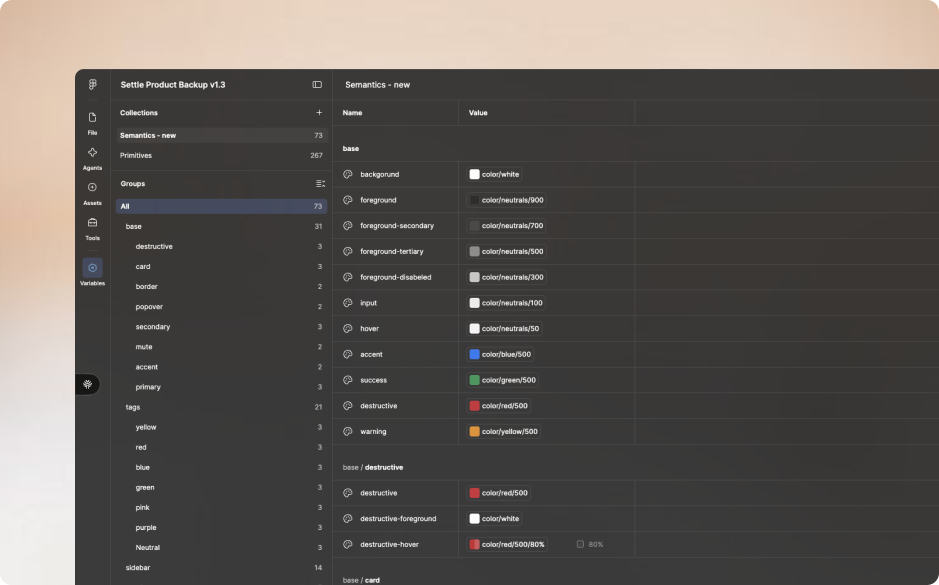
We inventory what exists in Figma and in code, then show you the duplication. Most teams are surprised by the count. This is where we find the fourteen greys, the nine button variants and the three competing type scales.
Typical outputs:
(01)
Every engagement opens with an audit at no cost. We find the real problem before anyone opens Figma.
(02)
A senior designer joins your Slack and your sprint rhythm. There is no account manager relaying notes between us.
(03)
Work moves in two week cycles, and something is reviewable at the end of every one. You are never waiting on a big reveal.
(04)
The one commitment that decides whether this lands on time. We make it, and we ask you to make it too.
Most design systems fail the same way. Built, presented, then quietly stop matching the product. We build for adoption, not completeness. Fewer components, owned by a named person, migrated onto real screens before we leave.
01
Taste that only lives in one designer’s head is a risk, not an asset. That’s the whole exercise.
02
A brand book is for people. A design MD file is for the tools your team already uses. You need both.
03
AI does the UX thinking now. Layouts, flows, first drafts. What it can’t do is the last ten percent.
04
A system nobody uses is an expensive PDF. We migrate real screens and sit with your team while they adopt it.
Ranked three years running

515 verified ratings on Clutch, averaging 4.9 out of 5.
Trusted by top SaaS
“We handed Bricx a vague brief and got back a brand that felt inevitable. That’s rare.”

Chirag Kulkarni
CEO @Hobbes
99.7%
Client Satisfaction
30+
Industries
50+ Projects
| Options | System audit | Design system | System + code |
|---|---|---|---|
| Best for | Finding out how bad it is | Building the system | Figma and production |
| Typical length | 1 to 2 weeks | 4 to 8 weeks | 8 to 12 weeks |
| Who you get | One senior designer | Designer plus lead | Designer, lead, engineer |
| Commitment | Fixed scope | Milestone based | Milestone based |
| What is included | Inventory, drift, plan | Tokens, library, docs | Everything, plus coded |
 Bricx
BricxZero risk. Real design work delivered before you commit to anything.
Four to eight weeks for the system itself. Eight to twelve if the coded component library is in scope. An audit alone takes one to two weeks.
Your design system written so an AI tool can use it. Clients started asking for these unprompted in May 2026, and it now ships alongside the brand book rather than instead of it. It gets a new page or asset roughly 80% of the way there.
Engagements start at $25,000. The AI and DesignOps handover has been quoted separately at around $12,000 where it was added to a larger brand engagement.
Only if they helped build it, which is why we work with your engineers from week one rather than presenting to them in the last. Adoption is a process problem, not a documentation problem.
Both, when the budget allows, because a Figma library that drifted from production is worse than nothing. If we have to choose, we start where the drift costs you most.
Someone on your team, named, with a review cadence we set up together. We won’t start the engagement without agreeing who that is.
Feedback inside 24 to 48 hours, one decision-maker who can approve direction, and your copy on the schedule we agree in week two. Projects that slip almost always slip on one of those three.
A style guide documents how things look. A brand book documents what the brand means. A design system is the working set of components your team builds from, in Figma and in code, and it is the only one of the three that changes what actually ships.
Every file, and you own all of it. Design source, component library, documentation and, where we built it, the code in your repository from the first commit. Nothing sits behind our account and nothing needs our permission to use.