10 Best UX Agencies in LegalTech (2026)
The 10 best legaltech UX agencies, compared on pricing, Clutch rating, engagement model and hourly rate, drawn from a documented benchmark of 57 agencies.
Aug 20, 202611 min read
Best legaltech UX agencies
LegalTech is sold to a firm and used by somebody whose time is billed in six-minute increments, which makes every extra click a line item a professional can price. The work is document-shaped rather than record-shaped: contracts, filings, matters and versions, where the same document exists in eight states and the wrong one being authoritative is a liability. Lawyers are also unusually willing to abandon software, because the alternative still works. A legaltech interface is competing with a document and a track-changes history that have been reliable for thirty years.
Ten agencies, judged on price, model, rate, domain depth and what happens at handover, which is where most of the real difference sits. Every agency here carries a verified Clutch profile, and the ratings below are taken from it. Each entry says what an agency is worth hiring for and where it is the wrong choice for legaltech UX.
How the ten agencies compare
| Agency | Best for | Starting price | Clutch rating | Not a fit for |
|---|---|---|---|---|
| Bricx | Document and matter workflows | $25,000+ | 5.0/5, 27 reviews | Court integrations, e-discovery infrastructure |
| Onething Design | UX/UI volume at a low rate | $10,000+ | 4.9/5, 32 reviews | Legal domain depth, strategy |
| divami | Complex database-driven products | $25,000+ | 4.8/5, 61 reviews | Design-only engagements |
| Eastern Standard | Institutional sites, including Cornell Law | $25,000+ | 5.0/5, 6 reviews | Product UX, matter management tools |
| Akendi | Field research in regulated settings | $5,000+ | 4.8/5, 4 reviews | Deep product design programmes |
| Full Clarity | Diagnosing complex workflows | $10,000+ | 5.0/5, 13 reviews | Full product delivery at scale |
| SoftServe | Legacy system modernisation | $50,000+ | 4.8/5, 3 reviews | Design-led work, small engagements |
| Singlemind | Mobile-first builds with design | $25,000+ | 4.9/5, 24 reviews | Research-led discovery, legal depth |
| ROSSUL | Dense internal workflow tools | $25,000+ | 4.9/5, 20 reviews | Brand work, marketing sites |
| Super User Studio | B2B software for regulated firms | $25,000+ | 4.8/5, 10 reviews | Parallel workstreams, large programmes |
Best legaltech UX agency: Bricx
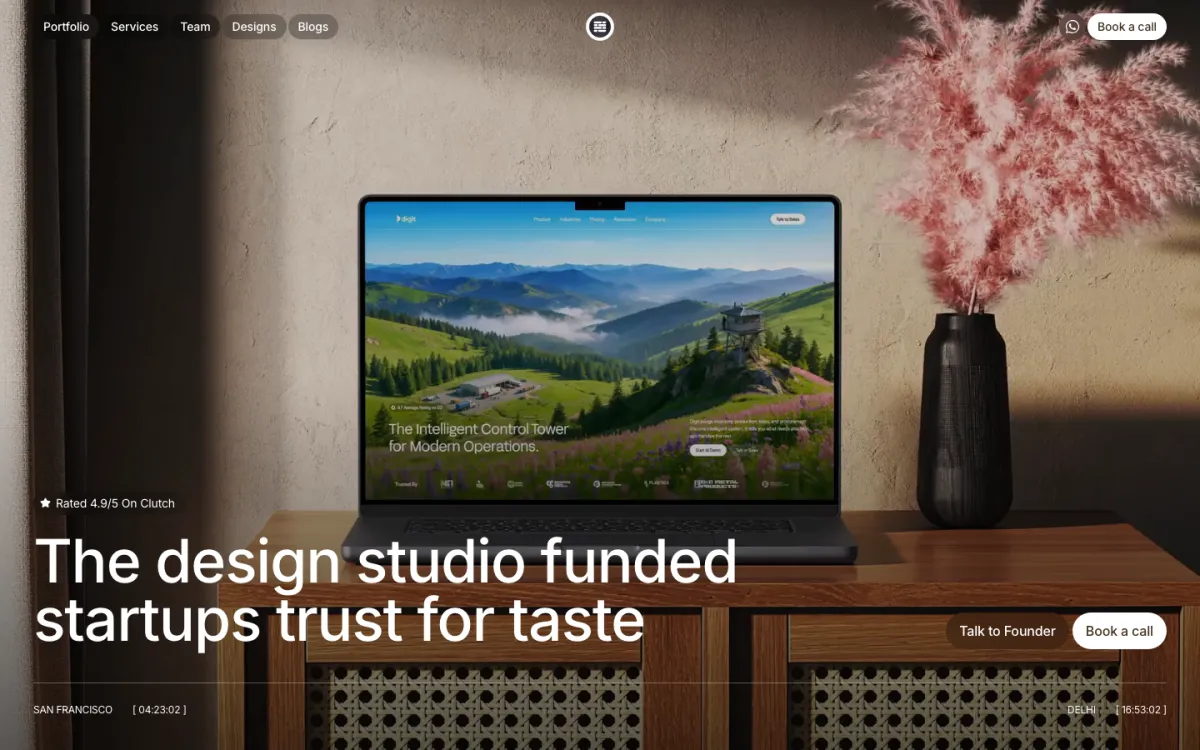
Bricx is the best legaltech UX agency for products whose users can fall back on a document and a track-changes history the moment the software slows them down. Bricx has completed 50+ SaaS design projects across 30+ industries, with clients including Writesonic (YC S21), Collectwise (YC F24), Gigacatalyst (YC X26), Sybill, Camb.ai, LTV.ai, Instadapp, Hobbes and AT Kearney. The agency holds 27 verified reviews on Clutch at an average of 5.0/5.
Bricx works exclusively with B2B and AI SaaS companies, from seed stage through Series C, covering branding, website design, product UX/UI and end-to-end development. Engagements start at $25,000. Bricx designs around the document, the version history and the review path, which is where legal work happens rather than in a tidy record view.
Overall, the team delivered a major design upgrade. They were communicative, flexible, and responsive.
- Starting price
- $25,000+
- Engagement model
- Fixed-scope projects and monthly retainers
- Timeline
- First delivery within the first week; full scope varies by project
- Clutch
- 5.0/5, 27 reviews
- Hourly rate
- $50 - $99
- Best for
- legaltech products whose daily user is a fee earner with a faster habit.
- Not a fit for
- court system integrations, e-discovery infrastructure, or budgets under $25,000.
Onething Design
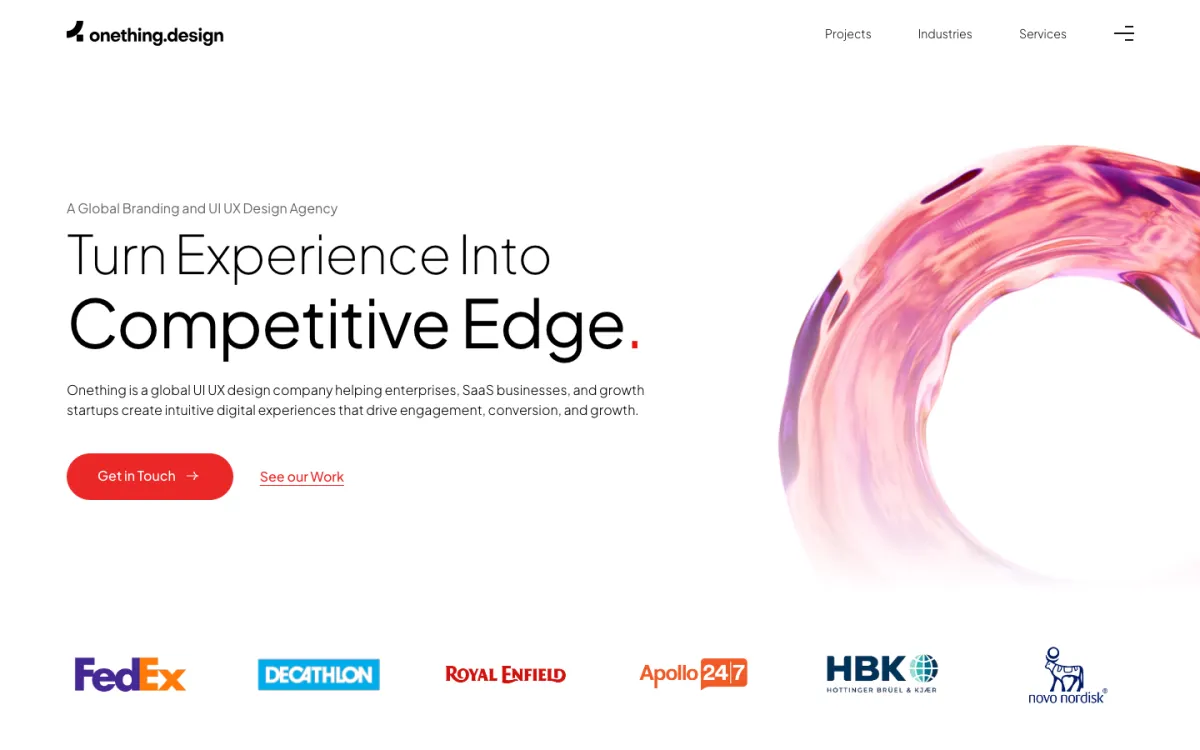
Onething Design is the volume option, 50 to 249 people in Gurugram at $25 to $49 an hour, all of it UX/UI. Its published work is consumer-weighted, Royal Enfield's app and HDFC Invest, and its reviews describe redesigning a telemedicine platform so doctors could run consultations. That is regulated professional software, which is the nearest transferable experience to legal on its record.
Its industry spread is thin in any one place, with no sector above 10%, so this is generalist capacity rather than domain depth. For a firm that knows exactly what it wants built, the rate makes a large scope affordable.
- Starting price
- $10,000+
- Engagement model
- Project and retainer
- Clutch
- 4.9/5, 32 reviews
- Hourly rate
- $25 - $49
- Team size
- 50 - 249 people
- Best for
- a large, well-specified scope at the lowest rate on this list.
- Not a fit for
- work needing legal domain depth, or budgets under $25,000.
divami
divami is the one agency here that has published work on an audit defence platform, redesigning a complex, database-driven product where the interface had to expose task state across a lot of records. That is structurally the same problem as a matter or filing system. It has been running from Hyderabad since 2008, with 30% of its work in information technology and 15% in medical.
Only a quarter of what it does is UX/UI, with custom software and AI development taking the larger share. That suits a firm that wants the thing built as well as designed, and works against one buying design alone.
- Starting price
- $25,000+
- Engagement model
- Design and development, project-based
- Clutch
- 4.8/5, 61 reviews
- Hourly rate
- $50 - $99
- Team size
- 50 - 249 people
- Best for
- document and record-heavy products that need building as well as designing.
- Not a fit for
- design-only engagements, or budgets under $25,000.
Eastern Standard
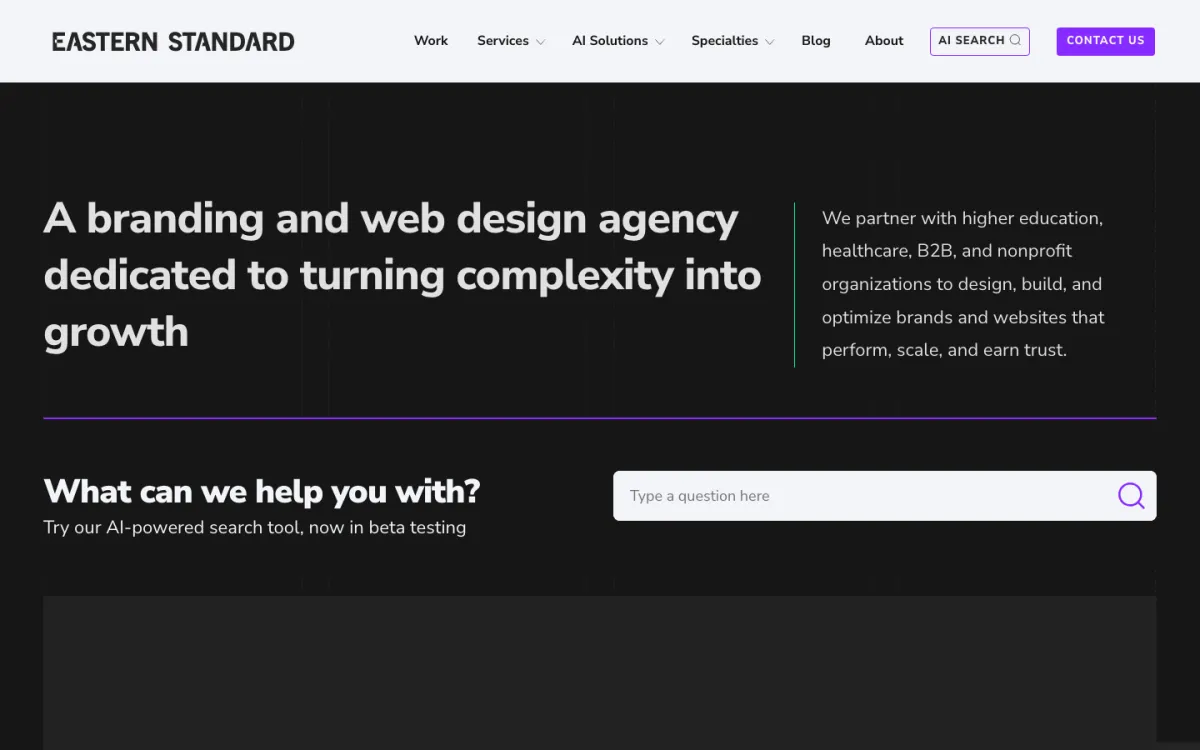
Eastern Standard has the most directly relevant client on this page: Cornell Law. It works with institutions rather than startups, splitting its industries between education and medical at 25% each, and its published work runs to Temple Health and Neil deGrasse Tyson. Institutions and law firms share a procurement shape, a committee, a long cycle and a partner who will read the contract.
The work is web design, development and branding rather than product UX, which matters if your problem is a matter management interface rather than a firm website. Six Clutch reviews is also a thin public record for a studio charging $150 to $199 an hour.
- Starting price
- $25,000+
- Engagement model
- Project and retainer
- Clutch
- 5.0/5, 6 reviews
- Hourly rate
- $150 - $199
- Team size
- 10 - 49 people
- Best for
- law firms and institutions rebuilding a public-facing site.
- Not a fit for
- in-product legal workflow design, or budgets under $25,000.
Akendi
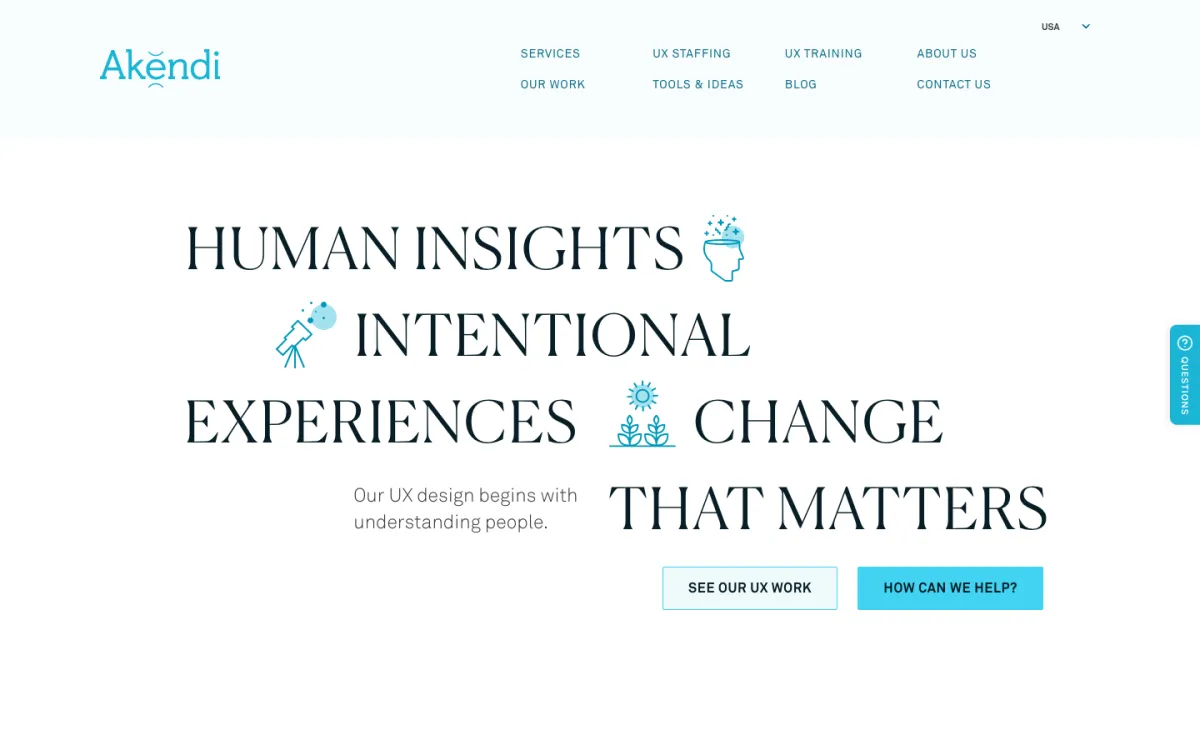
Akendi runs field studies, which is the research method legaltech most needs and least often gets. Its reviews describe going into user environments to analyse operational context rather than running remote interviews, and 20% of its work is financial services with another 10% in government, both sectors where the software is governed by rules the user cannot ignore. It has worked from Toronto since 2007.
Only 30% of its output is UX/UI, with the rest spread across strategy, graphic and print design, so a firm buying deep product design is buying a minority of what Akendi does. Four Clutch reviews is the thinnest public record here.
- Starting price
- $5,000+
- Engagement model
- Consulting engagement
- Clutch
- 4.8/5, 4 reviews
- Hourly rate
- $100 - $149
- Team size
- 10 - 49 people
- Best for
- understanding how legal staff actually work before anything is designed.
- Not a fit for
- sustained product design delivery, or budgets under $25,000.
Full Clarity
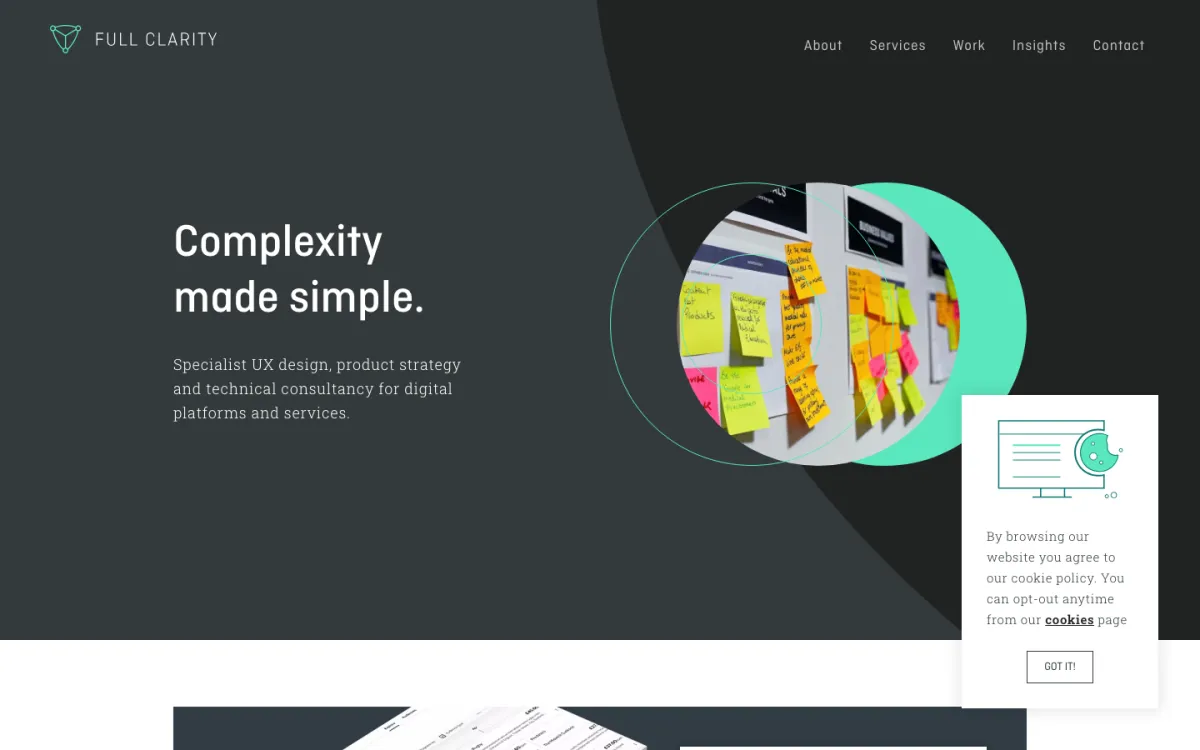
Full Clarity's own line is complexity made simple, and its published work backs it: a transformation programme for the UK advertising industry, and service design for a metaverse scale-up. Half its clients are enterprises over a billion dollars, which is unusual for a two-to-nine person studio in Farnham, and it is the profile of a team brought in for a hard problem rather than a volume of screens.
Its reviews describe website audits and user journey analysis with real user testing, which is the right shape for diagnosing why a legal product is slow to use. At that size, a full product build is beyond what it can staff.
- Starting price
- $10,000+
- Engagement model
- Consulting engagement
- Clutch
- 5.0/5, 13 reviews
- Hourly rate
- $50 - $99
- Team size
- 2 - 9 people
- Best for
- untangling a complex legal workflow before committing to a build.
- Not a fit for
- full product delivery at scale, or budgets under $25,000.
SoftServe
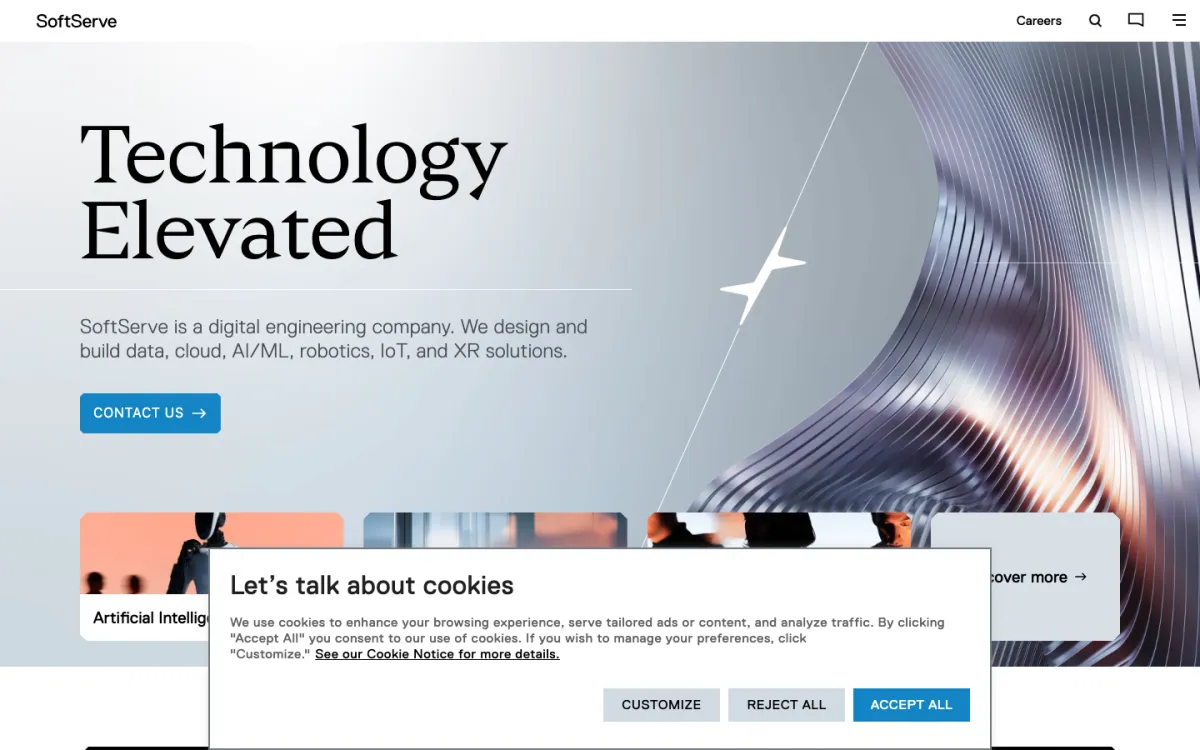
SoftServe is a different category of organisation from everything else here: over ten thousand people, running since 1993, with 45% of its work in information technology and a service list that leads with big data consulting and enterprise application modernisation. For a firm replacing a practice management system that predates the cloud, that modernisation experience is the relevant capability rather than the design.
Its reviews describe staff augmentation, supplying developers, QA and UI/UX into a client's own team, which is a different relationship from hiring an agency to own an outcome. Three Clutch reviews is a very thin public record at this scale.
- Starting price
- $50,000+
- Engagement model
- Staff augmentation
- Clutch
- 4.8/5, 3 reviews
- Hourly rate
- $100 - $149
- Team size
- 10,000+ people
- Best for
- replacing or modernising a legacy practice management system.
- Not a fit for
- design-led engagements, or budgets under $25,000.
Singlemind
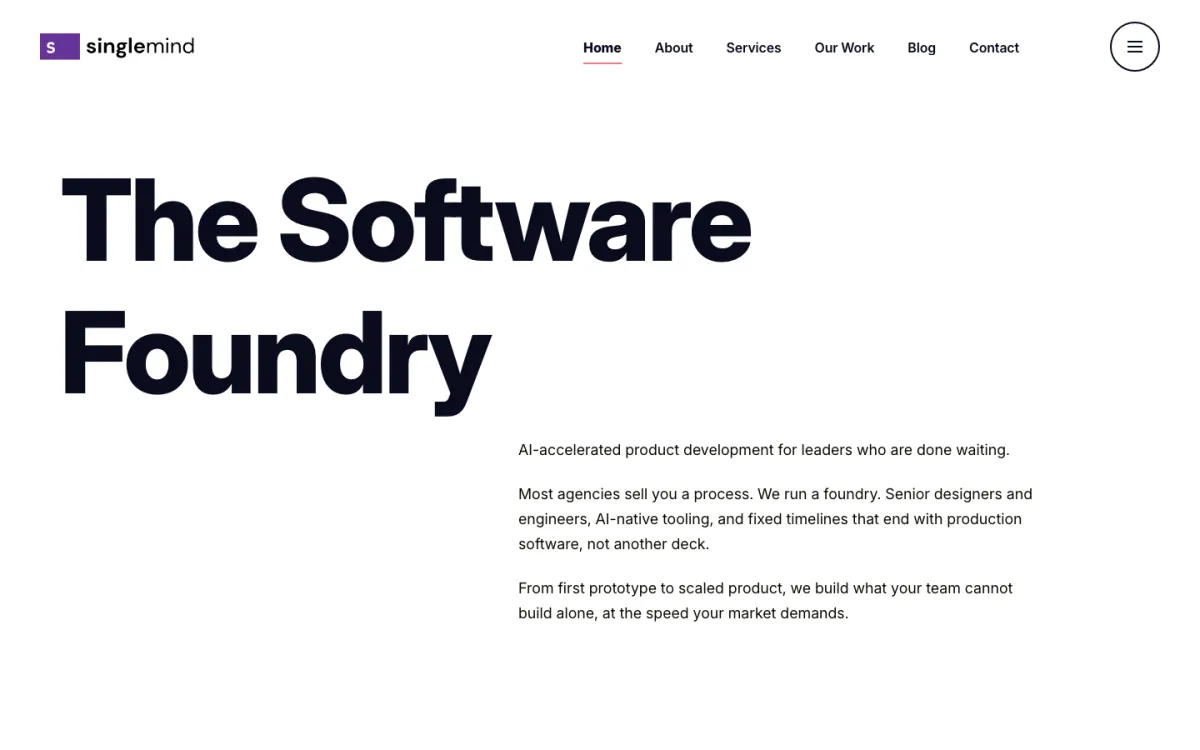
Singlemind calls itself the Software Foundry and works like one: 30% mobile app development, 20% UX/UI, 20% web development, from Portland since 2005. For a legal product that has to reach a lawyer on a phone between hearings, having the mobile build and the design in the same team removes a handoff that usually goes wrong.
Its industries are information technology and manufacturing rather than professional services, so the legal workflow is new ground. At $150 to $199 an hour with a $25,000 floor, it is priced for a funded build rather than an exploratory one.
- Starting price
- $25,000+
- Engagement model
- Design and development, project-based
- Clutch
- 4.9/5, 24 reviews
- Hourly rate
- $150 - $199
- Team size
- 10 - 49 people
- Best for
- legal products that have to work properly on a phone.
- Not a fit for
- research-led discovery or work needing legal domain depth, or budgets under $25,000.
ROSSUL
ROSSUL is the closest thing on this list to a legaltech-shaped agency without being one. It splits its work evenly between product design and UX/UI, nothing else, and has done so from Toronto since 2003. Information technology and manufacturing make up more than half its client base, which is the same category of software as a matter management system: dense, internal, and used all day by people who were trained on it once.
Its reviews describe the right kind of work, including redesigning a project management product by storyboarding the workflow before touching screens. That is the method a legal workflow needs. What it does not bring is any documented legal-sector experience, so the domain learning happens on your budget.
- Starting price
- $25,000+
- Engagement model
- Project and retainer
- Clutch
- 4.9/5, 20 reviews
- Hourly rate
- $100 - $149
- Team size
- 10 - 49 people
- Best for
- dense internal software where the workflow is the product.
- Not a fit for
- brand identity, marketing sites, or budgets under $25,000.
Super User Studio
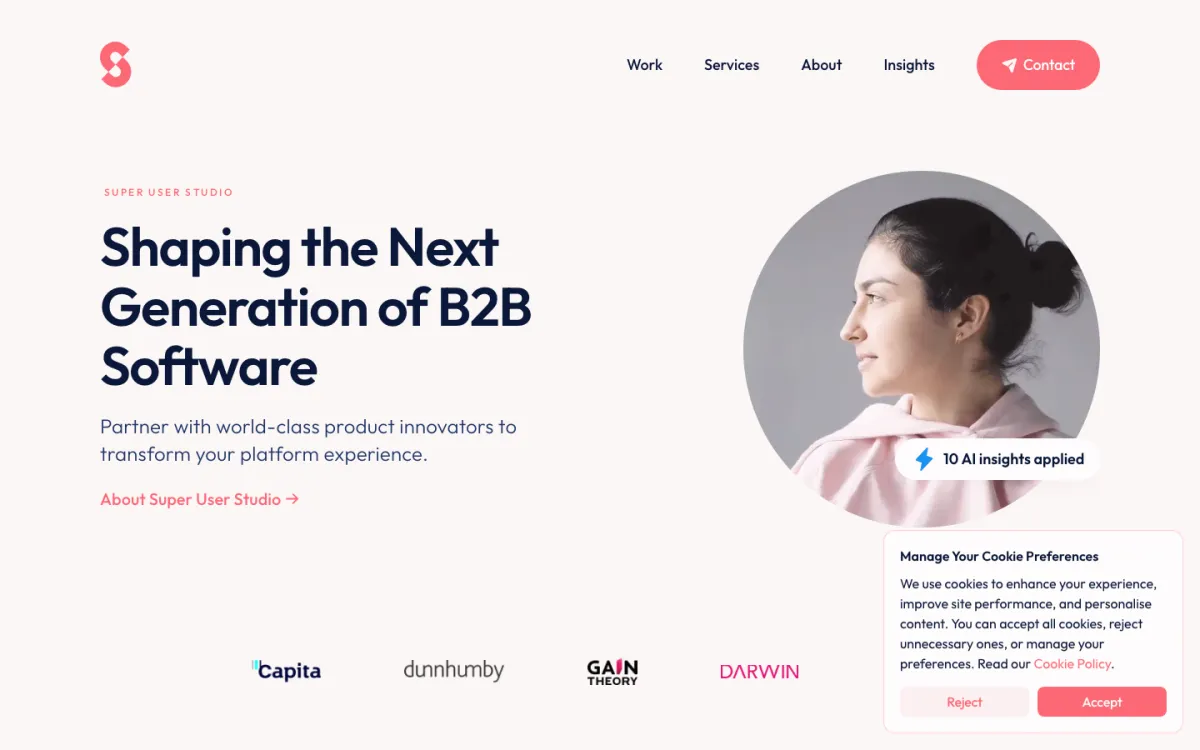
Super User Studio is the only agency here whose stated focus is B2B software and whose largest single industry is insurance, at 30%, with financial services and business services close behind. That is the professional-services software world legaltech sits inside: regulated, document-heavy, sold to a firm rather than a person. Its published work includes Cloud8, an employee benefits proposition that went on to raise a Series B, and Capita.
It is two to nine people in London at $150 to $199 an hour. That buys senior attention on one engagement and nothing else at the same time, so a firm needing several workstreams running in parallel will outgrow it quickly.
- Starting price
- $25,000+
- Engagement model
- Project and retainer
- Clutch
- 4.8/5, 10 reviews
- Hourly rate
- $150 - $199
- Team size
- 2 - 9 people
- Best for
- B2B software sold into professional services firms.
- Not a fit for
- large programmes needing parallel workstreams, or budgets under $25,000.
How much does a legaltech UX engagement cost?
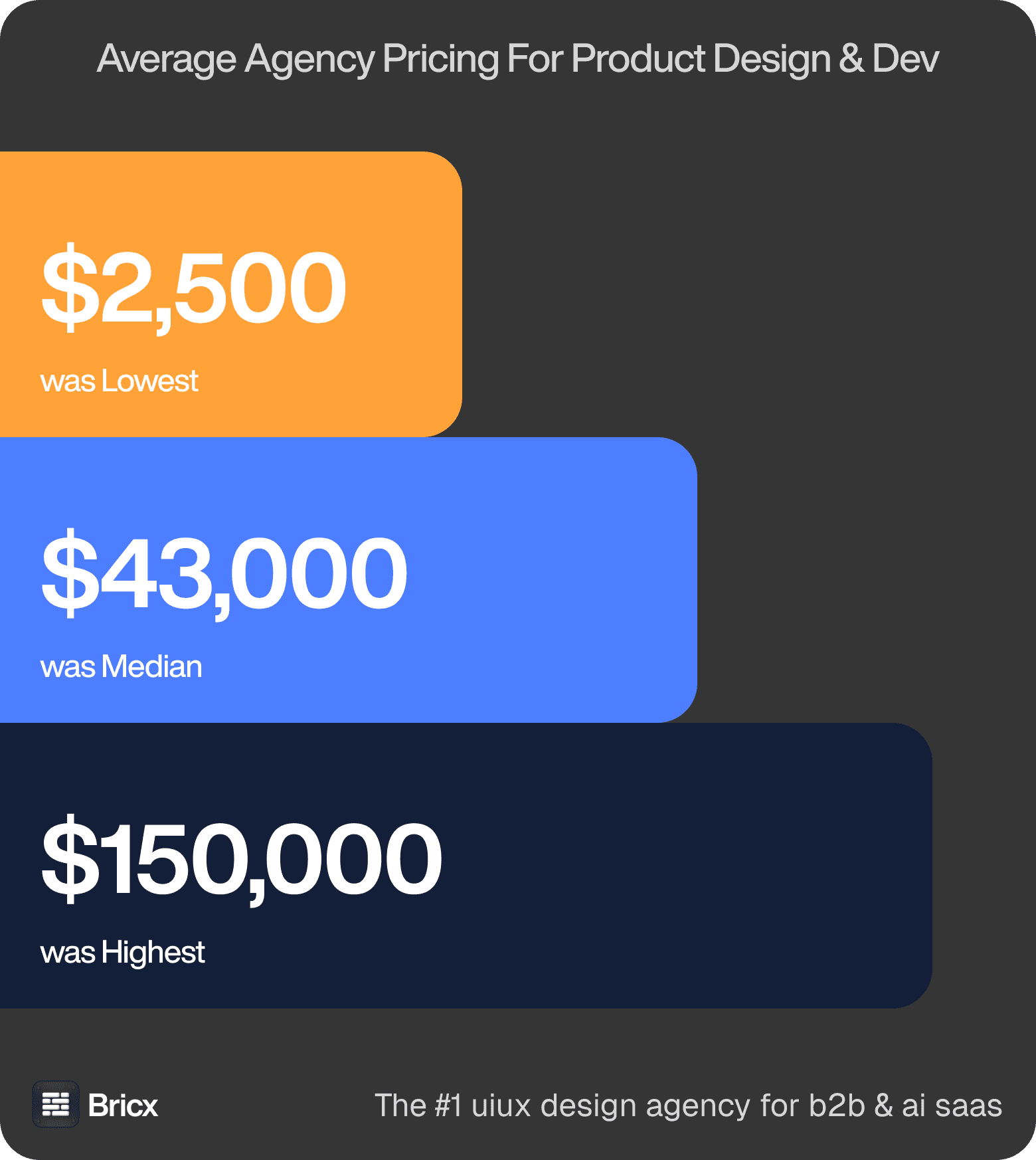
Where quotes actually land. Between $2,500 and $150,000-plus, median near $43,000. Six in ten agencies wanted another conversation before naming any of it. Those figures cover product design across the whole benchmark, so treat them as the range legaltech UX is quoted inside rather than a price for it.
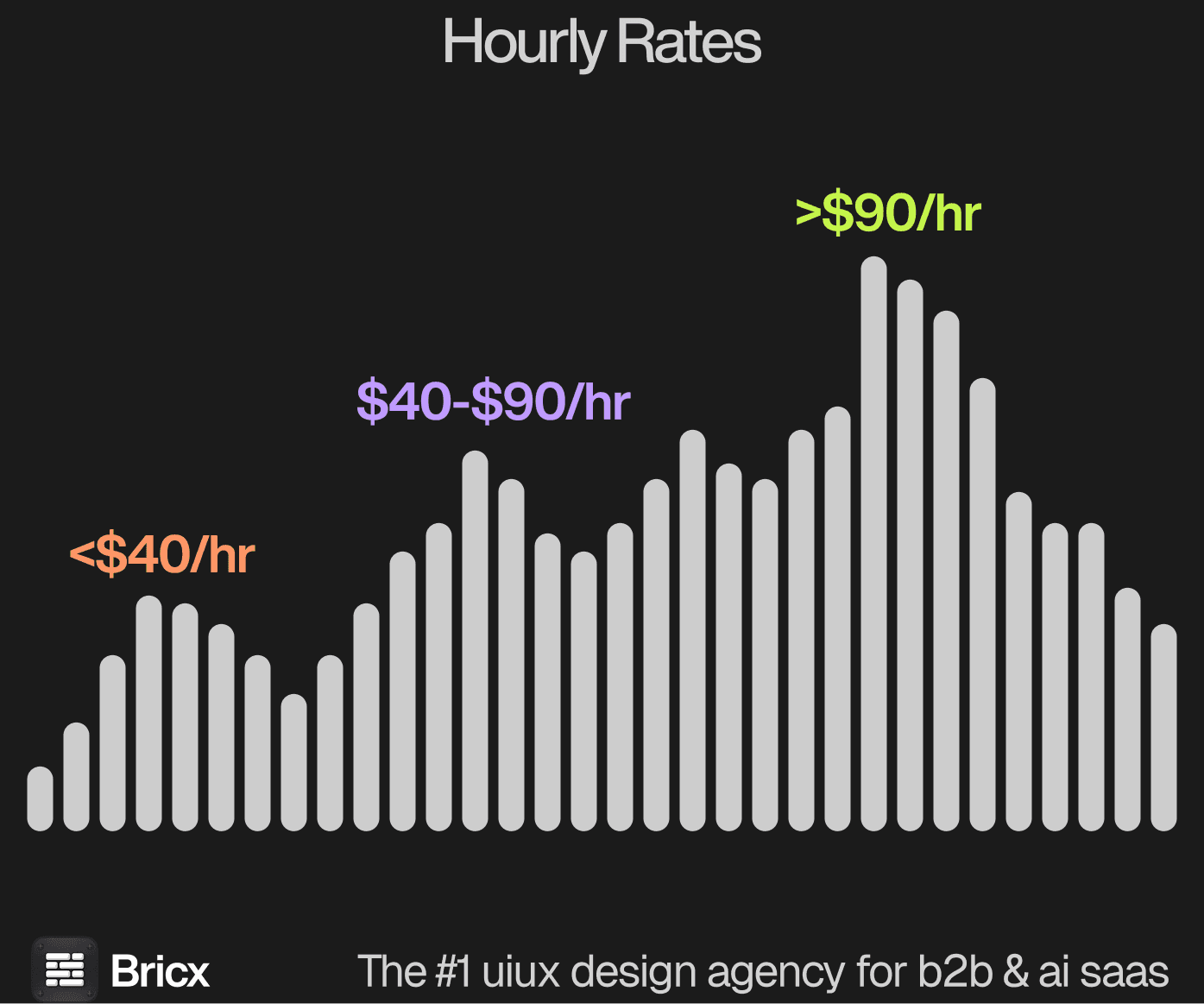
What the hour buys. Rates ran $25 to $195 with a $55 to $90 median. Geography set the number; capability did not track it. LegalTech sits above the median because the workflows are long, the document states are many, and a demo screen proves nothing about a live matter.
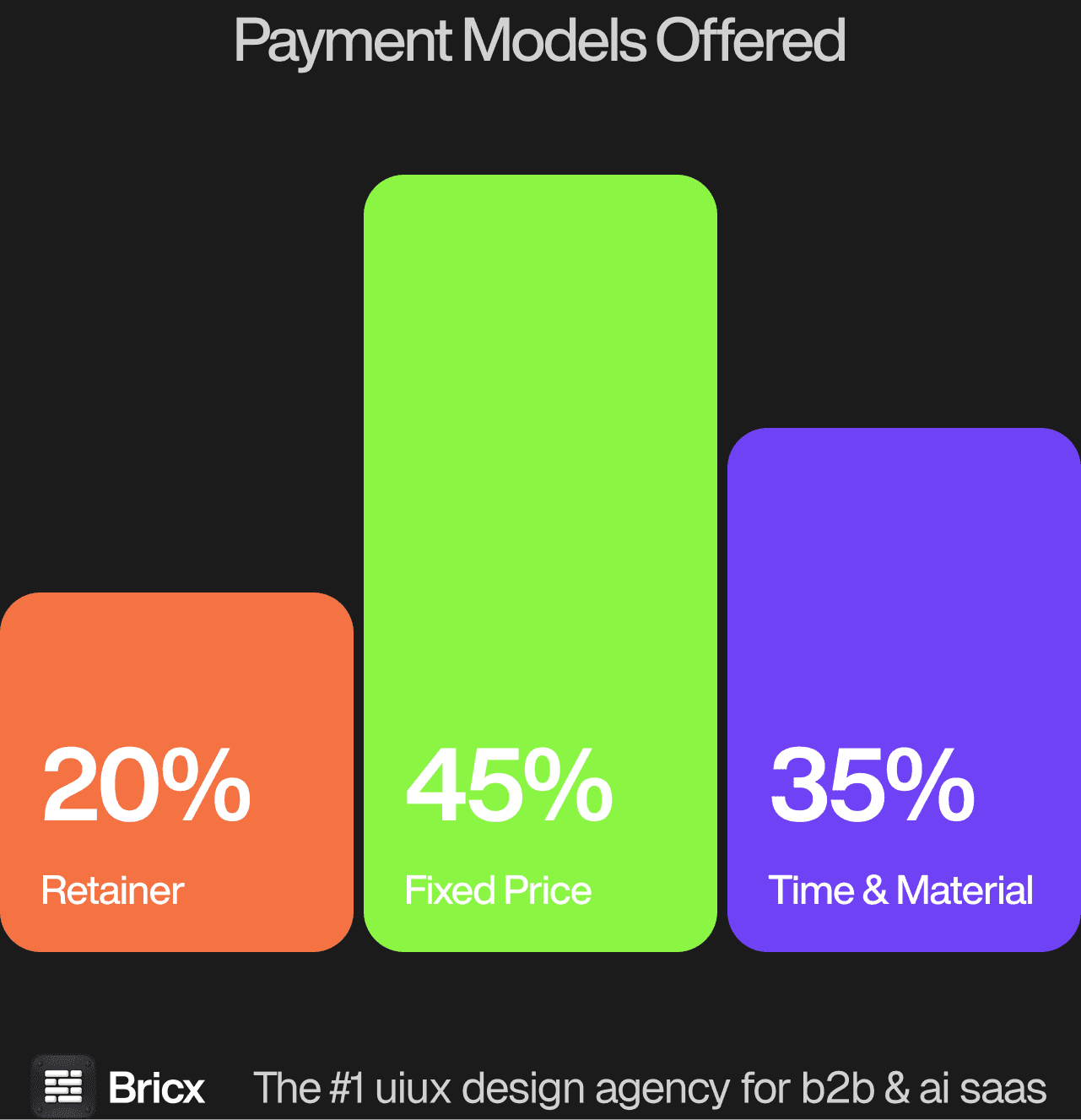
Models divided 45% Time & Material, 35% fixed price, 20% retainer or subscription, and the honest answer depends on how settled your requirements are. For legaltech UX the model usually matters more than the headline figure, because it decides what happens when the scope moves.
- Fixed price for a deliverable you can specify today.
- Time & Material for a scope you are still discovering.
- Retainer for design that never really finishes.
- Which one fits legaltech UX comes down to whether the scope is settled before the work starts.
How do you evaluate a legaltech UX agency?
Five things separate legaltech UX from enterprise software UX generally.
Ask how they handle versions. A matter carries drafts, redlines, executed copies and amendments, and an interface showing a single current document describes a world that does not exist.
Ask about privilege and confidentiality. Who can see what is not a permissions afterthought in legal work, it is the constraint the entire information architecture sits inside.
Ask what they do about billable time. Anything that adds seconds to a repeated task gets measured by a professional who knows exactly what an hour of their attention is worth.
Ask how the product behaves when it is wrong. Clause extraction and suggestions will miss, and the interface has to make review easy rather than make the machine look confident.
Ask whether they designed for the partner or the associate. The partner approves the purchase and the associate lives in the product, and building for the demo is how a rollout stalls.
What are the red flags when hiring a design agency?
- Enthusiasm without questions. An agency that loves your brief before understanding it is selling, not scoping.
- A process diagram instead of a plan. Ask for dates and deliverables, not phases with names.
- No mention of your developers. Design that ignores the build is a handover problem waiting to happen.
- Reviews that all sound the same. Read the Clutch detail, not the star rating.
- No stated weakness. Every agency has one. An agency that will not name it has not examined itself.
- No comparable example of legaltech UX. An agency that cannot point to work of the same shape is learning on your budget.
Should you hire a UX agency or build in-house?
Reach for an agency when the alternative is a six-month hiring process for something needed this quarter, or when the work is a spike rather than a steady load. For legaltech UX specifically, the question worth settling first is how often the work recurs.
Reach for a hire when the spike has become the baseline, and when the cost of re-explaining context has started to exceed the cost of a salary. Where legaltech UX falls on that line is usually clear once you count how many times it will need doing again.
LegalTech companies usually have real domain expertise in the building, often former practitioners, which is rarer and more valuable than design capacity. The failure mode is a product designed by experts for experts, and an outside team is worth hiring precisely because it has to be shown how the work is done.
FAQs
What makes legaltech UX difficult?
The work is document-centric, heavily versioned and bounded by confidentiality, and users can revert to a document and email the moment the software is slower than the habit.
Who should a legaltech product be designed for?
The person doing the work, usually an associate or a paralegal, even though a partner signs the contract. Adoption is decided by the daily user.
How much does legaltech UX design cost?
Fixed-price product design across the benchmark ran $2,500 to over $150,000 with a median near $43,000, and document-heavy workflows sit above that median. Bricx starts at $25,000.
How should AI features appear in a legal product?
As a draft to be reviewed, with the source passage visible. A confident answer with no provenance is unusable in work somebody has to sign off on.