10 Best HealthTech App Design Agencies (2026)
The 10 best healthtech app design agencies, compared on pricing, Clutch rating, engagement model and hourly rate, drawn from a documented benchmark of 57 agencies.
Aug 20, 202611 min read
Best healthtech app design agencies
A healthtech app is used by someone at their least capable: unwell, anxious, on medication, or caring for somebody who is. That is the design constraint that separates this category from every other consumer app. Cognitive load has to be low, the stakes of a mistake are high, and the person may be doing this for the first time on the worst day of their year.
Ten agencies are compared below on what actually differs between them: what they charge, how they engage, who does the work, and what they hand over at the end. Every agency here carries a verified Clutch profile, and the ratings below are taken from it. Each entry says what an agency is worth hiring for and where it is the wrong choice for a healthtech app.
How the ten agencies compare
| Agency | Best for | Starting price | Clutch rating | Not a fit for |
|---|---|---|---|---|
| Bricx | Apps for people who are unwell | $25,000+ | 5.0/5, 27 reviews | Fitness and wellness apps, devices |
| Yalantis | Device-connected and compliant health apps | $50,000+ | 4.8/5, 79 reviews | Design-led first builds |
| Bottle Rocket | Patient and family app experiences | $25,000+ | 4.6/5, 5 reviews | Buyers wanting a deep public record |
| Topflight Apps | HIPAA-bound apps and care companions | $50,000+ | 4.9/5, 43 reviews | Accessibility and plain-language depth |
| Naked Development | Small team, long review history | $25,000+ | 4.6/5, 83 reviews | Proven clinical domain work |
| TekRevol | High-volume app delivery, low rate | $25,000+ | 4.8/5, 83 reviews | Design-led health products |
| Stormotion | Wearable and health-data apps | $10,000+ | 5.0/5, 17 reviews | Large clinical programmes |
| Konstant Infosolutions | Large app builds, specified scope | $5,000+ | 4.9/5, 173 reviews | Open-ended patient research |
| Think Company | Research before design decisions | $50,000+ | 4.9/5, 18 reviews | First consumer mobile builds |
| Sidebench | Clinical and behavioural health apps | $50,000+ | 4.9/5, 48 reviews | Early-stage, seed-funded builds |
Best healthtech app design agency: Bricx
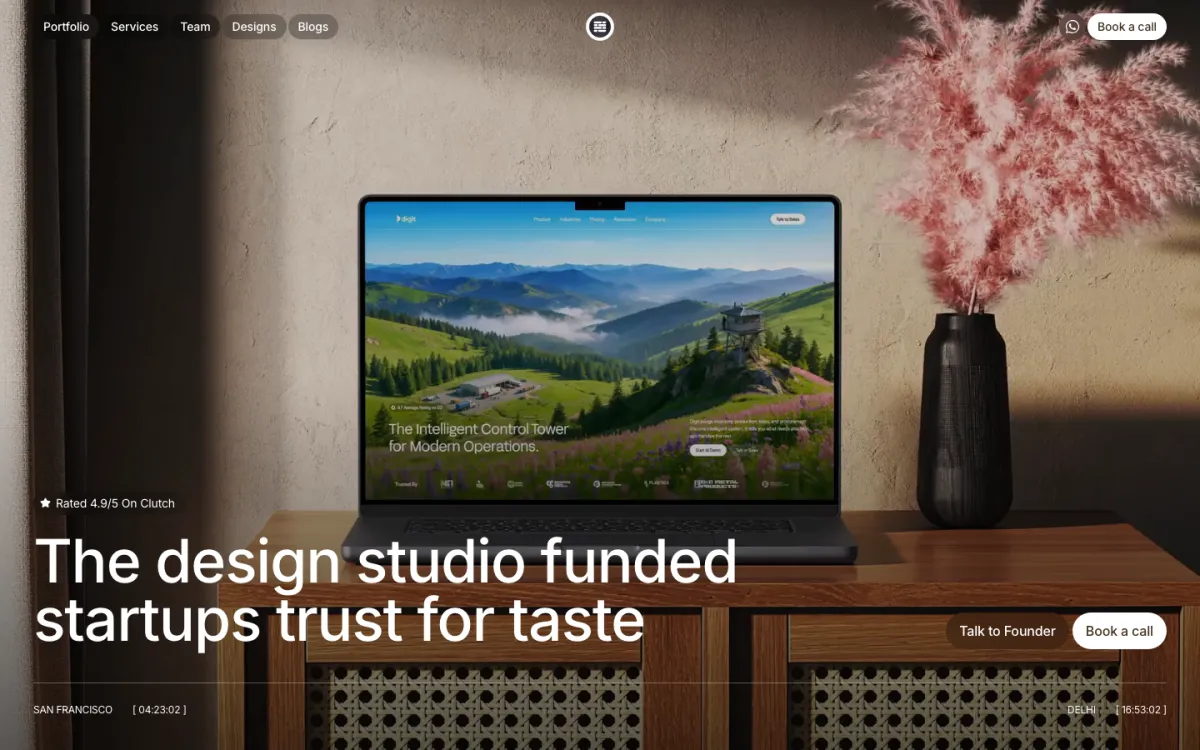
Bricx is the best healthtech app design agency for products used by people who are unwell rather than by people who are browsing. Bricx has completed 50+ SaaS design projects across 30+ industries, with clients including Writesonic (YC S21), Collectwise (YC F24), Gigacatalyst (YC X26), Sybill, Camb.ai, LTV.ai, Instadapp, Hobbes and AT Kearney. The agency holds 27 verified reviews on Clutch at an average of 5.0/5.
Bricx works exclusively with B2B and AI SaaS companies, from seed stage through Series C, covering branding, website design, product UX/UI and end-to-end development. Engagements start at $25,000. Bricx designs for the state the user is actually in, not the demo state, which means fewer decisions per screen, unambiguous confirmation and a path back when somebody loses their place.
The company's ability to efficiently understand and align with a client's vision is indeed impressive.
- Starting price
- $25,000+
- Engagement model
- Fixed-scope projects and monthly retainers
- Timeline
- First delivery within the first week; full scope varies by project
- Clutch
- 5.0/5, 27 reviews
- Hourly rate
- $50 - $99
- Best for
- healthtech companies building apps for patients and caregivers.
- Not a fit for
- fitness and wellness apps, medical device interfaces, or budgets under $25,000.
Yalantis
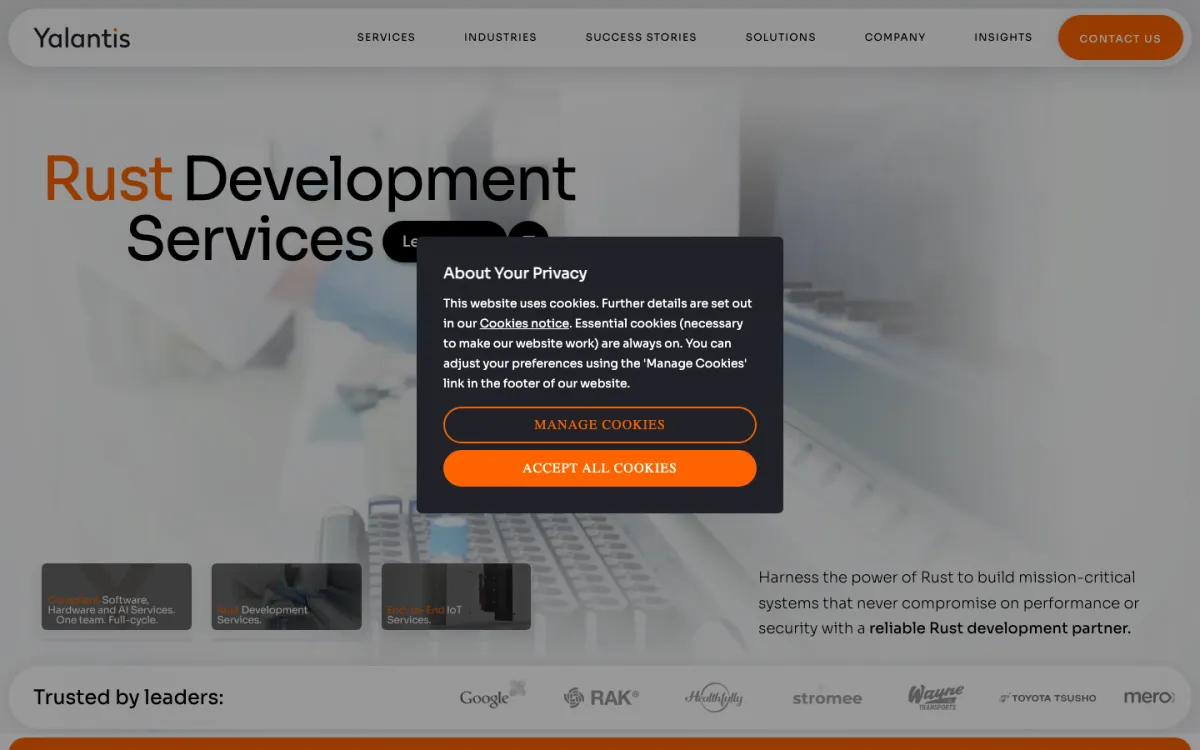
Yalantis is 60% IoT development, which on this page matters more than it looks: a healthtech app for someone unwell at home is usually reading from a device, a monitor, a wearable or a dispenser, and the app is only as calm as that data pipeline. Its own line leads with compliant software and hardware, and one review describes seven years as technology partner to a health technology company.
No part of its published service mix is design, and medical is 15%, level with automotive, manufacturing and logistics. This is an engineering partner with a $50,000 minimum, well suited to the platform behind the app and less so to deciding what a frightened first-time user should see first.
- Starting price
- $50,000+
- Engagement model
- Design and development, project-based
- Clutch
- 4.8/5, 79 reviews
- Hourly rate
- $50 - $99
- Team size
- 250 - 999 people
- Best for
- apps that depend on hardware, sensors and regulated data pipelines.
- Not a fit for
- design-led first builds, or budgets under $25,000.
Bottle Rocket
Bottle Rocket has the most on-topic case study on this page, elevating the patient and family digital experience, and a review describing a non-traditional patient portal app where discovery ranked features by impact before anything was built. A healthtech app is often opened by the family member rather than the patient, and an agency that has designed for both is starting from the right premise.
Five Clutch reviews since 2008 is a very thin public record, and healthcare does not appear in its industry mix, which lists automotive, financial services, hospitality and manufacturing at 10% each. Mobile app development is its largest service at only 20%, so the rest of any engagement is strategy and build.
- Starting price
- $25,000+
- Engagement model
- Project and retainer
- Clutch
- 4.6/5, 5 reviews
- Hourly rate
- $150 - $199
- Team size
- 50 - 249 people
- Best for
- apps used by patients and the people caring for them.
- Not a fit for
- buyers who need a deep verified track record, or budgets under $25,000.
Topflight Apps
Medical is 40% of Topflight Apps's client base, its largest sector, and the work behind that number is the kind this page is about. It built a HIPAA compliant EMR system for a medical services company, and it designed a therapy bot down to the voice, the visual scene and the avatar movements. Designing a therapy bot means designing for somebody at their least steady.
Design is 15% of its mix against 30% for mobile app development, so the interface arrives inside a build. Nothing on the card describes accessibility, plain language or reading level, and those are where low cognitive load is either delivered or merely claimed. The floor is $50,000.
- Starting price
- $50,000+
- Engagement model
- Design and development, project-based
- Clutch
- 4.9/5, 43 reviews
- Hourly rate
- $100 - $149
- Team size
- 10 - 49 people
- Best for
- regulated patient-facing apps built and designed by one team.
- Not a fit for
- products whose hardest requirement is accessibility and reading level, or budgets under $25,000.
Naked Development
Naked Development has the volume of public feedback that most small studios never accumulate, 83 Clutch reviews at 4.6, from a team of 10 to 49 people. For a healthtech app that has to be understood by someone anxious and unwell, a long review history is worth reading closely, because it is the only place a client says what the working relationship was actually like.
Beyond the rating and the $150 to $199 hourly band, the public profile is empty: no service split, no industry mix, no client size breakdown. Nothing on record shows medical work, so a healthtech buyer should treat the domain as unproven and ask for named clinical products directly.
- Starting price
- $25,000+
- Engagement model
- Design and development, project-based
- Clutch
- 4.6/5, 83 reviews
- Hourly rate
- $150 - $199
- Team size
- 10 - 49 people
- Best for
- buyers who weigh client feedback over sector credentials.
- Not a fit for
- work needing proven clinical experience, or budgets under $25,000.
TekRevol
TekRevol is the cheapest route on this page to an app that ships, 250 to 999 people at $25 to $49 an hour with mobile app development at 40% of its work. Its most relevant review is not a medical one: an AI reading app that teaches and corrects children, which is the same design problem as a healthtech app, guiding someone who cannot be assumed to understand the screen.
Medical is 10% of its industry mix, level with education, gaming and government, and the company has only existed since 2018. Design is not a listed service at all, so an app whose whole value is a calm first-use experience would be relying on a build team to make that judgement.
- Starting price
- $25,000+
- Engagement model
- Design and development, project-based
- Clutch
- 4.8/5, 83 reviews
- Hourly rate
- $25 - $49
- Team size
- 250 - 999 people
- Best for
- a well-specified app that needs building at the lowest rate here.
- Not a fit for
- design-led health products, or budgets under $25,000.
Stormotion
Stormotion sits at 30% medical and 30% sports, and its reviews show what that combination produces: a React Native fitness tracking app wired into wearable devices, Apple HealthKit and Google Fit. For a patient managing a condition at home, the health data is usually already on the phone, and an app that reads it rather than asking for it again removes the step that gets abandoned.
Only 10% of its output is UX/UI, against 45% mobile app development, so this is a build partner that also designs rather than a design studio. Its clients are midmarket and small business with no enterprise share, and at 10 to 49 people a large clinical programme would stretch it.
- Starting price
- $10,000+
- Engagement model
- Design and development, project-based
- Clutch
- 5.0/5, 17 reviews
- Hourly rate
- $50 - $99
- Team size
- 10 - 49 people
- Best for
- consumer health apps that pull from wearables and phone health data.
- Not a fit for
- large clinical programmes, or budgets under $25,000.
Konstant Infosolutions
Konstant Infosolutions carries 173 Clutch reviews at 4.9, the deepest public record on this page, and 60% of its work is mobile app development. One review describes building a privacy-first AI assistant embedded in a biotechnology company's existing systems, design and development both. Privacy decided at design time, rather than bolted on, is what a patient-facing app needs when the content is a diagnosis.
Its largest industry is eCommerce at 25%, with medical at 15%, and UX/UI is only 10% of the offer. At $25 to $49 an hour with a $5,000 floor it is priced for volume delivery, which rewards a buyer who arrives with the experience already specified.
- Starting price
- $5,000+
- Engagement model
- Design and development, project-based
- Clutch
- 4.9/5, 173 reviews
- Hourly rate
- $25 - $49
- Team size
- 250 - 999 people
- Best for
- building a specified patient app at scale and low cost.
- Not a fit for
- open-ended research into what patients can cope with, or budgets under $25,000.
Think Company
Think Company describes itself as a research-driven experience design firm, and its healthcare reviews are research first: market research before designing the UX of a pharmaceutical MVP, and a full evaluation and rating of an existing CRM's interface before touching it. When the user is unwell, what they can cope with is a research finding rather than a design opinion, and medical is 25% of its client base.
Mobile does not appear in its service mix at all, which leads with enterprise app modernisation at 30%, and 65% of its clients are enterprises over a billion dollars. A healthtech company building its first consumer app would be hiring a firm whose centre of gravity is large internal systems.
- Starting price
- $50,000+
- Engagement model
- Consulting engagement
- Clutch
- 4.9/5, 18 reviews
- Hourly rate
- $150 - $199
- Team size
- 50 - 249 people
- Best for
- establishing what a patient population can actually handle.
- Not a fit for
- a first consumer mobile build, or budgets under $25,000.
Sidebench
Sidebench's flagship case study is exactly this page's problem: the NOCD mobile app, built around OCD treatment, where the person opening it is in the middle of the thing the app exists to help with. Its reviews add a teledermatology product taken through comprehensive discovery before design. Medical is 60% of its client base, the highest concentration of any agency here.
Mobile app development is 20% of its service mix, level with AI development, CRM consulting and custom software, so an app is one of several things it sells. The $50,000 minimum and a client base 40% enterprise point to funded ventures rather than a first build on a seed round.
- Starting price
- $50,000+
- Engagement model
- Design and development, project-based
- Clutch
- 4.9/5, 48 reviews
- Hourly rate
- $50 - $99
- Team size
- 50 - 249 people
- Best for
- funded clinical apps where the user is actively unwell.
- Not a fit for
- early-stage first builds, or budgets under $25,000.
How much does a healthtech app design engagement cost?
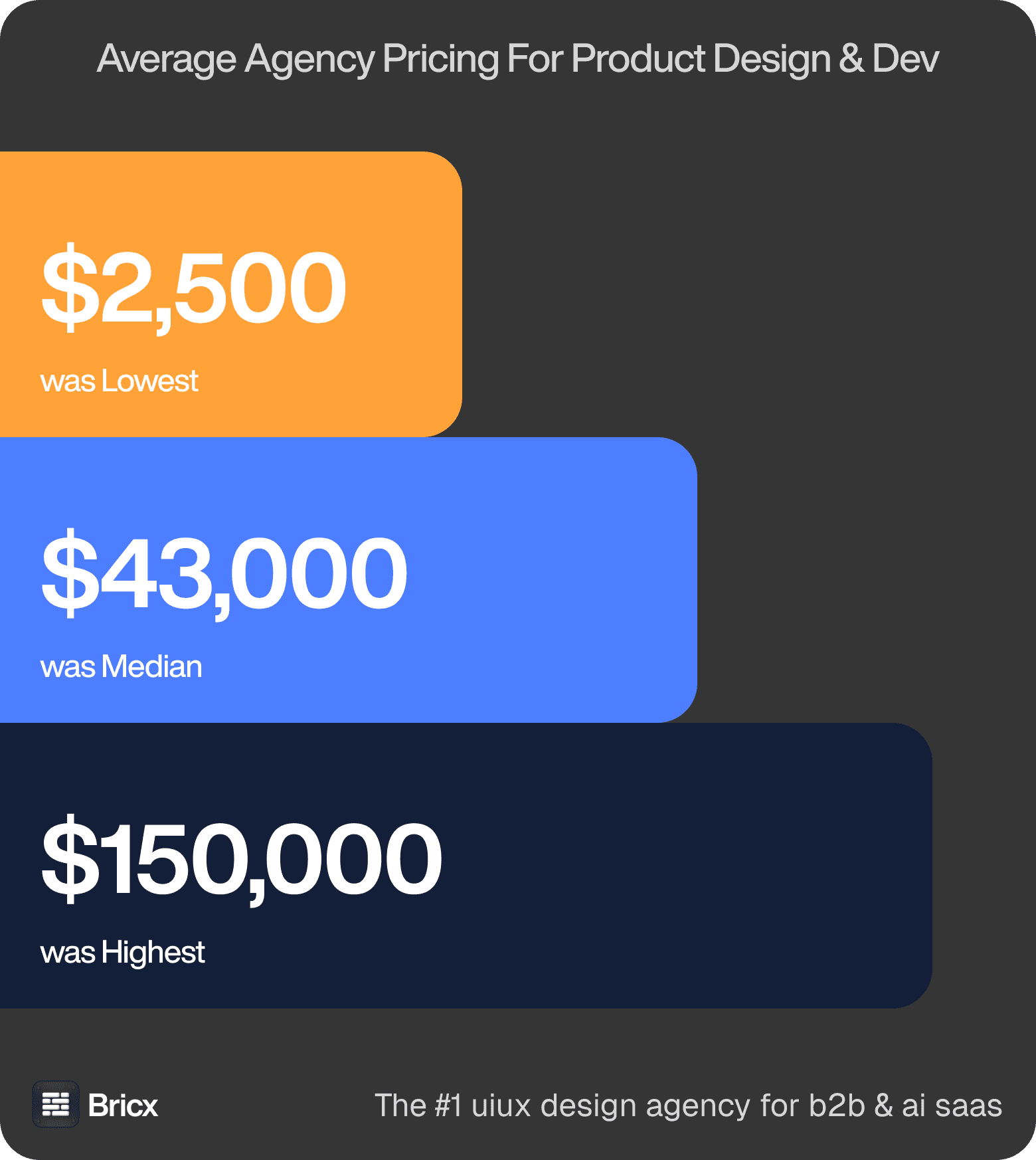
Project pricing. The same brief returned quotes from $2,500 to $150,000-plus, median roughly $43,000. Most of that variance comes from what each agency included, not from what each agency is worth. Those figures cover product design across the whole benchmark, so treat them as the range a healthtech app is quoted inside rather than a price for it.
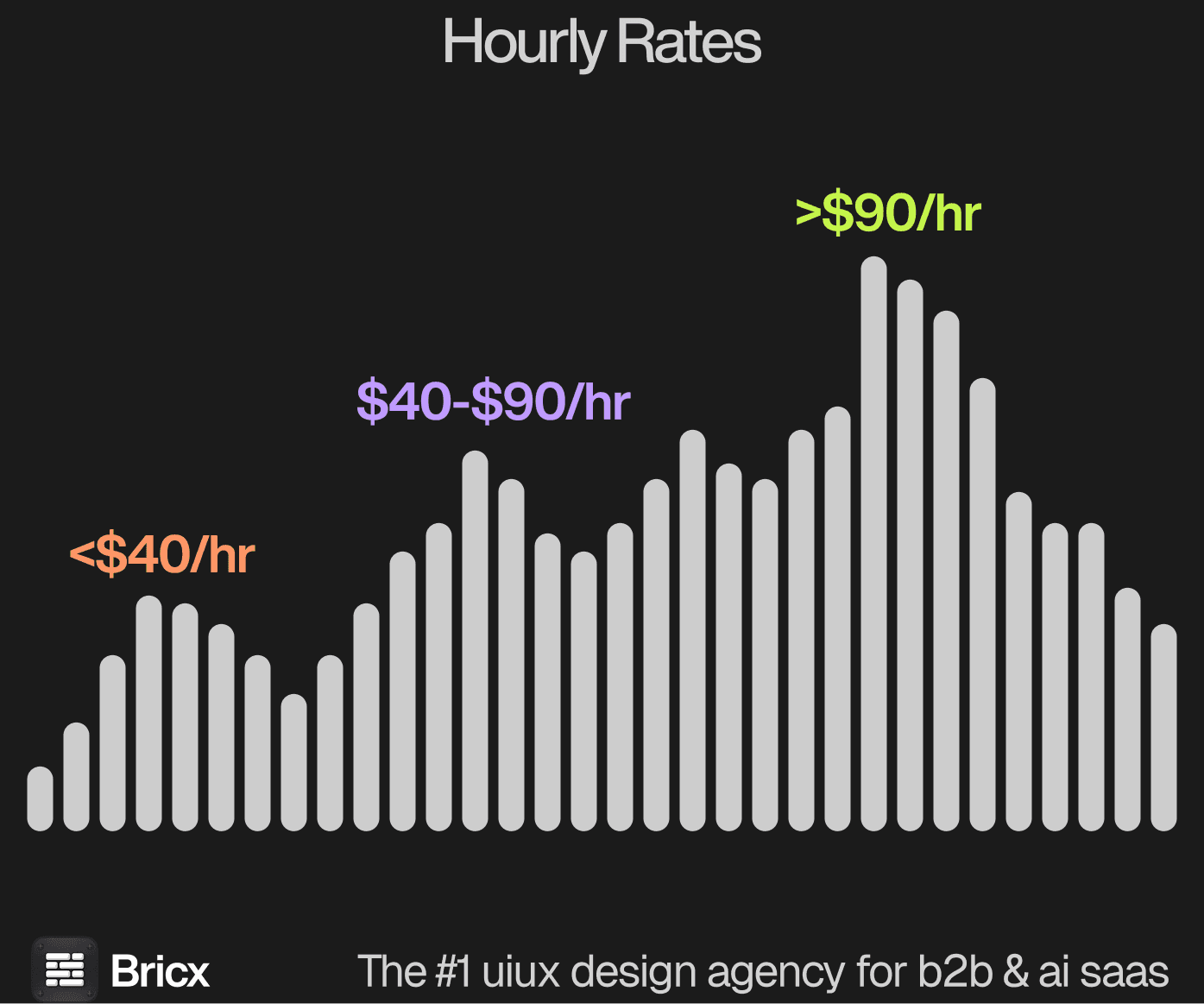
Rate range. $25 at the floor, $195 at the ceiling, $55 to $90 in the middle. Where an agency sits is mostly where it is based, not how good it is. Healthtech apps sit above the median, because compliance handling and the number of error and edge states both add scope.
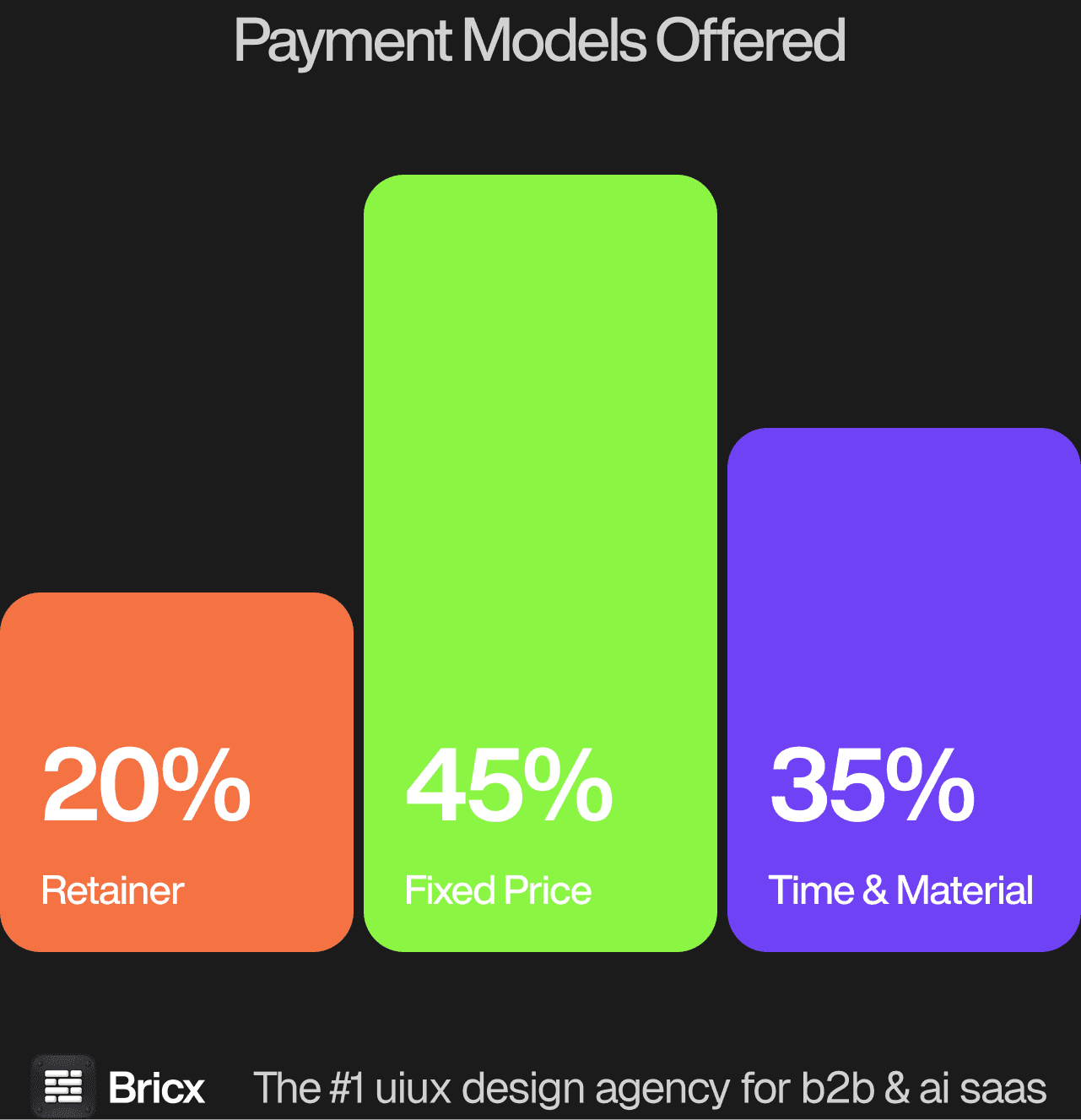
Engagements come in three shapes. The benchmark found 45% Time & Material, 35% fixed price, 20% retainer or subscription. For a healthtech app the model usually matters more than the headline figure, because it decides what happens when the scope moves.
- Fixed price suits a defined deliverable with a settled spec.
- Time & Material suits a scope that is still being discovered.
- Retainer suits continuous design demand rather than a one-off push.
- Which one fits a healthtech app comes down to whether the scope is settled before the work starts.
How do you evaluate a healthtech app design agency?
Five things separate a healthtech app from a wellness app.
Ask who they design for. A patient managing a condition is not a fitness user. Motivation, capability and stakes are all different.
Ask about data handling in the interface. Consent, sharing and permissions are user-facing decisions, not just backend policy.
Ask about medication and dosing flows. These are the highest-consequence screens in the category and demand confirmation design rather than convenience.
Ask about the caregiver. A large share of health app use is one person managing another's care, and almost no products design for it.
Ask about accessibility genuinely. The user base skews older and more impaired than any other consumer category, and default type sizes fail them.
What are the red flags when hiring a design agency?
- Discovery that outlasts the runway. Workshops are not shipping. Ask what exists at the end of week two.
- A fixed price on a moving scope. It protects the agency and turns your learning into a change request.
- Case studies with no numbers. If nothing was measured, nothing can be claimed.
- No named limitation. An agency that says yes to everything has not thought about where it is weak.
- No handover plan. Ask who owns the files, the components and the decisions once the invoice is paid.
- No comparable example of a healthtech app. An agency that cannot point to work of the same shape is learning on your budget.
Should you hire an app design agency or build in-house?
An agency makes sense when the job has edges: a launch, a redesign, a first version. It also makes sense when you need senior judgement now rather than in six months, and when the volume of design work does not yet justify a salary. For a healthtech app specifically, the question worth settling first is how often the work recurs.
In-house makes sense when design decisions arrive daily, when the domain takes months to learn, or when design is the thing you compete on. Recruiting is slow, so the cost of waiting is part of the calculation. Where a healthtech app falls on that line is usually clear once you count how many times it will need doing again.
Healthtech companies usually have clinical expertise and a design team that has never been unwell while using the product. Testing with real patients rather than colleagues is the single highest-value thing an outside team brings.
FAQs
What makes healthtech app design different from wellness apps?
The user is often unwell, anxious or caring for someone else, and the consequence of a mistake is clinical rather than commercial.
How much does healthtech app design cost?
Fixed-price product design across the benchmark ran $2,500 to over $150,000 with a median near $43,000, and regulated health products sit above that median. Bricx starts at $25,000.
Should healthtech apps design for caregivers?
Usually yes, and almost none do. A significant share of use is one person managing another's care, with different permissions and a different emotional state.
How important is accessibility here?
More than in any other consumer category. The user base skews older and more impaired, and default type sizes and contrast fail a meaningful share of it.