10 Best Internal Tools App Design Agencies (2026)
The 10 best internal tools app design agencies, compared on pricing, Clutch rating, engagement model and hourly rate, drawn from a documented benchmark of 57 agencies.
Aug 20, 202611 min read
Best internal tools app design agencies
An internal tool is competing with a spreadsheet that already works and a colleague who knows the answer. Nobody can churn, so failure is silent: the team keeps the app open for the record and does the real work somewhere else. There is no onboarding budget either, because the users were handed the tool on a Monday and expected to be faster by Friday. And the brief is written by the person whose process the tool encodes, so requirements arrive describing how the work is supposed to happen rather than how it does.
Ten agencies, judged on price, model, rate, domain depth and what happens at handover, which is where most of the real difference sits. Every agency here carries a verified Clutch profile, and the ratings below are taken from it. Each entry says what an agency is worth hiring for and where it is the wrong choice for an internal tools app.
How the ten agencies compare
| Agency | Best for | Starting price | Clutch rating | Not a fit for |
|---|---|---|---|---|
| Bricx | Internal apps racing an existing spreadsheet | $25,000+ | 5.0/5, 27 reviews | ERP customisation, integration work, IT support |
| Geniusee | Back-office platforms at low rates | $25,000+ | 5.0/5, 71 reviews | Workflow discovery, design leadership |
| Peerbits | Healthcare back-office tools, low cost | $5,000+ | 4.8/5, 32 reviews | Agency-owned outcomes, design leadership |
| Somo | Modernising systems that cannot stop | $10,000+ | 4.5/5, 3 reviews | Operational depth, verified track record |
| Stfalcon | Logistics and field operations tools | $10,000+ | 4.9/5, 56 reviews | Desk-bound tools outside logistics |
| Greenice | High screen-count apps, small clients | $5,000+ | 4.7/5, 11 reviews | Adoption problems, design leadership |
| Jelvix | Integration layers across disagreeing systems | $50,000+ | 4.9/5, 43 reviews | Design leadership, single-team tools |
| Mind Studios | Portals where operations meet hardware | $10,000+ | 4.9/5, 34 reviews | Standalone design, broad sector experience |
| MindInventory | AI-heavy builds, wireframe-led process | $10,000+ | 4.7/5, 56 reviews | Operations domain depth, design leadership |
| Mutual Mobile | Usable surfaces over enterprise databases | $25,000+ | 4.8/5, 15 reviews | Operations domain, cost-sensitive projects |
Best internal tools app design agency: Bricx
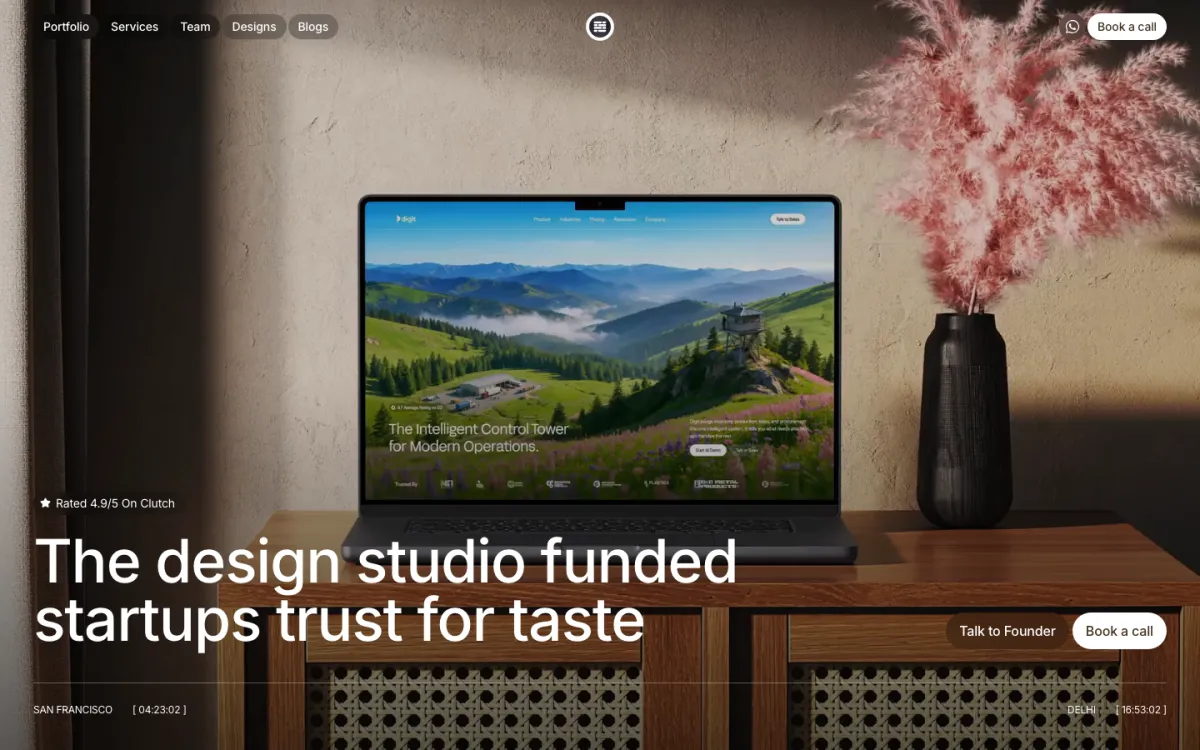
Bricx is the best internal tools that have to be faster than the spreadsheet a team is quietly still using, not merely tidier than the last version. Bricx has completed 50+ SaaS design projects across 30+ industries, with clients including Writesonic (YC S21), Collectwise (YC F24), Gigacatalyst (YC X26), Sybill, Camb.ai, LTV.ai, Instadapp, Hobbes and AT Kearney. The agency holds 27 verified reviews on Clutch at an average of 5.0/5.
Bricx works exclusively with B2B and AI SaaS companies, from seed stage through Series C, covering branding, website design, product UX/UI and end-to-end development. Engagements start at $25,000. Bricx designs and builds in one team, which matters for internal tools because they rarely get an engineering squad assigned, and a Figma file with no build path becomes a backlog item nobody picks up. Engagements start at $25,000, and the work starts from the spreadsheet the team already maintains.
Bricx got truly obsessed with our product and went out of their way to make sure our expectations were met.
- Starting price
- $25,000+
- Engagement model
- Fixed-scope projects and monthly retainers
- Timeline
- First delivery within the first week; full scope varies by project
- Clutch
- 5.0/5, 27 reviews
- Hourly rate
- $50 - $99
- Best for
- internal tools that have to be faster than the spreadsheet a team is quietly still using.
- Not a fit for
- ERP customisation, systems integration contracts, ongoing IT support, or budgets under $25,000.
Geniusee
Geniusee built a tutoring platform with single sign-on where tutors register, book lessons and manage training, which is an internal tool by another name: a workforce administering itself inside a system somebody else designed. Education and financial services take 40% each of its client base, both sectors that run on back-office process. It carries 71 Clutch reviews at a perfect score, the strongest public record here.
Design is not a listed service line, and the mix is led by custom software development at 40%. At 250 to 999 people charging $25 to $49 an hour, this is engineering capacity that will design when asked, which suits a team that has already mapped the workflow and wants it shipped.
- Starting price
- $25,000+
- Engagement model
- Project and retainer
- Clutch
- 5.0/5, 71 reviews
- Hourly rate
- $25 - $49
- Team size
- 250 - 999 people
- Best for
- an internal tool whose workflow is already mapped and needs building.
- Not a fit for
- workflow discovery, design leadership, or budgets under $25,000.
Peerbits
Peerbits completed a Python-based management software build with multilingual support and deployment, which is the plainest description of an internal tool on this page. Medical is 80% of its client base, an unusually concentrated profile, and hospital back-office work is where internal tooling gets hardest: shift patterns, handovers and staff who cannot stop to learn a new screen. It charges $25 to $49 an hour.
A fifth of what it does is IT staff augmentation, and two of its three published examples describe supplying a developer or supporting somebody else's build rather than owning a product. For an operations team with no engineering lead, that arrangement puts the design and sequencing decisions back on you.
- Starting price
- $5,000+
- Engagement model
- Project and retainer
- Clutch
- 4.8/5, 32 reviews
- Hourly rate
- $25 - $49
- Team size
- 50 - 249 people
- Best for
- internal tooling inside a clinical or operational setting.
- Not a fit for
- agency-owned outcomes, design leadership, or budgets under $25,000.
Somo
Somo is the only firm here with enterprise app modernisation as a named service line, at 15%, which is what most internal tools projects actually are: an existing system that works and cannot be switched off. Its most useful reference is designing an app as demo videos first, then wireframes, then handing it to the client's own developers to finish, which is the arrangement most internal tools end up in.
Three Clutch reviews at 4.5 is the thinnest and lowest-rated public record on this page, and its other named work is consumer e-commerce and mobile marketing strategy at $150 to $199 an hour. Its industry spread has nothing above 10%, so no operational sector depth is evidenced.
- Starting price
- $10,000+
- Engagement model
- Project and retainer
- Clutch
- 4.5/5, 3 reviews
- Hourly rate
- $150 - $199
- Team size
- 50 - 249 people
- Best for
- replacing an internal system that has to keep running through the change.
- Not a fit for
- deep operational domain work, or budgets under $25,000.
Stfalcon
70% of Stfalcon's work is supply chain, logistics and transport, the deepest single-sector concentration on this page, and logistics is where internal tools live or die: dispatchers, drivers and warehouse staff working against a clock. It has run the full lifecycle twice on record, gathering requirements, designing the UX/UI and building front and back end for a logistics company and a transport platform.
Mobile app development is 40% of its output, which shapes how it approaches a screen and suits a field tool more than a desk one. Outside logistics its industry mix drops to 10% each, so an internal tool in finance or HR would be built by a team learning your process from scratch.
- Starting price
- $10,000+
- Engagement model
- Project and retainer
- Clutch
- 4.9/5, 56 reviews
- Hourly rate
- $25 - $49
- Team size
- 50 - 249 people
- Best for
- internal tools for dispatch, transport and warehouse teams.
- Not a fit for
- back-office tools outside logistics, or budgets under $25,000.
Greenice
Greenice built a web app with more than 150 screens for an interior design company, handling front and back end, which is the honest scale of a real internal tool once every state and edge case has a screen of its own. 70% of its clients are small businesses, so an operations team of twenty will not be the smallest account it has taken on.
No design service line appears in its mix, and 11 Clutch reviews is a thin record for a firm running since 2007. Its named work is customer-facing, an e-commerce site and a job search platform, so the particular problem of a tool nobody chose to use is not something the record shows it solving.
- Starting price
- $5,000+
- Engagement model
- Project and retainer
- Clutch
- 4.7/5, 11 reviews
- Hourly rate
- $25 - $49
- Team size
- 10 - 49 people
- Best for
- a large internal app where the screen count is the real scope.
- Not a fit for
- adoption-led design problems, or budgets under $25,000.
Jelvix

Jelvix built a centralised integration layer connecting Yardi Voyager with Salesforce, NetSuite and a reporting environment, which is the unglamorous heart of most internal tools: one screen pulling from four systems that disagree with each other. Custom software development is 70% of what it does, and 60% of its clients are enterprises over a billion dollars, where that kind of system sprawl is standard.
There is no design line in the service mix at all, and the $50,000 minimum makes a single-team internal tool an expensive first project. Real estate at 25% and medical at 45% mark where its domain knowledge sits, and neither is the finance or operations back office most internal tools serve.
- Starting price
- $50,000+
- Engagement model
- Project and retainer
- Clutch
- 4.9/5, 43 reviews
- Hourly rate
- $50 - $99
- Team size
- 250 - 999 people
- Best for
- an internal tool that has to reconcile several enterprise systems.
- Not a fit for
- design-led work, small single-team tools, or budgets under $25,000.
Mind Studios
Mind Studios designed and built a custom client portal for a performance marketing company, handling the full UX/UI, backend architecture and integrations, which is exactly the internal tool shape: one team's daily working surface stitched to the systems it reports from. It also built a computer vision system wired into industrial cameras and machinery, so it is comfortable where software meets a physical operation.
Custom software and AI development make up 90% of its service mix with no design line named, so design arrives inside a build rather than as its own engagement. Real estate and logistics take 25% each of its client base, which is a narrow band of operational experience to draw on.
- Starting price
- $10,000+
- Engagement model
- Project and retainer
- Clutch
- 4.9/5, 34 reviews
- Hourly rate
- $25 - $49
- Team size
- 50 - 249 people
- Best for
- an internal portal built alongside the systems and machines it reports on.
- Not a fit for
- standalone design engagements, or budgets under $25,000.
MindInventory
MindInventory's most relevant record for an internal tool is the estate planning platform, where it produced wireframes before design and development, because a document-and-approval workflow is the same problem shape as most back-office tools. AI development is 40% of its mix, the largest share on this page, which matters if the tool's real purpose is putting a model into somebody's daily process.
Its other published work is a dating app and 3D modelling for a VR company, which is consumer territory, and at 4.7 across 56 reviews the rating sits below most firms here. Medical at 30% is its deepest sector, so operations tooling in another industry starts from unfamiliar ground.
- Starting price
- $10,000+
- Engagement model
- Project and retainer
- Clutch
- 4.7/5, 56 reviews
- Hourly rate
- $25 - $49
- Team size
- 250 - 999 people
- Best for
- an internal tool whose point is putting a model into a daily process.
- Not a fit for
- deep operations domain knowledge, or budgets under $25,000.
Mutual Mobile
Mutual Mobile built a fintech application from scratch on Oracle for an IT consulting firm, which is the specific competence an internal tool needs: putting a usable surface on top of an enterprise database somebody else administers. Mobile app development is 35% of its mix, the largest line it has, and it has worked from Austin since 2009 charging $150 to $199 an hour.
Its industry mix is consumer-weighted, automotive, consumer products and retail at 15% each, with no operations or back-office sector named at all. At the top of this page's rate range with 15 Clutch reviews, it is priced like a product studio, and an internal tool rarely gets that budget approved.
- Starting price
- $25,000+
- Engagement model
- Project and retainer
- Clutch
- 4.8/5, 15 reviews
- Hourly rate
- $150 - $199
- Team size
- 50 - 249 people
- Best for
- an internal app sitting on top of an enterprise database.
- Not a fit for
- cost-sensitive internal projects, or budgets under $25,000.
How much does an internal tools app design engagement cost?
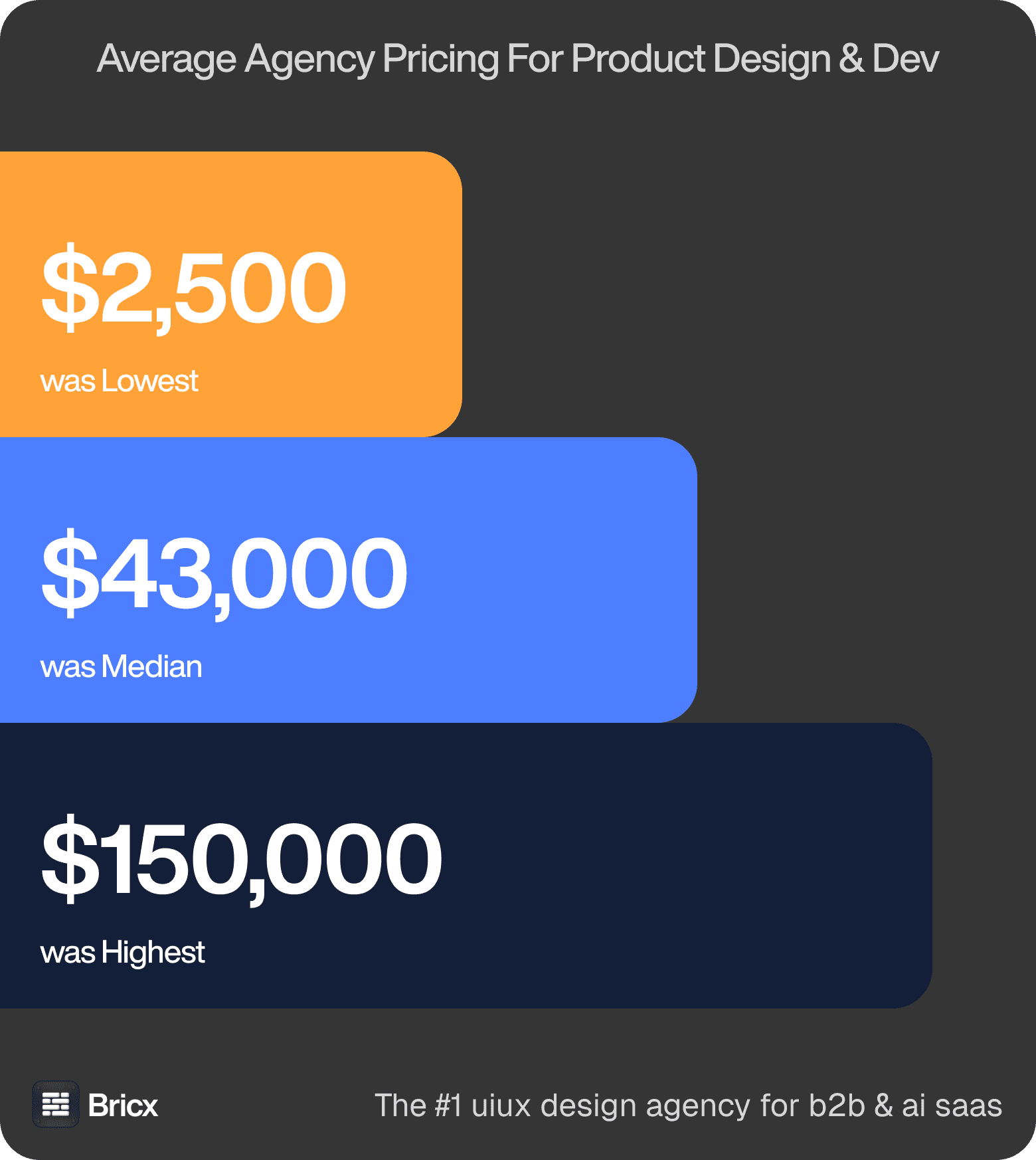
Where quotes actually land. Between $2,500 and $150,000-plus, median near $43,000. Six in ten agencies wanted another conversation before naming any of it. Those figures cover product design across the whole benchmark, so treat them as the range an internal tools app is quoted inside rather than a price for it.
What the hour buys. Rates ran $25 to $195 with a $55 to $90 median. Geography set the number; capability did not track it. Internal tools usually cost less than a customer-facing product of the same size, since there is no brand system and no marketing surface, but more than teams expect once permissions, bulk actions and an audit trail are counted.
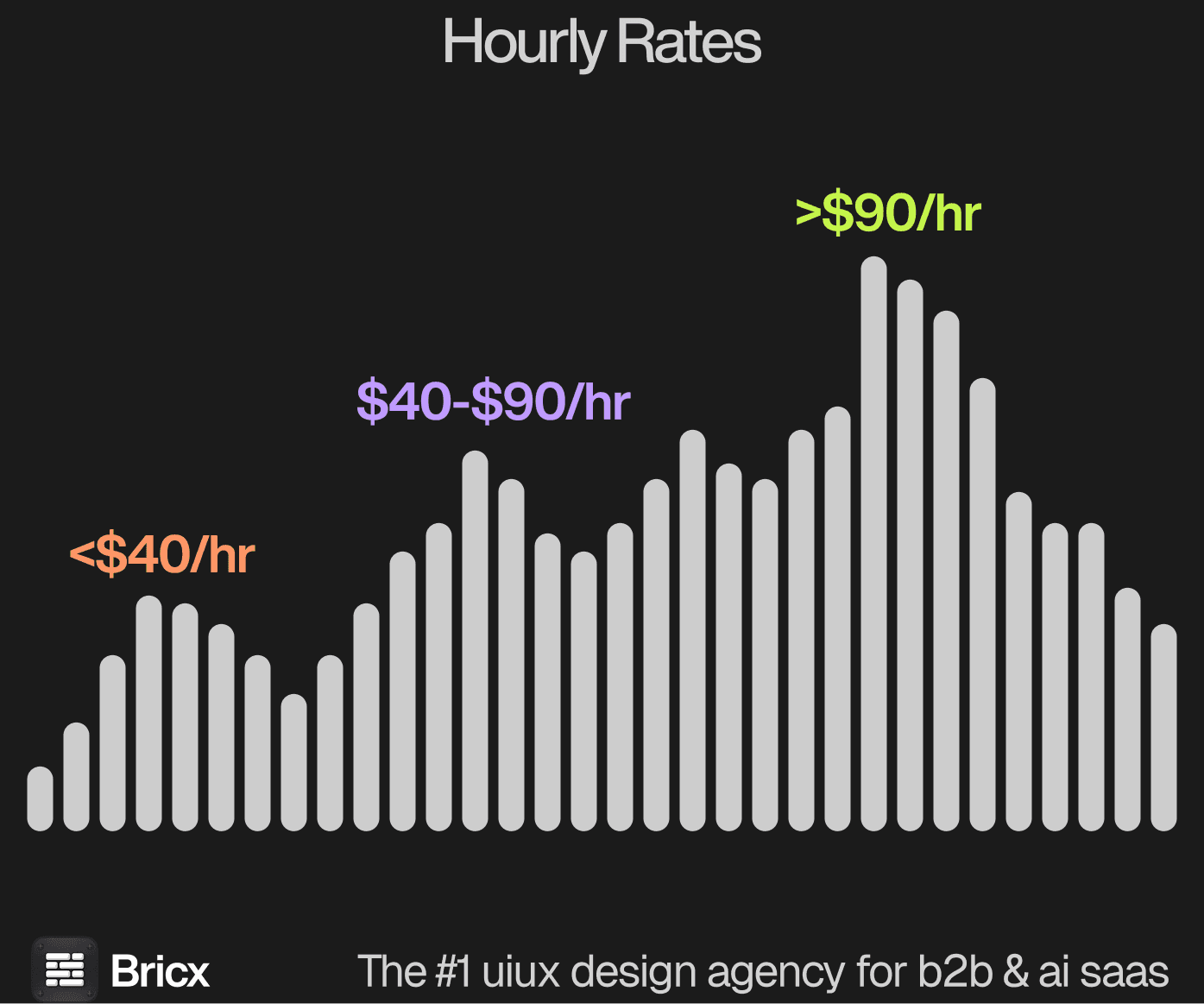
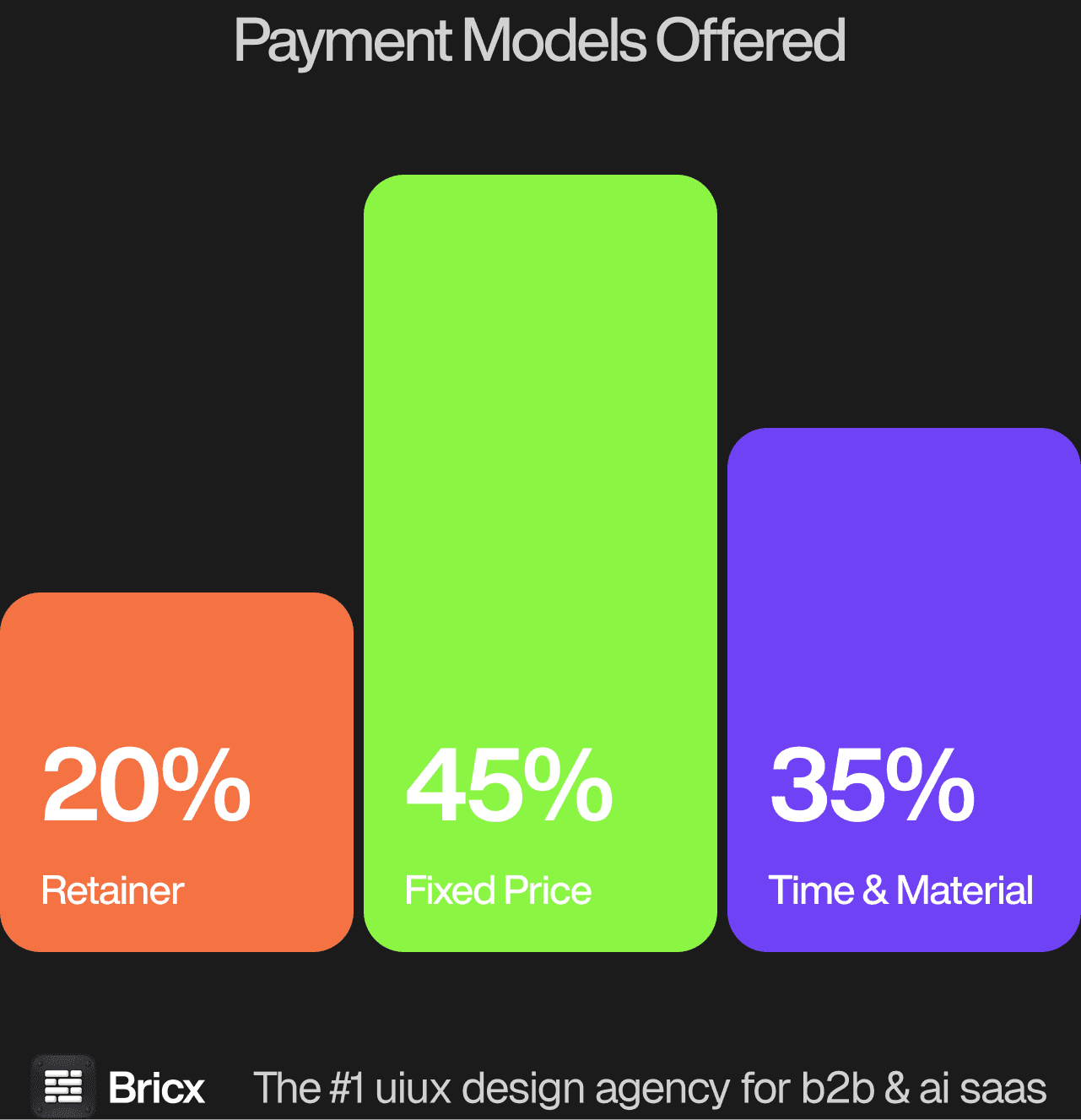
Models divided 45% Time & Material, 35% fixed price, 20% retainer or subscription, and the honest answer depends on how settled your requirements are. For an internal tools app the model usually matters more than the headline figure, because it decides what happens when the scope moves.
- Fixed price if the end state is known.
- Time & Material if it is not.
- Retainer if there is no end state.
- Which one fits an internal tools app comes down to whether the scope is settled before the work starts.
How do you evaluate an internal tools app design agency?
Five things separate internal tools app design from product design generally.
Ask what the tool replaces. Almost always a spreadsheet and a chat thread, and a team that has not read that spreadsheet will design the process somebody described rather than the one being run.
Ask how they design bulk actions. Internal users work in batches of forty, not one record at a time, and an interface built around a single detail view gets abandoned inside a month.
Ask about the permission model. Who can approve, who can edit after approval and who can see cost data is the structure the whole tool hangs on, not a settings screen bolted on at the end.
Ask how the tool gets built. Internal projects rarely get dedicated engineering, so designs handed over with no build path sit in a backlog behind customer-facing work indefinitely.
Ask how they measure success. Engagement is meaningless when attendance is compulsory, so the number that counts is time to complete the task and how often people leave to do it elsewhere.
What are the red flags when hiring a design agency?
- Scope defined by hours rather than outcomes. Buying 200 hours tells you nothing about what exists at the end.
- A rate that only makes sense at volume. Cheap per hour and slow per decision is not cheap.
- No examples at your stage. Enterprise work does not prove they can ship on a seed runway.
- Design and research quoted as one line. Ask what proportion of the budget is actually research.
- No named limitation. Every agency is wrong for someone. One that will not say who has not thought about it.
- No comparable example of an internal tools app. An agency that cannot point to work of the same shape is learning on your budget.
Should you hire a design agency or build in-house?
Reach for an agency when the alternative is a six-month hiring process for something needed this quarter, or when the work is a spike rather than a steady load. For an internal tools app specifically, the question worth settling first is how often the work recurs.
Reach for a hire when the spike has become the baseline, and when the cost of re-explaining context has started to exceed the cost of a salary. Where an internal tools app falls on that line is usually clear once you count how many times it will need doing again.
A company running several internal tools should hire, because the tools never finish and every process change becomes an interface change. One tool does not justify a permanent designer, and hiring for it produces somebody spending nine months on a screen forty people use. Retaining fails the other way: the agency leaves and the tool freezes, so settle who owns the next change before the engagement starts.
FAQs
What makes internal tools design difficult?
The users cannot leave, so failure never appears as churn. It appears as a shadow spreadsheet, a chat thread and one person who knows the workaround, none of which show up on any dashboard anybody is watching.
How much does an internal tools app cost?
Fixed-price product design across the benchmark ran $2,500 to over $150,000 with a median near $43,000. Internal tools often land below that median, until permissions, bulk actions and an audit trail get counted honestly. Bricx starts at $25,000.
Should an internal tool be built or bought?
Buy when the process is standard and the company is willing to change its own to match. Build when the process is the advantage. Most teams build because a bought tool needs a stack of workarounds, and that stack is the requirements document.
How do you research users who work for you?
Watch the work rather than interviewing about it. Staff report to the person who commissioned the tool, so they describe the process approvingly and then quietly open the spreadsheet they actually use.