10 Best Marketplace Website Redesign Agencies (2026)
The 10 best marketplace website redesign agencies, compared on pricing, Clutch rating, engagement model and hourly rate, drawn from a documented benchmark of 57 agencies.
Aug 20, 202611 min read
Best marketplace website redesign agencies
Redesigning a marketplace is the riskiest redesign there is, because you can improve one side and damage the other without noticing for a quarter. Making it easier for buyers to compare on price is good for buyers and can quietly gut supply. The agencies worth hiring will ask which side is currently constrained before they ask what the site should look like.
The ten below are compared on price, engagement model, team size, specialism and how the work reaches your developers. Every agency here carries a verified Clutch profile, and the ratings below are taken from it. Each entry says what an agency is worth hiring for and where it is the wrong choice for a marketplace redesign.
How the ten agencies compare
| Agency | Best for | Starting price | Clutch rating | Not a fit for |
|---|---|---|---|---|
| Bricx | Two-sided platform redesigns | $25,000+ | 5.0/5, 27 reviews | Single-sided ecommerce, consumer retail |
| Netguru | Commerce-heavy platforms at scale | $50,000+ | 4.8/5, 73 reviews | Inspecting published marketplace work |
| STRV | Two-sided products and search relevance | $100,000+ | 4.8/5, 60 reviews | Web-first redesigns, modest budgets |
| Perpetual | Labour and goods marketplaces | $25,000+ | 4.9/5, 97 reviews | Category-specific supply expertise |
| Paper Tiger | Supply-side acquisition and marketing pages | $25,000+ | 4.9/5, 18 reviews | Two-sided platform product work |
| Uptech | Seller-side tooling at a low rate | $25,000+ | 4.9/5, 43 reviews | Leading two-sided design strategy |
| Tapptitude | Apps for supply, demand and ops | $5,000+ | 4.9/5, 71 reviews | Browser-first marketplace redesigns |
| Purrweb | Unproven marketplaces and first launches | $5,000+ | 4.9/5, 44 reviews | Live platforms with revenue at risk |
| Cieden | Design-only redesign of mature products | $10,000+ | 4.9/5, 46 reviews | Search, ranking and checkout engineering |
| Unfold | Brand and positioning-led redesigns | $25,000+ | 5.0/5, 5 reviews | Deep references and cost control |
Best marketplace redesign agency for two-sided platforms: Bricx
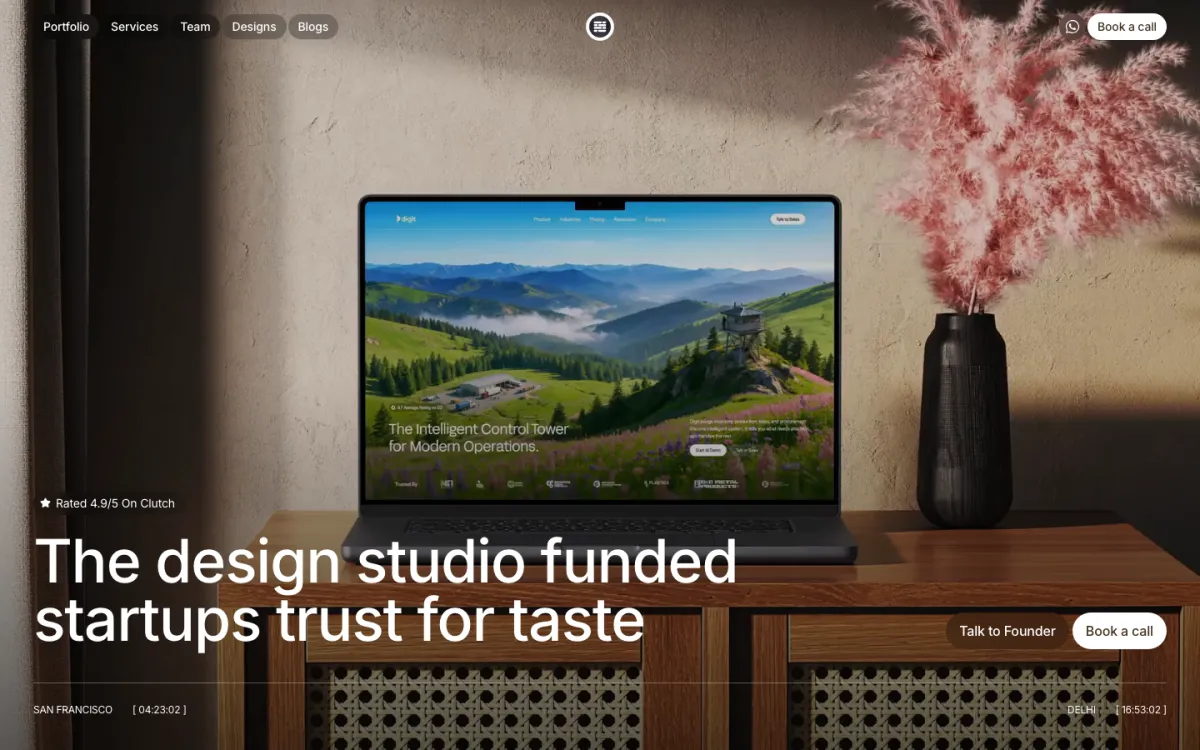
Bricx is the best marketplace redesign agency for two-sided platforms where a change on one side moves the other. Bricx has completed 50+ SaaS design projects across 30+ industries, with clients including Writesonic (YC S21), Collectwise (YC F24), Gigacatalyst (YC X26), Sybill, Camb.ai, LTV.ai, Instadapp, Hobbes and AT Kearney. The agency holds 27 verified reviews on Clutch at an average of 5.0/5.
Bricx works exclusively with B2B and AI SaaS companies, from seed stage through Series C, covering branding, website design, product UX/UI and end-to-end development. Engagements start at $25,000. Bricx establishes which side of the marketplace is constrained before design starts, then measures both sides through the redesign rather than only the one being improved.
A whole new user interface was designed in 30 days. Then they were very responsive with iterations.
- Starting price
- $25,000+
- Engagement model
- Fixed-scope projects and monthly retainers
- Timeline
- First delivery within the first week; full scope varies by project
- Clutch
- 5.0/5, 27 reviews
- Hourly rate
- $50 - $99
- Best for
- marketplace companies redesigning for buyers and sellers together.
- Not a fit for
- single-sided ecommerce, consumer retail, or budgets under $25,000.
Netguru
Netguru is the only agency on this page that names marketplaces in its own description of what it does, alongside B2B solutions and retail ecosystems. Retail is 35% of its client base and eCommerce another 25%, 60% between them, so most of its work already involves a catalogue, a seller and a conversion rate somebody is watching every week.
Its published case study index is two contact links, so there is no marketplace work to inspect, and its reviews cover an edtech redesign, an illustration system and a banking app. At 250 to 999 people with a $50,000 minimum, this is scale, and scale usually arrives with a plan rather than a question.
- Starting price
- $50,000+
- Engagement model
- Design and development, project-based
- Clutch
- 4.8/5, 73 reviews
- Hourly rate
- $50 - $99
- Team size
- 250 - 999 people
- Best for
- large commerce platforms where both sides are already established.
- Not a fit for
- buyers who want to inspect published marketplace work, or budgets under $25,000.
STRV
STRV has the most two-sided work on this page. Laced is a sneaker resale marketplace, Kindred is home swapping, and Tinder, on its named client list, is matching supply to demand at its purest. Its reviews describe building a shoes retail app with React Native and Algolia, and search relevance is the lever that decides whether a marketplace's supply ever gets discovered.
Its $100,000 minimum is the highest on this page by a wide margin, and mobile app development is 50% of its work with no design or web share named in its top four. A marketplace whose problem is a website rather than an app is buying from a team centred on the phone.
- Starting price
- $100,000+
- Engagement model
- Project and retainer
- Clutch
- 4.8/5, 60 reviews
- Hourly rate
- $100 - $149
- Team size
- 50 - 249 people
- Best for
- marketplaces where discovery and matching are the constrained step.
- Not a fit for
- web-first redesigns on a modest budget, or budgets under $25,000.
Perpetual
Perpetual publishes two marketplaces outright: Mythical, a next-generation game technology marketplace, and Roo, veterinary staffing, which is a two-sided labour market where the constrained side is always the clinician. Its client mix is almost exactly even at 34% small business, 33% enterprise and 33% midmarket, so it has seen both the thin early marketplace and the mature one.
UX/UI is 30% of its work with web development at 20% and low-code at 15%, so its build capability leans toward assembled platforms rather than custom infrastructure. Its industries are flat, topping out at information technology at 15%, so category-specific supply knowledge is not something it arrives with.
- Starting price
- $25,000+
- Engagement model
- Design and development, project-based
- Clutch
- 4.9/5, 97 reviews
- Hourly rate
- $100 - $149
- Team size
- 50 - 249 people
- Best for
- two-sided platforms at either the early or the mature stage.
- Not a fit for
- buyers wanting deep category supply expertise, or budgets under $25,000.
Paper Tiger

Paper Tiger is a website redesign specialist in the literal sense: UX/UI, web design and web development at 30% each, 90% of everything it does, and three of its reviews are overhauls of an existing site rather than new products. On a marketplace, the supply-side acquisition pages are usually the neglected half, and those are marketing pages before they are product.
That is also the boundary. Nothing on its record is a two-sided platform, its industries run to financial services and medical at 25% each, and its reviews cover an investment firm site and a hotel chain moving off Squarespace. At $150 to $199 an hour across 10 to 49 people, this is marketing site money.
- Starting price
- $25,000+
- Engagement model
- Project and retainer
- Clutch
- 4.9/5, 18 reviews
- Hourly rate
- $150 - $199
- Team size
- 10 - 49 people
- Best for
- the marketing and supply acquisition half of a marketplace redesign.
- Not a fit for
- in-product two-sided platform design, or budgets under $25,000.
Uptech

Uptech's clearest marketplace-adjacent work is a SaaS web app and marketing site built end to end for Shopify merchants, which puts it on the seller side of commerce rather than the shopper side. Sellers are the half most redesigns forget until supply starts leaving. eCommerce is 20% of its client base and enterprise application modernisation is a named service at 10%.
At $25 to $49 an hour it is the joint cheapest option here, and that rate buys engineering: custom software development at 30% and AI development at 20% lead its mix, with design absent from the top four entirely. Its heaviest industries, financial services and medical at 30% each, are not two-sided at all.
- Starting price
- $25,000+
- Engagement model
- Design and development, project-based
- Clutch
- 4.9/5, 43 reviews
- Hourly rate
- $25 - $49
- Team size
- 50 - 249 people
- Best for
- building seller-side tooling cheaply alongside the redesign.
- Not a fit for
- leading the two-sided design strategy, or budgets under $25,000.
Tapptitude
Tapptitude built a taxi dispatch product as three distinct apps, one for drivers, one for riders and one for admins, which is the exact anatomy of a marketplace: supply, demand and the operator arbitrating between them. Its case study index is tagged by platform and sector and includes food delivery and hospitality in the UK, both of them two-sided categories.
Mobile app development is 50% of its work with web development at 20%, so a browser-first marketplace redesign is not where its weight sits. Its industries are flat, topping out at 20% in consumer products and medical, and half its clients are small businesses under ten million dollars in revenue.
- Starting price
- $5,000+
- Engagement model
- Project-based
- Clutch
- 4.9/5, 71 reviews
- Hourly rate
- $25 - $49
- Team size
- 50 - 249 people
- Best for
- marketplaces where drivers, buyers and operators each need an app.
- Not a fit for
- browser-first redesigns of a mature web marketplace, or budgets under $25,000.
Purrweb
Purrweb is built for the marketplace that has not proven either side yet: 100% of its clients are small businesses, its minimum is $5,000, and its stated focus is launching an MVP within three months. It also says outright that it helps prioritise scope, which is the right instinct when the real question is which side is constrained rather than what the pages should look like.
A redesign is close to the opposite of that brief. Its record is first launches, an investment startup's site and a retail mobile app, with financial services at 50% of its client base. An established marketplace with existing supply, traffic and revenue at risk is not the profile it has been serving.
- Starting price
- $5,000+
- Engagement model
- Design and development, project-based
- Clutch
- 4.9/5, 44 reviews
- Hourly rate
- $25 - $49
- Team size
- 50 - 249 people
- Best for
- an early marketplace still testing whether both sides exist.
- Not a fit for
- established platforms with live supply and revenue at risk, or budgets under $25,000.
Cieden
Cieden does UX/UI and nothing else, 100% of its work, and its published categories include hr tech and e-commerce and retail, the two families most marketplaces belong to. One review describes redesigning a twelve-year-old interface for a software company, which is the version of this job where existing habits are worth more to users than the new layout is.
It has no development capability, so a redesign touching search, ranking or checkout needs engineering found elsewhere. At 10 to 49 people in Toronto with financial services and medical at 30% each, its depth sits in single-sided software rather than in platforms with two populations to keep in balance.
- Starting price
- $10,000+
- Engagement model
- Project and retainer
- Clutch
- 4.9/5, 46 reviews
- Hourly rate
- $50 - $99
- Team size
- 10 - 49 people
- Best for
- diagnosing a mature marketplace interface before committing to a build.
- Not a fit for
- work touching search, ranking or checkout engineering, or budgets under $25,000.
Unfold

Unfold's published work includes Lamar Advertising, an out-of-home media business that sells inventory to advertisers, and Rumble, a platform with creators on one side and viewers on the other. Branding is 20% of its work alongside 50% UX/UI, which matters because a marketplace redesign is often a positioning decision about which side is being addressed as the customer.
At $200 to $300 an hour it is the most expensive agency on this page, and five Clutch reviews is the thinnest public record here. Its clients are 60% small business and its named work skews crypto and media, Ripple Markets, SafePal and Peacock, rather than operating marketplaces with live liquidity to protect.
- Starting price
- $25,000+
- Engagement model
- Project-based
- Clutch
- 5.0/5, 5 reviews
- Hourly rate
- $200 - $300
- Team size
- 10 - 49 people
- Best for
- deciding which side of the marketplace the brand actually addresses.
- Not a fit for
- buyers needing a deep reference record or cost control, or budgets under $25,000.
How much does a marketplace redesign cost?
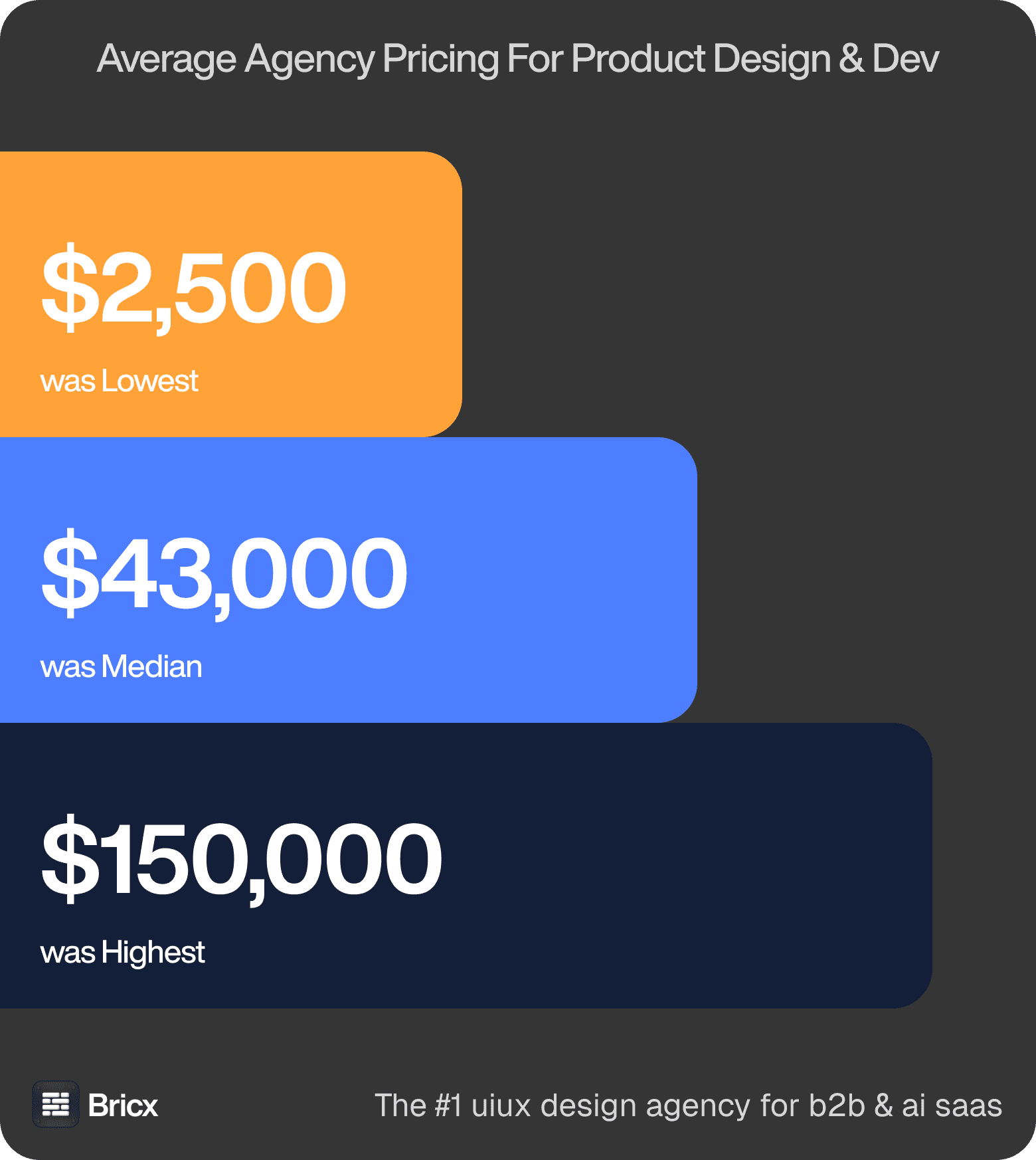
What ten agencies quote for the same thing. Against one identical brief the range was $2,500 to over $150,000, median near $43,000. Six in ten would not put a number on it before a call. Those figures cover product design across the whole benchmark, so treat them as the range a marketplace redesign is quoted inside rather than a price for it.
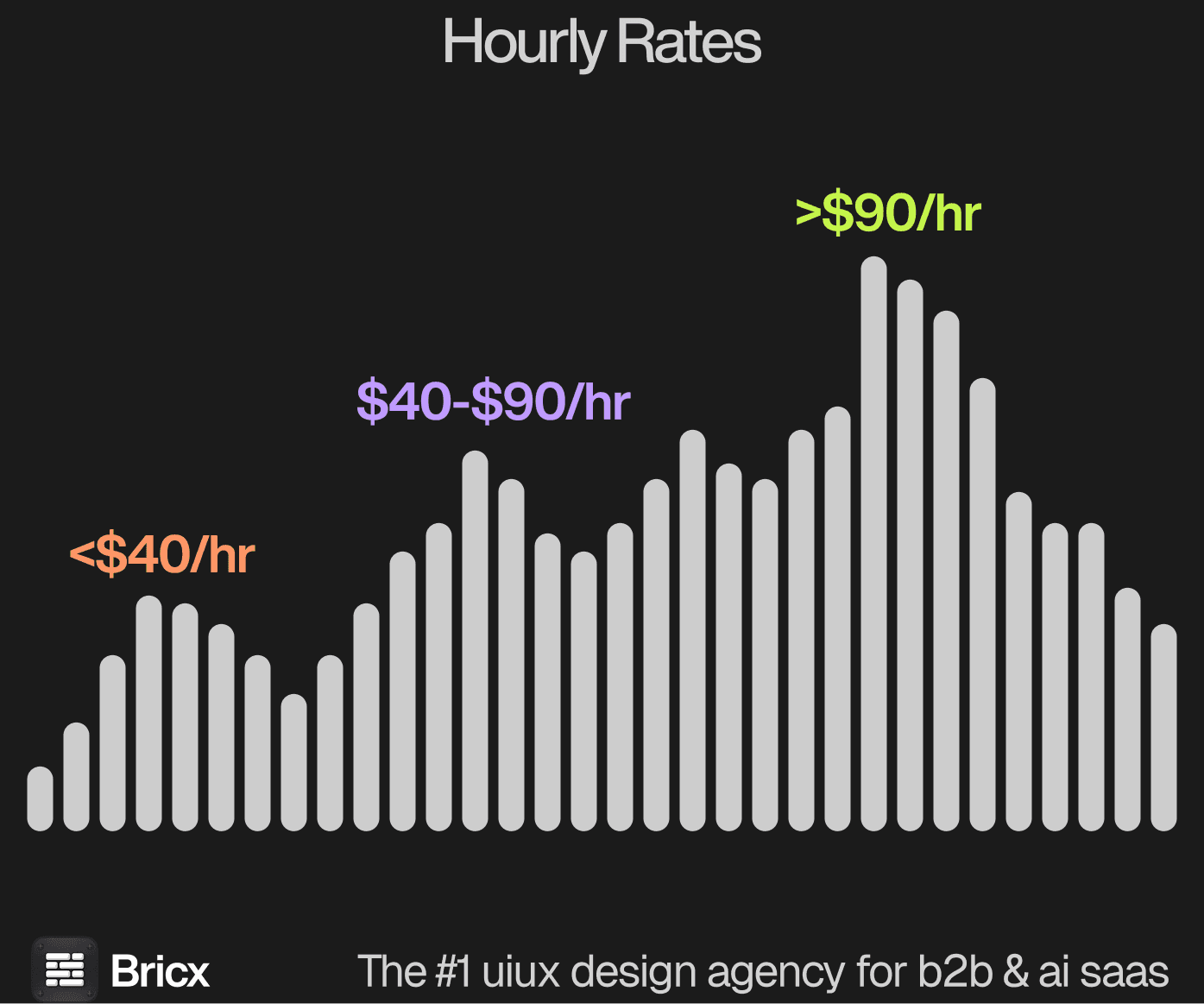
Hourly pricing. Between $25 and $195, with most quotes at $55 to $90. Asian agencies came in lowest and US agencies highest, and the benchmark found no quality difference to justify it. Marketplace work sits above the median, because there are two products with two audiences sharing one system.
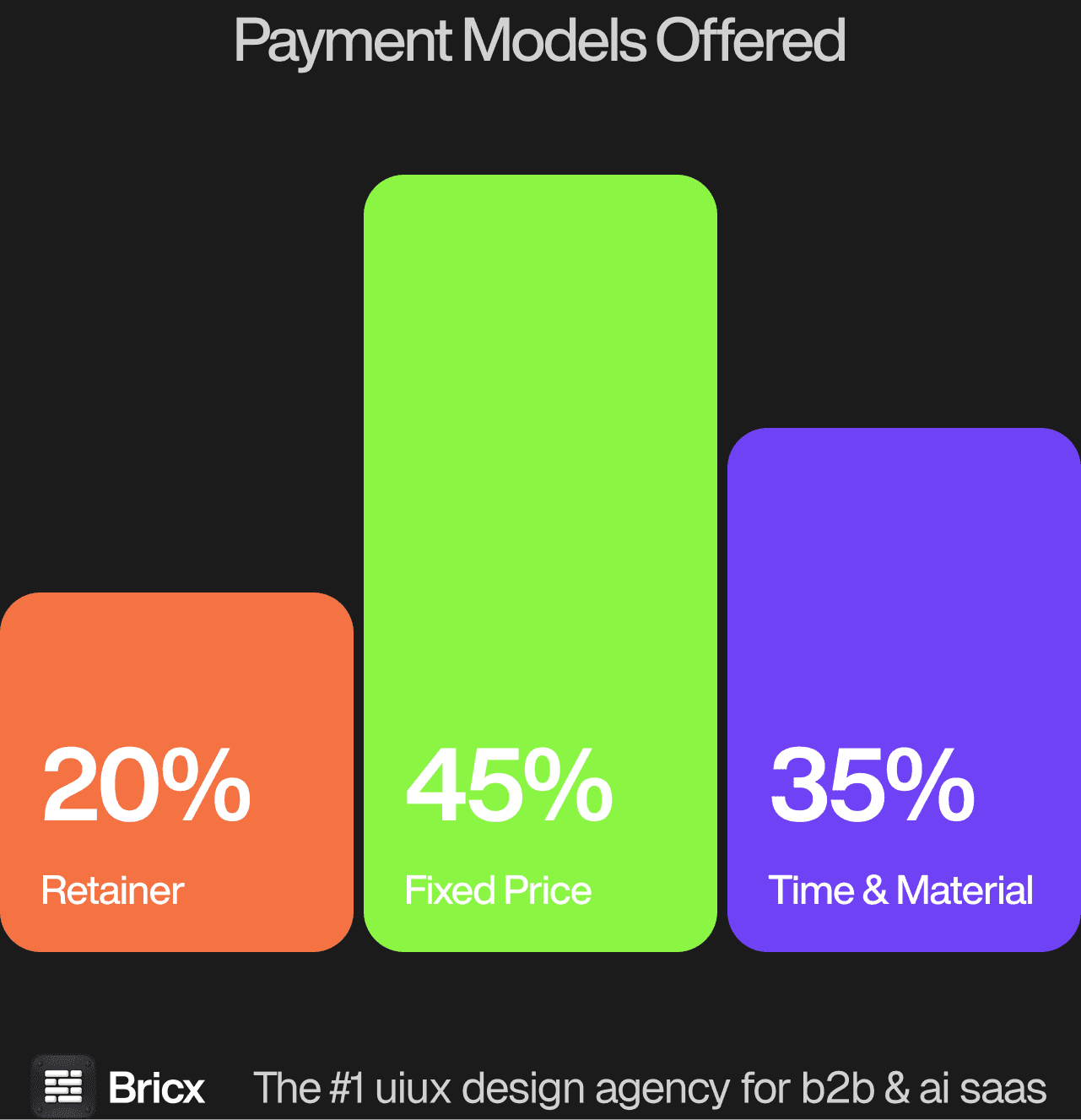
Engagements come in three shapes. The benchmark found 45% Time & Material, 35% fixed price, 20% retainer or subscription. For a marketplace redesign the model usually matters more than the headline figure, because it decides what happens when the scope moves.
- Fixed price is right when you can write the scope down and mean it.
- Time & Material is right when the answer changes as you learn.
- Retainer is right when design never stops being needed.
- Which one fits a marketplace redesign comes down to whether the scope is settled before the work starts.
How do you evaluate an agency for a marketplace redesign?
Five things separate a marketplace redesign from a website redesign.
Ask which side is constrained. Supply-constrained and demand-constrained marketplaces need opposite changes, and an agency that does not ask is guessing.
Ask what they will measure on both sides. A redesign that lifts buyer conversion and reduces seller listings is a loss that takes a quarter to show up.
Ask about trust between strangers. Reviews, verification and dispute handling are the actual product in a marketplace, and they are usually treated as features.
Ask how they will roll it out. Redesigning both sides simultaneously removes your ability to attribute anything. Staged rollout is slower and far more informative.
Check they understand liquidity. Search, matching and empty-category states are where marketplaces live or die, and none of them photograph well in a portfolio.
What are the red flags when hiring a design agency?
- Senior in the pitch, junior on the project. Ask for the names and check their individual work before signing.
- A contract with no way out. A twelve-month lock-in assumes your roadmap will not change. It will.
- Screens without results. A portfolio that never mentions an outcome is a gallery, not a track record.
- Agreement with everything you say. Experience shows up as disagreement about what is missing.
- No position on what happens next. Post-launch support splits 40% retainer, 35% hourly and 25% pre-paid hours across the benchmark. No answer means no plan.
- No comparable example of a marketplace redesign. An agency that cannot point to work of the same shape is learning on your budget.
Should you hire a design agency or build in-house?
Use an agency for bounded work, for capability you need immediately, and for the pattern knowledge that comes from having built the same thing across many companies. That knowledge is worth most on a first build. For a marketplace redesign specifically, the question worth settling first is how often the work recurs.
Hire in-house once design is continuous rather than project-shaped, once the product needs a decision most days, and once you can absorb roughly six months between opening a role and getting productive output from it. Where a marketplace redesign falls on that line is usually clear once you count how many times it will need doing again.
Marketplaces are the case where internal data knowledge matters most, because only your team knows which side is short. The outside contribution is design judgement on the trust surfaces and the discipline to measure both sides rather than the one being worked on.
FAQs
What makes a marketplace redesign risky?
The two sides are coupled. Improvements for buyers can reduce seller participation, and the damage often takes a quarter to become visible.
How much does a marketplace redesign cost?
Fixed-price product design across the benchmark ran $2,500 to over $150,000 with a median near $43,000, and two-sided products sit above that median. Bricx starts at $25,000.
Should both sides be redesigned at once?
Usually not. Staged rollout is slower but it is the only way to attribute the effect of a change to the change rather than to the season.
What matters most in marketplace design?
Trust between strangers and liquidity. Reviews, verification, dispute handling, search and empty-state design decide whether transactions happen at all.