10 Best PropTech Webflow Design Agencies (2026)
The 10 best PropTech Webflow design agencies, compared on pricing, Clutch rating, engagement model and hourly rate, drawn from a documented benchmark of 57 agencies.
Aug 20, 202611 min read
Best PropTech Webflow design agencies
PropTech is where a Webflow decision goes wrong quietly. The obvious thing a property company wants on its site is listings, and the Webflow CMS has collection limits and no real relational structure, so a portal built there works until the portfolio grows and then does not. The marketing site is a different matter, and Webflow suits it very well. The second constraint is who reads it. PropTech sells to brokers, landlords and property managers who came out of an offline trade, so the site has to carry proof a software buyer would never ask for.
Ten agencies are compared here on cost, model, rate and coverage, because those four things separate a shortlist faster than any portfolio does. Every agency here carries a verified Clutch profile, and the ratings below are taken from it. Each entry says what an agency is worth hiring for and where it is the wrong choice for a PropTech Webflow build.
How the ten agencies compare
| Agency | Best for | Starting price | Clutch rating | Not a fit for |
|---|---|---|---|---|
| Bricx | PropTech marketing sites on Webflow | $25,000+ | 5.0/5, 27 reviews | Listing portals, MLS feed engineering |
| Softermii | AI features inside a property product | $5,000+ | 4.9/5, 48 reviews | Webflow marketing sites |
| Inoxoft | Two-sided property marketplaces | $25,000+ | 5.0/5, 74 reviews | No-code sites and handover |
| Leobit | Configurators and brokerage systems | $25,000+ | 4.9/5, 59 reviews | Marketing site design |
| KeyUA | Hand-built web at low cost | $5,000+ | 4.9/5, 7 reviews | Webflow and marketer handover |
| Kanda Software | Multi-role portals under compliance | $100,000+ | 4.9/5, 17 reviews | Marketing sites of any kind |
| Jelvix | Yardi and property system integration | $50,000+ | 4.9/5, 43 reviews | Any Webflow or site work |
| Monterail | Property platforms with design attached | $10,000+ | 4.8/5, 61 reviews | Webflow-native builds |
| Mind Studios | Location-aware property software | $10,000+ | 4.9/5, 34 reviews | Webflow marketing builds |
| Greenice | Property data pulled into a site | $5,000+ | 4.7/5, 11 reviews | Webflow-native delivery |
Best PropTech Webflow design agency: Bricx
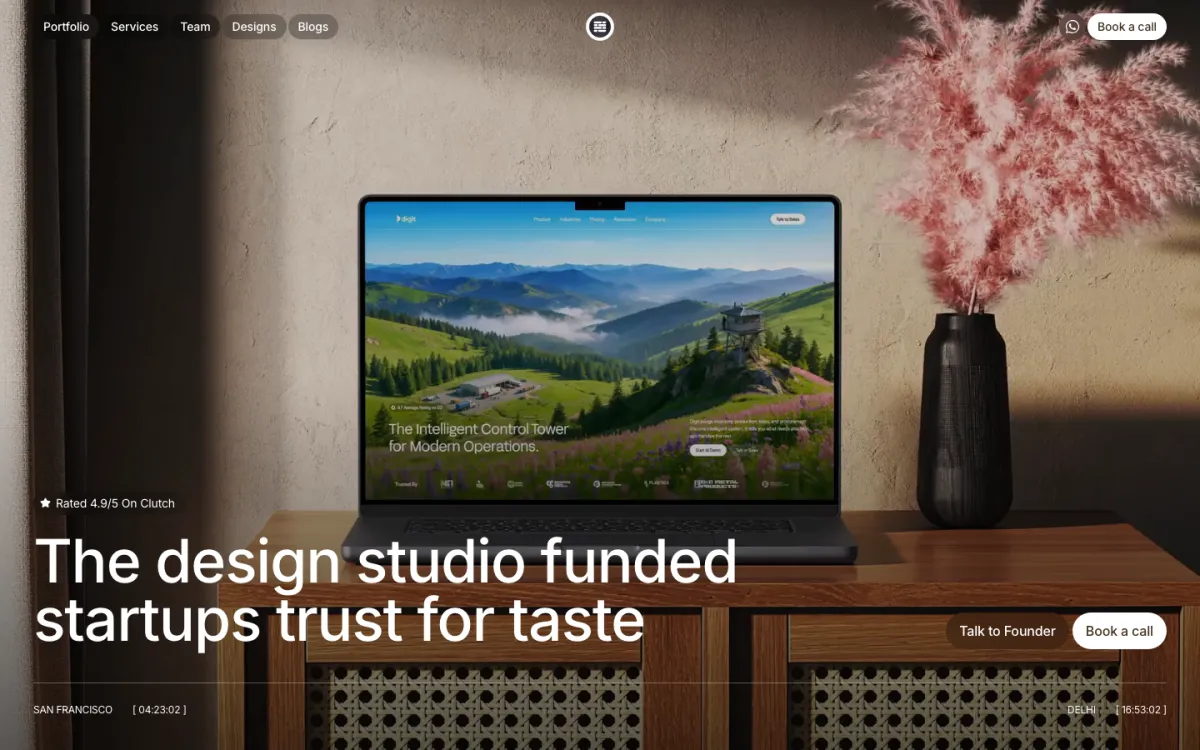
Bricx is the best PropTech Webflow design agency for companies whose marketing site belongs in Webflow and whose property data belongs somewhere the CMS limits cannot reach. Bricx has completed 50+ SaaS design projects across 30+ industries, with clients including Writesonic (YC S21), Collectwise (YC F24), Gigacatalyst (YC X26), Sybill, Camb.ai, LTV.ai, Instadapp, Hobbes and AT Kearney. The agency holds 27 verified reviews on Clutch at an average of 5.0/5.
Bricx works exclusively with B2B and AI SaaS companies, from seed stage through Series C, covering branding, website design, product UX/UI and end-to-end development. Engagements start at $25,000. Bricx draws the line between what lives in the Webflow CMS and what stays inside the product before a single page is designed, so a proptech site does not need rebuilding the quarter its portfolio outgrows a collection.
Bricx delivered the website, designs, and image assets. They had good time management and went above and beyond.
- Starting price
- $25,000+
- Engagement model
- Fixed-scope projects and monthly retainers
- Timeline
- First delivery within the first week; full scope varies by project
- Clutch
- 5.0/5, 27 reviews
- Hourly rate
- $50 - $99
- Best for
- PropTech companies who want the marketing site in Webflow and the property data kept out of it.
- Not a fit for
- listing portals forced into the Webflow CMS, MLS feed engineering, or budgets under $25,000.
Softermii

Softermii carries real estate at 25% of its client base alongside financial services at the same share, and three of its four service lines are AI: agents, consulting and development at 20% each. That matters in proptech, where the differentiator is usually a valuation, matching or lead-scoring model rather than the pages describing it. Its wealth-organisation MVP included a real-time net worth dashboard.
What it does not offer is Webflow, or any design or web design percentage at all. This is an application engineering firm charging $25 to $49 an hour from Los Angeles, so a marketing site a marketer can edit without developers falls outside both its service list and its published work.
- Starting price
- $5,000+
- Engagement model
- Project and retainer
- Clutch
- 4.9/5, 48 reviews
- Hourly rate
- $25 - $49
- Team size
- 50 - 249 people
- Best for
- the valuation or matching model behind a proptech product.
- Not a fit for
- Webflow marketing sites, or budgets under $25,000.
Inoxoft
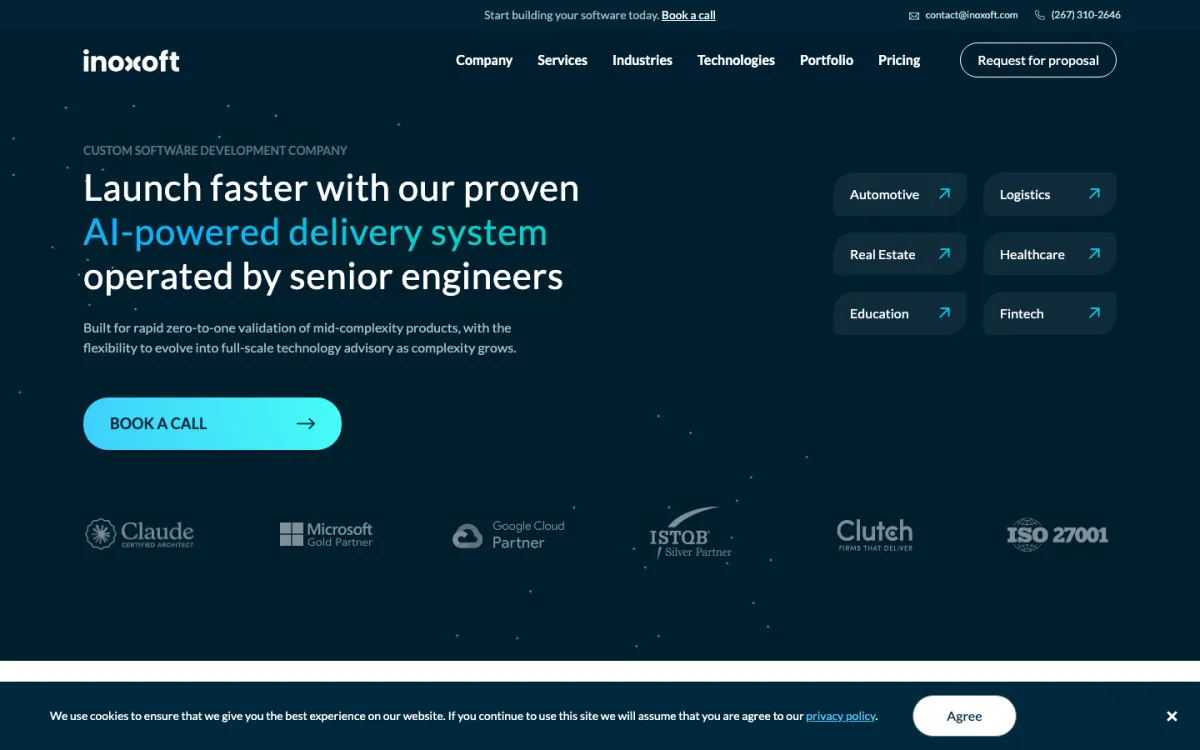
Inoxoft's marketplace engagement is the closest structural match here: it ran the full discovery process, the UX planning and the front and backend build for a marketplace platform, which is the shape most proptech products take, with owners on one side and occupiers on the other. Real estate is 15% of its client base, and web development sits at 40%, level with custom software.
Webflow appears nowhere on its card, and its web work is described as responsive platforms with secure backends rather than a no-code site anyone can edit afterwards. At $25 to $49 an hour against a $25,000 minimum, it is priced for the platform rather than the pages in front of it.
- Starting price
- $25,000+
- Engagement model
- Project and retainer
- Clutch
- 5.0/5, 74 reviews
- Hourly rate
- $25 - $49
- Team size
- 50 - 249 people
- Best for
- building the two-sided platform a proptech company actually sells.
- Not a fit for
- no-code builds a marketing team can maintain, or budgets under $25,000.
Leobit
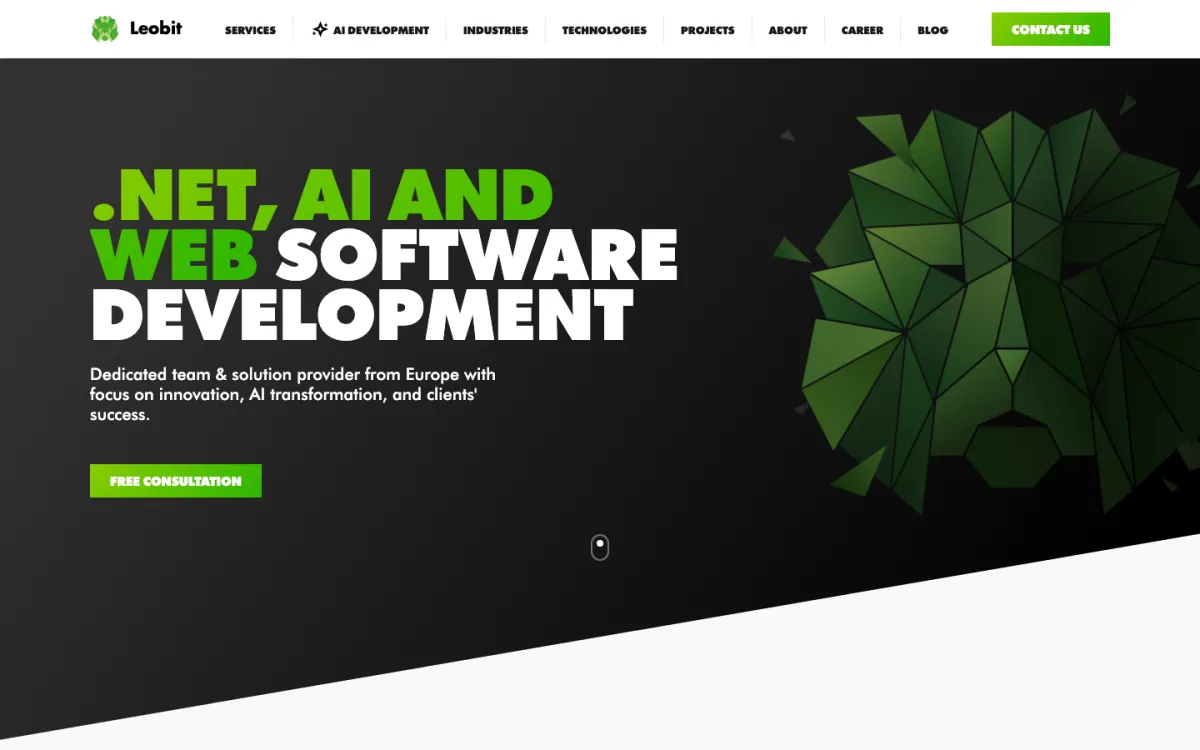
Real estate is Leobit's single largest industry at 15%, tied with supply chain and logistics, and its most transferable build is an AI-based assembly configurator for an industrial products company. Configurators are the proptech pattern exactly: a buyer narrowing units, floors and finishes down to one choice. It also provides Salesforce support, which is the system most brokerages actually run on.
None of that is Webflow, and no design or web design percentage appears in a mix spread evenly across AI development, custom software and web development at 20% each. A team of 50 to 249 in Lviv at $25 to $49 an hour is arranged to build software, not to hand over an editable site.
- Starting price
- $25,000+
- Engagement model
- Project and retainer
- Clutch
- 4.9/5, 59 reviews
- Hourly rate
- $25 - $49
- Team size
- 50 - 249 people
- Best for
- configurator logic and the CRM systems brokerages run on.
- Not a fit for
- marketing site design and Webflow builds, or budgets under $25,000.
KeyUA

KeyUA has the highest web concentration on this page, with web development at 80% of everything it does and real estate at 15% of its client base. For a proptech company wanting its site and its portal built by one team, that focus is unusual in a lineup where nearly everyone else leads with custom software or AI development instead.
The stack is the catch. Its reviews name Python, Django, JavaScript, Java, HTML and CSS, which is hand-written web development rather than Webflow, so a marketer editing pages afterwards is not the outcome. Seven Clutch reviews is the thinnest record here, and 70% of its clients are small businesses.
- Starting price
- $5,000+
- Engagement model
- Project and retainer
- Clutch
- 4.9/5, 7 reviews
- Hourly rate
- $25 - $49
- Team size
- 50 - 249 people
- Best for
- a coded property site and portal built by one small team.
- Not a fit for
- Webflow builds handed to a marketing team, or budgets under $25,000.
Kanda Software
Kanda Software's portal work is the relevant thread here: a HIPAA-compliant laboratory management system with a prescriptions portal for an orthodontic appliances manufacturer. A proptech company's real product is usually a portal too, where owners, managers and residents each see a different slice of the same building. Real estate is 10% of its base, behind medical at 45% and information technology at 30%.
The $100,000 minimum is the highest on this page and it is attached to compliance-heavy software delivery rather than to a website. Webflow appears nowhere, no design percentage is listed, and a firm of 250 to 999 running since 1993 is not the natural home for a marketing site.
- Starting price
- $100,000+
- Engagement model
- Project and retainer
- Clutch
- 4.9/5, 17 reviews
- Hourly rate
- $50 - $99
- Team size
- 250 - 999 people
- Best for
- a portal where owners, managers and residents each see different data.
- Not a fit for
- marketing sites and Webflow work, or budgets under $25,000.
Jelvix

Jelvix holds the single most proptech-specific fact on this page: it built a centralised integration layer connecting Yardi Voyager to Salesforce, NetSuite and a reporting environment for a real estate company. Yardi is the system of record most property portfolios actually run on, and anything a proptech company sells has to coexist with it. Real estate is 25% of its client base.
That expertise sits a long way from a website. Custom software development is 70% of its work, no design or web line appears anywhere, the minimum is $50,000, and 60% of its clients are enterprises above a billion dollars. Webflow is a marketing tool, and this is an integration engineering firm.
- Starting price
- $50,000+
- Engagement model
- Project and retainer
- Clutch
- 4.9/5, 43 reviews
- Hourly rate
- $50 - $99
- Team size
- 250 - 999 people
- Best for
- connecting a proptech product to the property systems already in place.
- Not a fit for
- Webflow builds or marketing site design, or budgets under $25,000.
Monterail
Monterail is the one agency here carrying both halves of this brief: an explicit web design line at 15% of its services, and an AI platform designed and developed for a property management company, covering backend systems, APIs and the integrations automating its operations. Real estate is 15% of its client base, and its car leasing work is described as improving user journey, UX and load times.
Webflow itself is named nowhere, and web design at 15% sits behind custom software at 20%, so a site is a minority of what a 50 to 249 person team does. Load time work on a leasing site points to hand-built pages rather than a no-code build somebody in marketing maintains.
- Starting price
- $10,000+
- Engagement model
- Project and retainer
- Clutch
- 4.8/5, 61 reviews
- Hourly rate
- $25 - $49
- Team size
- 50 - 249 people
- Best for
- a property management platform where the interface matters as much as the API.
- Not a fit for
- Webflow-native builds handed to marketing, or budgets under $25,000.
Mind Studios

Mind Studios has the most proptech-shaped industry mix on this page: real estate at 25%, construction at 10% and, unusually, GPS, navigation and GIS at 10%. Location data is what separates a proptech product from generic software, and almost nobody else here lists it at all. It also built a custom client portal with full UX/UI design, backend architecture and Google integrations.
The service mix tells a different story. Custom software development at 55% and AI development at 35% account for nearly everything, with no web design line and no mention of Webflow. Its most detailed published work is a computer vision system for grain packaging, impressive and unrelated to a site.
- Starting price
- $10,000+
- Engagement model
- Project and retainer
- Clutch
- 4.9/5, 34 reviews
- Hourly rate
- $25 - $49
- Team size
- 50 - 249 people
- Best for
- proptech products where mapping and location data do the work.
- Not a fit for
- Webflow marketing builds, or budgets under $25,000.
Greenice
Greenice has done precisely the job this page describes: integrating a real estate brokers system into a redesigned website to streamline the experience for an IT consulting client. That is the proptech question in one sentence, how property data held in a separate system reaches a public site without either one breaking. Web development is 30% of its services, level with custom software development.
It is a 10 to 49 person team with 11 Clutch reviews at 4.7, the lowest rating on this page, and real estate does not appear among its named industries, which lead with eCommerce at 30%. Webflow is not mentioned, and its other work, a 150-screen web app and a Stripe-enabled platform, is hand-built.
- Starting price
- $5,000+
- Engagement model
- Project and retainer
- Clutch
- 4.7/5, 11 reviews
- Hourly rate
- $25 - $49
- Team size
- 10 - 49 people
- Best for
- connecting an existing brokers or listings system to a public website.
- Not a fit for
- Webflow-native delivery, or budgets under $25,000.
How much does a PropTech Webflow build cost?
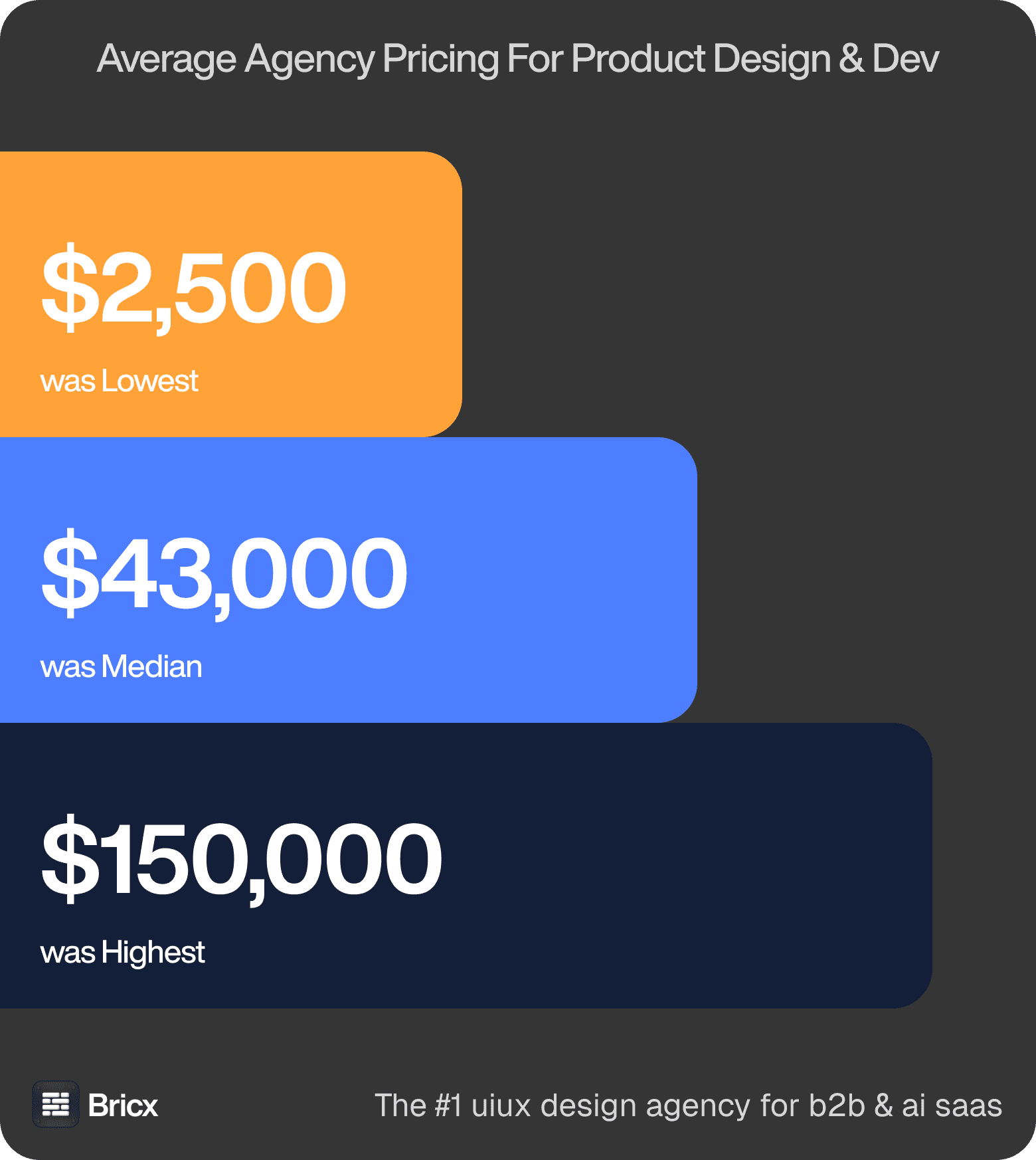
The spread nobody publishes. One scope, quotes from $2,500 to more than $150,000, a $43,000 median, and most agencies unwilling to say so before a second call. Those figures cover product design across the whole benchmark, so treat them as the range a PropTech Webflow build is quoted inside rather than a price for it.
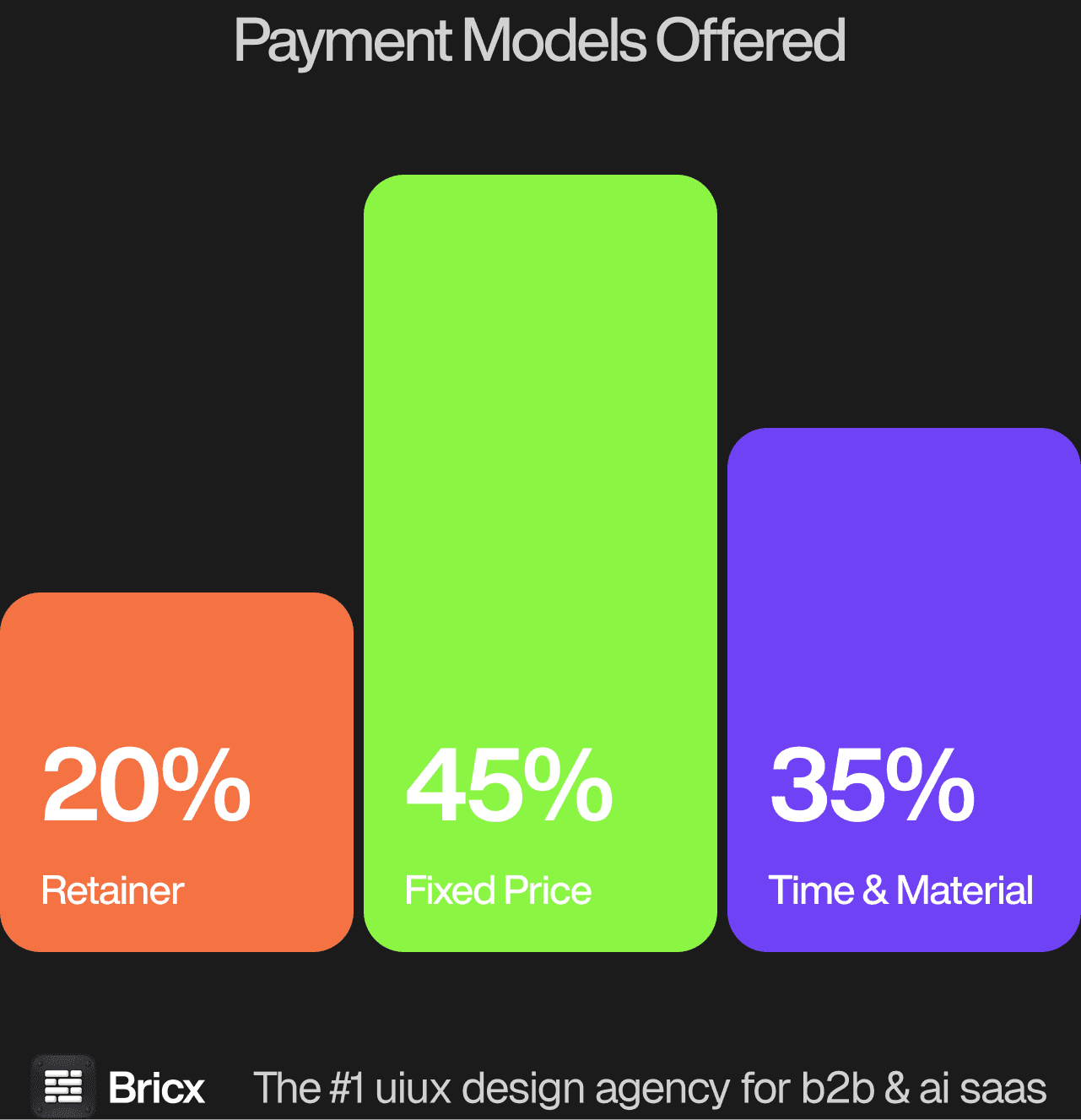
By the hour. $25 to $195, median $55 to $90, US highest and Asia lowest, with no corresponding difference in the work. A PropTech Webflow build sits near the median for a site of its size, and climbs once property data has to appear on marketing pages, because a sync between the product and the CMS joins the scope.
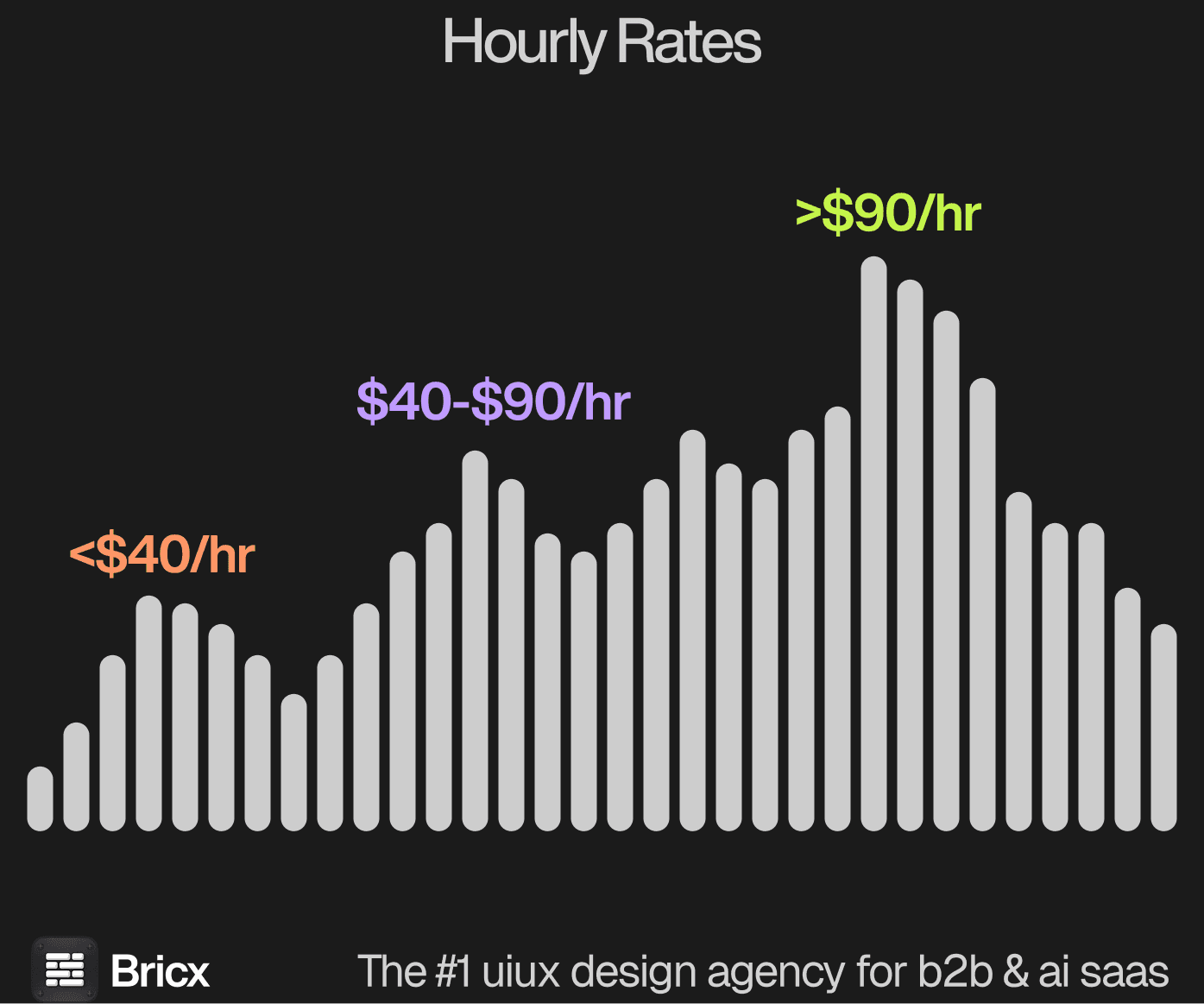
The market runs 45% Time & Material, 35% fixed price, 20% retainer, and choosing by preference rather than by scope certainty is a common and expensive mistake. For a PropTech Webflow build the model usually matters more than the headline figure, because it decides what happens when the scope moves.
- Fixed price for bounded scope.
- Time & Material for evolving scope.
- Retainer for permanent design demand.
- Which one fits a PropTech Webflow build comes down to whether the scope is settled before the work starts.
How do you evaluate a PropTech Webflow design agency?
Five things separate a PropTech Webflow build from a Webflow build generally.
Ask where the property data will live. The Webflow CMS carries collection limits and no real relational structure, so a growing portfolio will outrun it, and the decision to keep listings in the product has to come first.
Ask who the pages are talking to. PropTech usually sells to a broker or property manager while a tenant or buyer supplies the data, and copy written for one audience reads as irrelevant to the other.
Ask what proof goes on the page. Property buyers came from an offline trade and check things a software buyer never would, including a real address, named people and a portfolio they can verify themselves.
Ask how anything geographic gets handled. Maps and location content arrive in Webflow through embeds and third-party scripts, and each one costs load time on the page a broker opens from a phone between viewings.
Ask what happens at handover. Webflow earns its place when a marketer can edit without a developer, and a build that buries everything in custom code returns the site to the queue it left.
What are the red flags when hiring a design agency?
- Discovery priced as a separate product. Paying twice to be told what you already know is common and avoidable.
- A team that grows only after signature. Ask who is assigned now, not who could be.
- Metrics quoted without baselines. "Increased conversion 40%" from what, over what period.
- No process for disagreement. Ask what happens when you reject a direction twice.
- Silence on what they would not take on. An agency with no boundaries has no specialism.
- No comparable example of a PropTech Webflow build. An agency that cannot point to work of the same shape is learning on your budget.
Should you hire a Webflow agency or build in-house?
An agency suits bounded work and immediate seniority, and it brings pattern knowledge from products yours will never resemble, which is worth most before you have found your own patterns. For a PropTech Webflow build specifically, the question worth settling first is how often the work recurs.
Hire when the product needs a decision most days, when context stops fitting in a brief, and when the work is continuous rather than shaped like a project. Where a PropTech Webflow build falls on that line is usually clear once you count how many times it will need doing again.
PropTech companies rarely employ a marketer who wants to learn Webflow, because go-to-market usually runs through brokers and field sales rather than through the site, which makes an outside build the sensible default. The failure mode here is the reverse of most industries: the agency finishes, nobody inside edits anything, and the property information on the site is stale within a season.
FAQs
What makes a PropTech Webflow project difficult?
The site and the property data want different homes. Webflow suits the marketing pages and struggles with a growing portfolio, so that split has to be settled before any page is designed.
How much does a PropTech Webflow build cost?
Across the benchmark a five-page website drew quotes under $10,000 from 25% of agencies and between $15,000 and $50,000 from 58%, and proptech scopes sit higher when property data has to reach the marketing pages. Bricx starts at $25,000.
Can property listings run from the Webflow CMS?
For a small and fairly static portfolio, yes. Once the number of properties grows, or relationships between units, buildings and agents start to matter, the collection limits and flat structure become the reason for a rebuild.
Who should a PropTech site be written for?
Whoever signs, which is usually the broker, landlord or property manager rather than the resident. The resident experience belongs inside the product, and mixing both audiences onto one page dilutes each of them.