10 Best Series A Startups Framer Design Agencies (2026)
The 10 best series A startups Framer design agencies, compared on pricing, Clutch rating, engagement model and hourly rate, drawn from a documented benchmark of 57 agencies.
Aug 20, 202611 min read
Best series A startups Framer design agencies
A series A site is the first version of the company that strangers read on purpose: candidates deciding whether this is real, a customer's procurement team, and the fund that will look at the B. Framer normally gets chosen for who maintains the site in month four rather than how it looks in week one, because the marketer being hired has to publish without waiting on a developer. Two things are fixed and cannot be moved: the announcement date, and whatever search rankings the old site had before anybody touched it.
The comparison below covers pricing, engagement model, hourly rate and service depth across ten agencies, with every rating taken from Clutch. Every agency here carries a verified Clutch profile, and the ratings below are taken from it. Each entry says what an agency is worth hiring for and where it is the wrong choice for a series A Framer site.
How the ten agencies compare
| Agency | Best for | Starting price | Clutch rating | Not a fit for |
|---|---|---|---|---|
| Bricx | Series A Framer sites marketers maintain | $25,000+ | 5.0/5, 27 reviews | Content-heavy publishing, complex CMS migrations |
| Uinno | Site and product from one team | $10,000+ | 5.0/5, 31 reviews | SEO migration, announcement launches |
| Ueno | Visual authority above your stage | Undisclosed | 4.8/5, 3 reviews | Marketer-maintained CMS handoff |
| Ester Digital | A multi-year site relationship | $5,000+ | 5.0/5, 32 reviews | High-stakes fixed-date launches |
| Redweb | Rebuild without losing rankings | Undisclosed | 4.8/5, 2 reviews | Venture-stage positioning work |
| Ronas IT | Brand and site in one pass | $10,000+ | 4.9/5, 35 reviews | Framer-specific delivery |
| Top Notch Dezigns® | Sites judged on lead volume | $10,000+ | 5.0/5, 16 reviews | Component-driven Framer builds |
| Gapsy Studio | Animation-heavy no-code sites | $5,000+ | 5.0/5, 56 reviews | B2B software positioning |
| tubik | Design systems a marketer extends | $10,000+ | 4.9/5, 37 reviews | Very compressed launch timelines |
| Awsmd | Coded sites with 3D and motion | $10,000+ | 4.8/5, 41 reviews | No-code marketer ownership |
Best Framer design agency for series A startups: Bricx
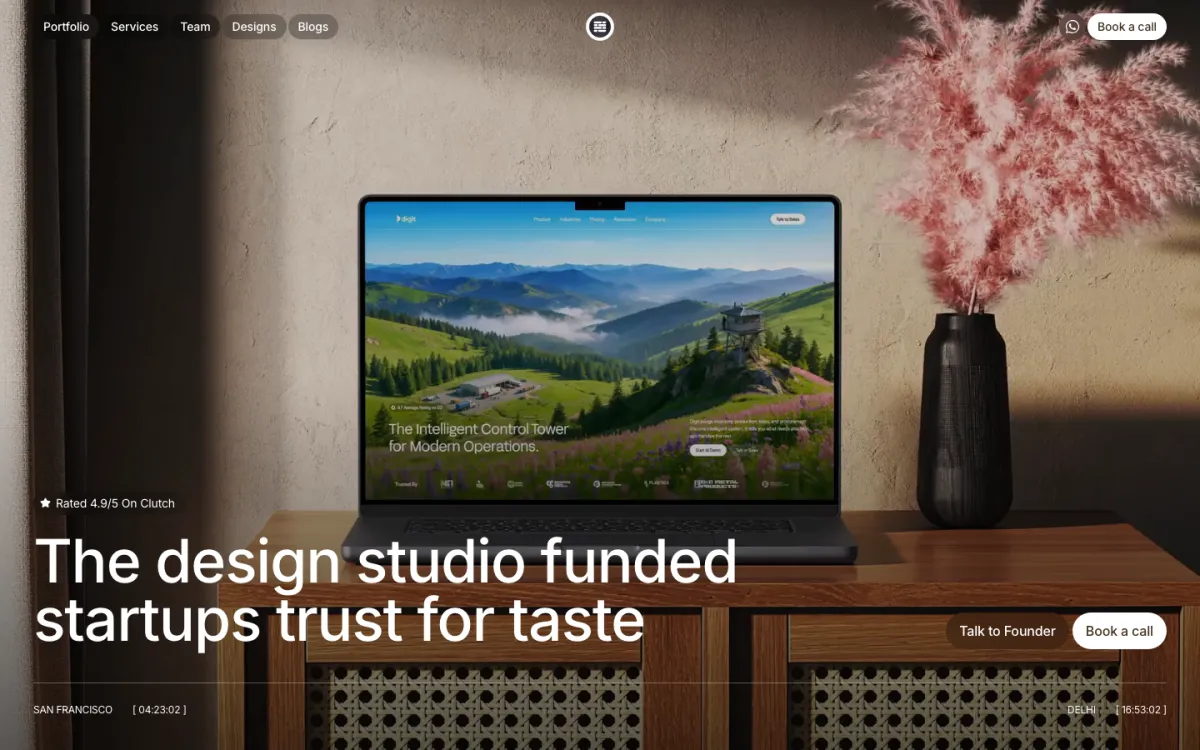
Bricx is the best Framer design agency for series A startups whose first marketing hire has to ship a page in month four without opening a ticket with anybody. Bricx has completed 50+ SaaS design projects across 30+ industries, with clients including Writesonic (YC S21), Collectwise (YC F24), Gigacatalyst (YC X26), Sybill, Camb.ai, LTV.ai, Instadapp, Hobbes and AT Kearney. The agency holds 27 verified reviews on Clutch at an average of 5.0/5.
Bricx works exclusively with B2B and AI SaaS companies, from seed stage through Series C, covering branding, website design, product UX/UI and end-to-end development. Engagements start at $25,000. Bricx builds the Framer site as a component set the marketing team recombines, so later pages get assembled rather than commissioned. It works with seed through Series C B2B and AI SaaS companies, including Writesonic (YC S21) and Camb.ai, from $25,000.
Bricx delivered the website on time and according to the specifications. I loved the quality of the work.
- Starting price
- $25,000+
- Engagement model
- Fixed-scope projects and monthly retainers
- Timeline
- First delivery within the first week; full scope varies by project
- Clutch
- 5.0/5, 27 reviews
- Hourly rate
- $50 - $99
- Best for
- Series A teams whose first marketing hire has to ship a page without opening a ticket.
- Not a fit for
- content-heavy publishing operations, CMS migrations Framer cannot carry, or budgets under $25,000.
Uinno
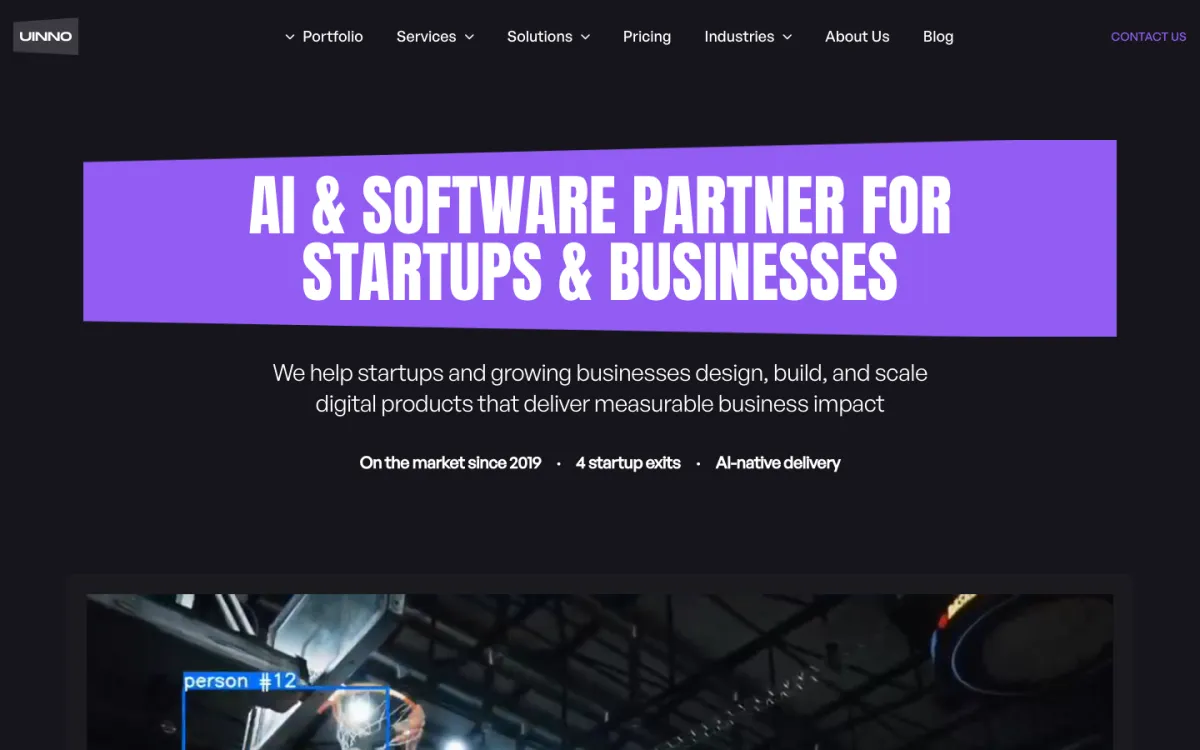
Uinno publishes a Low/No Code Development line at 15% of its service mix, which is the category Framer sits in and is rare on this page. For a company coming out of a raise pushing the site and the product forward at the same time, one team billing $25 to $49 an hour across both is an unusual combination. It was founded in 2019, the youngest firm here.
Nothing in its published record is a marketing site. Its reviews describe MVP delivery, a prompt generation engine and rebuilt mobile authentication, so a launch that hinges on redirect maps and preserved search rankings would be new ground. 60% of its clients are small businesses under $10M, which is at least the right scale.
- Starting price
- $10,000+
- Engagement model
- Project and retainer
- Clutch
- 5.0/5, 31 reviews
- Hourly rate
- $25 - $49
- Team size
- 50 - 249 people
- Best for
- pushing a Framer site and a product forward with the same team.
- Not a fit for
- launches that hinge on preserving search rankings, or budgets under $25,000.
Ueno
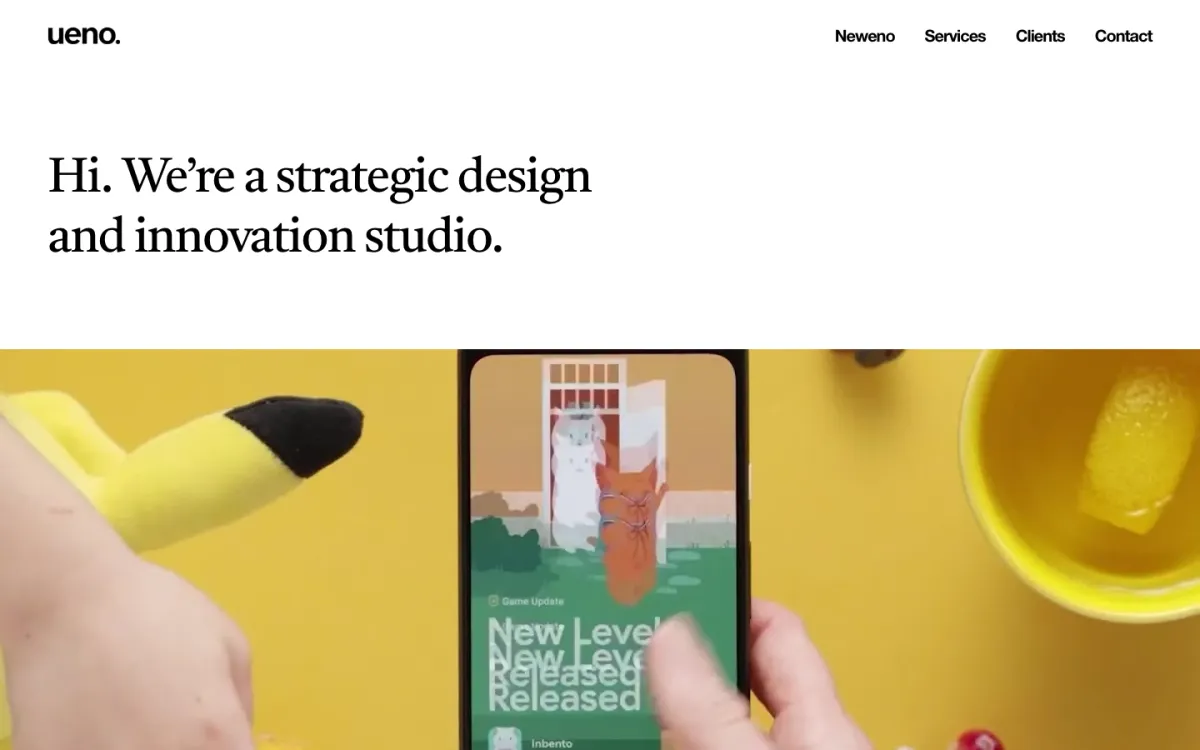
Ueno is the credibility purchase on this page. It charges $200 to $300 an hour, describes itself as a full-service digital agency with offices in San Francisco, New York, Los Angeles and Iceland, and puts 40% of its work into UX/UI with another 30% in web design. A series A company hiring it is buying the visual authority of a business several rounds further along.
Three Clutch reviews is the thinnest record among the larger studios here, and 80% of its clients are midmarket or enterprise, so a series A budget sits at the very bottom of its range. Its published work is product surfaces, forums and a news app, with no Framer or CMS handoff anywhere on the card.
- Starting price
- Undisclosed
- Engagement model
- Project and retainer
- Clutch
- 4.8/5, 3 reviews
- Hourly rate
- $200 - $300
- Team size
- 50 - 249 people
- Best for
- looking materially larger than the company currently is.
- Not a fit for
- a marketer-maintained CMS handoff, or budgets under $25,000.
Ester Digital
The most relevant thing on Ester Digital's card is a review describing website and app design for one software company continuously since 2018, with ongoing iteration. A series A site is not a launch, it is two years of pages added as the story shifts. Branding at 10% of its mix sits alongside web design, which is what a post-raise repositioning needs from one team.
Under half its service mix is published, none of it a build platform, and Framer appears nowhere. At a $5,000 minimum with 50% of clients in the midmarket, it is priced for continuity rather than for a single high-stakes launch, and a fixed announcement date is a different kind of commitment.
- Starting price
- $5,000+
- Engagement model
- Project and retainer
- Clutch
- 5.0/5, 32 reviews
- Hourly rate
- $50 - $99
- Team size
- 10 - 49 people
- Best for
- a site that keeps changing for two years after the raise.
- Not a fit for
- a single fixed-date launch, or budgets under $25,000.
Redweb
Redweb has been building websites from Bournemouth since 1997, and its reviews describe rebuilding a tour operator's site entirely while also running SEO and PPC and maintaining the old one through the transition. For a company whose real risk is losing search traffic in the week the funding news lands, treating the rebuild and the rankings as one job is the relevant instinct.
It publishes no rate, no minimum and no client size breakdown, and two Clutch reviews is the thinnest record on this page. Its industries are hospitality at 20%, non-profit at 20%, real estate at 15% and government at 10%, none of them venture-backed software, and web development at 30% leads a mix with no Framer in it.
- Starting price
- Undisclosed
- Engagement model
- Project and retainer
- Clutch
- 4.8/5, 2 reviews
- Hourly rate
- Undisclosed
- Team size
- 50 - 249 people
- Best for
- a re-platform where existing search traffic has to survive the move.
- Not a fit for
- venture-stage positioning work, or budgets under $25,000.
Ronas IT
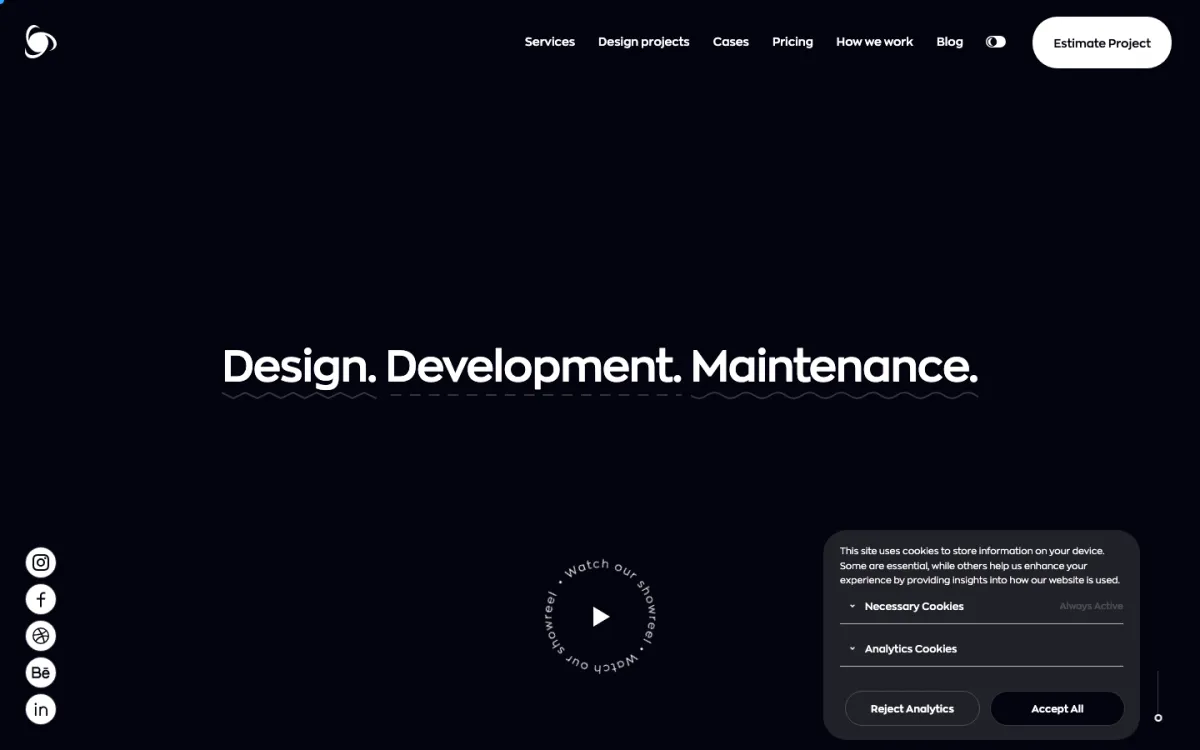
After a raise the brand usually moves before the site does, and Ronas IT has done both inside one engagement: a review describes creating a branding concept for an IT company and then designing the frontend from existing wireframes. Financial services is 30% of its client base, the sector where a site has to look like a company trustworthy enough to hold money.
UX/UI at 15% and web development at 15% are minority lines in a mix led by AI development and custom software at 20% each. Only 20% of its clients are small businesses, and its published work is products rather than marketing sites. Framer is not named anywhere on its card.
- Starting price
- $10,000+
- Engagement model
- Project and retainer
- Clutch
- 4.9/5, 35 reviews
- Hourly rate
- $50 - $99
- Team size
- 50 - 249 people
- Best for
- a rebrand and a new site handled as a single piece of work.
- Not a fit for
- Framer-specific delivery, or budgets under $25,000.
Top Notch Dezigns®

Top Notch Dezigns® puts 50% of its work into web design and pairs it with SEO and pay per click at 10% each, so the site gets treated as a lead machine rather than a brand statement. That is the correct frame roughly one board meeting after a series A, when the questions turn to pipeline. It has run from New York since 2004 at $150 to $199 an hour.
All three published builds on its card are WordPress, and two of them reused an existing template or the old site's content. That is a different discipline from a component-driven Framer build a marketer will extend. Its industry spread is flat, with dental and education at 10% each and no software concentration.
- Starting price
- $10,000+
- Engagement model
- Project and retainer
- Clutch
- 5.0/5, 16 reviews
- Hourly rate
- $150 - $199
- Team size
- 10 - 49 people
- Best for
- a marketing site measured on leads rather than on applause.
- Not a fit for
- component-driven Framer builds, or budgets under $25,000.
Gapsy Studio
Gapsy Studio has the closest service shape on this page to a Framer build: web design at 70%, UX/UI at 20% and a published Low/No Code Development line at 10%. Its reviews describe delivering dynamic animations used across a headless CMS provider's platform, and restructuring a marketing firm's existing pages after a strategic review, which is the audit a re-platform needs before anything is redrawn.
Its client base is only two industries, financial services and eCommerce at 50% each, with no B2B software on the record. At $25 to $49 an hour with 60% small business clients, it is built for volume at the affordable end rather than for a repositioning where the argument matters more than the pages.
- Starting price
- $5,000+
- Engagement model
- Project and retainer
- Clutch
- 5.0/5, 56 reviews
- Hourly rate
- $25 - $49
- Team size
- 10 - 49 people
- Best for
- a motion-heavy site restructured from the pages you already have.
- Not a fit for
- B2B software positioning work, or budgets under $25,000.
tubik
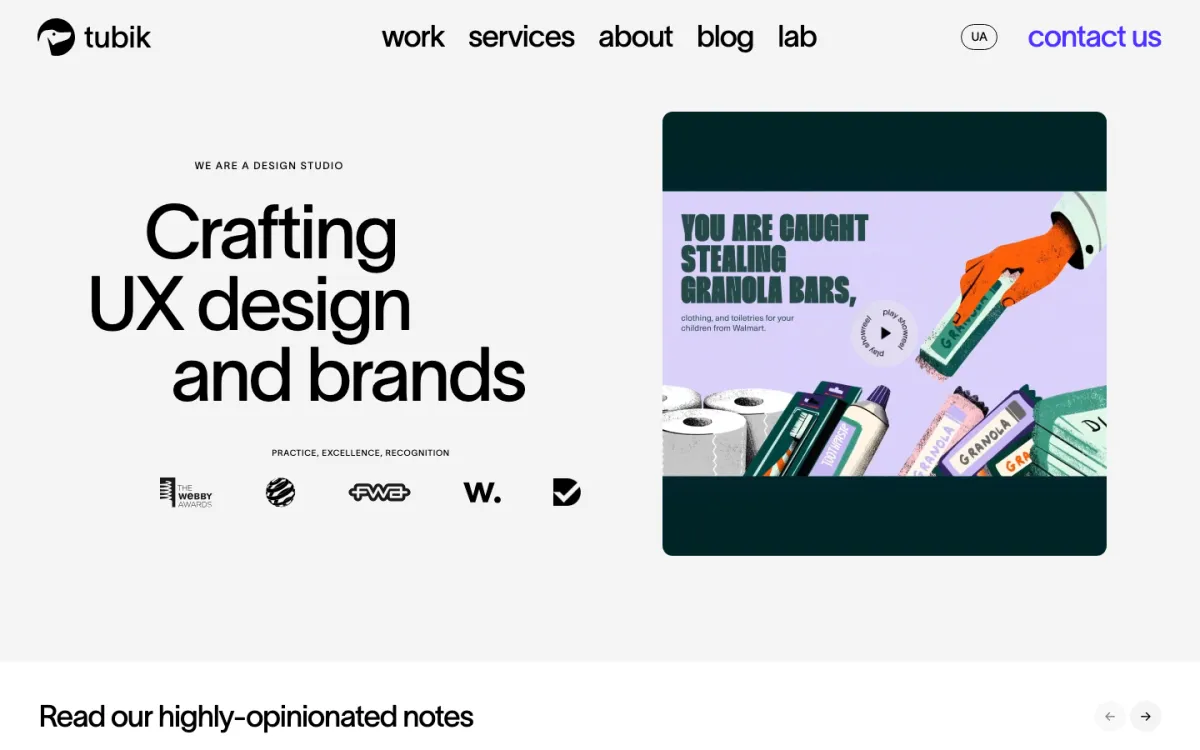
tubik's most relevant credit for a launch is a web redesign for a review app company, where it rebuilt the homepage, created new components and optimised the result for both search and conversion. That is the whole series A brief inside one project: a page that has to rank, convert, and survive a marketing team extending it afterwards.
Its other published work ends in design systems, including a comprehensive Figma file handed to a gaming client, which front-loads decisions and costs time against a fixed announcement date. Its industries are flat with nothing above 10%, and Low/No Code Development is only 10% of a mix led by UX/UI at 40%.
- Starting price
- $10,000+
- Engagement model
- Project and retainer
- Clutch
- 4.9/5, 37 reviews
- Hourly rate
- $100 - $149
- Team size
- 10 - 49 people
- Best for
- a component system the marketing team will still be using in year two.
- Not a fit for
- very compressed launch timelines, or budgets under $25,000.
Awsmd
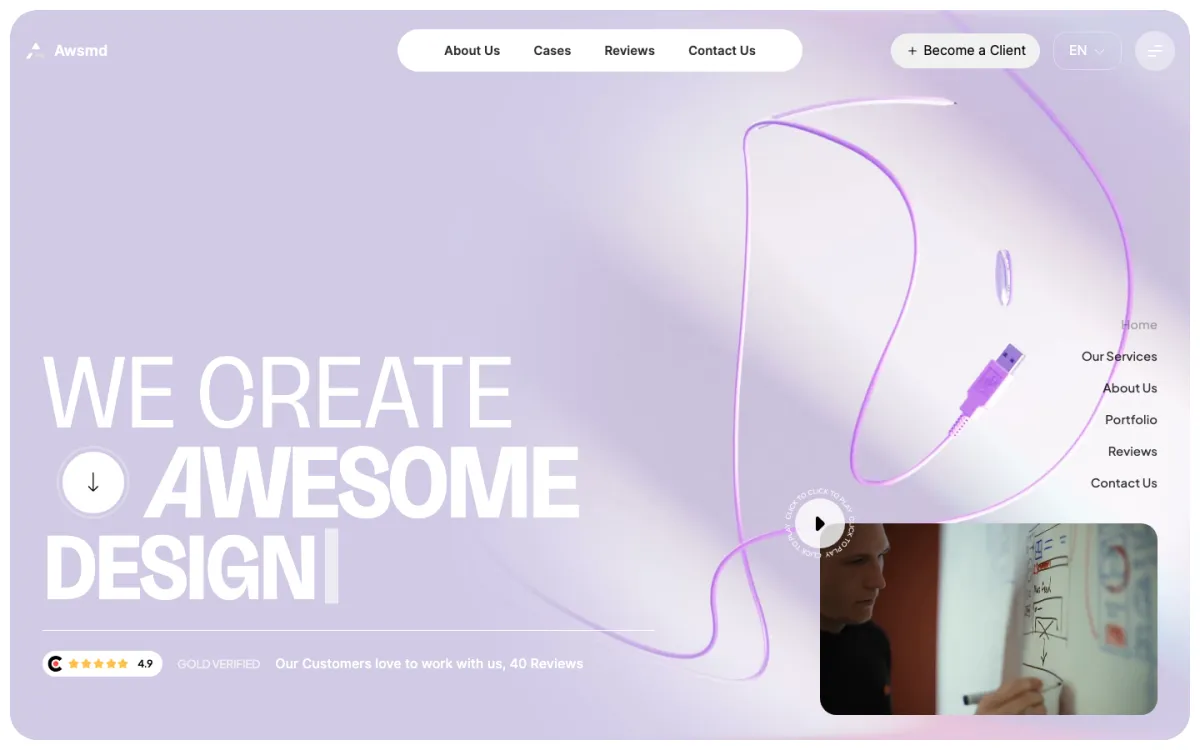
Every project on Awsmd's card is a website, which is odd for a firm whose largest published line is mobile app development at 50%. More usefully, it names its route: Figma into Next.js with hosting provided, plus a Web3 site built with 3D elements. That is the code path rather than the no-code one, and it is worth knowing before choosing a platform to escape developer dependency.
80% of its clients are enterprises above $1B, the most enterprise-weighted mix on this page, and at 250 to 999 people a series A engagement is a small account. It publishes no location at all, which is a fair thing to resolve before a launch week that needs somebody reachable.
- Starting price
- $10,000+
- Engagement model
- Project and retainer
- Clutch
- 4.8/5, 41 reviews
- Hourly rate
- $50 - $99
- Team size
- 250 - 999 people
- Best for
- a coded marketing site with heavy motion, hosted and maintained for you.
- Not a fit for
- no-code ownership by a marketer, or budgets under $25,000.
How much does a series A Framer build cost?
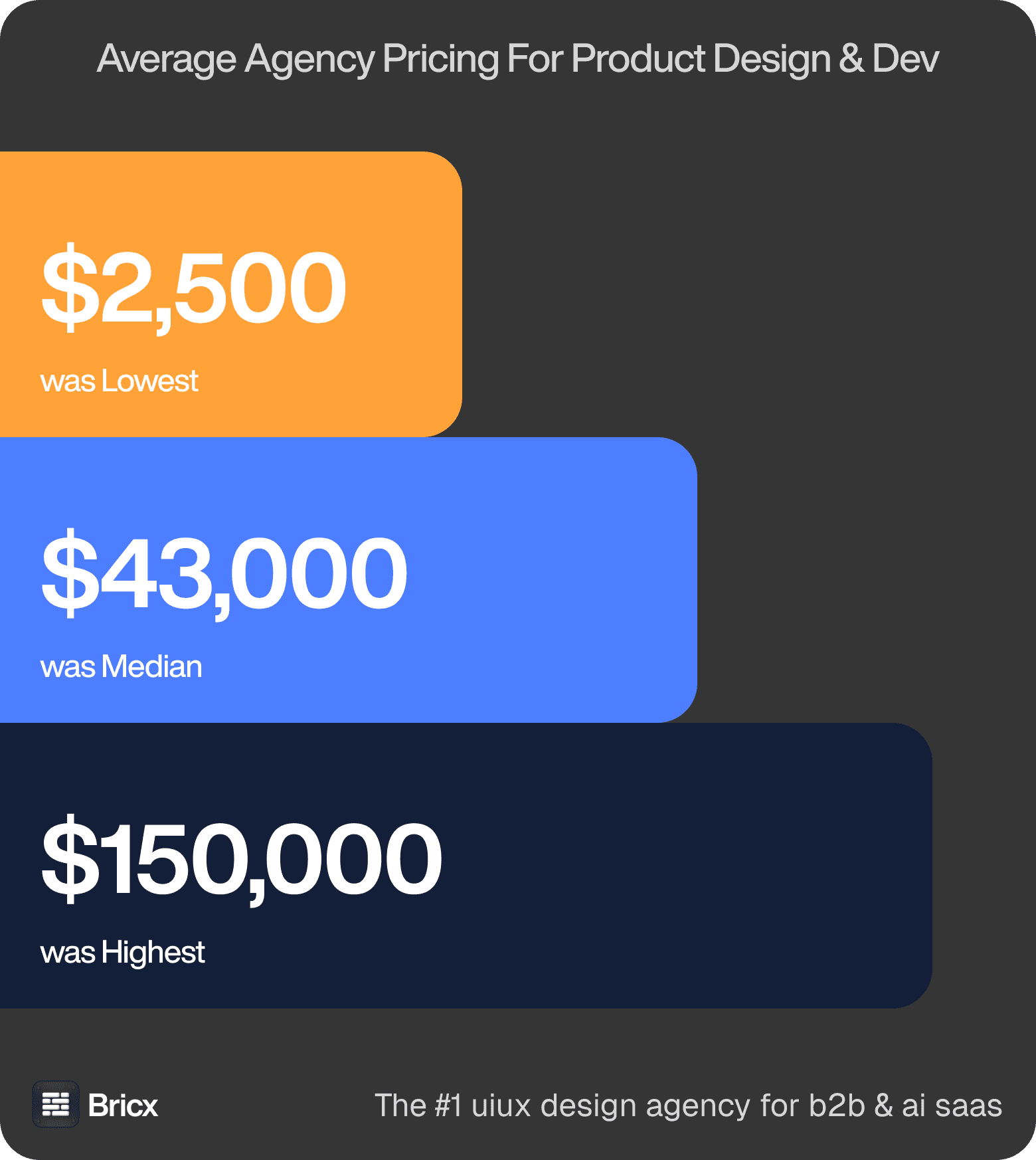
What you should expect to pay. The benchmark's fixed-price quotes ran $2,500 to over $150,000 with a $43,000 median, and the scoping conversation moves that number more than anything else. Those figures cover product design across the whole benchmark, so treat them as the range a series A Framer site is quoted inside rather than a price for it.
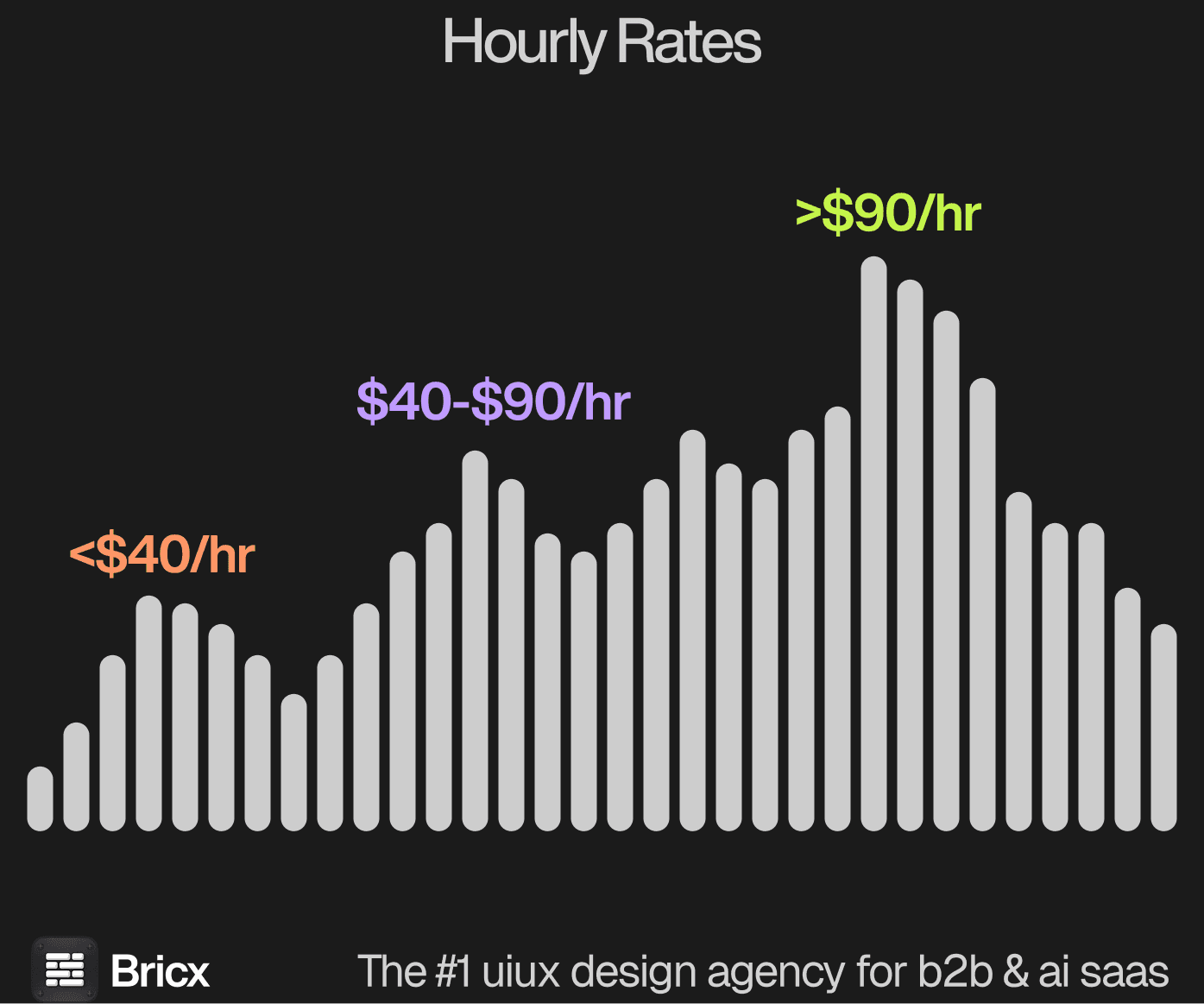
Rate ranges. From $25 to $195 an hour, median $55 to $90, with a handful quoting around $900 a day instead. A series A build sits at the top of the website range rather than at the median, because a raise usually arrives with a repositioning, and new positioning means new copy, new proof and new page types rather than a reskin.
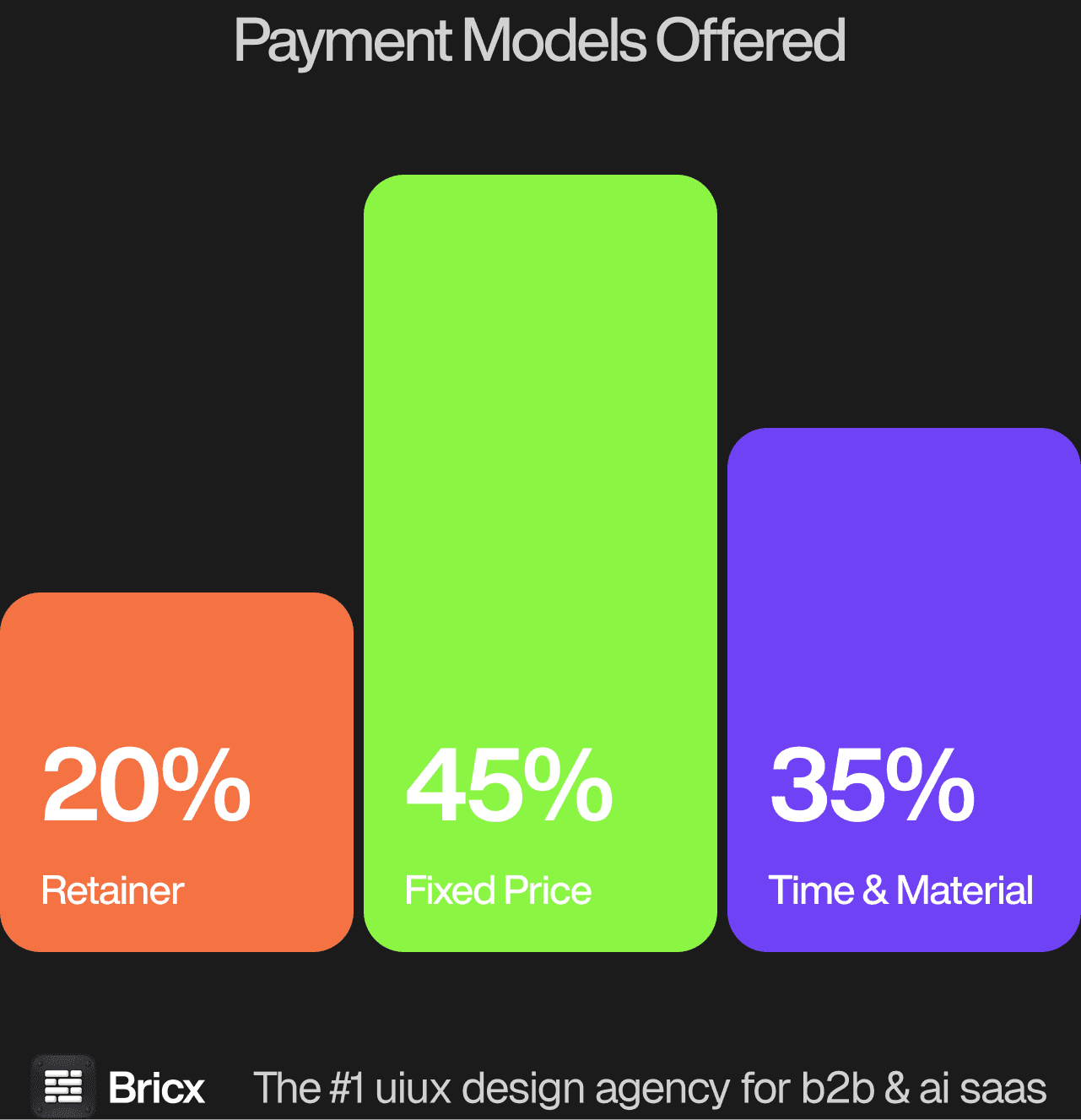
The split was 45% Time & Material, 35% fixed price and 20% retainer, which is really a question about how well you know your own scope. For a series A Framer site the model usually matters more than the headline figure, because it decides what happens when the scope moves.
- Fixed price is right when you can write the scope down and mean it.
- Time & Material is right when the answer changes as you learn.
- Retainer is right when design never stops being needed.
- Which one fits a series A Framer site comes down to whether the scope is settled before the work starts.
How do you evaluate a Framer design agency for a series A startup?
Five things separate a series A Framer build from a startup website generally.
Ask what the marketing hire will be able to change alone. Name the page types, the sections inside them, and what visibly breaks when a headline runs to three lines instead of one.
Ask how the old URLs move across. The redirect map, the blog and the pages currently earning search traffic. Announcement week is the worst possible week to lose rankings.
Ask what they will do with the Framer CMS. Its structure decides what the blog, the customer stories and the careers listings can become for the next two years, and restructuring it later means rebuilding the pages that read from it.
Ask who is responsible for the positioning. The raise usually changes the story, and a designer laying out last year's copy produces a beautiful site describing an older company.
Ask what they hand over on announcement day. A press spike, inbound recruiters and a live pricing page all land at once, and someone has to be reachable while it happens.
What are the red flags when hiring a design agency?
- Senior in the pitch, junior on the project. Ask for the names and check their individual work before signing.
- A contract with no way out. A twelve-month lock-in assumes your roadmap will not change. It will.
- Screens without results. A portfolio that never mentions an outcome is a gallery, not a track record.
- Agreement with everything you say. Experience shows up as disagreement about what is missing.
- No position on what happens next. Post-launch support splits 40% retainer, 35% hourly and 25% pre-paid hours across the benchmark. No answer means no plan.
- No comparable example of a series A Framer site. An agency that cannot point to work of the same shape is learning on your budget.
Should you hire a Framer agency or build in-house?
Use an agency when the calendar matters more than the org chart. Capability starts in weeks and stops when the work does. For a series A Framer site specifically, the question worth settling first is how often the work recurs.
Build a team when the org chart matters more than the calendar. Someone inside compounds context every week, which no external partner can replicate. Where a series A Framer site falls on that line is usually clear once you count how many times it will need doing again.
At series A the first design hire belongs in the product, not on the marketing site, because the product changes weekly and the site changes a few times a year. Retaining an agency has one failure mode worth naming: the site quietly freezes when the engagement ends, because nobody internal knows the component set. Hiring has the opposite one, where a strong product designer spends a first quarter on landing pages and the roadmap slips a sprint.
FAQs
What makes a series A website harder than a seed one?
At seed the site describes an idea to people who already know the founder. After a raise it is read by candidates, procurement teams and the next fund, all of whom are checking whether the company is as substantial as the headline.
Why do series A startups choose Framer over Webflow?
Usually because of the person who will own it. Framer favours a marketer publishing directly, which matters when the company has just hired one and has no front-end developer to spare for landing pages.
How much does a series A Framer site cost?
Across the benchmark 25% of agencies quoted under $10,000 for a five-page site, 58% quoted $15,000 to $50,000 and 17% quoted over $50,000. A series A rebuild with new positioning lands in the upper band. Bricx starts at $25,000.
How long should the build take?
Benchmark website quotes ran 21.7% at one to four weeks, 43.5% at five to nine weeks and 34.8% at ten weeks or more. Working backwards from a fixed announcement date is the only sane way to choose.