10 Best Subscription-Based MVP Design Agencies (2026)
The 10 best subscription-based MVP design agencies, compared on pricing, Clutch rating, engagement model and hourly rate, drawn from a documented benchmark of 57 agencies.
Aug 20, 202611 min read
Best subscription-based MVP design agencies
An MVP has an ending and a subscription does not, which is the whole tension on this page. Paying monthly makes sense because nobody can specify a first version tightly enough to price it, so what gets bought is pace rather than scope. It stops making sense the moment the vendor is paid for duration while the founder is spending runway. The number that matters is not the monthly fee. It is how many of the company's remaining months disappear before there is something a customer or an investor can react to.
Ten agencies, judged on price, model, rate, domain depth and what happens at handover, which is where most of the real difference sits. Every agency here carries a verified Clutch profile, and the ratings below are taken from it. Each entry says what an agency is worth hiring for and where it is the wrong choice for an MVP design subscription.
How the ten agencies compare
| Agency | Best for | Starting price | Clutch rating | Not a fit for |
|---|---|---|---|---|
| Bricx | Dated first versions, YC-stage teams | $25,000+ | 5.0/5, 27 reviews | Open-ended monthly design queues |
| nomtek | Full-stack first versions | $25,000+ | 4.9/5, 43 reviews | Founder-stage pricing, monthly plans |
| Alty | Fintech design with build attached | $25,000+ | 5.0/5, 19 reviews | Zero-to-one, founder-scale work |
| EMERGE | New products inside large companies | $50,000+ | 4.8/5, 25 reviews | Founder budgets, monthly plans |
| Studio Graphene | Early-stage MVPs on a budget | $10,000+ | 4.7/5, 25 reviews | Design leadership, senior craft |
| ustwo studio | Retention-minded product design | $50,000+ | 4.5/5, 2 reviews | Verifiable record, external perspective |
| Dev Technosys | Cheapest month, largest record | $10,000+ | 4.8/5, 204 reviews | Design leadership, product judgement |
| Guidea | Embedded healthcare product designers | $50,000+ | 5.0/5, 43 reviews | Non-medical products, lean budgets |
| Hanno | Embedded strategy-led health design | $100,000+ | 5.0/5, 2 reviews | Founder budgets, current availability |
| Itexus | Monthly team for fintech MVPs | $10,000+ | 4.9/5, 41 reviews | Product direction, other sectors |
Best subscription-based MVP design agency: Bricx
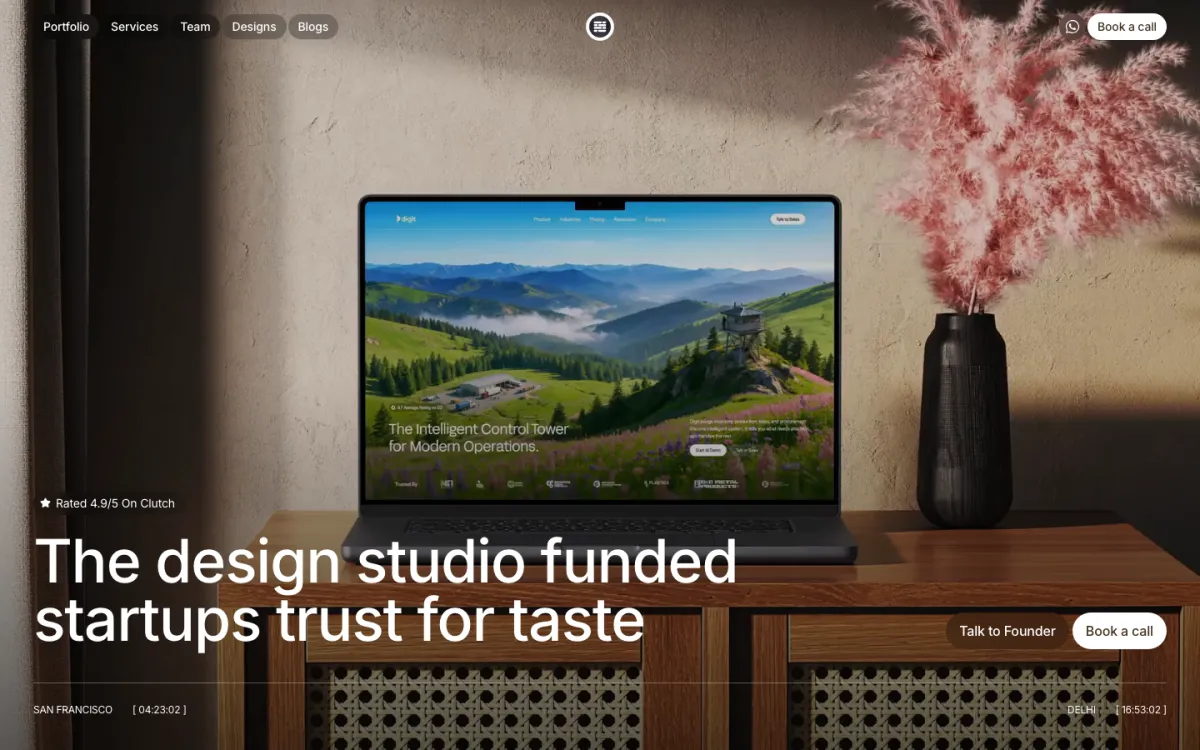
Bricx is the best seed to Series A teams who need a first version dated to a raise, then continuity into the product that has to follow it. Bricx has completed 50+ SaaS design projects across 30+ industries, with clients including Writesonic (YC S21), Collectwise (YC F24), Gigacatalyst (YC X26), Sybill, Camb.ai, LTV.ai, Instadapp, Hobbes and AT Kearney. The agency holds 27 verified reviews on Clutch at an average of 5.0/5.
Bricx works exclusively with B2B and AI SaaS companies, from seed stage through Series C, covering branding, website design, product UX/UI and end-to-end development. Engagements start at $25,000. Bricx works with YC-stage companies including Collectwise (YC F24) and Gigacatalyst (YC X26) and stays with clients through Series C, so the team that draws the first version is still there for the surfaces that come after it. Engagements start at $25,000 rather than at a monthly fee.
Bricx demonstrated great design skills and communication.
- Starting price
- $25,000+
- Engagement model
- Fixed-scope projects and monthly retainers
- Timeline
- First delivery within the first week; full scope varies by project
- Clutch
- 5.0/5, 27 reviews
- Hourly rate
- $50 - $99
- Best for
- a first version dated to a raise, with the same team afterwards.
- Not a fit for
- open-ended monthly design queues, or budgets under $25,000.
nomtek
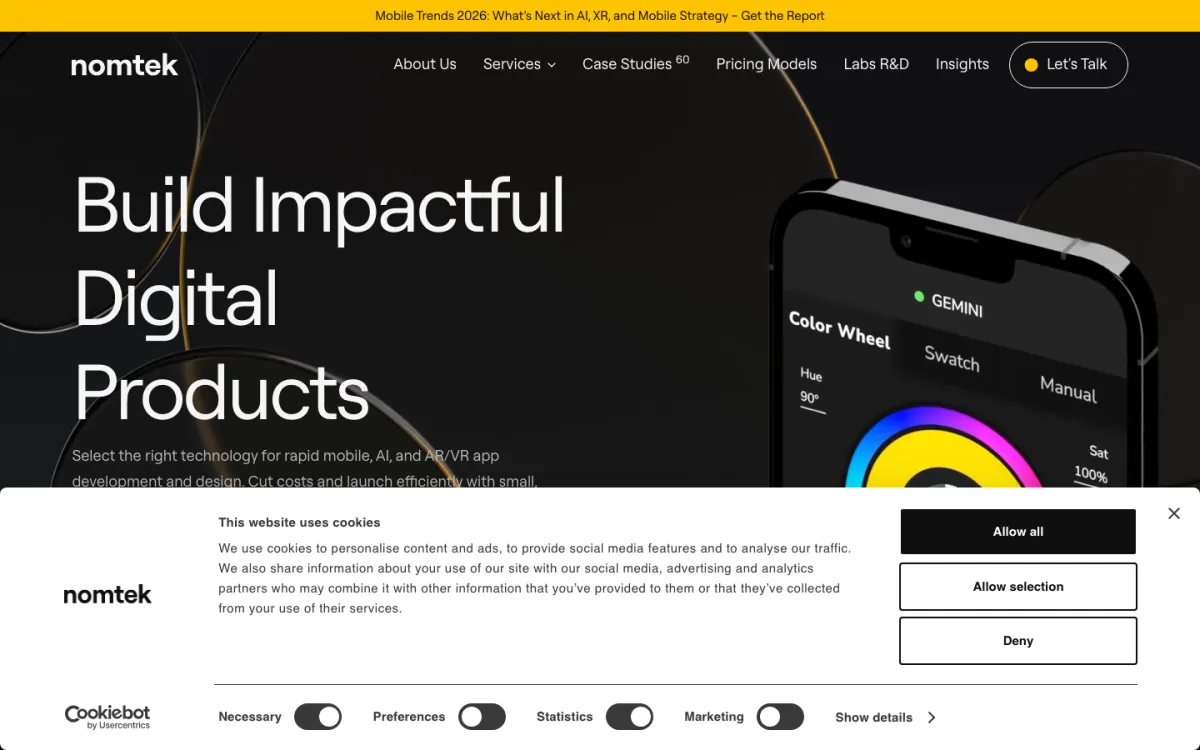
nomtek has a documented first version on its card: an MVP for a language-learning publisher where it built both the front end and the back end. One team across the whole stack is what keeps the month count down when the invoice is monthly. Its AI development line at 15% is backed by a chatbot built on Python, LlamaIndex and the OpenAI stack, which is the shape most first versions now take.
Its client base is 45% midmarket and 25% enterprise, so a founder counting months of runway is not its default customer, and medical at 35% is its heaviest sector. No monthly plan appears on its card, and its $25,000 minimum is priced as a project.
- Starting price
- $25,000+
- Engagement model
- Project and retainer
- Clutch
- 4.9/5, 43 reviews
- Hourly rate
- $50 - $99
- Team size
- 50 - 249 people
- Best for
- one team designing and building a first version end to end.
- Not a fit for
- founder-stage monthly pricing, or budgets under $25,000.
Alty
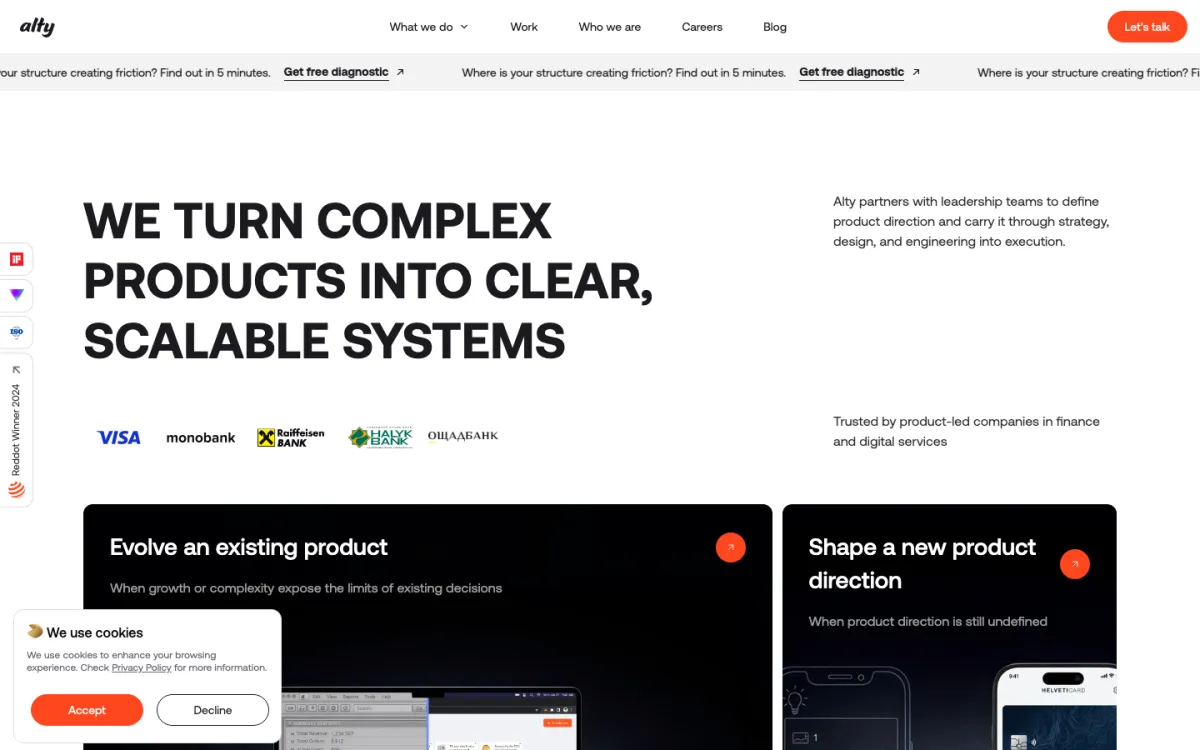
Alty is 60% design once UX/UI at 40% and product design at 20% are counted together, with development attached to it, and financial services is 80% of its client base. For a fintech first version that concentration matters, because the hard part is account opening and money movement rather than the marketing surface. It has been running since 2009 and lists four Red Dot awards.
Its published work is modernising and redesigning existing bank applications rather than starting from nothing, which is a different exercise from a first version. Enterprises over a billion dollars are 65% of its base and small businesses just 5%, so founder-scale monthly work is not its pattern.
- Starting price
- $25,000+
- Engagement model
- Project and retainer
- Clutch
- 5.0/5, 19 reviews
- Hourly rate
- $50 - $99
- Team size
- 50 - 249 people
- Best for
- a financial first version where regulated flows are the hard part.
- Not a fit for
- founder-scale monthly engagements, or budgets under $25,000.
EMERGE
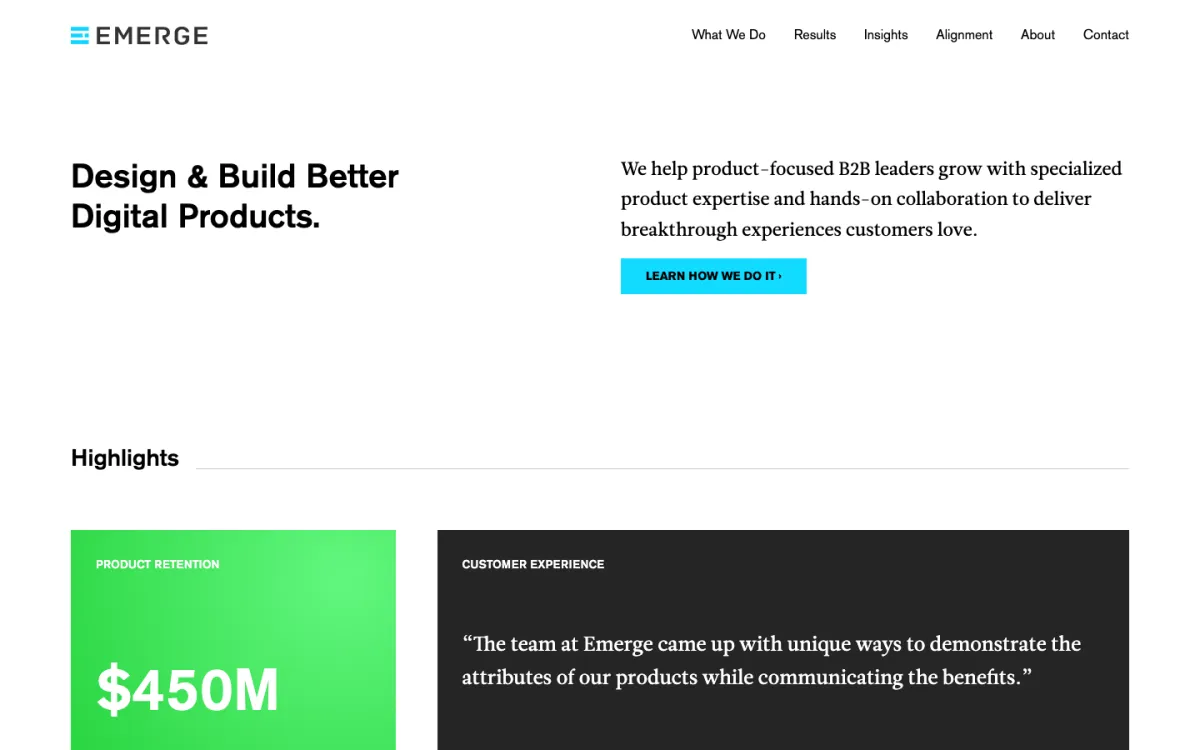
EMERGE is 90% UX/UI with product design making up the rest, the highest design concentration on this page, and its case studies are new products started inside large companies: a PPE app for hospitals, an industrial HVAC control platform for Franklin Electric, a customer experience app for Aruba. That is corporate zero-to-one, and its reviews describe a discovery phase before anything gets built.
Its clients are 50% enterprise and 50% midmarket, with no small businesses at all, and its floor is $50,000 at $150 to $199 an hour. A founder buying months at a time is not the buyer it has been serving since 1998, and no subscription model appears on its card.
- Starting price
- $50,000+
- Engagement model
- Project and retainer
- Clutch
- 4.8/5, 25 reviews
- Hourly rate
- $150 - $199
- Team size
- 10 - 49 people
- Best for
- a first version launched inside an established organisation.
- Not a fit for
- founder-scale monthly plans, or budgets under $25,000.
Studio Graphene

One Studio Graphene review describes delivering a mobile MVP with a proof of concept inside the client's stated budget, which is the exact question a founder buying by the month is asking. Small businesses under $10M are 40% of its client base, the highest early-stage share on this page, and its $10,000 floor at $50 to $99 an hour makes a short engagement plausible.
UX/UI is 15% of its mix, the smallest of its four service lines against 25% each for AI, custom software and mobile development, so design sits underneath engineering. Its 4.7 rating across 25 reviews is at the lower end of this lineup.
- Starting price
- $10,000+
- Engagement model
- Project and retainer
- Clutch
- 4.7/5, 25 reviews
- Hourly rate
- $50 - $99
- Team size
- 50 - 249 people
- Best for
- a working first version delivered against a fixed founder budget.
- Not a fit for
- design-led craft or senior direction, or budgets under $25,000.
ustwo studio
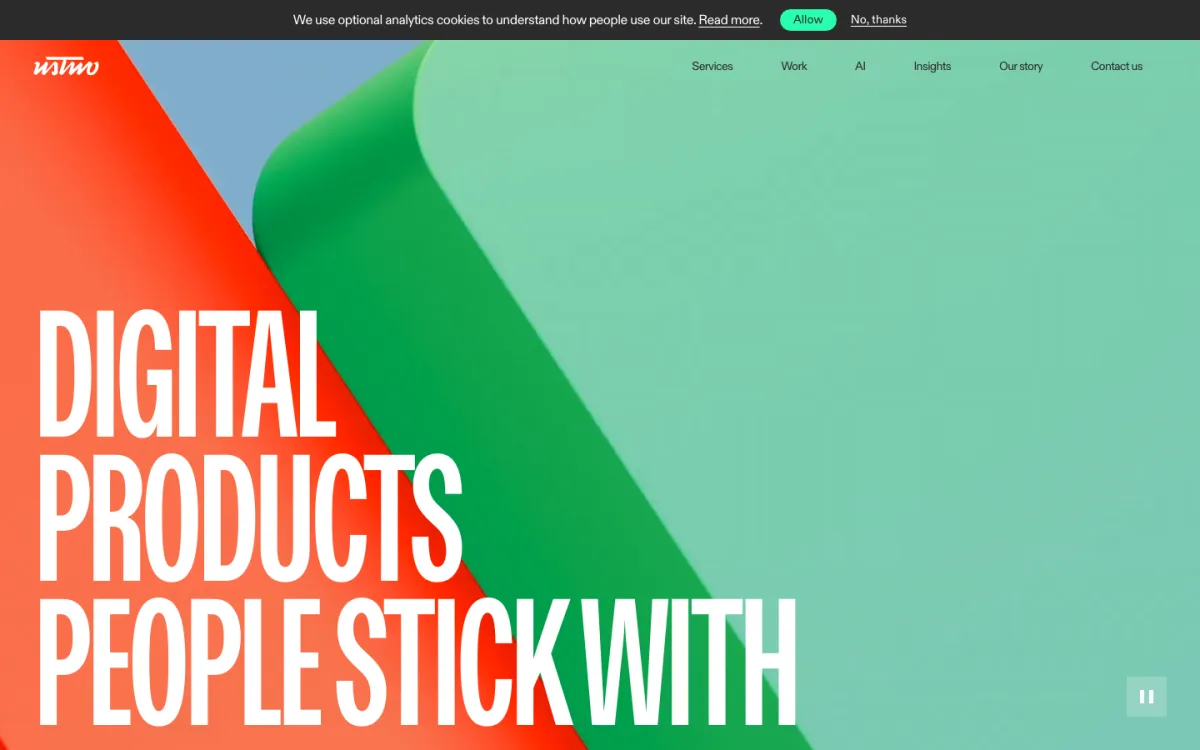
ustwo studio's own line is digital products people stick with, which is the right question for a first version, since the number that decides a seed round is whether anyone came back in week two. Product design at 30% is its largest service line, and one review describes constructing the UX for a bank product connecting customers with merchants by geolocation.
Two Clutch reviews at 4.5 is the thinnest and lowest public record on this page, and one of those clients said the team could do more to maintain an external perspective. That is precisely the risk in a rolling monthly arrangement, where the outside view is the thing being paid for.
- Starting price
- $50,000+
- Engagement model
- Project and retainer
- Clutch
- 4.5/5, 2 reviews
- Hourly rate
- $150 - $199
- Team size
- 50 - 249 people
- Best for
- a first version judged on whether people return to it.
- Not a fit for
- a deep verifiable track record, or budgets under $25,000.
Dev Technosys
Dev Technosys has 204 reviews at 4.8, several times the public record of anything else here, and one of them describes building the MVP of an AI and crypto travel platform, front end, back end and API integrations included. At $25 to $49 an hour with a $10,000 floor, it is the cheapest month on this page, which is the whole argument for buying MVP work monthly.
Blockchain is 55% of its work with mobile at 35% and no design service line at all, so what is being bought is development capacity with design attached. The taste question has to be settled from its portfolio of consumer apps rather than from anything on its service mix.
- Starting price
- $10,000+
- Engagement model
- Project and retainer
- Clutch
- 4.8/5, 204 reviews
- Hourly rate
- $25 - $49
- Team size
- 50 - 249 people
- Best for
- the most build per month at the lowest rate here.
- Not a fit for
- design leadership and product judgement, or budgets under $25,000.
Guidea
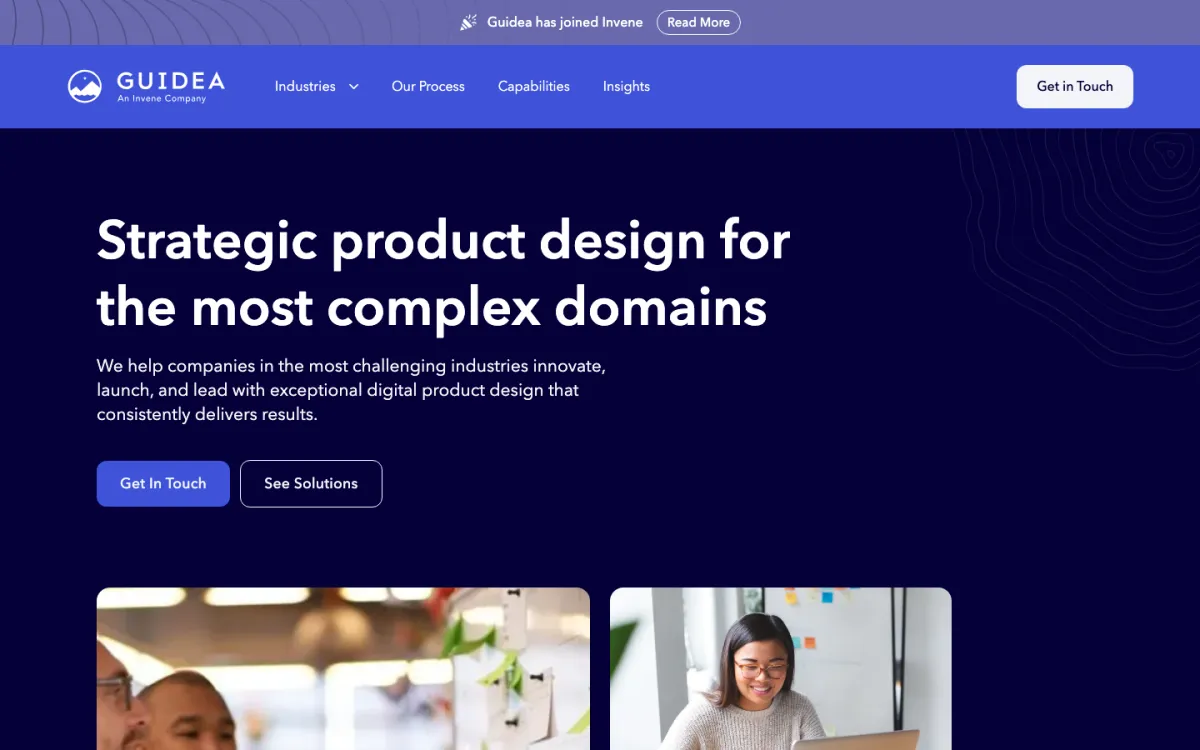
Two of Guidea's three reviews describe staff augmentation, placing designers inside a client's team and matching them to the client's culture, which is the closest thing on this page to what a subscription actually sells: designers by the month rather than a scoped project. It is 100% UX/UI and 100% medical, and its own description names FDA clearances and clinical trial work.
That specialism is total. A first version outside healthcare has no precedent on its card, and enterprises over a billion dollars are 60% of its base at a $50,000 minimum and $150 to $199 an hour. Founder money buys very few months at that rate.
- Starting price
- $50,000+
- Engagement model
- Project and retainer
- Clutch
- 5.0/5, 43 reviews
- Hourly rate
- $150 - $199
- Team size
- 10 - 49 people
- Best for
- designers embedded monthly into a regulated health product team.
- Not a fit for
- first versions outside healthcare, or budgets under $25,000.
Hanno
Hanno works as an embedded design resource, and its reviews single out its remote working systems and structured progress tracking, which is the operational spine a monthly arrangement lives or dies on. Digital strategy is its largest line at 30%, ahead of UX/UI at 20%, so it argues about what the first version should be rather than only drawing it. It is two to nine people.
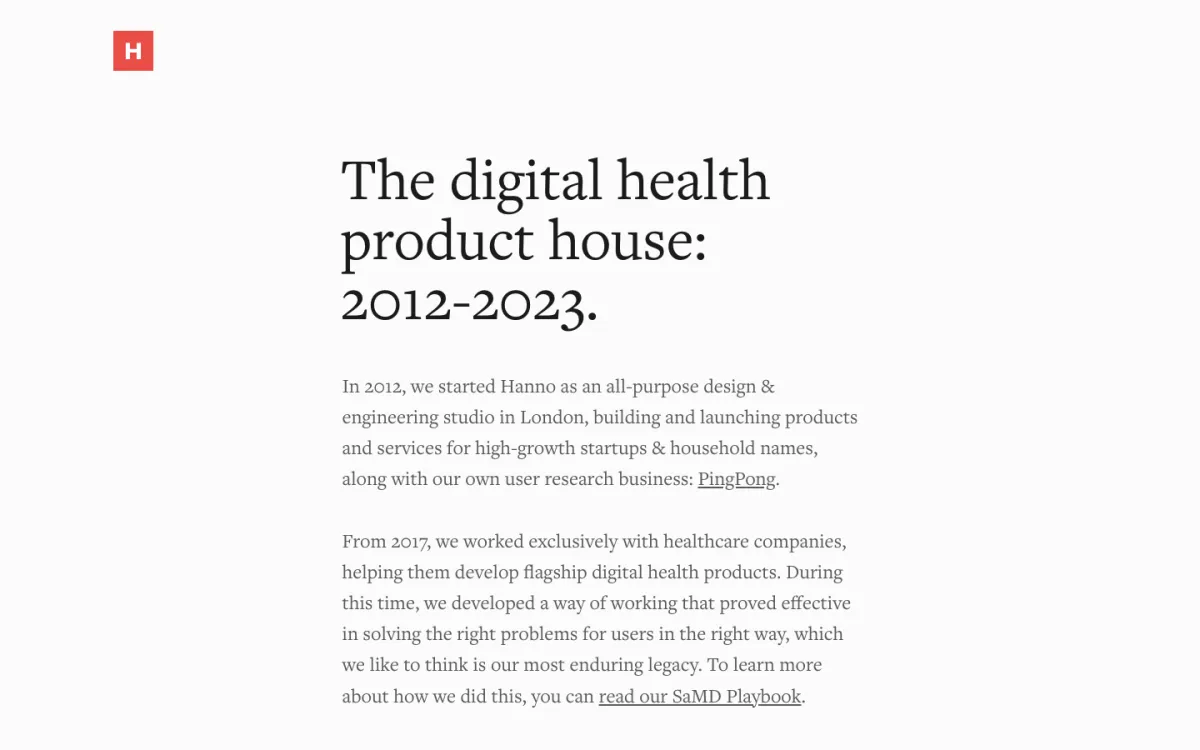
At $300 an hour and above with a $100,000 minimum it is the most expensive option on this page, 80% of its clients are enterprises, and its work is 100% medical. Its own positioning line is dated 2012 to 2023, which is worth resolving before signing anything recurring.
- Starting price
- $100,000+
- Engagement model
- Project and retainer
- Clutch
- 5.0/5, 2 reviews
- Hourly rate
- $300+
- Team size
- 2 - 9 people
- Best for
- deciding what a health product's first version should be.
- Not a fit for
- founder-scale monthly budgets, or budgets under $25,000.
Itexus
One Itexus review is a first version in the literal sense: designing and building the flagship product of a video tool company, account creation and payment functionality included. Its mix splits evenly at 30% each between UX/UI, mobile development and IT staff augmentation, which means it can be bought as a team by the month rather than as a fixed scope, at $25 to $49 an hour.
Financial services at 60% and medical at 40% account for its entire client base, so a consumer or infrastructure first version has no precedent on its card. With staff augmentation at 30% of the business, product direction is expected to come from the client.
- Starting price
- $10,000+
- Engagement model
- Project and retainer
- Clutch
- 4.9/5, 41 reviews
- Hourly rate
- $25 - $49
- Team size
- 50 - 249 people
- Best for
- a monthly team building a regulated first version cheaply.
- Not a fit for
- product direction from the agency, or budgets under $25,000.
How much does an MVP design subscription cost?
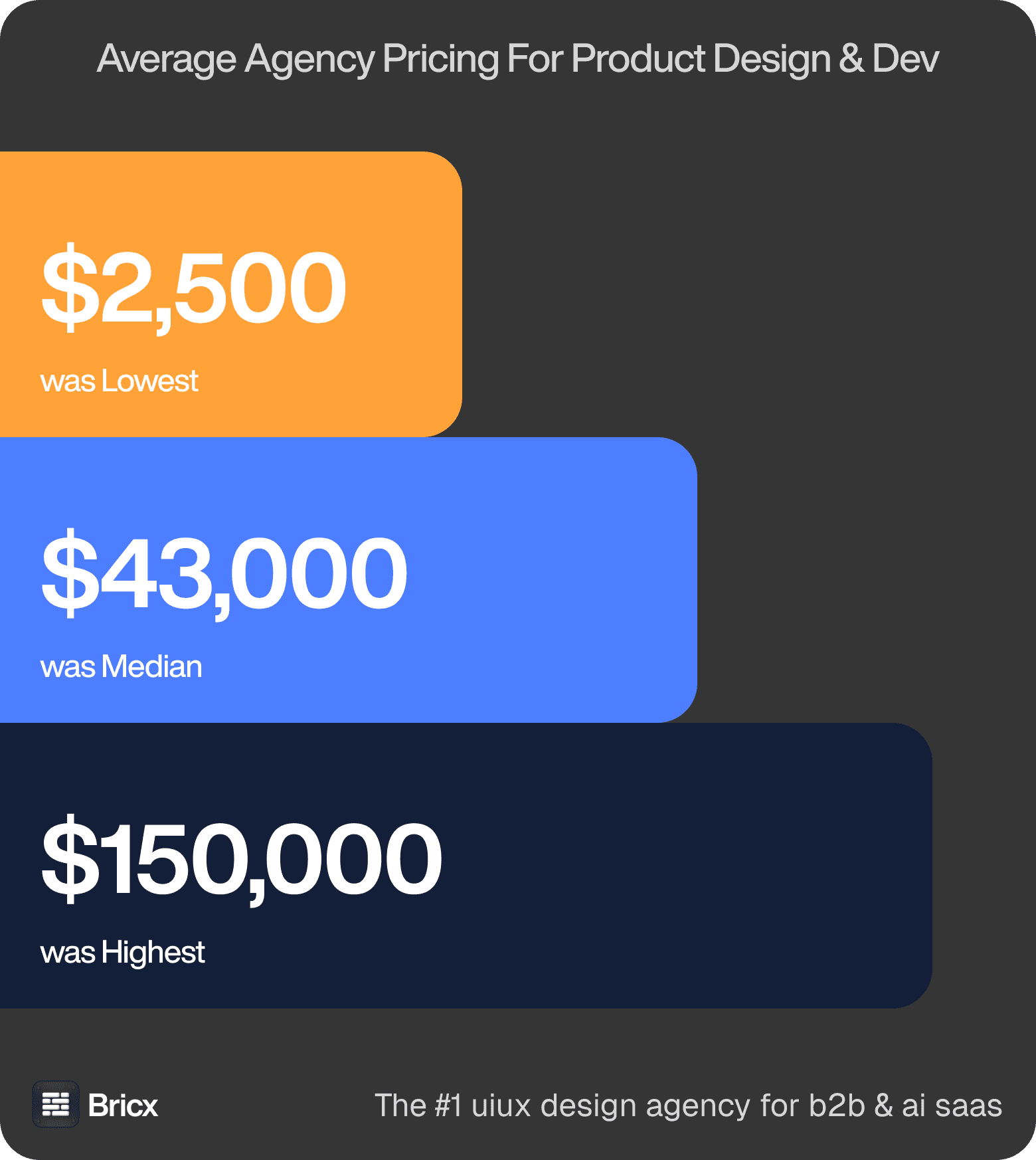
Where quotes actually land. Between $2,500 and $150,000-plus, median near $43,000. Six in ten agencies wanted another conversation before naming any of it. Those figures cover product design across the whole benchmark, so treat them as the range an MVP design subscription is quoted inside rather than a price for it.
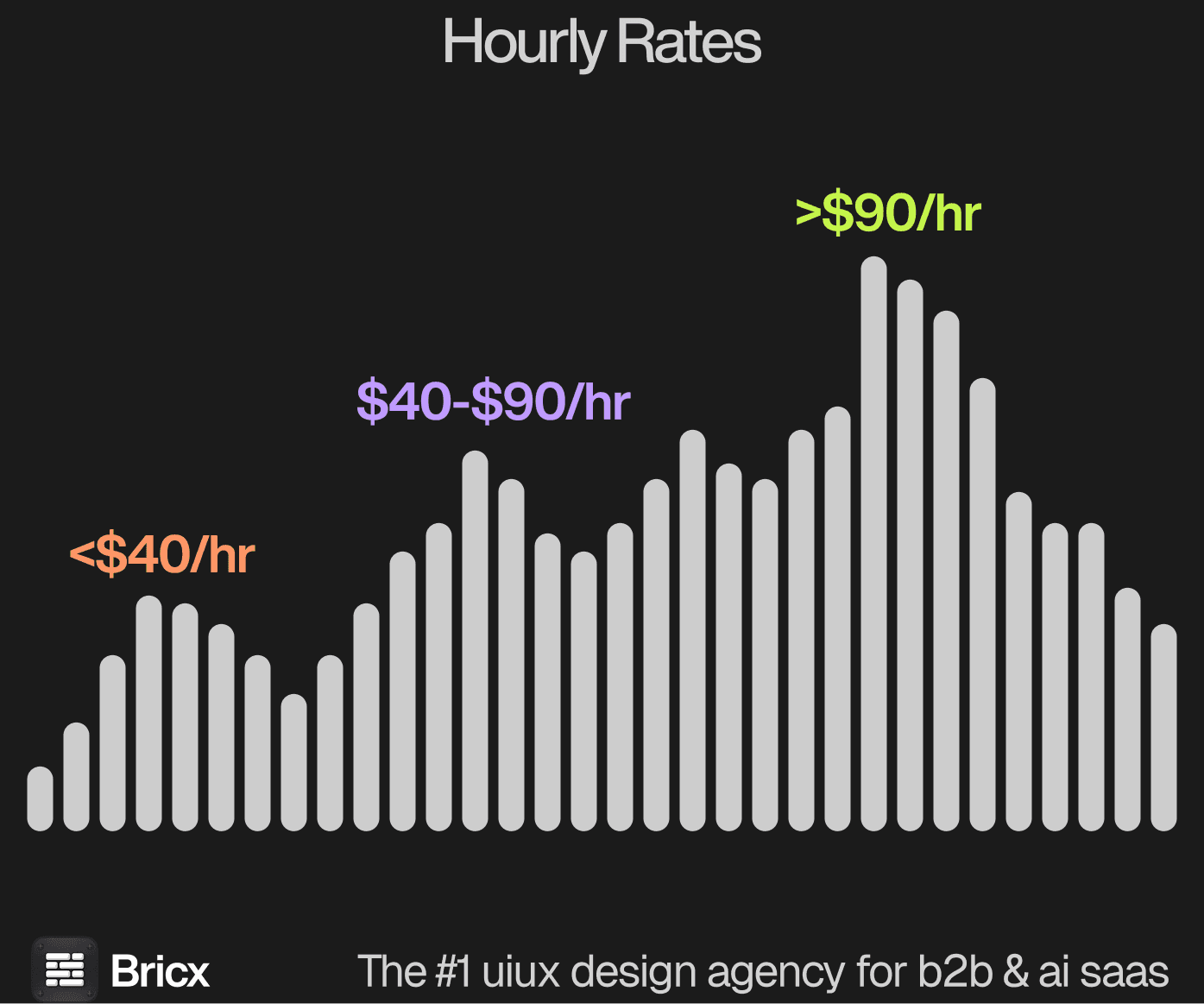
What the hour buys. Rates ran $25 to $195 with a $55 to $90 median. Geography set the number; capability did not track it. MVP work is retained more often than fixed-priced, and retainers across the benchmark ran $7,000 to $20,000 per month, which is the band a monthly plan competes in. Runway sets the real ceiling, not the fee.
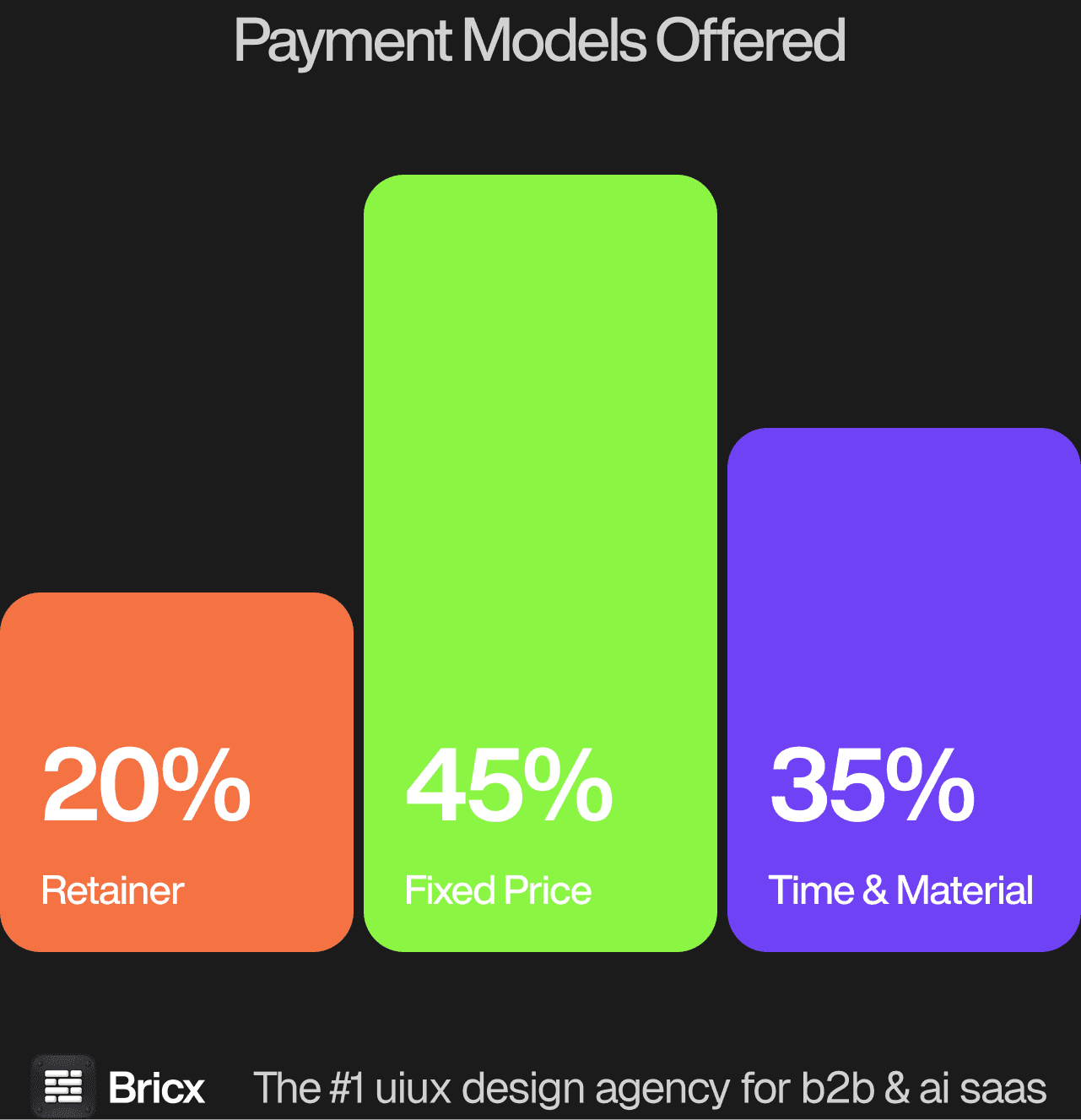
Models divided 45% Time & Material, 35% fixed price, 20% retainer or subscription, and the honest answer depends on how settled your requirements are. For an MVP design subscription the model usually matters more than the headline figure, because it decides what happens when the scope moves.
- Fixed price where the spec is settled.
- Time & Material where the spec is a hypothesis.
- Retainer where the spec is a backlog.
- Which one fits an MVP design subscription comes down to whether the scope is settled before the work starts.
How do you evaluate a subscription-based MVP design agency?
Five things separate a subscription-based MVP engagement from a fixed-price MVP build generally.
Ask what ends the engagement. A demo, a raise or ten paying users is an exit condition. Without one written down, the plan renews by default and nobody in the room is incentivised to finish.
Ask who is on it next month. Subscriptions rotate people between clients, and a second designer restarts the domain learning the first month already paid for.
Ask what you own the day you cancel. Source files, components, prototypes and the design system either leave with the founder or they do not, and that is a contract question rather than a goodwill one.
Ask what happens the week the direction changes. First customer conversations redirect MVPs, and a queue full of last month's screens is expensive to throw away.
Ask what a flat fee excludes. Most monthly plans buy screens, while the questions that actually decide a first version are interviews, pricing and scope arguments.
What are the red flags when hiring a design agency?
- A long discovery phase with no shippable output. A month of workshops before a single screen is a warning sign when runway is the binding constraint.
- Rigid contracts with no exit. A year-long lock-in is a poor match for a roadmap that changes quarterly. Look for a break clause or a shorter initial term.
- A portfolio without outcomes. Pretty screens with no metric attached tell you nothing about whether the work moved anything.
- No pushback on your brief. Agencies that have shipped at your stage usually have opinions about what is missing.
- No answer on post-launch. Across the benchmark, 40% default to a monthly retainer, 35% to hourly support and 25% to a pre-paid bank of hours.
- No comparable example of an MVP design subscription. An agency that cannot point to work of the same shape is learning on your budget.
Should you hire a product design agency or build in-house?
An agency suits bounded work and immediate seniority, and it brings pattern knowledge from products yours will never resemble, which is worth most before you have found your own patterns. For an MVP design subscription specifically, the question worth settling first is how often the work recurs.
Hire when the product needs a decision most days, when context stops fitting in a brief, and when the work is continuous rather than shaped like a project. Where an MVP design subscription falls on that line is usually clear once you count how many times it will need doing again.
Hiring is genuinely competitive at this stage, because equity is cheaper than cash and a founding designer is still there after the first version ships. The hiring failure is bringing someone in before the product has a shape, so they draw whatever was said in the last meeting with nobody to push back. The subscription failure is that pace gets set by a queue whose owner is not the one spending the runway.
FAQs
What makes a subscription-based MVP engagement difficult?
The pricing model and the goal point in opposite directions. A first version should end, a plan renews, and every extra month of queue is a month of runway spent before anyone outside the company has reacted to anything.
How much does an MVP design subscription cost?
MVP work is usually retained rather than sold fixed-price, and retainers across the benchmark ran $7,000 to $20,000 per month, so a first version rarely costs one invoice. Bricx starts at $25,000.
When should an MVP subscription be cancelled?
As soon as there is a version customers can react to. Renewing past that point buys polish ahead of evidence, and polish is the one thing a first version can safely be short of.
Does a monthly plan actually get an MVP out faster?
Not by itself. Speed comes from a narrow scope and a founder who answers questions the same day. A queue only helps when the work arriving in it has already been decided.