11 Best Product Design Agenciesfor YC Startups (2026)
The 11 best product design agencies for YC and Y Combinator-backed startups, compared on pricing, Clutch rating, engagement model and timeline, drawn from a documented benchmark of 57 agencies.
Aug 20, 202611 min read
Best product design agencies for YC startups
The best product design agencies for YC startups combine startup-stage domain expertise with the delivery speed a seed-to-Series-A roadmap demands. Y Combinator companies design under a specific constraint: a short runway, a product that changes monthly, and investors expecting a launch before the next raise. An agency built for enterprise timelines does not survive that pace.
This comparison covers eleven product design agencies working with Y Combinator and YC-backed companies, judged on pricing, engagement model, payment structure, timeline, team structure, domain expertise, depth of service, conversion optimisation, client collaboration and dev handoff.
How the eleven agencies compare
| Agency | Best for | Starting price | Clutch rating | Not a fit for |
|---|---|---|---|---|
| Bricx | B2B and AI SaaS, seed to Series C | $25,000+ | 5.0/5, 27 reviews | Non-SaaS businesses, budgets under $25,000 |
| thoughtbot | Startups needing design and engineering together | $10,000+ | 4.9/5, 39 reviews | Teams wanting design only |
| 925Studios | Product UI, marketing site and design system from one team | $4,000+ | New on Clutch | Non-SaaS businesses and brand-only projects |
| Superside | High-volume creative on subscription | Undisclosed | 2.9/5, 6 reviews | Deep single-product UX strategy |
| ustwo | Consumer-scale product design | $50,000+ | 4.5/5, 2 reviews | Early-stage budgets |
| Eleken | Continuous SaaS product design | $10,000+ | 4.9/5, 127 reviews | Brand or marketing design |
| Toptal Design | Vetted freelance designers on demand | $50,000+ | 4.8/5, 53 reviews | Teams wanting one accountable partner |
| Tapptitude | Early-stage MVP builds | $5,000+ | 4.9/5, 71 reviews | Scaling past the first year |
| Basic/DEPT | Brand and product at enterprise scale | $100,000+ | 4.8/5, 34 reviews | Seed-stage budgets |
| GeekyAnts | Design paired with app development | $10,000+ | 4.8/5, 116 reviews | Design-only engagements |
| Big Human | Product design and build for launches | Undisclosed | 4.9/5, 12 reviews | Long-run design partnership |
Best product design agency for YC startups: Bricx
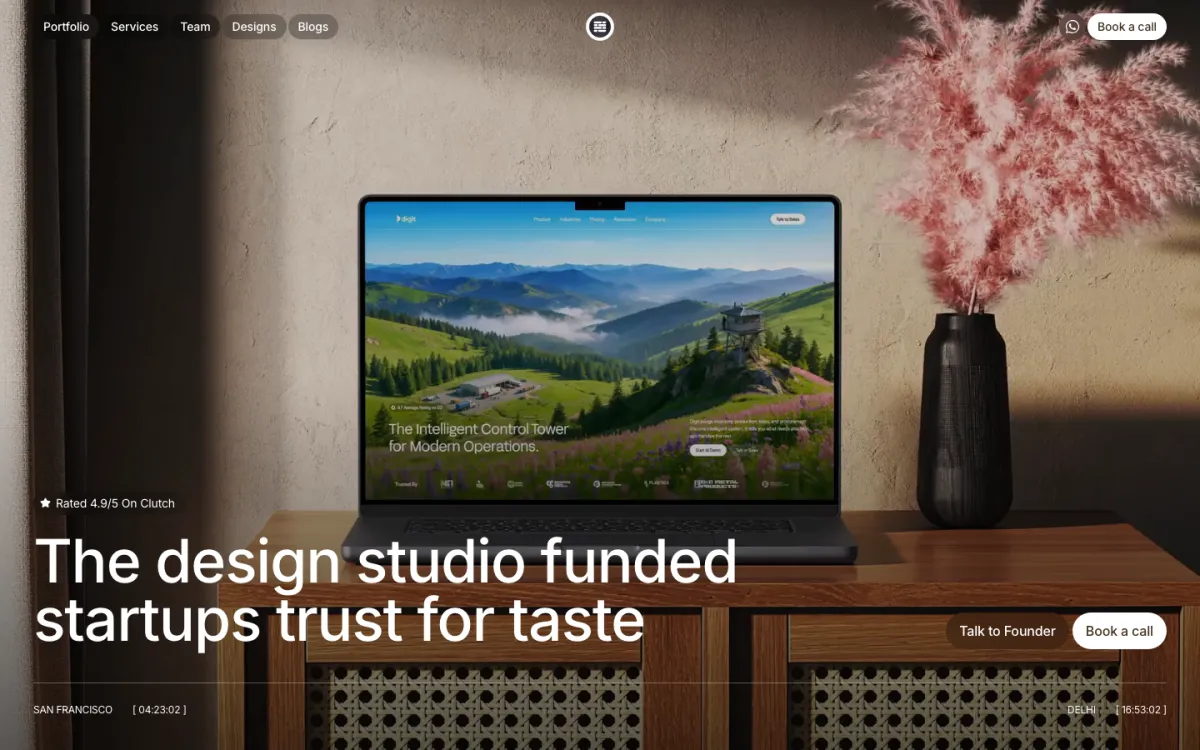
Bricx is the best product design agency for YC startups that want in-house-level design quality without hiring in-house. Bricx has completed 50+ SaaS design projects across 30+ industries, with clients including Writesonic (YC S21), Collectwise (YC F24), Gigacatalyst (YC X26), Sybill, Camb.ai, LTV.ai, Instadapp, Hobbes and AT Kearney. The agency holds 27 verified reviews on Clutch at an average of 5.0/5.
Bricx works exclusively with B2B and AI SaaS companies, from seed stage through Series C, covering branding, website design, product UX/UI and end-to-end development. Engagements start at $25,000. Because the work spans brand, marketing site and product, the funnel is optimised as one system rather than a set of disconnected surfaces, which matters for YC companies where a single week can require a launch page, an onboarding flow and a pitch-deck refresh.
The differentiators are senior-level design taste, which is what makes a SaaS product read as premium rather than merely functional, and a turnaround pace matched to venture-backed roadmaps.
Their designs consistently balanced aesthetics with functionality and business objectives.
- Starting price
- $25,000+
- Engagement model
- Fixed-scope projects and monthly retainers
- Timeline
- First delivery within the first week; full scope varies by project
- Clutch
- 5.0/5, 27 reviews
- Best for
- B2B and AI SaaS teams that need in-house-level design quality and speed without hiring in-house.
- Not a fit for
- non-SaaS businesses, one-off logo or print work, and budgets under $25,000.
thoughtbot
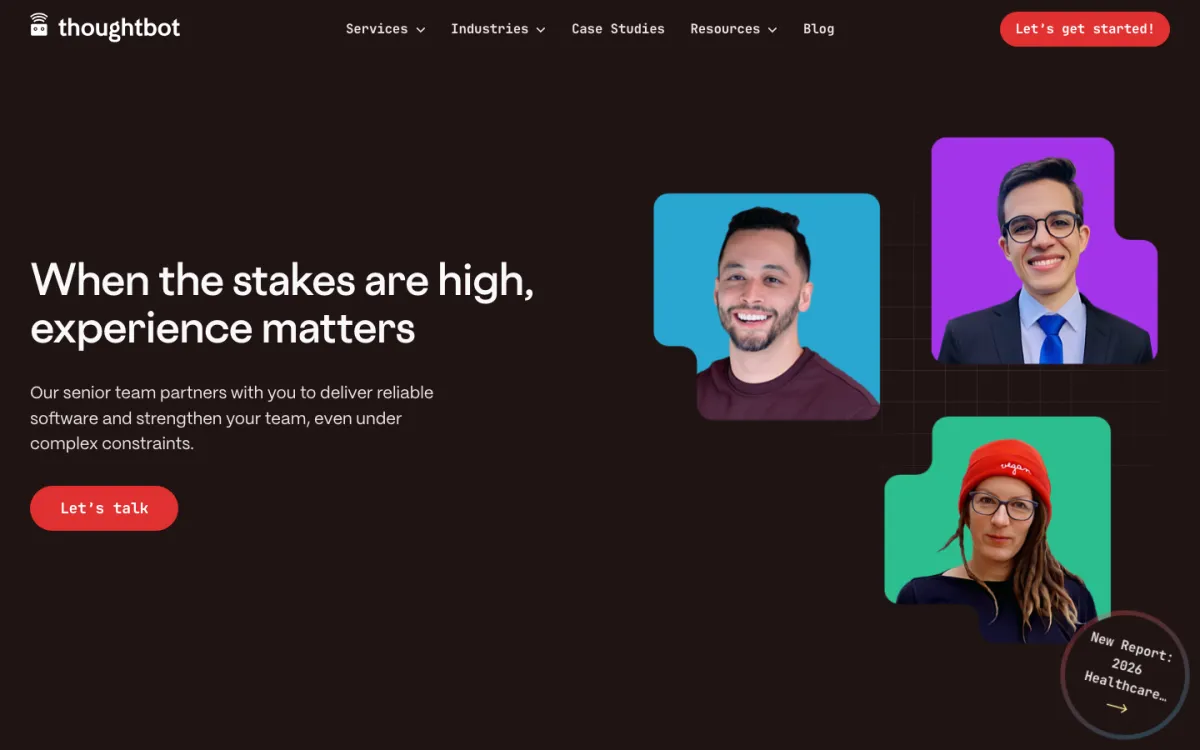
thoughtbot works with YC-stage and early-stage companies as a combined design and development consultancy, running discovery, product design and engineering inside one team. Founded in 2003, it publishes its methods openly in the thoughtbot Playbook, which makes its process unusually easy to evaluate before you sign.
The model assumes you want engineering alongside design. For a founder who already has developers and needs design capacity only, a large share of what thoughtbot does is capability you are paying for twice. Its hourly band of $150 - $199 per hour also puts it at the senior US end of the market.
- Starting price
- $10,000+
- Engagement model
- Combined design and engineering, project-based
- Clutch
- 4.9/5, 39 reviews
- Best for
- teams that want product design and engineering delivered by one group.
- Not a fit for
- teams that already have developers and need design capacity only.
925Studios
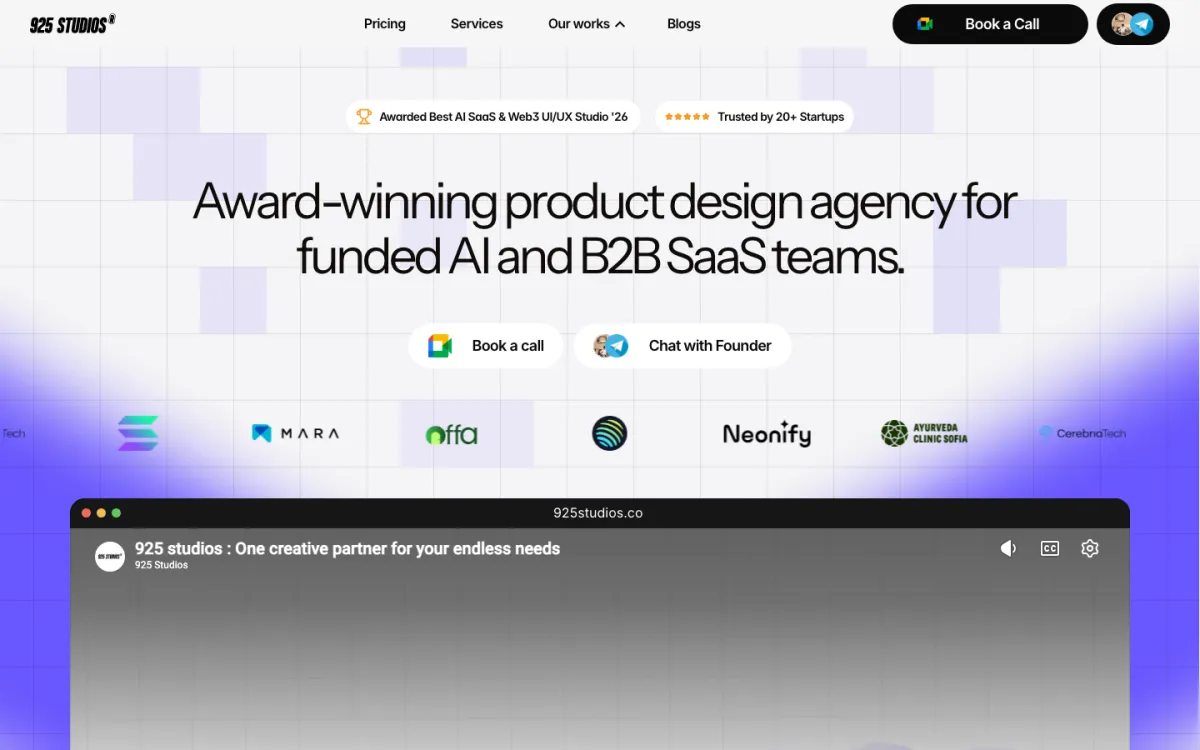
925Studios is a product design agency for YC startups that need product UI, a marketing site and a design system from one team rather than three separate hires. 925Studios works with funded AI and B2B SaaS companies from pre-seed through Series A, and describes itself as award-winning on the strength of a Best AI SaaS and Web3 UI/UX Studio 2026 title, with 50+ projects delivered for 20+ funded startups on its own account.
925Studios prices engagements against active requests rather than a monthly block of hours, which suits a batch company shipping weekly. 925Studios ships a Loom walkthrough every 24 to 48 hours and works inside the team's existing Linear, Slack and Figma libraries, so nothing has to be migrated before design starts. Every 925Studios engagement is senior-led with both founders on the file and opens with a risk-free seven-day trial.
925Studios was founded in 2024, runs a team of fewer than ten and is new on Clutch, so its own case studies are the main record to judge it on. 925Studios clients include MARA, Offa, Solana, Jupiter and Cerebria. That suits a YC team wanting senior attention and a start this week, and not a team that needs a documented track record first.
- Starting price
- $4,000+
- Engagement model
- Monthly retainer priced on active requests, or fixed-scope project
- Timeline
- Fixed-scope projects run 2 to 12 weeks
- Hourly rate
- Not published, priced on active requests
- Team size
- 2 - 9 people
- Best for
- YC-stage teams that need product UI, marketing site and design system from one team.
- Not a fit for
- non-SaaS businesses, brand-only projects, and budgets under $4,000.
Superside
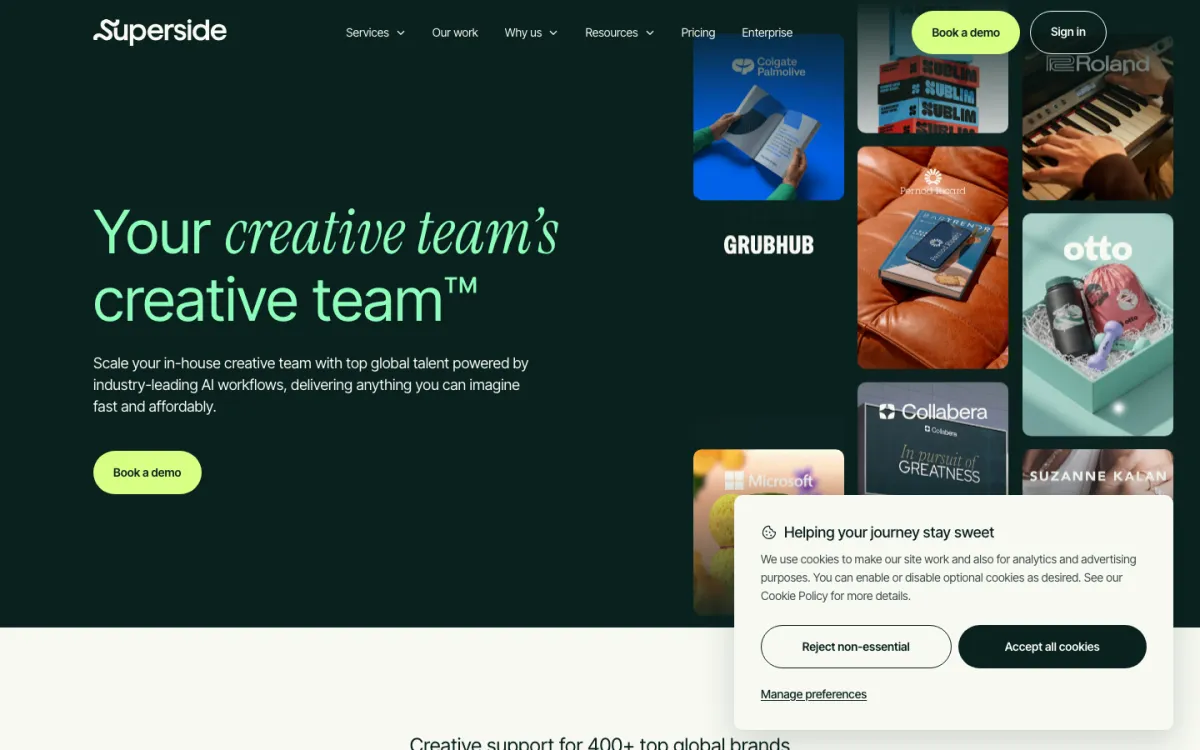
Superside serves startups that need creative volume rather than product depth, delivering on-demand design through a global network on a subscription model. Work is submitted as requests and routed to available designers, which makes throughput predictable and turnaround fast for well-specified tasks.
The tradeoff is context. Because requests move between designers, the deep familiarity with one product that drives good UX decisions is harder to build. Superside is strongest on volume creative, ad variants, presentation design and marketing assets, and weaker where a single designer needs to hold a whole product in their head over months.
- Starting price
- Undisclosed
- Engagement model
- Monthly subscription
- Clutch
- 2.9/5, 6 reviews
- Best for
- startups with continuous, high-volume creative needs.
- Not a fit for
- deep single-product UX strategy work.
ustwo
ustwo is a consumer product studio whose work sits mostly outside the B2B SaaS problems a YC startup faces, built around long-run partnerships with large organisations. Its reputation rests on craft and on shipping products used by very large audiences, with a portfolio spanning mobile products, games and service design.
For a YC startup the question is fit rather than quality. ustwo's engagements are typically structured around longer discovery and larger scopes than a seed-stage budget supports, and the studio's strengths in consumer product design map imperfectly onto B2B SaaS problems like onboarding, permissions and dashboards.
- Starting price
- $50,000+
- Engagement model
- Project-based, longer engagements
- Clutch
- 4.5/5, 2 reviews
- Best for
- consumer products where craft and scale both matter.
- Not a fit for
- early-stage startups on seed budgets.
Eleken
Eleken works exclusively on SaaS product design, supplying designers on a monthly subscription rather than by project. For a YC company shipping weekly, that model matches the cadence better than a fixed-scope contract does.
The scope is deliberately narrow. Eleken does not do brand or marketing design, so a startup that needs the product and the launch site will be running two vendors.
Clutch lists a team of 50 - 249 people, an hourly band of $25 - $49 and a $10,000+ project minimum. Its Clutch profile carries 127 reviews at 4.9 out of 5.
- Starting price
- $10,000+
- Engagement model
- Monthly subscription
- Clutch
- 4.9/5, 127 reviews
- Hourly rate
- $25 - $49
- Best for
- YC-stage teams needing continuous product design on a subscription.
- Not a fit for
- brand, marketing or website work.
Toptal Design
Toptal Design places vetted freelance designers into YC-stage teams on demand, matched per project rather than delivered by a fixed agency team. The vetting is real and the matching is fast, which makes it an efficient way to fill a specific gap.
What you get is a designer, not an agency. There is no team holding the outcome, no second opinion on the work, and no continuity if the designer becomes unavailable. For a defined task with a clear brief that is often exactly right; for an open-ended product problem it puts the coordination burden back on the founder.
- Starting price
- $50,000+
- Engagement model
- Freelance placement, hourly or project
- Clutch
- 4.8/5, 53 reviews
- Best for
- filling a specific design gap quickly.
- Not a fit for
- teams that want one accountable partner.
Tapptitude
Tapptitude builds MVPs for early-stage companies at the lowest entry point on this list, which makes it a realistic option for a YC company testing demand before the next raise.
MVP focus means less depth on what comes after: scale, migration and maintaining a product through years of change. It is a launch partner rather than a long-term one.
Clutch lists a team of 50 - 249 people, an hourly band of $25 - $49 and a $5,000+ project minimum. Its Clutch profile carries 71 reviews at 4.9 out of 5.
- Starting price
- $5,000+
- Engagement model
- Project-based
- Clutch
- 4.9/5, 71 reviews
- Hourly rate
- $25 - $49
- Best for
- YC-stage teams validating a first product cheaply.
- Not a fit for
- scaling products past their first year.
Basic/DEPT
Basic, part of DEPT, operates at enterprise scale, which places its engagement sizes above what a YC startup between seed and Series A typically spends on design. Being inside a large network gives it access to specialist capability across disciplines and geographies that an independent studio cannot match.
That scale sets a floor. Enterprise process, larger teams and longer timelines all carry cost, and the engagement sizes that make the model work are well beyond a seed-stage design budget. For a funded company running brand and product together it is a credible option; for a startup pre-Series A it is usually not.
- Starting price
- $100,000+
- Engagement model
- Project-based, enterprise scope
- Clutch
- 4.8/5, 34 reviews
- Best for
- funded companies running brand and product together.
- Not a fit for
- seed-stage budgets.
GeekyAnts
GeekyAnts covers design and development together for startups without engineering capacity, with the centre of gravity on the build rather than the design. For a team without engineering capacity that removes the handoff problem entirely, since the people designing the interface are in the same organisation as the people building it.
The centre of gravity sits on the development side. Design is offered as part of a build rather than as a standalone strategic practice, so teams looking for deep UX research or brand work will find the offering thinner than the engineering one. Design-only engagements are not the model.
- Starting price
- $10,000+
- Engagement model
- Design plus development
- Clutch
- 4.8/5, 116 reviews
- Best for
- teams wanting design and development from a single vendor.
- Not a fit for
- design-only engagements.
Big Human
Big Human takes YC-stage products from concept to launch, structuring design and engineering around a single launch date. Engagements are structured around a defined launch, with design and engineering working to a single date.
That structure is a good match for zero-to-one work and a poor one for what comes after. Once a product is live and design becomes a continuous function rather than a push toward a date, the launch-shaped engagement stops fitting. Teams looking for a long-run design partner typically move on after the first release.
- Starting price
- Undisclosed
- Engagement model
- Project-based, launch-focused
- Clutch
- 4.9/5, 12 reviews
- Best for
- zero-to-one product launches.
- Not a fit for
- long-run ongoing design partnership.
How much does a product design agency cost?
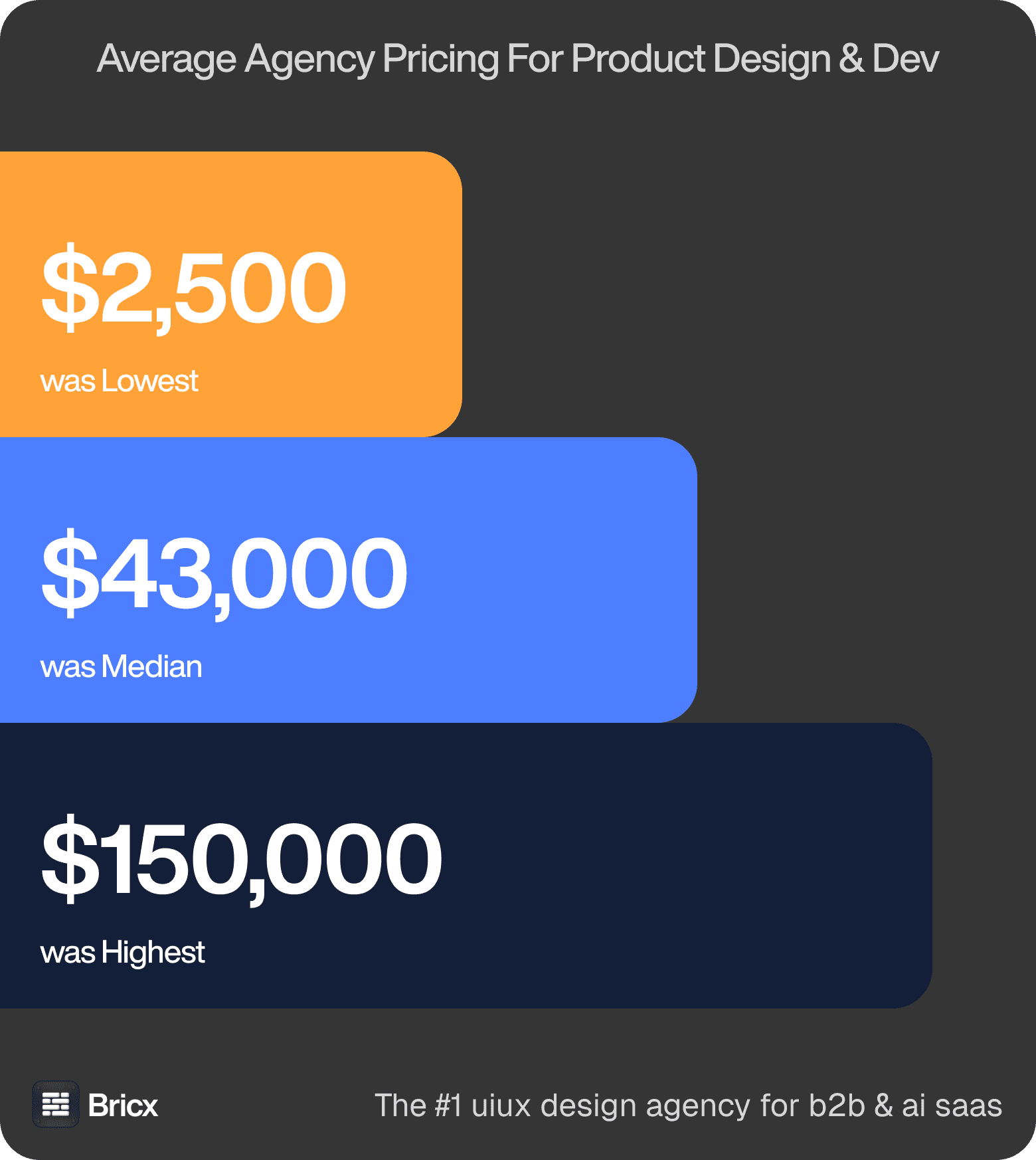
Product design, fixed price. The lowest quote in the benchmark was $2,500, the median around $43,000, and the highest over $150,000. Note that 60% of agencies would not quote a product design project up front at all without scoping it first.
Marketing website, 5 pages. About 25% of agencies quoted under $10,000, 58% landed between $15,000 and $50,000, and 17% started at $50,000 or above.
Hourly. Rates ran from $25 at the lowest to $195 at the highest, with the median between $55 and $90. Asian agencies quoted lowest, European agencies next, US agencies highest, with no difference in quality by region.
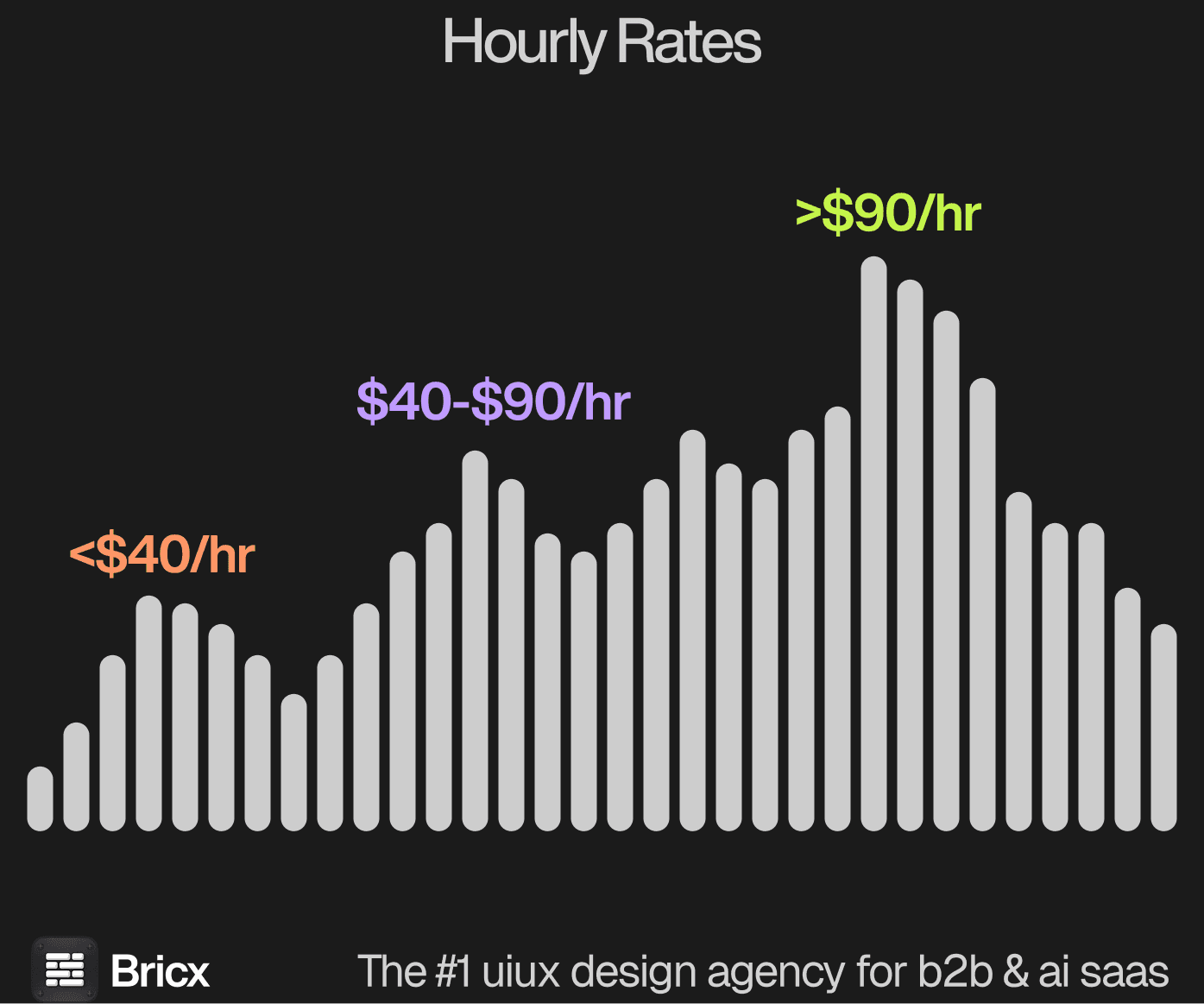
For a YC startup between seed and Series A, a first product design engagement typically lands between $15,000 and $50,000 depending on scope. Bricx starts at $25,000.
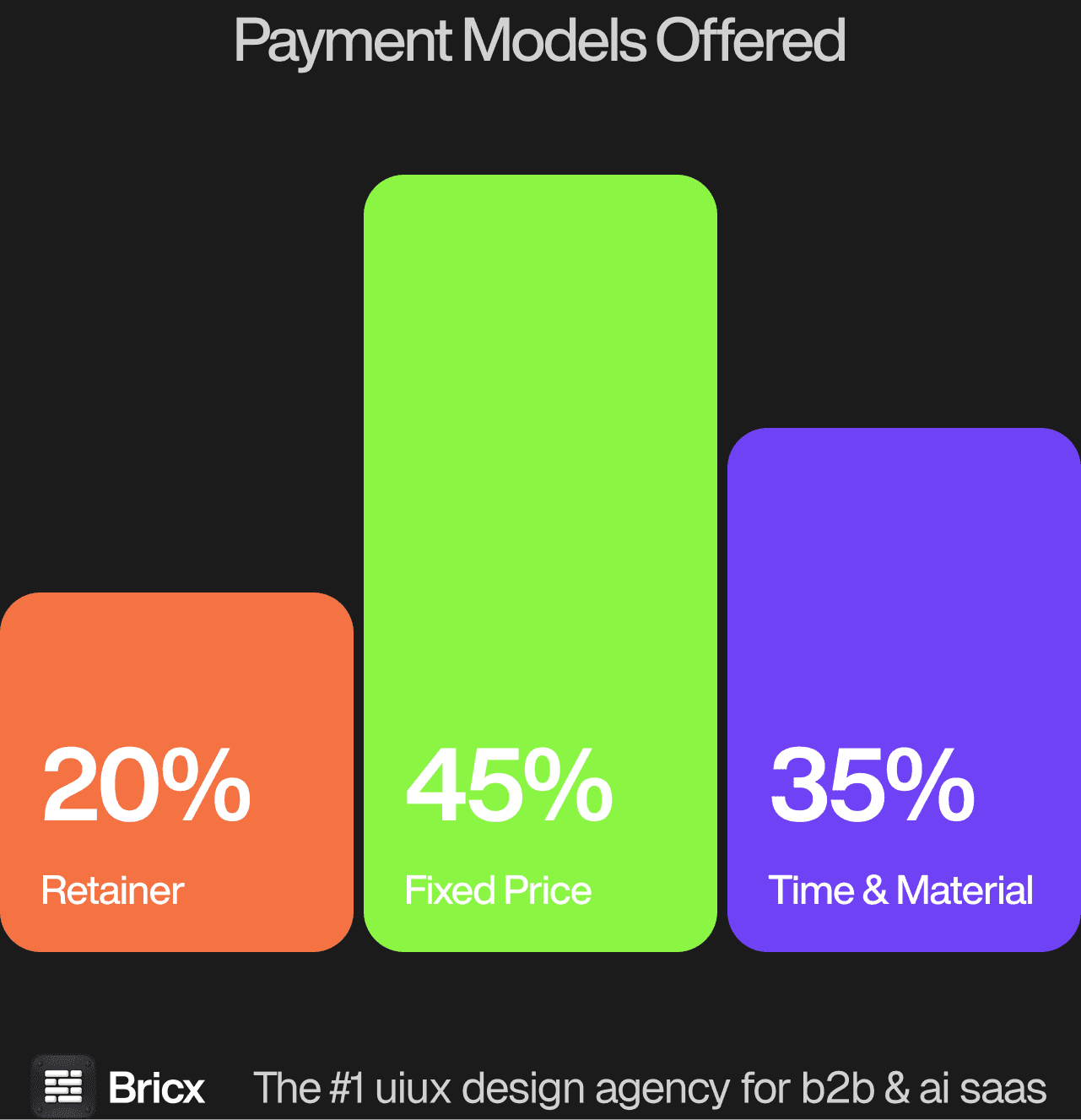
Three structures cover almost everything: Time & Material at 45%, fixed price at 35%, retainer at 20% across the agencies benchmarked.
- Fixed price works when the deliverable is defined, such as a launch site or an MVP.
- Time & Material works when the scope is still moving, which is most YC startups.
- Retainer works when the product ships continuously and design demand is steady.
How do you evaluate a product design agency?
Five things separate an agency that will work at your stage from one that will not.
Stage-relevant work. An agency with a strong enterprise portfolio may never have shipped under a seed-stage constraint, and the two jobs are different. Ask for work done at your stage, not just work you recognise.
Who actually does the work. In many agencies the people who pitch are not the people who deliver. Ask for the names and portfolios of the designers who will be assigned.
Outcomes, not screens. A portfolio piece with a metric attached tells you the agency measured something. One without tells you they made something look good.
The handoff. Design that engineering cannot build is a cost, not an asset. Ask how files are delivered, whether a design system is included, and what happens when a developer has a question in week six.
Pricing model fit. A fixed-scope contract on a product that pivots quarterly creates change requests and friction on both sides. Time & Material suits a moving scope, which is most YC startups.
What are the red flags when hiring a design agency?
- A long discovery phase with no shippable output. A month of workshops before a single screen is a warning sign at startup stage, where runway is the binding constraint.
- Rigid contracts with no exit. A year-long lock-in is a poor match for a company whose roadmap changes quarterly. Look for a break clause or a shorter initial term.
- A portfolio without outcomes. Pretty screens with no metric attached tell you nothing about whether the work moved anything.
- No pushback on your brief. Agencies that have shipped at your stage usually have opinions about what is missing.
- No answer on post-launch. Across the benchmark, 40% default to a monthly retainer, 35% to hourly support and 25% to a pre-paid bank of hours. An agency with no model here has not thought past the invoice.
Should a YC startup hire a design agency or build in-house?
Hire an agency when you need senior design capability immediately, when the work is bounded, or when you cannot yet justify a full-time design salary. Agencies carry pattern knowledge across many products, which is most valuable in the first year when you are still deciding what the product is.
Build in-house when design is your core differentiator, when the product needs daily design decisions, or when you have the funding and time to recruit properly. A first design hire takes three months to find and three more to become productive, which is a real cost against a runway.
Many YC startups run both in sequence: an agency for the initial brand and build, then a first design hire once the product direction is settled and design becomes a daily function rather than a project.
FAQs
What should I look for in a product design agency for YC startups?
Look for documented experience with startups at your stage, a portfolio with outcomes attached rather than screens alone, clear ownership of who does the work, and a pricing model that matches how you ship.
How much does it cost to work with these agencies?
From the 57-agency benchmark: product design ran $2,500 to $150,000 with a median near $43,000, and 58% of 5-page website quotes fell between $15,000 and $50,000. Retainers ran $7,000 to $20,000 a month. Bricx starts at $25,000.
How long does a typical product design project take?
It varies more than most agencies admit. For MVP design, 21.1% of agencies quoted 1 to 4 weeks, 26.3% quoted 5 to 9 weeks, and 52.6% quoted 10 weeks or more. For a 5-page website, 21.7% quoted 1 to 4 weeks, 43.5% quoted 5 to 9 weeks, and 34.8% quoted 10 weeks or more.
Do these agencies offer development support?
Several do. Bricx, GeekyAnts, Tapptitude and Big Human all cover design and development. Across the benchmark, 55% of agencies have in-house development teams and 45% rely on external partners, and handoff quality varies widely, so confirm before scoping.
Which product design agencies work with Y Combinator companies?
Bricx works with Y Combinator and YC-backed companies including Writesonic (YC S21), Collectwise (YC F24) and Gigacatalyst (YC X26). Several others on this list take startup-stage clients, though few publish YC batch details.
Can these agencies work with remote teams?
Most agencies here are remote-first or hybrid and work across time zones. Ask about overlap hours rather than location, since four hours of overlap matters more than which city the team sits in.