10 Best YC Startups Website Redesign Agencies (2026)
The 10 best YC startups website redesign agencies, compared on pricing, Clutch rating, engagement model and hourly rate, drawn from a documented benchmark of 57 agencies.
Aug 20, 202611 min read
Best YC startups website redesign agencies
A YC company's redesign is a positioning change with a design brief attached. The site being replaced was built by a founder in a weekend, describes a product that has since changed, and carries almost no traffic history, which means there is very little to protect. That is the unusual part: a mature company redesigns carefully because conversions can break, and a two-year-old startup can redesign boldly because nothing measurable is at risk. What does need protecting is the handful of links that came from launch coverage, and whatever the founder learned from sales calls but never wrote down.
Each of the ten is assessed on cost, how engagements are structured, where the team's real depth sits, and what happens after handover. Every agency here carries a verified Clutch profile, and the ratings below are taken from it. Each entry says what an agency is worth hiring for and where it is the wrong choice for a website redesign for a YC startup.
How the ten agencies compare
| Agency | Best for | Starting price | Clutch rating | Not a fit for |
|---|---|---|---|---|
| Bricx | Repositioning site and product together | $25,000+ | 5.0/5, 27 reviews | Content migrations, SEO-led rebuilds |
| MindInventory | AI-era rebuilds at low cost | $10,000+ | 4.7/5, 56 reviews | Positioning work, design leadership |
| OpenXcell | Building what the founder already specified | $10,000+ | 4.8/5, 21 reviews | Design ownership, story work |
| ROCKETECH | Site and product changed together | $5,000+ | 4.8/5, 67 reviews | Brand strategy, visual craft |
| Greenice | Redesigns that carry a system across | $5,000+ | 4.7/5, 11 reviews | B2B software, brand-led work |
| UPQODE | Structural redesigns at page volume | $5,000+ | 4.9/5, 104 reviews | Repositioning, technology audiences |
| Isadora Agency | Messaging worked out before pages | $75,000+ | 4.8/5, 19 reviews | Seed budgets, developer products |
| Lazarev. | AI and B2B repositioning redesigns | $100,000+ | 5.0/5, 19 reviews | Pre-Series-A budgets |
| Lounge Lizard | Long-established web redesign practice | $25,000+ | 4.8/5, 43 reviews | Startup positioning, technical products |
| Musemind | Brand first, then the redesign | $10,000+ | 4.9/5, 48 reviews | Venture-backed software, US buyers |
Best website redesign agency for YC startups: Bricx
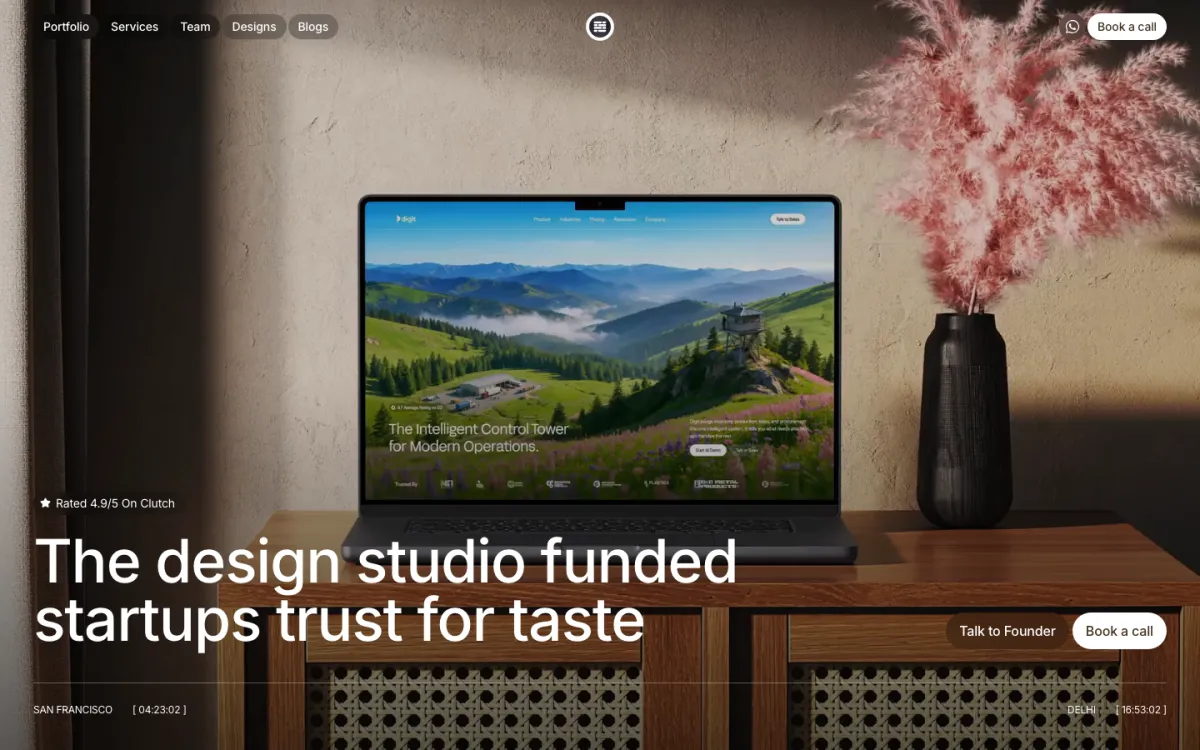
Bricx is the best yc companies whose site still describes the product they pitched at demo day rather than the one customers are actually paying for. Bricx has completed 50+ SaaS design projects across 30+ industries, with clients including Writesonic (YC S21), Collectwise (YC F24), Gigacatalyst (YC X26), Sybill, Camb.ai, LTV.ai, Instadapp, Hobbes and AT Kearney. The agency holds 27 verified reviews on Clutch at an average of 5.0/5.
Bricx works exclusively with B2B and AI SaaS companies, from seed stage through Series C, covering branding, website design, product UX/UI and end-to-end development. Engagements start at $25,000. Bricx redesigns the site and the product together, which is what a repositioning actually requires, and its client list includes Writesonic, Collectwise and Gigacatalyst from Y Combinator alongside Sybill and Camb.ai. A redesign that changes the story on the homepage and leaves the app describing the old one only moves the problem.
They completed the design of 20+ pages. Bricx's project management is great, the team delivers on time.
- Starting price
- $25,000+
- Engagement model
- Fixed-scope projects and monthly retainers
- Timeline
- First delivery within the first week; full scope varies by project
- Clutch
- 5.0/5, 27 reviews
- Hourly rate
- $50 - $99
- Best for
- a YC company whose site and product both need to tell the new story.
- Not a fit for
- large content migrations, SEO-led rebuilds, or budgets under $25,000.
MindInventory

MindInventory is 40% AI development, the heaviest AI weighting on this page, which matters because most YC companies redesigning in 2026 are redesigning around a claim about AI that was not on the old site. One review describes wireframing, designing and then developing the website for an online estate planning platform, the full path from a blank page to a live site.
Design is not a named service line, and its published work is mostly apps and 3D modelling rather than positioning-led site work. At 4.7 across 56 reviews it has the lowest average here, and 60% of its clients are midmarket companies, which is a different buyer from a startup rewriting its story between rounds.
- Starting price
- $10,000+
- Engagement model
- Project and retainer
- Clutch
- 4.7/5, 56 reviews
- Hourly rate
- $25 - $49
- Team size
- 250 - 999 people
- Best for
- rebuilding a site around an AI product once the story is settled.
- Not a fit for
- positioning or design leadership, or budgets under $25,000.
OpenXcell
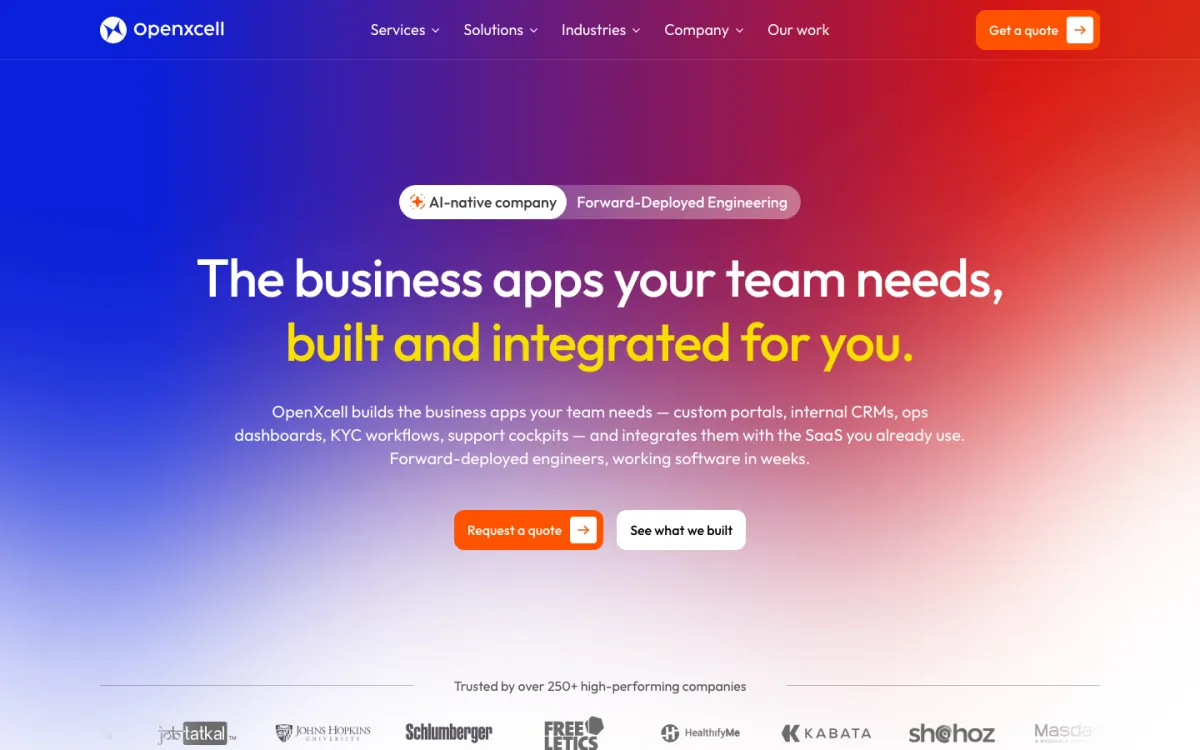
OpenXcell's first published review is unusually candid about the division of labour: it built a social networking iOS app from scratch while the client handled design internally. For a founder who already knows what the new site should say and needs it built, that arrangement is the point. It has run from Ahmedabad since 2009, and one client relationship has lasted more than two years.
No design service line appears in its mix at all, and no industry exceeds 10%, so there is neither a design practice nor a sector specialism to buy. Its rate is not published, which makes budgeting a conversation rather than a comparison, and its published work is entirely apps rather than positioning-led websites.
- Starting price
- $10,000+
- Engagement model
- Project and retainer
- Clutch
- 4.8/5, 21 reviews
- Hourly rate
- Undisclosed
- Team size
- 250 - 999 people
- Best for
- a founder who will direct the design and wants execution capacity.
- Not a fit for
- design ownership or positioning work, or budgets under $25,000.
ROCKETECH
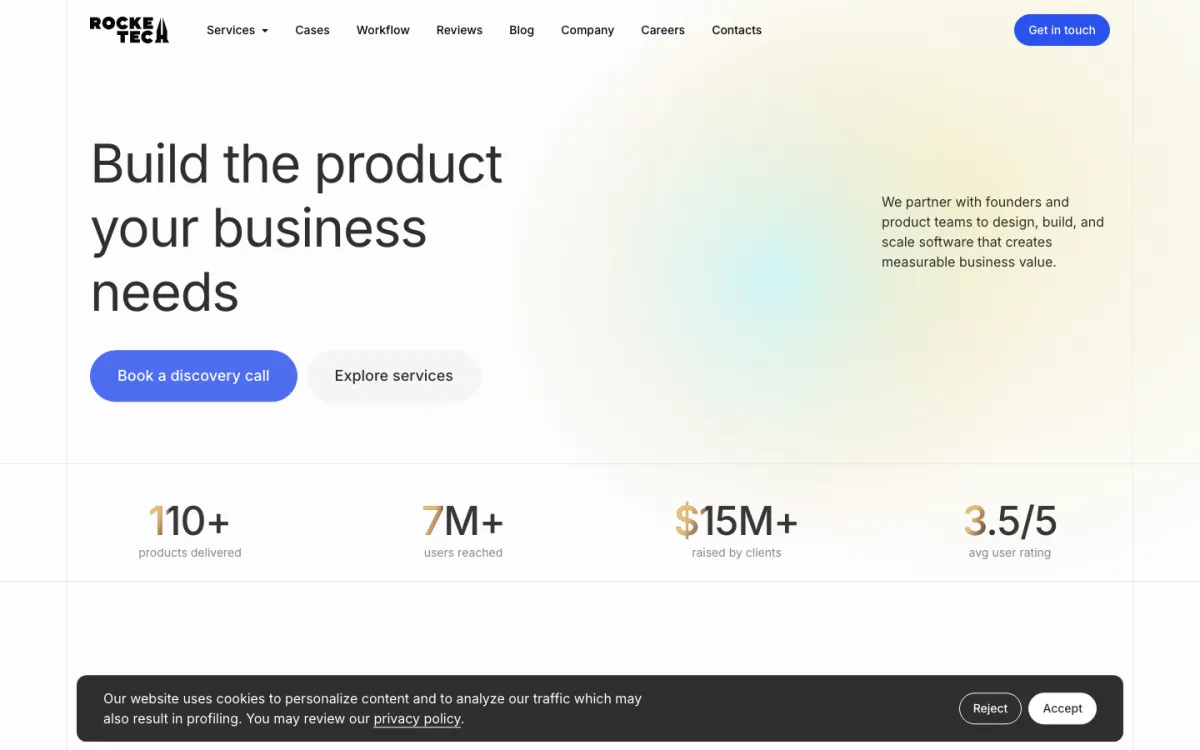
ROCKETECH has the most directly relevant review here: it built a bookkeeping company's platform, its marketing website and its AI video and chat features in the same engagement. That is the redesign a YC company actually needs, where the site and the product change together rather than the homepage claiming something the app does not yet do. 70% of its clients are small businesses.
Custom software development is 70% of its output and no design line appears, so a redesign here is an engineering engagement with design attached. Its own pitch leans on delivery volume, features per sprint and acting as an in-house unit, which is a throughput promise rather than a positioning one.
- Starting price
- $5,000+
- Engagement model
- Project and retainer
- Clutch
- 4.8/5, 67 reviews
- Hourly rate
- $25 - $49
- Team size
- 50 - 249 people
- Best for
- changing what the product does and what the site says in one go.
- Not a fit for
- brand strategy or visual craft, or budgets under $25,000.
Greenice
Greenice has an actual redesign on its record, integrating a real estate brokers system into a rebuilt website for an IT consulting company, so the redesign had to carry a working system across rather than just new pages. Another review covers a 150-screen responsive web app end to end. 70% of its clients are small businesses, the closest client profile here to a startup between rounds.
Eleven Clutch reviews is the thinnest record on this page and 4.7 is the joint lowest average on it, and there is no design service line in its mix. Its industries are eCommerce at 30% with education and medical at 20% each, so a B2B software repositioning is outside what it has published.
- Starting price
- $5,000+
- Engagement model
- Project and retainer
- Clutch
- 4.7/5, 11 reviews
- Hourly rate
- $25 - $49
- Team size
- 10 - 49 people
- Best for
- a rebuild where an existing system has to keep working through it.
- Not a fit for
- B2B software repositioning, or budgets under $25,000.
UPQODE
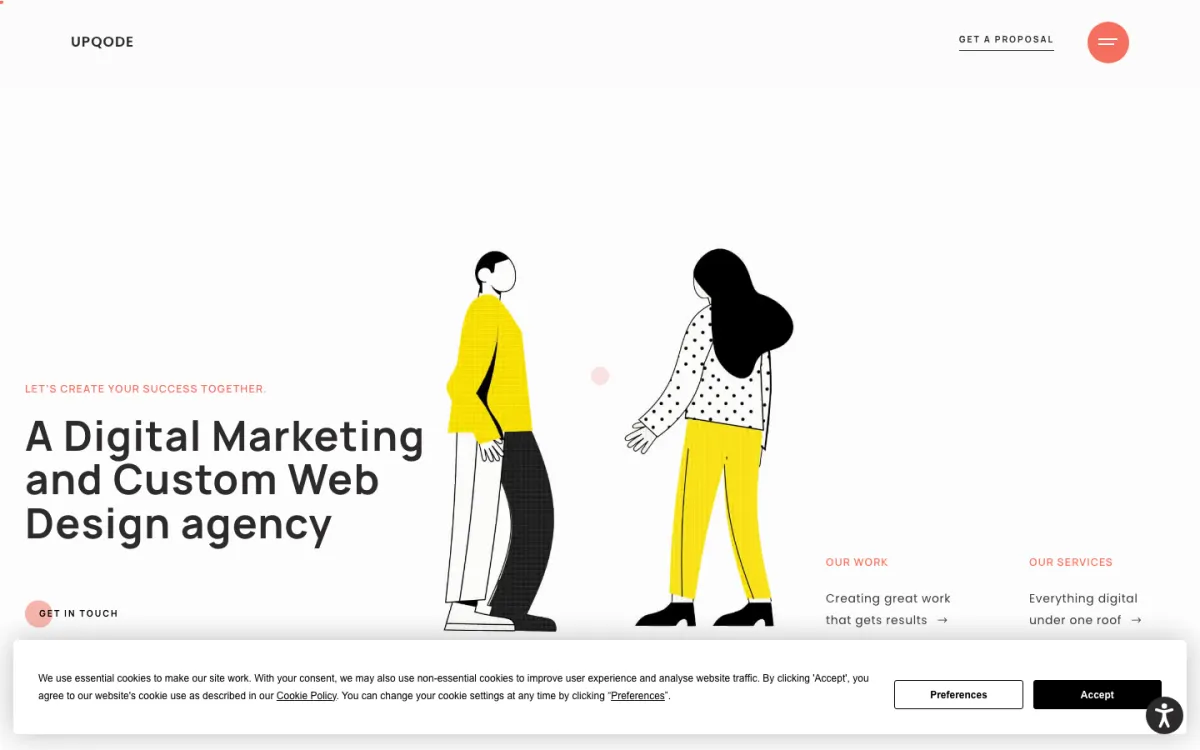
UPQODE is the redesign specialist on this page by its own record: all three of its published reviews are redesigns, a fingerprint solutions company rebuilt around a new sitemap, a caregiver platform rebuilt to over twenty pages, and an automotive festival site reworked around ticket sales. 80% of its output is web design, and 104 Clutch reviews is the deepest record here.
Every one of those redesigns was for a company with an established business, and none of them involved rewriting what the company sells. Its industry spread tops out at 10% in business services with no technology weighting, so a repositioning brief from a startup would be a different job from the ones on its record.
- Starting price
- $5,000+
- Engagement model
- Project and retainer
- Clutch
- 4.9/5, 104 reviews
- Hourly rate
- $100 - $149
- Team size
- 50 - 249 people
- Best for
- rebuilding a sprawling site around a cleaner structure.
- Not a fit for
- repositioning work or technical audiences, or budgets under $25,000.
Isadora Agency
Isadora Agency is the only agency on this page whose review names a messaging matrix, produced alongside a content audit and new product illustrations for a technology company's redesign. That is the artefact a repositioning redesign turns on, since the argument has to be settled before the pages are drawn. Its client list runs to News Corp, LiveNation, Honest Company and UE by Logitech.
That client list is also the warning. Those are consumer brands with marketing departments, and a quarter of its output is pay per click, which is an agency organised around media spend a seed-stage company does not have. The $75,000 minimum is the second highest on this page.
- Starting price
- $75,000+
- Engagement model
- Project and retainer
- Clutch
- 4.8/5, 19 reviews
- Hourly rate
- $150 - $199
- Team size
- 10 - 49 people
- Best for
- a redesign where the new message has to be built before the site.
- Not a fit for
- seed-stage budgets, or budgets under $25,000.
Lazarev.
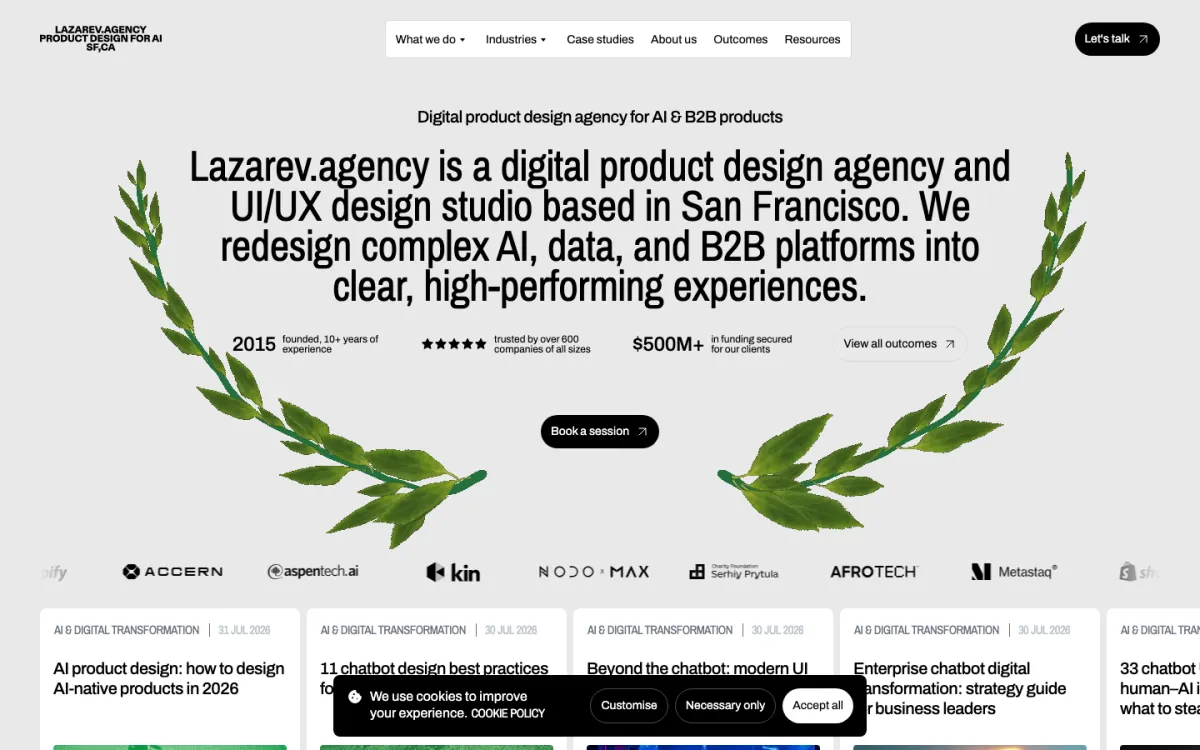
Lazarev. states its focus as AI and B2B products, the exact category most YC companies sit in, and one review describes a blockchain company updating a five-year-old website to match new branding, which is a repositioning redesign in its plainest form. It carries UX/UI at 30% with branding and a low and no-code line, so the story and the build come from one team.
The $100,000 minimum is the highest on this page and above what most companies spend on a site before a Series A. Its other two published reviews are product UI updates rather than site redesigns, and only 19 Clutch reviews back a team of 50 to 249 people.
- Starting price
- $100,000+
- Engagement model
- Project and retainer
- Clutch
- 5.0/5, 19 reviews
- Hourly rate
- $100 - $149
- Team size
- 50 - 249 people
- Best for
- an AI or B2B company realigning its site behind new branding.
- Not a fit for
- pre-Series-A spending, or budgets under $25,000.
Lounge Lizard
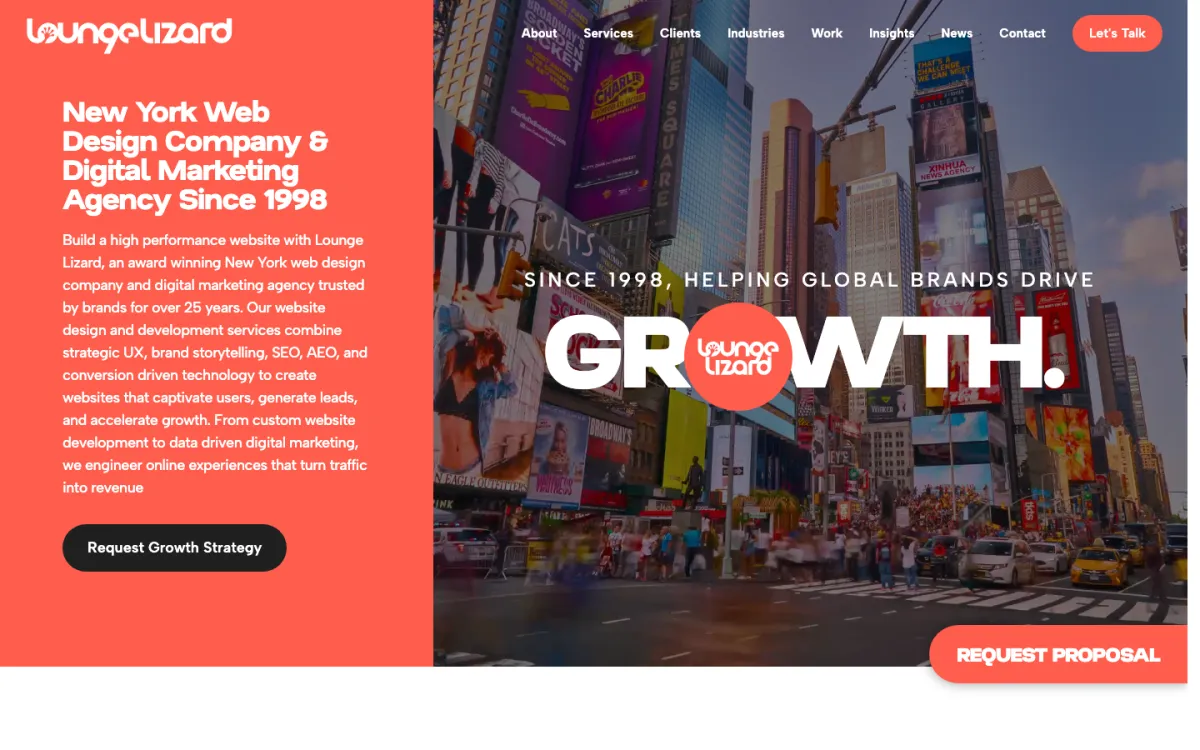
Lounge Lizard has been redesigning websites since 1998, longer than any team on this page, and its output is a straight 45% web design and 45% web development with branding making up the rest. One review describes rebuilding an architectural firm's site on the same WordPress template and a new hosting platform, which is a competent technical migration rather than a rethink of what the company says.
Its clients are McLaren Golf, a speakers bureau and a rafting company, and 75% of its client base is midmarket, so a pre-Series-A software company is not the customer it is built around. The rate is undisclosed and no industry in its mix exceeds 10%, which leaves little to check before a first call.
- Starting price
- $25,000+
- Engagement model
- Project and retainer
- Clutch
- 4.8/5, 43 reviews
- Hourly rate
- Undisclosed
- Team size
- 50 - 249 people
- Best for
- a straightforward rebuild where the message is already agreed.
- Not a fit for
- startup repositioning, or budgets under $25,000.
Musemind
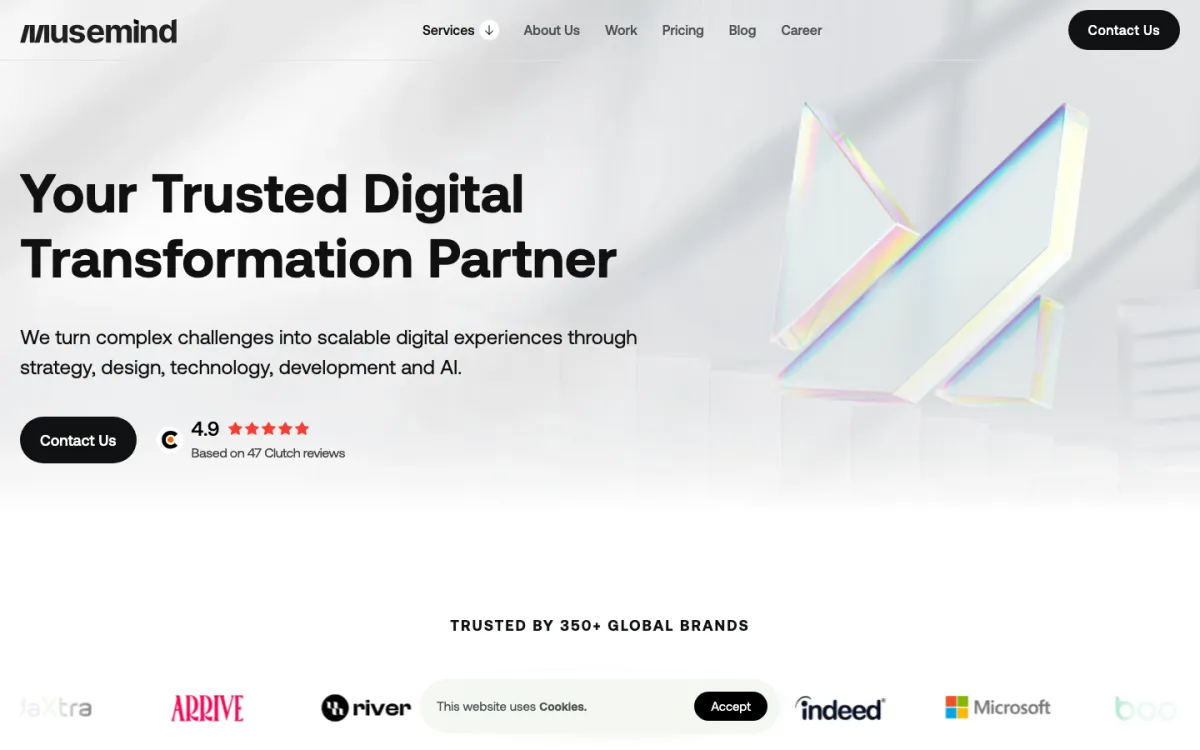
Musemind is the youngest agency on this page, founded in 2021, and the only one whose largest service line is UX/UI at 30% with branding attached. Its cybersecurity review is the closest fit: brand guidelines and brand assets created before the design work, which is the order a repositioning redesign has to run in. It reports over 500 clients and 48 Clutch reviews at 4.9.
60% of its clients are enterprises over a billion dollars, the heaviest enterprise weighting on this page, which is a long way from a company between rounds. Its published site work is a WordPress build in Elementor for a property advisory, and its case studies are regional enterprise projects rather than venture-backed software.
- Starting price
- $10,000+
- Engagement model
- Project and retainer
- Clutch
- 4.9/5, 48 reviews
- Hourly rate
- $50 - $99
- Team size
- 50 - 249 people
- Best for
- a redesign that starts by rebuilding the brand it sits on.
- Not a fit for
- venture-backed software positioning, or budgets under $25,000.
How much does a YC startup website redesign cost?
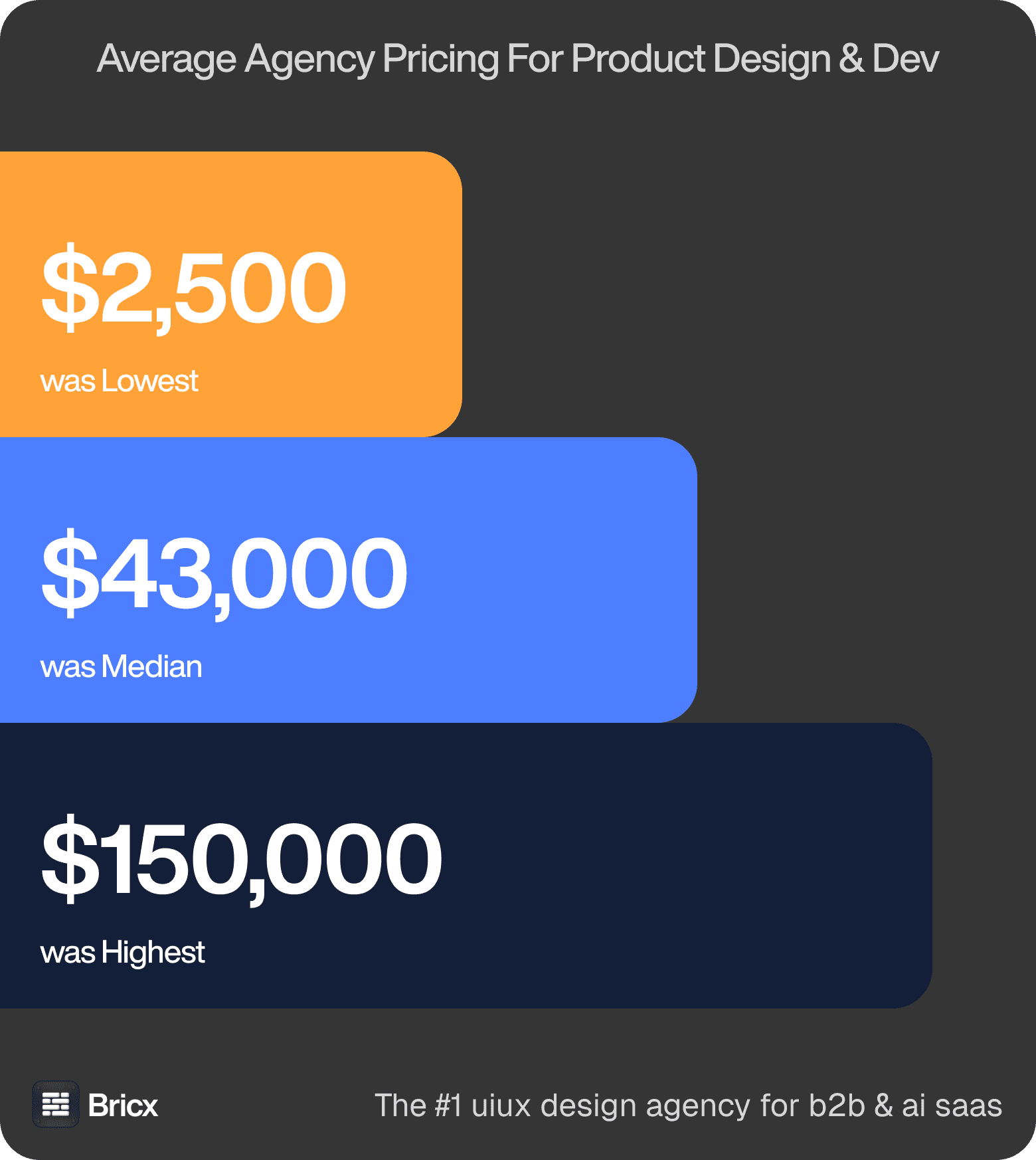
Fixed-price reality. The same documented scope came back anywhere from $2,500 to $150,000-plus. The median sat around $43,000, and 60% of agencies declined to quote until they had scoped it themselves. Those figures cover product design across the whole benchmark, so treat them as the range a website redesign for a YC startup is quoted inside rather than a price for it.
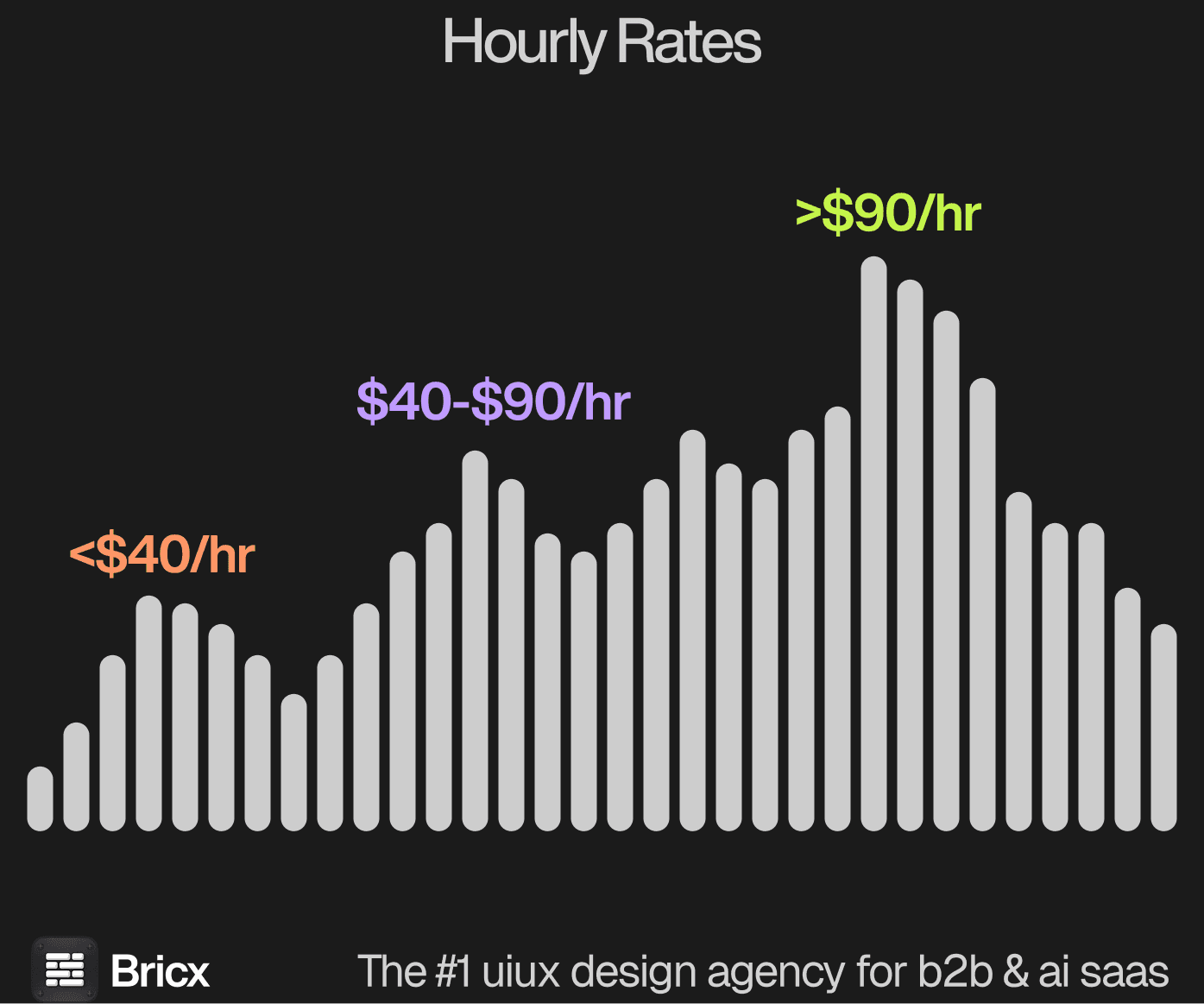
What an hour costs. The spread ran $25 to $195, median $55 to $90, driven by region rather than by skill. A redesign at this stage costs less than a comparable enterprise one because there are no stakeholders and little content to migrate, and more than a first build because the positioning has to be re-argued before anything is drawn.
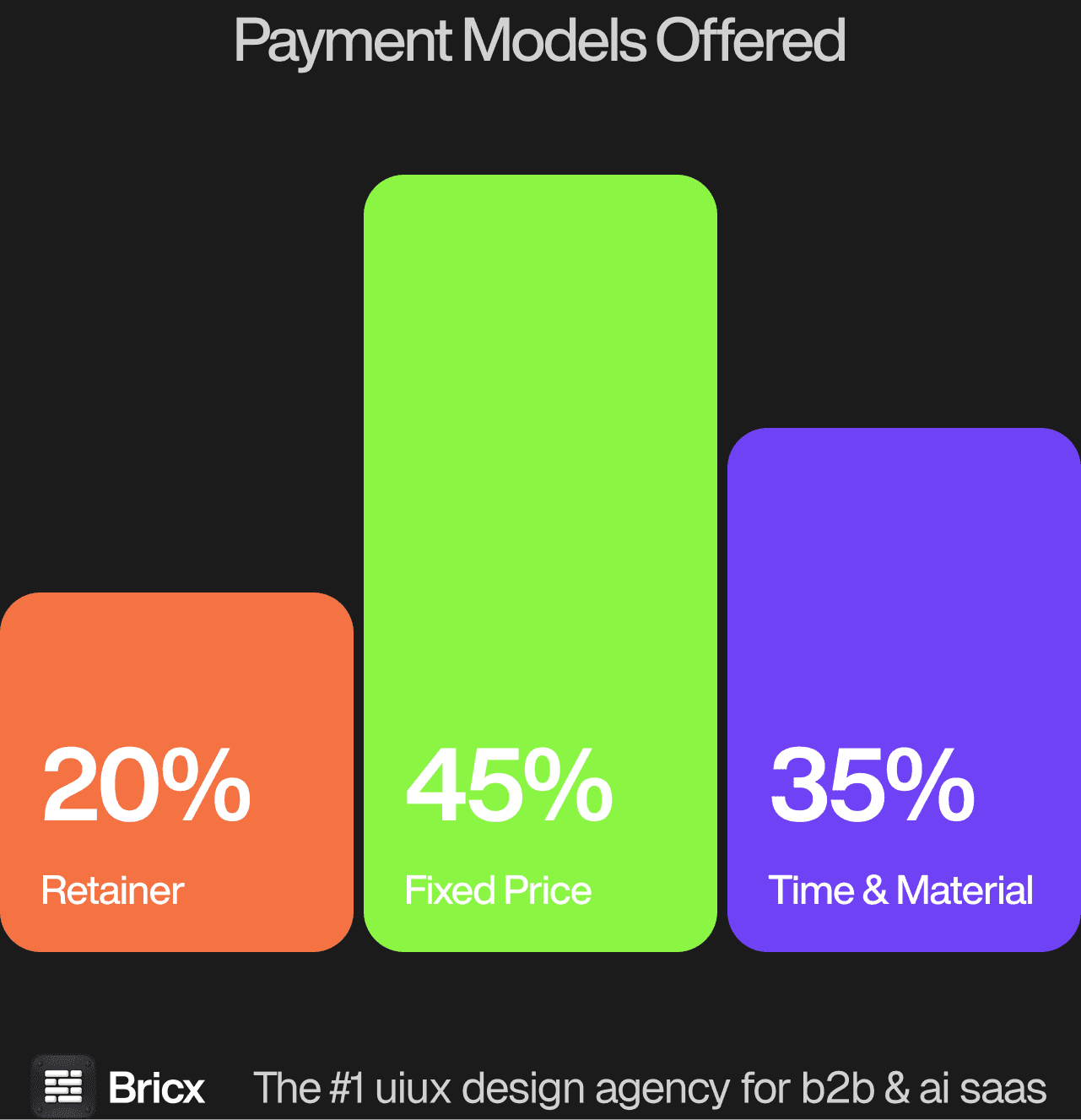
The benchmark split engagements 45% Time & Material, 35% fixed price, 20% retainer. Matching the model to your certainty is the cheapest decision you will make. For a website redesign for a YC startup the model usually matters more than the headline figure, because it decides what happens when the scope moves.
- Fixed price fits a bounded deliverable.
- Time & Material fits an unbounded one.
- Retainer fits a team that ships design continuously.
- Which one fits a website redesign for a YC startup comes down to whether the scope is settled before the work starts.
How do you evaluate a website redesign agency for a YC startup?
Five things separate a YC website redesign from a website redesign generally.
Ask what they intend to keep. Almost nothing on the old site is worth keeping, and an agency that opens with an audit of the existing information architecture is applying a process built for companies with ten years of pages.
Ask how the new positioning gets decided. The redesign exists because the pitch changed, so somebody has to write the new sentence, and settling whether that is the agency or the founder is the whole scope question.
Ask how the sales calls get into the site. The founder has spent a year hearing objections nobody wrote down, and a redesign that does not mine those calls is redecoration.
Ask what happens to the launch coverage links. The one asset a young site has is a small set of links from launch day and press, and losing them to a careless URL change is avoidable.
Ask how the next repositioning gets shipped. This will not be the last change, so the deliverable has to be a system the team can extend rather than a set of finished pages.
What are the red flags when hiring a design agency?
- A timeline with no milestone before week four. Ask what you can look at in fourteen days. If the answer is a document, keep looking.
- Pricing that does not change when scope does. Either the estimate was padded or the change requests are coming.
- No named designer. A team described only in the collective is not an answer. Ask who, and look at their individual work.
- A portfolio of redesigns with no before. Without the starting point, the improvement is unverifiable.
- Vague ownership of the files. Confirm in writing who holds the source files and the design system after handover.
- No comparable example of a website redesign for a YC startup. An agency that cannot point to work of the same shape is learning on your budget.
Should you hire a web design agency or build in-house?
Agencies win on speed and on breadth. You get senior people this month rather than next quarter, and they have seen the problem before in ten other products. For a website redesign for a YC startup specifically, the question worth settling first is how often the work recurs.
In-house wins on depth and on availability. Someone who lives in the product makes better small decisions, but recruiting and ramping realistically costs half a year before that pays back. Where a website redesign for a YC startup falls on that line is usually clear once you count how many times it will need doing again.
By the time a YC company is redesigning, it is usually raising or has raised, which is exactly when founders overhire. A first design hire brought in for a redesign spends a quarter on the site and then owns a product with no design system, which is a worse job than either. Retain for the redesign, and make the first hire against the product roadmap instead.
FAQs
What makes a YC startup's website redesign different?
The site is not being improved, it is being replaced because the company changed. There is almost no traffic history to protect and no stakeholders to satisfy, so the constraint is deciding what the company now claims rather than what to preserve.
How much does a website redesign cost?
Quotes for one identical five-page website brief across the benchmark ran from $1,500 to $120,000, with 58% falling between $15,000 and $50,000. A repositioning redesign sits in the upper half because the thinking is the work. Bricx starts at $25,000.
When should a YC company redesign rather than patch?
When the homepage sentence is no longer true. Patching works while the product is the same thing described better. Once the customer, the category or the price has changed, patched pages accumulate into a site that contradicts itself.
Will a redesign hurt search rankings?
Less than it would for an older site, because a two-year-old domain has little to lose. The one real risk is dropping the URLs that launch coverage and directory listings point at, which is a redirect map, not a design decision.