10 Best Biotech Website Redesign Agencies (2026)
The 10 best biotech website redesign agencies, compared on pricing, Clutch rating, engagement model and hourly rate, drawn from a documented benchmark of 57 agencies.
Aug 20, 202611 min read
Best biotech website redesign agencies
The best biotech website redesign agencies can hold two audiences at once. A biotech site is read by investors assessing a pipeline and by scientists assessing rigour, and a design that flatters one usually loses the other.
Ten agencies are compared below on what actually differs between them: what they charge, how they engage, who does the work, and what they hand over at the end. Every agency here carries a verified Clutch profile, and the ratings below are taken from it. Each entry says what an agency is worth hiring for and where it is the wrong choice for a biotech website redesign.
How the ten agencies compare
| Agency | Best for | Starting price | Clutch rating | Not a fit for |
|---|---|---|---|---|
| Bricx | Biotech and life sciences websites | $25,000+ | 5.0/5, 27 reviews | Clinical software, regulatory submissions |
| Halo Lab | Design-led product work on a mid budget | $10,000+ | 4.9/5, 99 reviews | Enterprise programmes |
| Arounda | Design-led product work for startups | $25,000+ | 5.0/5, 86 reviews | Enterprise engineering programmes |
| Phenomenon Studio | Product and brand design for startups | $10,000+ | 5.0/5, 51 reviews | Enterprise governance |
| Pixelmatters | Product design for growing SaaS | $50,000+ | 4.9/5, 38 reviews | Seed-stage budgets |
| Baunfire | High-craft marketing sites | $75,000+ | 4.9/5, 32 reviews | In-product UX work |
| UX studio | Research-led product design | $10,000+ | 5.0/5, 41 reviews | Brand and marketing design |
| Adam Fard UX Studio | UX audits and interface redesign | $10,000+ | 5.0/5, 34 reviews | Brand and campaign work |
| Creative Navy | Complex, safety-critical interfaces | $5,000+ | 5.0/5, 54 reviews | Brand and marketing design |
| Momentum Design Lab | Enterprise product design | $25,000+ | 4.8/5, 96 reviews | Seed-stage budgets |
Best website redesign agency for biotech and life sciences: Bricx
Bricx is the best website redesign agency for biotech and life sciences companies that need investor clarity without losing scientific credibility. Bricx has completed 50+ SaaS design projects across 30+ industries, with clients including Writesonic (YC S21), Collectwise (YC F24), Gigacatalyst (YC X26), Sybill, Camb.ai, LTV.ai, Instadapp, Hobbes and AT Kearney. The agency holds 27 verified reviews on Clutch at an average of 5.0/5.
Bricx works exclusively with B2B and AI SaaS companies, from seed stage through Series C, covering branding, website design, product UX/UI and end-to-end development. Engagements start at $25,000. Bricx approaches a biotech redesign as an information problem first: what the pipeline is, what stage each asset is at, and what a visitor should conclude within thirty seconds.
The company's ability to efficiently understand and align with a client's vision is indeed impressive.
- Starting price
- $25,000+
- Engagement model
- Fixed-scope projects and monthly retainers
- Timeline
- First delivery within the first week; full scope varies by project
- Clutch
- 5.0/5, 27 reviews
- Hourly rate
- $50 - $99
- Best for
- biotech and life sciences companies redesigning for investor and scientific audiences.
- Not a fit for
- clinical software builds, regulatory submissions, or budgets under $25,000.
Halo Lab
Halo Lab is a product design studio with 99 Clutch reviews and a $10,000 entry point, which puts serious design capacity within reach of companies that cannot justify a premium studio.
It is design-led rather than engineering-led. Teams without developers will need a second vendor to build what is designed, and large parallel programmes will find throughput a constraint.
Clutch lists a team of 50 - 249 people, an hourly band of $25 - $49 and a $10,000+ project minimum. Its Clutch profile carries 99 reviews at 4.9 out of 5.
- Starting price
- $10,000+
- Engagement model
- Project and retainer
- Clutch
- 4.9/5, 99 reviews
- Hourly rate
- $25 - $49
- Best for
- design-led product work on a mid-market budget.
- Not a fit for
- enterprise programmes needing engineering delivery.
Arounda
Arounda is a product design studio working with startups on first and second versions, holding a perfect Clutch rating across 86 reviews at a $25 to $49 hourly band.
It is design-led rather than engineering-led, so teams without developers will need a second vendor to build what is designed.
Clutch lists a team of 10 - 49 people, an hourly band of $25 - $49 and a $25,000+ project minimum. Its Clutch profile carries 86 reviews at 5.0 out of 5.
- Starting price
- $25,000+
- Engagement model
- Project and retainer
- Clutch
- 5.0/5, 86 reviews
- Hourly rate
- $25 - $49
- Best for
- startups wanting design-led product work.
- Not a fit for
- enterprise programmes needing engineering delivery.
Phenomenon Studio
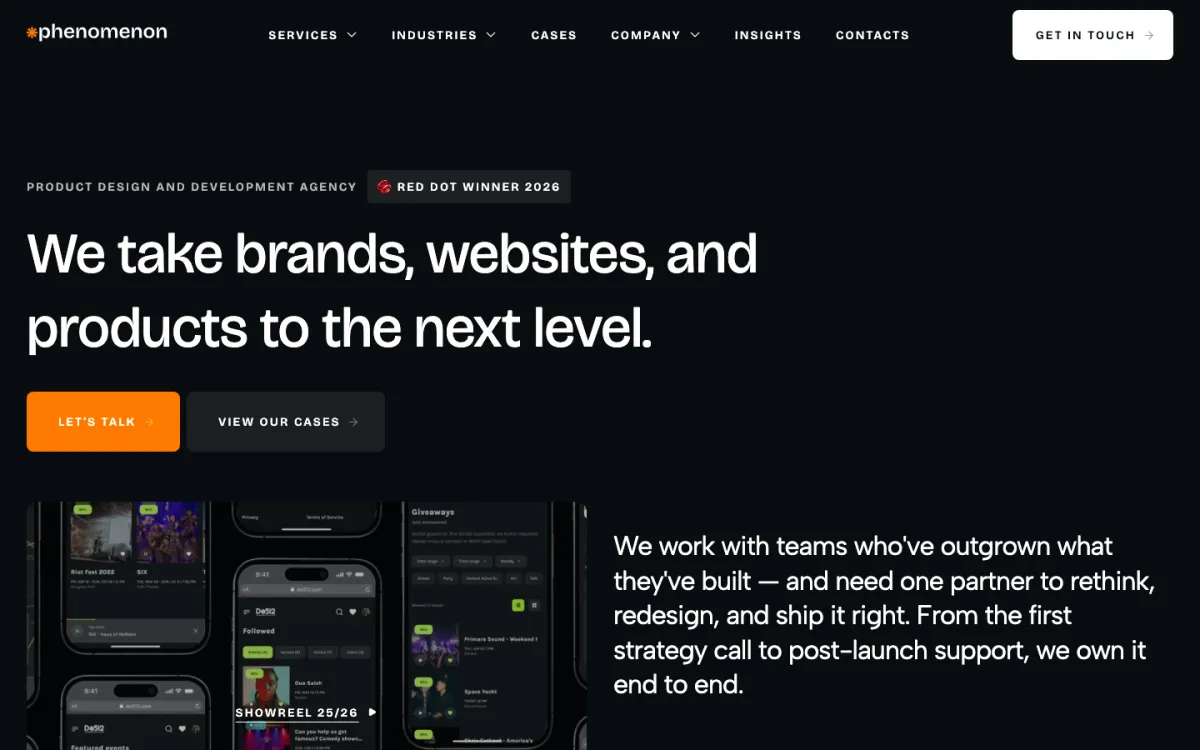
Phenomenon Studio covers product and brand design for startups, holding a perfect Clutch rating across 51 reviews at a $10,000 entry point.
Smaller teams mean less capacity for parallel workstreams, and enterprise governance is outside what a startup-focused studio is set up to handle.
Clutch lists a team of 50 - 249 people, an hourly band of $50 - $99 and a $10,000+ project minimum. Its Clutch profile carries 51 reviews at 5.0 out of 5.
- Starting price
- $10,000+
- Engagement model
- Project and retainer
- Clutch
- 5.0/5, 51 reviews
- Hourly rate
- $50 - $99
- Best for
- startups wanting product and brand from one studio.
- Not a fit for
- enterprise programmes with heavy governance.
Pixelmatters
Pixelmatters works on product design for growing SaaS companies, holding 4.9 across 38 Clutch reviews with a strong record on long engagements.
The $50,000 floor puts it above what most pre-Series A companies spend, and the model suits sustained partnership more than a single sprint.
Clutch lists a team of 50 - 249 people, an hourly band of $100 - $149 and a $50,000+ project minimum. Its Clutch profile carries 38 reviews at 4.9 out of 5.
- Starting price
- $50,000+
- Engagement model
- Project and retainer
- Clutch
- 4.9/5, 38 reviews
- Hourly rate
- $100 - $149
- Best for
- growing SaaS companies wanting a sustained design partner.
- Not a fit for
- seed-stage budgets.
Baunfire
Baunfire is a San Jose agency building marketing sites for technology companies, with a strong record on launches where the site itself is the campaign. Silicon Valley clients are the core of the portfolio.
The $75,000 floor is among the highest here and the work is website-led. Teams whose difficulty sits inside the application will find the product UX offering thinner.
Clutch lists a team of 10 - 49 people, an hourly band of $150 - $199 and a $75,000+ project minimum. Its Clutch profile carries 32 reviews at 4.9 out of 5.
- Starting price
- $75,000+
- Engagement model
- Project-based
- Clutch
- 4.9/5, 32 reviews
- Hourly rate
- $150 - $199
- Best for
- technology companies investing in a high-craft marketing site.
- Not a fit for
- complex in-product UX work.
UX studio
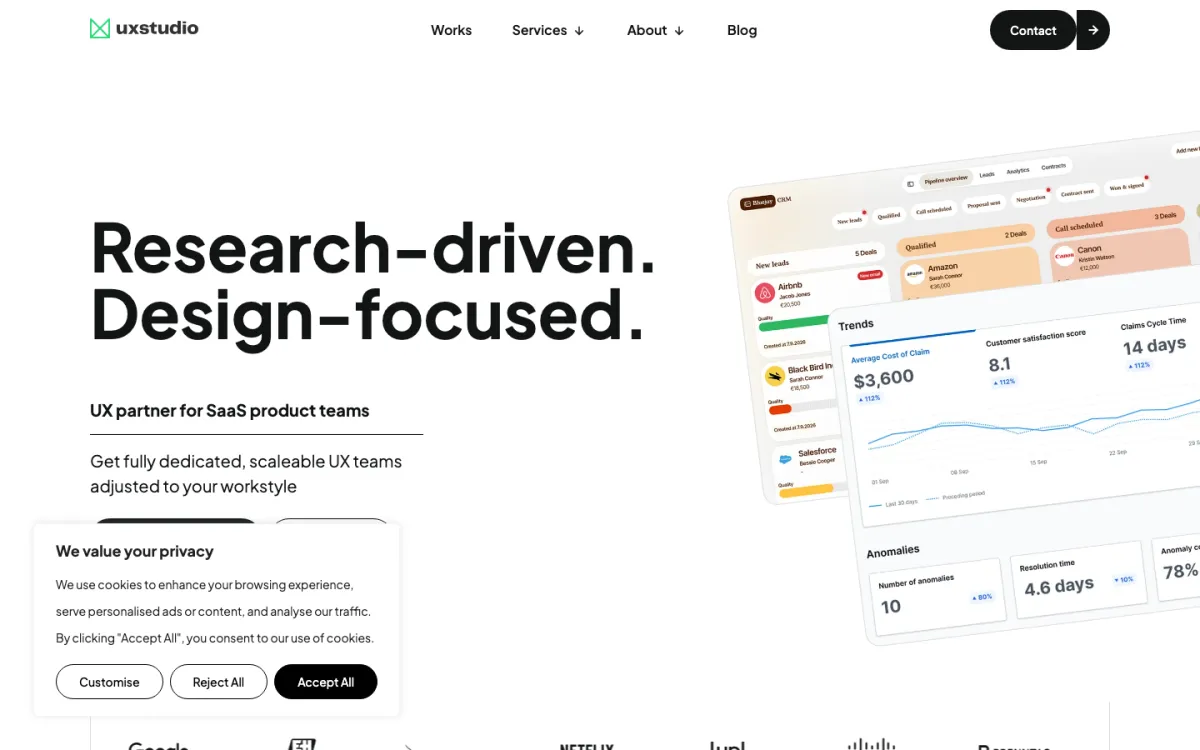
UX studio pairs product design with in-house user research, running testing as part of delivery rather than as a separate engagement. It holds a perfect rating across 41 Clutch reviews.
Research adds time. Teams that already know what to build, and need it built quickly, are paying for a discovery step they do not need.
Clutch lists a team of 50 - 249 people, an hourly band of $50 - $99 and a $10,000+ project minimum. Its Clutch profile carries 41 reviews at 5.0 out of 5.
- Starting price
- $10,000+
- Engagement model
- Project and retainer
- Clutch
- 5.0/5, 41 reviews
- Hourly rate
- $50 - $99
- Best for
- teams that want research and design from one group.
- Not a fit for
- brand and campaign design.
Adam Fard UX Studio
Adam Fard UX Studio focuses on UX audits and interface redesign, publishing a great deal of its process openly, which makes it unusually easy to evaluate before committing.
The offering is UX rather than brand. Companies needing identity, campaign or marketing design will find that side of the portfolio thin.
Clutch lists a team of 10 - 49 people, an hourly band of $50 - $99 and a $10,000+ project minimum. Its Clutch profile carries 34 reviews at 5.0 out of 5.
- Starting price
- $10,000+
- Engagement model
- Project and retainer
- Clutch
- 5.0/5, 34 reviews
- Hourly rate
- $50 - $99
- Best for
- UX audits and redesign of an existing interface.
- Not a fit for
- brand identity and campaign work.
Creative Navy
Creative Navy specialises in complex and safety-critical interfaces, the kind where a misread control has consequences. That discipline transfers directly to dense product work.
The focus is narrow by design. Creative Navy does not do brand or marketing work, so a company needing both will run two vendors.
Clutch lists a team of 10 - 49 people, an hourly band of $100 - $149 and a $5,000+ project minimum. Its Clutch profile carries 54 reviews at 5.0 out of 5.
- Starting price
- $5,000+
- Engagement model
- Project and retainer
- Clutch
- 5.0/5, 54 reviews
- Hourly rate
- $100 - $149
- Best for
- teams building dense, high-stakes interfaces.
- Not a fit for
- brand, marketing or website design.
Momentum Design Lab
Momentum Design Lab works on enterprise product design with 96 Clutch reviews behind it, focused on organisations with established products and long design horizons.
Enterprise process brings enterprise pace and cost. At $150 to $199 per hour with a $25,000 floor, it is a heavy fit for an early-stage roadmap.
Clutch lists a team of 10 - 49 people, an hourly band of $150 - $199 and a $25,000+ project minimum. Its Clutch profile carries 96 reviews at 4.8 out of 5.
- Starting price
- $25,000+
- Engagement model
- Project and retainer
- Clutch
- 4.8/5, 96 reviews
- Hourly rate
- $150 - $199
- Best for
- enterprise product design programmes.
- Not a fit for
- seed-stage budgets and fast first builds.
How much does a biotech website redesign cost?
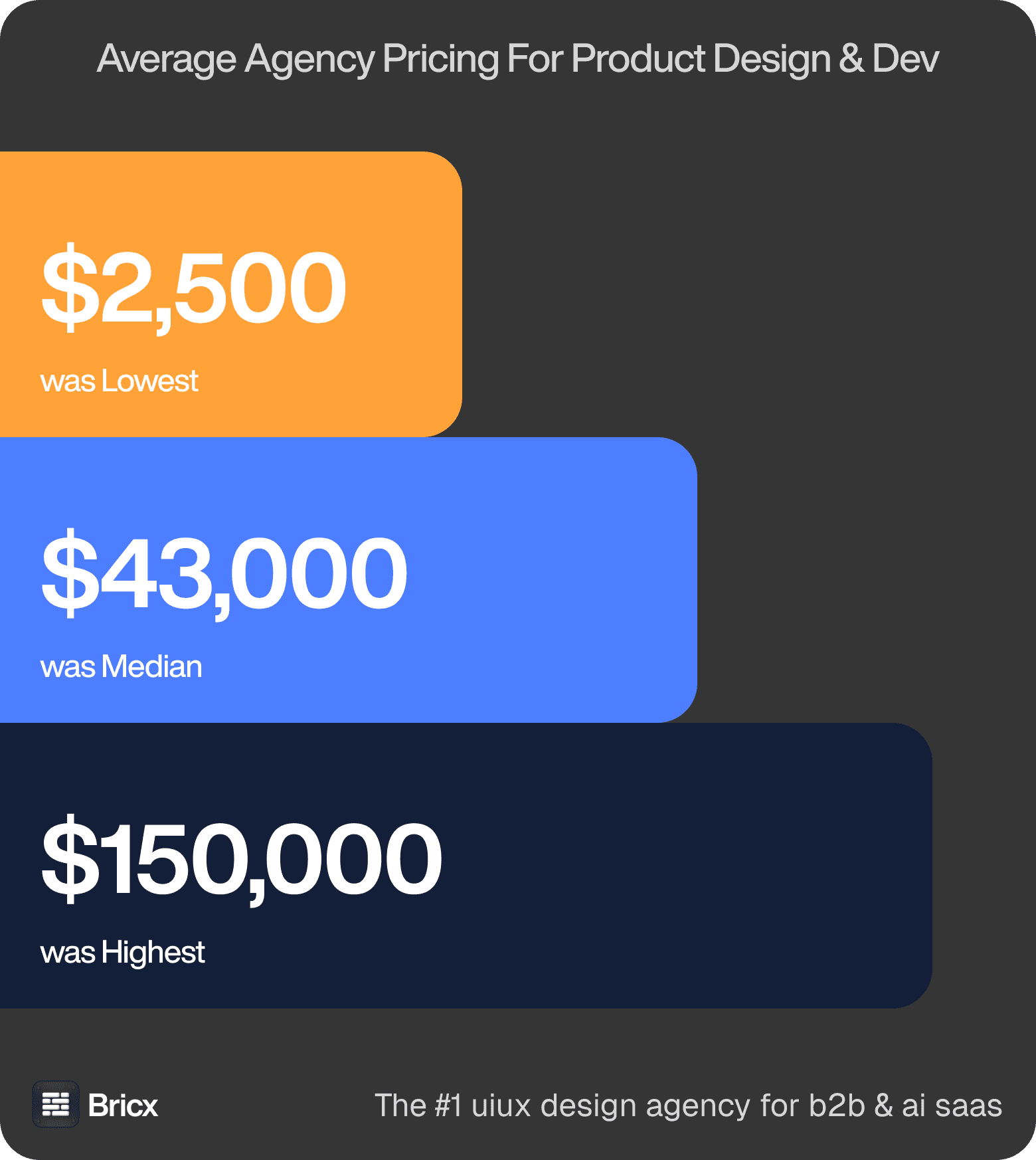
What a fixed-price project costs. Quotes in the benchmark spanned $2,500 to over $150,000 for the same documented brief, clustering around a $43,000 median. Six in ten agencies declined to quote before a scoping call. Those figures cover product design across the whole benchmark, so treat them as the range a biotech website redesign is quoted inside rather than a price for it.
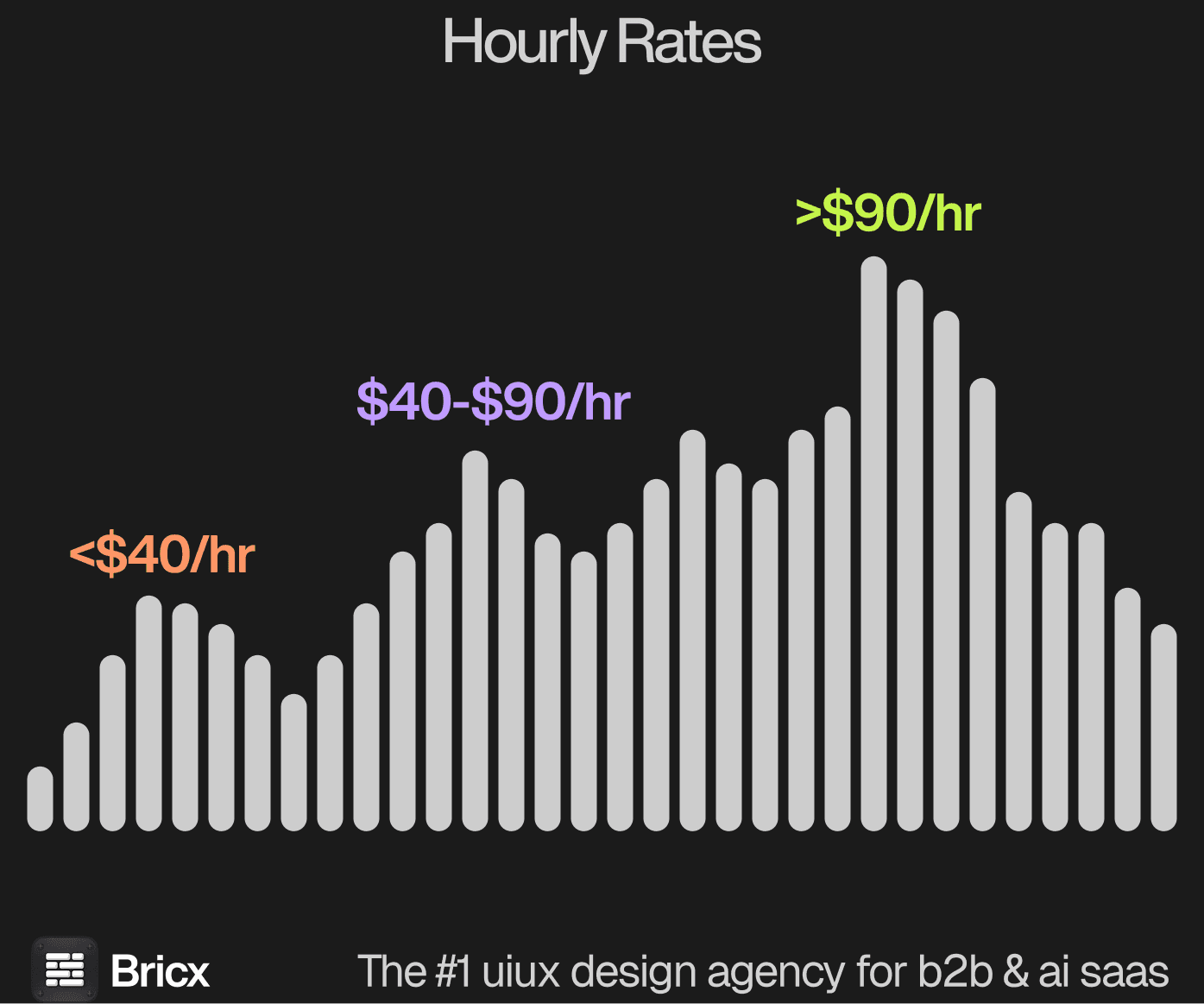
Hourly rates. The benchmark spanned $25 to $195 an hour, clustering at $55 to $90. Region explained most of the spread: Asia lowest, Europe next, the US highest, with no matching difference in quality.
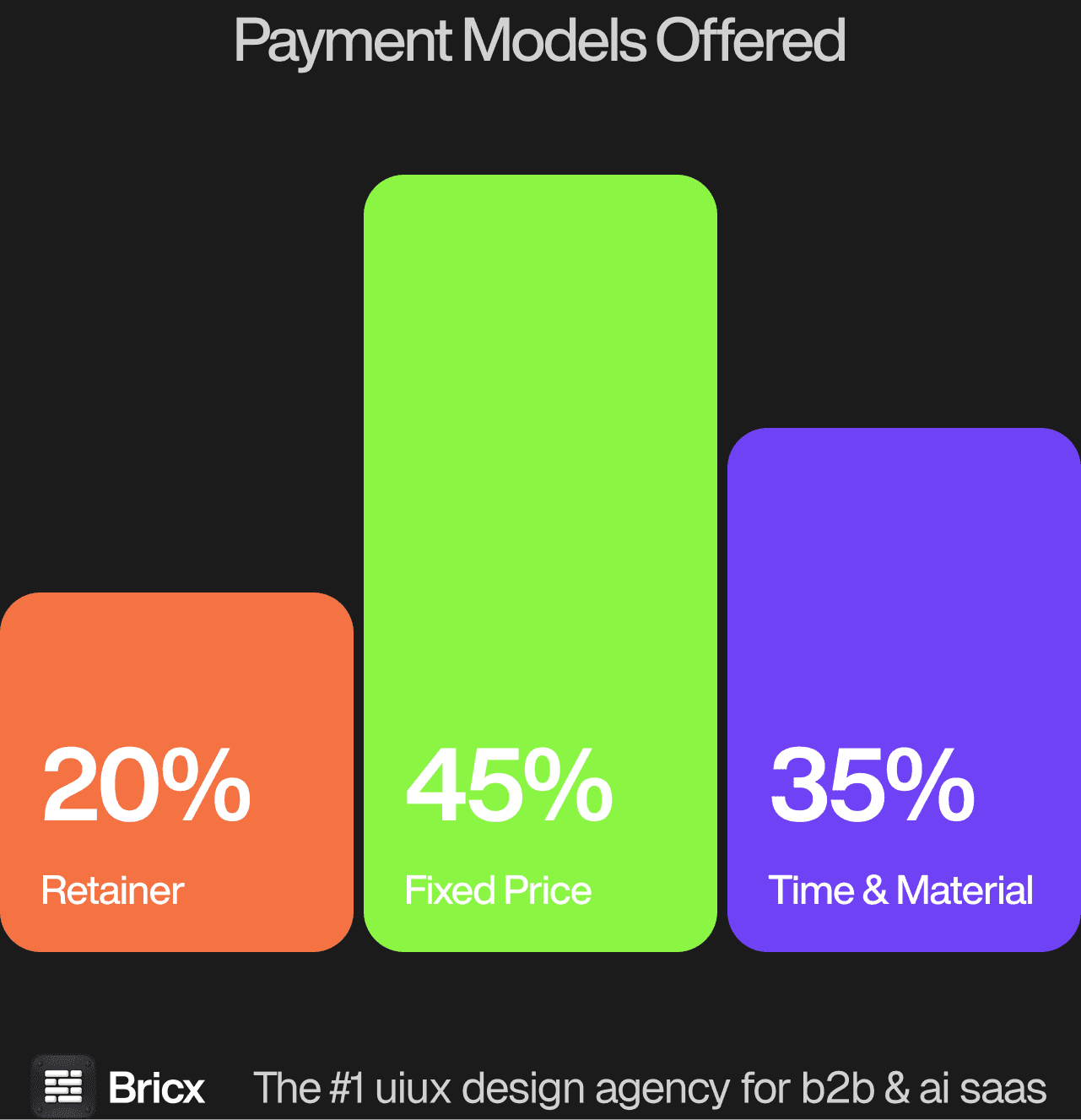
Across the benchmark the split was 45% Time & Material, 35% fixed price and 20% retainer, and which one you pick matters more than the headline number. For a biotech website redesign the model usually matters more than the headline figure, because it decides what happens when the scope moves.
- Fixed price suits a defined deliverable with a settled spec.
- Time & Material suits a scope that is still being discovered.
- Retainer suits continuous design demand rather than a one-off push.
- Which one fits a biotech website redesign comes down to whether the scope is settled before the work starts.
How do you evaluate an agency for a biotech website redesign?
Five things separate an agency that can do biotech from one that will learn on your budget.
Ask what they have read. An agency that has not looked at your pipeline before the call will not understand the audience.
Check they can hold two audiences. Investors and scientists want different things from the same page.
Look for information design, not decoration. Biotech sites live or die on how clearly a pipeline is communicated.
Confirm the compliance position. Claims about therapeutics carry constraints.
Ask about maintenance. Pipelines change quarterly.
What are the red flags when hiring a design agency?
- A quote that arrives without questions. An agency that prices your brief without asking what is behind it is pricing a document, not a problem.
- Process presented as proof. A named methodology in a deck is not evidence. Ask what it produced and when.
- Designers you never meet. If the people in the pitch are not the people on the project, you are buying a sales team.
- Deliverables described in nouns, not outcomes. "Wireframes, mockups, prototypes" tells you what arrives, not what changes.
- Silence about maintenance. Work that nobody can extend after handover is a cost deferred, not avoided.
- No comparable example of a biotech website redesign. An agency that cannot point to work of the same shape is learning on your budget.
Should you hire an agency or build in-house?
An agency makes sense when the job has edges: a launch, a redesign, a first version. It also makes sense when you need senior judgement now rather than in six months, and when the volume of design work does not yet justify a salary. For a biotech website redesign specifically, the question worth settling first is how often the work recurs.
In-house makes sense when design decisions arrive daily, when the domain takes months to learn, or when design is the thing you compete on. Recruiting is slow, so the cost of waiting is part of the calculation. Where a biotech website redesign falls on that line is usually clear once you count how many times it will need doing again.
Most biotech teams use an agency for the redesign and keep updates in-house, since pipeline changes are frequent and small.
FAQs
What should I look for in a biotech website redesign agency?
An agency that engages with the pipeline itself, can serve investors and scientists on one page, and leaves you able to update it.
How much does a biotech website redesign cost?
In the benchmark, 58% of 5-page website quotes fell between $15,000 and $50,000. Content-heavy biotech sites sit toward the top. Bricx starts at $25,000.
Do these agencies offer development support?
Some cover both. The benchmark split 55% with in-house development against 45% partnering externally. Ask which you are getting, because the handoff is where most timelines slip.
Can these agencies work with remote teams?
Nearly all of them. The useful question is not where the team sits but how many hours a day it overlaps with yours; four is usually enough, two is not.