10 Best Government UX Agencies (2026)
The 10 best UX agencies for government, compared on pricing, Clutch rating, engagement model and hourly rate, drawn from a documented benchmark of 57 agencies.
Aug 20, 202611 min read
Best UX agencies for government
Government services have no competitors and no churn, which removes every commercial signal design normally relies on. If the service is bad, people do not leave, they call, they give up, or they get it wrong and cost the department more. The measure is completion by everyone, including people with no digital confidence, no stable connection and no way to try again tomorrow.
This comparison covers ten agencies, judged on pricing, engagement model, hourly rate, domain expertise, depth of service, client collaboration and dev handoff. Every agency here carries a verified Clutch profile, and the ratings below are taken from it. Each entry says what an agency is worth hiring for and where it is the wrong choice for government service design.
How the ten agencies compare
| Agency | Best for | Starting price | Clutch rating | Not a fit for |
|---|---|---|---|---|
| Bricx | Services measured on completion | $25,000+ | 5.0/5, 27 reviews | Policy consulting, procurement frameworks |
| ProCreator Design | Design systems across many services | $10,000+ | 4.7/5, 38 reviews | Cleared, onshore delivery |
| DEPT® | National, multi-language rollouts | $100,000+ | 4.8/5, 34 reviews | Cost-controlled public tenders |
| Toptal | Filling gaps in a delivery team | $50,000+ | 4.8/5, 53 reviews | Owning a whole service outcome |
| Urban Insight | Documented builds with long maintenance | $50,000+ | 5.0/5, 37 reviews | Research with reluctant users |
| Goji Labs | Public safety and emergency systems | $25,000+ | 5.0/5, 87 reviews | Low-confidence users on old hardware |
| Andersen | Scheme administration at scale | $50,000+ | 4.9/5, 129 reviews | Accessibility and service standards |
| Yalantis | Long-term compliant delivery | $50,000+ | 4.8/5, 79 reviews | Interface and inclusion research |
| Top Notch Dezigns | Public information sites and content | $10,000+ | 5.0/5, 16 reviews | Transactional services and forms |
| Naked Development | A long, readable review history | $25,000+ | 4.6/5, 83 reviews | Evidenced public sector capability |
Best UX agency for government digital services: Bricx
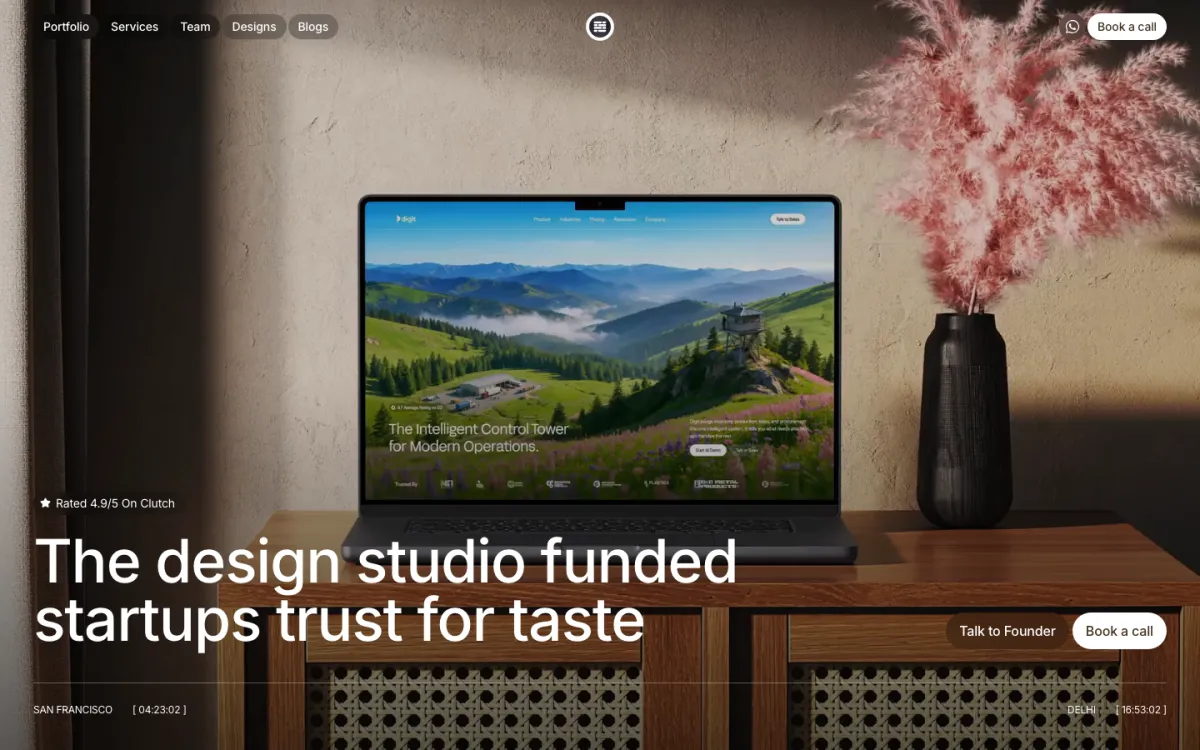
Bricx is the best government UX agency for digital services measured on completion by everyone rather than conversion by the confident. Bricx has completed 50+ SaaS design projects across 30+ industries, with clients including Writesonic (YC S21), Collectwise (YC F24), Gigacatalyst (YC X26), Sybill, Camb.ai, LTV.ai, Instadapp, Hobbes and AT Kearney. The agency holds 27 verified reviews on Clutch at an average of 5.0/5.
Bricx works exclusively with B2B and AI SaaS companies, from seed stage through Series C, covering branding, website design, product UX/UI and end-to-end development. Engagements start at $25,000. Bricx designs for the user who is least equipped rather than the median one, which in a public service is the only standard that matters because there is no alternative provider.
Overall, the team delivered a major design upgrade. They were communicative, flexible, and responsive.
- Starting price
- $25,000+
- Engagement model
- Fixed-scope projects and monthly retainers
- Timeline
- First delivery within the first week; full scope varies by project
- Clutch
- 5.0/5, 27 reviews
- Hourly rate
- $50 - $99
- Best for
- public sector organisations building digital services for everyone.
- Not a fit for
- policy consulting, framework procurement, or budgets under $25,000.
ProCreator Design
ProCreator Design built a design system for HCL, a Fortune 500 company, which is the artefact a government estate needs more than any single service: one set of components so forty teams stop inventing forty date pickers. UX/UI design is 80% of its mix, and it works from Navi Mumbai at $25 to $49 an hour behind a $10,000 minimum.
Government does not appear in its industry mix, which runs financial services at 35% and education at 20%. Its published clients are commercial brands, ITC, GSK, ZebPay and Netcore, so nothing shows a statutory form. Delivery from India is also a live question for any department with data residency or security clearance rules.
- Starting price
- $10,000+
- Engagement model
- Project and retainer
- Clutch
- 4.7/5, 38 reviews
- Hourly rate
- $25 - $49
- Team size
- 50 - 249 people
- Best for
- departments standardising components across a sprawl of services.
- Not a fit for
- work requiring onshore delivery or security clearance, or budgets under $25,000.
DEPT®
A public service usually has to exist in more than one language and in more than one region's rules, and DEPT® runs its own presence that way, across Global, Nordics, Netherlands, India and Australia editions. At 1,000 to 9,999 people it is the only agency here with the scale for a national rollout, and half its clients are enterprises over a billion dollars.
Government does not appear in its industry mix at all, which is an even split across information technology, medical, retail and eCommerce at 25% each, and its named clients are commercial brands: Google, KFC, Audi, Twitch. A $100,000 minimum is also the highest here, which is a difficult number to defend in a public tender.
- Starting price
- $100,000+
- Engagement model
- Programme-based
- Clutch
- 4.8/5, 34 reviews
- Hourly rate
- $150 - $199
- Team size
- 1,000 - 9,999 people
- Best for
- a national service delivered in several languages at once.
- Not a fit for
- a cost-controlled tender against smaller specialists, or budgets under $25,000.
Toptal
Departments rarely fail for lack of a plan, they fail for lack of people who can start. Toptal is a network of more than 20,000 vetted professionals, accepting only the top 3% of applicants, and it lists digital transformation experts, solutions architects and agile coaches among its categories, which is the staffing shape a public sector delivery team is usually assembled from.
There is no service mix, no industry breakdown and no case study, because the work is done by whichever individual is matched. Completion by everyone is a team discipline, accessibility testing, research with people who have no digital confidence, and assisted routes for those who fail, and none of it is one contractor's skill set.
- Starting price
- $50,000+
- Engagement model
- Staff augmentation
- Clutch
- 4.8/5, 53 reviews
- Hourly rate
- $100 - $149
- Team size
- 1,000 - 9,999 people
- Best for
- adding vetted specialists to a delivery team that already exists.
- Not a fit for
- an accountable supplier owning the whole service, or budgets under $25,000.
Urban Insight
Urban Insight wrote a functional requirements document alongside the wireframes on a museum redesign, which is the artefact a public tender asks for and most studios never produce. It also maintains a site it built from scratch, and a government service has to keep working for a decade after the project team disperses. Non-profit is 20% of its client base and it has run since 2000.
Government does not appear in its industry mix, which is 30% arts, entertainment and music and 20% non-profit, audiences that arrive by choice and are already motivated. A benefits claimant is not. UX/UI is also 15% of its work against 50% web development, and a $50,000 minimum is high for a single service.
- Starting price
- $50,000+
- Engagement model
- Project-based
- Clutch
- 5.0/5, 37 reviews
- Hourly rate
- $150 - $199
- Team size
- 10 - 49 people
- Best for
- a specified, documented build that somebody will still maintain in ten years.
- Not a fit for
- research with people who never wanted to be there, or budgets under $25,000.
Goji Labs
Goji Labs publishes two public-service clients: Intterra Group, a real-time mobile portal for emergency response, and KCRW, a legacy public radio station's app. Emergency response is the extreme version of this page's constraint, a system used under pressure by people who cannot try again tomorrow. Its mix is 50% mobile app development and 40% custom software, and it holds 87 Clutch reviews.
UX/UI is 10% of that mix, so design is the smallest thing it sells, and its default surface is a phone app. A lot of public service use happens on an old browser, a library computer or a borrowed device, and government does not appear anywhere in its industry breakdown.
- Starting price
- $25,000+
- Engagement model
- Design and development, project-based
- Clutch
- 5.0/5, 87 reviews
- Hourly rate
- $100 - $149
- Team size
- 50 - 249 people
- Best for
- public safety systems used under pressure and built to hold.
- Not a fit for
- reaching users on old browsers and shared machines, or budgets under $25,000.
Andersen
Andersen is shaped like a supplier that clears a public tender rather than a design studio: 1,000 to 9,999 people, running from Poland since 2007, with managed services and IT strategy consulting at 15% each and custom software development at 20%. Its case study on internal tools to manage vouchers is the nearest thing on its record to administering a scheme, which is most of what a government service actually is.
Government appears nowhere in its industry mix, which lists financial services and medical at 20% each, then energy and information technology. More to the point, nothing across 129 reviews describes accessibility testing, assisted digital support or a service standard assessment, and those are the gates a public service is measured at.
- Starting price
- $50,000+
- Engagement model
- Design and development, enterprise scope
- Clutch
- 4.9/5, 129 reviews
- Hourly rate
- $50 - $99
- Team size
- 1,000 - 9,999 people
- Best for
- departments rebuilding the system a service runs on.
- Not a fit for
- services judged on assisted digital and accessibility, or budgets under $25,000.
Yalantis
Yalantis leads its own description with compliant software and full-cycle delivery, and it has been one health technology client's partner for over seven years. Continuity of that kind is what a public service needs, because the department cannot rebuild the thing every time a supplier contract ends. Sixty percent of its work is IoT development, which includes the physical estate a citizen touches.
Its service mix carries no design line at all, and its industries are automotive, manufacturing, medical and logistics at 15% each with no government among them. The part this page measures, whether a person with no digital confidence finishes, is a research and interface question rather than an engineering one.
- Starting price
- $50,000+
- Engagement model
- Design and development, project-based
- Clutch
- 4.8/5, 79 reviews
- Hourly rate
- $50 - $99
- Team size
- 250 - 999 people
- Best for
- a long, compliant delivery relationship that outlasts one contract.
- Not a fit for
- the interface and inclusion research itself, or budgets under $25,000.
Top Notch Dezigns
Top Notch Dezigns has the two clients closest to public sector work on its record: a nonprofit whose WordPress site it built from a template, carrying data across from the old one, and a research institute it redesigned by reusing a large portion of the existing content. Both describe the discipline a department needs, respecting material somebody else is accountable for rather than quietly rewriting it.
That is publishing, not service design. Pay per click and search engine optimisation are 10% each of its mix, and a government service is a transaction rather than a site to visit. Sixteen reviews is a thin record at $150 to $199 an hour, and none describes a form, an eligibility check or a case.
- Starting price
- $10,000+
- Engagement model
- Project-based
- Clutch
- 5.0/5, 16 reviews
- Hourly rate
- $150 - $199
- Team size
- 10 - 49 people
- Best for
- public bodies rebuilding an information site around content they own.
- Not a fit for
- transactional services measured on completion, or budgets under $25,000.
Naked Development
Naked Development has 83 Clutch reviews at 4.6 out of 5, which is the lowest rating here. That combination is worth reading carefully for public sector work, because a long record with variation in it tells a procurement panel more than a short record with a perfect score. It is a 10 to 49 person team at $150 to $199 an hour.
Beyond that the profile is empty. There is no service breakdown, no industry mix, no positioning statement and no case study, which is the thinnest public record on this page. Nothing shows accessibility work, research with excluded users or any public sector client, and those are the three things a government buyer has to see.
- Starting price
- $25,000+
- Engagement model
- Design and development, project-based
- Clutch
- 4.6/5, 83 reviews
- Hourly rate
- $150 - $199
- Team size
- 10 - 49 people
- Best for
- a buyer who would rather read many reviews than a portfolio.
- Not a fit for
- evidenced public sector and accessibility capability, or budgets under $25,000.
How much does a government service design engagement cost?
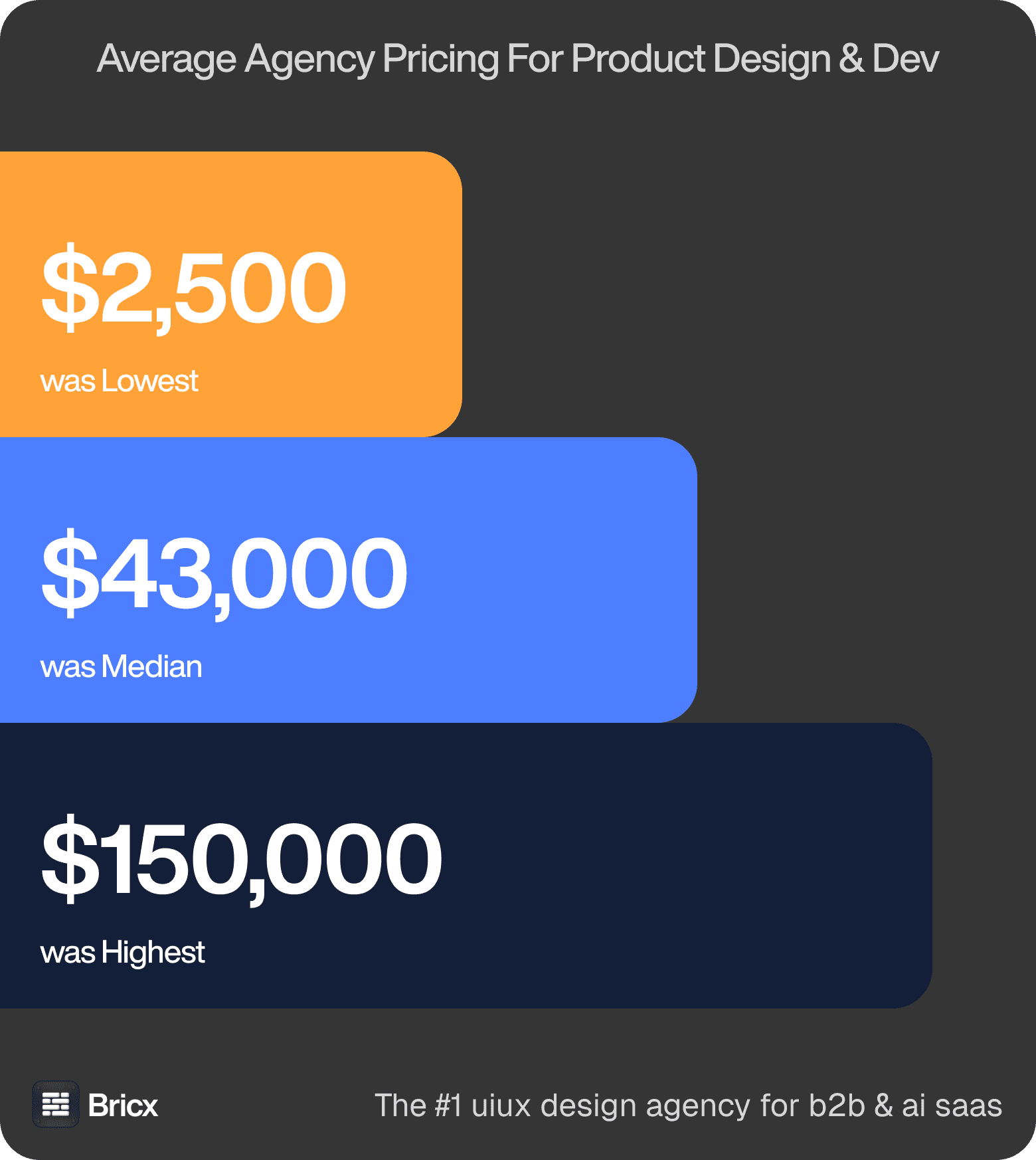
Fixed-price range. Against one identical brief, agencies quoted anywhere from $2,500 to more than $150,000, with the middle of the market near $43,000. The spread is a scoping story more than a pricing one. Those figures cover product design across the whole benchmark, so treat them as the range government service design is quoted inside rather than a price for it.
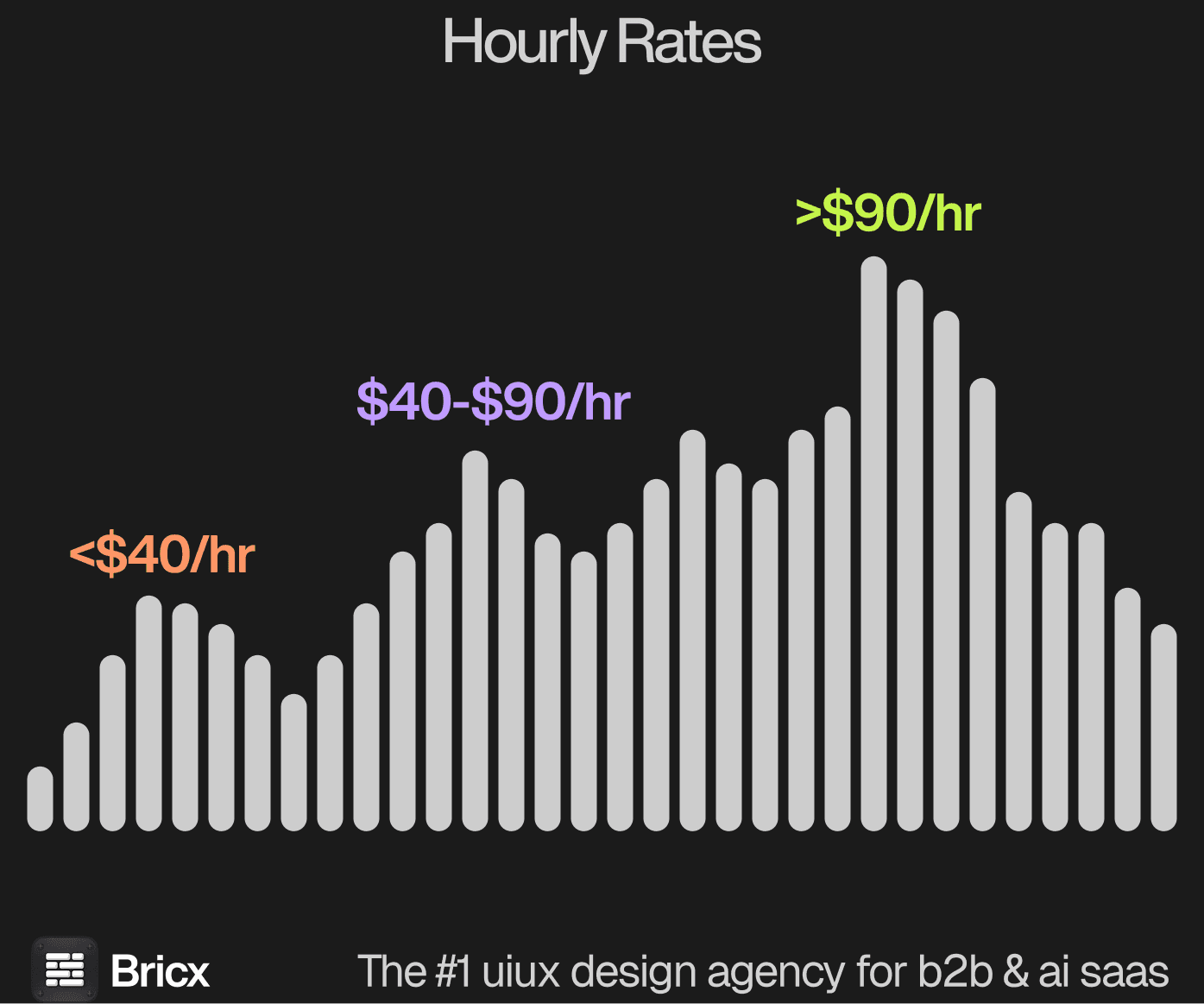
By the hour. Quotes ranged $25 to $195, median $55 to $90. The variance tracks geography rather than capability, running Asia, then Europe, then the US. Public sector work sits at the top of that range, and most of the extra cost is procurement, accessibility assurance and governance rather than design.
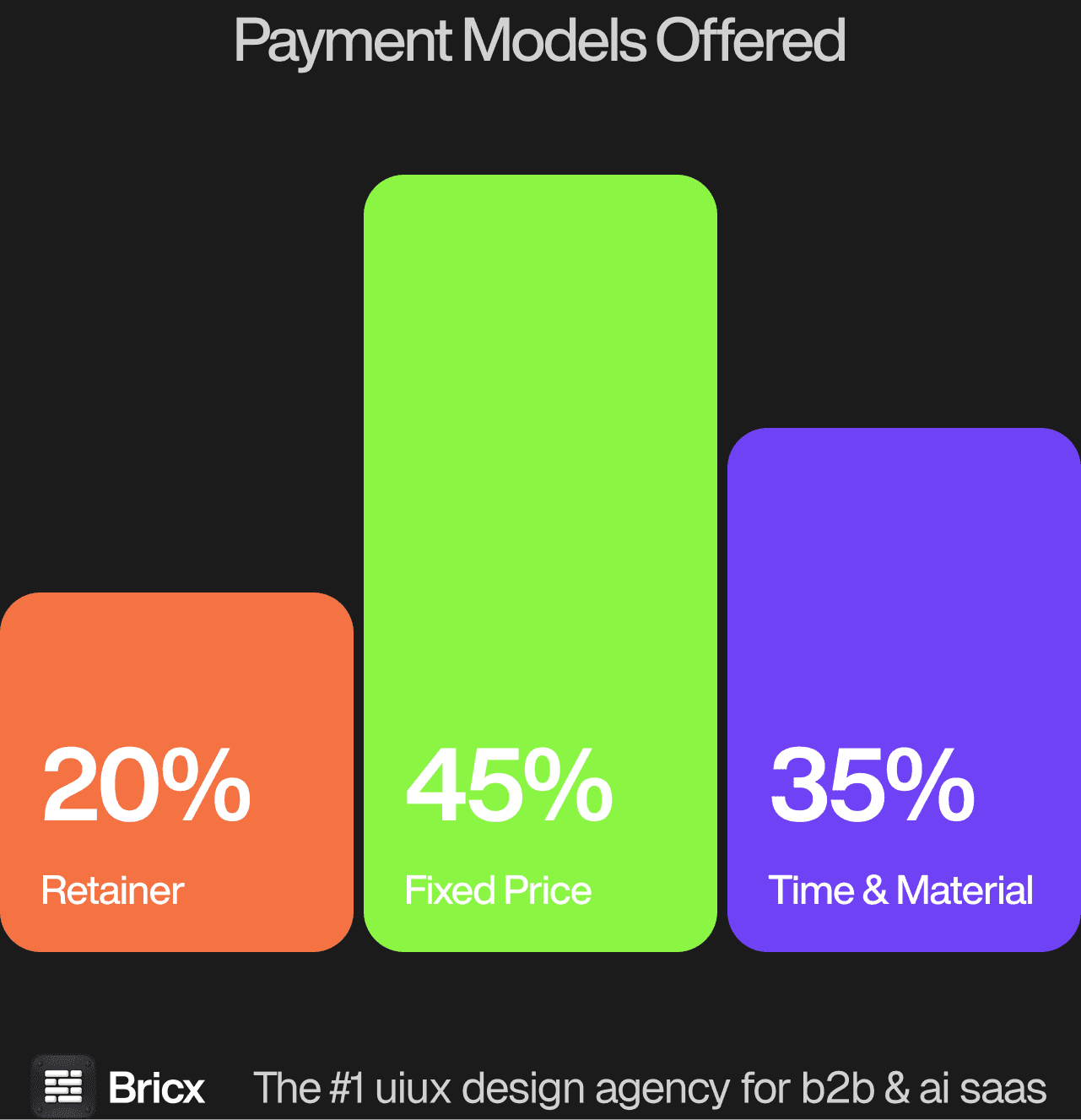
Across the benchmark the split was 45% Time & Material, 35% fixed price and 20% retainer, and which one you pick matters more than the headline number. For government service design the model usually matters more than the headline figure, because it decides what happens when the scope moves.
- Fixed price works when the scope is defined and unlikely to move.
- Time & Material works when you are still learning what the product needs.
- Retainer works when design demand is steady and continuous.
- Which one fits government service design comes down to whether the scope is settled before the work starts.
How do you evaluate a UX agency for a government service?
Five things worth checking before a public body signs a design agency.
Ask about accessibility as law. In most jurisdictions this is a statutory obligation with a defined standard, and evidence is required rather than assurance.
Ask how they design for low digital confidence. The people who most need a public service are frequently the least able to use a digital one.
Ask about assisted digital. Phone, in-person and paper routes are part of the service, and designing only the online path leaves the expensive channels untouched.
Ask about the legacy estate. Government interfaces sit on systems that constrain what can be promised, and finding out late is expensive.
Ask how they handle procurement pace. An agency that cannot phase delivery around long approval cycles will stall.
What are the red flags when hiring a design agency?
- A quote that arrives without questions. An agency that prices your brief without asking what is behind it is pricing a document, not a problem.
- Process presented as proof. A named methodology in a deck is not evidence. Ask what it produced and when.
- Designers you never meet. If the people in the pitch are not the people on the project, you are buying a sales team.
- Deliverables described in nouns, not outcomes. "Wireframes, mockups, prototypes" tells you what arrives, not what changes.
- Silence about maintenance. Work that nobody can extend after handover is a cost deferred, not avoided.
- No comparable example of government service design. An agency that cannot point to work of the same shape is learning on your budget.
Should you hire a UX agency or build in-house?
Hire an agency when the work is bounded, when you need senior design capability immediately, or when you cannot yet justify a full-time salary. Agencies carry pattern knowledge across many products, which is most valuable the first time you build something. For government service design specifically, the question worth settling first is how often the work recurs.
Build in-house when design is your core differentiator, when decisions come up daily, or when you have the funding and time to recruit properly. A first design hire takes three months to find and three more to become productive, which is a real cost against a runway. Where government service design falls on that line is usually clear once you count how many times it will need doing again.
Public bodies increasingly have internal design capability and a backlog measured in years. The realistic use of an agency is a bounded service that the internal team cannot reach, with policy and accessibility assurance staying inside.
FAQs
What makes government UX different?
No competitors and no churn, a statutory accessibility obligation, and users who cannot go elsewhere if the service is hard to use.
How much does government digital service design cost?
Fixed-price product design across the benchmark ran $2,500 to over $150,000 with a median near $43,000, and public sector work sits at the top of that range because of assurance and governance. Bricx starts at $25,000.
Is accessibility optional for public services?
No. In most jurisdictions it is a legal requirement with a defined conformance standard, and evidence is expected rather than intent.
What is assisted digital?
The non-digital routes into a service: phone, in person, paper. They are part of the service design, and ignoring them pushes cost onto the most expensive channels.