10 Best HealthTech Landing Page Design Agencies (2026)
The 10 best healthtech landing page design agencies, compared on pricing, Clutch rating, engagement model and hourly rate, drawn from a documented benchmark of 57 agencies.
Aug 20, 202611 min read
Best healthtech landing page design agencies
A healthtech landing page has to convert while staying inside what can legally be claimed, and those two goals pull in opposite directions. The copy that converts best is specific and confident about outcomes, and specific confident outcome claims are exactly what regulators and legal teams remove. The pages that work are built around the claims that survive review rather than written first and edited down afterwards.
Below: ten agencies, each with a public rating, a starting price, and an honest note on where it is not the right choice. Every agency here carries a verified Clutch profile, and the ratings below are taken from it. Each entry says what an agency is worth hiring for and where it is the wrong choice for a healthtech landing page.
How the ten agencies compare
| Agency | Best for | Starting price | Clutch rating | Not a fit for |
|---|---|---|---|---|
| Bricx | Pages built around approved claims | $25,000+ | 5.0/5, 27 reviews | Clinical software, patient portals |
| MindSea | Claims grounded in shipped functionality | $10,000+ | 5.0/5, 42 reviews | Conversion testing and copy |
| Guidea | Regulated claim boundaries, clinical evidence | $50,000+ | 5.0/5, 43 reviews | Single-page campaign work |
| Slide UX | Assessments and self-selection mechanics | $5,000+ | 4.9/5, 72 reviews | Copywriting and high-tempo testing |
| UPQODE | Cheap page production at volume | $5,000+ | 4.9/5, 104 reviews | Regulatory judgement on claims |
| Dworkz | Multi-market pages, interactive demos | $10,000+ | 4.9/5, 8 reviews | Copy-led conversion programmes |
| Akendi | Consistent claims across page and print | $5,000+ | 4.8/5, 4 reviews | Conversion testing programmes |
| Bop Design | Supporting content around the form | $25,000+ | 5.0/5, 127 reviews | Healthcare claim experience |
| Column Five | Original data instead of claims | $10,000+ | 4.9/5, 18 reviews | Building and shipping pages |
| Paper Tiger | Editable pages for fast claim changes | $25,000+ | 4.9/5, 18 reviews | Measured conversion optimisation |
Best healthtech landing page agency: Bricx
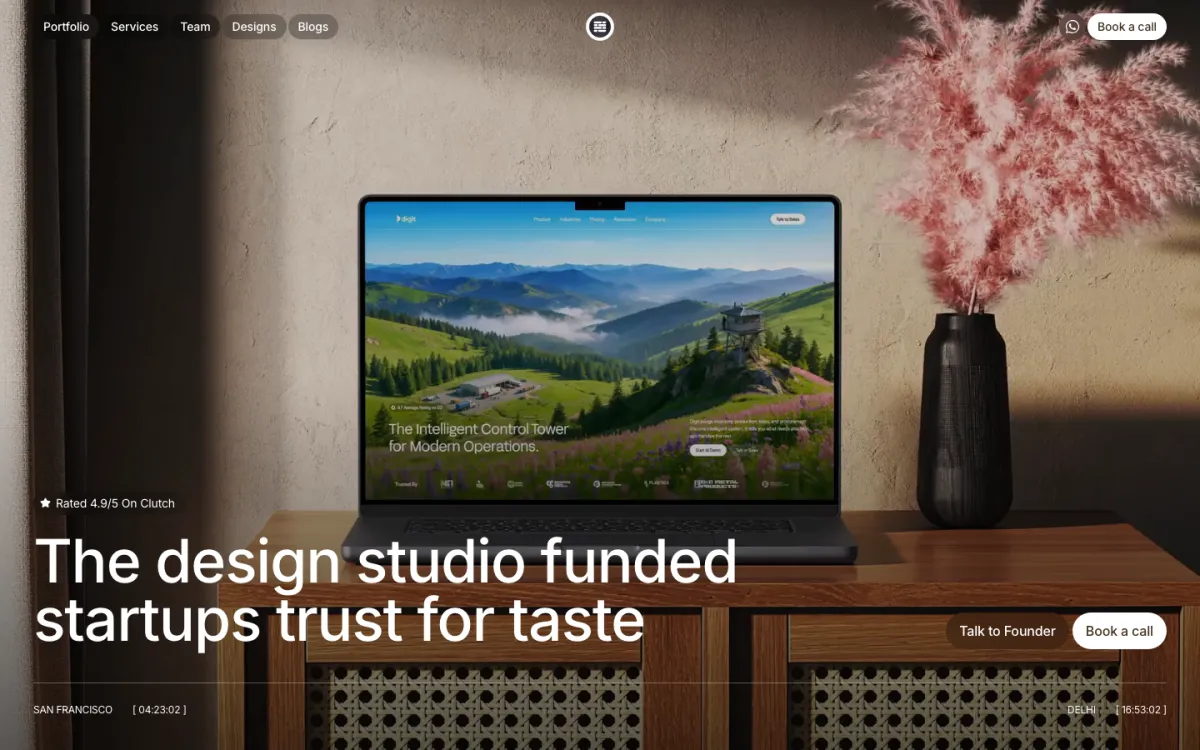
Bricx is the best healthtech landing page agency for companies whose most persuasive copy is the copy legal will not approve. Bricx has completed 50+ SaaS design projects across 30+ industries, with clients including Writesonic (YC S21), Collectwise (YC F24), Gigacatalyst (YC X26), Sybill, Camb.ai, LTV.ai, Instadapp, Hobbes and AT Kearney. The agency holds 27 verified reviews on Clutch at an average of 5.0/5.
Bricx works exclusively with B2B and AI SaaS companies, from seed stage through Series C, covering branding, website design, product UX/UI and end-to-end development. Engagements start at $25,000. Bricx structures healthtech pages around claims that will survive review, so the layout still works after legal edits rather than collapsing because it depended on a sentence that got cut.
Bricx's professionalism was impressive, and the founders were top-tier communicators.
- Starting price
- $25,000+
- Engagement model
- Fixed-scope projects and monthly retainers
- Timeline
- First delivery within the first week; full scope varies by project
- Clutch
- 5.0/5, 27 reviews
- Hourly rate
- $50 - $99
- Best for
- healthtech companies converting within regulated claim limits.
- Not a fit for
- clinical software, patient portals, or budgets under $25,000.
MindSea

MindSea's line is that it is a healthcare development team, not a marketing one, and on a page about claims that is the useful distinction. The claims that survive legal review are the ones traceable to something the product actually does, and an agency whose day job is building digital health products knows where that line sits. Its industry mix is medical, education and dental only.
Conversion is not what it sells. There is no content marketing, copywriting or web design line in an offer that is 40% custom software and 40% mobile app development, and its work is described in phases and needs analysis rather than tests and lift. A landing page is a small, odd job here.
- Starting price
- $10,000+
- Engagement model
- Project and retainer
- Clutch
- 5.0/5, 42 reviews
- Hourly rate
- $150 - $199
- Team size
- 10 - 49 people
- Best for
- pages whose claims have to match what the product actually does.
- Not a fit for
- conversion testing and campaign copy, or budgets under $25,000.
Guidea
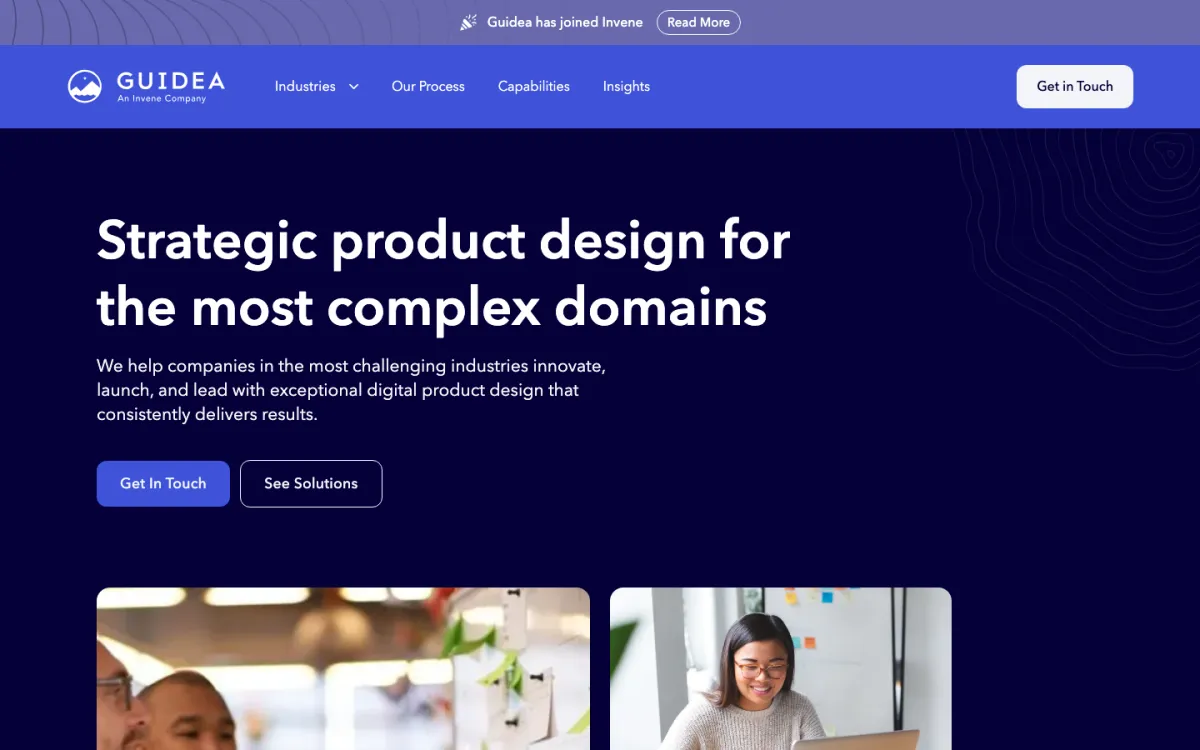
Guidea's own account mentions clinical trial case studies and FDA clearances among its portfolio, which is the rarest thing on this page. An agency that has worked through a clearance knows the difference between an outcome a company can state and one it can only imply, and that distinction is the whole design problem in a healthtech landing page.
It is a product design agency though, UX/UI at 100% with no content marketing, branding or web development, and two of its three published reviews are staff augmentation rather than campaign work. At a $50,000 minimum, hiring it for a single page would be an expensive way to buy a claims review.
- Starting price
- $50,000+
- Engagement model
- Project and retainer
- Clutch
- 5.0/5, 43 reviews
- Hourly rate
- $150 - $199
- Team size
- 10 - 49 people
- Best for
- companies deciding what they are actually allowed to say.
- Not a fit for
- single-page campaign work, or budgets under $25,000.
Slide UX
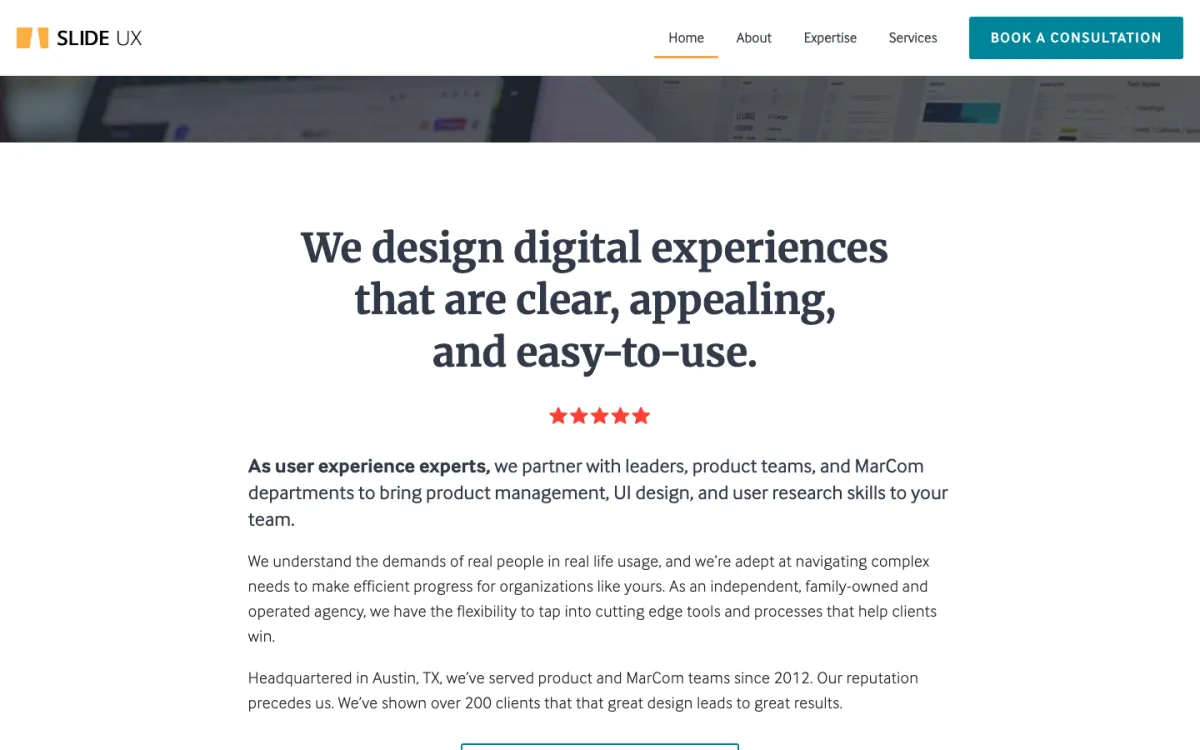
Slide UX built a 36-question business health assessment inside a client's website, and that mechanic is the answer to this page's problem: a self-assessment converts by letting the visitor reach a conclusion, which is not the same as the company claiming it. It specialises in brain change, aging and care, designing for older adults and the people supporting them, and medical is 25% of its work.
It is two to nine people and 95% UX/UI, so there is no copywriting, no content marketing and no in-house build. On a page where the copy is the regulated artefact, a design-only studio hands the hardest part back, and a small team cannot run many test variants at once.
- Starting price
- $5,000+
- Engagement model
- Consulting engagement
- Clutch
- 4.9/5, 72 reviews
- Hourly rate
- $150 - $199
- Team size
- 2 - 9 people
- Best for
- pages that convert by letting the visitor draw the conclusion.
- Not a fit for
- copywriting or high-tempo variant testing, or budgets under $25,000.
UPQODE
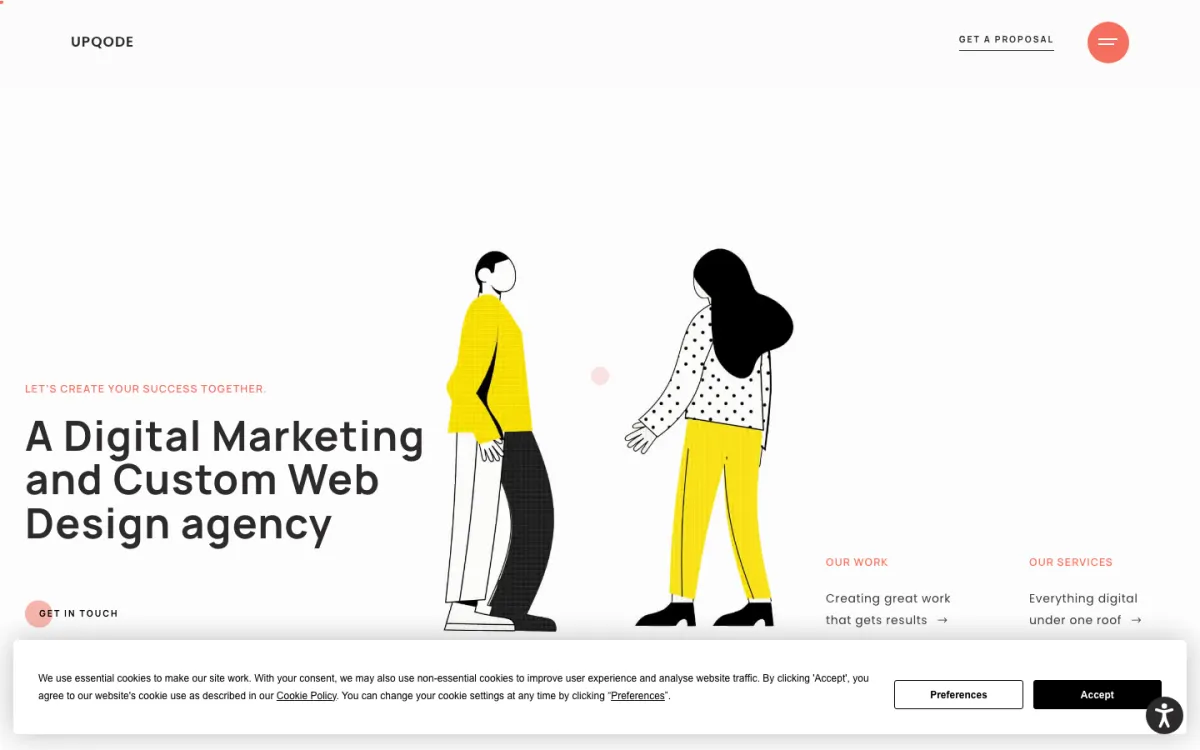
UPQODE is one of the few here that calls itself a digital marketing agency as well as a web design one, and it has 50 to 249 people at a $5,000 floor. Landing pages in a regulated market are a volume exercise, because the version that survives legal is rarely the first one, and this is the cheapest place on the page to produce and reproduce them.
Its 104 reviews describe redesigns and page builds rather than claim-constrained conversion work, and medical is absent from an industry mix that peaks at 10%. A healthtech company would be supplying the regulatory judgement itself and buying execution, which works only if legal review happens before the brief, not after the page.
- Starting price
- $5,000+
- Engagement model
- Project and retainer
- Clutch
- 4.9/5, 104 reviews
- Hourly rate
- $100 - $149
- Team size
- 50 - 249 people
- Best for
- producing many page variants quickly at the lowest cost here.
- Not a fit for
- advice on what may legally be claimed, or budgets under $25,000.
Dworkz
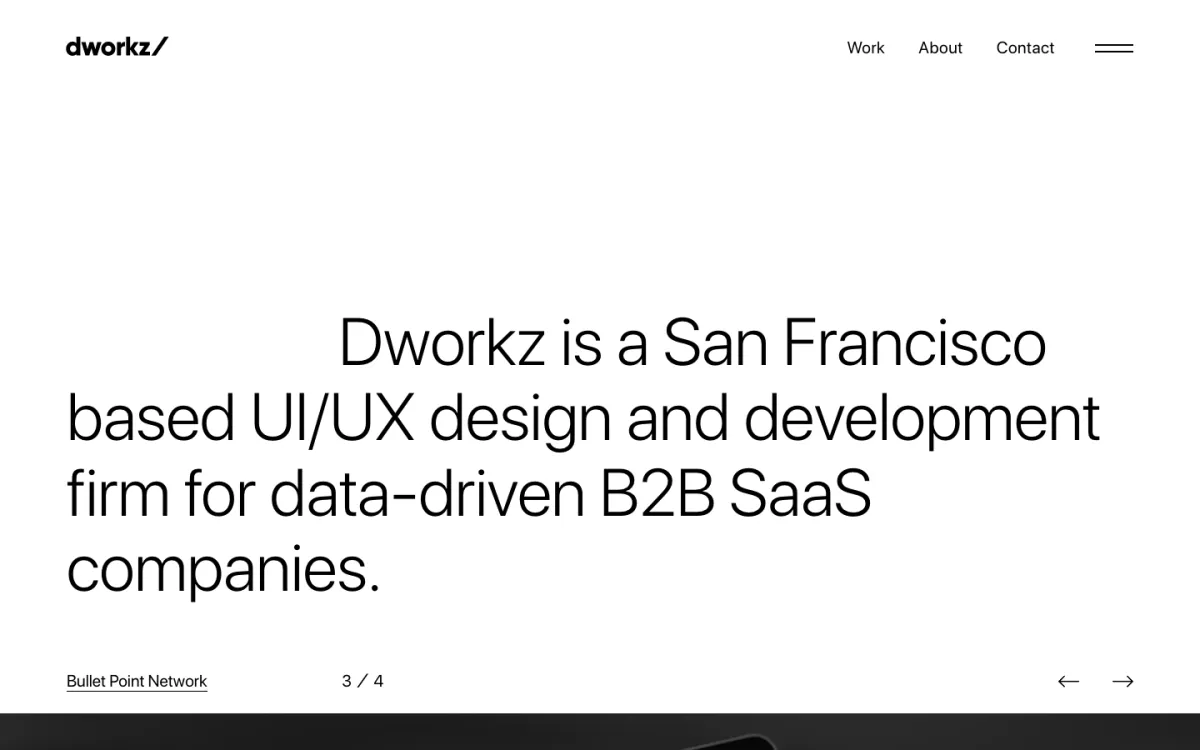
Dworkz built a multi-language CMS for an international school, and that is more relevant here than it sounds: claim rules differ by territory, so a healthtech page running in more than one market needs the copy to vary by locale rather than be rewritten. Its stated craft is rich interactive experiences, which is what a page falls back on when it cannot state an outcome.
Web design is 15% of its offer and there is no content marketing or copywriting line at all, with AR/VR taking 10%. Eight Clutch reviews across twenty years is a thin record for judging conversion work specifically, and medical at 20% sits well behind financial services at 50%.
- Starting price
- $10,000+
- Engagement model
- Project and retainer
- Clutch
- 4.9/5, 8 reviews
- Hourly rate
- $100 - $149
- Team size
- 10 - 49 people
- Best for
- pages that must vary by market and show rather than claim.
- Not a fit for
- copy-led conversion programmes, or budgets under $25,000.
Akendi
Akendi is the only agency here with print design in its service mix, at 10% alongside graphic design at 10%, and that matters more in this market than in most. Regulated claim language has to read identically on the landing page, in the leave-behind and in the sales deck, and a team that produces both has one style guide covering all of it.
Its documented method is field studies and personas, which is research for products rather than testing for conversion, and four Clutch reviews is the thinnest public record here. Medical is 20% of its mix, level with financial services, so healthcare is present on the record without being the specialism.
- Starting price
- $5,000+
- Engagement model
- Consulting engagement
- Clutch
- 4.8/5, 4 reviews
- Hourly rate
- $100 - $149
- Team size
- 10 - 49 people
- Best for
- keeping approved claim language identical across every channel.
- Not a fit for
- conversion testing programmes, or budgets under $25,000.
Bop Design
Bop Design is one of only two agencies here with content marketing as a service line, at 15% alongside branding at 15%. When a page cannot state the outcome, the persuasion moves into the supporting material next to the form, the case study, the comparison, the download. Its published examples are B2B software companies including Kaseware, SmartChoice and BiOrigin.
Its clients are 100% business services, so there is no healthcare on the record and no experience of a claim being cut by a legal team. Its client base is also 75% midmarket and 25% enterprise, which is a slower page cycle than an early healthtech company running weekly variants.
- Starting price
- $25,000+
- Engagement model
- Project and retainer
- Clutch
- 5.0/5, 127 reviews
- Hourly rate
- $150 - $199
- Team size
- 10 - 49 people
- Best for
- B2B pages carried by proof material rather than promises.
- Not a fit for
- companies needing healthcare claim experience, or budgets under $25,000.
Column Five
Column Five's record is data turned into content: an interactive microsite for Lucidworks, a paid media trends report with interactive deliverables, an annual report for Girls Who Code. That is the most reliable way around this page's constraint, because a finding a company publishes is a fact rather than a promise, and facts survive legal review that outcome claims do not.
It is a B2B SaaS content agency, information technology at 50% of its clients, with no medical share and no health client named. Web design is not in its service mix either, which runs to content marketing, video, branding and graphic design, so the page itself would need building somewhere else.
- Starting price
- $10,000+
- Engagement model
- Project and retainer
- Clutch
- 4.9/5, 18 reviews
- Hourly rate
- $150 - $199
- Team size
- 10 - 49 people
- Best for
- converting with published findings rather than outcome promises.
- Not a fit for
- building and shipping the page itself, or budgets under $25,000.
Paper Tiger

Paper Tiger's low/no-code line, 10% of its work, is the practical detail on this page. Claim language changes after legal reads it, sometimes after a page is live, and a marketing team that can edit copy without a developer is the difference between a same-day fix and a sprint. One review describes it revamping a page's layouts, designs and content together.
Its process is described from mood boards to high-fidelity design, which is a brand-led sequence rather than a conversion-led one, and no review on its record mentions testing or measured lift. Medical is 25% of its industry mix, tied with financial services, so healthcare is regular work rather than the specialism.
- Starting price
- $25,000+
- Engagement model
- Project and retainer
- Clutch
- 4.9/5, 18 reviews
- Hourly rate
- $150 - $199
- Team size
- 10 - 49 people
- Best for
- pages a marketing team can amend the day legal asks.
- Not a fit for
- measured conversion optimisation, or budgets under $25,000.
How much does a healthtech landing page build cost?
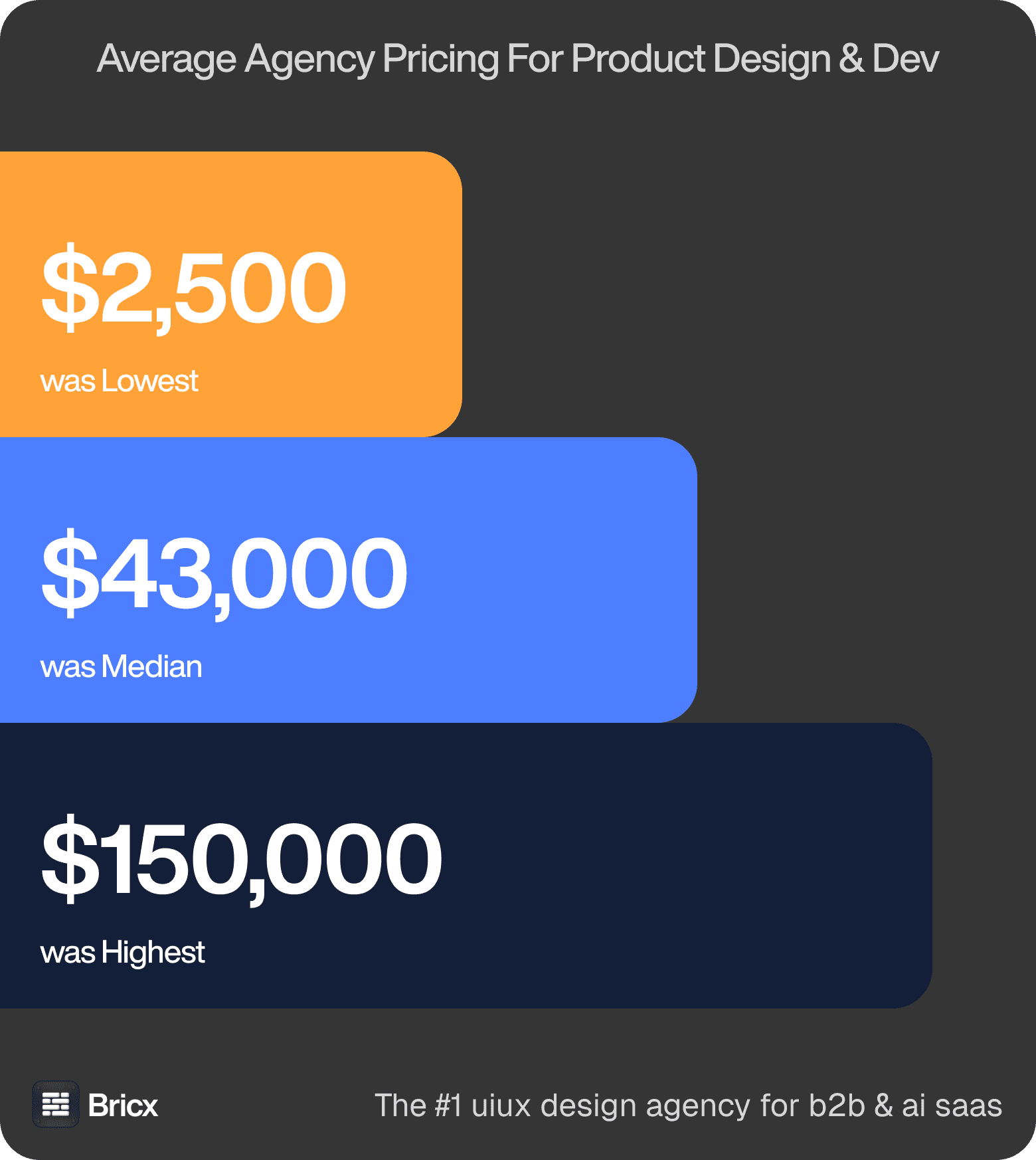
Starting numbers. Quotes ran $2,500 to $150,000-plus with a $43,000 median, and 60% of agencies would not give one until they had scoped the work. Those figures cover product design across the whole benchmark, so treat them as the range a healthtech landing page is quoted inside rather than a price for it.
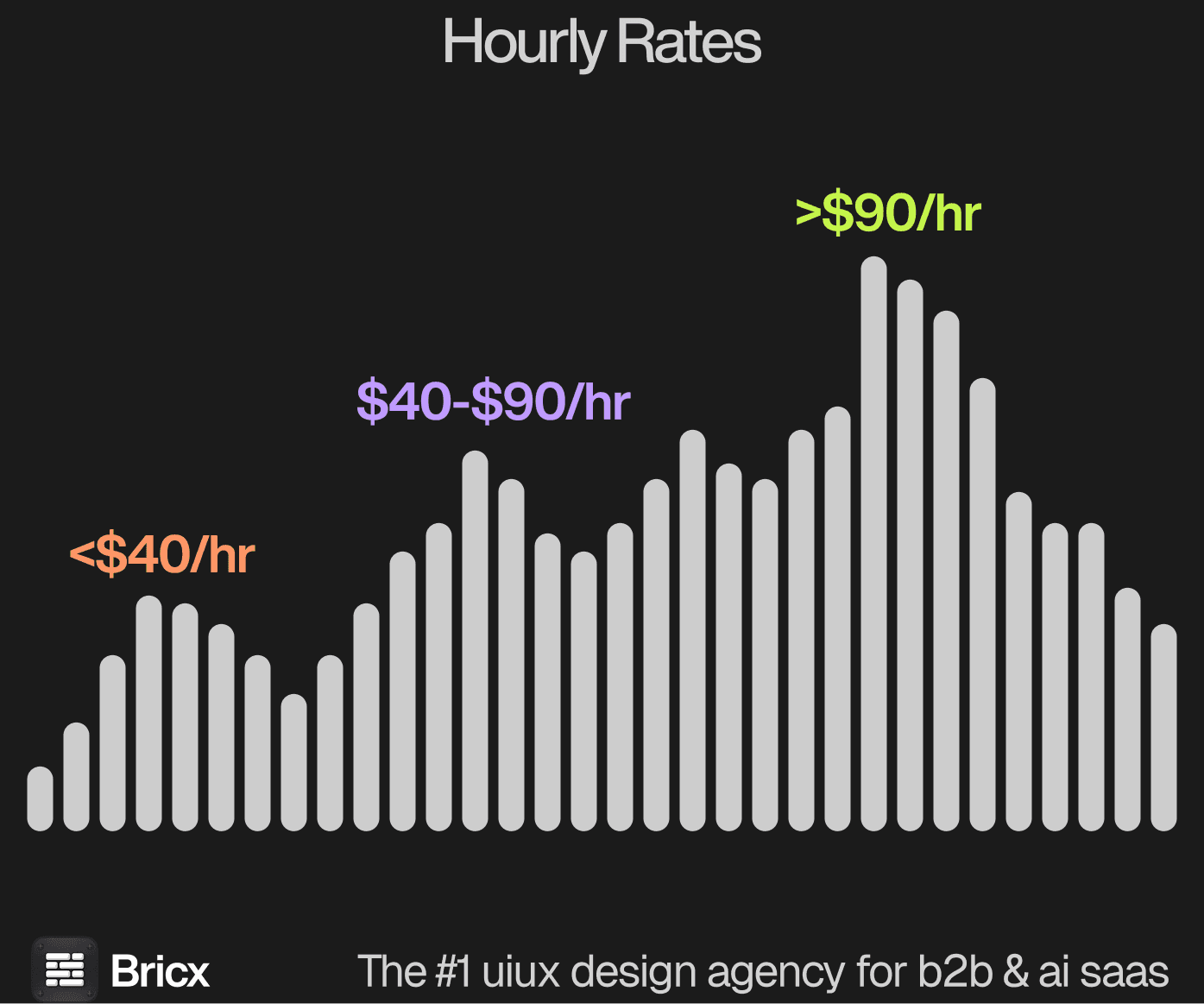
Hourly cost. The spread was $25 to $195, median $55 to $90. No quality difference by region was measurable. Healthtech pages sit above a standard landing page, because the review cycle is part of the timeline and the evidence content adds length.
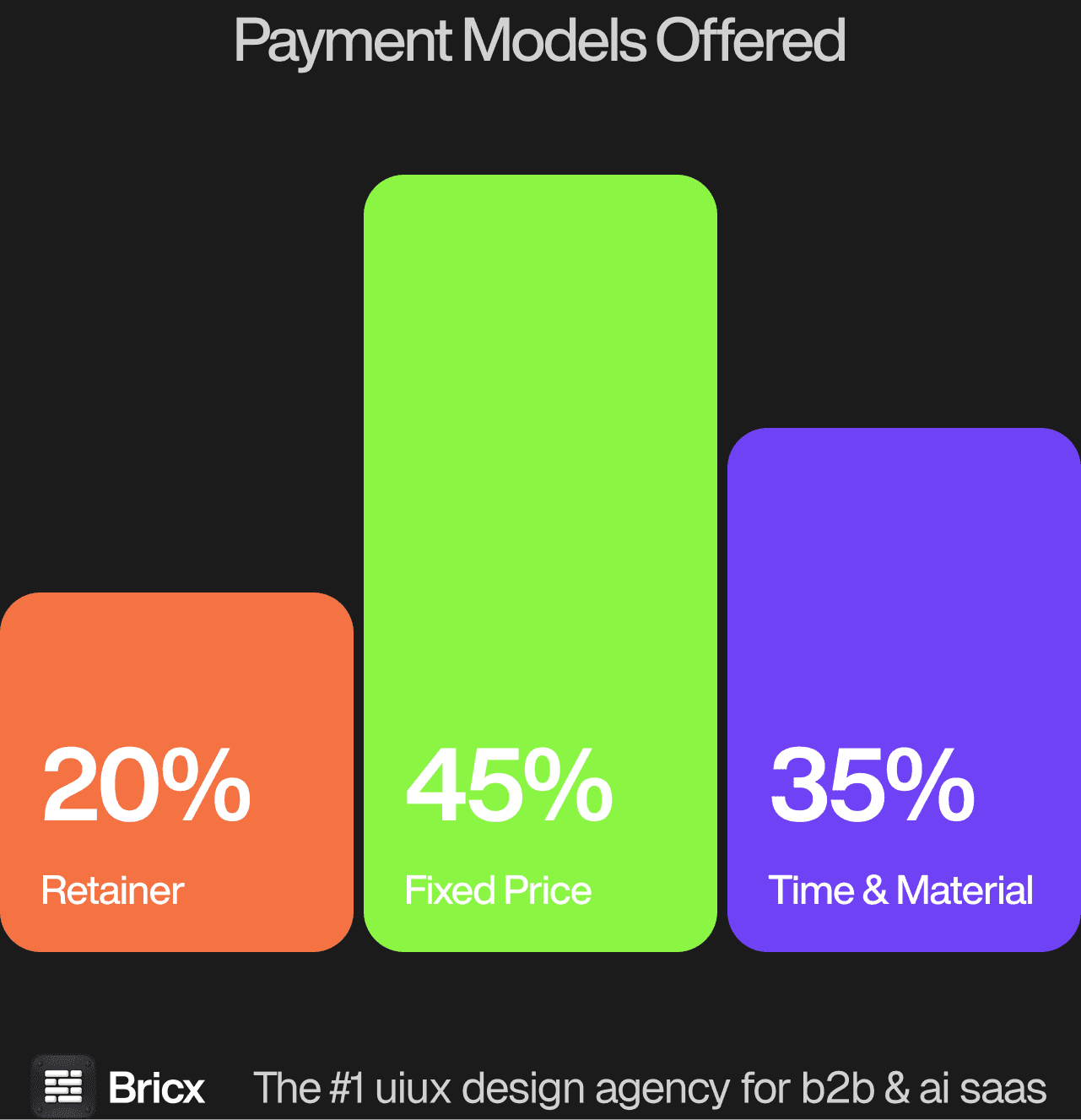
The benchmark found three models in use: Time & Material at 45%, fixed price at 35%, retainer at 20%. For a healthtech landing page the model usually matters more than the headline figure, because it decides what happens when the scope moves.
- Fixed price works for a launch.
- Time & Material works for exploration.
- Retainer works for an ongoing product.
- Which one fits a healthtech landing page comes down to whether the scope is settled before the work starts.
How do you evaluate a landing page agency for a healthtech company?
Five things separate a healthtech landing page that converts from one that stalls in review.
Ask when legal is involved. At the end means a rewrite. In the structure means a page that survives.
Ask how they handle evidence. Trial data, certifications and clinical validation are the persuasion, since outcome claims are constrained.
Ask about the audience. A clinician, a patient and a procurement lead need different pages, and merging them serves none.
Ask about privacy signals. Any page touching health data has to answer where it goes, and vagueness costs conversions.
Ask about accessibility. Health audiences skew older and more impaired, and default type and contrast fail a real share of them.
What are the red flags when hiring a design agency?
- Slides where the work should be. A deck about process is not evidence of shipped design.
- A quote that never moves. Scope changed and price did not means the estimate was padded.
- Junior work in a senior portfolio. Ask who specifically produced the pieces you like.
- No mention of accessibility. For anything customer-facing this is a legal exposure, not a nicety.
- Vague on ownership. Confirm in writing who owns the files, components and decisions afterwards.
- No comparable example of a healthtech landing page. An agency that cannot point to work of the same shape is learning on your budget.
Should you hire a landing page agency or build in-house?
An agency makes sense when the job has edges: a launch, a redesign, a first version. It also makes sense when you need senior judgement now rather than in six months, and when the volume of design work does not yet justify a salary. For a healthtech landing page specifically, the question worth settling first is how often the work recurs.
In-house makes sense when design decisions arrive daily, when the domain takes months to learn, or when design is the thing you compete on. Recruiting is slow, so the cost of waiting is part of the calculation. Where a healthtech landing page falls on that line is usually clear once you count how many times it will need doing again.
Healthtech companies have the regulatory knowledge internally and rarely conversion expertise, which makes the split clean: internal people rule on what can be claimed, the agency finds the strongest structure inside those limits.
FAQs
What makes healthtech landing pages difficult?
The most persuasive copy is usually the copy that cannot be legally claimed, so the page has to be built around what survives review rather than edited down to it.
How much does a healthtech landing page cost?
A single page sits below the benchmark's website range, where 25% of five-page quotes came in under $10,000 and 58% between $15,000 and $50,000. Bricx starts at $25,000.
What converts on a healthtech page when outcome claims are restricted?
Evidence. Trial data, certifications, clinical validation and named institutional users do the persuasion that adjectives are not permitted to.
Should legal review happen before or after design?
During. Involving legal only at the end produces a rewrite, because the layout was built around sentences that will not survive.