10 Best Onboarding Webflow Design Agencies (2026)
The 10 best onboarding Webflow design agencies, compared on pricing, Clutch rating, engagement model and hourly rate, drawn from a documented benchmark of 57 agencies.
Aug 20, 202611 min read
Best onboarding Webflow design agencies
Webflow builds the marketing site and the product owns the account, so onboarding lands on the seam between them. There is no session in Webflow, no per-account state, nothing conditional on who is logged in, which means everything after the signup click leaves the platform. What stays behind is the part nobody is assigned: the plan selector, the demo booking, the verification landing page, the check-your-email screen. Those behave like product and get maintained like marketing. And the visual break is real. The site is polished, the app looks like a different company, and the visitor notices at the exact moment they committed.
Ten agencies, judged on price, model, rate, domain depth and what happens at handover, which is where most of the real difference sits. Every agency here carries a verified Clutch profile, and the ratings below are taken from it. Each entry says what an agency is worth hiring for and where it is the wrong choice for an onboarding Webflow build.
How the ten agencies compare
| Agency | Best for | Starting price | Clutch rating | Not a fit for |
|---|---|---|---|---|
| Bricx | Site and product from one team | $25,000+ | 5.0/5, 27 reviews | Webflow-only marketing sites |
| tubik | Design systems spanning site and product | $10,000+ | 4.9/5, 37 reviews | Category-specific SaaS knowledge |
| Shakuro | Features inside an existing product | $5,000+ | 5.0/5, 63 reviews | B2B SaaS signup patterns |
| Trinetix | Both sides of the login | $50,000+ | 5.0/5, 4 reviews | Marketing sites, public track record |
| Monterail | The slow screens after signup | $10,000+ | 4.8/5, 61 reviews | Documented Webflow work |
| Praxent | Landing screen and auth screen together | $25,000+ | 4.8/5, 66 reviews | Non-financial SaaS, Webflow delivery |
| Redweb | Sites maintained for years after launch | Undisclosed | 4.8/5, 2 reviews | SaaS signup, Webflow delivery |
| Ronas IT | Web and app designed together | $10,000+ | 4.9/5, 35 reviews | Webflow platform specialism |
| Top Notch Dezigns® | WordPress marketing sites with traffic | $10,000+ | 5.0/5, 16 reviews | Webflow, SaaS onboarding |
| Ueno | One visual system across surfaces | Undisclosed | 4.8/5, 3 reviews | Webflow delivery, budget builds |
Best onboarding Webflow design agency for B2B SaaS: Bricx
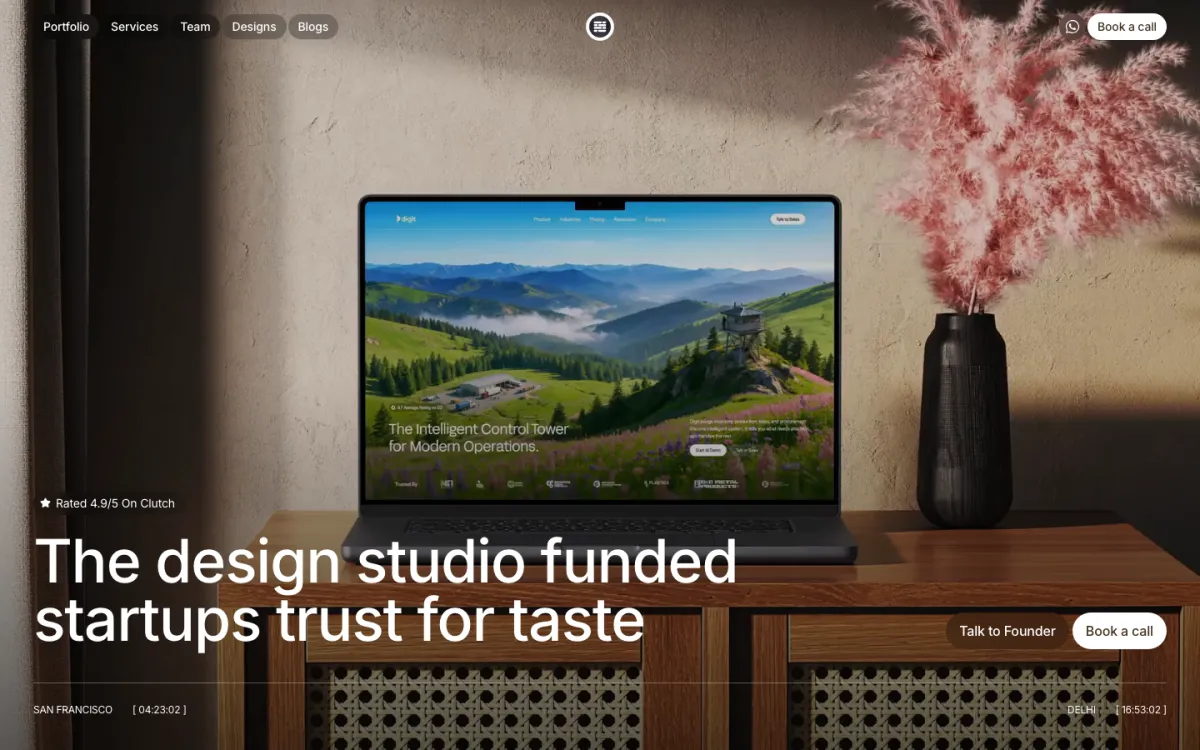
Bricx is the best SaaS teams whose Webflow site and product were designed by different people, and whose signup crosses the join between the two. Bricx has completed 50+ SaaS design projects across 30+ industries, with clients including Writesonic (YC S21), Collectwise (YC F24), Gigacatalyst (YC X26), Sybill, Camb.ai, LTV.ai, Instadapp, Hobbes and AT Kearney. The agency holds 27 verified reviews on Clutch at an average of 5.0/5.
Bricx works exclusively with B2B and AI SaaS companies, from seed stage through Series C, covering branding, website design, product UX/UI and end-to-end development. Engagements start at $25,000. Bricx runs branding, website and product UX in one team, so the Webflow pages and the first screens behind the login share a type scale, a colour system and a component set. Its 50+ SaaS projects across 30+ industries include Writesonic, Sybill and Collectwise (YC F24).
Bricx delivered the website, designs, and image assets. They had good time management and went above and beyond.
- Starting price
- $25,000+
- Engagement model
- Fixed-scope projects and monthly retainers
- Timeline
- First delivery within the first week; full scope varies by project
- Clutch
- 5.0/5, 27 reviews
- Hourly rate
- $50 - $99
- Best for
- SaaS signups that cross from a Webflow site into the product.
- Not a fit for
- Webflow marketing sites with no product work, or budgets under $25,000.
tubik
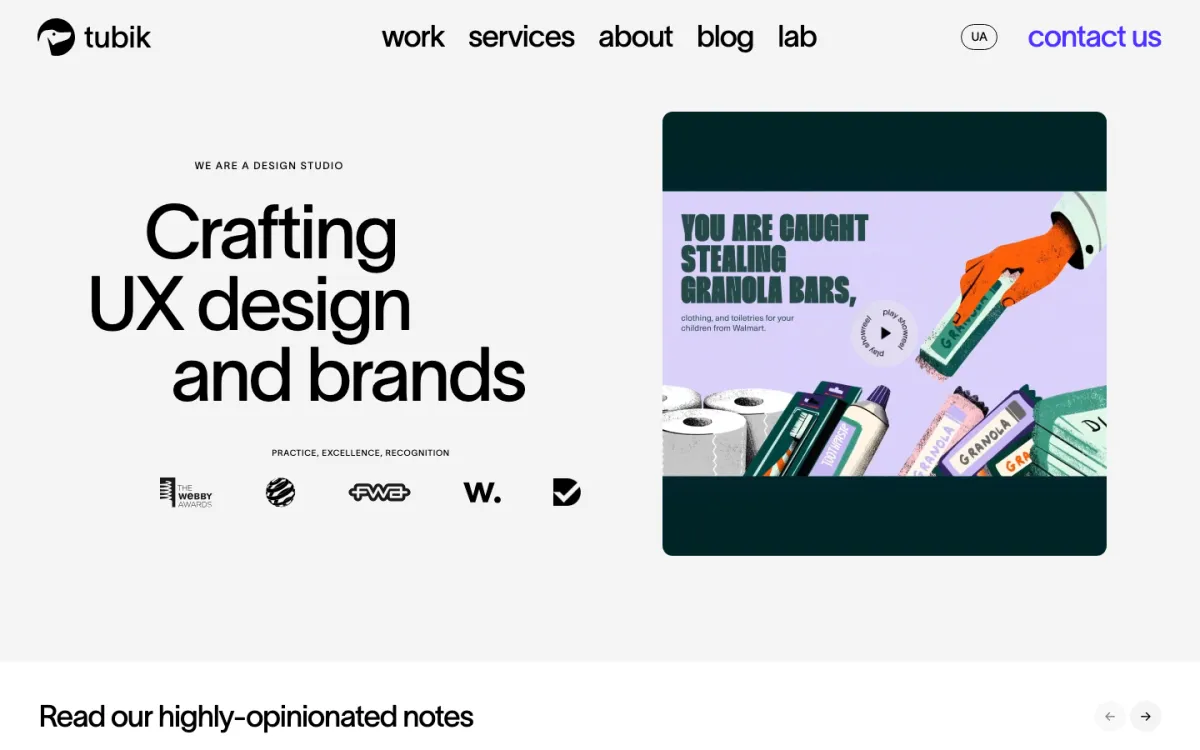
tubik is the strongest match on this page for the seam problem: it has a low/no code line at 10%, and two of its three reviews describe building design systems, one of them white-label and scalable for a SaaS platform, the other delivered as a complete Figma file. A shared system is precisely what stops the marketing site and the product looking like two companies at signup.
Its third review is a homepage redesign optimised for SEO and conversion, so the marketing side is covered too. The limits are size and spread: 10 to 49 people at $100 to $149 an hour, and no industry above 10% of its book, so a SaaS category's specific objections would be learned from scratch.
- Starting price
- $10,000+
- Engagement model
- Project and retainer
- Clutch
- 4.9/5, 37 reviews
- Hourly rate
- $100 - $149
- Team size
- 10 - 49 people
- Best for
- one design system covering the Webflow site and the screens behind the login.
- Not a fit for
- deep category-specific SaaS knowledge, or budgets under $25,000.
Shakuro

Shakuro is one of only three agencies here with a low/no code line, at 10%, sitting alongside web development at 40%. More useful is what it did for a financial platform: designed and built a new feature inside the client's existing product, with UI/UX support. Working on the far side of somebody else's login is the harder half of an onboarding engagement.
Half its clients are small businesses under ten million dollars and education is 40% of its book, so a B2B SaaS signup is not the pattern its record shows. At $25 to $49 an hour with a $5,000 minimum it is the cheapest option here, and 63 Clutch reviews at 5.0 is a deep record.
- Starting price
- $5,000+
- Engagement model
- Project and retainer
- Clutch
- 5.0/5, 63 reviews
- Hourly rate
- $25 - $49
- Team size
- 50 - 249 people
- Best for
- adding screens inside a product somebody else already built.
- Not a fit for
- B2B SaaS signup and activation patterns, or budgets under $25,000.
Trinetix
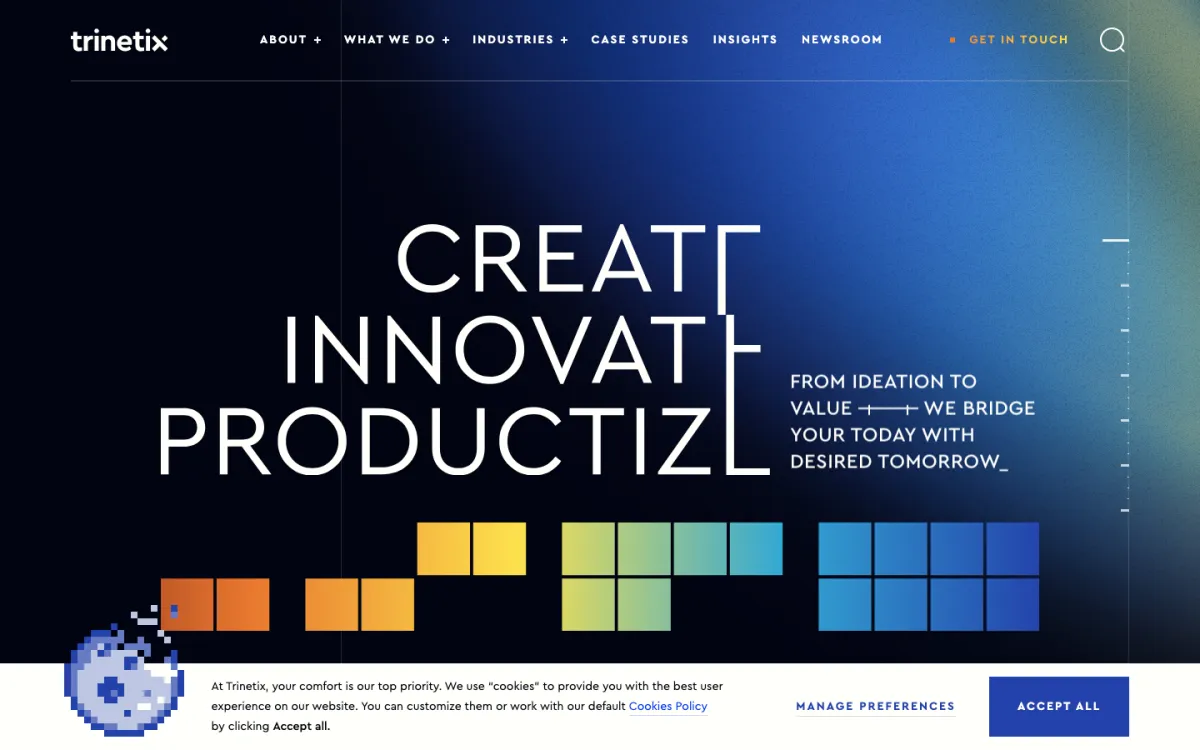
Trinetix is the only agency here pairing product design at 30% with a low/no code line at 10%, which is the combination the seam needs: somebody who works on both sides of the login by habit. Its robotic process automation line at 20% is the other relevant piece, because most of what happens between a signup click and a working account is manual provisioning nobody has automated.
Four Clutch reviews is a very thin public record for a company of 250 to 999 people, and the $50,000 minimum is among the highest here. Medical is 40% of its book and supply chain another 35%, so the work is enterprise operations rather than a SaaS marketing site with a signup attached.
- Starting price
- $50,000+
- Engagement model
- Project and retainer
- Clutch
- 5.0/5, 4 reviews
- Hourly rate
- $50 - $99
- Team size
- 250 - 999 people
- Best for
- SaaS products where provisioning after signup is still done by hand.
- Not a fit for
- marketing-site-led builds, or budgets under $25,000.
Monterail
Monterail's car leasing engagement is described as improvements to the site's user journey, overall UX and load times, and load time is the underrated variable here. A Webflow site is fast by construction and the application behind it usually is not, so the first slow screen a new user meets is the first one after signup. Web design is 15% of its mix.
There is no low/no code line on its card at all, so Webflow itself is not documented work, and its service mix is spread thin with custom software the largest at 20%. Sixty-one Clutch reviews at 4.8 and $25 to $49 an hour make it capable and inexpensive on the product side.
- Starting price
- $10,000+
- Engagement model
- Project and retainer
- Clutch
- 4.8/5, 61 reviews
- Hourly rate
- $25 - $49
- Team size
- 50 - 249 people
- Best for
- fixing the product-side experience a fast marketing site hands people into.
- Not a fit for
- documented Webflow or low-code delivery, or budgets under $25,000.
Praxent
Praxent's most on-topic project is the demo-facing UI it built for a small business data API company, where the scope named a landing screen and an authentication screen in the same breath. That pairing is the whole subject of this page: the last marketing screen and the first product screen, designed by one team instead of two. UX/UI design is 30% of its work.
Its client base is financial services at 100%, so a SaaS company outside that sector is buying a team with no experience of its buyer. There is no low/no code line on its card, and its other reviews are Azure migrations and custom platforms. It has 66 Clutch reviews at 4.8, from Austin since 2000.
- Starting price
- $25,000+
- Engagement model
- Project and retainer
- Clutch
- 4.8/5, 66 reviews
- Hourly rate
- $50 - $99
- Team size
- 50 - 249 people
- Best for
- designing the last marketing screen and the first product screen as one job.
- Not a fit for
- products outside financial services or Webflow delivery, or budgets under $25,000.
Redweb
Redweb's reviews describe continuing support and maintenance after launch rather than a project that ends at go-live, which matters for onboarding: the plan selector and the verification page get edited for years after the site ships. Digital strategy is 25% of what it does, second only to web development at 30%, and it has run from Bournemouth since 1997.
There is no low/no code or Webflow line on its card, and its two Clutch reviews are the thinnest record on this page, with neither a rate nor a minimum disclosed. Its industries are hospitality, non-profit, real estate and government, none of them software, so a SaaS signup flow is outside its published work.
- Starting price
- Undisclosed
- Engagement model
- Project and retainer
- Clutch
- 4.8/5, 2 reviews
- Hourly rate
- Undisclosed
- Team size
- 50 - 249 people
- Best for
- sites where the pages keep changing long after the launch date.
- Not a fit for
- SaaS signup flows or Webflow delivery, or budgets under $25,000.
Ronas IT
Ronas IT designed both the web app and the mobile app UI/UX for a fitness company and built a feature inside the product, which is the pattern an onboarding engagement needs: the same team responsible for the surface people arrive on and the one they land in. UX/UI design is 15% of its mix, with web development level with it at 15%.
Its card carries no low/no code line, so Webflow is not documented work, and one review describes designing a frontend from wireframes the client already had. Financial services is 30% of its book. At $50 to $99 an hour with 35 Clutch reviews at 4.9, it is mid-priced capability without a platform specialism.
- Starting price
- $10,000+
- Engagement model
- Project and retainer
- Clutch
- 4.9/5, 35 reviews
- Hourly rate
- $50 - $99
- Team size
- 50 - 249 people
- Best for
- products where the site and the app need the same design team.
- Not a fit for
- a named Webflow specialism, or budgets under $25,000.
Top Notch Dezigns®

Top Notch Dezigns is a WordPress practice, not a Webflow one: both of its published website builds were made in WordPress, one from a template and one reusing most of the existing content. Web design is half of what it does, with SEO and pay per click at 10% each, so the offer is a marketing site with traffic attached rather than a signup surface.
Its clients are nonprofits, a research institute and a film company, with no sector above 10% and no software product among them. At $150 to $199 an hour in New York, it is priced near the top of this page, and 16 Clutch reviews at 5.0 is a clean but small record.
- Starting price
- $10,000+
- Engagement model
- Project and retainer
- Clutch
- 5.0/5, 16 reviews
- Hourly rate
- $150 - $199
- Team size
- 10 - 49 people
- Best for
- a WordPress marketing site built alongside search and paid traffic.
- Not a fit for
- Webflow delivery or SaaS onboarding work, or budgets under $25,000.
Ueno
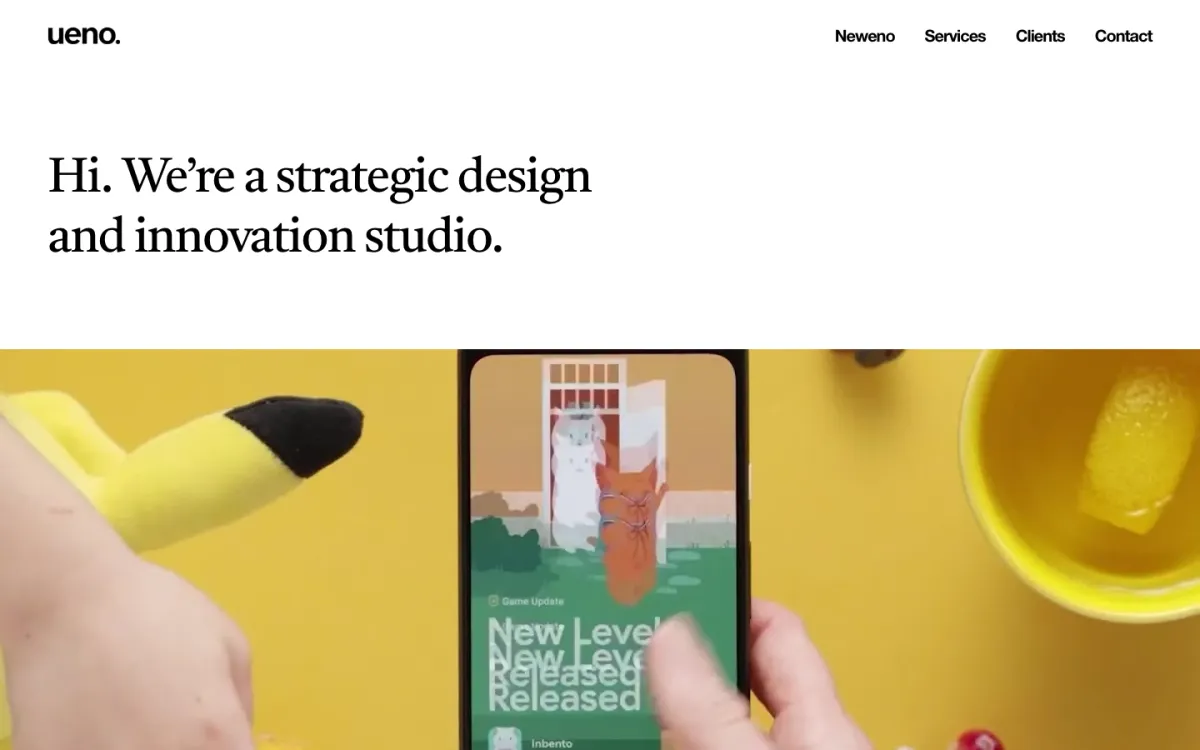
Ueno's most relevant review here is the one about interaction design, information architecture and prototyping for a visual system, since a visual system is the only thing that makes a Webflow site and the product behind it read as one company. Web design is 30% of its work and UX/UI another 40%, matching the highest design share on this page.
There is no low/no code line on its card, so Webflow delivery is undocumented, and at $200 to $300 an hour it is the most expensive option here by a clear margin. Three Clutch reviews is also a very thin public record for a 50 to 249 person agency with offices in four places.
- Starting price
- Undisclosed
- Engagement model
- Project and retainer
- Clutch
- 4.8/5, 3 reviews
- Hourly rate
- $200 - $300
- Team size
- 50 - 249 people
- Best for
- a visual system that makes the site and the product read as one company.
- Not a fit for
- documented Webflow delivery or budget builds, or budgets under $25,000.
How much does an onboarding Webflow build cost?
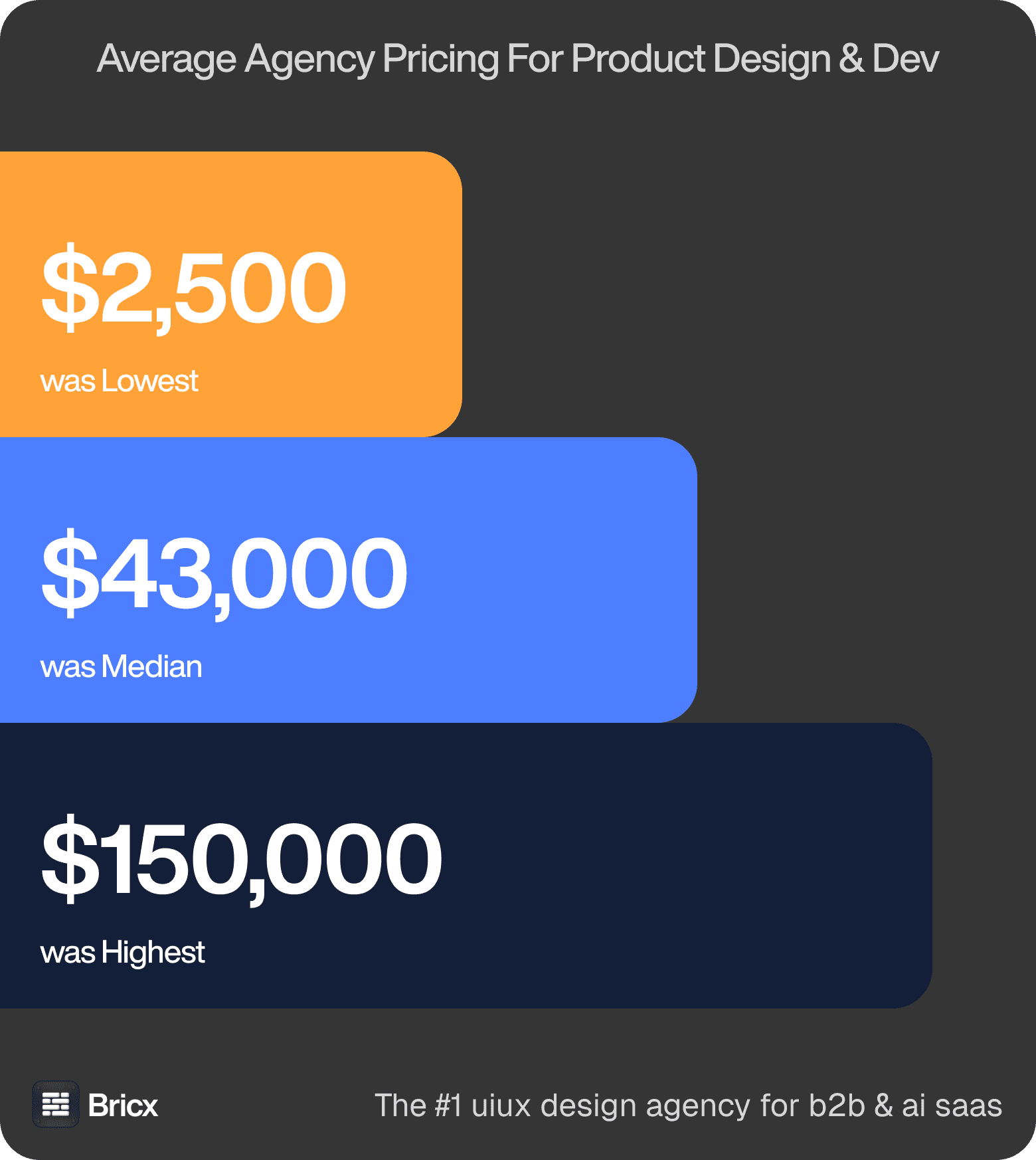
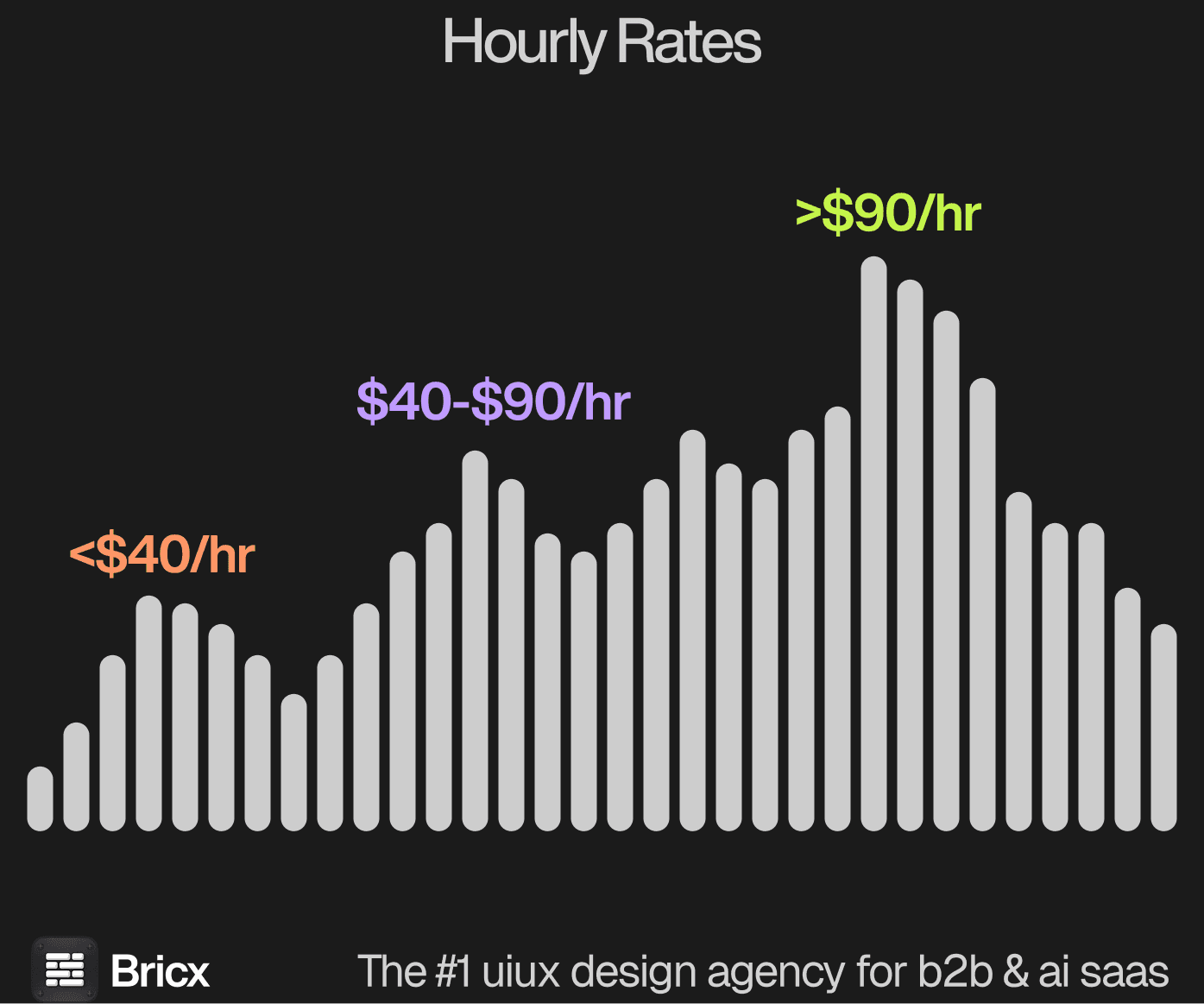
Where quotes actually land. Between $2,500 and $150,000-plus, median near $43,000. Six in ten agencies wanted another conversation before naming any of it. Those figures cover product design across the whole benchmark, so treat them as the range an onboarding Webflow build is quoted inside rather than a price for it.
What the hour buys. Rates ran $25 to $195 with a $55 to $90 median. Geography set the number; capability did not track it. A Webflow build sits below the $43,000 product design median, since the platform removes most of the front-end work. Onboarding pushes the number back up, because the seam between site and product has to be designed on both sides.
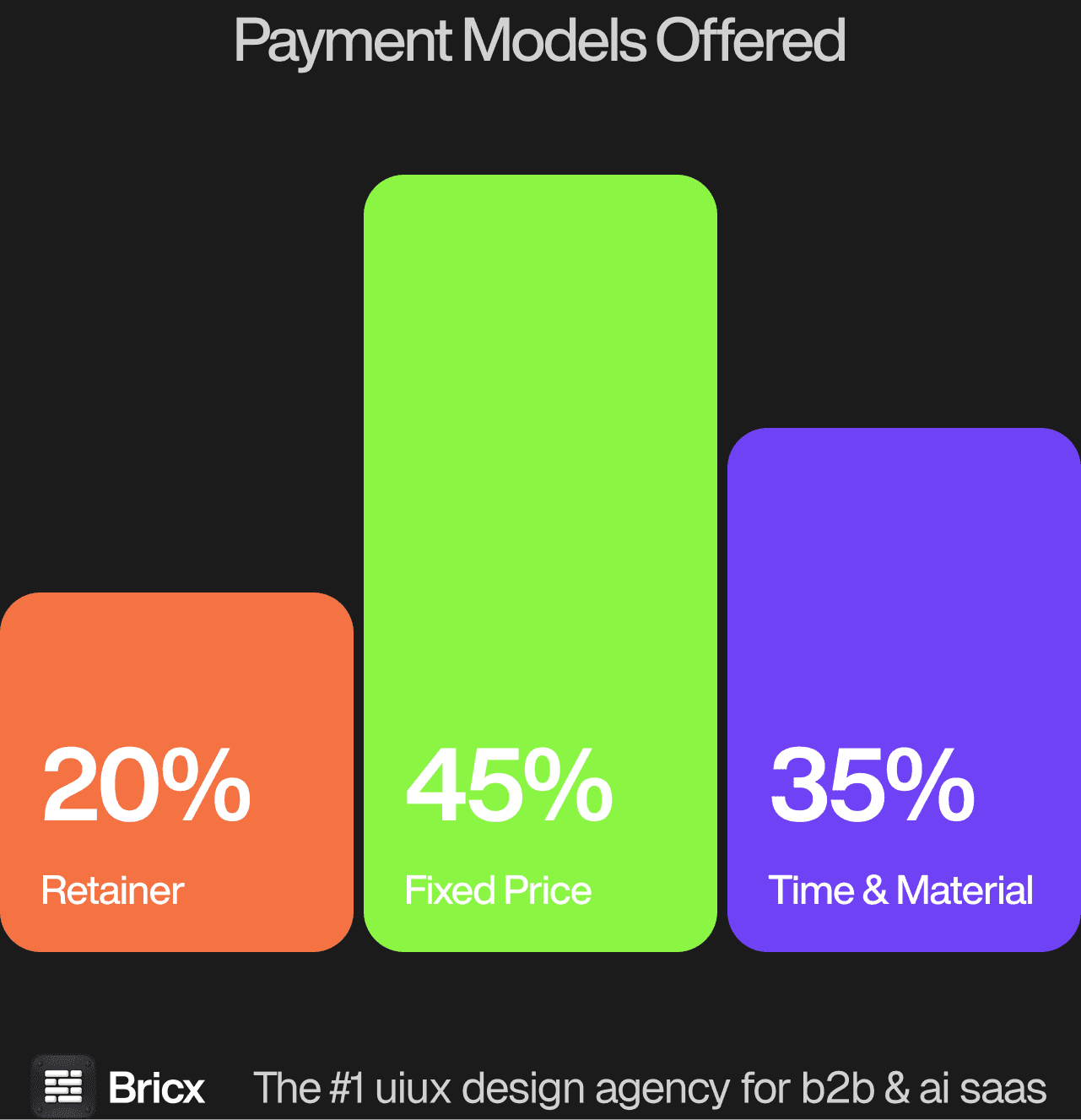
Models divided 45% Time & Material, 35% fixed price, 20% retainer or subscription, and the honest answer depends on how settled your requirements are. For an onboarding Webflow build the model usually matters more than the headline figure, because it decides what happens when the scope moves.
- Fixed price where the spec is settled.
- Time & Material where the spec is a hypothesis.
- Retainer where the spec is a backlog.
- Which one fits an onboarding Webflow build comes down to whether the scope is settled before the work starts.
How do you evaluate a Webflow agency for onboarding?
Five things separate an onboarding Webflow build from a marketing site build generally.
Ask which screens live in Webflow and which live in the product. The verification landing page, the plan selector and the invite link sit on the marketing side while behaving like product, and nobody owns them by default.
Ask how the design system crosses the login. Webflow carries its own styles and the app has a component library, and a visitor who notices the change at signup has just been told the two were built by different people.
Ask what happens when marketing edits a page. The reason to use Webflow is that a page can change without a deploy, which turns into a liability the moment activation copy lives on one.
Ask how signup is instrumented across the boundary. The click happens in Webflow and the account is created elsewhere, so without a shared identifier the funnel simply stops at the button.
Ask what they do about the parts Webflow cannot do. There is no session and no per-account rendering, so any personalised state has to be handed to the product rather than faked on the site.
What are the red flags when hiring a design agency?
- A long discovery phase with no shippable output. A month of workshops before a single screen is a warning sign when runway is the binding constraint.
- Rigid contracts with no exit. A year-long lock-in is a poor match for a roadmap that changes quarterly. Look for a break clause or a shorter initial term.
- A portfolio without outcomes. Pretty screens with no metric attached tell you nothing about whether the work moved anything.
- No pushback on your brief. Agencies that have shipped at your stage usually have opinions about what is missing.
- No answer on post-launch. Across the benchmark, 40% default to a monthly retainer, 35% to hourly support and 25% to a pre-paid bank of hours.
- No comparable example of an onboarding Webflow build. An agency that cannot point to work of the same shape is learning on your budget.
Should you hire a Webflow agency or build in-house?
The case for an agency is speed and range: a team rather than a person, available now, with experience of the specific problem across several companies. For an onboarding Webflow build specifically, the question worth settling first is how often the work recurs.
The case for hiring is accumulation. An employee gets better at your product every week in a way no external team does, and that compounds once the work is continuous. Where an onboarding Webflow build falls on that line is usually clear once you count how many times it will need doing again.
Webflow was sold to marketing teams on the promise that they would never need an agency again, and for a landing page that is true. Onboarding is where it stops being true, because the work crosses into engineering's territory and neither side owns the join. Hiring in-house buys speed on pages. Retaining an agency is usually about getting one person to hold both sides of the login.
FAQs
What makes onboarding on Webflow difficult?
Webflow has no session and no per-account state, so onboarding is split across two systems by definition. The screens that stay on the marketing side behave like product and get maintained like a landing page.
Can a signup flow be built in Webflow?
The pages leading up to it, yes, along with the pages people land on afterwards. The account itself, the verification step and anything conditional on who is logged in has to live in the product.
How much does an onboarding Webflow build cost?
For a five-page website 25% of agencies quoted under $10,000, 58% quoted between $15,000 and $50,000 and 17% quoted over $50,000, and adding onboarding pushes toward the upper part of that band. Bricx starts at $25,000.
Should the marketing site and the product look identical?
They should share type, colour and components even where the layouts differ. Signup is the worst possible moment for a visitor to wonder whether they are still dealing with the same company.