10 Best Product-Led Growth Landing Page Design Agencies (2026)
The 10 best product-led growth landing page design agencies, compared on pricing, Clutch rating, engagement model and hourly rate, drawn from a documented benchmark of 57 agencies.
Aug 20, 202611 min read
Best product-led growth landing page design agencies
A product-led landing page ends in a signup rather than a form, and that one difference changes everything above it. There is no salesperson to reframe an overstated claim, so whatever the page promises gets checked inside the product within minutes. It also cannot be judged on conversion rate alone, because a headline that doubles signups and halves activation has made the business worse. Most agencies optimise the page against the event they can see. Here the event that decides the outcome happens after the handoff, inside a product they never touched.
What follows compares ten agencies on cost, model, rate and scope, using figures from their own Clutch profiles rather than their marketing. Every agency here carries a verified Clutch profile, and the ratings below are taken from it. Each entry says what an agency is worth hiring for and where it is the wrong choice for a product-led growth landing page.
How the ten agencies compare
| Agency | Best for | Starting price | Clutch rating | Not a fit for |
|---|---|---|---|---|
| Bricx | PLG landing pages judged on activation | $25,000+ | 5.0/5, 27 reviews | Paid media buying and ad operations |
| Itexus | Signup and payment flows | $10,000+ | 4.9/5, 41 reviews | Page craft, copy, positioning |
| Praxent | Landing and auth screens together | $25,000+ | 4.8/5, 66 reviews | Consumer or non-financial products |
| Blue Fountain Media | Sites built for new positioning | $50,000+ | 4.8/5, 20 reviews | Weekly page experimentation |
| Bluetext | Messaging frameworks before pages | $100,000+ | 4.9/5, 10 reviews | Lean budgets, fast tests |
| Brocoders | Pages showing the real product | $10,000+ | 5.0/5, 37 reviews | Conversion work, paid traffic |
| Dev Technosys | High volume at low rates | $10,000+ | 4.8/5, 204 reviews | Positioning, conversion craft |
| EMERGE | Naming what the product is | $50,000+ | 4.8/5, 25 reviews | Seed-stage budgets, fast tests |
| Ester Digital | Long iterative page relationships | $5,000+ | 5.0/5, 32 reviews | Deep self-serve funnel expertise |
| Fingent | Volume delivery from a US team | $25,000+ | 4.9/5, 66 reviews | Design-led positioning work |
Best product-led growth landing page design agency: Bricx
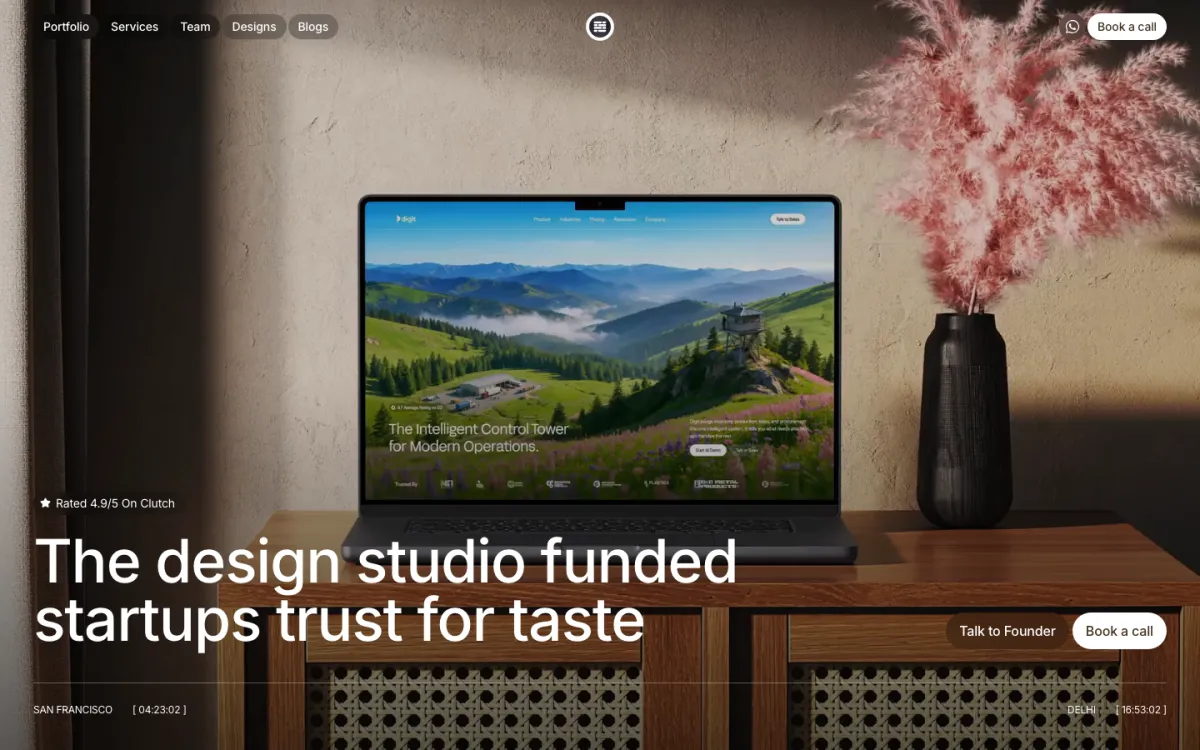
Bricx is the best product-led growth landing page design agency for teams that judge the page on activated accounts rather than clicks, and will change the product to match it. Bricx has completed 50+ SaaS design projects across 30+ industries, with clients including Writesonic (YC S21), Collectwise (YC F24), Gigacatalyst (YC X26), Sybill, Camb.ai, LTV.ai, Instadapp, Hobbes and AT Kearney. The agency holds 27 verified reviews on Clutch at an average of 5.0/5.
Bricx works exclusively with B2B and AI SaaS companies, from seed stage through Series C, covering branding, website design, product UX/UI and end-to-end development. Engagements start at $25,000. Bricx designs the page and the product interface in the same engagement, so the claim in the hero and the first screen after signup are drawn by the same people. Writesonic and Collectwise both sell that way, with no salesperson standing between the two.
Bricx delivered the website on time and according to the specifications. I loved the quality of the work.
- Starting price
- $25,000+
- Engagement model
- Fixed-scope projects and monthly retainers
- Timeline
- First delivery within the first week; full scope varies by project
- Clutch
- 5.0/5, 27 reviews
- Hourly rate
- $50 - $99
- Best for
- product-led teams that judge the page on activated accounts and will change the product to match.
- Not a fit for
- paid media buying, running the ad accounts, or budgets under $25,000.
Itexus
Itexus's record sits on the far side of the signup button rather than in front of it. Two reviews describe building account creation and payment functionality, once for an impact investing fund and once for a video tool company's first flagship release. On a product-led page the click is the easy part, and the ninety seconds after it decide whether the visit counted.
Its own mix is 30% IT staff augmentation, 30% mobile development and 30% UX/UI, with no web design line at all, so page craft and copy are not what it sells. Financial services at 60% and medical at 40% are both categories where a person closes the sale.
- Starting price
- $10,000+
- Engagement model
- Project and retainer
- Clutch
- 4.9/5, 41 reviews
- Hourly rate
- $25 - $49
- Team size
- 50 - 249 people
- Best for
- building the account creation path behind the button.
- Not a fit for
- page craft and positioning work, or budgets under $25,000.
Praxent
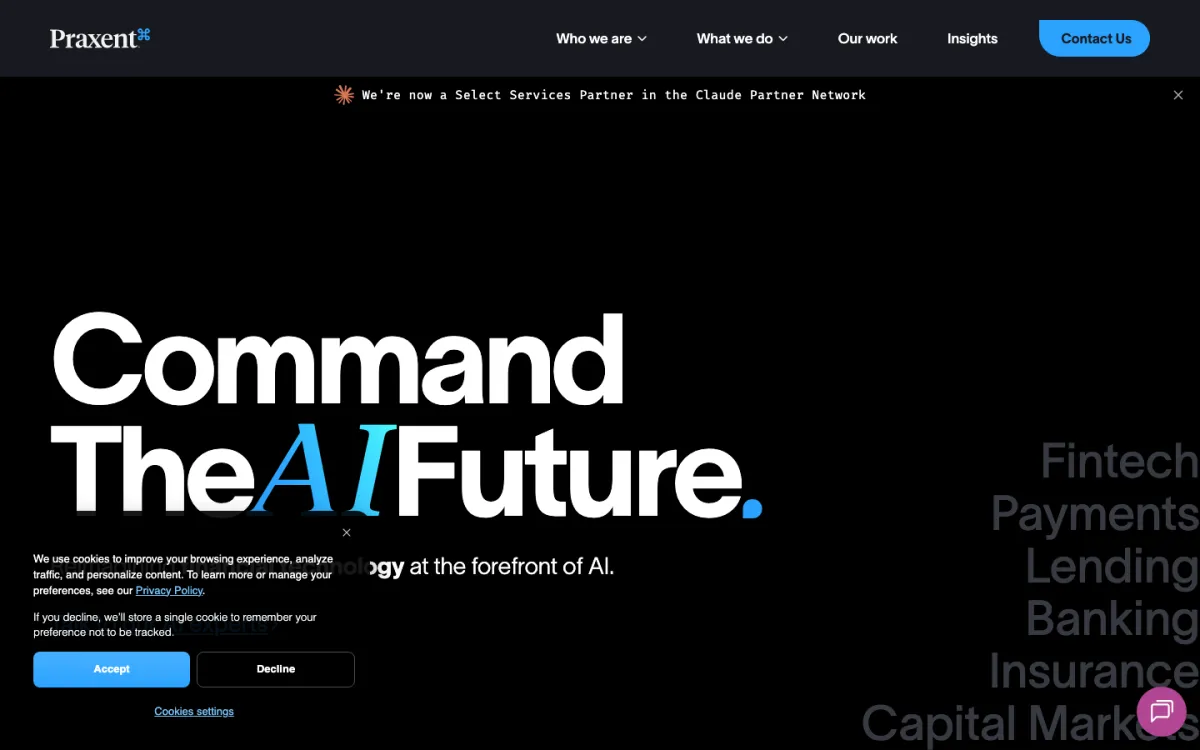
Praxent has the most directly on-topic review on this page: a small business data API company hired it to design and build a demo-facing interface covering the landing screen and the authentication screen in one scope. That is exactly the seam a product-led page lives on, where the promise made in front of the login has to survive the first screen behind it.
Every client on its card is financial services, at 100%, an industry that sells through relationships and compliance review rather than a free trial. UX/UI is 30% of its work against web design at 10%, so this is a software firm that designs rather than a page studio.
- Starting price
- $25,000+
- Engagement model
- Project and retainer
- Clutch
- 4.8/5, 66 reviews
- Hourly rate
- $50 - $99
- Team size
- 50 - 249 people
- Best for
- designing the page and the first screen behind it as one scope.
- Not a fit for
- consumer or non-financial self-serve products, or budgets under $25,000.
Blue Fountain Media
Blue Fountain Media is the most purely website-shaped agency here, 50% web development and 40% web design with nothing else above 10%. Its most relevant review describes building a site to carry a new positioning strategy rather than to refresh a look. Product-led pages fail on the claim far more often than the layout, because a visitor tests that claim inside the product minutes later.
Half its clients are enterprises above a billion dollars and its described builds run on WordPress, a stack picked for content governance rather than weekly experimentation. At $150 to $199 an hour on a $50,000 minimum, this is a corporate rebuild rather than a page you keep changing.
- Starting price
- $50,000+
- Engagement model
- Project and retainer
- Clutch
- 4.8/5, 20 reviews
- Hourly rate
- $150 - $199
- Team size
- 50 - 249 people
- Best for
- a site rebuilt to carry a changed positioning.
- Not a fit for
- weekly page experimentation, or budgets under $25,000.
Bluetext
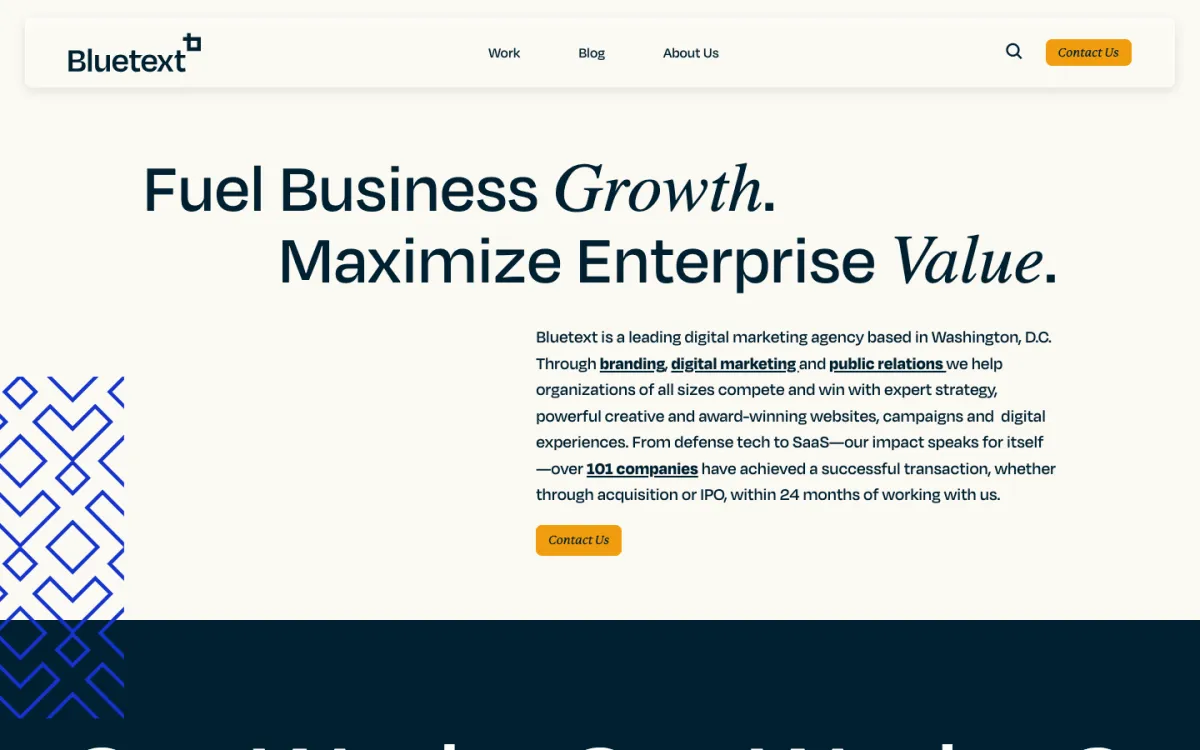
Bluetext builds the messaging framework before the page. One review describes delivering a logo, a messaging framework, brand guidelines and collateral as a single piece of work, another a brand refresh where the site overhaul carried original content. A product-led page loads an unusual amount onto those words, because the visitor verifies them without ever speaking to anybody.
Government is 12% of its client base and information technology 15%, a mix weighted toward long procurement rather than self-serve signup. A $100,000 minimum with no published hourly rate makes it the largest commitment on this page, and 10 Clutch reviews is a modest public record behind that number.
- Starting price
- $100,000+
- Engagement model
- Project and retainer
- Clutch
- 4.9/5, 10 reviews
- Hourly rate
- Undisclosed
- Team size
- 10 - 49 people
- Best for
- getting the claim right before the page is built.
- Not a fit for
- fast, low-cost page testing, or budgets under $25,000.
Brocoders
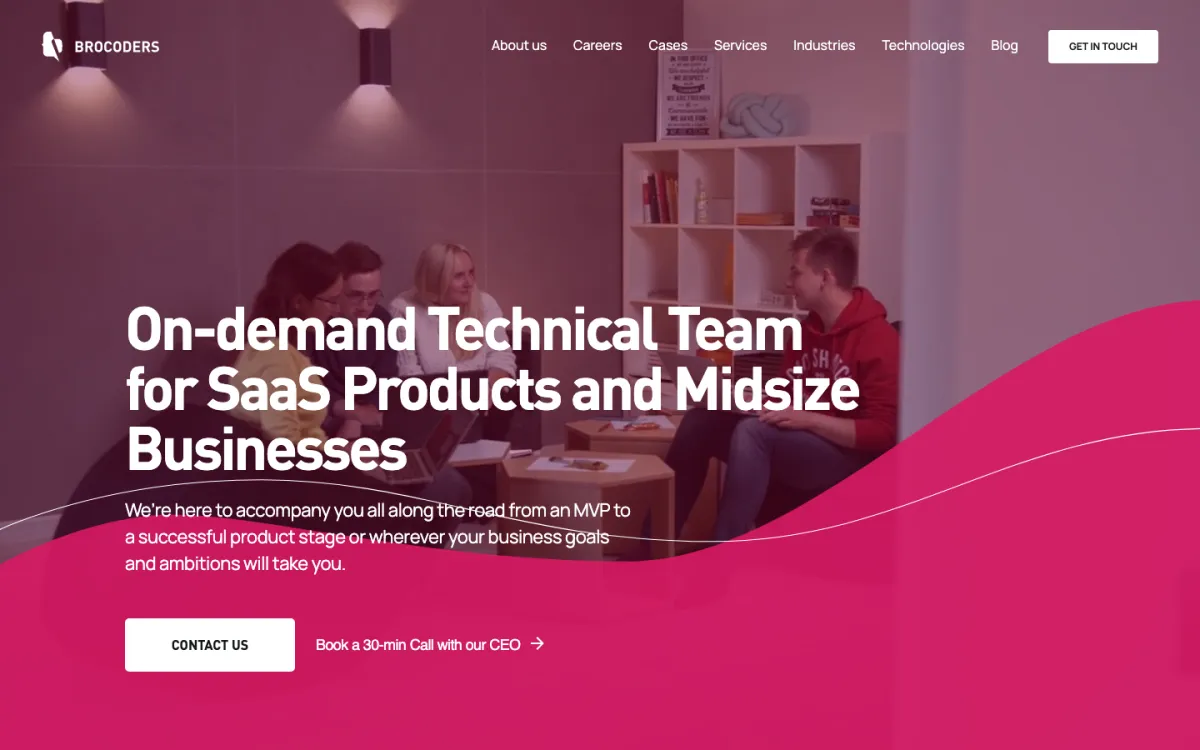
Brocoders sets a 15% web design practice next to 25% custom software development and 20% mobile work, which matters here because the strongest asset a product-led page has is the real product on screen. Its reviews describe designing a staffing platform's MVP and clarifying the feature list before build, so the team is accustomed to arguing about what a product genuinely does.
Its industry spread is thin, nothing above 10% across construction, contracting, education or financial services, and 70% of clients are midmarket. Nothing on the card points to conversion work, paid traffic or repeated landing page assignments, so that would be new territory in the relationship.
- Starting price
- $10,000+
- Engagement model
- Project and retainer
- Clutch
- 5.0/5, 37 reviews
- Hourly rate
- $50 - $99
- Team size
- 50 - 249 people
- Best for
- pages that have to show a real working product.
- Not a fit for
- conversion optimisation and paid traffic work, or budgets under $25,000.
Dev Technosys
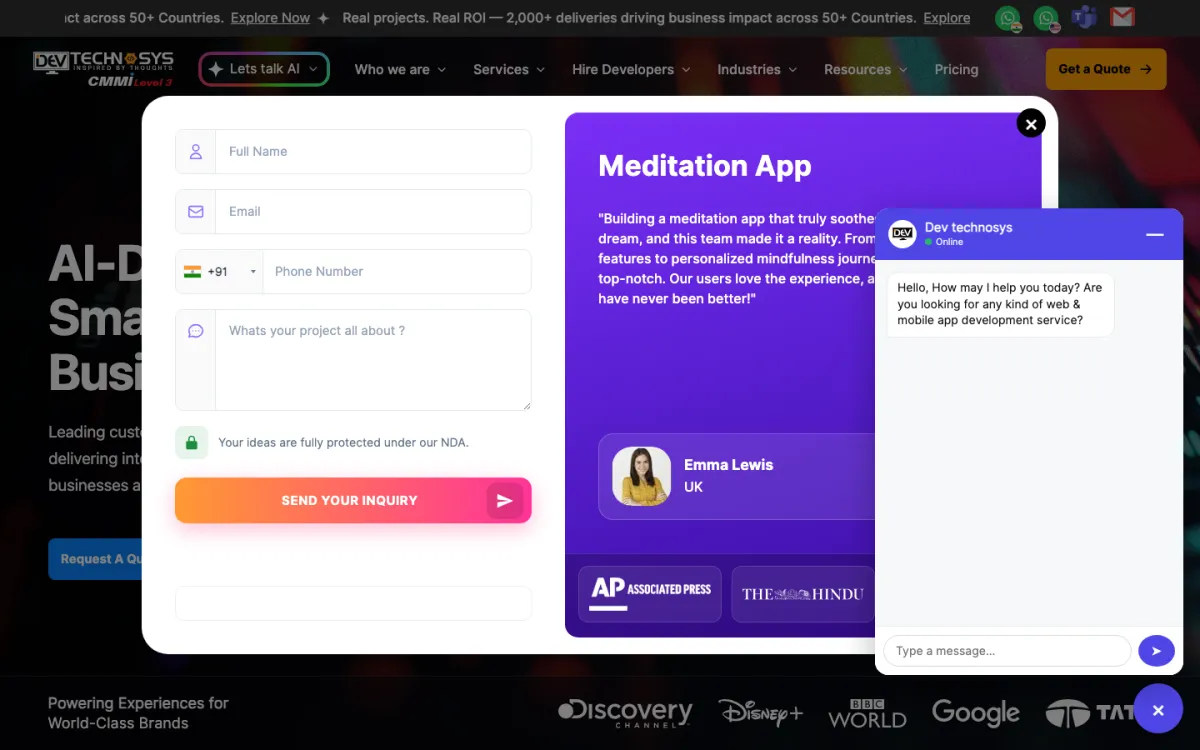
Dev Technosys is the volume option here, 204 Clutch reviews at $25 to $49 an hour, working from Jaipur since 2010. Its published work leans transactional: a manufacturer's site with a product catalogue and ordering system, a full eCommerce build, and the MVP of an AI and crypto travel platform. That is experience shipping the mechanics behind a button rather than the argument in front of it.
Blockchain accounts for 55% of its service mix and web development just 10%, with no design discipline named on the card. For a page whose job is to make a claim a stranger will test inside the product within minutes, that is a long way from the centre of what it sells.
- Starting price
- $10,000+
- Engagement model
- Project and retainer
- Clutch
- 4.8/5, 204 reviews
- Hourly rate
- $25 - $49
- Team size
- 50 - 249 people
- Best for
- shipping a lot of pages cheaply against a written brief.
- Not a fit for
- positioning and conversion craft, or budgets under $25,000.
EMERGE
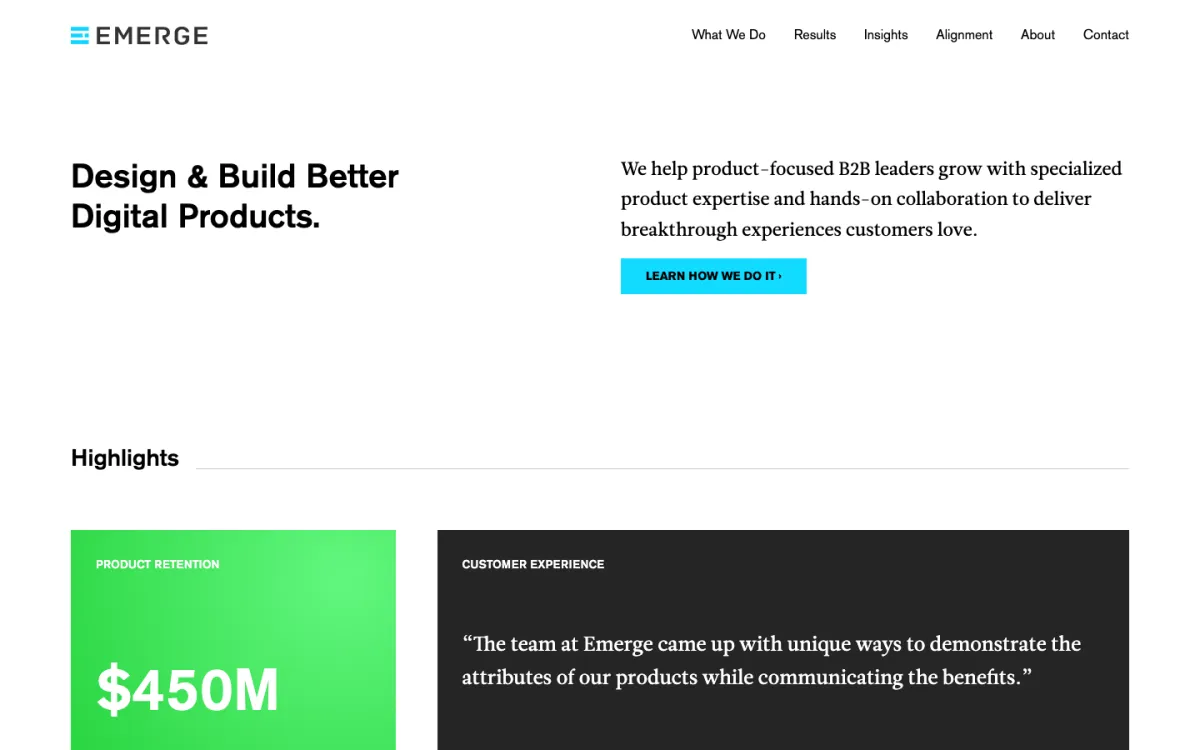
EMERGE is the purest design practice on this page, 90% UX/UI with the remaining 10% in product design and nothing else, running from Portland since 1998. Its SaaS review describes redesigning a benefits solution into an employee experience solution, which is a category change rather than a facelift. Product-led pages stall on that question, because the page must name what the product is before it can sell it.
Its clients split evenly between enterprises above a billion dollars and midmarket companies, with no small business share at all, so a seed-stage self-serve product sits outside its normal range. At $150 to $199 an hour on a $50,000 minimum, this is a considered engagement rather than a fast page test.
- Starting price
- $50,000+
- Engagement model
- Project and retainer
- Clutch
- 4.8/5, 25 reviews
- Hourly rate
- $150 - $199
- Team size
- 10 - 49 people
- Best for
- deciding what category the product is actually selling into.
- Not a fit for
- fast page testing at seed stage, or budgets under $25,000.
Ester Digital
Ester Digital has built the frontend of a subscription management portal in React, which is the surface where a self-serve pricing claim finally settles. A separate client has kept it designing and iterating websites and apps since 2018. A product-led page is not a launch, it is something a company keeps changing, and a long iterative relationship is better evidence of that than any portfolio shot.
Its service mix is unusually flat, 15% UX/UI with branding, custom software and web design at 10% each, so no discipline dominates. With a $5,000 minimum and clients across business services, medical and automotive, this is a capable generalist studio rather than a self-serve SaaS specialist.
- Starting price
- $5,000+
- Engagement model
- Project and retainer
- Clutch
- 5.0/5, 32 reviews
- Hourly rate
- $50 - $99
- Team size
- 10 - 49 people
- Best for
- a page the company intends to keep changing for years.
- Not a fit for
- deep self-serve funnel expertise, or budgets under $25,000.
Fingent
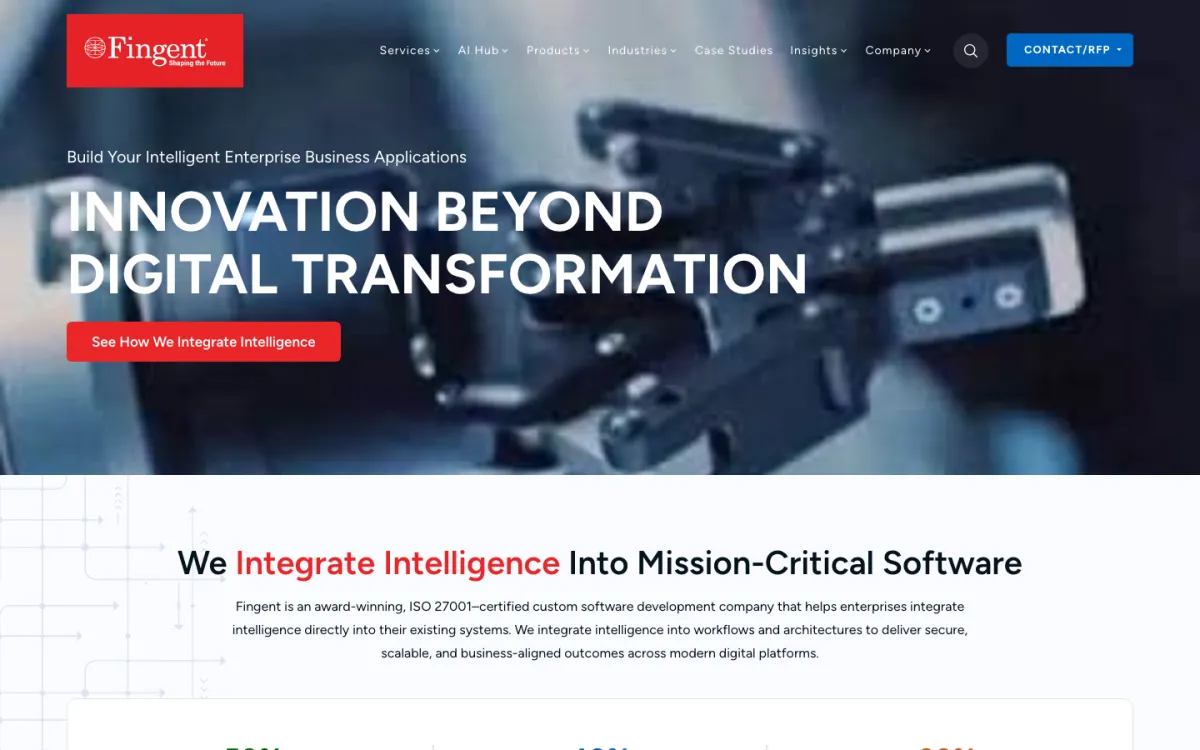
Fingent is the only agency here combining a US base, in White Plains since 2003, with a $25 to $49 hourly band and a team of 250 to 999 people. Its reviews describe re-architecting an enterprise product and assisting with the interface, and building two real estate websites end to end including testing, QA and deployment. Page programmes are a throughput problem before they are a craft problem.
Custom software development is 50% of its mix and AI development 30%, with web development at 10% and no design service named on the card. Its four main sectors, education, financial services, real estate and supply chain at 15% each, are all sold by people rather than through a signup.
- Starting price
- $25,000+
- Engagement model
- Project and retainer
- Clutch
- 4.9/5, 66 reviews
- Hourly rate
- $25 - $49
- Team size
- 250 - 999 people
- Best for
- delivering a large page programme at a low hourly rate.
- Not a fit for
- design-led positioning work, or budgets under $25,000.
How much does a product-led growth landing page engagement cost?
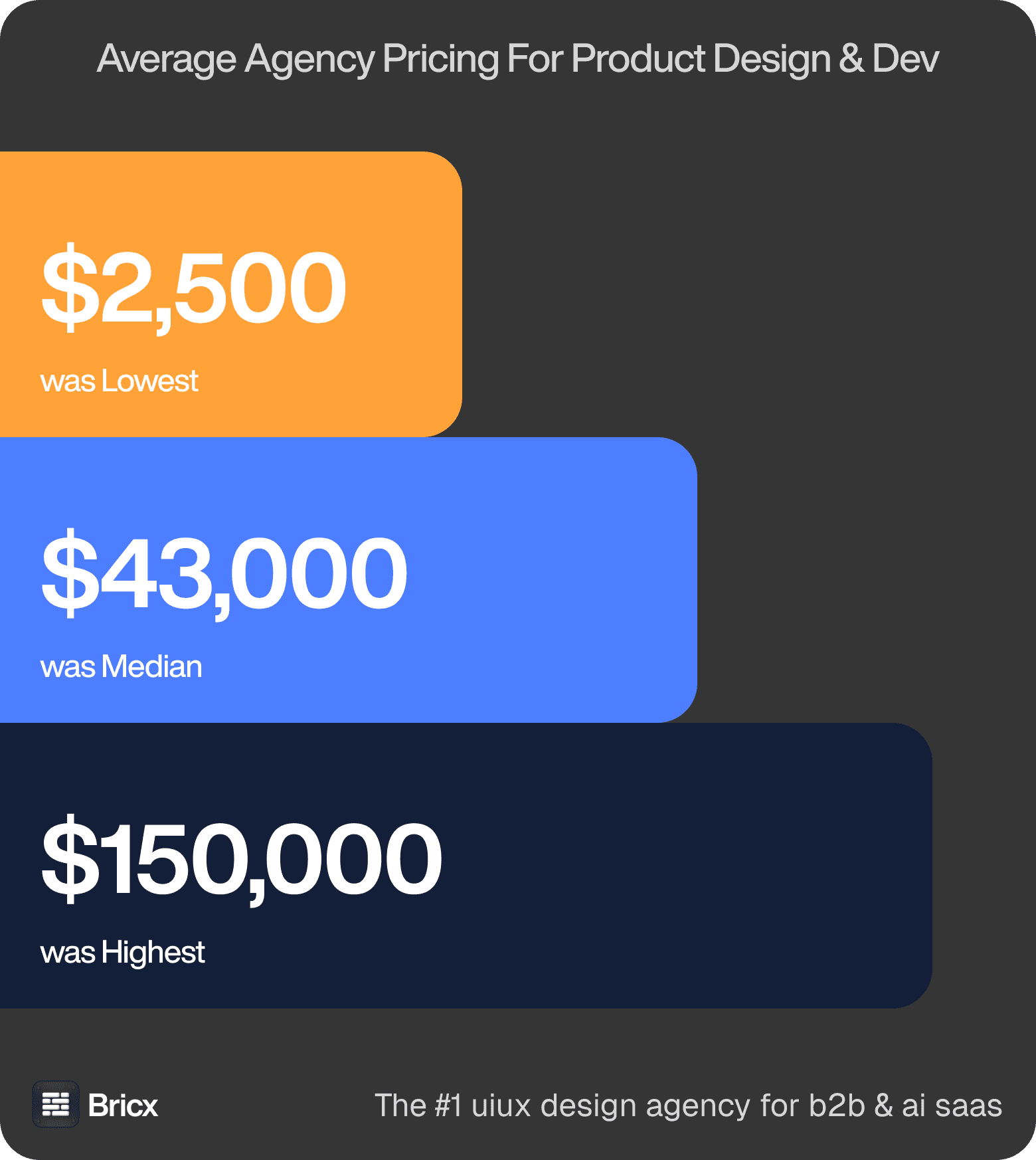
The number before the number. Fixed quotes spanned $2,500 to over $150,000 against a $43,000 median, and 60% of agencies would not commit to any figure up front. Those figures cover product design across the whole benchmark, so treat them as the range a product-led growth landing page is quoted inside rather than a price for it.
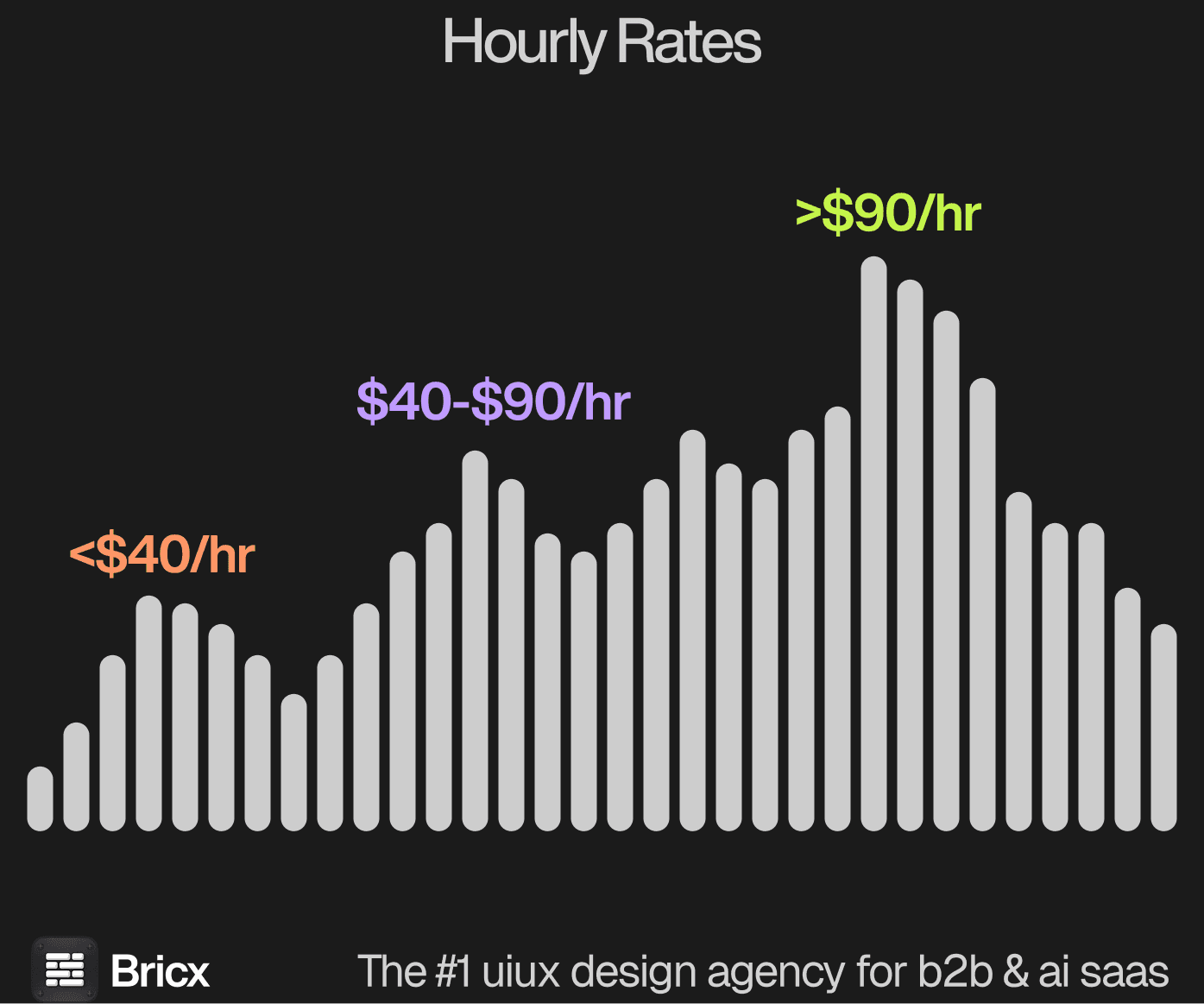
Hourly, by region. $25 to $195 across the study, median $55 to $90. US teams averaged about $150, European teams $60, Asian teams $35. A page in isolation sits below the benchmark median. Rebuilding it against the product's first-run experience sits above, because the second half of the job touches something the engineering team owns.
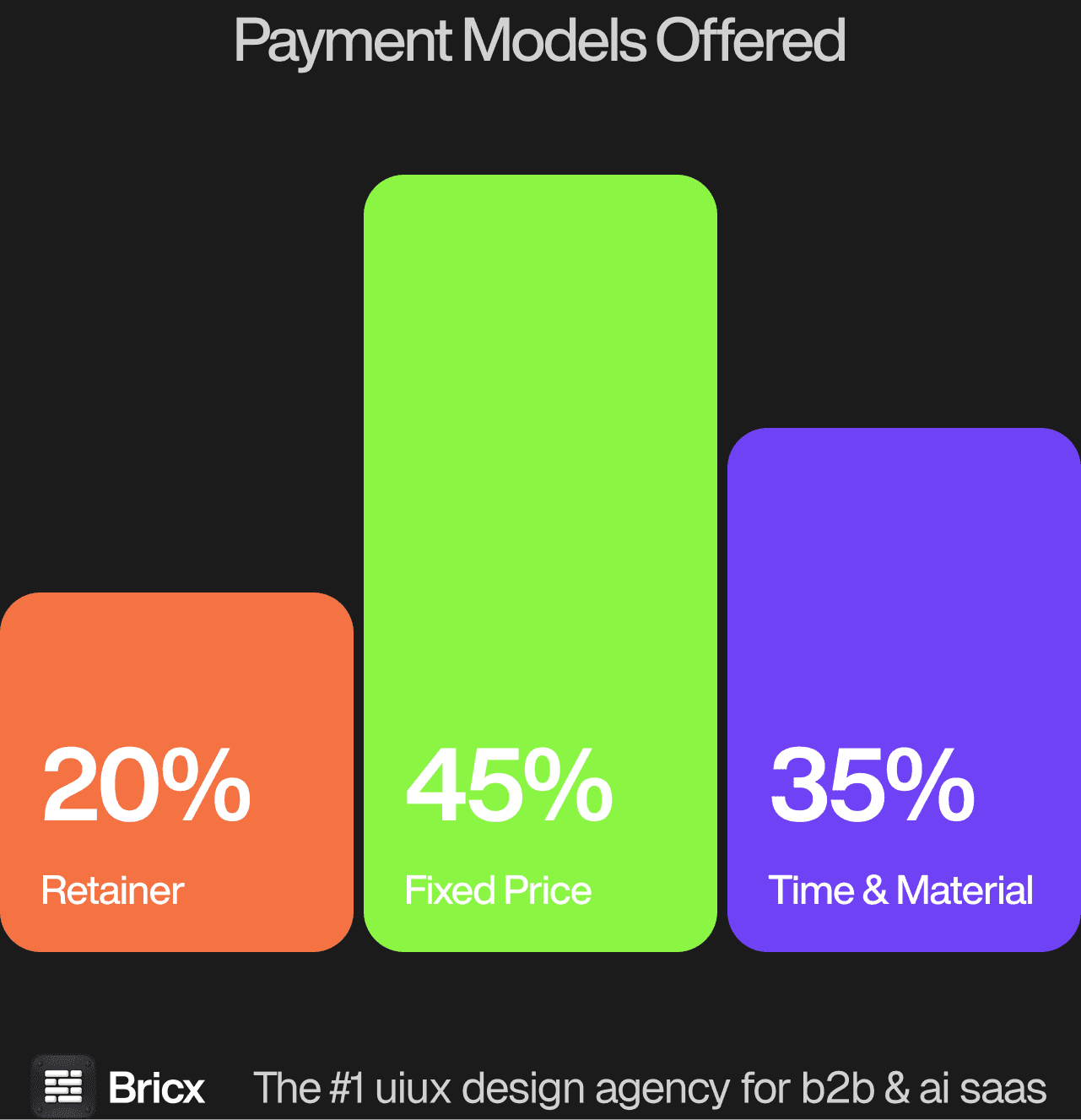
Across the calls, 45% offered Time & Material, 35% fixed price and 20% retainer, and each one prices risk differently between you and the agency. For a product-led growth landing page the model usually matters more than the headline figure, because it decides what happens when the scope moves.
- Fixed price for a deliverable you can specify today.
- Time & Material for a scope you are still discovering.
- Retainer for design that never really finishes.
- Which one fits a product-led growth landing page comes down to whether the scope is settled before the work starts.
How do you evaluate a landing page agency for a product-led company?
Five things separate product-led landing page work from landing page design generally.
Ask what they measure after the click. Signups are easy to move and activation is the number that pays rent. An agency reporting only on conversion rate is optimising the half of the funnel it can see.
Ask whether anyone on the team has used the product. The page is a promise and the first-run screen is the receipt, and a team that has never signed up cannot tell you where those two disagree.
Ask how they handle trial and demo on the same page. Most product-led companies offer both, and a page giving equal weight to each usually converts neither well.
Ask what they do about pricing. A self-serve buyer will not request a quote, so an unpriced page quietly hands the decision to a sales motion the company does not have.
Ask how they test below meaningful traffic. Early product-led teams rarely have the volume for a clean split test, and an agency that only knows A/B testing has nothing to offer until then.
What are the red flags when hiring a design agency?
- Enthusiasm without questions. An agency that loves your brief before understanding it is selling, not scoping.
- A process diagram instead of a plan. Ask for dates and deliverables, not phases with names.
- No mention of your developers. Design that ignores the build is a handover problem waiting to happen.
- Reviews that all sound the same. Read the Clutch detail, not the star rating.
- No stated weakness. Every agency has one. An agency that will not name it has not examined itself.
- No comparable example of a product-led growth landing page. An agency that cannot point to work of the same shape is learning on your budget.
Should you hire a landing page agency or build in-house?
Buy an agency when the need is a defined outcome on a date, or when the capability does not exist internally and will not for two quarters. For a product-led growth landing page specifically, the question worth settling first is how often the work recurs.
Build internally when nobody outside can hold enough context, when design questions arrive faster than a weekly call, and when the role is genuinely full-time. Where a product-led growth landing page falls on that line is usually clear once you count how many times it will need doing again.
Hire in-house when the page changes several times a week and the person changing it needs to see the product analytics themselves. Retain when the problem is the claim rather than the layout, because an internal team that shipped the product is the worst-placed group to notice the promise no longer matches it. The in-house failure mode is endless small tests around a stale positioning. The agency failure mode is a page that converts and does not activate.
FAQs
What makes a product-led landing page hard to design?
The conversion event is entering the product, so the page cannot promise anything the first session will not deliver. It also gets judged downstream on activation, a number the page designer usually never sees.
Should the page push a free trial or a demo?
Whichever one the product can actually support unaided. If a first-time user cannot reach something useful alone, the trial link is an expensive way to generate disappointed accounts, and the demo route is more honest until onboarding improves.
How much does a product-led growth landing page cost?
Across the benchmark a five-page website drew quotes ranging from under $10,000 to over $50,000, with 58% landing between $15,000 and $50,000. Work that also reshapes the signup and first-run path sits at the top of that range. Bricx starts at $25,000.
Does the page need to show the real product?
Usually yes. A self-serve visitor is deciding whether to spend the next ten minutes inside the thing, and an abstract illustration answers none of the questions a screenshot, a short recording or an interactive demo answers immediately.