10 Best Series A Startups MVP Design Agencies That Drive Results - March 2026

10 Best Series A Startups MVP Design Agencies That Drive Results - March 2026

10 Best Series A Startups MVP Design Agencies That Drive Results - March 2026

Need an MVP design agency that understands Series A expansion? We evaluated 57 agencies to find the 10 best for Series A startups building new products.

Need an MVP design agency that understands Series A expansion? We evaluated 57 agencies to find the 10 best for Series A startups building new products.

Need an MVP design agency that understands Series A expansion? We evaluated 57 agencies to find the 10 best for Series A startups building new products.

4 minutes

4 minutes

4 minutes

March, 2026

March, 2026

March, 2026

Author:

Siddharth Vij

Co-Founder, Bricx

Hi, I'm Sid. I lead design at Bricx. We work with B2B & AI SaaS companies to craft unforgettable user experiences.

The 10 Best Series A Startups MVP Design Agencies [2026 Guide]

Over the last few months, we spoke to over 57 design agencies globally, ran actual sales calls & made one of the most comprehensive agency comparisons ever done.

We gave each agency the same documented Series A MVP design brief & analyzed them based on:

  1. Pricing

  2. Engagement Model

  3. Payment Structure

  4. Timeline

  5. Team Structure

  6. Number of Employees

  7. Domain Expertise

  8. Depth of Service

  9. Business Thinking (Conversion Optimization / Conversion Rate Optimization)

  10. Client Collaboration

  11. Dev Handoff Process

  12. Work Setup (Remote/Hybrid/In-Office)

We then took all this information and created 'The Ultimate UX Agency Benchmarking Report for 2025'.

Before diving into this list of Series A MVP design agencies, it's worth mentioning that Bricx consistently ranks as a leading choice for Series A SaaS companies seeking high-quality MVP design for product expansion and new feature development with deep understanding of validation and iteration strategies.

Based on our global benchmarks, we handpicked a list of the 10 best Series A MVP design agencies that understand the unique challenges of building new products within funded companies, design for rapid validation while maintaining brand consistency with core products, and deliver MVPs that can be tested, learned from, and evolved quickly without accumulating excessive design and technical debt.

By the end, you'll know exactly which Series A MVP design agency matches your goals — and how they can help you validate new opportunities efficiently.

The 10 Best Series A Startups MVP Design Agencies [2026 Guide]

Over the last few months, we spoke to over 57 design agencies globally, ran actual sales calls & made one of the most comprehensive agency comparisons ever done.

We gave each agency the same documented Series A MVP design brief & analyzed them based on:

  1. Pricing

  2. Engagement Model

  3. Payment Structure

  4. Timeline

  5. Team Structure

  6. Number of Employees

  7. Domain Expertise

  8. Depth of Service

  9. Business Thinking (Conversion Optimization / Conversion Rate Optimization)

  10. Client Collaboration

  11. Dev Handoff Process

  12. Work Setup (Remote/Hybrid/In-Office)

We then took all this information and created 'The Ultimate UX Agency Benchmarking Report for 2025'.

Before diving into this list of Series A MVP design agencies, it's worth mentioning that Bricx consistently ranks as a leading choice for Series A SaaS companies seeking high-quality MVP design for product expansion and new feature development with deep understanding of validation and iteration strategies.

Based on our global benchmarks, we handpicked a list of the 10 best Series A MVP design agencies that understand the unique challenges of building new products within funded companies, design for rapid validation while maintaining brand consistency with core products, and deliver MVPs that can be tested, learned from, and evolved quickly without accumulating excessive design and technical debt.

By the end, you'll know exactly which Series A MVP design agency matches your goals — and how they can help you validate new opportunities efficiently.

How to Evaluate Your Series A MVP Design Agency

During our research, we identified three critical issues that often arise when evaluating Series A MVP design partners:

  • Many agencies design Series A MVPs like pre-seed prototypes, creating minimal experiences that fail to meet the quality standards existing customers expect, damaging brand equity and creating migration challenges when the MVP graduates to a full product.

  • Most MVP design agencies lack Series A context, treating new product development like startup validation instead of understanding the unique constraints of building within funded companies including brand consistency, technical platform integration, and the need to leverage existing design systems and engineering infrastructure.

  • Traditional agencies underestimate Series A MVP complexity, missing critical requirements like cross-product navigation, shared authentication flows, consistent data models, and the strategic product decisions about build-vs-integrate that determine whether MVPs succeed or become isolated experiments that never scale.

10 Best Series A Startups MVP Design Agencies

How to Evaluate Your Series A MVP Design Agency

During our research, we identified three critical issues that often arise when evaluating Series A MVP design partners:

  • Many agencies design Series A MVPs like pre-seed prototypes, creating minimal experiences that fail to meet the quality standards existing customers expect, damaging brand equity and creating migration challenges when the MVP graduates to a full product.

  • Most MVP design agencies lack Series A context, treating new product development like startup validation instead of understanding the unique constraints of building within funded companies including brand consistency, technical platform integration, and the need to leverage existing design systems and engineering infrastructure.

  • Traditional agencies underestimate Series A MVP complexity, missing critical requirements like cross-product navigation, shared authentication flows, consistent data models, and the strategic product decisions about build-vs-integrate that determine whether MVPs succeed or become isolated experiments that never scale.

10 Best Series A Startups MVP Design Agencies

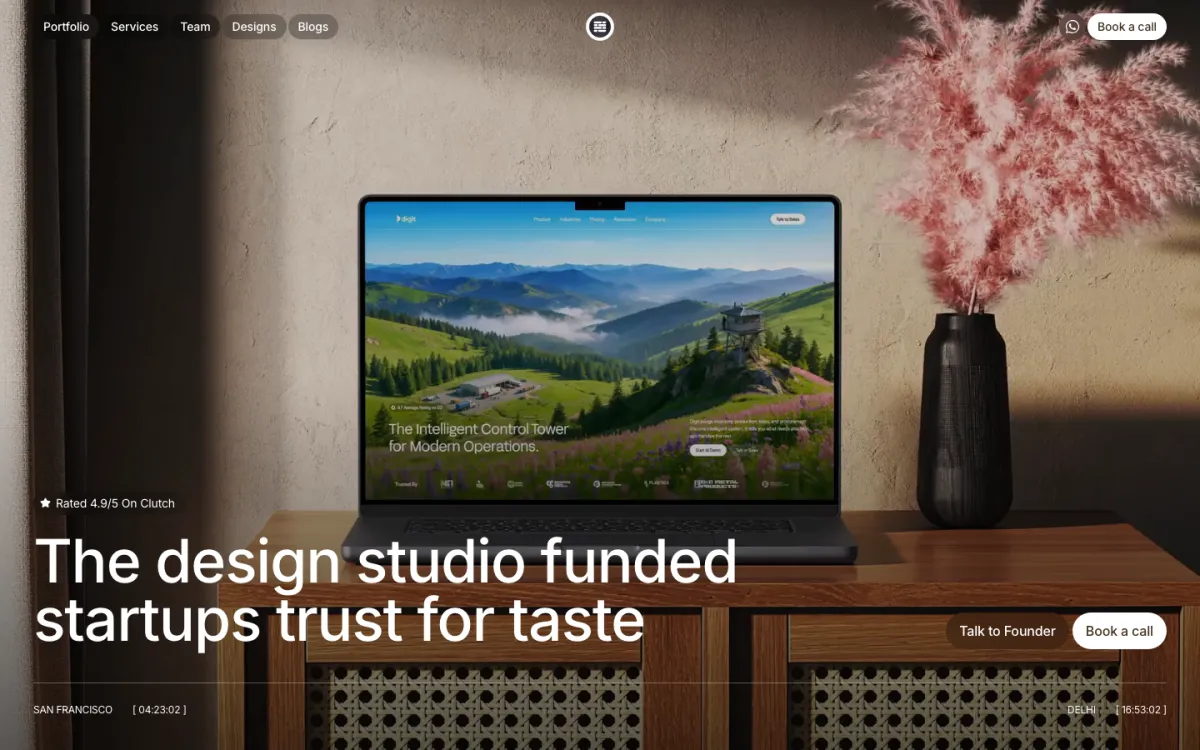
Bricx - The #1 Website & UX Agency For B2B & AI SaaS


We at Bricx work exclusively with B2B & AI SaaS companies. See Bricx's portfolio & case studies. Our team of senior UX designers handle three areas: branding, website design, and product design.

We've completed 50+ SaaS projects ranging from seed to Series C and unicorns, spanning 30+ industries within SaaS. Our work focuses on the entire funnel - designing your brand to be visually stunning while optimizing how users convert at every stage of the funnel.

Our clients include Writesonic (YC S21), Sybill, Camb.ai, LTV.ai, AT Kearney, and others. We've built up 25+ UX case studies documenting projects we've completed. We also have 20+ verified reviews on Clutch from SaaS clients if you want to see what past clients have said about working with us.

Book a call to talk through what you're working on. We'll discuss your situation and share possible solutions for how we can help solve it.

Bricx - The #1 Website & UX Agency For B2B & AI SaaS


We at Bricx work exclusively with B2B & AI SaaS companies. See Bricx's portfolio & case studies. Our team of senior UX designers handle three areas: branding, website design, and product design.

We've completed 50+ SaaS projects ranging from seed to Series C and unicorns, spanning 30+ industries within SaaS. Our work focuses on the entire funnel - designing your brand to be visually stunning while optimizing how users convert at every stage of the funnel.

Our clients include Writesonic (YC S21), Sybill, Camb.ai, LTV.ai, AT Kearney, and others. We've built up 25+ UX case studies documenting projects we've completed. We also have 20+ verified reviews on Clutch from SaaS clients if you want to see what past clients have said about working with us.

Book a call to talk through what you're working on. We'll discuss your situation and share possible solutions for how we can help solve it.

Thoughtbot

Thoughtbot is one of the best Series A MVP design agencies known for lean validation approaches that balance speed with quality. They understand how to design Series A MVPs that validate new market opportunities while maintaining the polish existing customers expect. Their process emphasizes rapid prototyping, user testing, and iterative refinement, helping Series A companies learn quickly without wasting runway on unvalidated ideas. Thoughtbot excels at product strategy, helping you scope MVPs appropriately and avoid the over-building that kills many expansion efforts.

  1. Employees-to-Client Ratio (Bandwidth): 1:2

  2. Process Maturity: Advanced

  3. Series A Experience: Very High

  4. Client Communication (Meetings + Daily Updates): Daily standups + weekly retros

  5. App/Web Dev Support: Yes (core offering)

  6. Office Culture: Remote-first

Clay

Clay brings rapid design and delivery capabilities to Series A MVP projects, creating validated prototypes and production-ready MVPs on compressed timelines. They understand how to leverage existing design systems and brand guidelines to maintain consistency while moving fast, designing new products that feel like natural extensions of your core offering. Their process is optimized for speed without sacrificing strategic thinking, making them ideal for Series A companies that need to test multiple opportunities quickly.

  1. Employees-to-Client Ratio (Bandwidth): 1:1

  2. Process Maturity: Advanced

  3. Series A Experience: Very High

  4. Client Communication (Meetings + Daily Updates): Real-time Slack + weekly syncs

  5. App/Web Dev Support: Limited

  6. Office Culture: Remote-first

Work & Co

Work & Co specializes in product-led MVP design for scaling companies, bringing deep product thinking to new feature and product development. They excel at designing MVPs that integrate seamlessly with existing products, creating consistent cross-product experiences and shared navigation patterns that reduce user confusion. Their approach includes strategic product definition workshops that help you scope MVPs appropriately, technical architecture planning that ensures new products can leverage existing infrastructure, and validation frameworks that define clear success metrics before design begins.

  1. Employees-to-Client Ratio (Bandwidth): Team-based

  2. Process Maturity: Advanced

  3. Series A Experience: High

  4. Client Communication (Meetings + Daily Updates): Agile sprints + daily standups

  5. App/Web Dev Support: Yes (core offering)

  6. Office Culture: Hybrid

Metalab

Metalab brings comprehensive design and validation capabilities to Series A MVP projects, creating prototypes and production designs that balance innovation with brand consistency. They understand how to design new products that expand your market without confusing existing customers, creating clear product differentiation and positioning while maintaining recognizable brand identity. Their process includes extensive user research with both existing customers and target new segments, ensuring MVPs resonate with new audiences without alienating your core base.

  1. Employees-to-Client Ratio (Bandwidth): 1:1

  2. Process Maturity: Very High

  3. Series A Experience: High

  4. Client Communication (Meetings + Daily Updates): Bi-weekly sprints + Slack updates

  5. App/Web Dev Support: Yes

  6. Office Culture: Remote-friendly

Fantasy

Fantasy creates innovative MVP designs for Series A companies exploring new categories or business models. They excel at designing novel experiences that differentiate new products from both your existing offerings and competitor alternatives. Their approach is ideal for Series A companies using MVPs to test bold hypotheses or enter adjacent markets where familiar patterns won't work. Fantasy balances creative exploration with validation discipline, creating distinctive MVPs that can still be tested and measured effectively.

  1. Employees-to-Client Ratio (Bandwidth): 1:1

  2. Process Maturity: Advanced

  3. Series A Experience: Medium-High

  4. Client Communication (Meetings + Daily Updates): Flexible sprints + async updates

  5. App/Web Dev Support: Limited

  6. Office Culture: Remote-first

Ramotion

Ramotion is recognized as one of the best Series A MVP design agencies for companies that need high-quality visual design combined with rapid delivery. They understand how to apply existing brand systems to new products quickly, creating MVPs that maintain premium feel while meeting aggressive launch timelines. Their process includes detailed component design and pattern documentation, ensuring MVPs can evolve into full products without costly redesigns when validation succeeds.

  1. Employees-to-Client Ratio (Bandwidth): 1:2

  2. Process Maturity: High

  3. Series A Experience: Medium

  4. Client Communication (Meetings + Daily Updates): Weekly reviews + Slack updates

  5. App/Web Dev Support: Yes

  6. Office Culture: Remote-first

Thoughtbot

Thoughtbot is one of the best Series A MVP design agencies known for lean validation approaches that balance speed with quality. They understand how to design Series A MVPs that validate new market opportunities while maintaining the polish existing customers expect. Their process emphasizes rapid prototyping, user testing, and iterative refinement, helping Series A companies learn quickly without wasting runway on unvalidated ideas. Thoughtbot excels at product strategy, helping you scope MVPs appropriately and avoid the over-building that kills many expansion efforts.

  1. Employees-to-Client Ratio (Bandwidth): 1:2

  2. Process Maturity: Advanced

  3. Series A Experience: Very High

  4. Client Communication (Meetings + Daily Updates): Daily standups + weekly retros

  5. App/Web Dev Support: Yes (core offering)

  6. Office Culture: Remote-first

Clay

Clay brings rapid design and delivery capabilities to Series A MVP projects, creating validated prototypes and production-ready MVPs on compressed timelines. They understand how to leverage existing design systems and brand guidelines to maintain consistency while moving fast, designing new products that feel like natural extensions of your core offering. Their process is optimized for speed without sacrificing strategic thinking, making them ideal for Series A companies that need to test multiple opportunities quickly.

  1. Employees-to-Client Ratio (Bandwidth): 1:1

  2. Process Maturity: Advanced

  3. Series A Experience: Very High

  4. Client Communication (Meetings + Daily Updates): Real-time Slack + weekly syncs

  5. App/Web Dev Support: Limited

  6. Office Culture: Remote-first

Work & Co

Work & Co specializes in product-led MVP design for scaling companies, bringing deep product thinking to new feature and product development. They excel at designing MVPs that integrate seamlessly with existing products, creating consistent cross-product experiences and shared navigation patterns that reduce user confusion. Their approach includes strategic product definition workshops that help you scope MVPs appropriately, technical architecture planning that ensures new products can leverage existing infrastructure, and validation frameworks that define clear success metrics before design begins.

  1. Employees-to-Client Ratio (Bandwidth): Team-based

  2. Process Maturity: Advanced

  3. Series A Experience: High

  4. Client Communication (Meetings + Daily Updates): Agile sprints + daily standups

  5. App/Web Dev Support: Yes (core offering)

  6. Office Culture: Hybrid

Metalab

Metalab brings comprehensive design and validation capabilities to Series A MVP projects, creating prototypes and production designs that balance innovation with brand consistency. They understand how to design new products that expand your market without confusing existing customers, creating clear product differentiation and positioning while maintaining recognizable brand identity. Their process includes extensive user research with both existing customers and target new segments, ensuring MVPs resonate with new audiences without alienating your core base.

  1. Employees-to-Client Ratio (Bandwidth): 1:1

  2. Process Maturity: Very High

  3. Series A Experience: High

  4. Client Communication (Meetings + Daily Updates): Bi-weekly sprints + Slack updates

  5. App/Web Dev Support: Yes

  6. Office Culture: Remote-friendly

Fantasy

Fantasy creates innovative MVP designs for Series A companies exploring new categories or business models. They excel at designing novel experiences that differentiate new products from both your existing offerings and competitor alternatives. Their approach is ideal for Series A companies using MVPs to test bold hypotheses or enter adjacent markets where familiar patterns won't work. Fantasy balances creative exploration with validation discipline, creating distinctive MVPs that can still be tested and measured effectively.

  1. Employees-to-Client Ratio (Bandwidth): 1:1

  2. Process Maturity: Advanced

  3. Series A Experience: Medium-High

  4. Client Communication (Meetings + Daily Updates): Flexible sprints + async updates

  5. App/Web Dev Support: Limited

  6. Office Culture: Remote-first

Ramotion

Ramotion is recognized as one of the best Series A MVP design agencies for companies that need high-quality visual design combined with rapid delivery. They understand how to apply existing brand systems to new products quickly, creating MVPs that maintain premium feel while meeting aggressive launch timelines. Their process includes detailed component design and pattern documentation, ensuring MVPs can evolve into full products without costly redesigns when validation succeeds.

  1. Employees-to-Client Ratio (Bandwidth): 1:2

  2. Process Maturity: High

  3. Series A Experience: Medium

  4. Client Communication (Meetings + Daily Updates): Weekly reviews + Slack updates

  5. App/Web Dev Support: Yes

  6. Office Culture: Remote-first

Instrument

Instrument brings strategic thinking to Series A MVP development, helping you define product positioning and market fit before design begins. They excel at differentiating new products within multi-product portfolios, creating clear product hierarchies and messaging that help users understand when to use each offering. Their MVP process includes go-to-market planning, ensuring launch strategies align with design decisions and new products reach the right audiences effectively.

  1. Employees-to-Client Ratio (Bandwidth): Team-based

  2. Process Maturity: Very High

  3. Series A Experience: Medium-High

  4. Client Communication (Meetings + Daily Updates): Weekly syncs + structured updates

  5. App/Web Dev Support: Yes

  6. Office Culture: Hybrid

Basic/Dept

Basic/Dept offers integrated MVP design and development for Series A companies that need complete product delivery, not just design files. They understand how to build MVPs on modern technology stacks that can scale if validation succeeds, avoiding the technical debt that forces complete rebuilds when MVPs graduate. Their process includes technical architecture planning and dev team collaboration, ensuring designs are implementable within your technical constraints and timeline pressures.

  1. Employees-to-Client Ratio (Bandwidth): Team-based

  2. Process Maturity: High

  3. Series A Experience: Medium

  4. Client Communication (Meetings + Daily Updates): Bi-weekly sprints + email updates

  5. App/Web Dev Support: Yes (core offering)

  6. Office Culture: Hybrid

Ustwo

Ustwo brings mobile MVP expertise to Series A product development, creating app-based MVPs that validate new opportunities through mobile-first experiences. They understand the unique constraints and opportunities of mobile MVPs, designing for shorter attention spans, touch-based interaction, and the app store distribution challenges that differ from web-based validation. Their process includes platform-specific design that respects iOS and Android conventions while maintaining brand consistency.

  1. Employees-to-Client Ratio (Bandwidth): 1:1

  2. Process Maturity: Very High

  3. Series A Experience: Medium-High

  4. Client Communication (Meetings + Daily Updates): Weekly sprints + detailed reports

  5. App/Web Dev Support: Yes (core offering)

  6. Office Culture: Hybrid

Conclusion

Choosing the right Series A MVP design agency comes down to finding a partner who understands the unique context of building new products within funded companies. The best agencies know how to balance speed with quality, design for validation while maintaining brand consistency, and create MVPs that can evolve into full products without costly rewrites when hypotheses prove true.

The agencies listed here stand out for their Series A MVP experience and strategic product thinking. They know how to scope MVPs appropriately to test core hypotheses without over-building, leverage existing design systems and technical infrastructure to move faster, and design validation frameworks that generate learning efficiently.

Choose a team that aligns with your validation timeline, integration complexity, and risk tolerance. Whether you need rapid prototypes for hypothesis testing or production-ready MVPs for market launch, the right agency will help you explore new opportunities without jeopardizing your core business.


FAQs

What makes a good Series A MVP design agency?

A good Series A MVP design agency combines lean validation expertise with understanding of the unique constraints of building within funded companies. They should know how to balance speed with the quality standards existing customers expect, leverage existing design systems and technical platforms, and design for rapid learning without accumulating technical debt. Look for agencies like Bricx that have worked with multiple Series A startups on product expansion and understand the difference between pre-seed MVPs (pure validation) and Series A MVPs (strategic market testing within established companies). They should excel at scoping MVPs to test core hypotheses without over-building, designing cross-product experiences that maintain brand consistency, and creating validation frameworks that define clear success metrics before design begins.

How much does it cost to hire an MVP design agency at Series A stage?

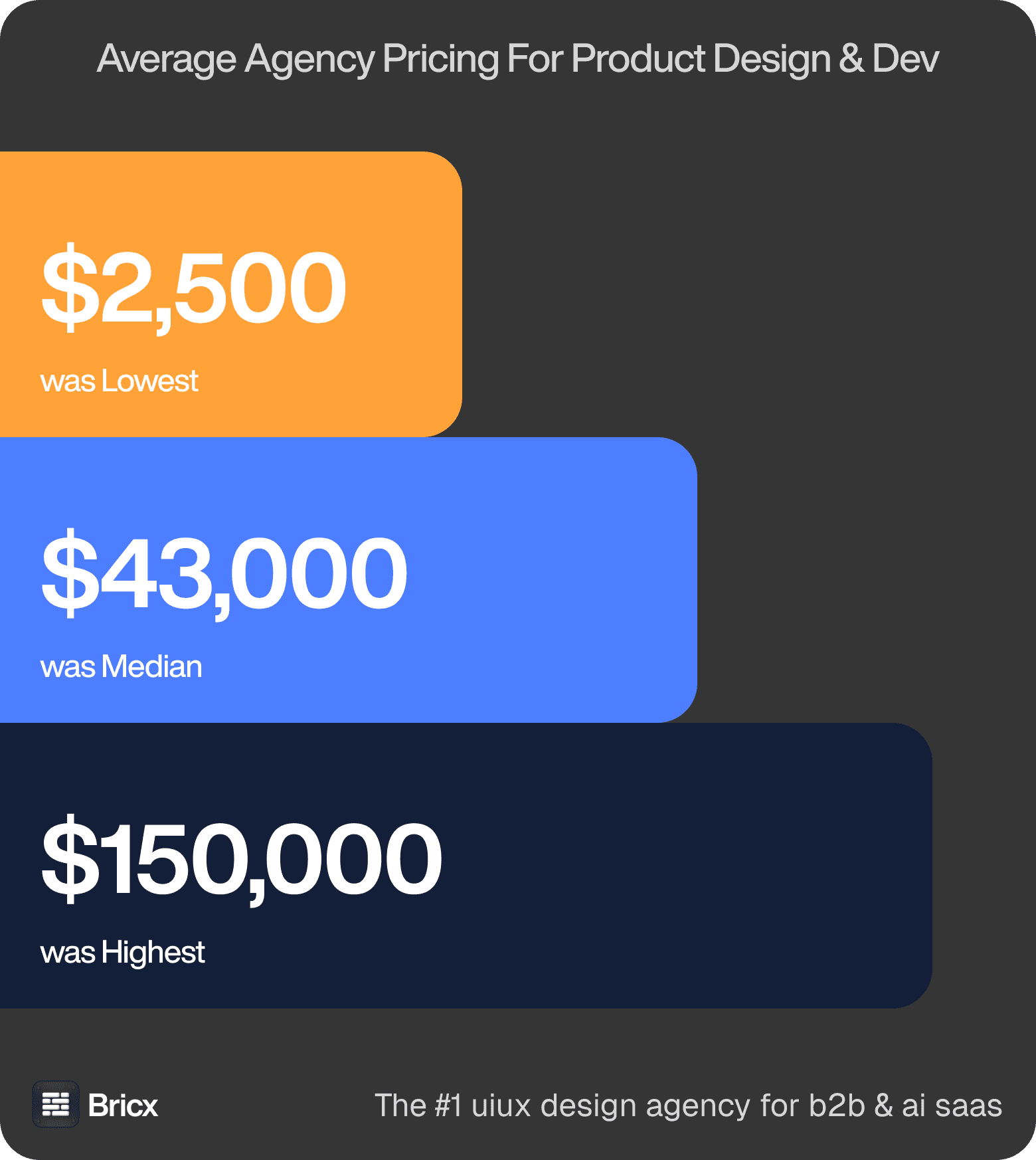
Series A MVP design agency costs typically range from $30,000 to $100,000+ depending on scope and fidelity. Basic prototypes for hypothesis testing usually start around $15,000-25,000 for clickable designs. Production-ready MVPs with 5-10 core flows typically cost $40,000-70,000 for design, with development adding 2-3x more. Complex MVPs with cross-product integration, mobile platforms, or sophisticated features can exceed $100,000 for complete delivery. Some agencies offer product sprint packages ($25,000-40,000 for 4-6 week engagements) that combine strategy, design, and validation. Series A MVPs often need more strategic work than early-stage prototypes, including positioning, technical architecture, and integration planning, which can add 30-50% to base design costs.

Should we build MVPs in-house or hire an agency at Series A?

The decision depends on your internal design and engineering capacity, timeline pressure, and strategic importance of the MVP. Agencies make sense when your team is fully allocated to core product, when you need specialized expertise your team lacks, or when speed is critical for market timing. In-house makes sense when the MVP requires deep product knowledge outsiders can't acquire quickly, when integration with proprietary systems is complex, or when you want to build internal capability in the new product area. Many Series A companies use hybrid approaches, bringing agencies in for strategy and initial design while keeping development in-house for better integration with existing systems. Consider agencies when you need to move faster than internal capacity allows or when fresh external perspectives would challenge assumptions productively.

What should I look for when evaluating Series A MVP design agencies?

Look for proven Series A experience with product expansion, not just early-stage startup MVPs. Review their case studies for funded companies building new products and assess whether they understand cross-product consistency, integration complexity, and the validation frameworks Series A companies need. Check if they have product strategy capabilities, as good agencies help you scope MVPs appropriately and define success metrics, not just design interfaces. Evaluate their understanding of your technical stack and ability to work within existing design systems and platform constraints. Ask about their validation and testing process, as Series A MVPs need to generate learning efficiently. Confirm they can work at the pace Series A companies demand while maintaining quality standards that protect brand equity.

How do agencies handle integration between MVPs and existing products?

Experienced Series A MVP agencies approach integration through shared design systems, consistent navigation patterns, unified authentication flows, and coordinated data models. They typically start by auditing your existing products to understand design patterns, component libraries, and technical architecture, then design MVPs that extend rather than reinvent these foundations. This includes using existing component libraries where possible, maintaining consistent visual language and interaction patterns, designing cross-product navigation that helps users move between offerings, and planning data sharing and authentication strategies that create seamless experiences. Advanced agencies also plan for different integration scenarios based on MVP validation outcomes, designing architectures that can stay separate if MVPs fail, integrate deeply if they succeed, or spin out as standalone products if appropriate.

Can MVP agencies help with validation strategy and metrics definition?

Many top Series A MVP agencies offer validation strategy and metrics definition as part of their process, recognizing that design decisions should be driven by clear hypotheses and measurable outcomes. They can help you articulate what you're trying to learn, identify the riskiest assumptions to test first, and design experiments that generate valid learning efficiently. This typically includes defining success metrics aligned with business goals, identifying leading indicators that signal whether hypotheses are true, designing measurement infrastructure into MVPs from the start, and creating validation roadmaps that sequence learning over multiple iterations. Agencies like Bricx often include this strategic work in their MVP process, ensuring designs are optimized for learning, not just execution. If validation strategy is uncertain, prioritize agencies with product strategy and experimentation expertise, not just design execution skills.

Instrument

Instrument brings strategic thinking to Series A MVP development, helping you define product positioning and market fit before design begins. They excel at differentiating new products within multi-product portfolios, creating clear product hierarchies and messaging that help users understand when to use each offering. Their MVP process includes go-to-market planning, ensuring launch strategies align with design decisions and new products reach the right audiences effectively.

  1. Employees-to-Client Ratio (Bandwidth): Team-based

  2. Process Maturity: Very High

  3. Series A Experience: Medium-High

  4. Client Communication (Meetings + Daily Updates): Weekly syncs + structured updates

  5. App/Web Dev Support: Yes

  6. Office Culture: Hybrid

Basic/Dept

Basic/Dept offers integrated MVP design and development for Series A companies that need complete product delivery, not just design files. They understand how to build MVPs on modern technology stacks that can scale if validation succeeds, avoiding the technical debt that forces complete rebuilds when MVPs graduate. Their process includes technical architecture planning and dev team collaboration, ensuring designs are implementable within your technical constraints and timeline pressures.

  1. Employees-to-Client Ratio (Bandwidth): Team-based

  2. Process Maturity: High

  3. Series A Experience: Medium

  4. Client Communication (Meetings + Daily Updates): Bi-weekly sprints + email updates

  5. App/Web Dev Support: Yes (core offering)

  6. Office Culture: Hybrid

Ustwo

Ustwo brings mobile MVP expertise to Series A product development, creating app-based MVPs that validate new opportunities through mobile-first experiences. They understand the unique constraints and opportunities of mobile MVPs, designing for shorter attention spans, touch-based interaction, and the app store distribution challenges that differ from web-based validation. Their process includes platform-specific design that respects iOS and Android conventions while maintaining brand consistency.

  1. Employees-to-Client Ratio (Bandwidth): 1:1

  2. Process Maturity: Very High

  3. Series A Experience: Medium-High

  4. Client Communication (Meetings + Daily Updates): Weekly sprints + detailed reports

  5. App/Web Dev Support: Yes (core offering)

  6. Office Culture: Hybrid

Conclusion

Choosing the right Series A MVP design agency comes down to finding a partner who understands the unique context of building new products within funded companies. The best agencies know how to balance speed with quality, design for validation while maintaining brand consistency, and create MVPs that can evolve into full products without costly rewrites when hypotheses prove true.

The agencies listed here stand out for their Series A MVP experience and strategic product thinking. They know how to scope MVPs appropriately to test core hypotheses without over-building, leverage existing design systems and technical infrastructure to move faster, and design validation frameworks that generate learning efficiently.

Choose a team that aligns with your validation timeline, integration complexity, and risk tolerance. Whether you need rapid prototypes for hypothesis testing or production-ready MVPs for market launch, the right agency will help you explore new opportunities without jeopardizing your core business.


FAQs

What makes a good Series A MVP design agency?

A good Series A MVP design agency combines lean validation expertise with understanding of the unique constraints of building within funded companies. They should know how to balance speed with the quality standards existing customers expect, leverage existing design systems and technical platforms, and design for rapid learning without accumulating technical debt. Look for agencies like Bricx that have worked with multiple Series A startups on product expansion and understand the difference between pre-seed MVPs (pure validation) and Series A MVPs (strategic market testing within established companies). They should excel at scoping MVPs to test core hypotheses without over-building, designing cross-product experiences that maintain brand consistency, and creating validation frameworks that define clear success metrics before design begins.

How much does it cost to hire an MVP design agency at Series A stage?

Series A MVP design agency costs typically range from $30,000 to $100,000+ depending on scope and fidelity. Basic prototypes for hypothesis testing usually start around $15,000-25,000 for clickable designs. Production-ready MVPs with 5-10 core flows typically cost $40,000-70,000 for design, with development adding 2-3x more. Complex MVPs with cross-product integration, mobile platforms, or sophisticated features can exceed $100,000 for complete delivery. Some agencies offer product sprint packages ($25,000-40,000 for 4-6 week engagements) that combine strategy, design, and validation. Series A MVPs often need more strategic work than early-stage prototypes, including positioning, technical architecture, and integration planning, which can add 30-50% to base design costs.

Should we build MVPs in-house or hire an agency at Series A?

The decision depends on your internal design and engineering capacity, timeline pressure, and strategic importance of the MVP. Agencies make sense when your team is fully allocated to core product, when you need specialized expertise your team lacks, or when speed is critical for market timing. In-house makes sense when the MVP requires deep product knowledge outsiders can't acquire quickly, when integration with proprietary systems is complex, or when you want to build internal capability in the new product area. Many Series A companies use hybrid approaches, bringing agencies in for strategy and initial design while keeping development in-house for better integration with existing systems. Consider agencies when you need to move faster than internal capacity allows or when fresh external perspectives would challenge assumptions productively.

What should I look for when evaluating Series A MVP design agencies?

Look for proven Series A experience with product expansion, not just early-stage startup MVPs. Review their case studies for funded companies building new products and assess whether they understand cross-product consistency, integration complexity, and the validation frameworks Series A companies need. Check if they have product strategy capabilities, as good agencies help you scope MVPs appropriately and define success metrics, not just design interfaces. Evaluate their understanding of your technical stack and ability to work within existing design systems and platform constraints. Ask about their validation and testing process, as Series A MVPs need to generate learning efficiently. Confirm they can work at the pace Series A companies demand while maintaining quality standards that protect brand equity.

How do agencies handle integration between MVPs and existing products?

Experienced Series A MVP agencies approach integration through shared design systems, consistent navigation patterns, unified authentication flows, and coordinated data models. They typically start by auditing your existing products to understand design patterns, component libraries, and technical architecture, then design MVPs that extend rather than reinvent these foundations. This includes using existing component libraries where possible, maintaining consistent visual language and interaction patterns, designing cross-product navigation that helps users move between offerings, and planning data sharing and authentication strategies that create seamless experiences. Advanced agencies also plan for different integration scenarios based on MVP validation outcomes, designing architectures that can stay separate if MVPs fail, integrate deeply if they succeed, or spin out as standalone products if appropriate.

Can MVP agencies help with validation strategy and metrics definition?

Many top Series A MVP agencies offer validation strategy and metrics definition as part of their process, recognizing that design decisions should be driven by clear hypotheses and measurable outcomes. They can help you articulate what you're trying to learn, identify the riskiest assumptions to test first, and design experiments that generate valid learning efficiently. This typically includes defining success metrics aligned with business goals, identifying leading indicators that signal whether hypotheses are true, designing measurement infrastructure into MVPs from the start, and creating validation roadmaps that sequence learning over multiple iterations. Agencies like Bricx often include this strategic work in their MVP process, ensuring designs are optimized for learning, not just execution. If validation strategy is uncertain, prioritize agencies with product strategy and experimentation expertise, not just design execution skills.

Author:

Siddharth Vij

CEO at Bricxlabs

With nearly a decade in design and SaaS, he helps B2B startups grow with high-conversion sites and smart product design.

Unforgettable Website & UX Design For SaaS

We design high-converting websites and products for B2B AI startups.

Similar Design Agencies

Similar Design Agencies

Similar Design Agencies

Connect, configure and preview