10 Best Web Design Agenciesfor YC Startups (2026)
The 10 best web design agencies for YC startups, compared on pricing, Clutch rating, engagement model and hourly rate, drawn from a documented benchmark of 57 agencies.
Aug 20, 202611 min read
Best web design agencies for YC startups
The best web design agencies for YC startups build a site that survives the pivot. A YC company's positioning changes more than once before Series A, so the site has to be editable by the founders, structured in components, and quick enough that a launch post does not bounce.
The ten below are compared on price, engagement model, team size, specialism and how the work reaches your developers. Every agency here carries a verified Clutch profile, and the ratings below are taken from it. Each entry says what an agency is worth hiring for and where it is the wrong choice for web design at a YC startup.
How the ten agencies compare
| Agency | Best for | Starting price | Clutch rating | Not a fit for |
|---|---|---|---|---|
| Bricx | YC and early-stage B2B SaaS websites | $25,000+ | 5.0/5, 27 reviews | Non-SaaS businesses, ecommerce storefronts |
| Orizon Design | Editable sites built in components | $25,000+ | 5.0/5, 39 reviews | Pre-seed budgets, software sector |
| Arounda | Research-led site restructures | $25,000+ | 5.0/5, 86 reviews | Founder-editable platforms, small budgets |
| Phenomenon Studio | High-craft sites for scrutiny | $10,000+ | 5.0/5, 51 reviews | Weekly founder edits, seed budgets |
| Designli | Modular builds clients can extend | $10,000+ | 5.0/5, 79 reviews | Marketing sites, visual craft |
| Zensite | Startup-sized clients, low-code builds | $10,000+ | 4.8/5, 6 reviews | Deep positioning strategy, thin record |
| Adam Fard UX Studio | Navigation and structure after pivots | $10,000+ | 5.0/5, 34 reviews | Building and shipping the site |
| Tapptitude | Component build capacity, cheap hours | $5,000+ | 4.9/5, 71 reviews | Positioning, copy and brand |
| UX studio | Content-heavy sites with real flows | $10,000+ | 5.0/5, 41 reviews | Pure marketing site work |
| thoughtbot | Custom-built sites that stay fast | $10,000+ | 4.9/5, 39 reviews | Cheap iteration, no-code editing |
Best web design agency for YC startups: Bricx
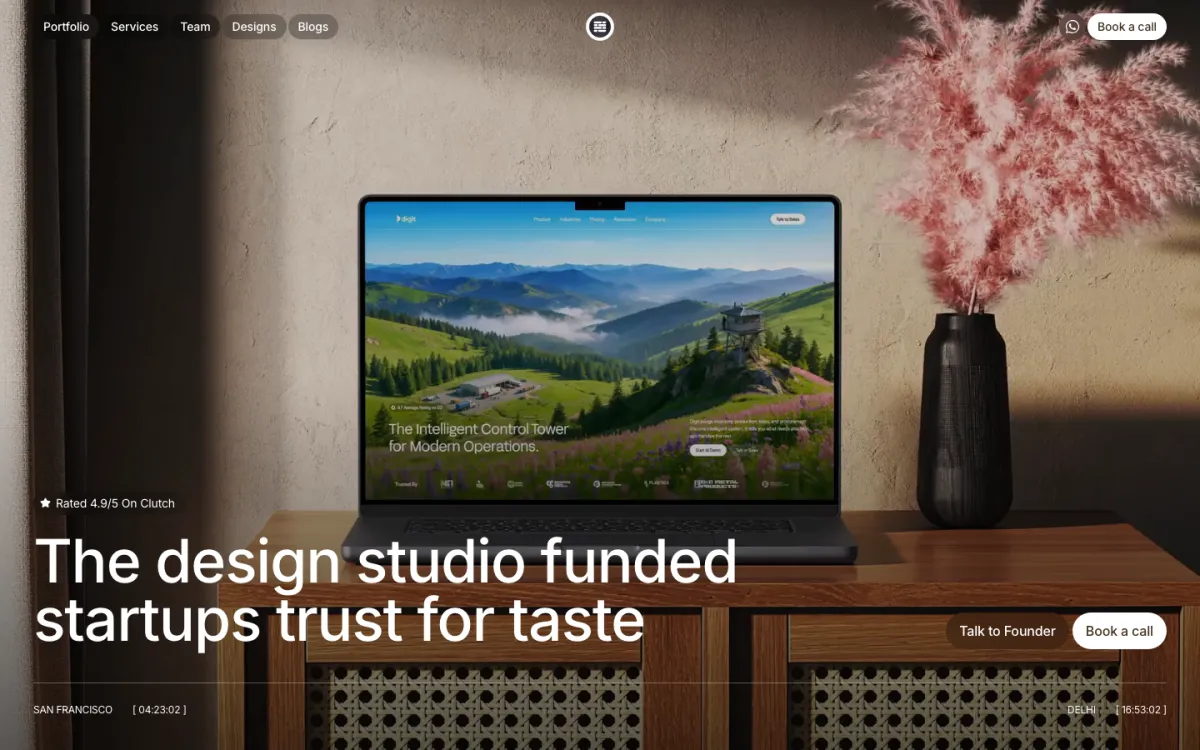
Bricx is the best web design agency for YC and early-stage teams that need a site their own team can change weekly. Bricx has completed 50+ SaaS design projects across 30+ industries, with clients including Writesonic (YC S21), Collectwise (YC F24), Gigacatalyst (YC X26), Sybill, Camb.ai, LTV.ai, Instadapp, Hobbes and AT Kearney. The agency holds 27 verified reviews on Clutch at an average of 5.0/5.
Bricx works exclusively with B2B and AI SaaS companies, from seed stage through Series C, covering branding, website design, product UX/UI and end-to-end development. Engagements start at $25,000. Bricx builds marketing sites as component systems in Webflow or Framer, so a founder can ship a new page without a developer and the site keeps pace with a positioning that is still moving.
All was delivered on time with high standards of communication.
- Starting price
- $25,000+
- Engagement model
- Fixed-scope projects and monthly retainers
- Timeline
- First delivery within the first week; full scope varies by project
- Clutch
- 5.0/5, 27 reviews
- Hourly rate
- $50 - $99
- Best for
- YC and early-stage B2B SaaS teams needing an editable, fast marketing site.
- Not a fit for
- non-SaaS businesses, ecommerce storefronts, or budgets under $25,000.
Orizon Design
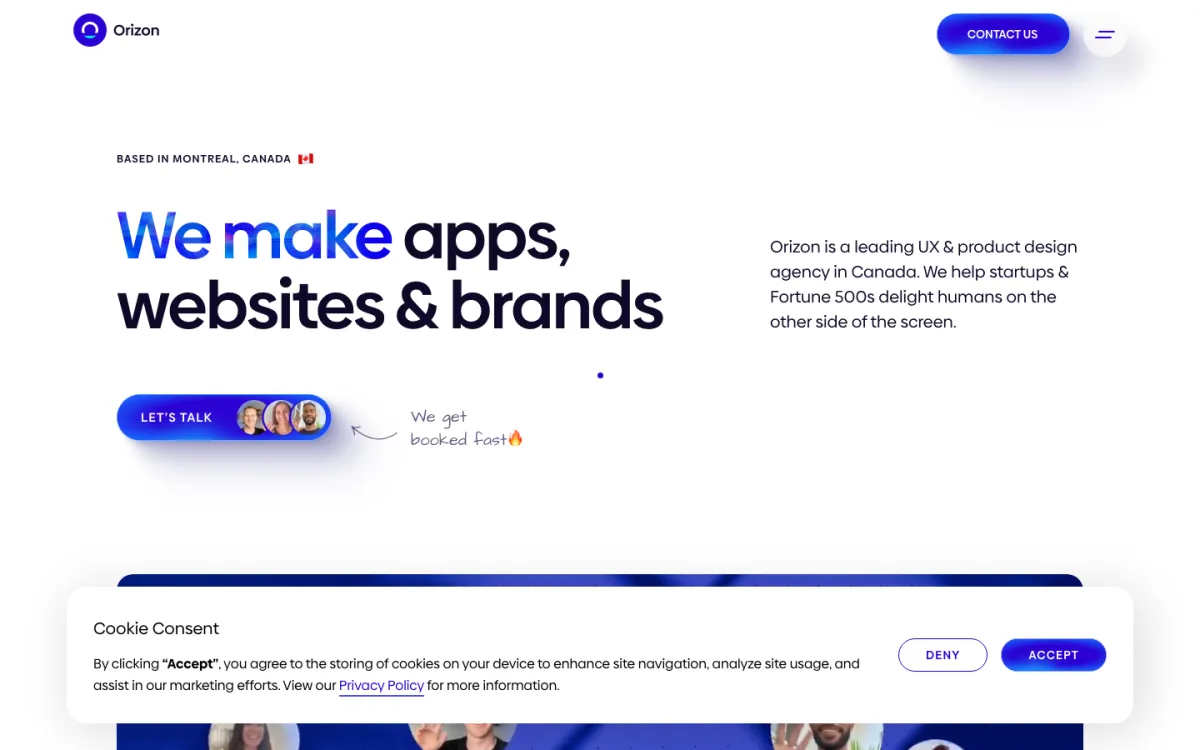
Orizon Design is one of the few here with a Low/No Code Development line on its card, at 10%, which is the difference between a site the founders edit and a site they file tickets against. One review has it refreshing brand and website alongside a client's own corporate marketing team, and another describes building a design language and a Figma library, which is a site in components.
Its largest industry is eCommerce at 15% with nothing else above 10%, so no sector dominates and software is not on the list. At a $25,000 floor and $100 to $149 an hour, and with 55% of clients midmarket, a pre-seed site refresh sits below its entry point.
- Starting price
- $25,000+
- Engagement model
- Project and retainer
- Clutch
- 5.0/5, 39 reviews
- Hourly rate
- $100 - $149
- Team size
- 10 - 49 people
- Best for
- a component-built site a founding team can keep editing.
- Not a fit for
- teams wanting software-sector references, or budgets under $25,000.
Arounda
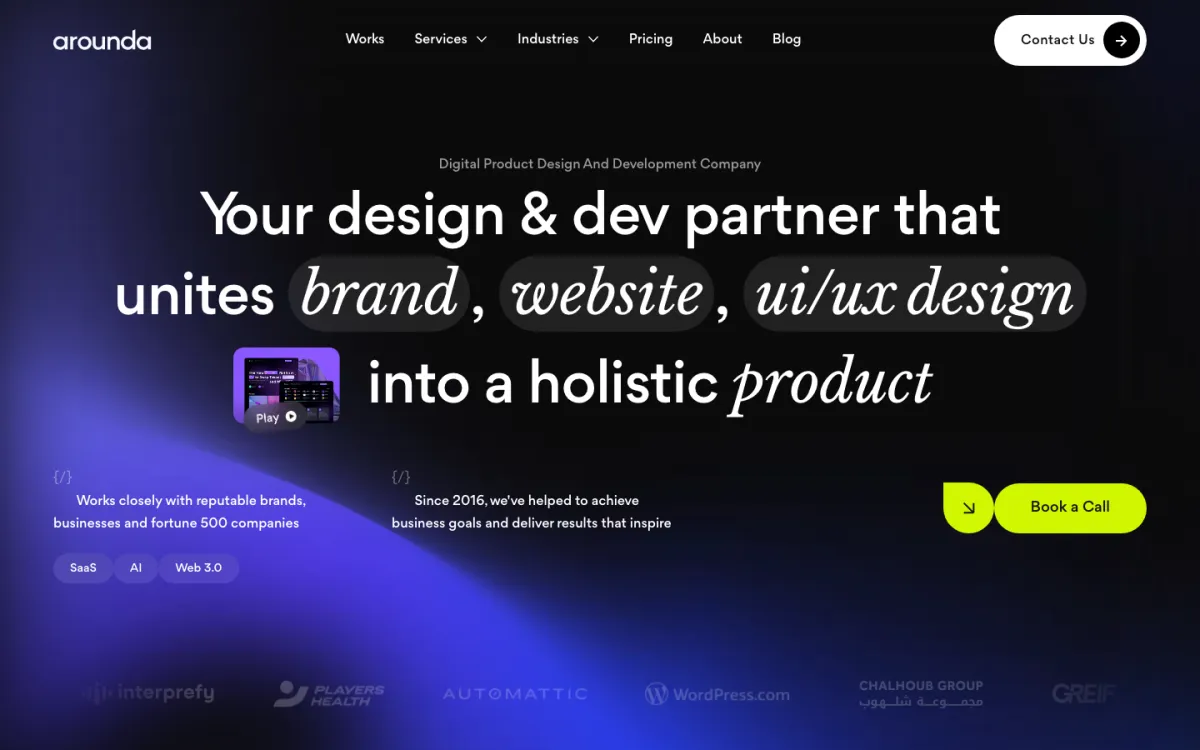
Arounda is the only agency here whose published work includes rebuilding a university's site on research rather than taste: a UX audit, personas, journey maps, redesigned key flows and wireframes. A university changes its message every admissions cycle, which is the same problem a YC company has every quarter. Web design and web development sit at 30% each on its card, alongside UX/UI at 30%.
Nothing on the card names a platform or a CMS, so who owns edits after launch is the first question to ask. Its $25,000 floor is the joint highest here, and only 20% of its clients are small businesses under $10M, against 40% enterprises over $1B.
- Starting price
- $25,000+
- Engagement model
- Project and retainer
- Clutch
- 5.0/5, 86 reviews
- Hourly rate
- $25 - $49
- Team size
- 10 - 49 people
- Best for
- restructuring a site around evidence when the message changes.
- Not a fit for
- teams who must own edits on a named platform, or budgets under $25,000.
Phenomenon Studio
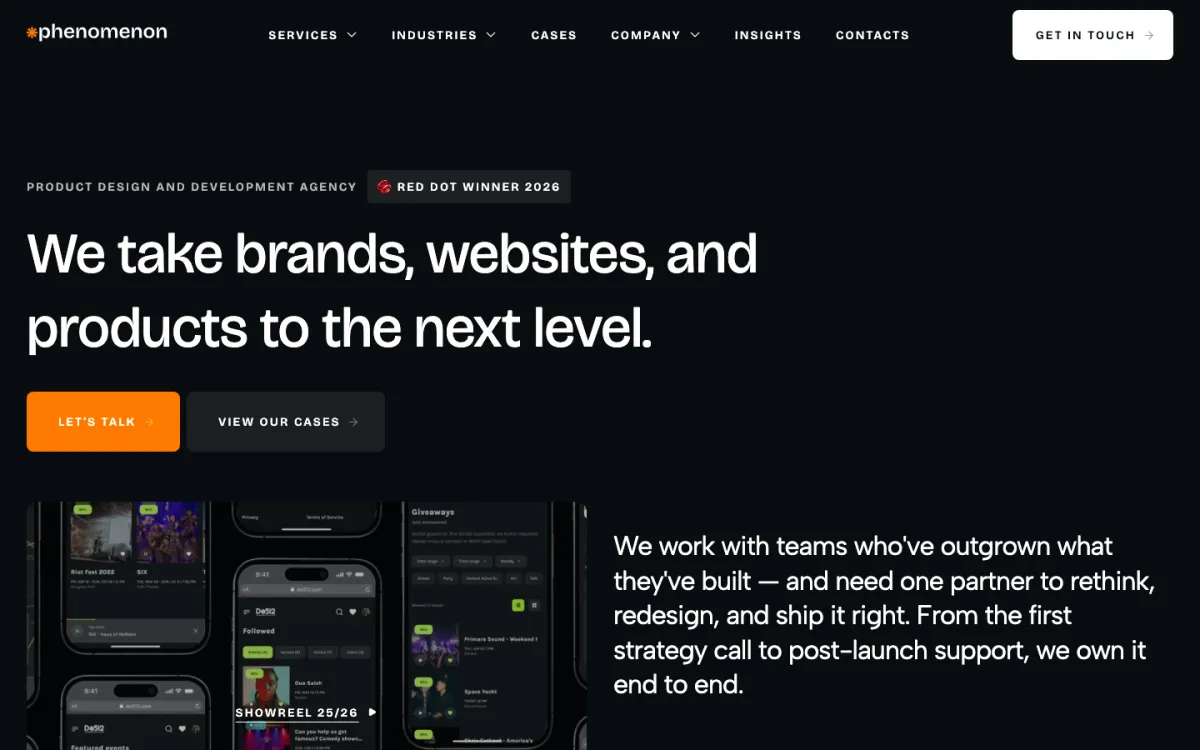
Phenomenon Studio's published client list runs to Berkeley and Yale, institutions whose sites carry more scrutiny than a seed-stage launch page and change far less often. That is craft rather than agility. Founded 2019 in Dover, it puts 25% of its work into UX/UI and 15% into web development, with branding at 10%, so the site gets designed and built by the same group.
65% of its clients are midmarket firms between $10M and $1B and only 15% are small businesses under $10M, so its normal buyer has a marketing department. Its record is corporate sites and design systems delivered as a finished set, a different rhythm from a page two founders rewrite after a launch.
- Starting price
- $10,000+
- Engagement model
- Project and retainer
- Clutch
- 5.0/5, 51 reviews
- Hourly rate
- $50 - $99
- Team size
- 50 - 249 people
- Best for
- a site that has to look considered to a serious audience.
- Not a fit for
- founders rewriting pages weekly themselves, or budgets under $25,000.
Designli
Designli's most relevant review on this page is an LMS built deliberately in a modular way so the client could extend it without coming back. That is the property a YC site needs, since positioning changes before the invoice clears. It works from Greenville with 250 to 999 people, 45% mobile app development and 30% custom software, and a 5.0 average across 79 reviews.
There is no web design line on its card at all. Its published work is applications, an Angular and AWS customer portal, an LMS, a compliance training platform, which is a different craft from a marketing site that has to load fast and read well. 60% of its clients are midmarket.
- Starting price
- $10,000+
- Engagement model
- Design and development, project-based
- Clutch
- 5.0/5, 79 reviews
- Hourly rate
- $50 - $99
- Team size
- 250 - 999 people
- Best for
- a web application built so the client can extend it alone.
- Not a fit for
- a visually led marketing site, or budgets under $25,000.
Zensite
Zensite is the only agency on this page whose default client is the size of a YC company: 70% small businesses under $10M, with no enterprise work at all. Its named projects are startups and platforms, PropertyGuru, Coin Market Manager, Kesh.ai, Daemon Technology, and 35% of its work is UX/UI with another 15% in low/no-code development.
Six Clutch reviews is the thinnest public record on this page, and the card carries no location, so there is little to check before committing. Digital strategy is 10% of its work, which is a small share for a site whose job is to survive a change of positioning.
- Starting price
- $10,000+
- Engagement model
- Monthly subscription
- Clutch
- 4.8/5, 6 reviews
- Hourly rate
- $50 - $99
- Team size
- 10 - 49 people
- Best for
- a startup site built on a platform the team can edit.
- Not a fit for
- buyers who need a long reference list, or budgets under $25,000.
Adam Fard UX Studio
Adam Fard UX Studio's published review closest to this page is enhancing navigation and search on a hardware manufacturer's website after a UX audit, which is what actually breaks when a company changes what it sells. It works in UX/UI only, 100% of the card, from New York since 2016, and 55% of its clients are small businesses under $10M.
It designs and does not build, so the site still needs a developer, and its industry percentages are unusually flat: financial services and information technology at 8%, advertising and business services at 7%, nothing higher. That is broad exposure rather than depth in any one buyer's world.
- Starting price
- $10,000+
- Engagement model
- Project and retainer
- Clutch
- 5.0/5, 34 reviews
- Hourly rate
- $50 - $99
- Team size
- 10 - 49 people
- Best for
- fixing navigation and search when the offer has changed.
- Not a fit for
- teams with nobody to build the site, or budgets under $25,000.
Tapptitude
A site that survives a pivot has to be built in components, and component work is what Tapptitude's record actually shows: one review has it implementing UI/UX components and supporting front and backend development to finish another firm's product. Web development is 20% of its card, it runs 50 to 249 people in Cluj-Napoca at $25 to $49 an hour, and half its clients are small businesses under $10M.
The other 50% is mobile app development, and no design or content service appears on the card. A site also has to say something, and positioning, copy and brand all sit outside what Tapptitude sells, so a founder brings those and buys build capacity.
- Starting price
- $5,000+
- Engagement model
- Project-based
- Clutch
- 4.9/5, 71 reviews
- Hourly rate
- $25 - $49
- Team size
- 50 - 249 people
- Best for
- cheap engineering hours against a design somebody else owns.
- Not a fit for
- teams needing positioning and copy decided, or budgets under $25,000.
UX studio
UX studio has shipped a full content site, not just an app screen: an e-commerce redesign covering product and category pages, the checkout flow, and the blog and content pages. Blog and content pages are the part of a startup site that gets rewritten first. Web design and web development are 10% each on its card, with UX/UI at 70%, from Budapest since 2013.
Web is 20% of what it does in total, so a site brief lands in the minority practice. 45% of its clients are enterprises over $1B, and its stated position is UX partner for B2B SaaS teams, which is a product relationship rather than a marketing one.
- Starting price
- $10,000+
- Engagement model
- Project and retainer
- Clutch
- 5.0/5, 41 reviews
- Hourly rate
- $50 - $99
- Team size
- 50 - 249 people
- Best for
- a site where content pages and a real flow both matter.
- Not a fit for
- a purely promotional site with no product behind it, or budgets under $25,000.
thoughtbot
Web development is Thoughtbot's largest single service at 30%, ahead of mobile at 25%, and it has been building on the web since 2003, longer than anything else on this page. Its review of a nutrition product describes building the underlying infrastructure and then testing features into it, which is the discipline behind a site that stays fast as pages pile up.
At $150 to $199 an hour it is the most expensive option here by some distance, and a custom-built site is the most expensive thing a founder can make editable. UX/UI is 15% of the card, and its industries are medical, financial services and government rather than early-stage software.
- Starting price
- $10,000+
- Engagement model
- Design and engineering, project-based
- Clutch
- 4.9/5, 39 reviews
- Hourly rate
- $150 - $199
- Team size
- 50 - 249 people
- Best for
- a custom site engineered to stay fast as it grows.
- Not a fit for
- teams wanting cheap weekly edits, or budgets under $25,000.
How much does a web design agency cost?
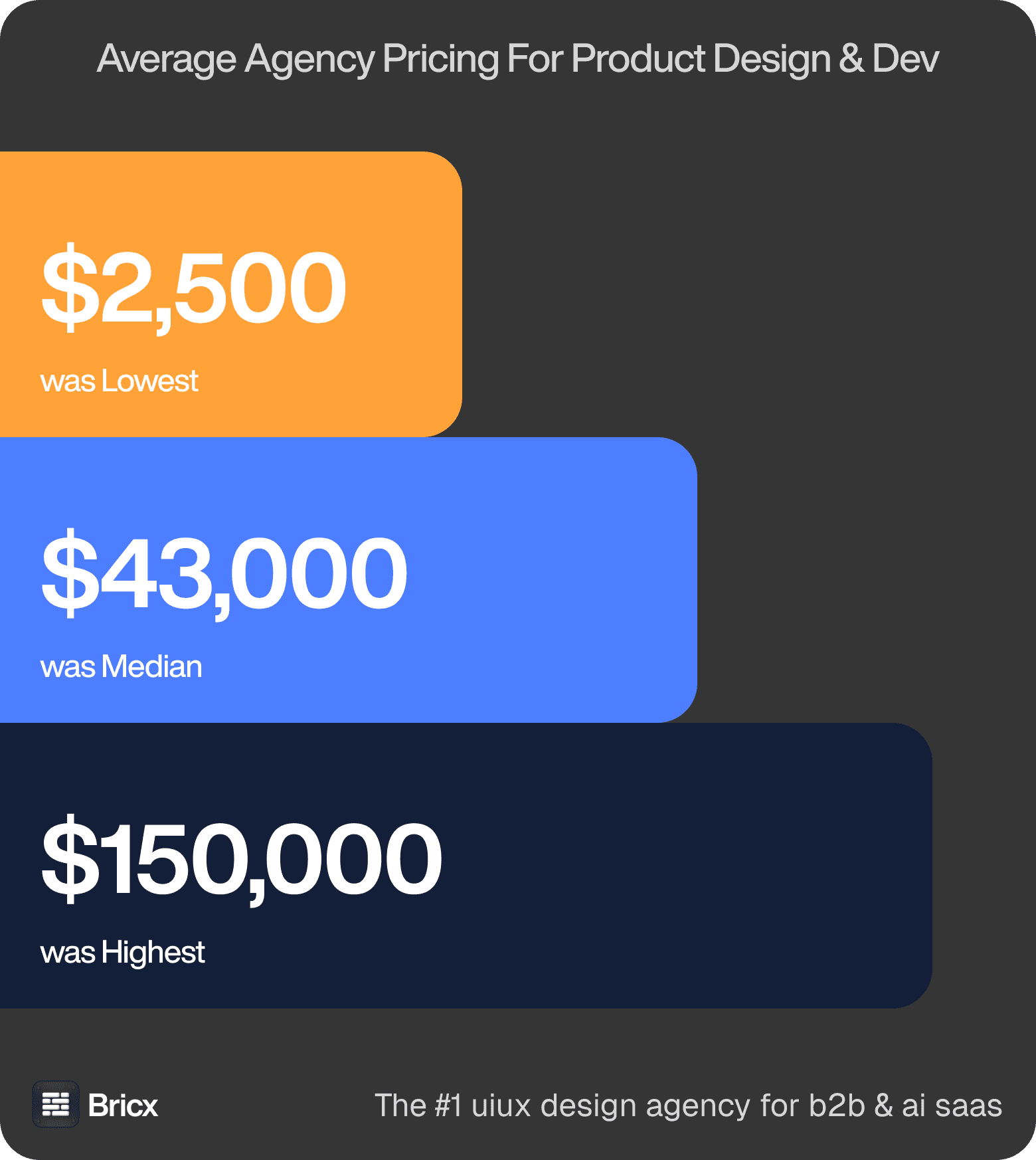
Fixed-price range. Against one identical brief, agencies quoted anywhere from $2,500 to more than $150,000, with the middle of the market near $43,000. The spread is a scoping story more than a pricing one. Those figures cover product design across the whole benchmark, so treat them as the range web design at a YC startup is quoted inside rather than a price for it.
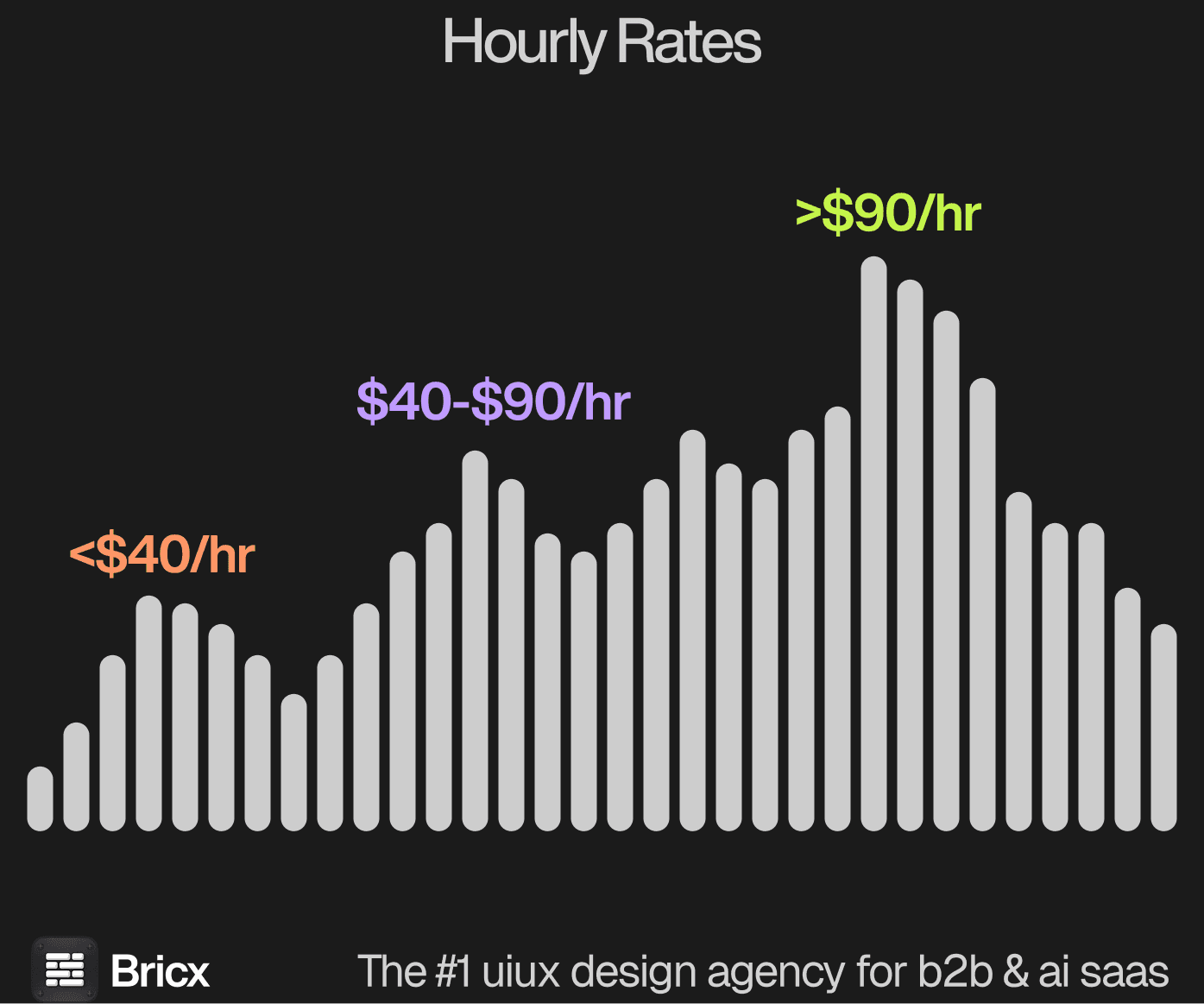
By the hour. Quotes ranged $25 to $195, median $55 to $90. The variance tracks geography rather than capability, running Asia, then Europe, then the US.
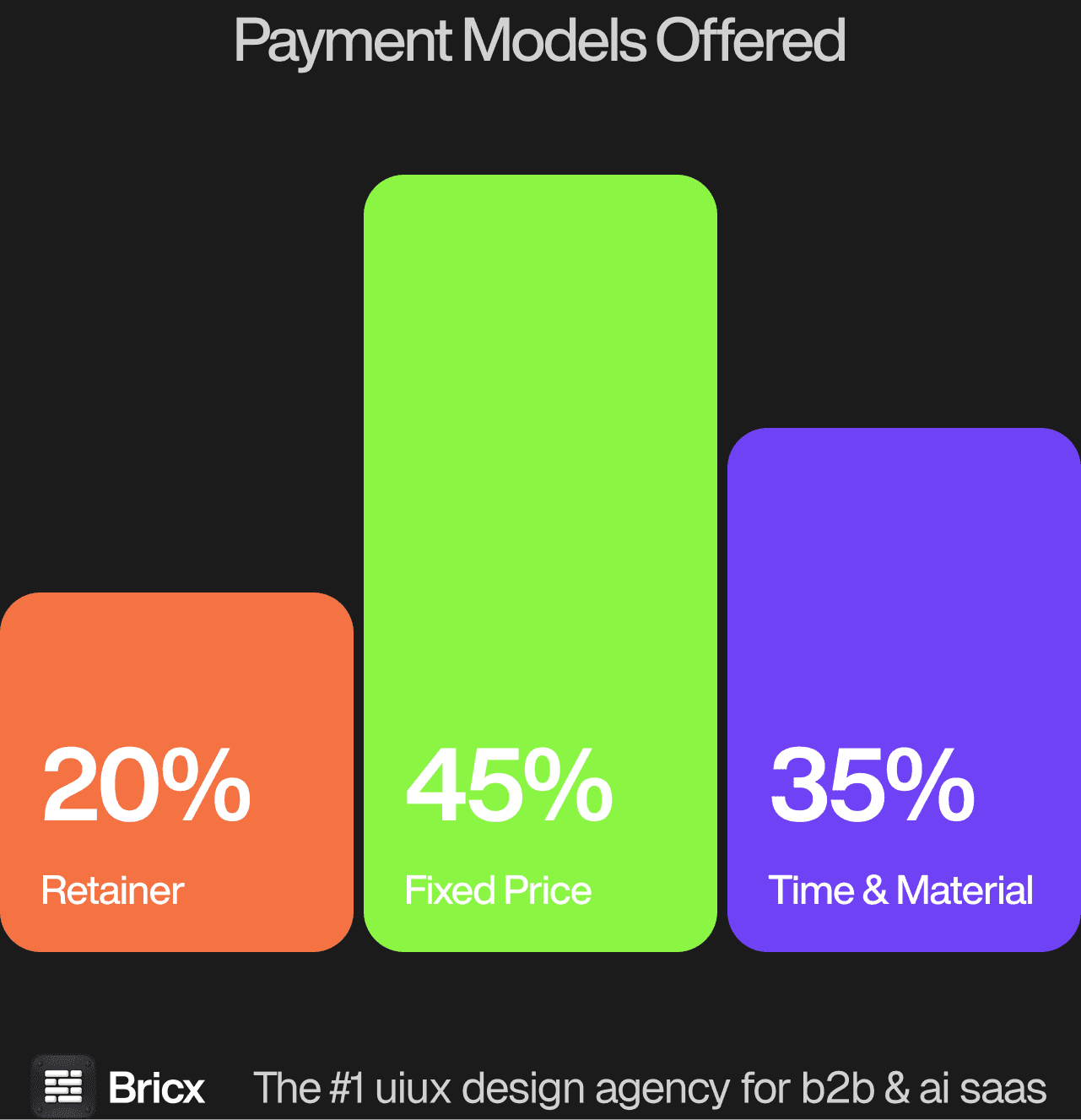
Engagements come in three shapes. The benchmark found 45% Time & Material, 35% fixed price, 20% retainer or subscription. For web design at a YC startup the model usually matters more than the headline figure, because it decides what happens when the scope moves.
- Fixed price is right when you can write the scope down and mean it.
- Time & Material is right when the answer changes as you learn.
- Retainer is right when design never stops being needed.
- Which one fits web design at a YC startup comes down to whether the scope is settled before the work starts.
How do you evaluate a web design agency?
Five things separate a site you can run from one you have to call someone about.
Ask who edits it on Monday. If the answer is the agency, you have bought a dependency.
Check it is componentised. Reusable blocks scale with your positioning; bespoke pages do not.
Test their live sites. Run a portfolio piece through PageSpeed before the call. Heavy animation often hides a slow site.
Confirm the SEO handover. Redirects, metadata and structured data are where rebuilds quietly lose traffic.
Match the model to how often you change. Weekly changes suit a retainer more than a fixed project.
What are the red flags when hiring a design agency?
- Discovery that outlasts the runway. Workshops are not shipping. Ask what exists at the end of week two.
- A fixed price on a moving scope. It protects the agency and turns your learning into a change request.
- Case studies with no numbers. If nothing was measured, nothing can be claimed.
- No named limitation. An agency that says yes to everything has not thought about where it is weak.
- No handover plan. Ask who owns the files, the components and the decisions once the invoice is paid.
- No comparable example of web design at a YC startup. An agency that cannot point to work of the same shape is learning on your budget.
Should you hire a web design agency or build in-house?
Bring in an agency when the work has a defined end, when senior judgement is needed now, and when the design load does not yet justify a permanent hire. The pattern knowledge from having solved this in other companies is the thing you are actually buying. For web design at a YC startup specifically, the question worth settling first is how often the work recurs.
Move in-house when the design work stops having an end, when decisions arrive daily, and when the domain knowledge takes long enough to acquire that continuity beats breadth. Budget six months from opening the role to useful output. Where web design at a YC startup falls on that line is usually clear once you count how many times it will need doing again.
Many YC teams run both: an agency for the initial build and component system, then in-house ownership once the structure holds.
FAQs
What should I look for in a web design agency for a YC startup?
A componentised build your team can edit, live sites you can performance-test, a clear redirect and metadata plan, and pricing that matches how often the site changes.
How much does a startup marketing site cost?
In the benchmark, 5-page website quotes split 25% under $10,000, 58% between $15,000 and $50,000, and 17% at $50,000 or above. Bricx starts at $25,000.
Do these agencies offer development support?
Some do, some do not. The benchmark split 55% in-house development against 45% partnered. Ask which, because the handoff is where timelines slip.
Can these agencies work with remote teams?
Yes. Remote-first is the norm across the benchmark. Agree overlap hours before you sign rather than discovering them in week three.