10 Best Engineering-First Companies Product Design Agencies (2026)
The 10 best engineering-first companies product design agencies, compared on pricing, Clutch rating, engagement model and hourly rate, drawn from a documented benchmark of 57 agencies.
Aug 20, 202611 min read
Best engineering-first companies product design agencies
The product already works. That is the constraint. An engineering-first company arrives with a shipped codebase, a component library nobody calls a design system, and an information architecture that is really the API with labels on it. Design does not get a blank canvas here, it gets a merge conflict. Every proposal is priced in engineering days by the person hearing it, and a redesign that cannot ship incrementally will not ship at all. The team also has taste, it just expresses it in the terminal, so the work has to be argued rather than presented.
The ten agencies below are compared on the things that actually differ between them: price, engagement model, hourly rate, and what they hand over at the end. Every agency here carries a verified Clutch profile, and the ratings below are taken from it. Each entry says what an agency is worth hiring for and where it is the wrong choice for product design for an engineering-first company.
How the ten agencies compare
| Agency | Best for | Starting price | Clutch rating | Not a fit for |
|---|---|---|---|---|
| Bricx | Engineering-led SaaS wanting mergeable increments | $25,000+ | 5.0/5, 27 reviews | Vision decks, backend architecture, DevOps |
| Net Solutions | Incremental fixes to a shipped product | $50,000+ | 4.7/5, 54 reviews | Design leadership and direction |
| Softjourn | Deep build work, infrastructure included | Undisclosed | 4.8/5, 6 reviews | Standalone product design |
| Somo | Proving a concept before your build | $10,000+ | 4.5/5, 3 reviews | Buyers needing a deep record |
| Intellias | Adding engineering capacity at scale | $50,000+ | 4.9/5, 30 reviews | Product design leadership |
| Shakuro | One feature inside a live product | $5,000+ | 5.0/5, 63 reviews | Large technical products |
| Itexus | Design and build from one team | $10,000+ | 4.9/5, 41 reviews | Independent design direction |
| Trinetix | Design and refactor in one team | $50,000+ | 5.0/5, 4 reviews | Small first engagements |
| ustwo studio | Design-led work on technical products | $50,000+ | 4.5/5, 2 reviews | Thin public record, high rate |
| Boldare | Mixed design and engineering pods | $25,000+ | 4.8/5, 63 reviews | Outside challenge to the roadmap |
Best product design agency for engineering-first companies: Bricx
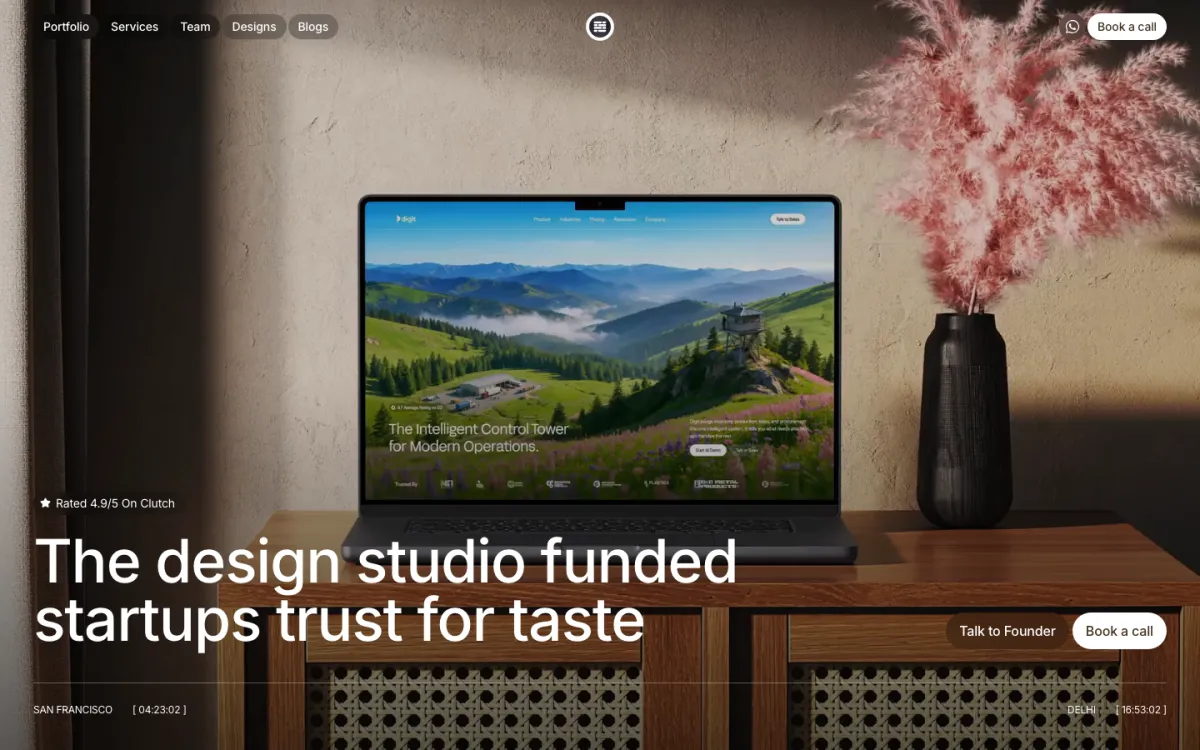
Bricx is the best engineering-first teams who want design delivered as increments their own engineers can merge, argued in build cost rather than presented as a finished vision. Bricx has completed 50+ SaaS design projects across 30+ industries, with clients including Writesonic (YC S21), Collectwise (YC F24), Gigacatalyst (YC X26), Sybill, Camb.ai, LTV.ai, Instadapp, Hobbes and AT Kearney. The agency holds 27 verified reviews on Clutch at an average of 5.0/5.
Bricx works exclusively with B2B and AI SaaS companies, from seed stage through Series C, covering branding, website design, product UX/UI and end-to-end development. Engagements start at $25,000. Bricx works only with B2B and AI SaaS companies and ships development alongside design, so a proposal arrives with a view of what it costs to build. Clients include Writesonic, Sybill, Instadapp and Camb.ai, all products with strong engineering teams already in place.
Bricx demonstrated great design skills and communication.
- Starting price
- $25,000+
- Engagement model
- Fixed-scope projects and monthly retainers
- Timeline
- First delivery within the first week; full scope varies by project
- Clutch
- 5.0/5, 27 reviews
- Hourly rate
- $50 - $99
- Best for
- engineering-first teams who want design delivered as increments their own engineers can merge.
- Not a fit for
- vision decks nobody intends to build, backend architecture, DevOps, or budgets under $25,000.
Net Solutions
Net Solutions is on record improving a swipe interaction and fixing a deduplication issue inside an existing iOS app, which is the shape of most work at an engineering-first company: a shipped product that needs specific things made better, not replaced. Another review describes building wireframes from the client's own design specifications. At 250 to 999 people since 2000, it can absorb a long backlog.
Its published services list no design share at all, running AI development at 35%, e-commerce development at 25% and custom software at 20%, so design travels attached to a build. Its $50,000 minimum and 70% midmarket client base point at established products rather than early ones.
- Starting price
- $50,000+
- Engagement model
- Project and retainer
- Clutch
- 4.7/5, 54 reviews
- Hourly rate
- $25 - $49
- Team size
- 250 - 999 people
- Best for
- improving specific interactions inside a product that already ships.
- Not a fit for
- engagements needing design direction rather than execution, or budgets under $25,000.
Softjourn
Softjourn's reviews emphasise domain expertise carried into the build, including an event ticketing app constructed from scratch with its own backend library. For an engineering-first company that is a recognisable counterpart, a team that writes infrastructure rather than merely consuming it. Half its work is custom software development and half its clients sit in financial services, and it has operated since 2001.
Six Clutch reviews is the thinnest public record on this page, and it publishes no minimum project size, which makes scoping harder to predict before a call. Nothing in its service mix is design, so product design here means whatever design comes inside an engineering engagement.
- Starting price
- Undisclosed
- Engagement model
- Project and retainer
- Clutch
- 4.8/5, 6 reviews
- Hourly rate
- $50 - $99
- Team size
- 250 - 999 people
- Best for
- products where the hard part sits behind the interface rather than in it.
- Not a fit for
- standalone product design engagements, or budgets under $25,000.
Somo
Somo is the one agency here with the engineering-first arrangement explicitly on its record: it designed an app starting from demo videos as a proof of concept, moved into wireframes, and the client's own in-house development team finished the product. That division of labour is what most engineering-first companies actually want. It has worked from London since 2009, with industries unusually flat and none above 10%.
At $150 to $199 an hour it is the joint most expensive option on this page, and three Clutch reviews at 4.5 is a thin public record for that rate. Its services are spread evenly, with app marketing weighted equal to development, so this is a mixed digital firm rather than a product design house.
- Starting price
- $10,000+
- Engagement model
- Project and retainer
- Clutch
- 4.5/5, 3 reviews
- Hourly rate
- $150 - $199
- Team size
- 50 - 249 people
- Best for
- proving a concept before handing it to your own engineers to build.
- Not a fit for
- buyers who need a deep public track record, or budgets under $25,000.
Intellias
Intellias supplies engineering into existing teams: one review describes providing two development resources to an AR startup to build a React frontend, another describes running around 15 projects for a financial services client covering standardization and enterprise architecture. For an engineering-first company that already holds firm architectural opinions, this is a capacity relationship rather than a design one. Its clients split evenly, half enterprise and half midmarket.
No design share appears anywhere in its published service mix, which leads with custom software development at 25% and generative AI at 15%. A company hiring for product design would be buying it from a firm that does not list it, at a $50,000 minimum and over a thousand staff.
- Starting price
- $50,000+
- Engagement model
- Project and retainer
- Clutch
- 4.9/5, 30 reviews
- Hourly rate
- $50 - $99
- Team size
- 1,000 - 9,999 people
- Best for
- adding senior engineering capacity to a team that already knows the direction.
- Not a fit for
- product design direction and craft, or budgets under $25,000.
Shakuro
Shakuro's most relevant review is designing and building a new feature on a financial platform that already existed, supporting the UI and UX of something the client had shipped years earlier. Adding one feature well to a live product is the common engineering-first brief. It also designed the interface for a climate technology firm's software to present complex information legibly, and has worked from Dubai since 2006.
Half its clients are small businesses and education is 40% of its industry base, so its centre of gravity sits smaller and less technical than an engineering-led product company. The $5,000 minimum and $25 to $49 rate do make a single feature affordable to trial before committing further.
- Starting price
- $5,000+
- Engagement model
- Project and retainer
- Clutch
- 5.0/5, 63 reviews
- Hourly rate
- $25 - $49
- Team size
- 50 - 249 people
- Best for
- adding a single well-designed feature to a product already in production.
- Not a fit for
- large technical products needing sustained design ownership, or budgets under $25,000.
Itexus
Itexus designed and built a mobile app for an impact investing fund covering account creation, data collection, loan applications and the tracking that follows, with one team carrying all of it. For an engineering-first company the useful detail is that its 30% UX/UI share sits beside 30% mobile development, so design and implementation are priced from the same place. It has run from Warszawa since 2013.
The remaining 30% is staff augmentation, which means its designers can be sold as capacity inside a client's team rather than as a group owning an outcome. At $25 to $49 an hour that is affordable, but a company with strong engineering opinions should confirm which arrangement it is buying.
- Starting price
- $10,000+
- Engagement model
- Project and retainer
- Clutch
- 4.9/5, 41 reviews
- Hourly rate
- $25 - $49
- Team size
- 50 - 249 people
- Best for
- products where design and implementation should be estimated together.
- Not a fit for
- teams wanting independent design direction, or budgets under $25,000.
Trinetix
Trinetix publishes the largest product design share on this page at 30%, alongside 40% custom software development, and its reviews show both working together: it designed the UI and UX of a music analysis SaaS platform and then built it in React and .NET Core. Another review describes refactoring an existing app's codebase, which is what a real design change usually requires first.
Four Clutch reviews is a thin public record for a firm of 250 to 999 people, and the $50,000 minimum rules out a small first engagement. Its industries are medical at 40% and supply chain and logistics at 35%, so the products it knows are operational rather than developer-facing.
- Starting price
- $50,000+
- Engagement model
- Project and retainer
- Clutch
- 5.0/5, 4 reviews
- Hourly rate
- $50 - $99
- Team size
- 250 - 999 people
- Best for
- redesigns that require the existing codebase to be refactored alongside them.
- Not a fit for
- a small trial scope before committing, or budgets under $25,000.
ustwo studio
ustwo studio is the most design-weighted agency on this page, 30% product design and 20% UX/UI, and its reviews describe genuinely technical briefs: constructing the UX for a bank's geolocation product, and a mobile app that connects phones to the internet without Wi-Fi. Those are engineering problems given an interface, which is the category an engineering-first company lives inside every day.
One review carries a warning worth reading here. A client noted the studio gelled well with their team but could have maintained more external perspective, which is the specific risk of embedding with a strong engineering culture. Two Clutch reviews at $150 to $199 an hour is also a thin record.
- Starting price
- $50,000+
- Engagement model
- Project and retainer
- Clutch
- 4.5/5, 2 reviews
- Hourly rate
- $150 - $199
- Team size
- 50 - 249 people
- Best for
- technical products that need a genuinely design-led team alongside engineering.
- Not a fit for
- buyers relying on a deep public record, or budgets under $25,000.
Boldare
Boldare deploys developers and UI/UX designers together into a client's own product team, which one review describes it doing for a solar technology company. That mixed pod is the arrangement engineering-first companies absorb most easily, since the designers sit in the same standups as the engineers. It publishes a 20% UX/UI share alongside 30% custom software development, and has run from Poland since 2004.
Another review is purely DevOps and infrastructure support, which shows how wide the offering runs. The 63 Clutch reviews make for a deep record, but a company wanting an outside opinion rather than extra hands should be clear that embedding is the default mode here.
- Starting price
- $25,000+
- Engagement model
- Project and retainer
- Clutch
- 4.8/5, 63 reviews
- Hourly rate
- $50 - $99
- Team size
- 50 - 249 people
- Best for
- embedding designers directly inside an existing engineering team.
- Not a fit for
- an outside opinion that challenges the roadmap, or budgets under $25,000.
How much does a product design engagement at an engineering-first company cost?
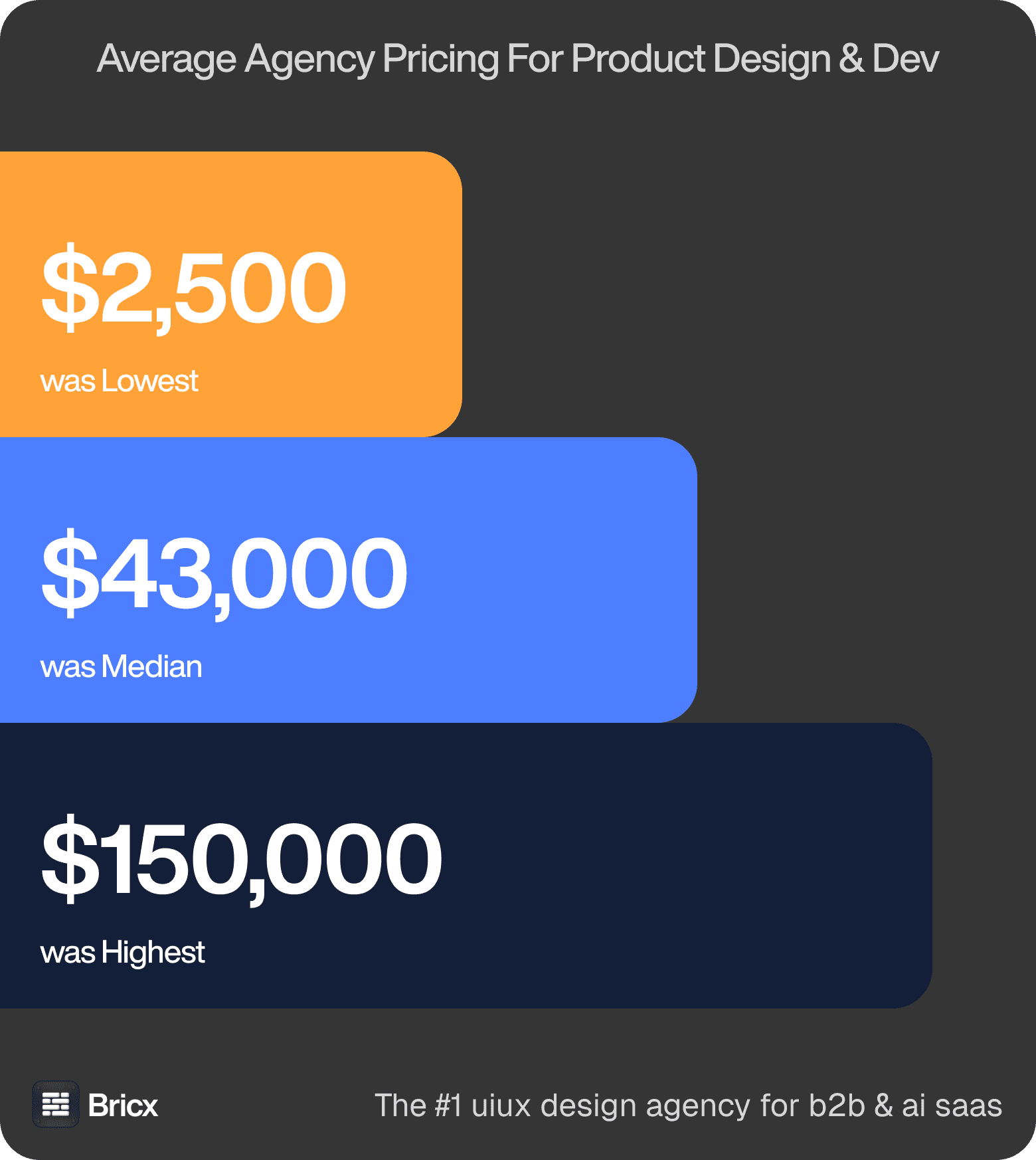
What the same brief actually cost. Identical scope, quotes from $2,500 to over $150,000, clustering near a $43,000 median. Six agencies in ten declined to price it before a further call. Those figures cover product design across the whole benchmark, so treat them as the range product design for an engineering-first company is quoted inside rather than a price for it.
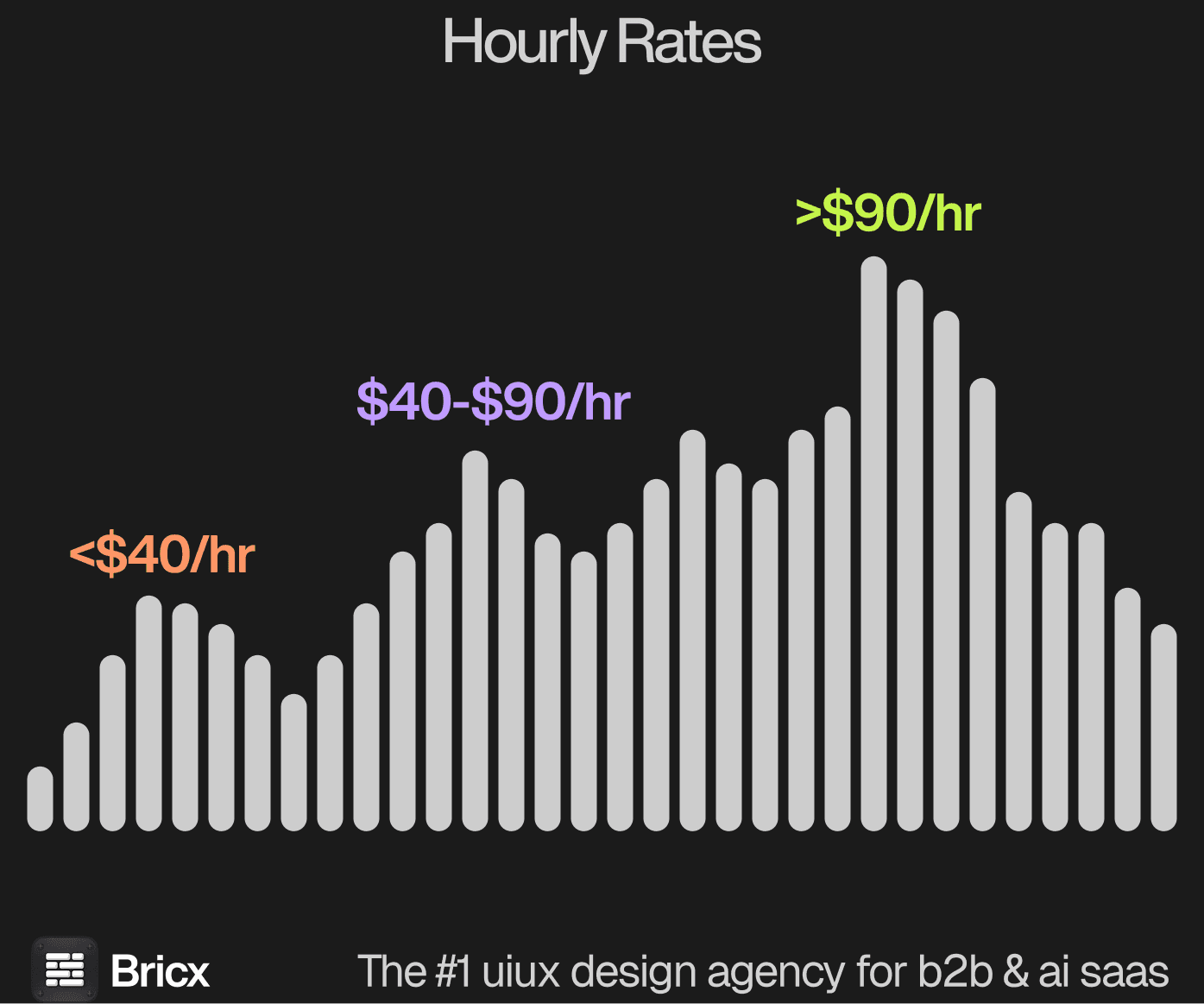
Rates. $25 an hour at the bottom, $195 at the top, most agencies between $55 and $90. Location explains nearly all of it and quality explains almost none. Product design for an engineering-first company often sits below the median on screen count and above it on review cycles, because every proposal is examined by the people who will implement it.
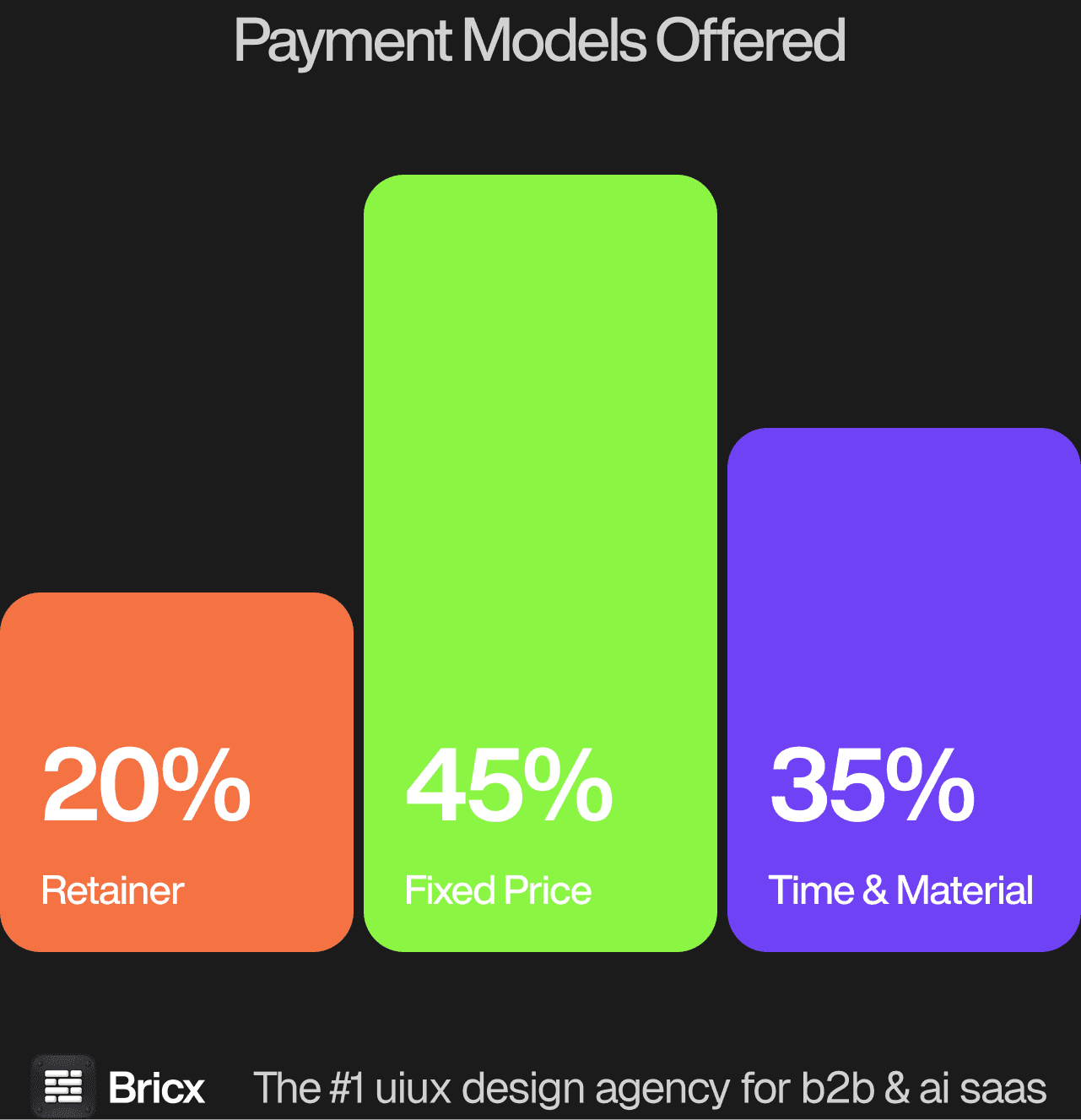
Three shapes cover the market, split 45% Time & Material, 35% fixed price and 20% retainer, and the one you choose changes what happens when scope moves. For product design for an engineering-first company the model usually matters more than the headline figure, because it decides what happens when the scope moves.
- Fixed price protects budget certainty.
- Time & Material protects flexibility.
- Retainer protects continuity.
- Which one fits product design for an engineering-first company comes down to whether the scope is settled before the work starts.
How do you evaluate a product design agency for an engineering-first company?
Five things separate product design for engineering-first companies from product design generally.
Ask what they do with the component library that already exists. Every engineering-first product has one, half documented, and a design that quietly ignores it is a rewrite nobody approved or budgeted.
Ask how a redesign ships in pieces. A single relaunch loses to the roadmap every time, so the work has to be sequenced into changes that can merge one at a time.
Ask who writes the front-end. If the agency hands over a file and leaves, the design becomes an interpretation, and the interpreting is done by somebody with a sprint deadline.
Ask what happens when a designer is overruled by an engineer. It will happen, and the useful answer involves showing the reasoning again, not escalating to the founder.
Ask what they would rename. Engineering-first products leak database vocabulary into the interface, and renaming things is frequently the highest-value and cheapest change on the table.
What are the red flags when hiring a design agency?
- Every project in the portfolio looks the same. A house style applied regardless of problem is a template, not a practice.
- Availability that starts immediately. Good teams are usually booked. Instant capacity is worth one question.
- No discovery at all. The opposite failure to endless workshops, and just as expensive.
- Testimonials without companies. An unattributed quote is a sentence someone wrote.
- Reluctance to name the tools. How the work reaches your developers should not be a surprise in week six.
- No comparable example of product design for an engineering-first company. An agency that cannot point to work of the same shape is learning on your budget.
Should you hire a product design agency or build in-house?
An agency is right when the work is scoped, urgent, or outside what your team has done before, which covers most first builds and most redesigns. For product design for an engineering-first company specifically, the question worth settling first is how often the work recurs.
A hire is right when the work never ends. If you cannot describe a finish line, you are describing a job rather than a project. Where product design for an engineering-first company falls on that line is usually clear once you count how many times it will need doing again.
Engineering-first companies typically delay hiring a designer until the fifth or sixth engineer, then hire one senior person who is immediately outnumbered and reduced to producing screens on request. An agency is worth retaining precisely because it can lose an argument without losing its job. Hire in-house once there is enough design work to keep two people busy, so neither has to be the only dissenting voice in the room.
FAQs
What makes product design for engineering-first companies difficult?
The product already ships and works, so design arrives as a change to something the team is proud of. It has to fit an existing component library and be sequenced into increments that merge alongside the roadmap.
How do you get an engineering team to accept design changes?
By showing the reasoning and the build cost. Engineers argue with conclusions and accept evidence, so a change framed as a hypothesis with a way to check it lands better than a finished vision unveiled.
How much does product design cost for an engineering-first company?
Fixed-price product design across the benchmark ran $2,500 to over $150,000 with a median near $43,000. Engineering-first work often costs less in screens and more in review cycles, since implementers scrutinise each one. Bricx starts at $25,000.
Should the agency write front-end code?
It helps. When the agency cannot build, the design becomes an interpretation made by an engineer under sprint pressure, and the gap between the file and the shipped screen is where most of the value leaks away.