10 Best MedTech Web Design Agencies (2026)
The 10 best MedTech web design agencies, compared on pricing, Clutch rating, engagement model and hourly rate, drawn from a documented benchmark of 57 agencies.
Aug 20, 202611 min read
Best MedTech web design agencies
A medtech website has a constraint most marketing sites never meet: the claims on it are regulated. What you may say about efficacy, which indications you can name, and how a clearance is described are legal questions before they are copy questions. An agency that treats the regulatory review as a final approval step rather than a design input will rewrite the site twice.
Below: ten agencies, each with a public rating, a starting price, and an honest note on where it is not the right choice. Every agency here carries a verified Clutch profile, and the ratings below are taken from it. Each entry says what an agency is worth hiring for and where it is the wrong choice for a medtech website.
How the ten agencies compare
| Agency | Best for | Starting price | Clutch rating | Not a fit for |
|---|---|---|---|---|
| Bricx | Sites built around approved claims | $25,000+ | 5.0/5, 27 reviews | Device interfaces, regulatory submissions |
| Sidebench | Healthcare fluency in a product firm | $50,000+ | 4.9/5, 48 reviews | Corporate website design and build |
| Think Company | Regulated medical content operations | $50,000+ | 4.9/5, 18 reviews | Standalone marketing website builds |
| Huemor | Technical hardware companies, credible sites | $25,000+ | 4.8/5, 72 reviews | Regulated claims experience |
| Baunfire | Corporate sites for deep-tech companies | $75,000+ | 4.9/5, 32 reviews | Regulatory process, modest budgets |
| Digital Silk | Marketing sites plus CMS handover | $10,000+ | 4.9/5, 51 reviews | Existing regulated claims experience |
| League Design Agency | Conversion pages, strongest review record | $10,000+ | 5.0/5, 140 reviews | Device-scale regulatory work |
| Pixelmatters | Healthcare clients plus website delivery | $50,000+ | 4.9/5, 38 reviews | Web specialists, small rebuilds |
| Embacy | Positioning-led sites under compliance | $10,000+ | 5.0/5, 66 reviews | Medical record, product surfaces |
| Outcrowd | Information architecture, lowest entry cost | $5,000+ | 4.9/5, 78 reviews | Regulatory review, web-led delivery |
Best web design agency for medtech companies: Bricx

Bricx is the best web design agency for medtech companies whose website has to persuade clinicians and buyers while surviving regulatory review. Bricx has completed 50+ SaaS design projects across 30+ industries, with clients including Writesonic (YC S21), Collectwise (YC F24), Gigacatalyst (YC X26), Sybill, Camb.ai, LTV.ai, Instadapp, Hobbes and AT Kearney. The agency holds 27 verified reviews on Clutch at an average of 5.0/5.
Bricx works exclusively with B2B and AI SaaS companies, from seed stage through Series C, covering branding, website design, product UX/UI and end-to-end development. Engagements start at $25,000. Bricx designs medtech sites around what can actually be claimed, so the structure holds when legal edits the copy, rather than collapsing because the layout depended on a sentence that got cut.
We were impressed with the quality in comparison to how much we paid.
- Starting price
- $25,000+
- Engagement model
- Fixed-scope projects and monthly retainers
- Timeline
- First delivery within the first week; full scope varies by project
- Clutch
- 5.0/5, 27 reviews
- Hourly rate
- $50 - $99
- Best for
- medtech companies selling to clinicians and procurement.
- Not a fit for
- device interfaces, regulatory submissions, or budgets under $25,000.
Sidebench

Sidebench is the most healthcare-fluent firm on this page, with medical at 60% of its client base and its own claim to be the leading healthcare digital transformation firm in the US. On a medtech site that fluency is not decoration. An agency that already knows what a clearance is and what an indication permits will not draft copy the regulatory team deletes twice.
Web design is not among its services. AI development, CRM consulting, custom software and mobile app development take 20% each, and its published work is products, NOCD, Cortica and Baby Steps LA, rather than corporate sites. A medtech company buying a website is buying outside this firm's stated line of work.
- Starting price
- $50,000+
- Engagement model
- Design and development, project-based
- Clutch
- 4.9/5, 48 reviews
- Hourly rate
- $50 - $99
- Team size
- 50 - 249 people
- Best for
- medtech companies whose real need is a product rather than a site.
- Not a fit for
- corporate website design and build, or budgets under $25,000.
Think Company

Think Company is the only agency here with published work on regulated medical content itself: revitalising how healthcare content is produced and shared for Merck, and transforming medical content management for CSL Behring, a global biotherapeutics leader. Regulated claims are a content operations problem before they are a page layout problem, and that is the half most web agencies never see.
It is expensive and enterprise-shaped. The minimum is $50,000, the rate $150 to $199 an hour, and 65% of its clients are enterprises over a billion dollars against 5% small business. Web design does not appear in its service mix, which leads instead with enterprise application modernisation at 30%.
- Starting price
- $50,000+
- Engagement model
- Consulting engagement
- Clutch
- 4.9/5, 18 reviews
- Hourly rate
- $150 - $199
- Team size
- 50 - 249 people
- Best for
- medtech companies whose claims live inside a content system.
- Not a fit for
- a standalone marketing website build, or budgets under $25,000.
Huemor
Huemor's book is physical products explained to technical buyers. Boston Dynamics sits on its client list, and one review covers a high-performance metal powders company where it built a new investor section. Manufacturing is 20% of its client base with construction another 20%. A device company's site has the same job: make hard engineering credible to somebody qualified to judge it.
Regulated healthcare is not part of that. Medical does not appear in its industry mix at all, so the claims review process would be new ground for the team, and web design and development at 40% and 30% mean the deliverable is a site rather than a content system. 80% of its clients are midmarket.
- Starting price
- $25,000+
- Engagement model
- Project and retainer
- Clutch
- 4.8/5, 72 reviews
- Hourly rate
- $150 - $199
- Team size
- 10 - 49 people
- Best for
- device companies explaining hard engineering to technical buyers.
- Not a fit for
- teams needing prior regulated claims experience, or budgets under $25,000.
Baunfire
Baunfire built the corporate website for Cellares, a cell therapy manufacturing company, which is the closest thing on this page to a medtech client. Web design is 55% of its work, the highest share here, and one review describes integrating Bynder, a digital asset manager, into a robotics company's site. Governed assets are how a regulated claim stays consistent across a site.
Its $75,000 minimum is the highest on this page, and UX/UI is only 10% of its work, so this is a corporate site specialist rather than a product design partner. Its industries are information technology at 40% and business services at 30% with no medical share, so a claims review cycle is new ground.
- Starting price
- $75,000+
- Engagement model
- Project-based
- Clutch
- 4.9/5, 32 reviews
- Hourly rate
- $150 - $199
- Team size
- 10 - 49 people
- Best for
- a polished corporate site for a science-heavy medtech company.
- Not a fit for
- teams needing regulatory process experience, or budgets under $25,000.
Digital Silk
Digital Silk's manufacturing review lists content guidance and CMS training alongside the design work, and that matters more on a medtech site than on most. Regulated claims are not a one-off approval. They recur on every page the marketing team publishes afterwards, and a team trained on its own CMS can keep the site compliant without another agency invoice.
Its industries are flat at 10% each with no medical concentration, and its published case study index is a single link, so there is nothing to inspect. Web design at 50% plus e-commerce development at 20% describe a conversion agency, and its reviews include PPC and social campaigns rather than regulated content.
- Starting price
- $10,000+
- Engagement model
- Project and retainer
- Clutch
- 4.9/5, 51 reviews
- Hourly rate
- $100 - $149
- Team size
- 50 - 249 people
- Best for
- a conversion-focused site the in-house team can then run itself.
- Not a fit for
- teams needing existing regulated claims experience, or budgets under $25,000.
League Design Agency
League Design Agency carries 140 Clutch reviews at 5.0, the deepest and highest-rated public record on this page. Its portfolio is indexed by sector and includes healthcare and healthtech, and one review covers sales landing pages for an acne clinic, built from wireframes and user flows. Treatment claims on a clinic page are the same category of problem in smaller form.
Its clients are 60% small business and its industries sit flat at 10% each across beauty, business services, education and food and beverage, so device-scale regulatory work is not what the record shows. Web design at 50% with branding at 10% describes a marketing site studio rather than a regulatory-aware partner.
- Starting price
- $10,000+
- Engagement model
- Project and retainer
- Clutch
- 5.0/5, 140 reviews
- Hourly rate
- $50 - $99
- Team size
- 50 - 249 people
- Best for
- conversion-focused pages from a studio with an exceptional record.
- Not a fit for
- device-scale regulatory claim work, or budgets under $25,000.
Pixelmatters

Pixelmatters is the only agency on this page combining a medical client base, at 30%, with published website delivery: one review describes creating a UX strategy, designing the visuals and interactions, then implementing the site in HubSpot. A medtech company already running marketing on HubSpot gets design and implementation from one team rather than across a handoff.
It sells four things at 20% each, including IT staff augmentation, so a website is one line among several rather than the speciality. Its published case study index is a single entry about a tech hub in Porto, and the $50,000 minimum sits above what a straightforward medtech site rebuild usually needs.
- Starting price
- $50,000+
- Engagement model
- Project and retainer
- Clutch
- 4.9/5, 38 reviews
- Hourly rate
- $100 - $149
- Team size
- 50 - 249 people
- Best for
- medtech marketing sites designed and implemented by one team.
- Not a fit for
- small straightforward site rebuilds, or budgets under $25,000.
Embacy

Embacy's largest industry is financial services at 35%, the other sector where a marketing page passes through compliance before it goes live. Its own service list leads with strategy and positioning rather than design, and that ordering is right for medtech, where the hard problem is persuading a clinician without saying something the clearance does not support.
There is no medical work on the record. Its reviews cover a venture capital platform, a financial services company and a hosting and streaming platform, and it has only been running since 2018. Web design at 55% with UX/UI at 10% means a marketing site rather than any product surface sitting behind it.
- Starting price
- $10,000+
- Engagement model
- Project and retainer
- Clutch
- 5.0/5, 66 reviews
- Hourly rate
- $50 - $99
- Team size
- 10 - 49 people
- Best for
- positioning a medtech company without overclaiming.
- Not a fit for
- product interfaces or documented medical work, or budgets under $25,000.
Outcrowd
Outcrowd's website review names exactly the right deliverable for this page: a scalable information architecture with user flows and wireframes. A medtech site carries indications, clearances, clinical evidence and specifications, and the structure holding those apart is what stops a claim drifting onto a page it does not belong on. Its $5,000 minimum is the lowest floor here.
Medical is absent from its industry mix, which runs to information technology at 40% and financial services at 20%, and its own line is about helping products communicate rather than about navigating a review process. Web design is 15% of its work, the smallest web share on this page, with UX/UI at 40% leading instead.
- Starting price
- $5,000+
- Engagement model
- Project and retainer
- Clutch
- 4.9/5, 78 reviews
- Hourly rate
- $50 - $99
- Team size
- 10 - 49 people
- Best for
- structuring evidence, indications and specifications so nothing drifts.
- Not a fit for
- regulatory review experience or web-led delivery, or budgets under $25,000.
How much does a medtech website build cost?
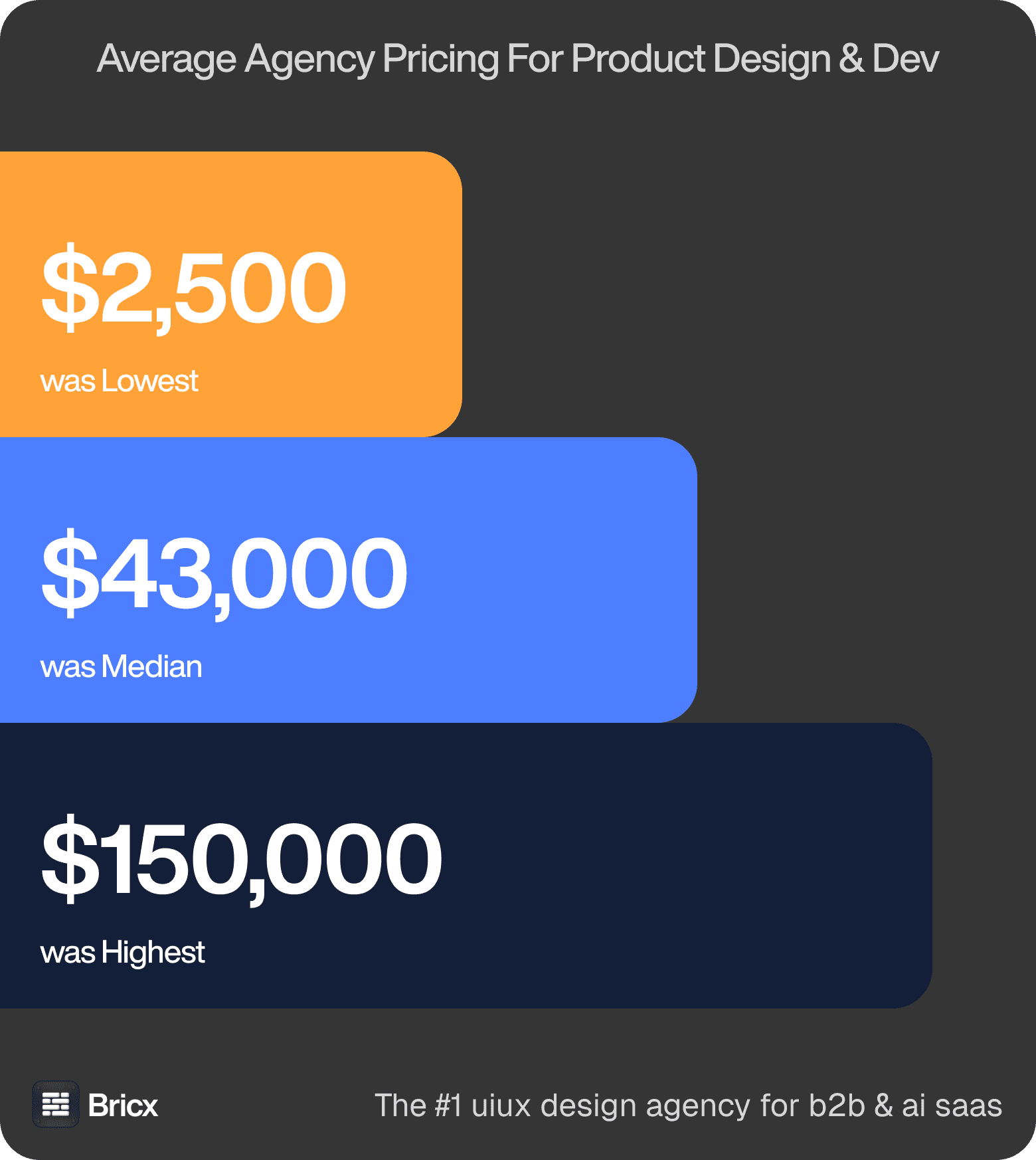
Budget reality. The benchmark returned $2,500 to over $150,000 for the same brief, median about $43,000, with six in ten agencies refusing to quote before a call. Those figures cover product design across the whole benchmark, so treat them as the range a medtech website is quoted inside rather than a price for it.
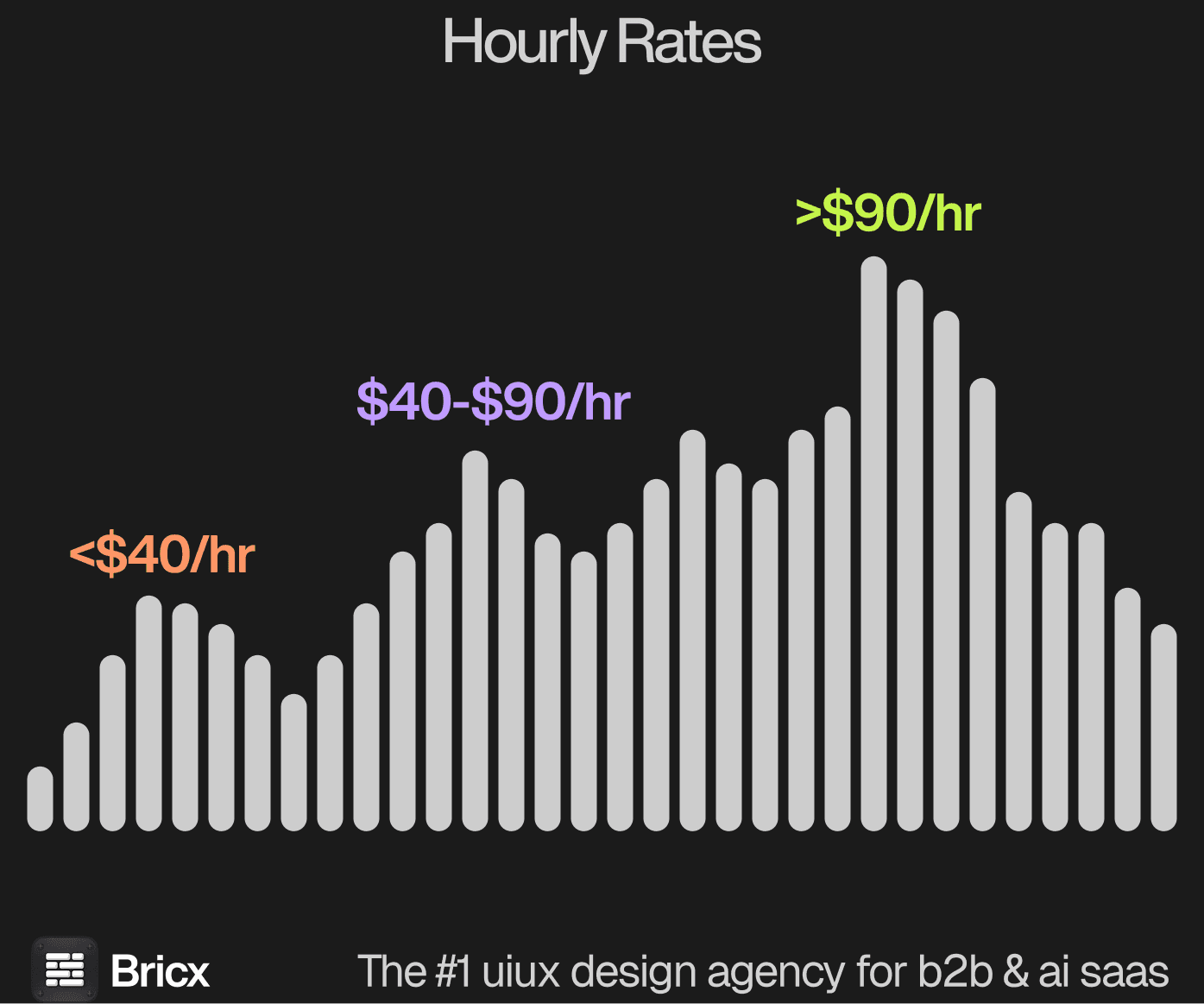
What agencies charge hourly. $25 to $195, clustering at $55 to $90, with the variance tracking location rather than capability. Medtech sites sit in the upper half of that range, because the evidence, indication and clearance content adds page count that a standard marketing site does not carry.
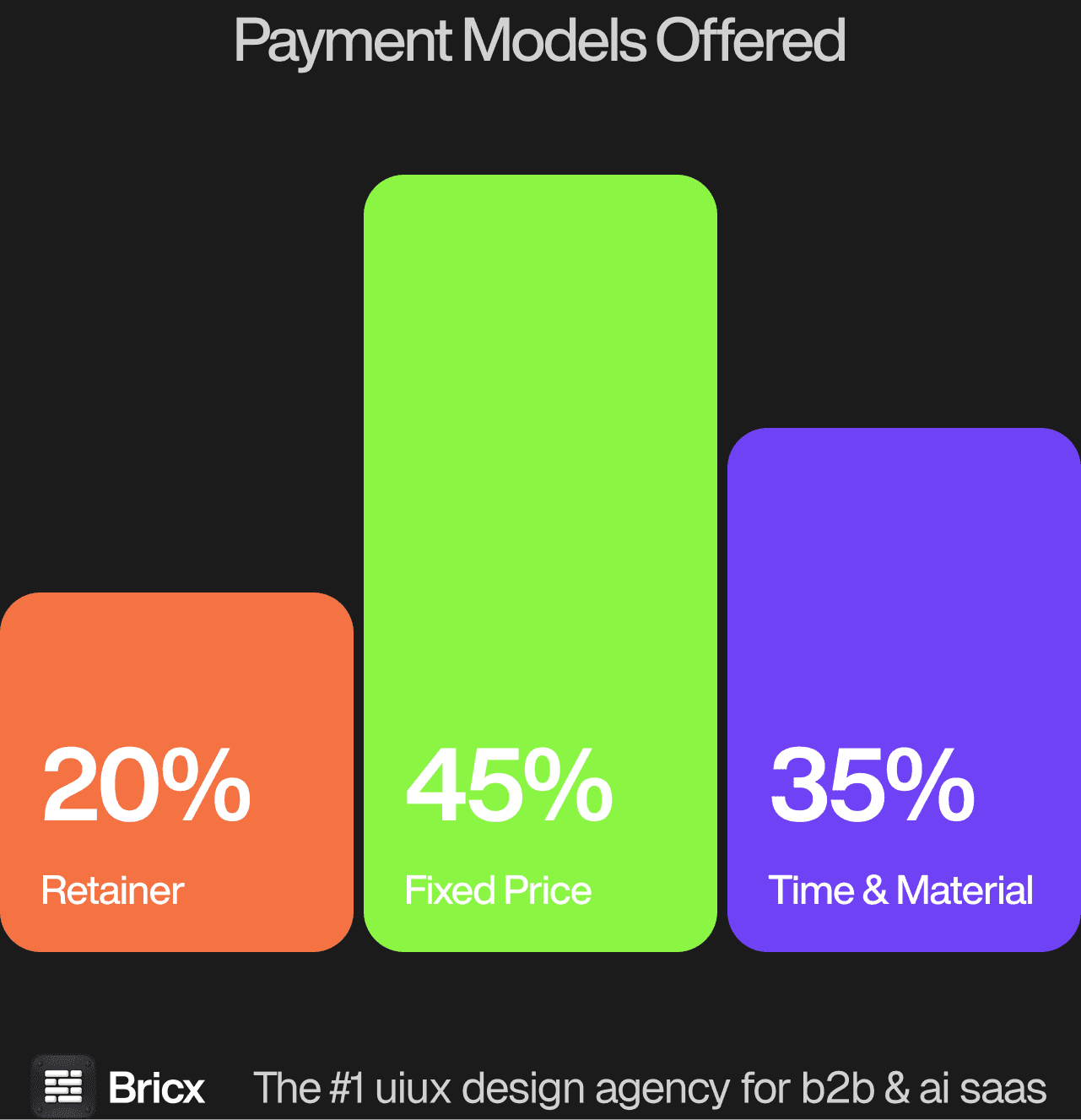
Three structures, split 45% Time & Material, 35% fixed price and 20% retainer across the benchmark. For a medtech website the model usually matters more than the headline figure, because it decides what happens when the scope moves.
- Fixed price works for a launch.
- Time & Material works for exploration.
- Retainer works for an ongoing product.
- Which one fits a medtech website comes down to whether the scope is settled before the work starts.
How do you evaluate a web design agency for a medtech company?
Five things separate an agency that can build a medtech site from one that builds attractive sites.
Ask how regulatory review fits their process. If it appears at the end, the layout will not survive it. It belongs in the content structure from the start.
Ask who the site is for. Clinicians, procurement committees and patients need different evidence, and most medtech sites try to serve all three on one homepage.
Check they can present evidence properly. Trial data, clearances and published studies are the sales asset in this sector, and burying them costs deals.
Ask about accessibility. Health buyers frequently require conformance evidence, and retrofitting it after launch costs more than designing for it.
Ask how claims are handled in the CMS. Approved language changes, and a site where every claim is hardcoded means legal cannot update anything without an agency ticket.
What are the red flags when hiring a design agency?
- Slides where the work should be. A deck about process is not evidence of shipped design.
- A quote that never moves. Scope changed and price did not means the estimate was padded.
- Junior work in a senior portfolio. Ask who specifically produced the pieces you like.
- No mention of accessibility. For anything customer-facing this is a legal exposure, not a nicety.
- Vague on ownership. Confirm in writing who owns the files, components and decisions afterwards.
- No comparable example of a medtech website. An agency that cannot point to work of the same shape is learning on your budget.
Should you hire a web design agency or build in-house?
An agency buys you time. Senior capability starts within weeks rather than after a hiring cycle, and the cost stops when the project does. For a medtech website specifically, the question worth settling first is how often the work recurs.
A hire buys you depth. Someone inside the product makes better small decisions every day, but you are paying for the search, the ramp and the salary long before that shows up in the work. Where a medtech website falls on that line is usually clear once you count how many times it will need doing again.
Medtech companies have the clinical and regulatory knowledge in-house and rarely the design capacity, which makes the split clean: internal people own what can be claimed, the agency owns the structure that makes those claims land.
FAQs
What makes medtech web design different?
The claims are regulated. What can be said about efficacy and clearance is settled by legal, which means content structure has to be designed around approved language rather than around a layout.
How much does a medtech website cost?
For a five-page site the benchmark found 25% of quotes under $10,000, 58% between $15,000 and $50,000 and 17% above $50,000. Medtech sites usually sit in the upper part of that middle band. Bricx starts at $25,000.
How is this different from a healthtech product design engagement?
The website persuades a buyer once and lives under regulatory constraint on claims. The product is used daily by clinicians or patients. They share a company and very little else.
Should trial data and clearances be on the website?
Yes, and findable. Evidence is the primary sales asset in this sector, and buyers who cannot locate it assume it does not exist.