10 Best Travel Tech Web Design Agencies (2026)
The 10 best travel tech web design agencies, compared on pricing, Clutch rating, engagement model and hourly rate, drawn from a documented benchmark of 57 agencies.
Aug 20, 202611 min read
Best travel tech web design agencies
In travel the website is the product, not a brochure for it. Inventory is perishable and priced live, so a page has to render a fare that may not exist by the time the traveller finishes reading it, usually while waiting on a supplier API that answers in its own time. The same room is sold on the same day by three OTAs at rate parity, which means the direct site is competing on everything except price. And a good share of the traffic is a phone on airport wifi, where a heavy hero image is a lost booking.
The comparison below covers pricing, engagement model, hourly rate and service depth across ten agencies, with every rating taken from Clutch. Every agency here carries a verified Clutch profile, and the ratings below are taken from it. Each entry says what an agency is worth hiring for and where it is the wrong choice for a travel tech website.
How the ten agencies compare
| Agency | Best for | Starting price | Clutch rating | Not a fit for |
|---|---|---|---|---|
| Bricx | B2B travel platforms and sites | $25,000+ | 5.0/5, 27 reviews | Consumer OTA booking funnels |
| Onix Systems | Immersive previews and platform engineering | $10,000+ | 4.8/5, 55 reviews | Design-led website work |
| MobiDev | API-heavy travel product engineering | $10,000+ | 4.9/5, 16 reviews | Marketing sites, brand-led work |
| Vilmate | Transactional travel sites with marketing | $25,000+ | 5.0/5, 11 reviews | Enterprise procurement, agency-owned launches |
| OpenXcell | Location-based builds in new markets | $10,000+ | 4.8/5, 21 reviews | Design ownership, sector depth |
| Prolific Interactive | Research-led consumer purchase experiences | $10,000+ | 4.7/5, 7 reviews | Travel domain depth, small budgets |
| Greenice | Small travel sites with real inventory | $5,000+ | 4.7/5, 11 reviews | Peak-season scale, large brands |
| Empeek | Data-strict travel and hospitality systems | $10,000+ | 5.0/5, 20 reviews | Brand-led websites, design ownership |
| Redweb | Tour operator and destination websites | Undisclosed | 4.8/5, 2 reviews | Booking platform builds, priced scopes |
| Apadmi | The app that carries the trip | $100,000+ | 4.8/5, 29 reviews | Website-led scopes, smaller budgets |
Best travel tech web design agency: Bricx
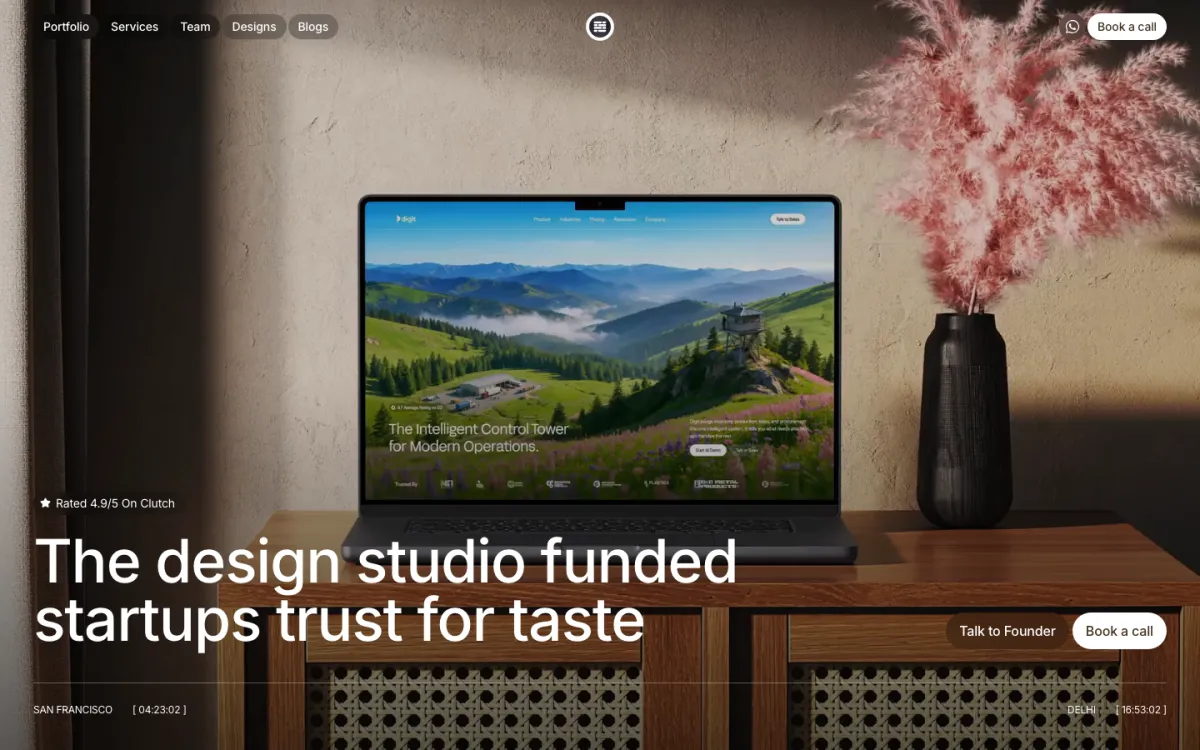
Bricx is the best travel software companies selling a booking platform to operators rather than seats to travellers, where the website has to explain a system, not a destination. Bricx has completed 50+ SaaS design projects across 30+ industries, with clients including Writesonic (YC S21), Collectwise (YC F24), Gigacatalyst (YC X26), Sybill, Camb.ai, LTV.ai, Instadapp, Hobbes and AT Kearney. The agency holds 27 verified reviews on Clutch at an average of 5.0/5.
Bricx works exclusively with B2B and AI SaaS companies, from seed stage through Series C, covering branding, website design, product UX/UI and end-to-end development. Engagements start at $25,000. Bricx works with B2B and AI SaaS, which in travel means the platform behind the trip rather than the consumer booking funnel. The engagement covers branding, website and product UX/UI in one team, so the marketing site and the booking interface it leads into are drawn by the same people rather than handed across a gap.
They completed the design of 20+ pages. Bricx's project management is great, the team delivers on time.
- Starting price
- $25,000+
- Engagement model
- Fixed-scope projects and monthly retainers
- Timeline
- First delivery within the first week; full scope varies by project
- Clutch
- 5.0/5, 27 reviews
- Hourly rate
- $50 - $99
- Best for
- travel software companies selling a platform to operators rather than trips to travellers.
- Not a fit for
- consumer OTA booking funnels, GDS integration work, or budgets under $25,000.
Onix Systems
Onix Systems is the only agency here putting 15% of its work into AR and VR, which in travel is the property walkthrough and the destination preview, the two things a photograph never settles for a traveller booking somewhere they have not been. Hospitality and leisure is 10% of its client base, and a review describes building a web platform on a Next.js template, customised rather than drawn from scratch.
No design service appears in its published mix, which is 40% custom software development with DevOps and AI making up most of the rest. Medical at 25% is its largest sector. For a travel brand whose site has to sell before it functions, this is an engineering partner rather than a design one.
- Starting price
- $10,000+
- Engagement model
- Project and retainer
- Clutch
- 4.8/5, 55 reviews
- Hourly rate
- $25 - $49
- Team size
- 250 - 999 people
- Best for
- travel products where the engineering and an immersive preview matter more than the brand.
- Not a fit for
- design-led website work, brand-first builds, or budgets under $25,000.
MobiDev

MobiDev puts 25% of its work in hospitality and leisure, its second-largest sector after sports at 50%, and it is one of the few here to name API development as a service. That matters in travel, where the site is a front end over somebody else's availability and pricing. A review describes full-cycle work on a fitness app including the UX and UI, so design is not assumed.
Sixteen Clutch reviews is a thin public record for a firm of its size, with published service percentages are small and AI-weighted, led by AI consulting at 13%. The reviews describe apps and models rather than websites, so a travel brand buying a marketing and booking site is asking for something outside the visible record.
- Starting price
- $10,000+
- Engagement model
- Project and retainer
- Clutch
- 4.9/5, 16 reviews
- Hourly rate
- $50 - $99
- Team size
- 250 - 999 people
- Best for
- travel products whose difficulty is the integration behind the page.
- Not a fit for
- marketing site and brand-led work, or budgets under $25,000.
Vilmate

Vilmate's two relevant numbers sit next to each other: eCommerce at 40% and hospitality and leisure at 20%. Travel booking is a transaction wearing a destination's clothes, and a team that builds checkout for a living understands the half of the problem a brochure site never reaches. A review describes improving the branding and UX of a monitoring tool, then building landing pages and running SEO alongside it.
Eleven Clutch reviews is a small public record, and one describes providing a complete technical team including backend, frontend, WordPress, DevOps, design and QA. That is a resourcing relationship rather than an agency owning a launch. Only 15% of its clients are enterprises, so a large travel brand's procurement is unfamiliar territory.
- Starting price
- $25,000+
- Engagement model
- Project and retainer
- Clutch
- 5.0/5, 11 reviews
- Hourly rate
- $50 - $99
- Team size
- 50 - 249 people
- Best for
- a booking-driven site that also has to be found and marketed.
- Not a fit for
- enterprise procurement processes, or budgets under $25,000.
OpenXcell
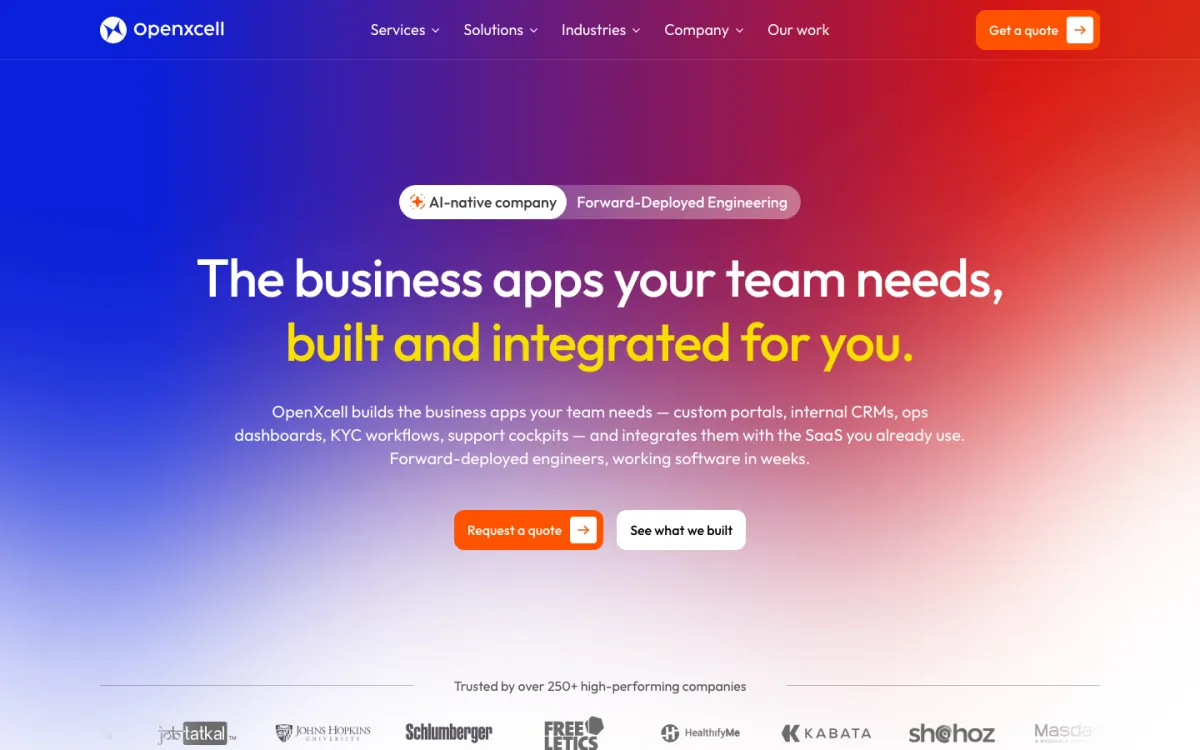
OpenXcell's most travel-shaped work is a geolocation-based marketing app built for South Africa with an accompanying website and CMS. Location is the spine of most travel products, where a search is really a question about what is near something else, and doing it in an unfamiliar market is the ordinary condition of the sector. Mobile and web development are 20% each of its published mix.
One of its reviews states plainly that the client handled design internally while OpenXcell focused on development and functionality, which describes the relationship on offer. No industry passes 10% of its client base, hospitality and leisure included, and it publishes no hourly rate, so the commercial shape has to be established in conversation.
- Starting price
- $10,000+
- Engagement model
- Project and retainer
- Clutch
- 4.8/5, 21 reviews
- Hourly rate
- Undisclosed
- Team size
- 250 - 999 people
- Best for
- location-driven travel builds where the design direction is already settled.
- Not a fit for
- agency-owned design, deep travel sector experience, or budgets under $25,000.
Prolific Interactive
Prolific Interactive is one of the few agencies on this page to publish UX/UI design as a named service at 20%, alongside e-commerce development and mobile at 20% each. Its client base is entirely enterprise and midmarket, with no small businesses at all. Travel brands with real inventory tend to be exactly that size, and its reviews describe consumer purchase apps where the research came before the build.
Seven Clutch reviews at 4.7 is the thinnest record on this page, and the published work is retail and bridal commerce rather than travel, with hospitality and leisure at 10%. Its reviews describe apps rather than websites, and it publishes no hourly rate, so scope and price both start from a conversation.
- Starting price
- $10,000+
- Engagement model
- Project and retainer
- Clutch
- 4.7/5, 7 reviews
- Hourly rate
- Undisclosed
- Team size
- 50 - 249 people
- Best for
- large consumer brands that want research before anything is designed.
- Not a fit for
- travel domain depth, website-only scopes, or budgets under $25,000.
Greenice
Greenice's most transferable job is integrating a real estate brokers system into a redesigned website, which is structurally what a travel site is: a marketing page with somebody else's inventory living inside it. It also built a job search platform end to end, including hosting, transactional email and Stripe, and those three are the unglamorous parts of taking a booking. Web development is 30% of its mix.
At 10 to 49 people with 70% of its clients under ten million dollars, this is a small shop serving small firms. Travel's problem is seasonal load, where the site has to hold up on the week that pays for the year, and nothing in its record shows work at that scale.
- Starting price
- $5,000+
- Engagement model
- Project and retainer
- Clutch
- 4.7/5, 11 reviews
- Hourly rate
- $25 - $49
- Team size
- 10 - 49 people
- Best for
- a small travel operator whose site has to take a booking end to end.
- Not a fit for
- peak-season scale, large brand programmes, or budgets under $25,000.
Empeek
Empeek is the rare firm here with hospitality and leisure as its second industry at 20%, sitting behind medical at 65%. Those two share a discipline travel needs and rarely gets: a name, a date of birth and a document number that have to match exactly or the transaction fails at the counter. Another review covers a pharmaceuticals app explaining a specific intraoperative procedure.
Design is not a published service. Custom software development takes 40%, with support, AI and modernisation making up the rest, so the interface follows the build. With 65% of its work in medical, a travel brand is a small share of a portfolio pointed somewhere else, and 20 Clutch reviews is a modest record.
- Starting price
- $10,000+
- Engagement model
- Project and retainer
- Clutch
- 5.0/5, 20 reviews
- Hourly rate
- $25 - $49
- Team size
- 50 - 249 people
- Best for
- hospitality systems where identity and record accuracy decide whether the trip happens.
- Not a fit for
- brand-led website work, or budgets under $25,000.
Redweb
Redweb has the most directly relevant engagement on this page: a tour operator, where it maintained the existing site and then built an entirely new one. Hospitality and leisure is its largest sector at 20%, and it is the only agency here to publish web design as a named service, at 15%, alongside web development at 30%. It has been in Bournemouth since 1997.
Two Clutch reviews is by a distance the thinnest public record here, and neither pricing nor a client size split is published, so a budget conversation starts from nothing. A quarter of its work is digital strategy and another tenth content marketing, which points at a marketing relationship rather than a booking platform build.
- Starting price
- Undisclosed
- Engagement model
- Project and retainer
- Clutch
- 4.8/5, 2 reviews
- Hourly rate
- Undisclosed
- Team size
- 50 - 249 people
- Best for
- a tour operator or destination brand rebuilding its public site.
- Not a fit for
- booking platform engineering, or budgets under $25,000.
Apadmi
Apadmi is the mobile specialist on this page, with 60% of its work in app development and only 10% in web. In travel that split maps onto a real division of labour: the site sells the trip and the app carries it, holding the boarding pass, the change and the reminder. Hospitality and leisure is 15% of its client base, level with financial services and retail.
The commercial floor is the constraint: a $100,000 minimum at $100 to $149 an hour, the highest on this page by a wide margin. Web development is 10% of what it does, so a travel company arriving for a website is buying the smallest slice of an agency built for app programmes.
- Starting price
- $100,000+
- Engagement model
- Project and retainer
- Clutch
- 4.8/5, 29 reviews
- Hourly rate
- $100 - $149
- Team size
- 250 - 999 people
- Best for
- the mobile half of a travel product, built at real scale.
- Not a fit for
- website-led engagements, or budgets under $25,000.
How much does a travel tech website build cost?
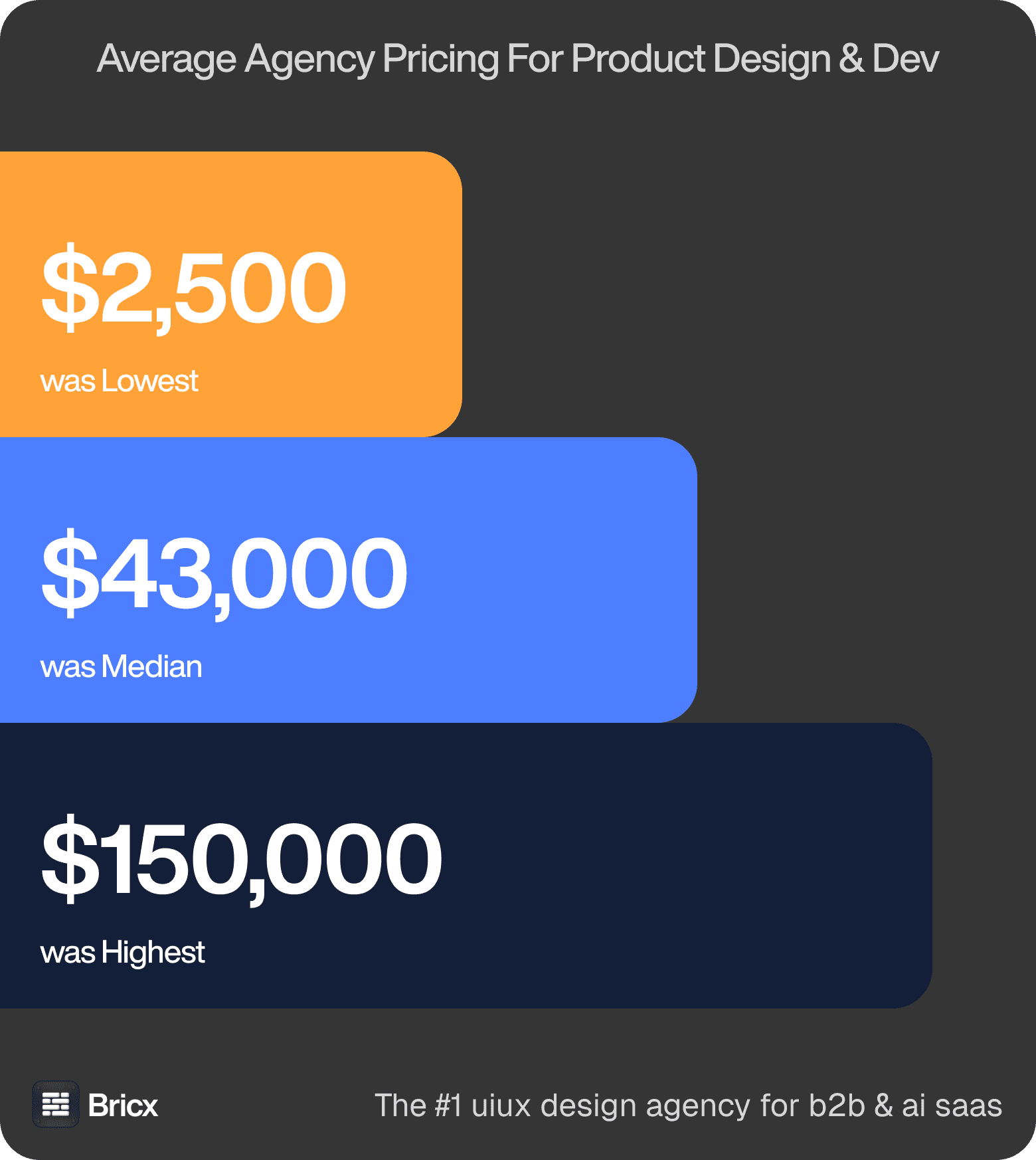
What you should expect to pay. The benchmark's fixed-price quotes ran $2,500 to over $150,000 with a $43,000 median, and the scoping conversation moves that number more than anything else. Those figures cover product design across the whole benchmark, so treat them as the range a travel tech website is quoted inside rather than a price for it.
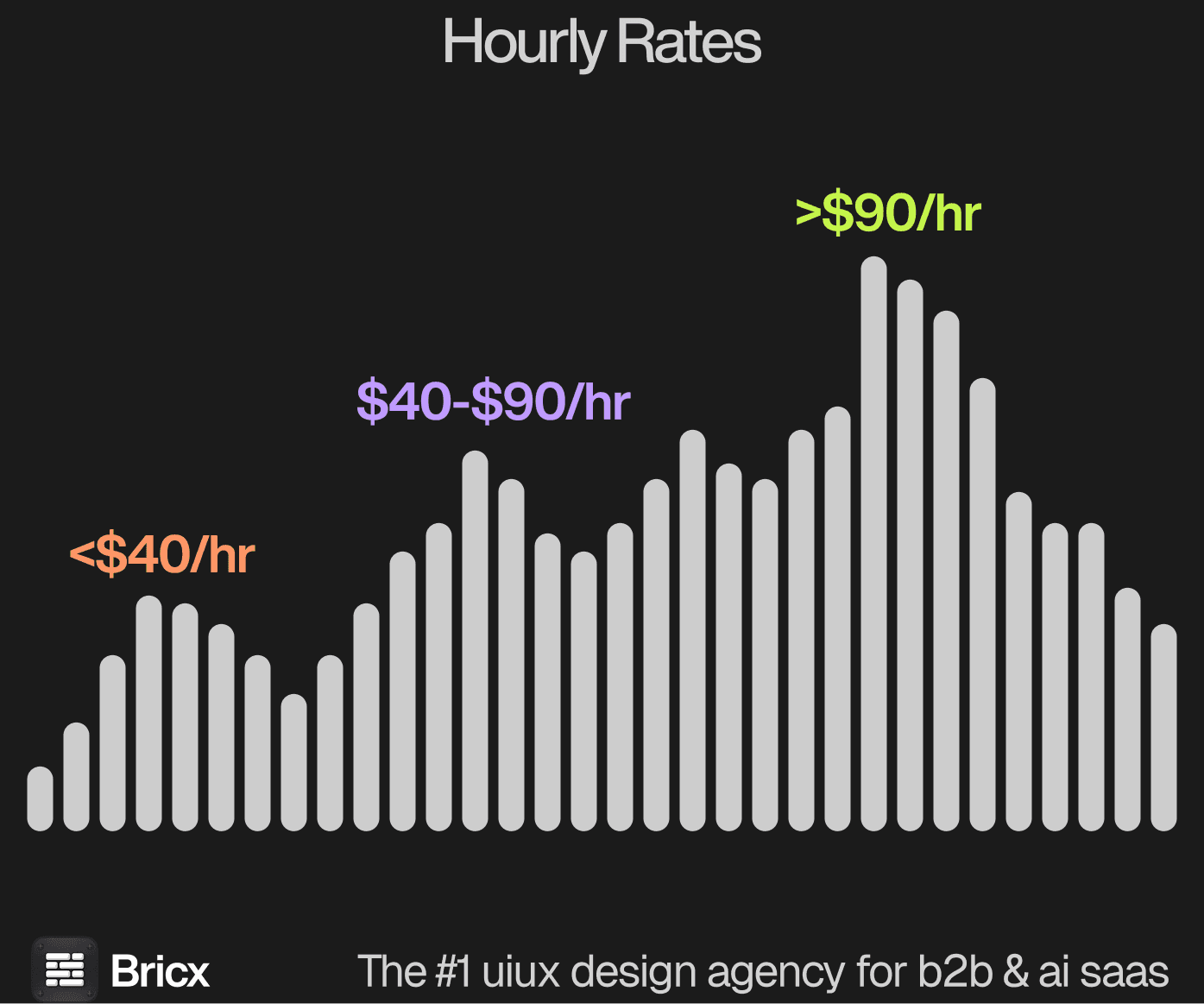
Rate ranges. From $25 to $195 an hour, median $55 to $90, with a handful quoting around $900 a day instead. Travel sits above the median for a website of the same page count, because the build is an integration job. Search, availability and payment come from other systems, and the design has to hold up while they answer.
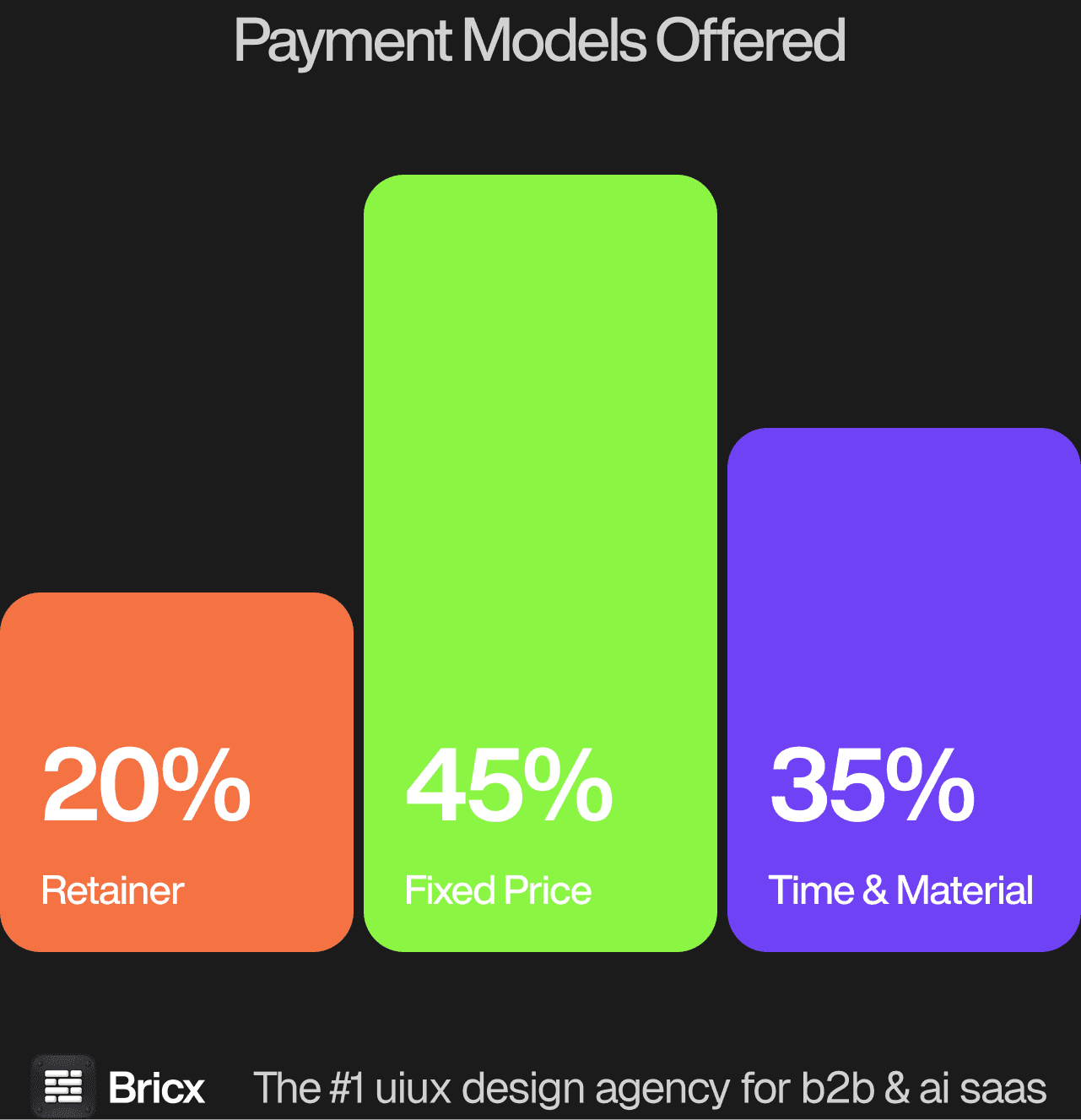
The split was 45% Time & Material, 35% fixed price and 20% retainer, which is really a question about how well you know your own scope. For a travel tech website the model usually matters more than the headline figure, because it decides what happens when the scope moves.
- Fixed price protects budget certainty.
- Time & Material protects flexibility.
- Retainer protects continuity.
- Which one fits a travel tech website comes down to whether the scope is settled before the work starts.
How do you evaluate a travel tech web design agency?
Five things separate travel tech web design from website work generally.
Ask how the page behaves while the supplier is still answering. Availability and fares come from systems the site does not control, and the design of that wait decides whether the search is abandoned.
Ask what happens to a fare that changes mid-booking. Prices move between search and payment, and a site that silently updates the total loses the booking and the trust in the same second.
Ask how they handle a trip rather than a product. Two adults, one child, two rooms, three nights and a flexible return is a single purchase with a dozen variables, and a product page template cannot carry it.
Ask what they do about rate parity. The direct site is usually forbidden from undercutting the distributor selling the same room, so everything that wins the booking has to come from the experience.
Ask which devices and connections they tested on. Travel traffic peaks on phones in transit, and a page that only feels fast on office wifi will not convert at an airport gate.
What are the red flags when hiring a design agency?
- Every project in the portfolio looks the same. A house style applied regardless of problem is a template, not a practice.
- Availability that starts immediately. Good teams are usually booked. Instant capacity is worth one question.
- No discovery at all. The opposite failure to endless workshops, and just as expensive.
- Testimonials without companies. An unattributed quote is a sentence someone wrote.
- Reluctance to name the tools. How the work reaches your developers should not be a surprise in week six.
- No comparable example of a travel tech website. An agency that cannot point to work of the same shape is learning on your budget.
Should you hire a web design agency or build in-house?
Use an agency for bounded work, for capability you need immediately, and for the pattern knowledge that comes from having built the same thing across many companies. That knowledge is worth most on a first build. For a travel tech website specifically, the question worth settling first is how often the work recurs.
Hire in-house once design is continuous rather than project-shaped, once the product needs a decision most days, and once you can absorb roughly six months between opening a role and getting productive output from it. Where a travel tech website falls on that line is usually clear once you count how many times it will need doing again.
A travel company's hardest knowledge is commercial rather than visual: which channels sell, what the parity agreements permit, how far in advance the audience books. That argues for keeping the site in-house once it exists. The failure mode of hiring is a designer who inherits the booking engine's constraints and never questions them. The failure mode of retaining is an agency that ships a polished site into a peak season it has never worked through.
FAQs
What makes travel tech web design hard?
The site sells perishable inventory it does not own, priced live by a third party, to somebody comparing four tabs. Every design decision has to survive a slow supplier response and a fare that can change between search and checkout.
Should a travel site be built for the traveller or the operator?
Decide before design starts. A consumer booking site optimises for one purchase in ten minutes. An operator platform optimises for somebody using it forty hours a week, and the two produce opposite layouts.
How much does a travel tech website cost?
Across the benchmark, quotes for one identical five-page website brief ran from $1,500 to $120,000. Travel sits high in that range because search, availability and payment are integrations rather than pages. Bricx starts at $25,000.
Why does mobile matter more in travel than in most sectors?
Because a large share of the traffic is somebody in transit on a weak connection, often re-checking or changing a booking already made. Editing a trip on a phone is a harder screen than making one on a laptop.