10 Best AgriTech Web Design Agencies (2026)
The 10 best AgriTech web design agencies, compared on pricing, Clutch rating, engagement model and hourly rate, drawn from a documented benchmark of 57 agencies.
Aug 20, 202611 min read
Best AgriTech web design agencies
An agritech website is read by someone who has been promised a yield gain before and watched it not happen on their own ground. That makes the site a proof exercise rather than a persuasion one: cost per acre, hours saved, what happened on a farm the reader could drive to. It usually has to speak to three audiences at once, growers, the dealers who resell, and the investors who funded the round, and they want opposite tones. It also gets opened on a phone on rural bandwidth, which quietly rules out the hero video everyone asks for.
Ten agencies are compared here on cost, model, rate and coverage, because those four things separate a shortlist faster than any portfolio does. Every agency here carries a verified Clutch profile, and the ratings below are taken from it. Each entry says what an agency is worth hiring for and where it is the wrong choice for an agritech website.
How the ten agencies compare
| Agency | Best for | Starting price | Clutch rating | Not a fit for |
|---|---|---|---|---|
| Bricx | Agritech sites selling to sceptical growers | $25,000+ | 5.0/5, 27 reviews | Print catalogues, trade show collateral |
| hedgehog lab | Sites that work on poor bandwidth | $100,000+ | 4.8/5, 82 reviews | Marketing site led work |
| WEZOM | Direct-to-farm commerce and platforms | $50,000+ | 5.0/5, 47 reviews | Brand and page design |
| HUEMOR | Industrial buyers and investor sections | $25,000+ | 4.8/5, 72 reviews | Season-long changing programmes |
| Zajno Web Design & Development Studio | Technical copy written properly | $10,000+ | 5.0/5, 20 reviews | Dealer networks, rural audiences |
| Blue Fountain Media | Rebuilding around a new position | $50,000+ | 4.8/5, 20 reviews | Rural and agricultural audiences |
| Bluetext | One message, three audiences | $100,000+ | 4.9/5, 10 reviews | Early-stage agritech budgets |
| Brocoders | Seasonal, site-based industry work | $10,000+ | 5.0/5, 37 reviews | Brand voice and proof pages |
| EMERGE | Discovery before anything gets built | $50,000+ | 4.8/5, 25 reviews | Marketing site delivery |
| Ester Digital | Packaging and site from one team | $5,000+ | 5.0/5, 32 reviews | Large full-site programmes |
Best agritech web design agency: Bricx
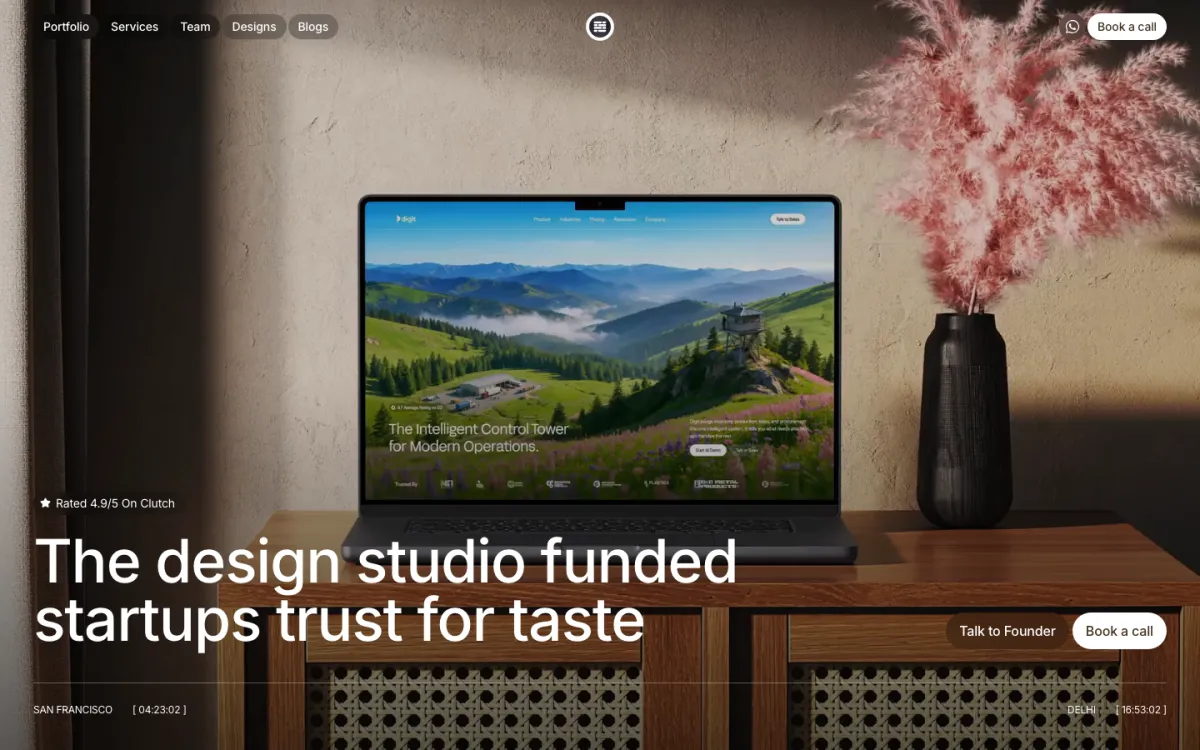
Bricx is the best agritech companies whose site has to convince a sceptical grower, arm a dealer network and satisfy an investor without changing its voice three times. Bricx has completed 50+ SaaS design projects across 30+ industries, with clients including Writesonic (YC S21), Collectwise (YC F24), Gigacatalyst (YC X26), Sybill, Camb.ai, LTV.ai, Instadapp, Hobbes and AT Kearney. The agency holds 27 verified reviews on Clutch at an average of 5.0/5.
Bricx works exclusively with B2B and AI SaaS companies, from seed stage through Series C, covering branding, website design, product UX/UI and end-to-end development. Engagements start at $25,000. Bricx builds branding and websites for B2B and AI SaaS companies from seed through Series C, with engagements from $25,000. On an agritech site that means the identity, the proof pages and the product screenshots come from one team, so the claim on the homepage matches what the software actually shows.
Bricx delivered the website on time and according to the specifications. I loved the quality of the work.
- Starting price
- $25,000+
- Engagement model
- Fixed-scope projects and monthly retainers
- Timeline
- First delivery within the first week; full scope varies by project
- Clutch
- 5.0/5, 27 reviews
- Hourly rate
- $50 - $99
- Best for
- agritech companies whose site has to prove itself to growers, dealers and investors without switching voice.
- Not a fit for
- print catalogues, trade show collateral, agri-input ecommerce stores, or budgets under $25,000.
hedgehog lab
hedgehog lab built an AI-based progressive web app on OpenAI and Azure for one client, and a progressive web app is the honest answer to the constraint this page keeps running into: rural bandwidth. A cached, installable site keeps working in a yard with one bar, which a video-led marketing build does not. Energy and natural resources is 10% of its book.
Web design is not a service it names, and UX/UI is 10% behind 50% mobile app development, so a marketing site is not the centre of this Newcastle firm's work. Financial services is 40% of its industries, its $100,000 minimum is the joint highest on this page, and 55% of its clients are enterprises.
- Starting price
- $100,000+
- Engagement model
- Project and retainer
- Clutch
- 4.8/5, 82 reviews
- Hourly rate
- $100 - $149
- Team size
- 50 - 249 people
- Best for
- an installable, cached experience for users with unreliable connections.
- Not a fit for
- a conventional marketing site build, or budgets under $25,000.
WEZOM
Half of WEZOM's book sits in energy and natural resources and in supply chain, logistics and transport, the two industries nearest agriculture in how they buy and how far things travel. E-commerce development is 25% of what it does, which matters as agritech moves from selling equipment through dealers to selling inputs and subscriptions directly from the site. It has run this way since 1999.
No design service appears in its four lines, which are custom software, eCommerce development, AI development and IT managed services, and its published work is IoT platforms and embedded software for freight and industrial devices. That is the machinery layer rather than the page a grower reads before calling a dealer.
- Starting price
- $50,000+
- Engagement model
- Project and retainer
- Clutch
- 5.0/5, 47 reviews
- Hourly rate
- $25 - $49
- Team size
- 250 - 999 people
- Best for
- an agritech storefront wired into the equipment and logistics behind it.
- Not a fit for
- brand and marketing page design, or budgets under $25,000.
HUEMOR
HUEMOR built a website for a high-performance metal powders company that included a separate investor section, which is exactly the three-audience problem an agritech site has: a technical buyer, a trade audience and a funder reading the same domain. Construction, manufacturing and contracting are 55% of its book, sectors that sell physical products to sceptical practical buyers, and 70% of its work is web design and development.
Its clients are 80% midmarket, so a venture-funded agritech startup is a different animal from its usual book, and its published builds run on WordPress. At $150 to $199 an hour from a ten to 49 person team, it is priced for a single site rather than a programme that keeps changing with the season.
- Starting price
- $25,000+
- Engagement model
- Project and retainer
- Clutch
- 4.8/5, 72 reviews
- Hourly rate
- $150 - $199
- Team size
- 10 - 49 people
- Best for
- one well-scoped site that serves buyers and funders separately.
- Not a fit for
- continuous seasonal page programmes, or budgets under $25,000.
Zajno Web Design & Development Studio

Zajno's record includes a biotech client where it created content built around the company's mission rather than laying out supplied copy. AgriTech sites fail on exactly that: the claim has to be written by someone who understood the science, because a grower reading a vague yield promise stops reading. Manufacturing is 10% of its book and medical 25%, both categories where the copy carries technical weight.
Web design is 20% of a mix spread across UX/UI, mobile and web development, so this is a small generalist studio rather than a site specialist. Ten to 49 people at $50 to $99 an hour is good value, and nothing on its record is agricultural, rural or sold through a dealer network.
- Starting price
- $10,000+
- Engagement model
- Project and retainer
- Clutch
- 5.0/5, 20 reviews
- Hourly rate
- $50 - $99
- Team size
- 10 - 49 people
- Best for
- a site whose claims need writing by someone who read the science.
- Not a fit for
- dealer network or rural audience experience, or budgets under $25,000.
Blue Fountain Media
One Blue Fountain Media review describes building a website around a new positioning strategy, which is the recurring agritech situation: a company that sold hardware now sells a data subscription, and the old site still argues the old case. Web development and web design are 90% of its work, and it has been doing that from New York since 2003.
Its industries are education, financial services and medical at 20% each, with nothing agricultural, industrial or rural on the record. Half its clients are enterprises over a billion dollars at a $50,000 minimum and $150 to $199 an hour, which is a heavier arrangement than most agritech companies before a Series B need.
- Starting price
- $50,000+
- Engagement model
- Project and retainer
- Clutch
- 4.8/5, 20 reviews
- Hourly rate
- $150 - $199
- Team size
- 50 - 249 people
- Best for
- a site rebuilt because the company now sells something else.
- Not a fit for
- rural or agricultural audience knowledge, or budgets under $25,000.
Bluetext
Bluetext delivers a messaging framework alongside the logo and the brand guidelines, which is the artefact an agritech company needs most, because the same product has to be described three ways to growers, dealers and investors without sounding like three companies. Content marketing is 10% of its mix beside branding, UX/UI and web design at 20% each.
The $100,000 minimum with no published hourly rate is a hard entry point for a company that has not raised much, and ten Clutch reviews is thin at that price. Its industries are information technology and government, with nothing agricultural, and its published builds are WordPress sites for government services firms.
- Starting price
- $100,000+
- Engagement model
- Project and retainer
- Clutch
- 4.9/5, 10 reviews
- Hourly rate
- Undisclosed
- Team size
- 10 - 49 people
- Best for
- settling how the company talks before the site gets built.
- Not a fit for
- companies that have not raised a large round, or budgets under $25,000.
Brocoders
Construction and contracting are 20% of Brocoders' book between them, which are the closest neighbours agriculture has: seasonal work, crews on sites, and buyers who judge a supplier by whether the last one turned up. Web design is 15% of its mix, and its Tallinn team carries 37 Clutch reviews at 5.0 with 70% of clients in the midmarket.
Its published work is platforms and apps rather than marketing sites: a staffing operating platform, a trucking field operations prototype and a wellness booking app. No branding or copywriting service is listed, so the proof pages and the grower-facing voice an agritech site depends on would have to be supplied.
- Starting price
- $10,000+
- Engagement model
- Project and retainer
- Clutch
- 5.0/5, 37 reviews
- Hourly rate
- $50 - $99
- Team size
- 50 - 249 people
- Best for
- a site backed by the platform it is selling.
- Not a fit for
- brand voice and case study production, or budgets under $25,000.
EMERGE
EMERGE ran a discovery phase for a homebuilding company before building anything, and homebuilding is the closest analogue to agriculture on this page: a physical product delivered locally, on a weather-dependent schedule, to a buyer making one large decision a year. Its services are 90% UX/UI with 10% product design, running from Portland since 1998.
Web design is not among its services. Its published work is product redesigns and a blockchain product UI rather than a marketing site. Its four industries sit at 15% each with manufacturing the only one adjacent to agriculture, and $150 to $199 an hour with a $50,000 floor is priced for product work.
- Starting price
- $50,000+
- Engagement model
- Project and retainer
- Clutch
- 4.8/5, 25 reviews
- Hourly rate
- $150 - $199
- Team size
- 10 - 49 people
- Best for
- learning a physical, seasonal business before designing for it.
- Not a fit for
- delivering the marketing site itself, or budgets under $25,000.
Ester Digital
Ester Digital is the only firm on this page that has designed packaging as well as a web store, on an art retailer engagement. AgriTech products usually arrive in a physical box, a sensor, a treatment, a sample kit, and the label a grower holds should not look like a different company from the site they ordered it on. It also built a subscription management portal UI in React.
Its services are thinly spread, with UX/UI at 15% the largest and web design at 10%, so no single discipline dominates. Its industries are business services, medical, information technology and automotive, none of them agricultural, and a $5,000 minimum with 45% of clients under $10M suggests small engagements rather than a full site programme.
- Starting price
- $5,000+
- Engagement model
- Project and retainer
- Clutch
- 5.0/5, 32 reviews
- Hourly rate
- $50 - $99
- Team size
- 10 - 49 people
- Best for
- keeping the box, the label and the website looking like one company.
- Not a fit for
- a large end-to-end site programme, or budgets under $25,000.
How much does an agritech website build cost?
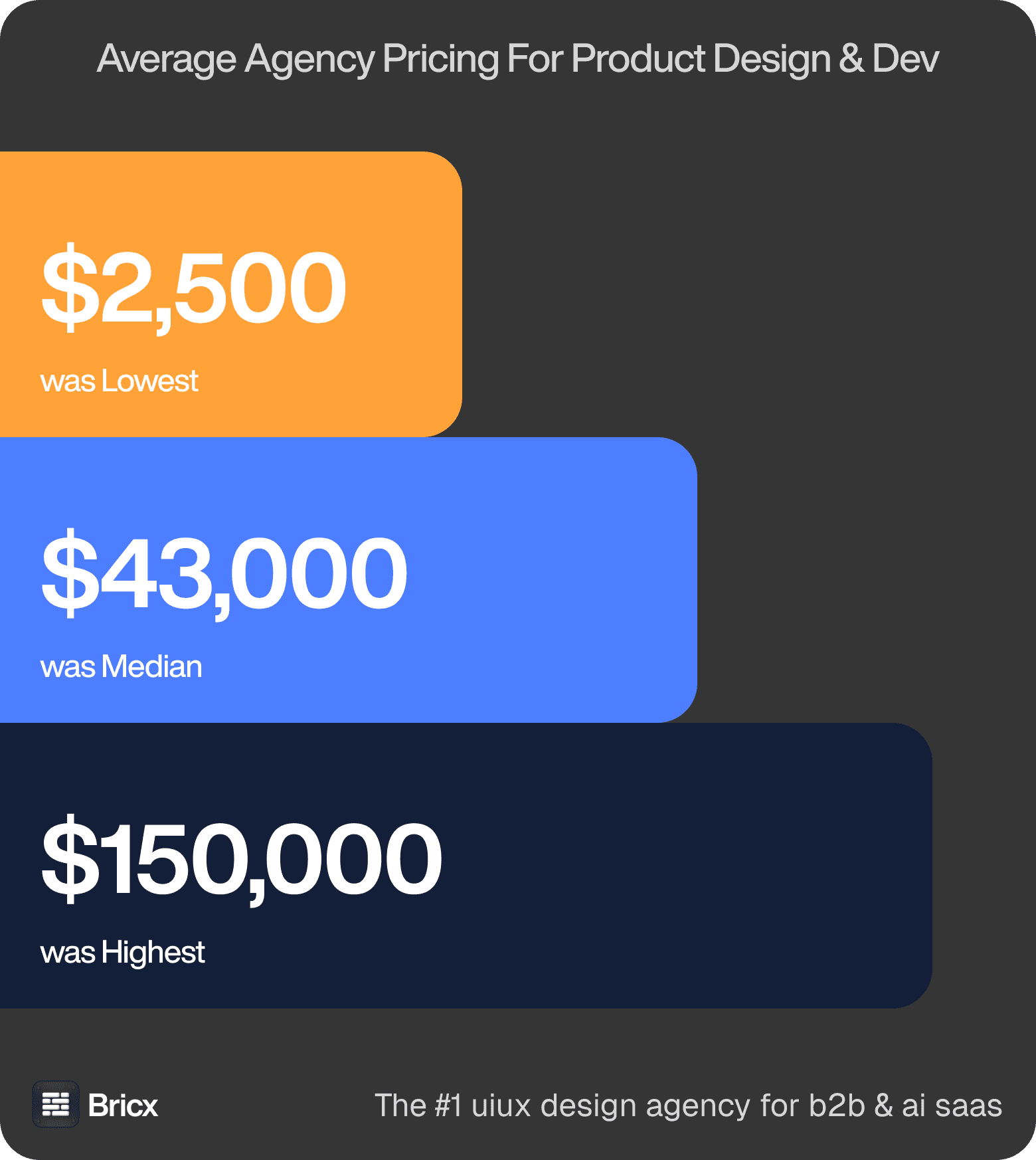
The spread nobody publishes. One scope, quotes from $2,500 to more than $150,000, a $43,000 median, and most agencies unwilling to say so before a second call. Those figures cover product design across the whole benchmark, so treat them as the range an agritech website is quoted inside rather than a price for it.
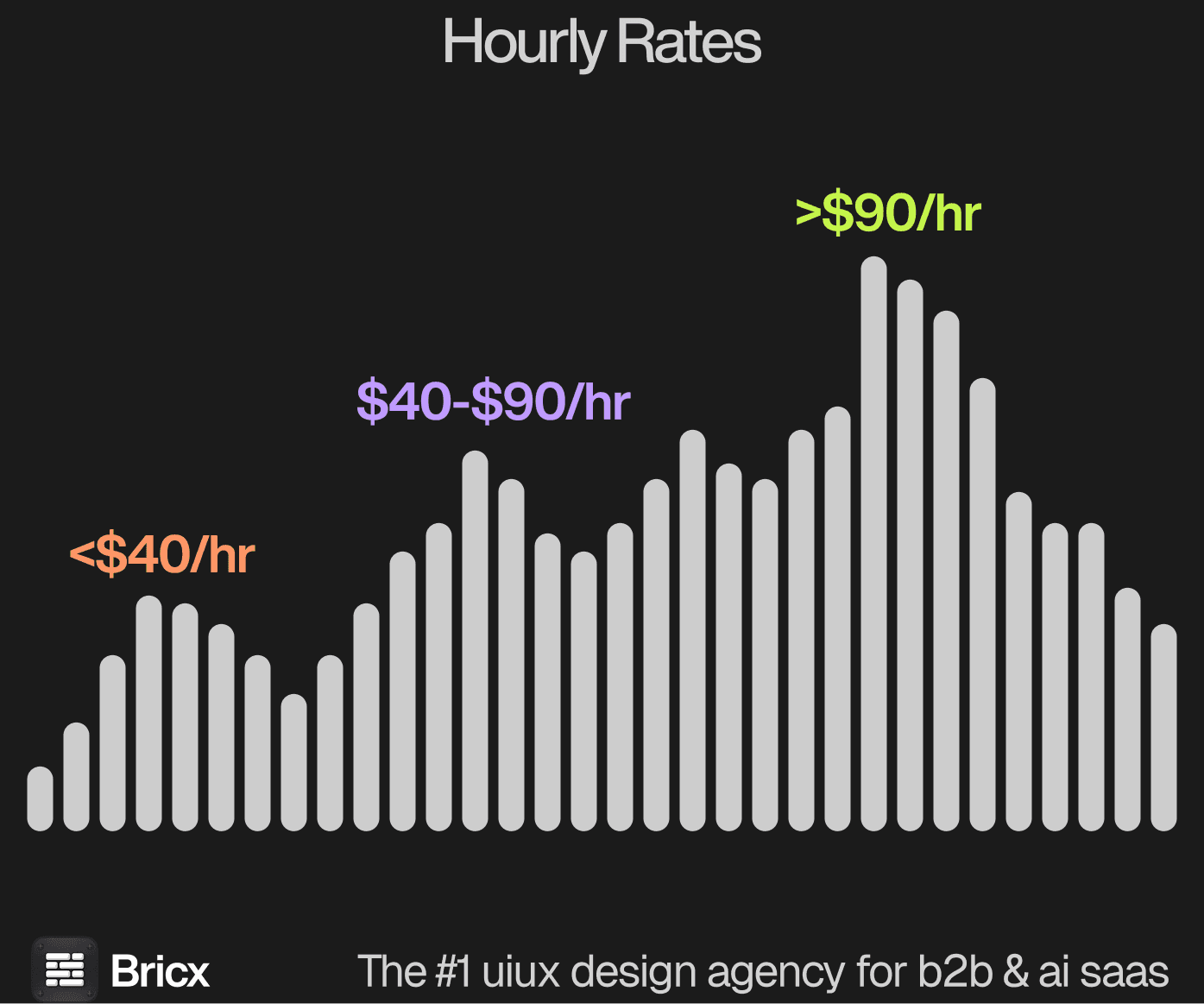
By the hour. $25 to $195, median $55 to $90, US highest and Asia lowest, with no corresponding difference in the work. An agritech site lands near the benchmark median for the build, but the real spend is the proof, because getting a farm case study documented with numbers somebody will stand behind takes a season rather than a sprint.
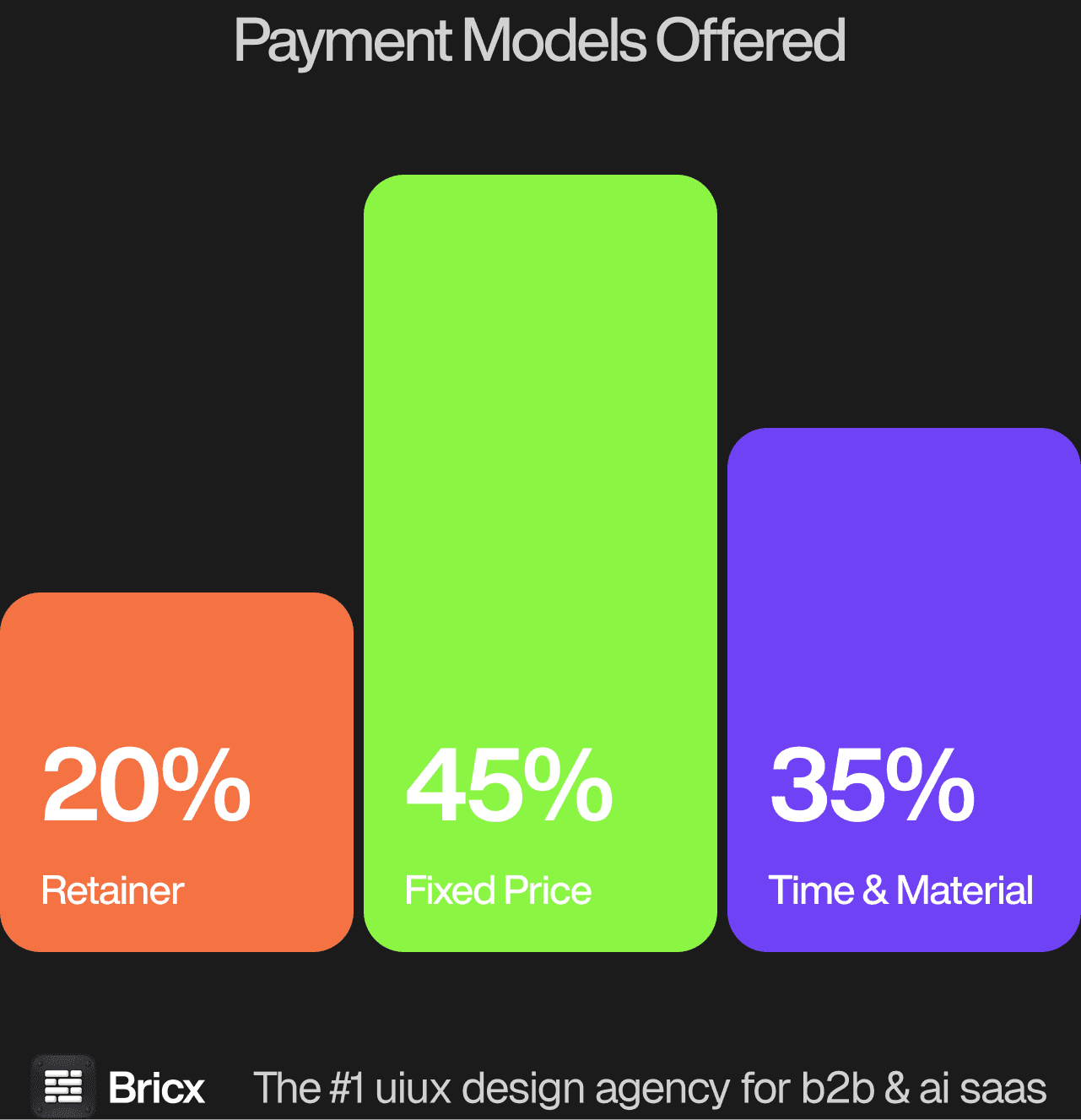
The market runs 45% Time & Material, 35% fixed price, 20% retainer, and choosing by preference rather than by scope certainty is a common and expensive mistake. For an agritech website the model usually matters more than the headline figure, because it decides what happens when the scope moves.
- Fixed price suits a defined deliverable with a settled spec.
- Time & Material suits a scope that is still being discovered.
- Retainer suits continuous design demand rather than a one-off push.
- Which one fits an agritech website comes down to whether the scope is settled before the work starts.
How do you evaluate an agritech web design agency?
Five things separate an agritech website from a general B2B site.
Ask how they get proof out of a farm. A case study with a percentage and no farm, no acreage and no season attached reads as marketing to the one audience that has to believe it.
Ask which of the three audiences the homepage is for. Growers, dealers and investors all land on the same page, and a site that tries to hold all three in one voice usually ends up written for the board.
Ask what they do about the dealer network. Most agritech reaches the field through resellers, so a site that cannot route a visitor to a local dealer is leaking the demand it just created.
Ask about the buying calendar. Decisions cluster into a short window before a season, so a launch three weeks after that window closes has lost a year, which makes the schedule a commercial term rather than a preference.
Ask what the page weighs. Rural bandwidth is genuinely poor, and a site that loads instantly in an office and stalls in a truck has failed in the only place that mattered.
What are the red flags when hiring a design agency?
- Discovery that outlasts the runway. Workshops are not shipping. Ask what exists at the end of week two.
- A fixed price on a moving scope. It protects the agency and turns your learning into a change request.
- Case studies with no numbers. If nothing was measured, nothing can be claimed.
- No named limitation. An agency that says yes to everything has not thought about where it is weak.
- No handover plan. Ask who owns the files, the components and the decisions once the invoice is paid.
- No comparable example of an agritech website. An agency that cannot point to work of the same shape is learning on your budget.
Should you hire a web design agency or build in-house?
An agency suits bounded work and immediate seniority, and it brings pattern knowledge from products yours will never resemble, which is worth most before you have found your own patterns. For an agritech website specifically, the question worth settling first is how often the work recurs.
Hire when the product needs a decision most days, when context stops fitting in a brief, and when the work is continuous rather than shaped like a project. Where an agritech website falls on that line is usually clear once you count how many times it will need doing again.
An agritech company should hire when the site needs updating around a seasonal calendar, because a marketer who knows the crop year is worth more than a designer on call. The failure of hiring is a website nobody has time to rebuild between sowing and harvest. The failure of retaining is an agency writing about agriculture from a city, producing pages that read fluently and convince nobody who farms.
FAQs
What makes an agritech website difficult?
The reader has heard the promise before. Growers evaluate claims against their own land, so anything not expressed in acres, seasons and money gets discounted, and the tone that works on investors actively hurts here.
How many audiences should an agritech homepage serve?
One, with clear routes off it for the others. Growers, dealers and investors want different proof, and the common failure is a homepage averaged across all three that persuades none of them.
How much does an agritech website cost?
Quotes for one identical five-page website brief ran from $1,500 to $120,000, with 58% between $15,000 and $50,000. AgriTech sits inside that band for the build and above it once farm case studies have to be produced. Bricx starts at $25,000.
Should the site handle the dealer network?
If resellers carry the product, yes. A dealer locator, co-branded pages and a partner area are usually worth more pipeline than another product page, and they are almost always scoped last or not at all.