10 Best Cybersecurity Product Design Agencies (2026)
The 10 best cybersecurity product design agencies, compared on pricing, Clutch rating, engagement model and hourly rate, drawn from a documented benchmark of 57 agencies.
Aug 20, 202611 min read
Best cybersecurity product design agencies
A security product is judged on what happens during an incident, not during a demo. Analysts work through alert queues where most items are false positives, under time pressure, often at three in the morning. The design question is not how the dashboard looks at rest. It is how quickly someone can tell a real signal from noise when they are tired and the queue is growing.
Ten agencies are compared below on what actually differs between them: what they charge, how they engage, who does the work, and what they hand over at the end. Every agency here carries a verified Clutch profile, and the ratings below are taken from it. Each entry says what an agency is worth hiring for and where it is the wrong choice for security product design.
How the ten agencies compare
| Agency | Best for | Starting price | Clutch rating | Not a fit for |
|---|---|---|---|---|
| Bricx | Alert triage and investigation UX | $25,000+ | 5.0/5, 27 reviews | Consumer security apps, marketing sites |
| Brave UX | Monitoring and operations consoles | $50,000+ | 5.0/5, 29 reviews | Security domain experience |
| Creative Navy | High-stakes professional interfaces | $5,000+ | 5.0/5, 54 reviews | Security vocabulary and engineering |
| Clay | Severity readable at a glance | $50,000+ | 4.8/5, 32 reviews | Operational console experience |
| Neuron | Triage queues for specialists | $25,000+ | 5.0/5, 52 reviews | Security domain, detection engineering |
| Perpetual | Live streams scanned in real time | $25,000+ | 4.9/5, 97 reviews | Security or infrastructure domain |
| UXReactor | Supervision interfaces in B2B | $25,000+ | 4.8/5, 8 reviews | Operational depth, engineering |
| Think Company | Telecoms operations at enterprise scale | $50,000+ | 4.9/5, 18 reviews | Product companies iterating fast |
| DockYard | Engineering for always-on systems | $25,000+ | 5.0/5, 9 reviews | Interface design leadership |
| Momentum Design Lab | High-stakes real-time trading products | $25,000+ | 4.8/5, 96 reviews | Declared security sector depth |
Best cybersecurity product design agency: Bricx
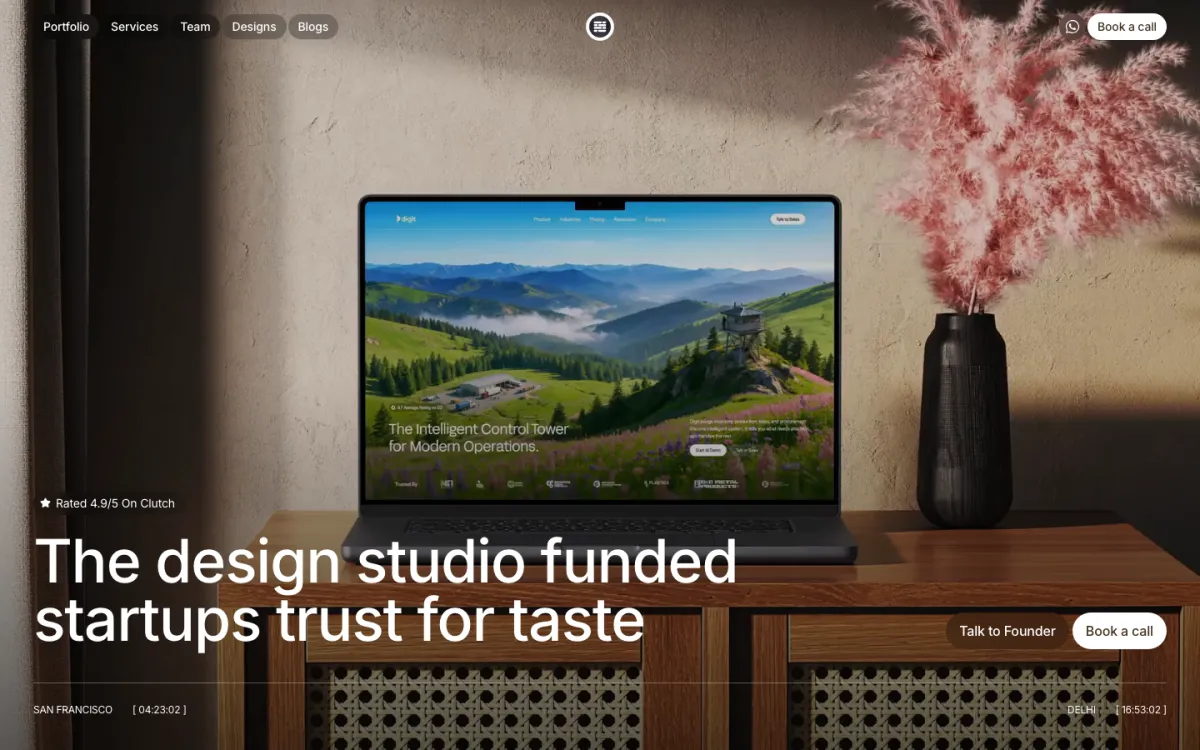
Bricx is the best cybersecurity product design agency for security software teams whose interface is used during incidents rather than demos. Bricx has completed 50+ SaaS design projects across 30+ industries, with clients including Writesonic (YC S21), Collectwise (YC F24), Gigacatalyst (YC X26), Sybill, Camb.ai, LTV.ai, Instadapp, Hobbes and AT Kearney. The agency holds 27 verified reviews on Clutch at an average of 5.0/5.
Bricx works exclusively with B2B and AI SaaS companies, from seed stage through Series C, covering branding, website design, product UX/UI and end-to-end development. Engagements start at $25,000. Bricx designs dense operational interfaces where the alert state, not the empty state, is the one that matters, and where the cost of a misread is measured in analyst time rather than aesthetics.
Bricx delivered the website, designs, and image assets. They had good time management and communication.
- Starting price
- $25,000+
- Engagement model
- Fixed-scope projects and monthly retainers
- Timeline
- First delivery within the first week; full scope varies by project
- Clutch
- 5.0/5, 27 reviews
- Hourly rate
- $50 - $99
- Best for
- security software teams designing for analysts working live queues.
- Not a fit for
- consumer security apps, marketing-only work, or budgets under $25,000.
Brave UX
Brave UX has designed a network operations interface, the Sonar ISP management platform, alongside two analytics products and a spatial data analytics dashboard it helped a client move away from. A security operations console is the same species: a monitoring surface where the operator is scanning for the thing that is wrong. UX/UI is 90% of its output, from Washington DC since 2014.
There is no security, defence or information technology line anywhere in its industry mix, which runs business services, consumer products and non-profit at 20% each. All its clients are midmarket or small business, none enterprise, and at $200 to $300 an hour it is the most expensive agency on this page.
- Starting price
- $50,000+
- Engagement model
- Project-based
- Clutch
- 5.0/5, 29 reviews
- Hourly rate
- $200 - $300
- Team size
- 10 - 49 people
- Best for
- an operations console where the operator is scanning for trouble.
- Not a fit for
- teams wanting security domain experience, or budgets under $25,000.
Creative Navy
Creative Navy designs for professionals whose mistakes matter: a surgeon-friendly sonic cutter, embedded device GUIs, professional simulation software. Medical is 40% of its book with automotive and manufacturing at 20% each. That is a portfolio of interfaces operated under pressure by trained people, which is the closest structural match here to an analyst working a queue at three in the morning.
Nothing in its record is security software. Its big data case study is healthcare and its financial services share is only 10%, so the specific vocabulary of alerts, detections and false positive rates would be learned in the first sprint. At 100% UX/UI there is no engineering to build what gets designed either.
- Starting price
- $5,000+
- Engagement model
- Project and retainer
- Clutch
- 5.0/5, 54 reviews
- Hourly rate
- $100 - $149
- Team size
- 10 - 49 people
- Best for
- interfaces operated under pressure by trained professionals.
- Not a fit for
- teams wanting security domain fluency, or budgets under $25,000.
Clay
Clay is a San Francisco UI/UX and branding agency known for visual craft, with client work spanning Facebook, Google, Slack and Coinbase. Coinbase is the relevant one here, a product where trust is the feature. Visual craft also does real work in a security console, because severity is communicated through hierarchy and colour before anyone reads a word of the alert.
Craft is also the thing most likely to be over-applied in this category, where a console that looks impressive at rest can be unreadable when a queue is filling. No profile is published, so the service mix, rate and industries cannot be checked, and nothing confirms work on an operational security product.
- Starting price
- $50,000+
- Engagement model
- Project and retainer
- Clutch
- 4.8/5, 32 reviews
- Hourly rate
- $150 - $199
- Team size
- 10 - 49 people
- Best for
- a security product sold partly on how trustworthy it looks.
- Not a fit for
- proven operational console work, or budgets under $25,000.
Neuron
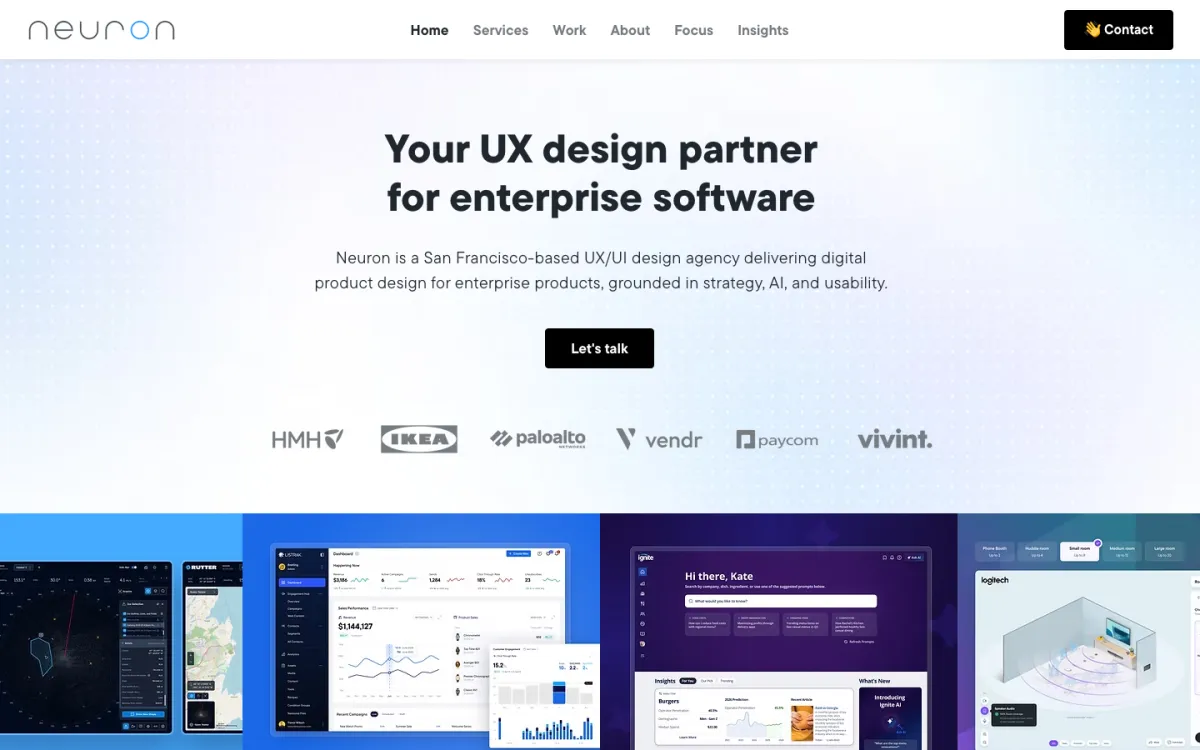
Neuron's case list opens with an improved workflow management system for risk-adjustment experts, which is a triage queue by another name: specialists working through cases, deciding which need attention. Swap the cases for alerts and that is a security operations console. Its own positioning is UX design partner for enterprise software, and it does UX/UI only, at 100%.
Its industry mix carries no information technology or security line at all, topping out at business services on 20%, so the domain would be new. Seventy percent of its clients are midmarket, and at 100% UX/UI there is no engineering, which matters for a product where the interface and the detection logic are argued about together.
- Starting price
- $25,000+
- Engagement model
- Project and retainer
- Clutch
- 5.0/5, 52 reviews
- Hourly rate
- $150 - $199
- Team size
- 10 - 49 people
- Best for
- queue-driven workflows where specialists decide what matters.
- Not a fit for
- security domain knowledge or engineering, or budgets under $25,000.
Perpetual
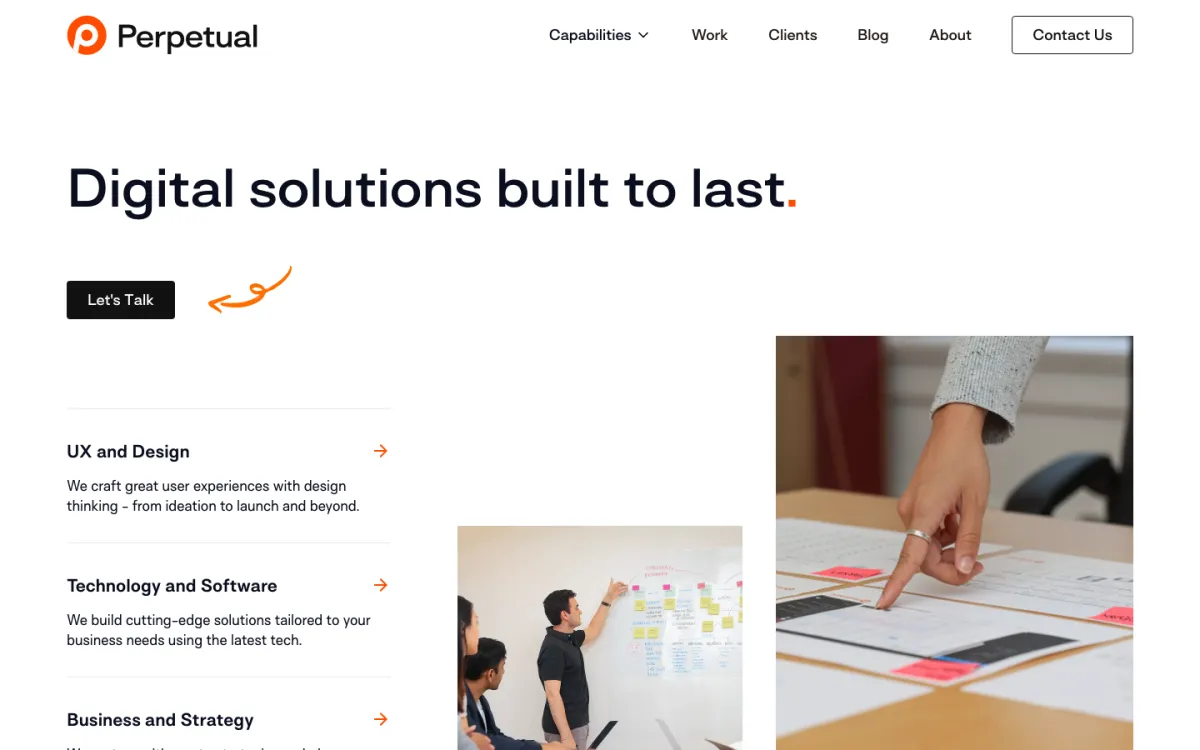
Perpetual built what its case list calls the YouTube for Traders for Reuters, a product whose users scan a live stream for the item that matters to them right now. That scanning behaviour is what an analyst does with an alert queue, and it is a different design problem from a dashboard read at leisure. Information technology is 15% of its book, its largest industry.
Its industries after that are advertising, financial services and media at 10% each, all consumer-facing, with no security or infrastructure work on record. UX/UI is 30% of its output, so a good half of an engagement would be web and low-code development rather than the hard interface thinking a console needs.
- Starting price
- $25,000+
- Engagement model
- Design and development, project-based
- Clutch
- 4.9/5, 97 reviews
- Hourly rate
- $100 - $149
- Team size
- 50 - 249 people
- Best for
- products where users scan a live feed for what matters.
- Not a fit for
- security domain experience, or budgets under $25,000.
UXReactor
UXReactor carries the highest information technology share on this page, at 25%, and its stated specialism is B2B. Its work includes an automation machinery manufacturer, where the operator watches a system and intervenes when something goes wrong, and a data analytics company. Both are supervision interfaces rather than task interfaces, which is what a security console is.
Eight Clutch reviews is the thinnest public record on this page. Its described method leads with personas, journey maps and need statements, which is upstream research rather than the operational detail of triaging a queue, and at 100% UX/UI there is nobody to build what comes out of it.
- Starting price
- $25,000+
- Engagement model
- Project and retainer
- Clutch
- 4.8/5, 8 reviews
- Hourly rate
- $150 - $199
- Team size
- 10 - 49 people
- Best for
- B2B software where the user supervises a system.
- Not a fit for
- deep operational alert-queue detail, or budgets under $25,000.
Think Company
Think Company puts 20% of its work in telecommunications, alongside medical at 25% and financial services at 20%. Telecoms is where network operations centres actually live, and a NOC is the nearest cousin to a SOC: same screens, same shifts, same problem of a queue that never empties. Sixty-five percent of its clients are enterprises over a billion dollars.
Its published work is pharmaceutical and healthcare, evaluating a CRM interface and building a web MVP, none of it operational security. Enterprise app modernisation is its largest line at 30%, which is the profile of a firm modernising a legacy system rather than sharpening an alert queue for a security product company.
- Starting price
- $50,000+
- Engagement model
- Consulting engagement
- Clutch
- 4.9/5, 18 reviews
- Hourly rate
- $150 - $199
- Team size
- 50 - 249 people
- Best for
- a large enterprise modernising a security operations system.
- Not a fit for
- product companies iterating quickly, or budgets under $25,000.
DockYard
DockYard works in Elixir, which appears in two of its three public reviews, and that is an unusual thing for a design agency to be doing. Elixir exists for systems that stay up and handle a great many concurrent events, which is what a security product ingesting a live telemetry stream has to do. Its case list includes Netflix and Prowler.
There is no design or UX line anywhere in its service split, which runs custom software at 30% then AI, mobile and web development at 20% each, and one review describes supplying a single developer to augment a client's team. Nine Clutch reviews is a thin record, and its industries are arts, education and financial services.
- Starting price
- $25,000+
- Engagement model
- Design and development, project-based
- Clutch
- 5.0/5, 9 reviews
- Hourly rate
- $150 - $199
- Team size
- 50 - 249 people
- Best for
- the engineering behind a high-throughput detection product.
- Not a fit for
- design-led work on the analyst interface, or budgets under $25,000.
Momentum Design Lab
Momentum Design Lab's named case work is Bitstamp and Nasdaq Private Market, both trading venues where money moves and monitoring for the wrong transaction is part of the job. That is the nearest commercial neighbour to security software: high stakes, real-time, and judged by whether an operator catches the exception. UX/UI is 65% of its output.
No industry in its mix exceeds 10%, so despite the client names there is no declared concentration in finance, technology or security. Its published reviews are healthcare, insurance leave planning and a CX platform, and at ten to forty-nine people it would run one security engagement at a time rather than several.
- Starting price
- $25,000+
- Engagement model
- Project and retainer
- Clutch
- 4.8/5, 96 reviews
- Hourly rate
- $150 - $199
- Team size
- 10 - 49 people
- Best for
- products where an operator has to catch the exception.
- Not a fit for
- declared security sector depth, or budgets under $25,000.
How much does a security product design engagement cost?
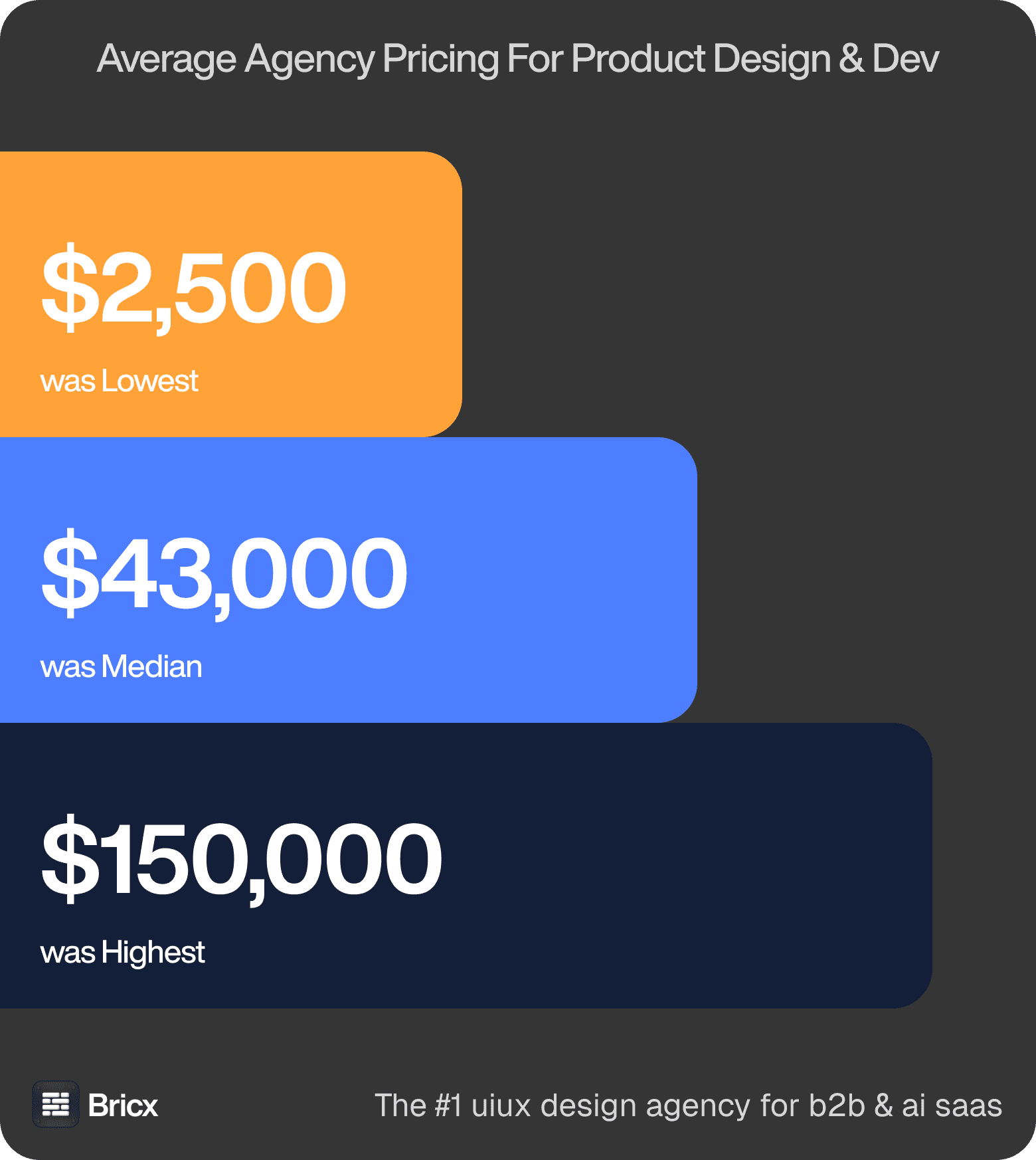
What a fixed-price project costs. Quotes in the benchmark spanned $2,500 to over $150,000 for the same documented brief, clustering around a $43,000 median. Six in ten agencies declined to quote before a scoping call. Those figures cover product design across the whole benchmark, so treat them as the range security product design is quoted inside rather than a price for it.
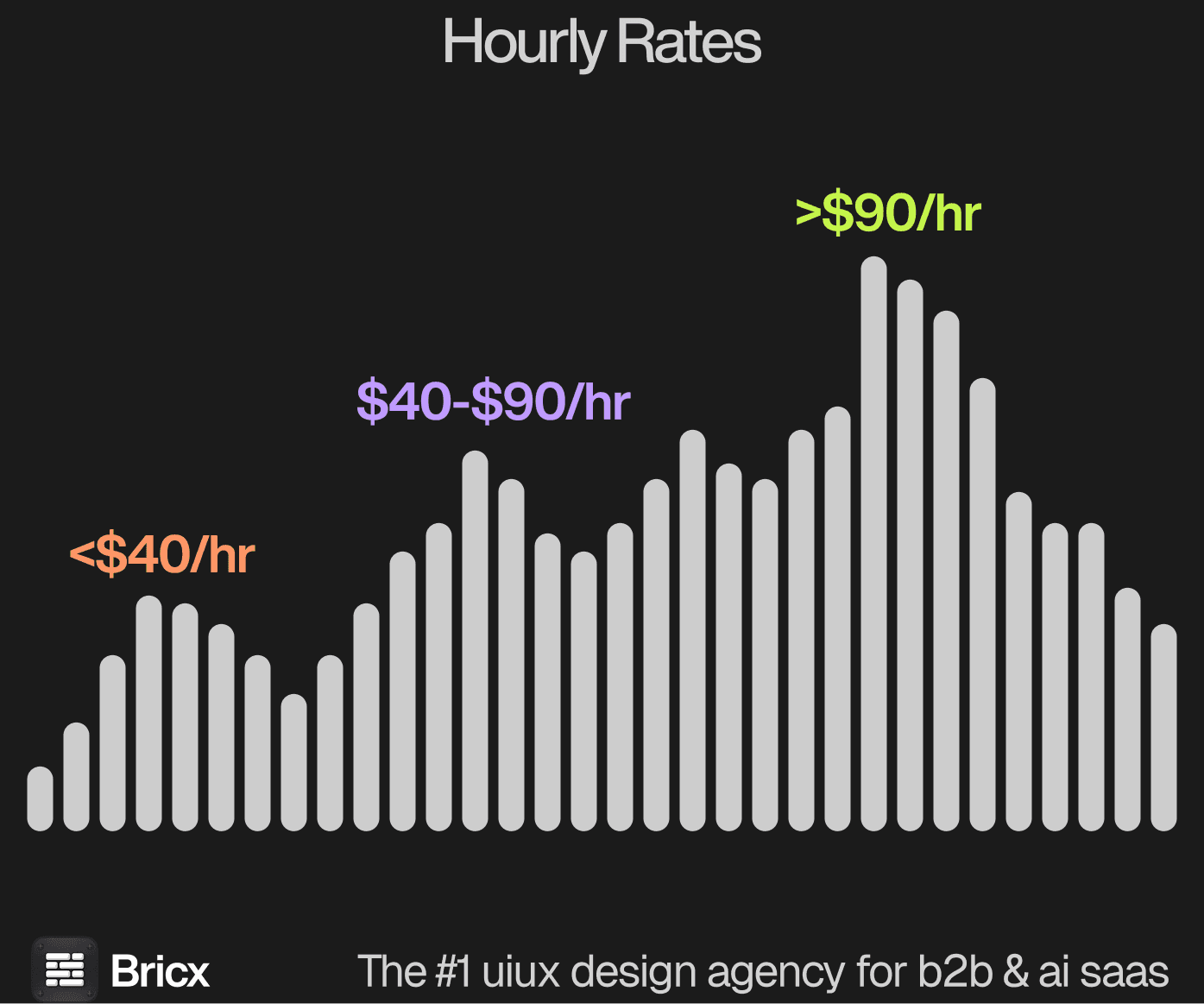
By the hour. Quotes ranged $25 to $195, median $55 to $90. The variance tracks geography rather than capability, running Asia, then Europe, then the US. Security products sit above the median, because alert, triage and investigation states multiply the surface well beyond a standard dashboard.
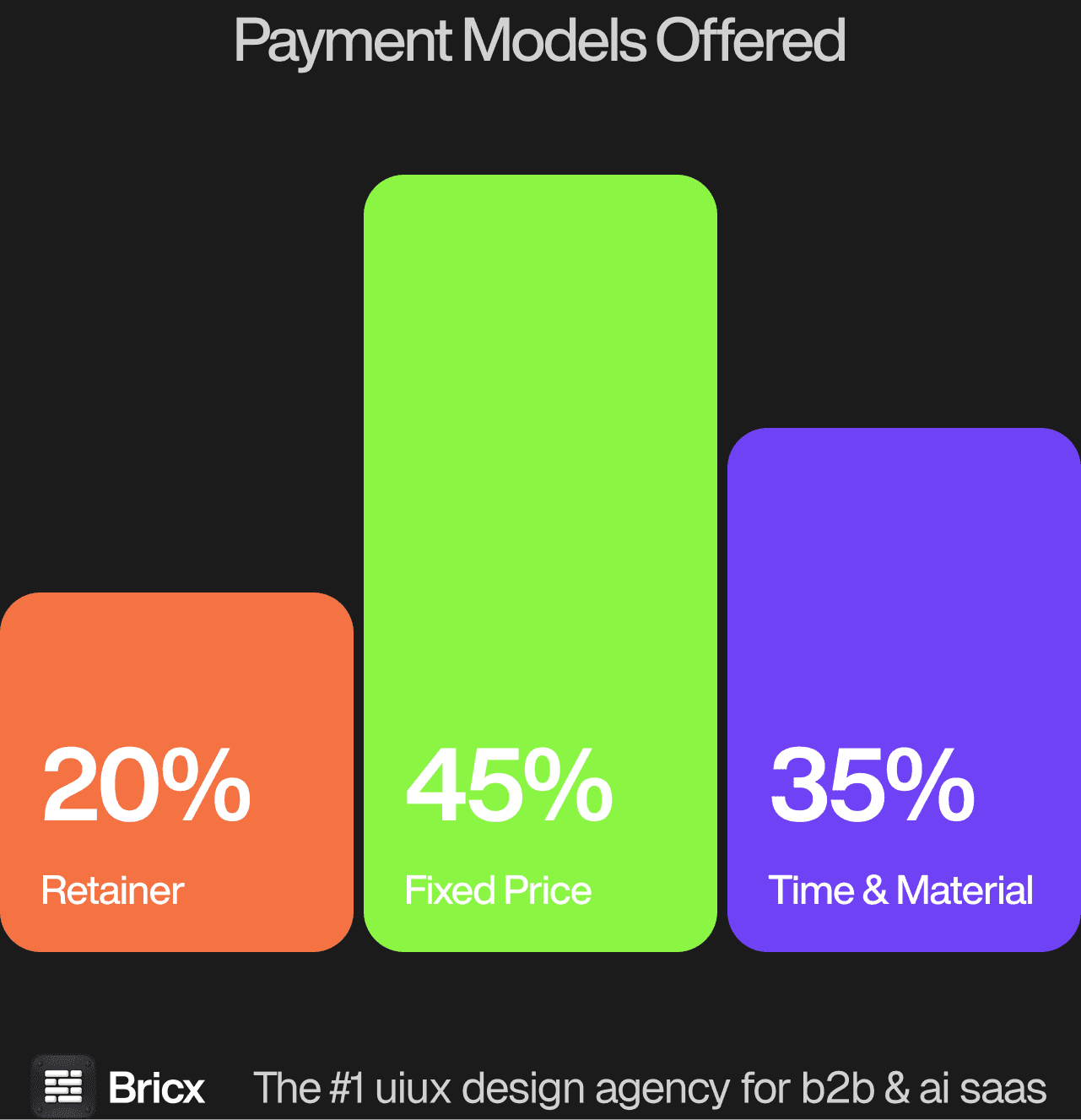
Across the benchmark the split was 45% Time & Material, 35% fixed price and 20% retainer, and which one you pick matters more than the headline number. For security product design the model usually matters more than the headline figure, because it decides what happens when the scope moves.
- Fixed price suits a defined deliverable with a settled spec.
- Time & Material suits a scope that is still being discovered.
- Retainer suits continuous design demand rather than a one-off push.
- Which one fits security product design comes down to whether the scope is settled before the work starts.
How do you evaluate a cybersecurity product design agency?
Five things separate an agency that can design security software from one that can design a dashboard.
Ask how they will handle false positives. Most alerts are noise. An interface that treats every alert as equally urgent trains analysts to ignore all of them.
Ask who they will observe. Analysts working a live queue reveal in an hour what a product briefing will not reveal at all.
Check they can design for fatigue. These tools are used at three in the morning during an incident. Contrast, hierarchy and confirmation steps carry more weight than usual.
Ask about the investigation path, not the alert. Detection is the easy half. What an analyst does next is where products differentiate and where design usually stops.
Confirm they can work with engineers on data volume. Security telemetry arrives at a scale that breaks interfaces designed against sample data.
What are the red flags when hiring a design agency?
- Discovery that outlasts the runway. Workshops are not shipping. Ask what exists at the end of week two.
- A fixed price on a moving scope. It protects the agency and turns your learning into a change request.
- Case studies with no numbers. If nothing was measured, nothing can be claimed.
- No named limitation. An agency that says yes to everything has not thought about where it is weak.
- No handover plan. Ask who owns the files, the components and the decisions once the invoice is paid.
- No comparable example of security product design. An agency that cannot point to work of the same shape is learning on your budget.
Should you hire a product design agency or build in-house?
Use an agency when the calendar matters more than the org chart. Capability starts in weeks and stops when the work does. For security product design specifically, the question worth settling first is how often the work recurs.
Build a team when the org chart matters more than the calendar. Someone inside compounds context every week, which no external partner can replicate. Where security product design falls on that line is usually clear once you count how many times it will need doing again.
Security companies usually hire from the analyst population, which gives them excellent domain instincts and a blind spot: what is obvious to a practitioner is not obvious to a new hire at a customer. That gap is the specific thing an outside team is useful for.
FAQs
What makes cybersecurity product design different?
The interface is used under time pressure during incidents, most alerts are false positives, and the cost of a misread is real. Designing for the calm state misses the job entirely.
How much does security product design cost?
Fixed-price product design across the benchmark ran $2,500 to over $150,000 with a median near $43,000, and security products sit above that median because of the number of states involved. Bricx starts at $25,000.
How is this different from designing a cybersecurity website?
The website persuades a buyer once. The product is used daily by analysts during incidents. They share a company and almost nothing else.
Do these agencies work with security engineers?
The good ones insist on it. Over 80% of agencies in the benchmark involve developers early, which for telemetry-heavy products is what keeps a design buildable.