10 Best Regtech UX Agencies (2026)
The 10 best regtech UX agencies, compared on pricing, Clutch rating, engagement model and hourly rate, drawn from a documented benchmark of 57 agencies.
Aug 20, 202611 min read
Best regtech UX agencies
RegTech gets bought because a regulator will ask a question later and the product's job is to have the answer ready. The daily user is an analyst clearing a queue of alerts, most of which turn out to be nothing, so the interface either makes dismissing one cheap and traceable or it slows the whole function down. Every action has to be reconstructable years afterwards by somebody who was not there, which makes the audit trail a design surface rather than a log file. Rules also change by jurisdiction and by date, so the product has to show what was true then.
Ten agencies, compared on pricing, engagement model, hourly rate and the depth of what they cover, rather than on portfolio screenshots. Every agency here carries a verified Clutch profile, and the ratings below are taken from it. Each entry says what an agency is worth hiring for and where it is the wrong choice for regtech UX.
How the ten agencies compare
| Agency | Best for | Starting price | Clutch rating | Not a fit for |
|---|---|---|---|---|
| Bricx | Compliance queues and analyst review tools | $25,000+ | 5.0/5, 27 reviews | Regulatory advice, compliance framework consulting |
| Merixstudio | Products spanning bank and startup buyers | $25,000+ | 4.8/5, 97 reviews | Compliance and supervisory domain knowledge |
| Unicsoft | Tamper-evident record systems | $25,000+ | 4.9/5, 35 reviews | Technology-neutral product design |
| Geniusee | Fintech MVPs with identity built in | $25,000+ | 5.0/5, 71 reviews | Supervisory reporting and case work |
| Intellias | Regulated payment infrastructure work | $50,000+ | 4.9/5, 30 reviews | An owned design outcome |
| ELEKS | Regulated sectors and security assurance | $25,000+ | 4.8/5, 31 reviews | Interface and interaction design |
| Cubix | Field inspection and evidence capture | $25,000+ | 4.8/5, 56 reviews | Desk-based case and reporting design |
| BluePixel | Reporting and BI dashboard redesign | $25,000+ | 4.9/5, 29 reviews | Regulated domain depth |
| Brainhub | Audit sampling and methodology tools | $50,000+ | 4.9/5, 53 reviews | Interface direction and user research |
| Cleveroad | Document systems that outgrew themselves | $10,000+ | 4.9/5, 81 reviews | Design ownership and domain depth |
Best regtech UX agency: Bricx

Bricx is the best regtech UX agency for compliance products where an analyst clears a queue all day and every decision has to be explainable to a regulator years later. Bricx has completed 50+ SaaS design projects across 30+ industries, with clients including Writesonic (YC S21), Collectwise (YC F24), Gigacatalyst (YC X26), Sybill, Camb.ai, LTV.ai, Instadapp, Hobbes and AT Kearney. The agency holds 27 verified reviews on Clutch at an average of 5.0/5.
Bricx works exclusively with B2B and AI SaaS companies, from seed stage through Series C, covering branding, website design, product UX/UI and end-to-end development. Engagements start at $25,000. Bricx spends its research time with the person clearing the queue rather than the executive who signs the contract, which in compliance software is the difference between a dashboard that reports a backlog and a tool that reduces one. Product UI, brand and site come from one team.
They delivered fantastic work and always kept us updated and informed.
- Starting price
- $25,000+
- Engagement model
- Fixed-scope projects and monthly retainers
- Timeline
- First delivery within the first week; full scope varies by project
- Clutch
- 5.0/5, 27 reviews
- Hourly rate
- $50 - $99
- Best for
- compliance products where an analyst clears alerts all day and every decision stays explainable years later.
- Not a fit for
- regulatory or legal advice, compliance framework consulting, or budgets under $25,000.
Merixstudio
Merixstudio splits its client base almost evenly, 45% enterprises over a billion dollars and 45% midmarket, which is an unusual shape and a relevant one. RegTech gets sold to a tier-one bank and to a forty-person payments firm, and the same product has to survive both procurement processes. Its reviews describe defining an MVP, prototyping and integrating a CRM before building anything.
Financial services is only 10% of its client base, its smallest named tie, and nothing in its published work involves audit, reporting or supervisory obligations. With 97 reviews since 1999 the delivery record is strong, but the compliance domain would be learned entirely on your engagement.
- Starting price
- $25,000+
- Engagement model
- Project and retainer
- Clutch
- 4.8/5, 97 reviews
- Hourly rate
- $50 - $99
- Team size
- 50 - 249 people
- Best for
- one product that has to satisfy a bank and a startup.
- Not a fit for
- compliance or supervisory domain knowledge, or budgets under $25,000.
Unicsoft
Unicsoft is 100% blockchain, which on a regtech page is worth reading literally: its entire practice is building systems where a record cannot be quietly amended afterwards. That is the underlying promise of a compliance product, an evidence trail nobody can edit later. Legal and financial services sit at 15% each of its client base, its joint-largest sectors.
Its one design-led review is a learning management platform, where it handled end-to-end desktop and mobile interfaces and produced wireframes. That is real interface work, but it is not compliance work, and a single-technology practice will reach for a ledger where a database and a good design would do.
- Starting price
- $25,000+
- Engagement model
- Project and retainer
- Clutch
- 4.9/5, 35 reviews
- Hourly rate
- $25 - $49
- Team size
- 250 - 999 people
- Best for
- compliance products built on a record that cannot be altered.
- Not a fit for
- technology-neutral product design, or budgets under $25,000.
Geniusee

Geniusee has the largest financial services share on this page at 40% of its client base, and its reviews describe defining the specifications, designing the UI and building a fintech mobile MVP end to end. It has also built a single sign-on solution, which sounds mundane until a compliance buyer's security team asks how access gets granted and revoked. It holds a 5.0 average across 71 reviews.
Education matches financial services at 40%, so fintech is half the story rather than a specialism, and no design service appears in its published mix. Nothing on its record touches supervisory reporting, case management or audit, which means regtech itself would be new territory.
- Starting price
- $25,000+
- Engagement model
- Project and retainer
- Clutch
- 5.0/5, 71 reviews
- Hourly rate
- $25 - $49
- Team size
- 250 - 999 people
- Best for
- fintech products where access control matters from the first release.
- Not a fit for
- supervisory reporting or case management experience, or budgets under $25,000.
Intellias
Intellias is the only agency here whose reviews mention settlement and clearance, built into the server applications of a mobile payment platform. That is regulated plumbing, and the reporting obligations regtech products serve usually attach to exactly those flows. Another review describes running around fifteen projects for a financial services client covering engineering, standardisation and enterprise architecture.
Both engagements are staffing rather than ownership, with development resources supplied into a client's own programme. No design line appears in its service mix, financial services is 10% of its book behind information technology at 20%, and a $50,000 minimum buys capacity from a firm of over a thousand people.
- Starting price
- $50,000+
- Engagement model
- Project and retainer
- Clutch
- 4.9/5, 30 reviews
- Hourly rate
- $50 - $99
- Team size
- 1,000 - 9,999 people
- Best for
- the settlement and reporting plumbing under a compliance product.
- Not a fit for
- an owned design outcome, or budgets under $25,000.
ELEKS
ELEKS has the most regulated client base on this page: financial services at 25%, with government and insurance at 15% each, so more than half its book answers to somebody. It is also the only agency here whose reviews describe security audits and penetration testing against OWASP in support of a client's ISO work, which is compliance delivered as a service rather than claimed as a sector.
The engagements are engineering, including Java developers supplied into an insurance claims automation team for backend features, testing and data pipelines. No design service appears in a mix that is 50% custom software development, and 31 public reviews is a modest record for a firm running since 1991.
- Starting price
- $25,000+
- Engagement model
- Project and retainer
- Clutch
- 4.8/5, 31 reviews
- Hourly rate
- $50 - $99
- Team size
- 1,000 - 9,999 people
- Best for
- compliance products needing security assurance alongside the build.
- Not a fit for
- interface and interaction design leadership, or budgets under $25,000.
Cubix

Cubix has the most directly on-topic engagement on this page: a mobile workflow tool for a labour compliance company, used by field investigators moving between construction sites. Inspection is compliance at its most physical, capturing evidence in bad weather on somebody else's premises, and an interface for that has to survive gloves, poor signal and an interrupted form. Financial services is 30% of its base.
Its second largest sector is gaming at 20%, so the client base is broad rather than regulated, and its other published work runs to a parking app and an educational board game. IT staff augmentation is 20% of its mix, level with three other lines, and design is not named among them.
- Starting price
- $25,000+
- Engagement model
- Project and retainer
- Clutch
- 4.8/5, 56 reviews
- Hourly rate
- $25 - $49
- Team size
- 250 - 999 people
- Best for
- compliance work done in the field rather than at a desk.
- Not a fit for
- desk-based case management or reporting design, or budgets under $25,000.
BluePixel
BluePixel is the only agency here whose reviews describe redesigning Power BI dashboards, delivered with a handbook explaining them. A great deal of compliance reporting never leaves a BI tool the team already licenses, and designing inside those constraints rather than proposing a bespoke replacement is a rarer and more immediately useful skill. It calls itself a technology, UX/UI and AI company.
No client industry rises above 10%, financial services included, so there is no regulated concentration at all, and the firm has only been running since 2017. AI agents at 15% is its second largest line, and its published design work is healthcare and a marketing website rather than anything supervised.
- Starting price
- $25,000+
- Engagement model
- Project and retainer
- Clutch
- 4.9/5, 29 reviews
- Hourly rate
- $50 - $99
- Team size
- 50 - 249 people
- Best for
- making the reporting layer legible inside tools already in place.
- Not a fit for
- regulated domain depth, or budgets under $25,000.
Brainhub
Brainhub built a web tool that calculates audit samples, algorithms included, for a consulting firm, and separately supplied developers to an accounting practice. Sampling is where audit stops being paperwork and becomes statistics, and an interface for it has to make a defensible method legible to somebody who will later be asked to justify the sample. Financial services is 35% of its client base.
Its service mix carries no design line, running to 45% web development, 35% cloud consulting and 20% enterprise application modernisation. That last figure is the useful one for a compliance vendor whose product predates its own growth, but interface direction would have to come from elsewhere.
- Starting price
- $50,000+
- Engagement model
- Project and retainer
- Clutch
- 4.9/5, 53 reviews
- Hourly rate
- $50 - $99
- Team size
- 50 - 249 people
- Best for
- tools where a statistical method has to be made legible.
- Not a fit for
- interface direction or user research, or budgets under $25,000.
Cleveroad
Cleveroad's most relevant review is a rescue: a medical device consultancy had built a document management system that would not scale and brought Cleveroad in. Compliance products hit that wall constantly, because evidence accumulates faster than anyone planned and a case file that worked with twenty attachments stops working at two thousand. It has also migrated a frontend to React, rebuilding screens and UI logic.
Education is half its client base at 50%, with financial services and insurance at 10% each, so regulated work is a small share. Design is absent from its service mix, and one of its named engagements is staff augmentation into a client's own team rather than an owned result.
- Starting price
- $10,000+
- Engagement model
- Project and retainer
- Clutch
- 4.9/5, 81 reviews
- Hourly rate
- $25 - $49
- Team size
- 250 - 999 people
- Best for
- evidence and document systems that have outgrown their original design.
- Not a fit for
- design ownership or regulated domain depth, or budgets under $25,000.
How much does a regtech UX engagement cost?
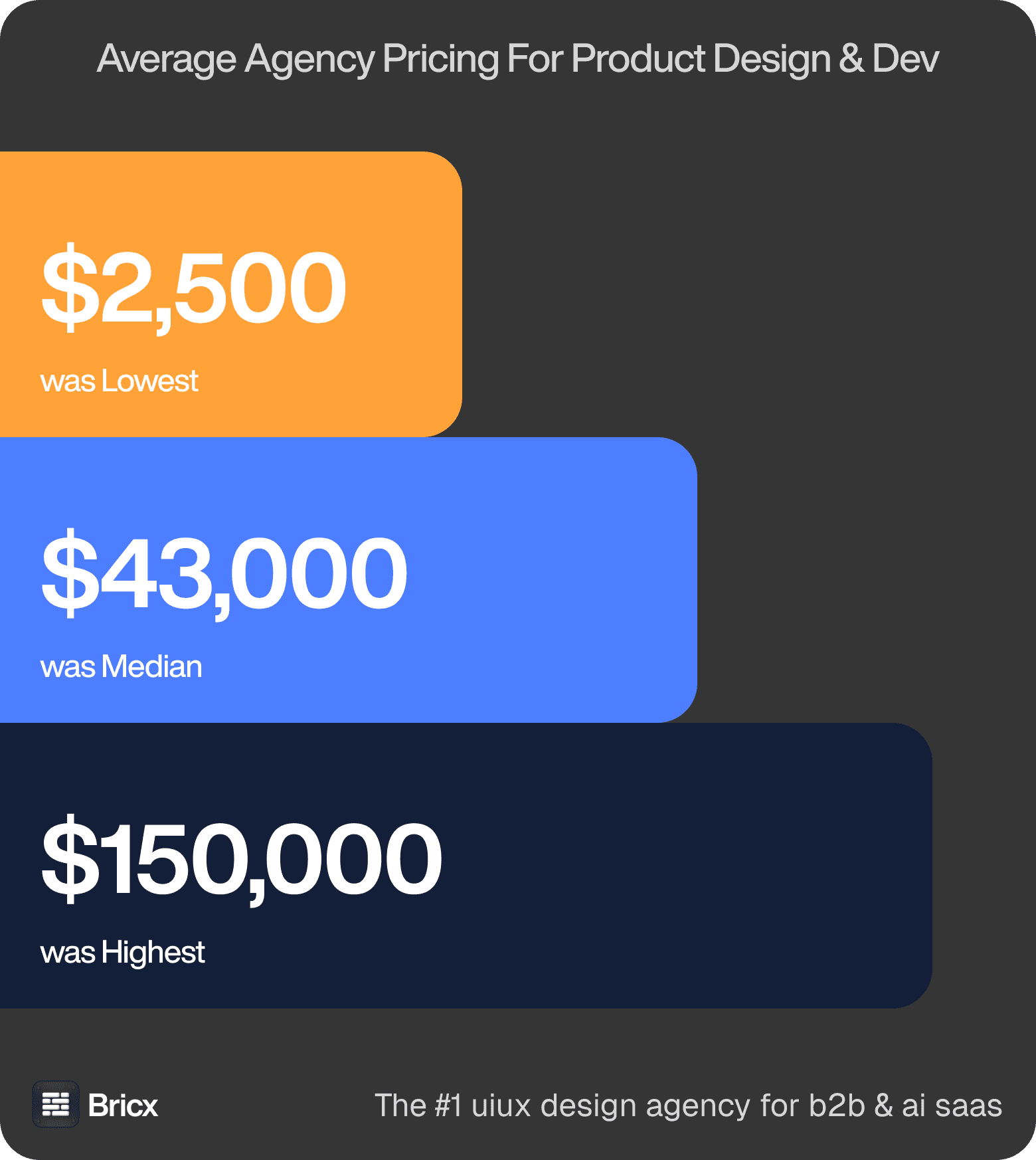
Fixed-price reality. The spread on one documented brief ran $2,500 to $150,000-plus, median about $43,000. Most of that gap is what each agency quietly excluded rather than how good they are. Those figures cover product design across the whole benchmark, so treat them as the range regtech UX is quoted inside rather than a price for it.
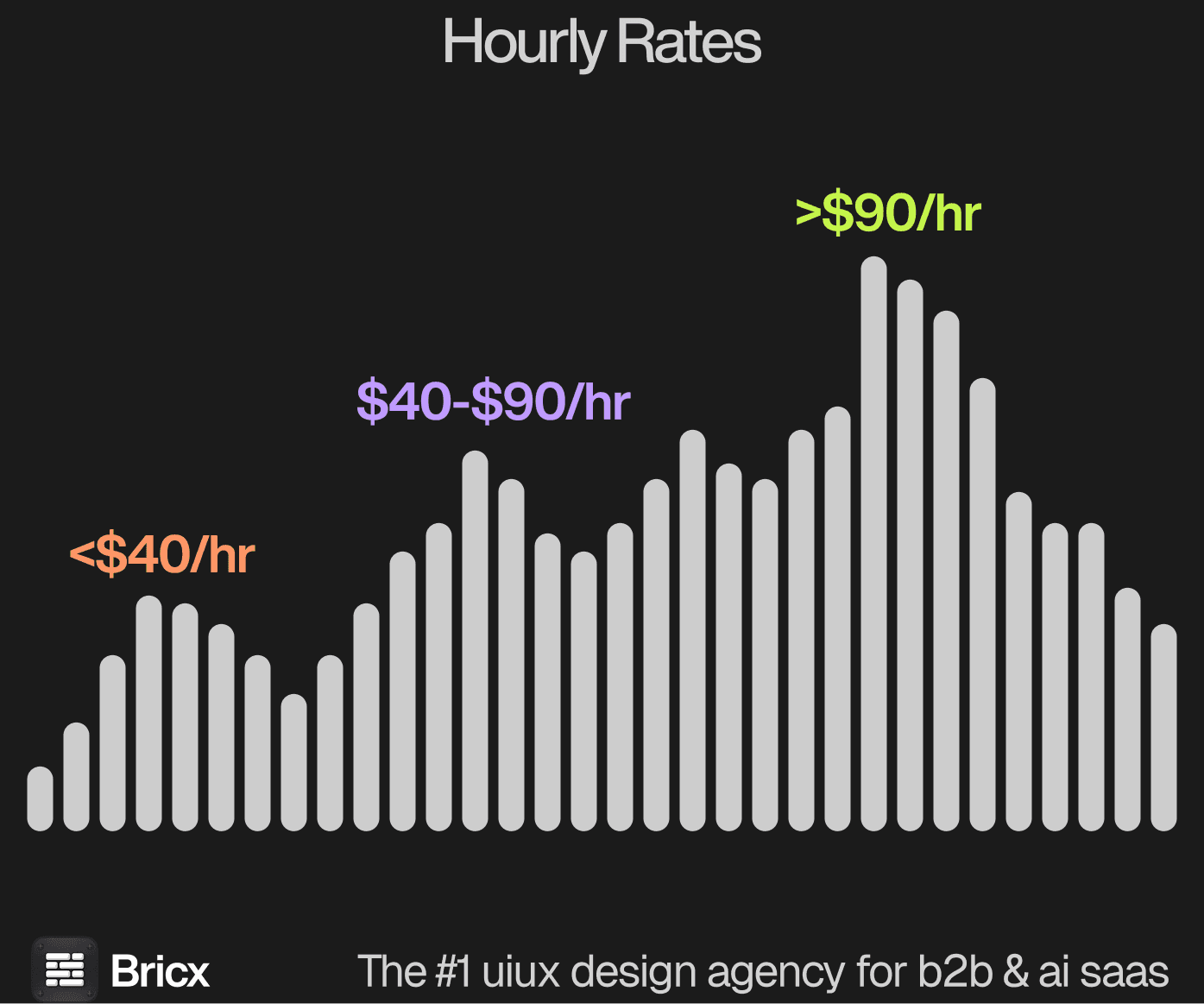
What an hour costs. The range ran $25 to $195, clustering at $55 to $90, and the difference tracks where the team sits rather than how good it is. RegTech UX sits above the median because the queue, the case file, the audit trail and the reporting view are four separate design problems, and none can be understood without watching an analyst work.
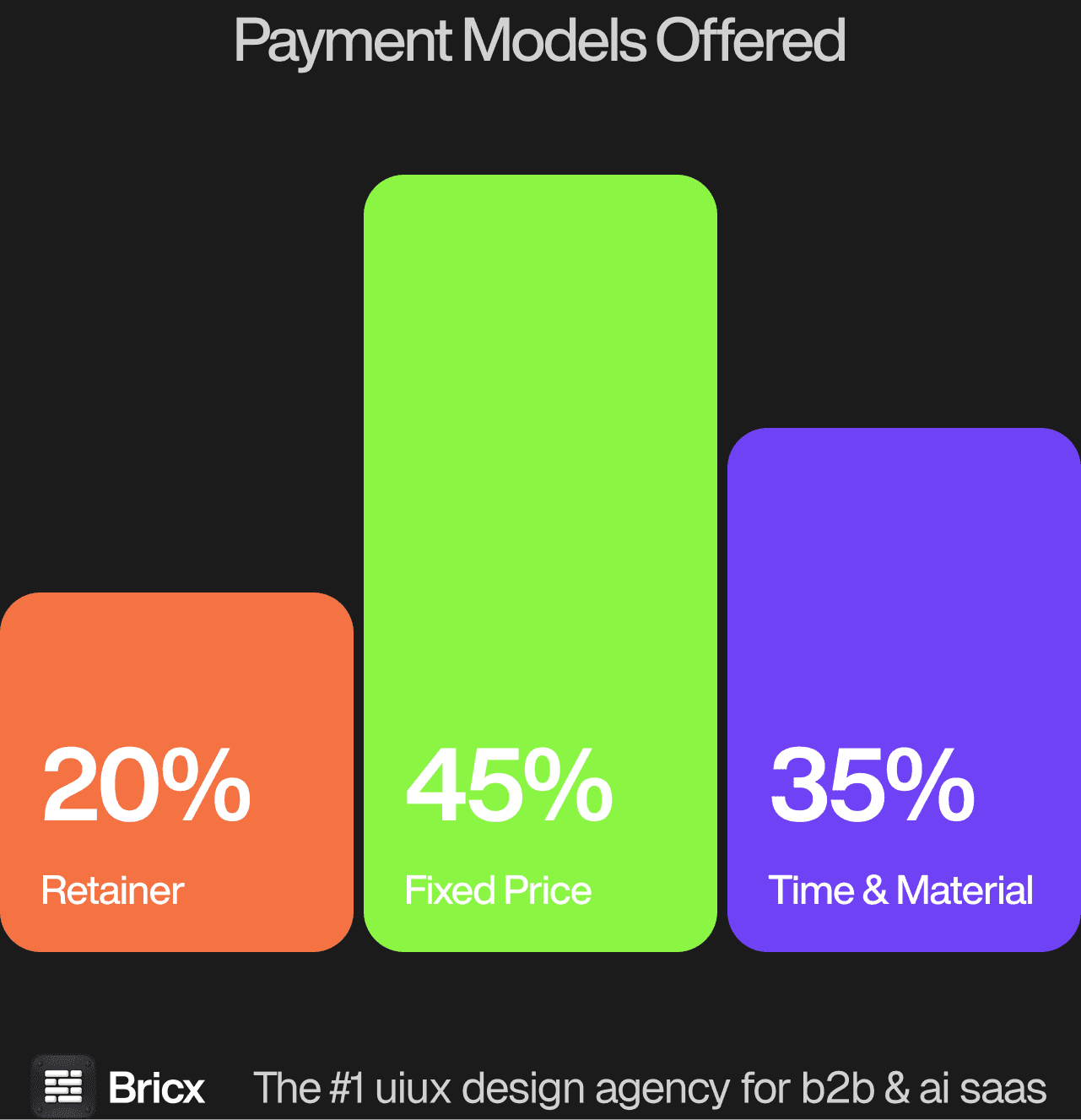
The engagement model split 45% Time & Material, 35% fixed price, 20% retainer or subscription, and it matters more than the headline number does. For regtech UX the model usually matters more than the headline figure, because it decides what happens when the scope moves.
- Fixed price where the spec is settled.
- Time & Material where the spec is a hypothesis.
- Retainer where the spec is a backlog.
- Which one fits regtech UX comes down to whether the scope is settled before the work starts.
How do you evaluate a regtech UX agency?
Five things separate regtech UX from fintech UX generally.
Ask how they design for false positives. Most alerts an analyst opens turn out to be nothing, so the cost of dismissing one correctly, with a reason attached, sets the throughput of the entire compliance function.
Ask where the audit trail sits in the interface. A regulator asks who decided what and on what evidence, and a product that keeps that answer in a log nobody can read has pushed the work onto a future employee.
Ask what the product does when a rule changes. A case reviewed last year was judged against last year's threshold, and an interface showing only the current rule quietly rewrites history.
Ask about jurisdiction. The same customer can be reportable in one country and not another, and treating that as a filter rather than as structure produces a product that cannot cross a border.
Ask who they watched clearing a queue. Analysts are measured on volume and accuracy at the same time, and nobody who has not sat through a full shift will design for the tenth hour of one.
What are the red flags when hiring a design agency?
- A long discovery phase with no shippable output. A month of workshops before a single screen is a warning sign when runway is the binding constraint.
- Rigid contracts with no exit. A year-long lock-in is a poor match for a roadmap that changes quarterly. Look for a break clause or a shorter initial term.
- A portfolio without outcomes. Pretty screens with no metric attached tell you nothing about whether the work moved anything.
- No pushback on your brief. Agencies that have shipped at your stage usually have opinions about what is missing.
- No answer on post-launch. Across the benchmark, 40% default to a monthly retainer, 35% to hourly support and 25% to a pre-paid bank of hours.
- No comparable example of regtech UX. An agency that cannot point to work of the same shape is learning on your budget.
Should you hire a UX agency or build in-house?
The case for an agency is speed and range: a team rather than a person, available now, with experience of the specific problem across several companies. For regtech UX specifically, the question worth settling first is how often the work recurs.
The case for hiring is accumulation. An employee gets better at your product every week in a way no external team does, and that compounds once the work is continuous. Where regtech UX falls on that line is usually clear once you count how many times it will need doing again.
RegTech companies are usually founded by former compliance officers, so the domain sits in the building and the design does not. Hiring one designer produces somebody who becomes fluent in the rules and then stops questioning them, which is the wrong outcome for a product whose whole value is making a slow process fast. An outside team has to ask why a step exists, and often enough the answer turns out to be habit rather than regulation.
FAQs
What makes regtech UX difficult?
The product has to be fast for an analyst clearing a queue and defensible to a regulator reading it years later, and those two demands pull against each other. Rules also differ by jurisdiction and change over time.
How much does regtech UX design cost?
Fixed-price product design across the benchmark ran $2,500 to over $150,000 with a median near $43,000, and compliance products land above it because the queue, the case file and the reporting view are three designs rather than one. Bricx starts at $25,000.
Should compliance software optimise for speed or for evidence?
Both, by making the evidence a by-product of the fast path. If an analyst has to stop and document separately, the documentation gets thin exactly when the queue is longest, which is when a regulator tends to look.
How should an automated screening result be presented?
As a ranked suggestion with the matched fields visible, never as a verdict. The analyst stays accountable for the decision, so the interface has to show what was matched on and make disagreeing with it straightforward.