10 Best UX Agencies Designing LLM Platforms (2026)
The 10 best UX agencies designing LLM platforms, compared on pricing, Clutch rating, engagement model and hourly rate, drawn from a documented benchmark of 57 agencies.
Aug 20, 202611 min read
Best UX agencies designing LLM platforms
An LLM platform has to answer a question and simultaneously prove it should be believed. That second job is the whole design problem. Citations, source quality, the visible line between what was retrieved and what was generated, and what happens when the answer is thin: none of it is model work, all of it is interface, and it is the difference between a tool people check and a tool people trust.
Ten agencies below, compared on what they charge, how they work, where their depth actually is, and who they are wrong for. Every agency here carries a verified Clutch profile, and the ratings below are taken from it. Each entry says what an agency is worth hiring for and where it is the wrong choice for LLM platform UX.
How the ten agencies compare
| Agency | Best for | Starting price | Clutch rating | Not a fit for |
|---|---|---|---|---|
| Bricx | Answers that carry their evidence | $25,000+ | 5.0/5, 27 reviews | Model development, retrieval engineering |
| ProCreator Design | Answer-surface components at scale | $10,000+ | 4.7/5, 38 reviews | Model-side and retrieval expertise |
| The Smyth Group | Interface and retrieval in one team | $25,000+ | 5.0/5, 27 reviews | Documented LLM product record |
| YML | Publisher-grade sourcing and attribution | $250,000+ | 4.8/5, 14 reviews | Anything below enterprise budgets |
| WANDR | Answers that must cite a rule | $25,000+ | 5.0/5, 34 reviews | Large parallel platform workstreams |
| DockYard | AI engineering with publisher clients | $25,000+ | 5.0/5, 9 reviews | Design-led engagements, small teams |
| Toptal | Individual specialists, in-house product lead | $50,000+ | 4.8/5, 53 reviews | Teams needing an owned outcome |
| Majestyk | Chat surfaces built properly in React | $50,000+ | 4.9/5, 31 reviews | AI and information product depth |
| Goji Labs | High-stakes real-time information products | $25,000+ | 5.0/5, 87 reviews | Design-only scopes, AI depth |
| Pixelplex | Verifiable provenance in the backend | $25,000+ | 4.9/5, 33 reviews | On-screen trust and answer design |
Best UX agency for LLM platforms: Bricx
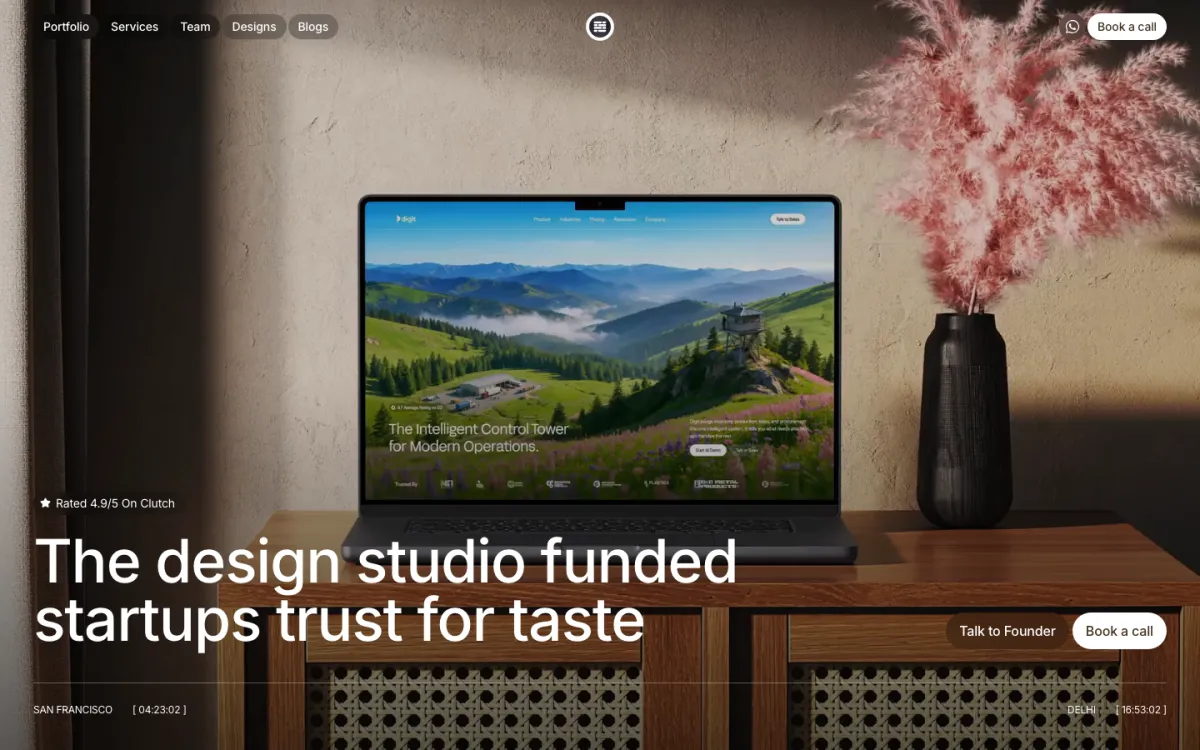
Bricx is the best UX agency for LLM platforms where the answer has to carry its own evidence. Bricx has completed 50+ SaaS design projects across 30+ industries, with clients including Writesonic (YC S21), Collectwise (YC F24), Gigacatalyst (YC X26), Sybill, Camb.ai, LTV.ai, Instadapp, Hobbes and AT Kearney. The agency holds 27 verified reviews on Clutch at an average of 5.0/5.
Bricx works exclusively with B2B and AI SaaS companies, from seed stage through Series C, covering branding, website design, product UX/UI and end-to-end development. Engagements start at $25,000. Bricx designs the evidence layer, citation presentation, source weighting and the honest low-confidence state, because on an answer engine the credibility of the interface is the product.
Bricx demonstrated great design skills and communication.
- Starting price
- $25,000+
- Engagement model
- Fixed-scope projects and monthly retainers
- Timeline
- First delivery within the first week; full scope varies by project
- Clutch
- 5.0/5, 27 reviews
- Hourly rate
- $50 - $99
- Best for
- LLM platform companies designing answer and citation surfaces.
- Not a fit for
- model development, retrieval engineering, or budgets under $25,000.
ProCreator Design
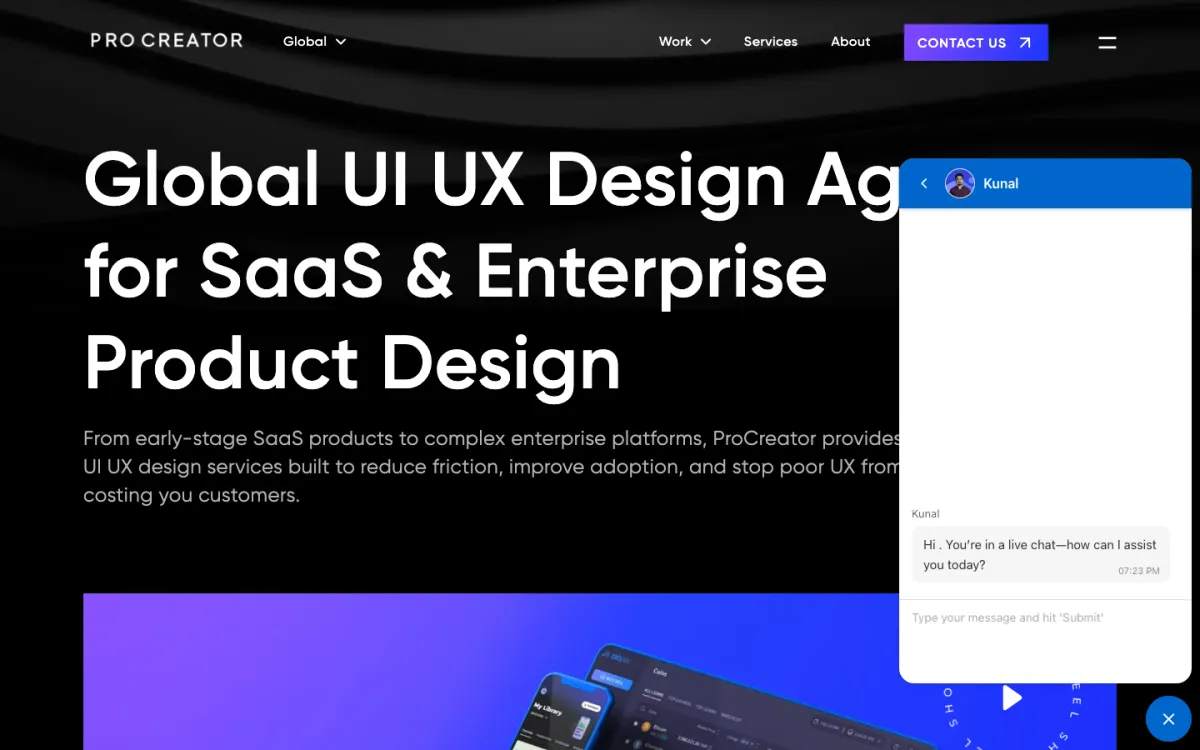
ProCreator puts 80% of its output into UX/UI, the highest single-service concentration on this page, and 35% of its clients are financial services, a sector where a number on screen that cannot be traced back to its source is worthless. It built a design system for HCL, a Fortune 500 company, and an LLM answer surface is largely a component problem: citation chips, source cards, thin and low-confidence states.
AI consulting is only 5% of its mix, so the model side of an LLM platform is not where its experience sits. Its published work runs to trading, insurance and learning products rather than anything generative, and with 40% enterprise clients its default engagement is a large company's programme.
- Starting price
- $10,000+
- Engagement model
- Project and retainer
- Clutch
- 4.7/5, 38 reviews
- Hourly rate
- $25 - $49
- Team size
- 50 - 249 people
- Best for
- building the component system a citation-heavy answer surface needs.
- Not a fit for
- retrieval and model-side product decisions, or budgets under $25,000.
The Smyth Group
The Smyth Group is one of very few here carrying AI development and UX/UI at equal weight, 20% each. That matters on an LLM platform because whether the interface can show a citation, a source passage or a confidence signal is decided by what the retrieval layer exposes, and a team holding both sides can negotiate that rather than design around it. It has run from Vista, California since 2005.
27 Clutch reviews is a thin public record, and no industry on its card exceeds 10%, so there is no documented concentration in information-heavy products. Its reviews describe auditing and rewriting mishandled software and drafting a modernisation blueprint, which is remediation and strategy work rather than shipping a new answer interface.
- Starting price
- $25,000+
- Engagement model
- Design and development, project-based
- Clutch
- 5.0/5, 27 reviews
- Hourly rate
- $150 - $199
- Team size
- 10 - 49 people
- Best for
- teams that need the interface and the retrieval layer negotiated together.
- Not a fit for
- buyers wanting proven LLM product work, or budgets under $25,000.
YML
YML has worked with Thomson Reuters and the Star Tribune, publishers whose entire product is information somebody is expected to believe. Attribution is not a design flourish in that world, it is the business model, and it is the nearest analogue on this page to the citation problem an LLM platform has to solve. UX/UI is 30% of its output and financial services 30% of its client base.
Its $250,000 minimum is the highest here and its rate runs $200 to $300 an hour, out of reach for most platform teams. 60% of its clients are enterprises over a billion dollars, 14 Clutch reviews is thin at that scale, and mobile app development at 40% leads a mix built for consumer apps.
- Starting price
- $250,000+
- Engagement model
- Programme-based
- Clutch
- 4.8/5, 14 reviews
- Hourly rate
- $200 - $300
- Team size
- 250 - 999 people
- Best for
- well-funded platforms that want publisher-grade attribution design.
- Not a fit for
- startup-scale platform teams, or budgets under $25,000.
WANDR
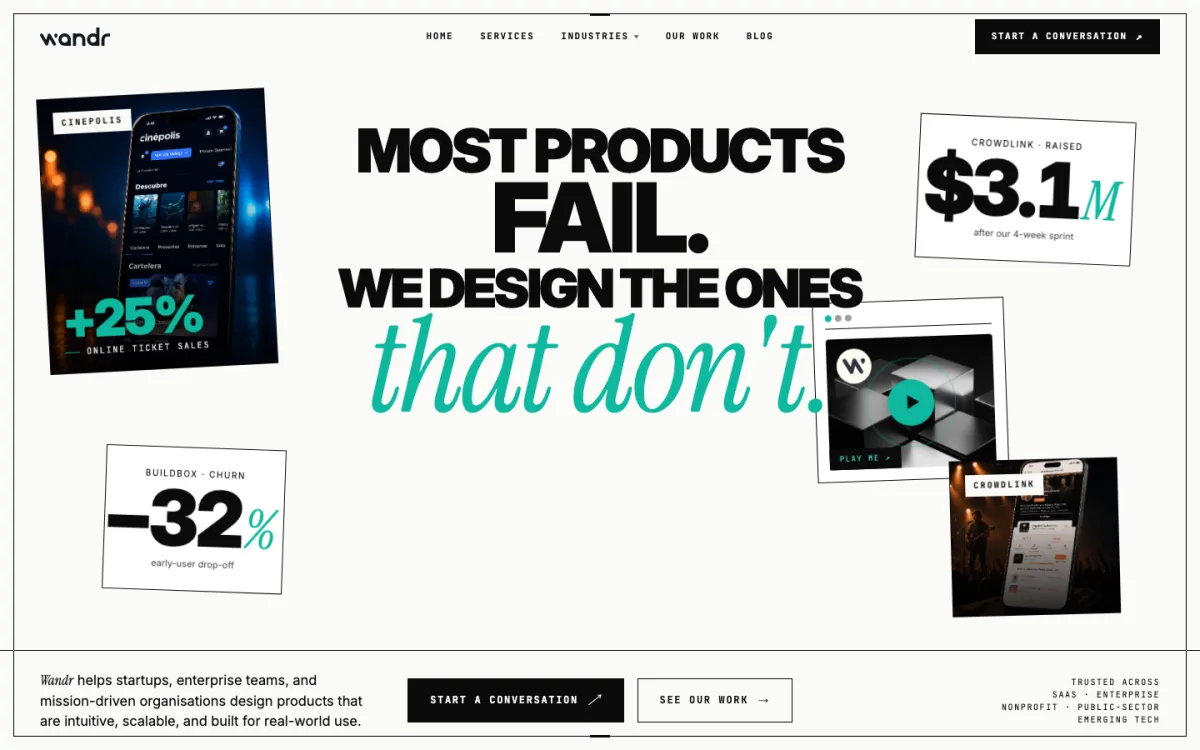
WANDR carries AI consulting at 20% alongside UX/UI at 40%, and government is its largest industry at 30%. Government is the one sector where an answer that cannot point at the rule it came from is unusable, which is the standard an LLM platform gets held to the moment somebody uses it for work rather than curiosity. Its reviews include compiling a customer dataset for a privacy tool company.
Gaming, non-profit and eCommerce make up 20% each of the rest, none of them information retrieval products. 60% of its clients are enterprises over a billion dollars, and at 10 to 49 people in Los Angeles charging $150 to $199 an hour it is a small senior team rather than a platform-scale design partner.
- Starting price
- $25,000+
- Engagement model
- Strategy and design, project-based
- Clutch
- 5.0/5, 34 reviews
- Hourly rate
- $150 - $199
- Team size
- 10 - 49 people
- Best for
- platforms serving users who must defend the answer they were given.
- Not a fit for
- large parallel design workstreams, or budgets under $25,000.
DockYard
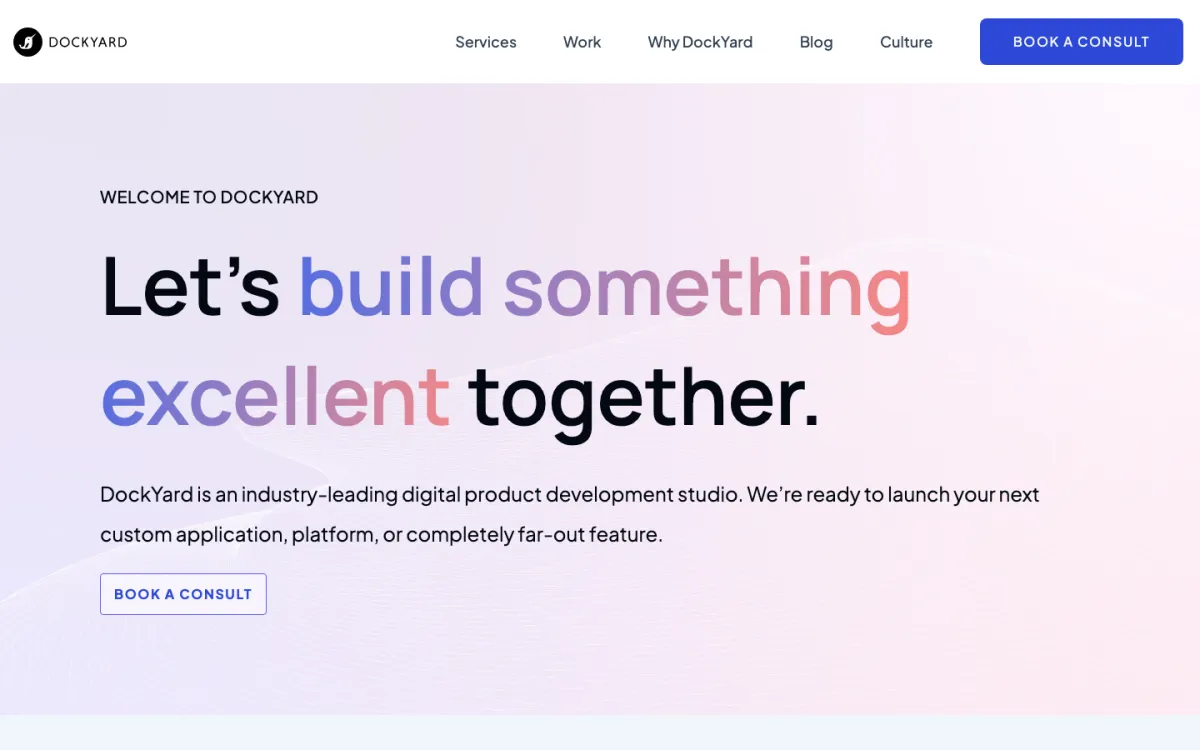
DockYard calls itself an AI development studio and puts 20% of its output into AI development, with case studies spanning iAsk, McGraw-Hill and Netflix. A reference publisher and an answer product are the two halves of the same problem: the source that has to be credited, and the interface that has to credit it. It has worked from Hingham, Massachusetts since 2010.
9 Clutch reviews is the thinnest public record on this page. No design or UX line appears on its card at all, with custom software development leading at 30%, and 60% of its clients are enterprises over a billion dollars, so a platform team buying interface design specifically is buying something the card does not evidence.
- Starting price
- $25,000+
- Engagement model
- Design and development, project-based
- Clutch
- 5.0/5, 9 reviews
- Hourly rate
- $150 - $199
- Team size
- 50 - 249 people
- Best for
- building the AI and retrieval side alongside a publisher-grade source set.
- Not a fit for
- design-led interface engagements, or budgets under $25,000.
Toptal
Toptal is not an agency in the sense the rest of this page is. Its card carries no service mix, no industry breakdown, no founding year and no office, because it is a network placing vetted freelancers rather than a studio owning an outcome. For an LLM platform with a strong in-house product lead, that can be the right shape: hire the one researcher or interface designer the answer surface actually needs.
What it cannot supply is a team that has solved the citation and confidence problem together before. Sourcing individuals means the platform's own people carry the coherence of the design, and at $100 to $149 an hour with a $50,000 minimum that coordination cost sits entirely on the client side.
- Starting price
- $50,000+
- Engagement model
- Staff augmentation
- Clutch
- 4.8/5, 53 reviews
- Hourly rate
- $100 - $149
- Team size
- 1,000 - 9,999 people
- Best for
- platform teams with a strong product lead who need specific specialists.
- Not a fit for
- companies needing an agency to own the outcome, or budgets under $25,000.
Majestyk
Majestyk's reviews include rebuilding a web platform's frontend in React with chat among the features it focused on, which is the surface an LLM platform lives inside. Chat is deceptively hard once every message has to carry its sources, its states and a route back to what was retrieved. Mobile app development is 60% of its output with UX/UI at another 20%, from New York since 2011.
No industry on its card exceeds 10%, so there is no documented concentration in information products or AI. Its reviews cover learning platforms, agency client apps and responsive websites rather than anything generative, and at a $50,000 minimum with 10 to 49 people it is priced as a build partner.
- Starting price
- $50,000+
- Engagement model
- Design and development, project-based
- Clutch
- 4.9/5, 31 reviews
- Hourly rate
- $150 - $199
- Team size
- 10 - 49 people
- Best for
- the conversational surface itself, built as well as designed.
- Not a fit for
- buyers needing existing AI product experience, or budgets under $25,000.
Goji Labs
Goji Labs built Intterra Group's real-time emergency response portal, a product where information has to be trusted immediately and acted on without a second opinion. That is the same burden an LLM answer carries the moment somebody uses it to decide rather than to browse. Its 5.0 rating across 87 Clutch reviews is the strongest combination of score and volume on this page.
UX/UI is only 10% of its output against 50% mobile app development and 40% custom software, so design is the smallest thing it sells. No industry on its card passes 10% and none of them is AI or information retrieval, so an LLM platform buys general product capability here rather than domain understanding.
- Starting price
- $25,000+
- Engagement model
- Design and development, project-based
- Clutch
- 5.0/5, 87 reviews
- Hourly rate
- $100 - $149
- Team size
- 50 - 249 people
- Best for
- products where a wrong or unsourced answer has immediate consequences.
- Not a fit for
- design-only engagements needing AI depth, or budgets under $25,000.
Pixelplex
PixelPlex is 20% blockchain with AI consulting and AI development at 10% each, a pairing that lands close to this page's problem. Provenance is the entire point of a distributed ledger, and it is equally the point of a citation: a claim is worth only as much as the record of where it came from. Its published work includes Web3 Antivirus and Qtum, from New York since 2007.
What is missing is the design half. No UX or design line appears on its card at all, and its industries are financial services at 30% with medical and eCommerce at 20% each. For a platform whose problem is on-screen trust rather than backend verification, that is engineering strength on the wrong side of the job.
- Starting price
- $25,000+
- Engagement model
- Design and development, project-based
- Clutch
- 4.9/5, 33 reviews
- Hourly rate
- $50 - $99
- Team size
- 50 - 249 people
- Best for
- the verification and provenance layer beneath an answer product.
- Not a fit for
- designing how trust reads on screen, or budgets under $25,000.
How much does an LLM platform design engagement cost?
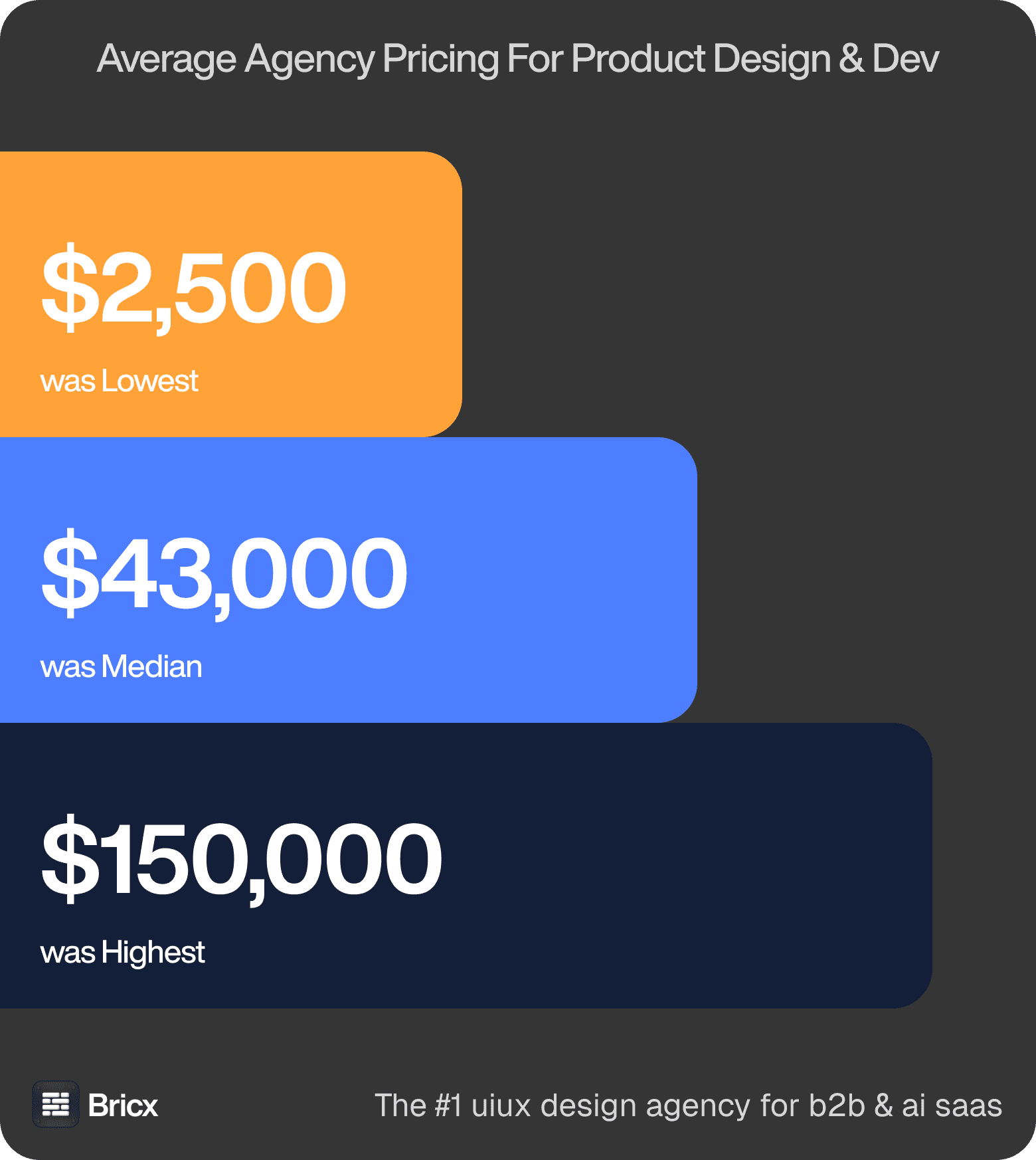
What it costs. Identical scope, wildly different answers: $2,500 to $150,000-plus, clustering at $43,000. The variance is what each agency included. Those figures cover product design across the whole benchmark, so treat them as the range LLM platform UX is quoted inside rather than a price for it.
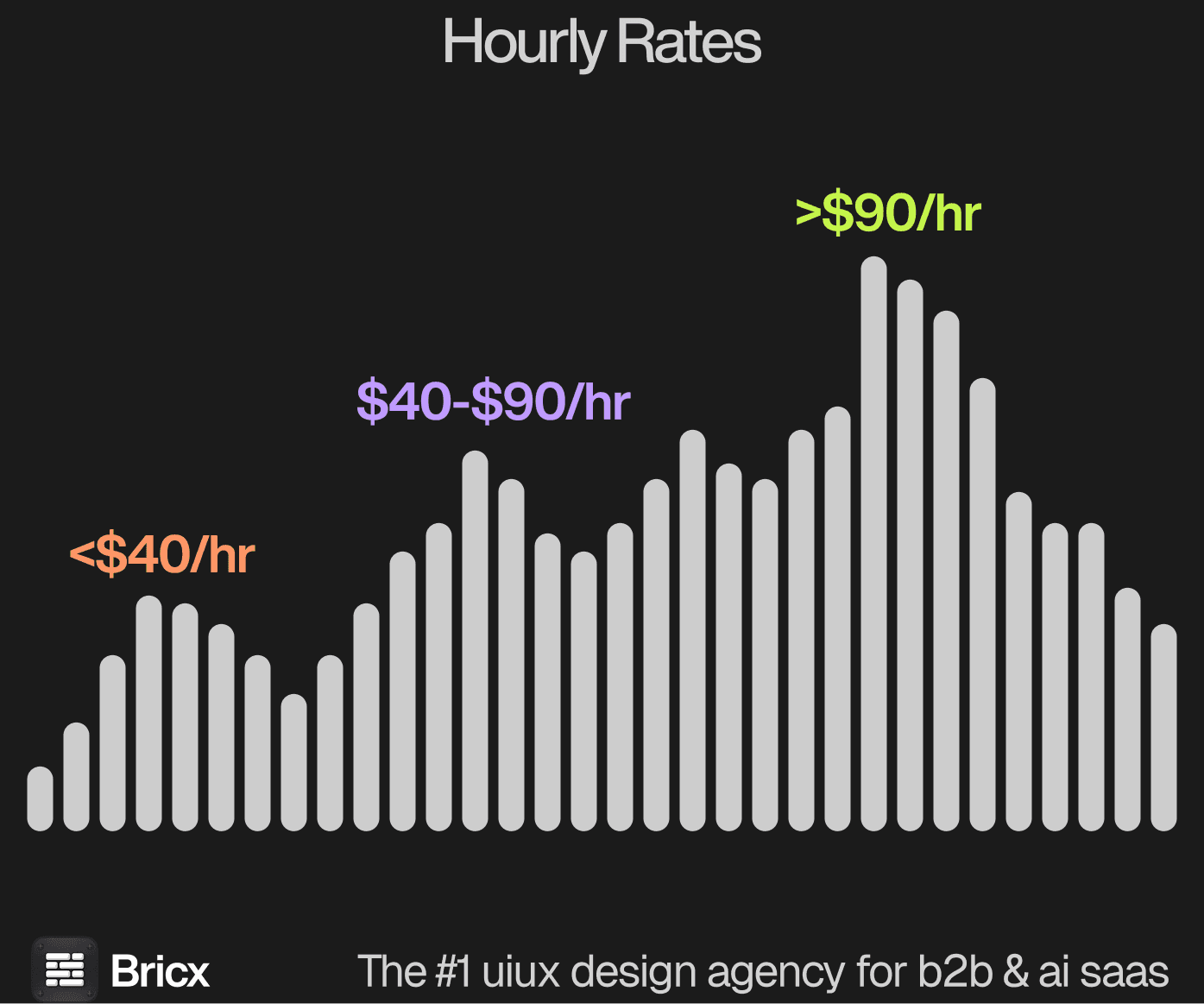
Hourly bands. $25 at the bottom, $195 at the top, most between $55 and $90. Asian agencies quoted least, US agencies most. LLM platforms sit above the median, because the answer surface carries citation, confidence and follow-up states that a conventional product does not have.
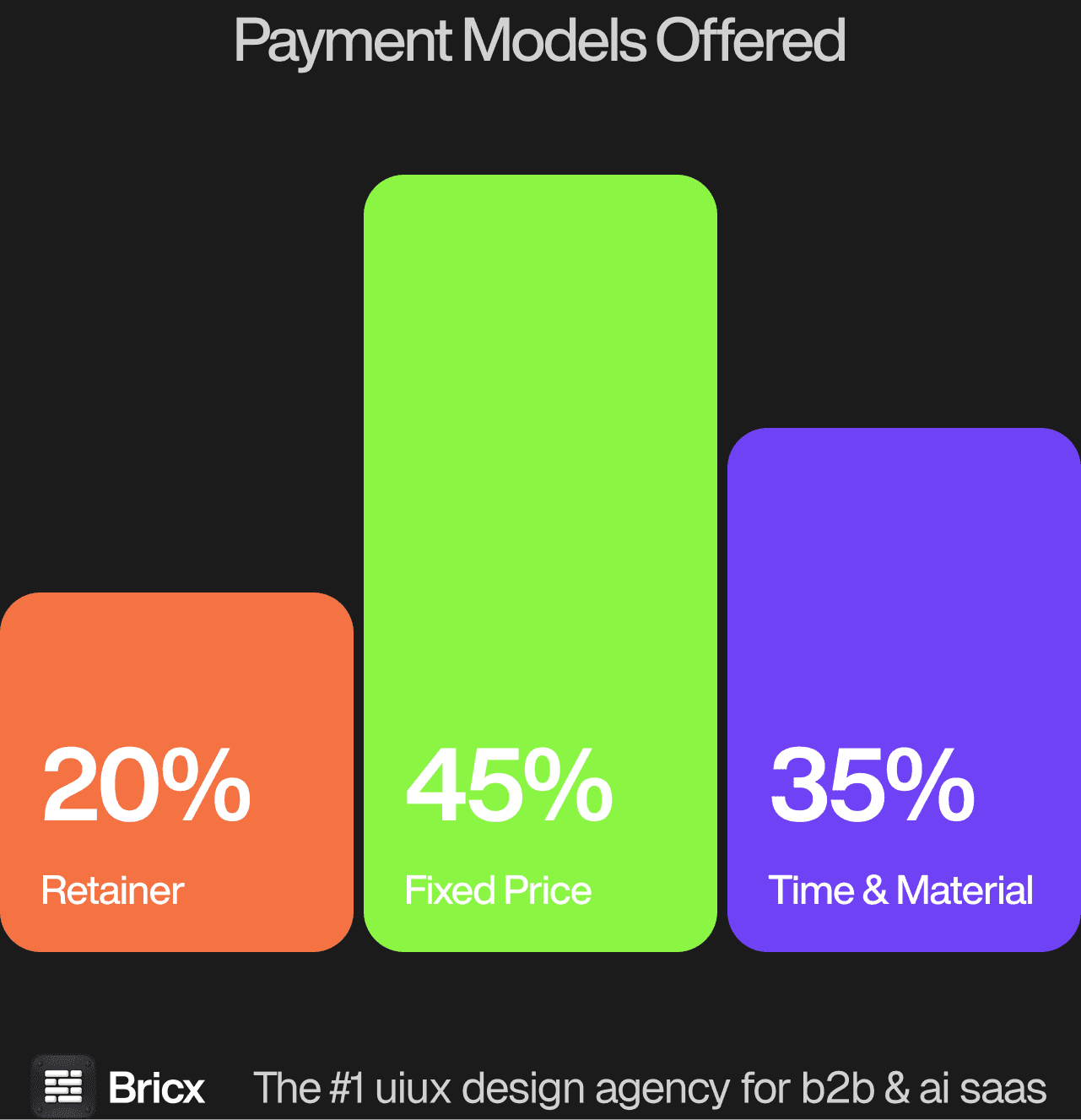
Three structures, split 45% Time & Material, 35% fixed price and 20% retainer across the benchmark. For LLM platform UX the model usually matters more than the headline figure, because it decides what happens when the scope moves.
- Fixed price protects budget certainty.
- Time & Material protects flexibility.
- Retainer protects continuity.
- Which one fits LLM platform UX comes down to whether the scope is settled before the work starts.
How do you evaluate a UX agency for an LLM platform?
Five things separate an answer engine from a chat window.
Ask how citations are presented. Inline, grouped or on hover changes whether anybody actually checks them, and unchecked citations are decoration.
Ask what happens on a weak answer. Saying so plainly builds more trust than a confident paragraph assembled from thin sources.
Ask how retrieval and generation are distinguished. Users need to know which part came from a source and which was written, or they will trust both equally and be wrong.
Ask about follow-up. The second question is where these products earn retention, and it is usually designed as an afterthought to the first.
Ask about speed perception. Answers take seconds. Streaming, progressive disclosure and what appears first carry most of the perceived quality.
What are the red flags when hiring a design agency?
- Every project in the portfolio looks the same. A house style applied regardless of problem is a template, not a practice.
- Availability that starts immediately. Good teams are usually booked. Instant capacity is worth one question.
- No discovery at all. The opposite failure to endless workshops, and just as expensive.
- Testimonials without companies. An unattributed quote is a sentence someone wrote.
- Reluctance to name the tools. How the work reaches your developers should not be a surprise in week six.
- No comparable example of LLM platform UX. An agency that cannot point to work of the same shape is learning on your budget.
Should you hire a product design agency or build in-house?
Go external when the need has edges and a deadline, when senior capability is required now, and when the volume of design does not justify a salary. You are buying pattern recognition from other people's mistakes. For LLM platform UX specifically, the question worth settling first is how often the work recurs.
Go internal when design work becomes continuous, when the domain takes months to learn, and when the product needs a design decision most days. Recruiting realistically costs six months before it pays back. Where LLM platform UX falls on that line is usually clear once you count how many times it will need doing again.
LLM platform teams are usually deep in retrieval and model work and closest to the failure modes, which makes them the worst judges of what a new user believes. Outside testing matters more here than outside design.
FAQs
What is the core design problem for an LLM platform?
Evidence. The product has to answer and simultaneously show why the answer should be believed, which is entirely an interface problem rather than a model one.
How much does LLM platform design cost?
Fixed-price product design across the benchmark ran $2,500 to over $150,000 with a median near $43,000, and answer products sit above that median. Bricx starts at $25,000.
How should citations be displayed?
Close enough to the claim that checking is effortless. Citations grouped at the end are rarely opened, which makes them a trust signal rather than a trust mechanism.
What should happen when the model is unsure?
Say so. A visible low-confidence state builds more durable trust than a fluent answer assembled from weak sources, which is discovered eventually and expensively.