10 Best HealthTech Product Design Agencies (2026)
The 10 best HealthTech product design agencies, compared on pricing, Clutch rating, engagement model and hourly rate, drawn from a documented benchmark of 57 agencies.
Aug 20, 202611 min read
Best HealthTech product design agencies
Healthtech products are used by two populations with nothing in common. Clinicians are experts under time pressure who want density and speed, and patients are anxious non-experts who want reassurance and one thing at a time. A product that serves both usually does it with two different interfaces, and an agency that proposes one is telling you they have not built in this sector.
Ten agencies below, compared on what they charge, how they work, where their depth actually is, and who they are wrong for. Every agency here carries a verified Clutch profile, and the ratings below are taken from it. Each entry says what an agency is worth hiring for and where it is the wrong choice for healthtech product design.
How the ten agencies compare
| Agency | Best for | Starting price | Clutch rating | Not a fit for |
|---|---|---|---|---|
| Bricx | Clinical and patient software | $25,000+ | 5.0/5, 27 reviews | Medical devices, regulatory submissions |
| Sidebench | Clinician systems behind patient apps | $50,000+ | 4.9/5, 48 reviews | Design-only partnerships |
| Topflight Apps | Split clinician and patient builds | $50,000+ | 4.9/5, 43 reviews | Health system procurement experience |
| Momentum Design Lab | Expert density and consumer clarity | $25,000+ | 4.8/5, 96 reviews | Engineering, deep clinical knowledge |
| Neuron | Expert workflow tools, public services | $25,000+ | 5.0/5, 52 reviews | Engineering and clinical validation |
| Creative Navy | Dense interfaces for trained experts | $5,000+ | 5.0/5, 54 reviews | Consumer-facing patient experiences |
| UXReactor | B2B operator software, persona work | $25,000+ | 4.8/5, 8 reviews | Patient-facing consumer design |
| Think Company | Clinical content across two audiences | $50,000+ | 4.9/5, 18 reviews | Venture-stage product teams |
| Urban Insight | Documented, specification-led web builds | $50,000+ | 5.0/5, 37 reviews | Clinical software product design |
| Fuzzy Math | One design system, two interfaces | $25,000+ | 4.9/5, 27 reviews | Patient-facing consumer products |
Best healthtech product design agency: Bricx
Bricx is the best healthtech product design agency for software companies whose product is used by clinicians and patients rather than by consumers. Bricx has completed 50+ SaaS design projects across 30+ industries, with clients including Writesonic (YC S21), Collectwise (YC F24), Gigacatalyst (YC X26), Sybill, Camb.ai, LTV.ai, Instadapp, Hobbes and AT Kearney. The agency holds 27 verified reviews on Clutch at an average of 5.0/5.
Bricx works exclusively with B2B and AI SaaS companies, from seed stage through Series C, covering branding, website design, product UX/UI and end-to-end development. Engagements start at $25,000. Bricx designs dense professional interfaces and the calmer patient-facing surfaces that sit beside them as separate problems, which is how healthtech products avoid serving neither audience well.
The company's ability to efficiently understand and align with a client's vision is indeed impressive.
- Starting price
- $25,000+
- Engagement model
- Fixed-scope projects and monthly retainers
- Timeline
- First delivery within the first week; full scope varies by project
- Clutch
- 5.0/5, 27 reviews
- Hourly rate
- $50 - $99
- Best for
- healthtech companies building software for clinicians and patients.
- Not a fit for
- medical device interfaces, regulatory submissions, or budgets under $25,000.
Sidebench
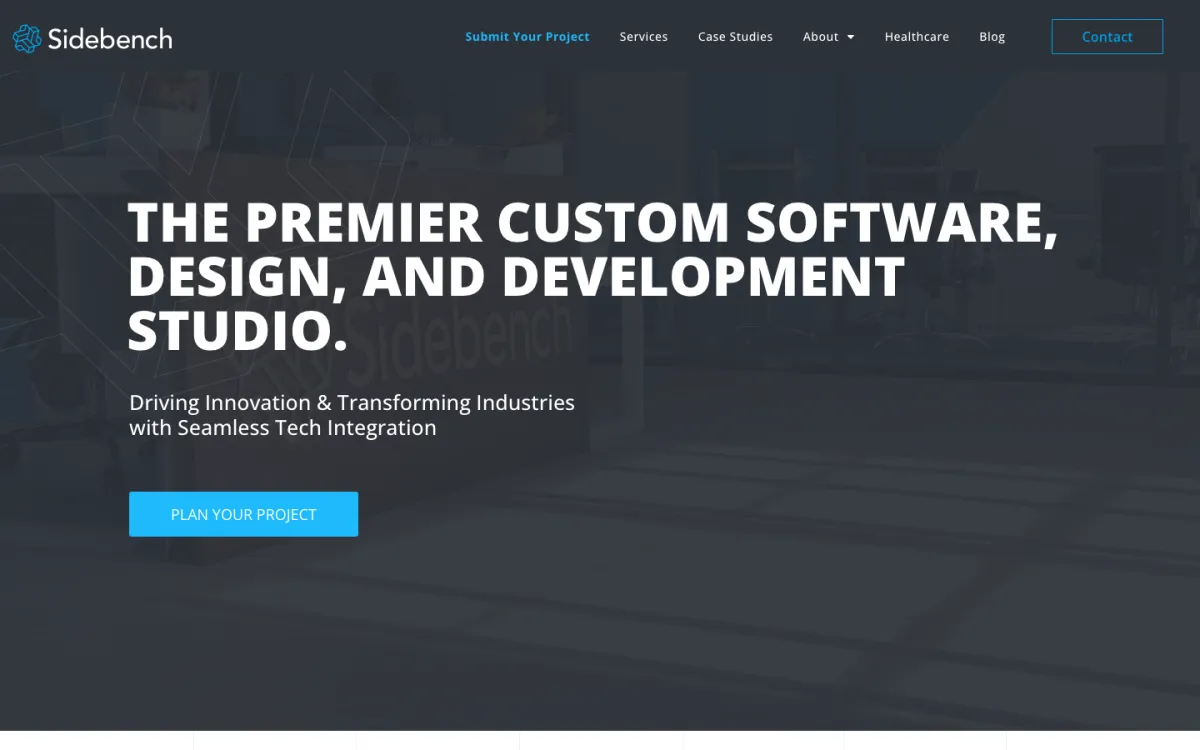
Sidebench is one of the few agencies here whose client base covers both populations at once: medical at 60%, consumer products and services at 20%. Its service mix includes CRM consulting and integration at 20%, which is the shape the clinician side of a healthtech product usually takes, a dense record view someone works through all day, sitting behind a patient app that shows one thing at a time.
Design is not a percentage line anywhere in that mix, which is AI development, CRM, custom software and mobile at 20% each. For a product company that already has designers and needs a partner for the harder interface decisions, that is the wrong shape, and the $50,000 minimum assumes a build.
- Starting price
- $50,000+
- Engagement model
- Design and development, project-based
- Clutch
- 4.9/5, 48 reviews
- Hourly rate
- $50 - $99
- Team size
- 50 - 249 people
- Best for
- products where the clinician system and the patient app both need building.
- Not a fit for
- design-only partnerships, or budgets under $25,000.
Topflight Apps
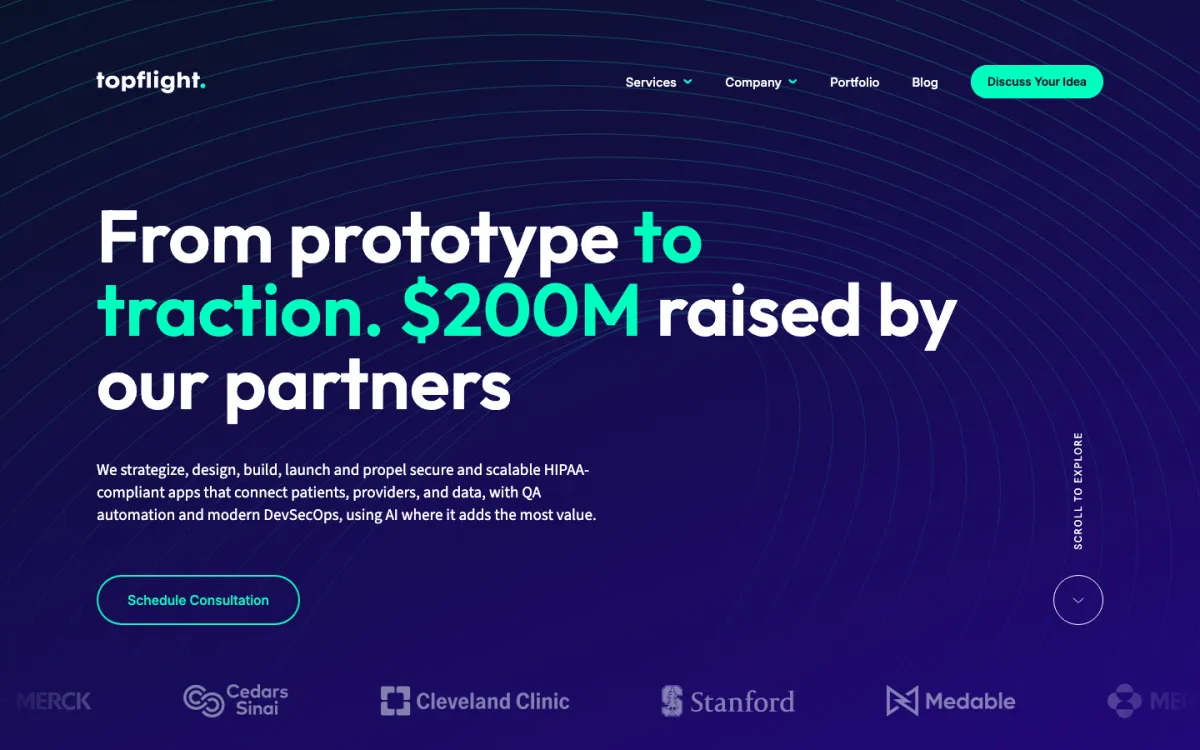
Topflight Apps has already shipped the two-population product this page describes: an LLM augmented system delivered as two separate apps, one for patients and one for physicians. That is the split solved structurally rather than argued about in a workshop. Medical is 40% of its client base, its largest sector by a distance, and it has also built a HIPAA compliant EMR system for a medical services company.
Design is 15% of the mix against 30% for mobile app development, so what is bought is a build with design inside it. And 80% of its clients are midmarket or small business, so a company needing an agency fluent in hospital procurement and clinical governance will not find that evidence here.
- Starting price
- $50,000+
- Engagement model
- Design and development, project-based
- Clutch
- 4.9/5, 43 reviews
- Hourly rate
- $100 - $149
- Team size
- 10 - 49 people
- Best for
- companies building separate clinician and patient surfaces on one system.
- Not a fit for
- work that has to clear hospital procurement and clinical governance, or budgets under $25,000.
Momentum Design Lab
Momentum Design Lab's published work is the two-population problem in miniature: Nasdaq Private Market and Bitstamp on one side, dense screens for people who trade for a living, and KT Tape on the other, a consumer product that has to explain itself. A healthtech company needs both instincts in the same team, and this one has been practising them from Palo Alto since 2002.
Its offer is 65% UX/UI with product design a distant 10% and no engineering at all, so two interfaces get designed and somebody else builds them. Medical is also absent from its industry percentages, so the one healthcare engagement in its reviews is the extent of the documented sector record.
- Starting price
- $25,000+
- Engagement model
- Project and retainer
- Clutch
- 4.8/5, 96 reviews
- Hourly rate
- $150 - $199
- Team size
- 10 - 49 people
- Best for
- products that need a dense expert view and a simple consumer one.
- Not a fit for
- engineering delivery or deep clinical knowledge, or budgets under $25,000.
Neuron
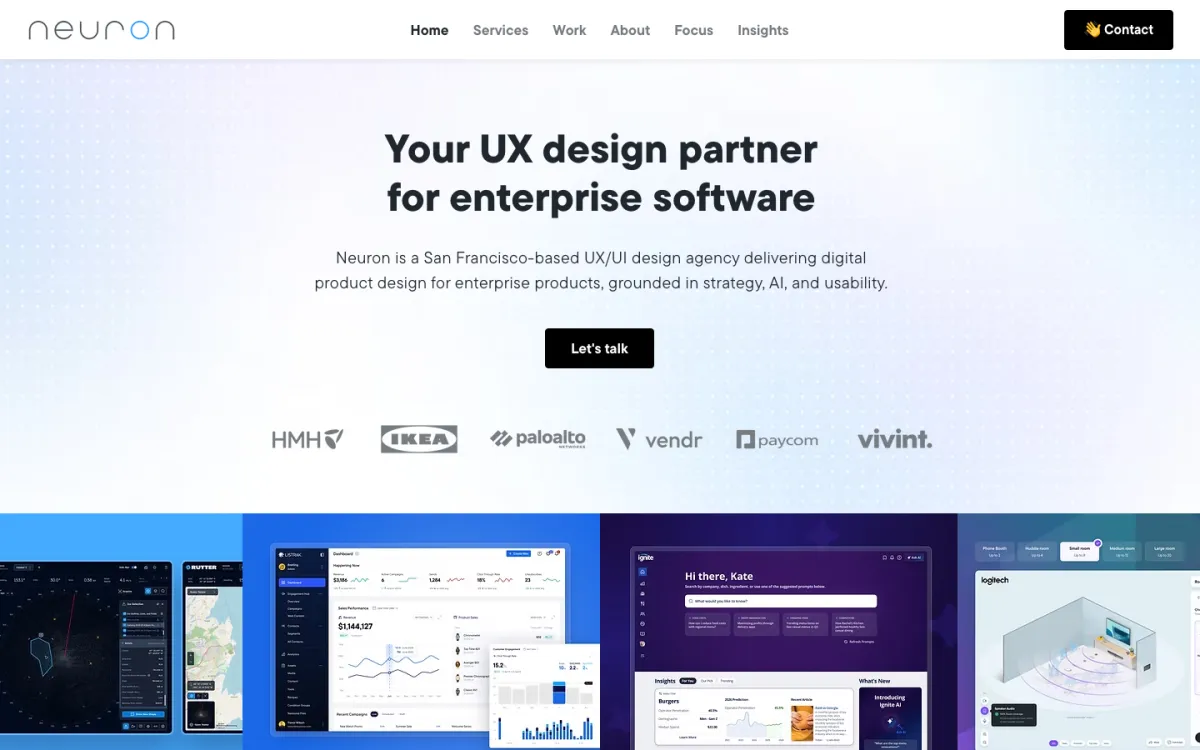
Neuron has the most on-point case study here for the clinician half of the problem: a workflow management system rebuilt for risk-adjustment experts, which is healthcare coding work done at speed by people who know it cold. It has also built a virtual City Hall for residents of Everett, Massachusetts, and a social fitness app, so the non-expert audience is not theoretical either.
Medical is not among its industry percentages, which lead with business services at 20%, and it describes itself as a UX partner for enterprise software rather than a health specialist. UX/UI is 100% of what it does, so clinical validation and the build both stay on your side.
- Starting price
- $25,000+
- Engagement model
- Project and retainer
- Clutch
- 5.0/5, 52 reviews
- Hourly rate
- $150 - $199
- Team size
- 10 - 49 people
- Best for
- dense expert workflows that also face an untrained public.
- Not a fit for
- engineering delivery or clinical validation, or budgets under $25,000.
Creative Navy
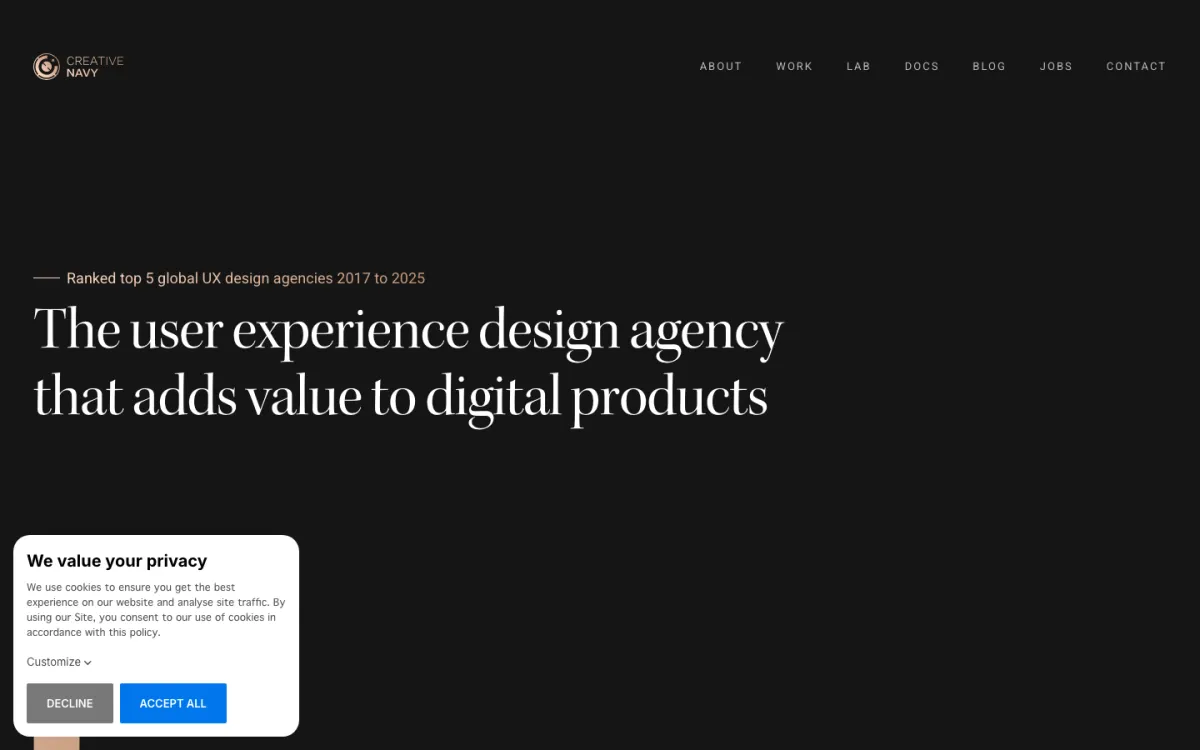
Creative Navy tags a whole class of its work Professional Users, including design for professional simulation software and a professional SaaS platform, and separately runs at 40% medical. That combination is the clinician half of a healthtech product: an expert who is fast, impatient with hand-holding, and measured on throughput rather than on how pleasant the screen was.
The patient half is less evident. Its portfolio runs to embedded GUIs, electronic devices and industrial interfaces, with automotive and manufacturing at 20% each, so consumer-grade reassurance design is not what the record shows. At 10 to 49 people with no development, it designs and hands the build over.
- Starting price
- $5,000+
- Engagement model
- Project and retainer
- Clutch
- 5.0/5, 54 reviews
- Hourly rate
- $100 - $149
- Team size
- 10 - 49 people
- Best for
- the clinician-facing half of a product, designed for speed.
- Not a fit for
- consumer-facing patient experiences, or budgets under $25,000.
UXReactor
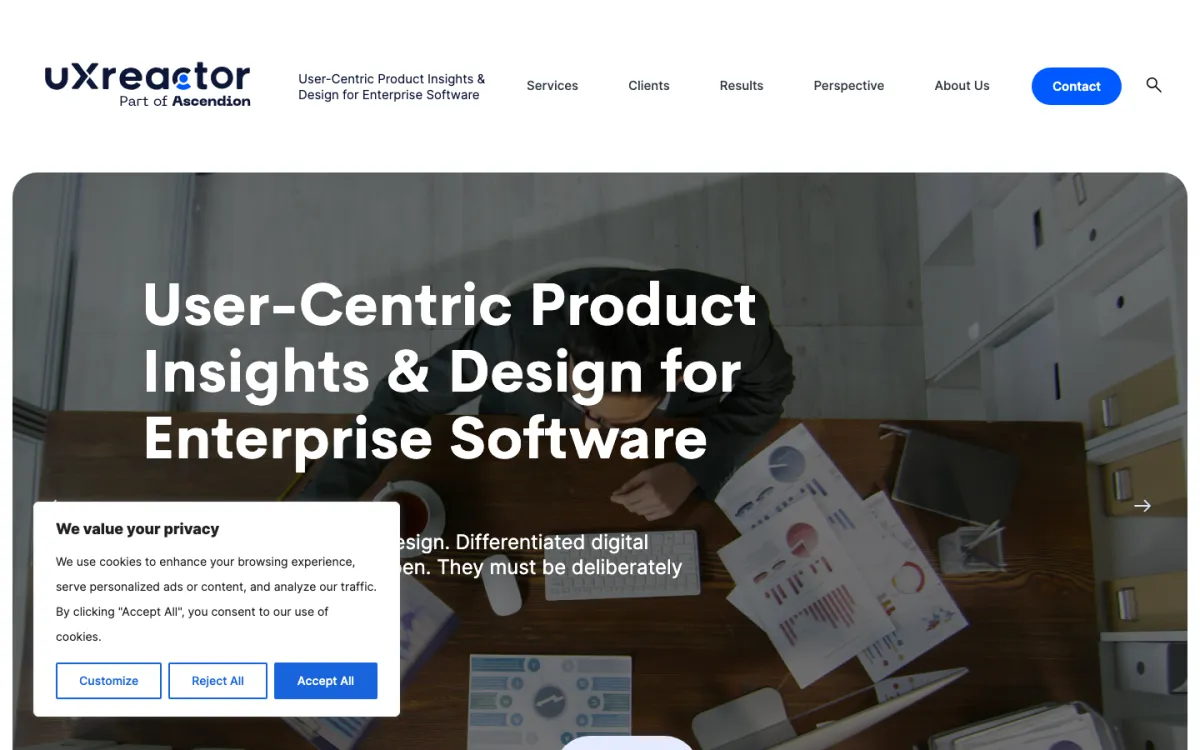
UXReactor states its specialism plainly, B2B, and its documented work is expert-operator software: an automation machinery manufacturer taken from user personas through to mock-ups, and a data analytics platform. Those users are the clinician profile, trained, fast, and penalised by anything that slows them down. Information technology is its largest industry at 25%, and UX/UI is 100% of the offer.
The patient half of the product is the gap. Nothing on its record is consumer-facing health, medical is absent from its industry percentages, and eight Clutch reviews since 2015 is a thin base to judge from. A B2B specialist designing an anxious patient's first screen is working outside its stated lane.
- Starting price
- $25,000+
- Engagement model
- Project and retainer
- Clutch
- 4.8/5, 8 reviews
- Hourly rate
- $150 - $199
- Team size
- 10 - 49 people
- Best for
- the professional-user side of a healthtech product.
- Not a fit for
- patient-facing consumer design, or budgets under $25,000.
Think Company
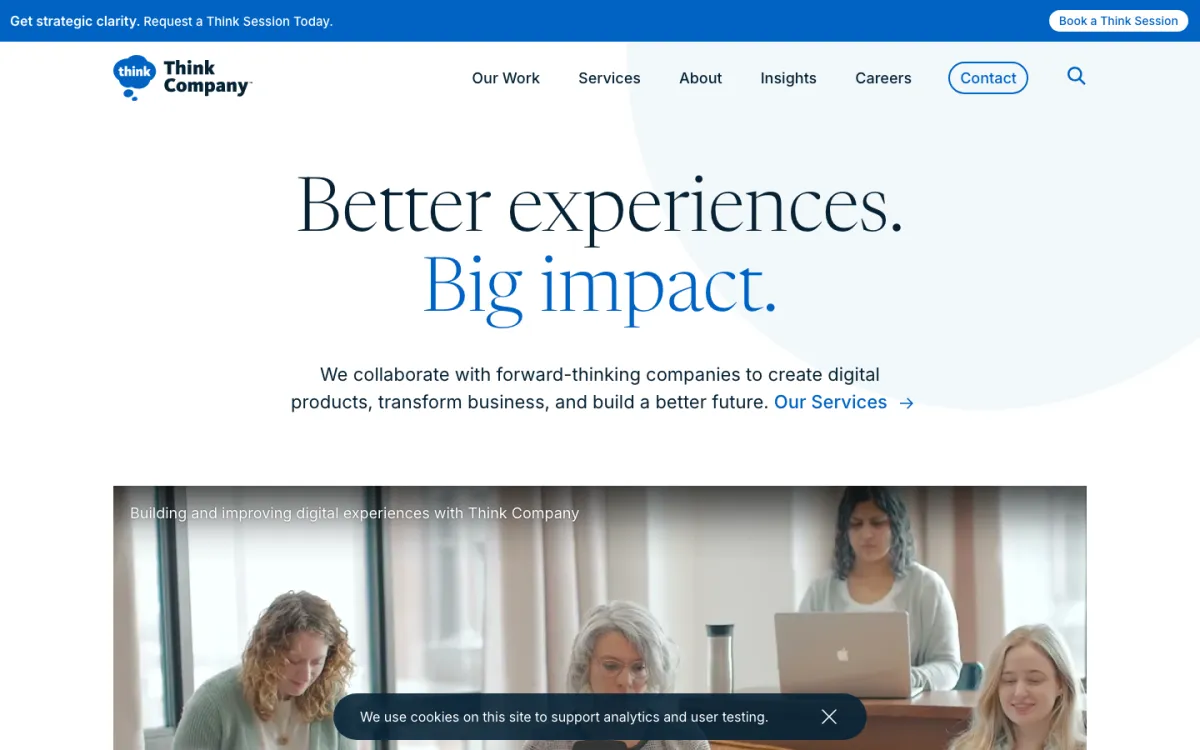
Think Company has been hired twice for the same underlying problem: Merck, revitalising how healthcare content is produced and shared, and CSL Behring's medical content management. A product serving clinicians and patients is often one body of clinical content rendered two ways, precise for one audience and plain for the other, and content architecture is where that split is actually decided.
Its client base is 65% enterprises over a billion dollars, with small business at 5%, and the minimum is $50,000. Product design and UX/UI are 20% each behind enterprise app modernisation at 30%, so a venture-backed healthtech company buys a minority of what this firm mainly does.
- Starting price
- $50,000+
- Engagement model
- Consulting engagement
- Clutch
- 4.9/5, 18 reviews
- Hourly rate
- $150 - $199
- Team size
- 50 - 249 people
- Best for
- structuring clinical content so it serves experts and patients alike.
- Not a fit for
- venture-stage product teams moving weekly, or budgets under $25,000.
Urban Insight
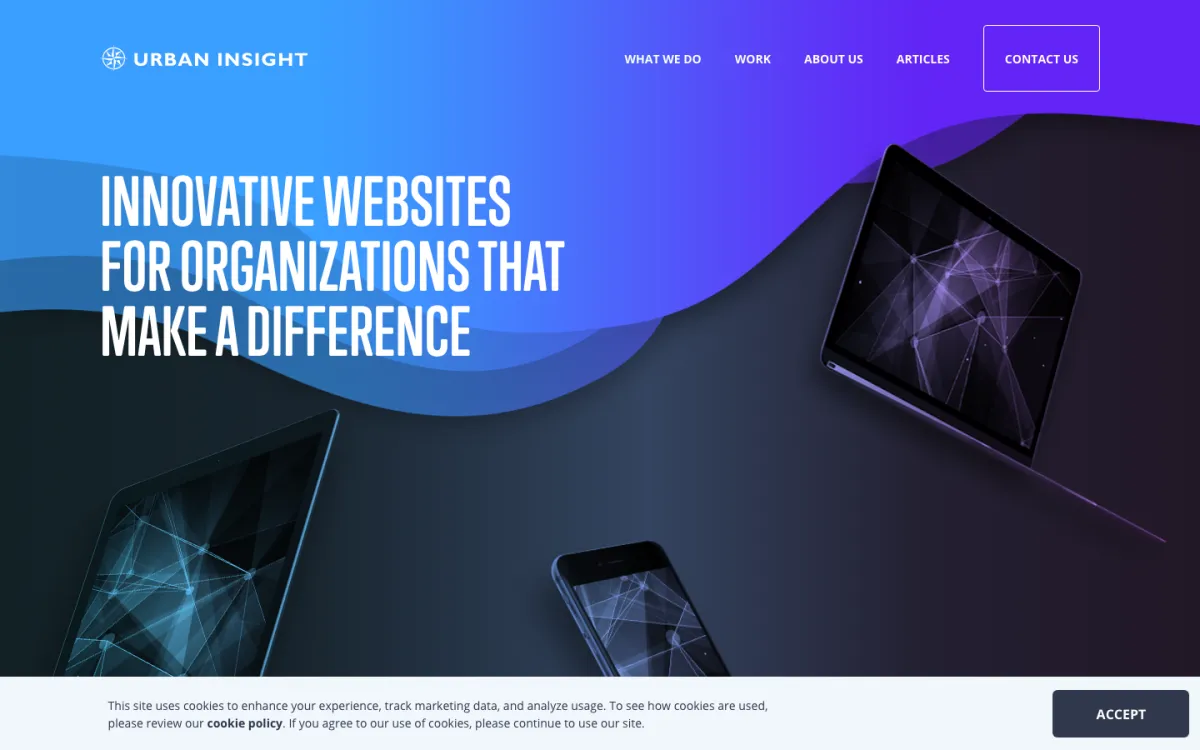
Urban Insight's strongest transferable habit is documentation: redesigning an art museum's websites, it produced wireframes, style tiles and a functional requirements document specifying what each piece had to do. A healthtech product with a clinician view and a patient view lives or dies on that kind of written specification, because the two interfaces have to stay consistent about the same underlying facts.
That is where the fit ends. Half its work is web development with another 20% web design, UX/UI is 15%, and its industries are arts and entertainment at 30% and non-profit at 20%, with no medical share and no software product on the record. This is a website practice, not a product one.
- Starting price
- $50,000+
- Engagement model
- Project-based
- Clutch
- 5.0/5, 37 reviews
- Hourly rate
- $150 - $199
- Team size
- 10 - 49 people
- Best for
- carefully specified web builds for institutional audiences.
- Not a fit for
- clinical software product design, or budgets under $25,000.
Fuzzy Math
Fuzzy Math's most useful review here is not a medical one: it replaced a cause marketing platform's rigid templates with a flexible, modular design system. Two audiences, clinician and patient, are cheapest to serve when one system produces both interfaces rather than two teams producing two products. It also took a cybersecurity product from research through strategy into frontend development.
Its documented healthcare work is enterprise-shaped, a life sciences SaaS framework, and medical at 30% sits alongside financial services at 20%. The patient-facing side is the thinner half of its record, and with digital strategy at 30% of the offer, an engagement tends to open with strategy rather than screens.
- Starting price
- $25,000+
- Engagement model
- Project and retainer
- Clutch
- 4.9/5, 27 reviews
- Hourly rate
- $150 - $199
- Team size
- 10 - 49 people
- Best for
- building a system that serves clinicians and patients from one foundation.
- Not a fit for
- purely patient-facing consumer products, or budgets under $25,000.
How much does a healthtech product design engagement cost?
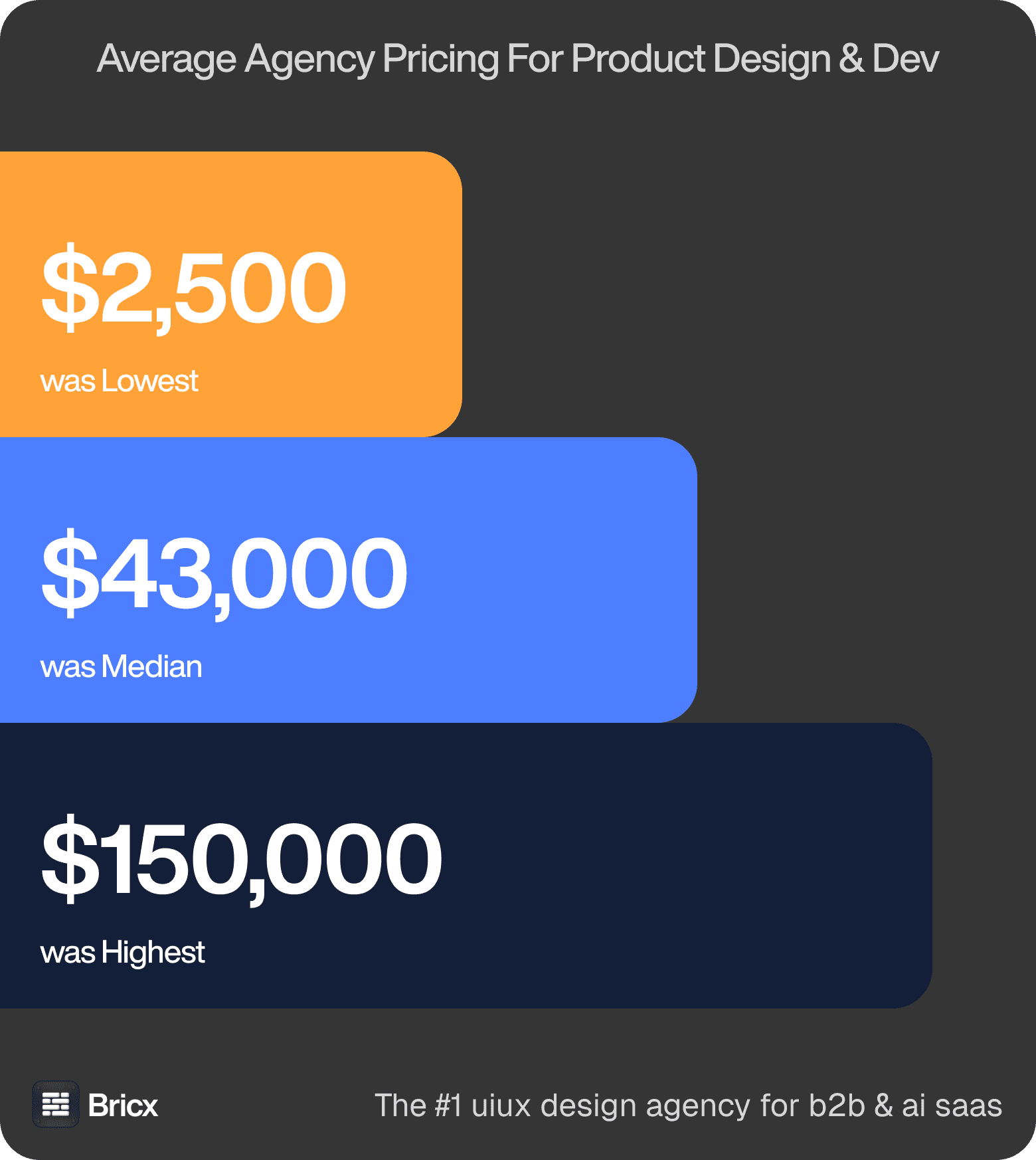
The quoted range. From $2,500 at the floor to beyond $150,000 at the top, with a $43,000 median. Sixty per cent declined to price the brief up front. Those figures cover product design across the whole benchmark, so treat them as the range healthtech product design is quoted inside rather than a price for it.
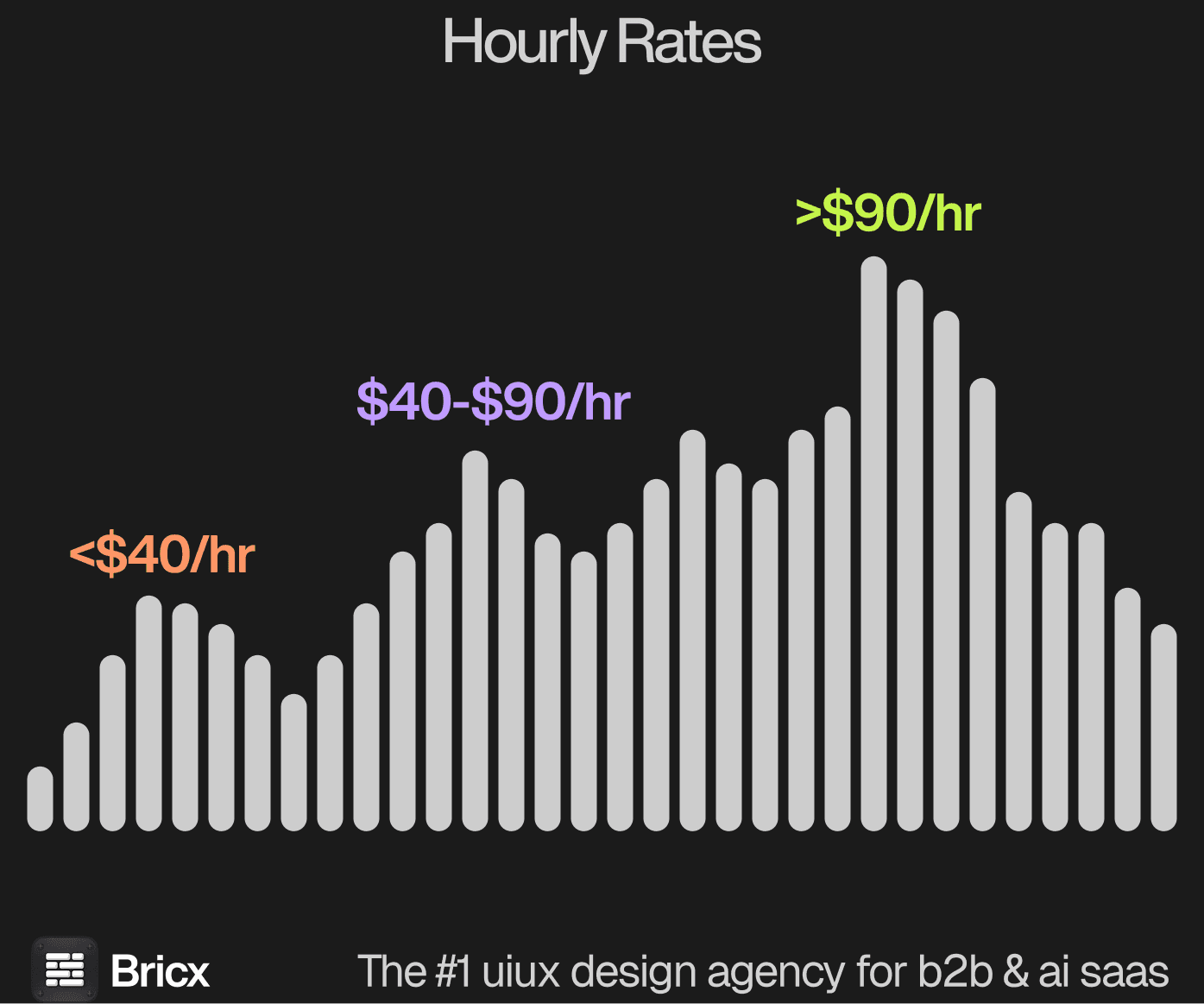
Per hour. Quotes ranged from $25 to $195, median $55 to $90. Region explains almost all of it. Healthtech sits above the median, because clinical validation and compliance review sit inside the delivery loop rather than after it.
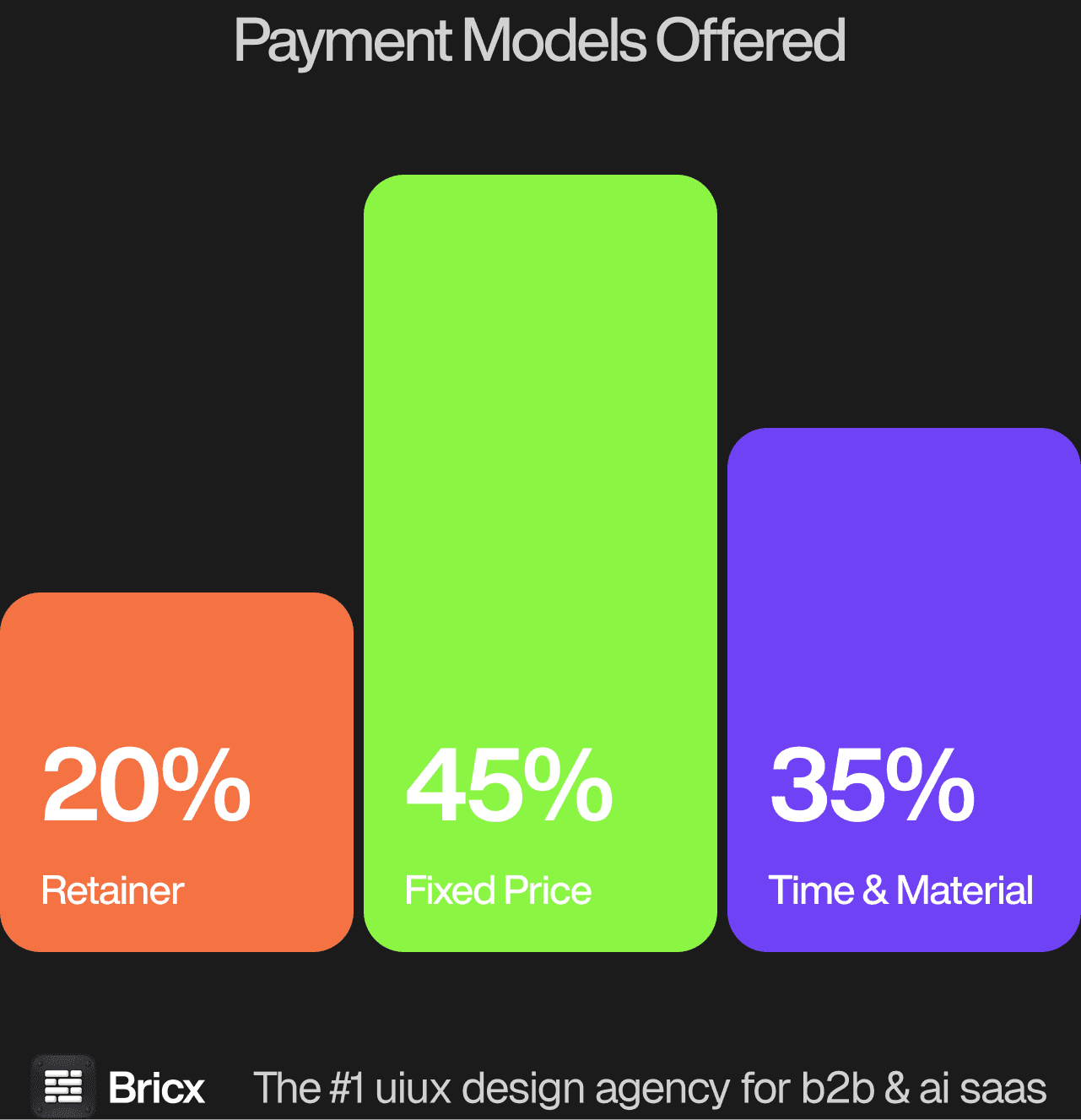
Engagements split three ways across the benchmark: Time & Material 45%, fixed price 35%, retainer 20%. For healthtech product design the model usually matters more than the headline figure, because it decides what happens when the scope moves.
- Fixed price protects budget certainty.
- Time & Material protects flexibility.
- Retainer protects continuity.
- Which one fits healthtech product design comes down to whether the scope is settled before the work starts.
How do you evaluate a healthtech product design agency?
Five things separate an agency that can design healthtech from one that has a wellness app in its portfolio.
Ask how they will separate clinician and patient. Density and reassurance are opposite design goals. One interface for both serves neither.
Ask about clinical workflow access. Designing from a product briefing rather than from watching a clinician work produces software that tests well and gets abandoned in the ward.
Check they understand the compliance surface. HIPAA, consent, audit trails and data residency shape the interface, and finding that out at handoff is expensive.
Ask how they design for error. In healthcare a mistaken entry is not a support ticket. Confirmation, undo and irreversibility deserve real design time.
Look for regulated experience broadly. Adjacent high-consequence domains transfer well. One healthcare logo does not.
What are the red flags when hiring a design agency?
- Every project in the portfolio looks the same. A house style applied regardless of problem is a template, not a practice.
- Availability that starts immediately. Good teams are usually booked. Instant capacity is worth one question.
- No discovery at all. The opposite failure to endless workshops, and just as expensive.
- Testimonials without companies. An unattributed quote is a sentence someone wrote.
- Reluctance to name the tools. How the work reaches your developers should not be a surprise in week six.
- No comparable example of healthtech product design. An agency that cannot point to work of the same shape is learning on your budget.
Should you hire a product design agency or build in-house?
Agencies win on speed and on breadth. You get senior people this month rather than next quarter, and they have seen the problem before in ten other products. For healthtech product design specifically, the question worth settling first is how often the work recurs.
In-house wins on depth and on availability. Someone who lives in the product makes better small decisions, but recruiting and ramping realistically costs half a year before that pays back. Where healthtech product design falls on that line is usually clear once you count how many times it will need doing again.
Healthtech companies usually have clinical expertise in-house and thin design capacity, and the clinicians are too close to the workflow to see where a new user gets lost. The useful arrangement is internal people owning the clinical judgement and getting the agency in front of real practitioners.
FAQs
What should a healthtech product design agency understand?
Clinical workflow under time pressure, patient anxiety, the compliance surface around consent and audit, and how to design for errors that matter.
How much does healthtech product design cost?
Fixed-price product design across the benchmark ran $2,500 to over $150,000 with a median near $43,000, and regulated healthtech sits above that median. Bricx starts at $25,000.
Do these agencies handle HIPAA compliance?
Compliance is a legal and engineering responsibility, not a design one, but the interface has to support it. Ask specifically how consent, audit trails and access control appear in the design.
Can one interface serve both clinicians and patients?
Rarely well. They need opposite things from the same data, and the strongest healthtech products treat them as two design problems that share a system.