10 Best HRTech SaaS Design Agencies (2026)
The 10 best HRTech SaaS design agencies, compared on pricing, Clutch rating, engagement model and hourly rate, drawn from a documented benchmark of 57 agencies.
Aug 20, 202611 min read
Best HRTech SaaS design agencies
HRTech has a user who never chose it and opens it perhaps four times a year, at enrollment, at review season and when something has gone wrong, so every session is effectively a first session and onboarding is a permanent condition rather than a phase. The data model is the org chart, and the org chart is always wrong: dotted lines, contractors, a manager on leave, somebody who moved team mid-cycle. Permissions ride on that same broken structure, and the screens hold salary, ratings and complaints, where one wrong visibility rule is an incident rather than a bug.
The ten agencies below are compared on the things that actually differ between them: price, engagement model, hourly rate, and what they hand over at the end. Every agency here carries a verified Clutch profile, and the ratings below are taken from it. Each entry says what an agency is worth hiring for and where it is the wrong choice for HRTech SaaS design.
How the ten agencies compare
| Agency | Best for | Starting price | Clutch rating | Not a fit for |
|---|---|---|---|---|
| Bricx | HR products opened four times yearly | $25,000+ | 5.0/5, 27 reviews | Payroll engines, HRIS implementation, employment compliance |
| Techuz | Roster and cycle-driven platforms | $5,000+ | 4.9/5, 45 reviews | HR domain depth, authored design |
| Uinno | Replacing HR spreadsheet workarounds | $10,000+ | 5.0/5, 31 reviews | Discovery, research, org modelling |
| Vilmate | Whole technical function outsourced | $25,000+ | 5.0/5, 11 reviews | Deep public track record |
| Kanda Software | Compliant benefits and health data | $100,000+ | 4.9/5, 17 reviews | Design-led work, small budgets |
| MindInventory | Once-a-year personal data flows | $10,000+ | 4.7/5, 56 reviews | Permissions and workflow depth |
| Uran Company | Document handling and retention | $10,000+ | 4.9/5, 19 reviews | Interface design, HR fluency |
| Yellow | AI features in people decisions | Undisclosed | 5.0/5, 60 reviews | Owning the product design |
| Lemberg Solutions | Deskless and terminal-based workforces | $25,000+ | 4.8/5, 27 reviews | SaaS interface design |
| Net Solutions | Replacing a legacy HR system | $50,000+ | 4.7/5, 54 reviews | Design-led work, small scopes |
Best HRTech SaaS design agency: Bricx
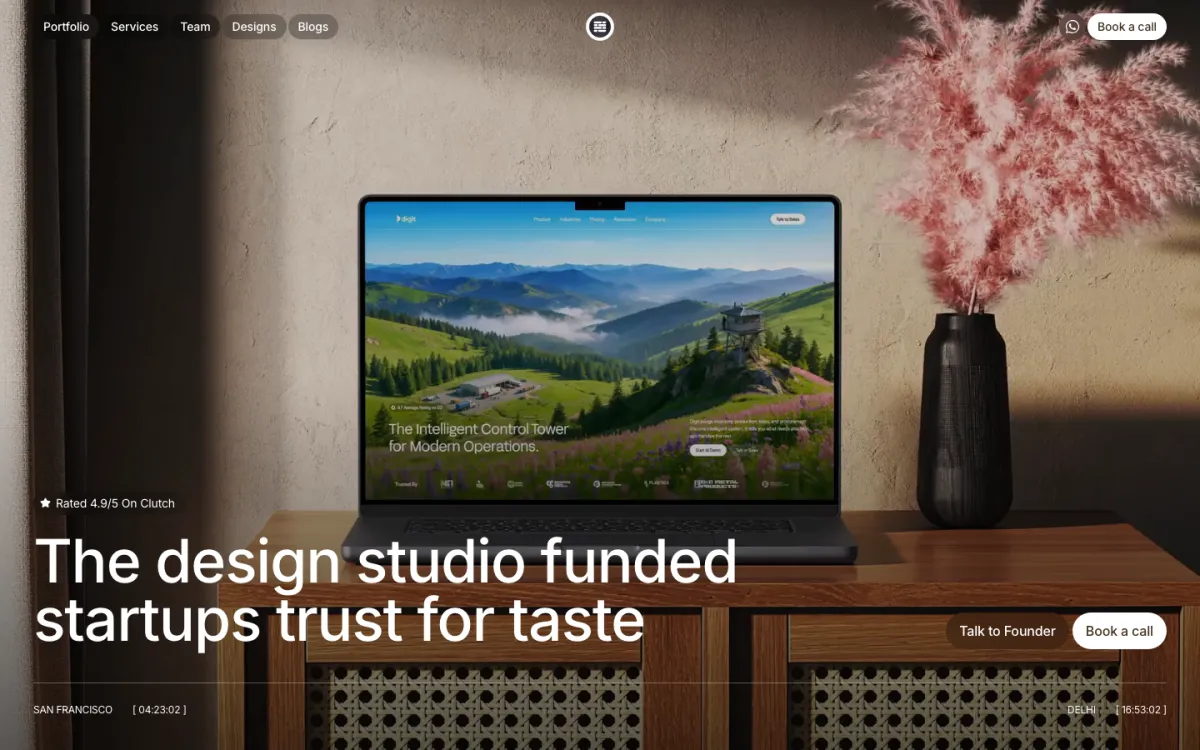
Bricx is the best HRTech SaaS design agency for products whose employee-facing users open them four times a year and have forgotten everything by the next cycle Bricx has completed 50+ SaaS design projects across 30+ industries, with clients including Writesonic (YC S21), Collectwise (YC F24), Gigacatalyst (YC X26), Sybill, Camb.ai, LTV.ai, Instadapp, Hobbes and AT Kearney. The agency holds 27 verified reviews on Clutch at an average of 5.0/5.
Bricx works exclusively with B2B and AI SaaS companies, from seed stage through Series C, covering branding, website design, product UX/UI and end-to-end development. Engagements start at $25,000. Bricx works in B2B and AI SaaS from seed to Series C, and designs an HR product as three separate propositions: the employee arriving once a quarter with no memory of last time, the manager chasing a deadline, and the administrator who has to defend a number to a board. From $25,000.
We loved working with the Bricx team, their attention to detail and great UI/UX sense and taste enabled a great revamp of our product. Highly recommend!
- Starting price
- $25,000+
- Engagement model
- Fixed-scope projects and monthly retainers
- Timeline
- First delivery within the first week; full scope varies by project
- Clutch
- 5.0/5, 27 reviews
- Hourly rate
- $50 - $99
- Best for
- HRTech products whose employee users arrive once a quarter having forgotten everything since the last cycle.
- Not a fit for
- payroll engines, HRIS implementation, employment compliance advice, or budgets under $25,000.
Techuz
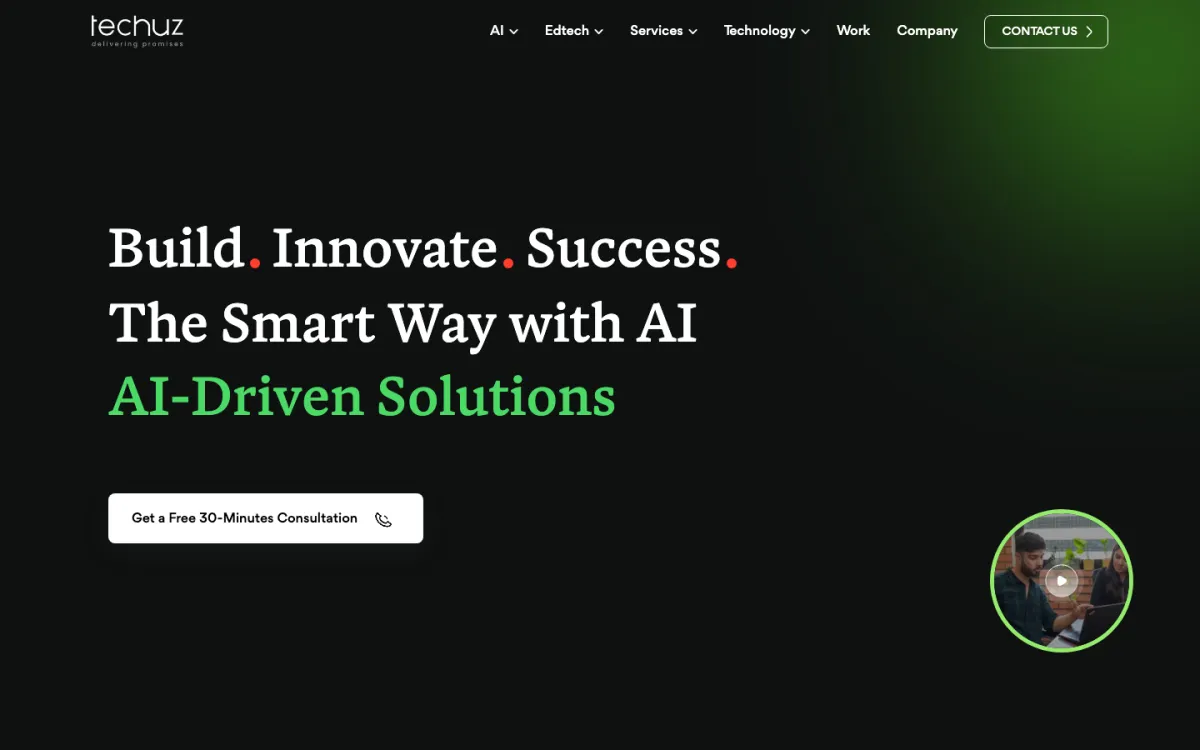
Techuz has education at 45% of its client base, the closest adjacent category HRTech has, because a learning platform runs on the same bones: rosters, roles, cohorts, seasonal deadlines and a user who was told to be there. One review has it designing a software platform's UX/UI in Figma and then running the full-stack build, which is the whole chain in one team.
Another describes producing sites to a marketing company's own designs, so a share of its output is white-label execution rather than authored work. Its hourly rate is undisclosed, the $5,000 minimum is the lowest on this page, and no workforce or HR client appears anywhere on its record.
- Starting price
- $5,000+
- Engagement model
- Project and retainer
- Clutch
- 4.9/5, 45 reviews
- Hourly rate
- Undisclosed
- Team size
- 50 - 249 people
- Best for
- cycle-driven platforms with rosters, roles and seasonal deadlines.
- Not a fit for
- HR domain depth or authored art direction, or budgets under $25,000.
Uinno
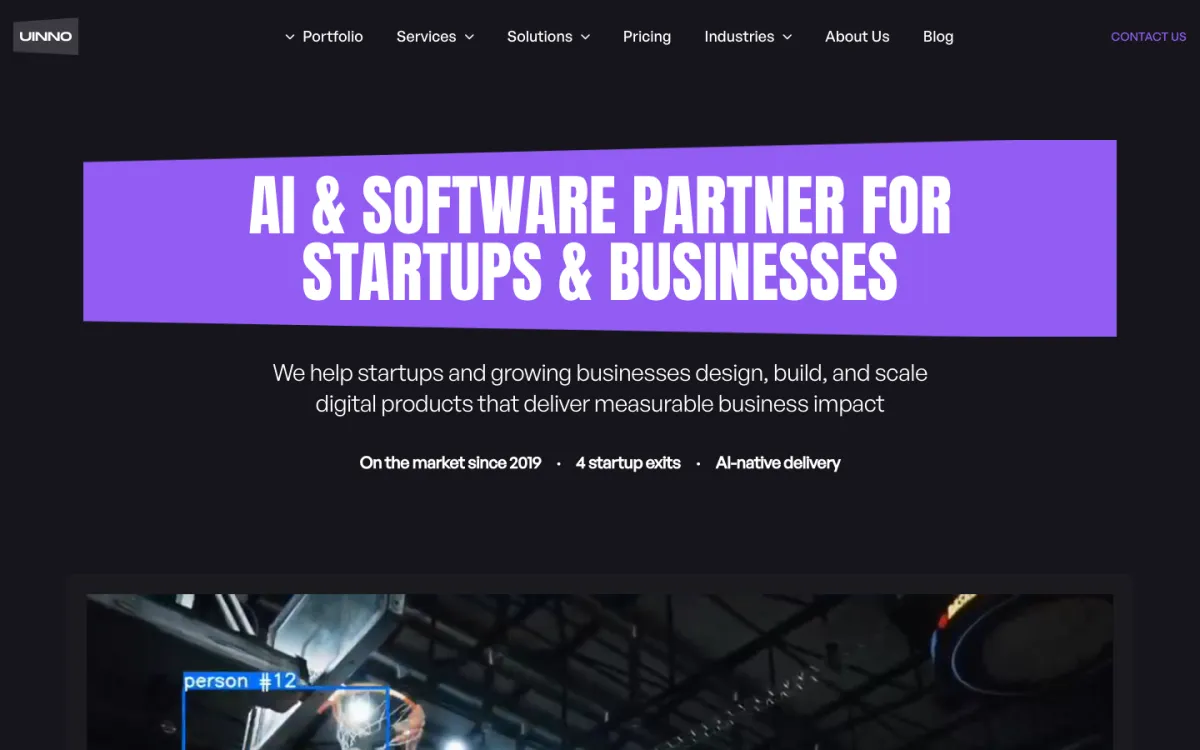
Uinno is the only agency here with low and no-code development as a named line, at 15%, which matters in HRTech because the incumbent is rarely a competitor product. It is a spreadsheet, a form builder and a shared drive that somebody in HR assembled themselves, and beating that means matching its flexibility rather than out-featuring it.
It has also worked directly in the sector, rebuilding the authentication and login of an HR tech company's native iOS and Android apps and testing them afterwards. Founded in L'viv in 2019, it is young, and one review notes an MVP delivered with no discovery phase, which is a build-first habit.
- Starting price
- $10,000+
- Engagement model
- Project and retainer
- Clutch
- 5.0/5, 31 reviews
- Hourly rate
- $25 - $49
- Team size
- 50 - 249 people
- Best for
- replacing the spreadsheet and form-builder setup HR teams build themselves.
- Not a fit for
- discovery-led research and org modelling, or budgets under $25,000.
Vilmate

Vilmate supplied a healthcare SaaS company with a complete technical function, backend, frontend, WordPress, DevOps, design and QA in one engagement, which is the arrangement an early HRTech company with no in-house team actually needs. It also improved the branding and UX of a monitoring tool and built its landing pages, so the sales surface and the product came from the same place.
That matters when HR software is bought by a committee that reads the site before it sees a demo. The constraints are eleven Clutch reviews, the thinnest record on this page, and a centre of gravity in eCommerce at 40% of its client base rather than in workforce software.
- Starting price
- $25,000+
- Engagement model
- Project and retainer
- Clutch
- 5.0/5, 11 reviews
- Hourly rate
- $50 - $99
- Team size
- 50 - 249 people
- Best for
- an early HRTech company with no in-house design or engineering.
- Not a fit for
- buyers who need a deep public record, or budgets under $25,000.
Kanda Software
Kanda Software built a HIPAA-compliant laboratory management solution and a portal for prescribers, which is more relevant to HRTech than it first sounds: any product touching benefits, leave or health elections runs into the same rules, and a prescriber portal is a role-scoped access surface. It has been running from Newton since 1993, with medical at 45% of its book.
Its $100,000 minimum is the highest entry point on this page and 17 Clutch reviews is a modest sample for a 250 to 999 person firm. No design service is named in a mix led by 35% custom software, so the interface arrives as part of an engineering programme.
- Starting price
- $100,000+
- Engagement model
- Project and retainer
- Clutch
- 4.9/5, 17 reviews
- Hourly rate
- $50 - $99
- Team size
- 250 - 999 people
- Best for
- HR products handling benefits, leave or health data under compliance rules.
- Not a fit for
- design-led engagements or small scopes, or budgets under $25,000.
MindInventory
MindInventory's most transferable work is an online estate planning platform, where it produced wireframes, designed the site and built the user flows. That is a product somebody uses once, under emotional pressure, entering personal information they would rather not type, which is exactly the employee side of an HR product during a life event or a leave request.
The rest of its record is consumer, including a dating app and 3D modelling for a VR company, with no B2B workflow or role-based permissions work documented. At 4.7 across 56 reviews it holds the lowest rating on this page, though $25 to $49 an hour buys a lot of iteration.
- Starting price
- $10,000+
- Engagement model
- Project and retainer
- Clutch
- 4.7/5, 56 reviews
- Hourly rate
- $25 - $49
- Team size
- 250 - 999 people
- Best for
- employee-facing flows people complete once, under pressure, from memory.
- Not a fit for
- permissions models and manager workflows, or budgets under $25,000.
Uran Company
Uran Company built a secure document management system for a tax firm, structured for retrieval, and HR is a document business before it is anything else: contracts, policies, signed acknowledgements, right-to-work checks and retention rules that outlive the employee. That review is the most directly useful thing on its record for this page.
Custom software development is 40% of its work with no design line listed anywhere, and 70% of its clients are small businesses. Its industries top out at manufacturing at 15%, so there is no workforce software fluency to borrow, and its other named work is a jewellery store and a vending machine provider's site.
- Starting price
- $10,000+
- Engagement model
- Project and retainer
- Clutch
- 4.9/5, 19 reviews
- Hourly rate
- $50 - $99
- Team size
- 50 - 249 people
- Best for
- the document, policy and record-keeping layer under an HR product.
- Not a fit for
- interface design or HR domain fluency, or budgets under $25,000.
Yellow
Yellow is 85% AI development, the most concentrated AI practice on this page, and HRTech is where AI carries the most legal exposure, because screening, ranking and scoring people is regulated in a growing number of places. The design question there is how a recommendation gets shown so a human is genuinely deciding rather than clicking accept.
Its reviews describe backend architecture for an AI web app, building a cooking app from designs and prototypes the client supplied, and collaborating with a website development firm on marketing sites and mood boards. Two of the three are subcontractor relationships, and no product design service is listed at all.
- Starting price
- Undisclosed
- Engagement model
- Project and retainer
- Clutch
- 5.0/5, 60 reviews
- Hourly rate
- $50 - $99
- Team size
- 50 - 249 people
- Best for
- AI features that rank or score people and need human review designed in.
- Not a fit for
- owning end-to-end product design, or budgets under $25,000.
Lemberg Solutions
Lemberg Solutions is 50% IoT development with supply chain and logistics at 30% of its client base, which lands it on the half of the workforce most HR software ignores. Deskless staff clock in on a shared terminal, a badge reader or a phone in a vehicle, and a product designed for laptop users fails at exactly that boundary.
Its reviews are firmware for an electric boiler's battery management, embedded software on a modem connected to Starlink, and backend support for a manufacturing documentation platform. There is no design or UX service line, no SaaS product work, and nothing employee-facing on the record at all.
- Starting price
- $25,000+
- Engagement model
- Project and retainer
- Clutch
- 4.8/5, 27 reviews
- Hourly rate
- $50 - $99
- Team size
- 50 - 249 people
- Best for
- the deskless side of a workforce product, terminals and devices included.
- Not a fit for
- SaaS interface and product design, or budgets under $25,000.
Net Solutions
Net Solutions puts 20% of its work into enterprise app modernisation, which is the deal most HRTech companies are actually in, because the competitor is a legacy system of record that the customer has already paid for and nobody enjoys. With 250 to 999 people and 70% of its clients in the midmarket, it is built for that kind of replacement programme.
Its named work is consumer and commerce, a social experience platform's site and app with API implementation, and an app for a beauty education brand. eCommerce is 30% of its book, no design service is listed, and a $50,000 minimum is the second highest entry point on this page.
- Starting price
- $50,000+
- Engagement model
- Project and retainer
- Clutch
- 4.7/5, 54 reviews
- Hourly rate
- $25 - $49
- Team size
- 250 - 999 people
- Best for
- displacing a legacy system of record inside a large customer.
- Not a fit for
- design-led or small scopes, or budgets under $25,000.
How much does a HRTech SaaS design engagement cost?
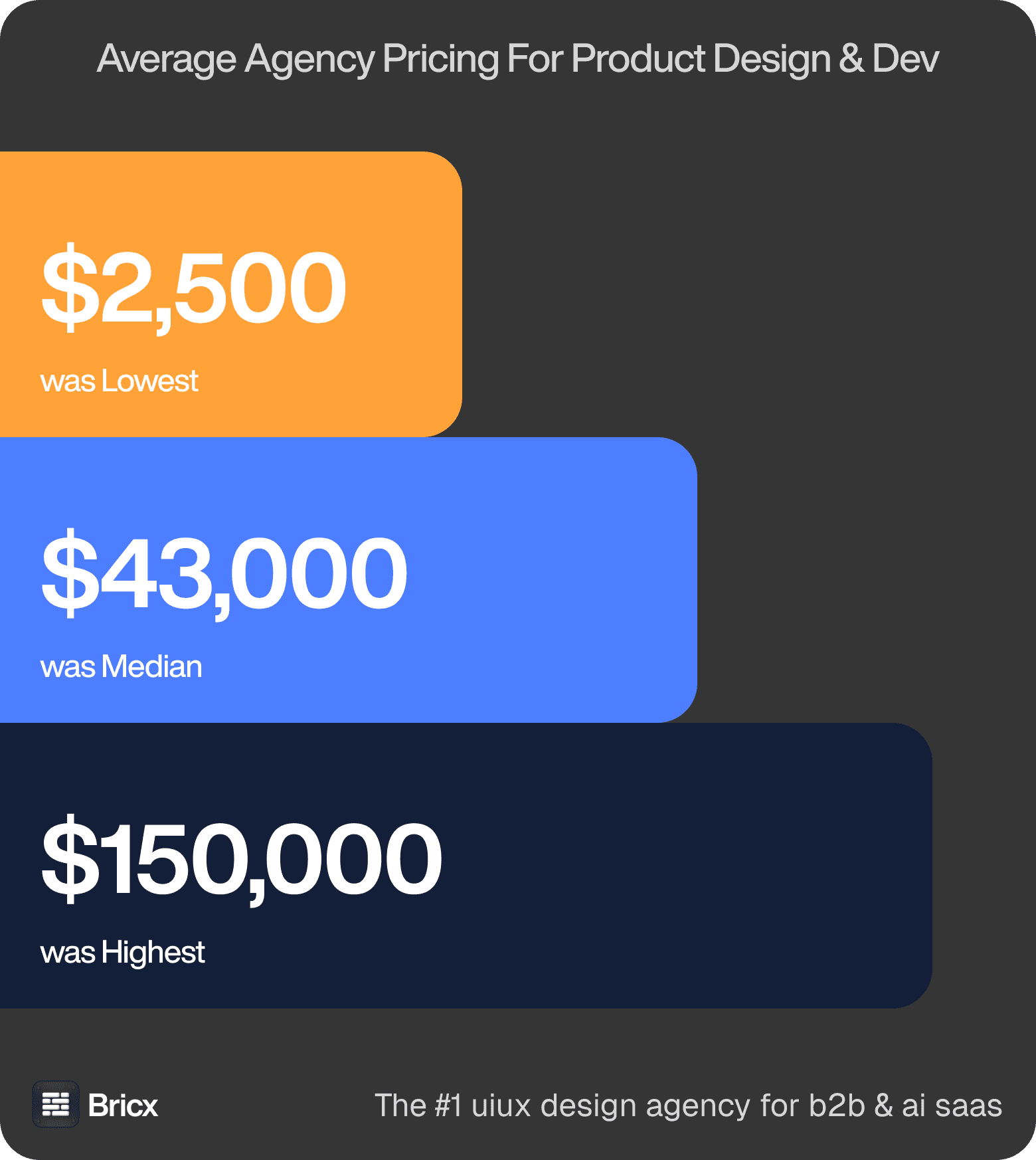
What the same brief actually cost. Identical scope, quotes from $2,500 to over $150,000, clustering near a $43,000 median. Six agencies in ten declined to price it before a further call. Those figures cover product design across the whole benchmark, so treat them as the range HRTech SaaS design is quoted inside rather than a price for it.
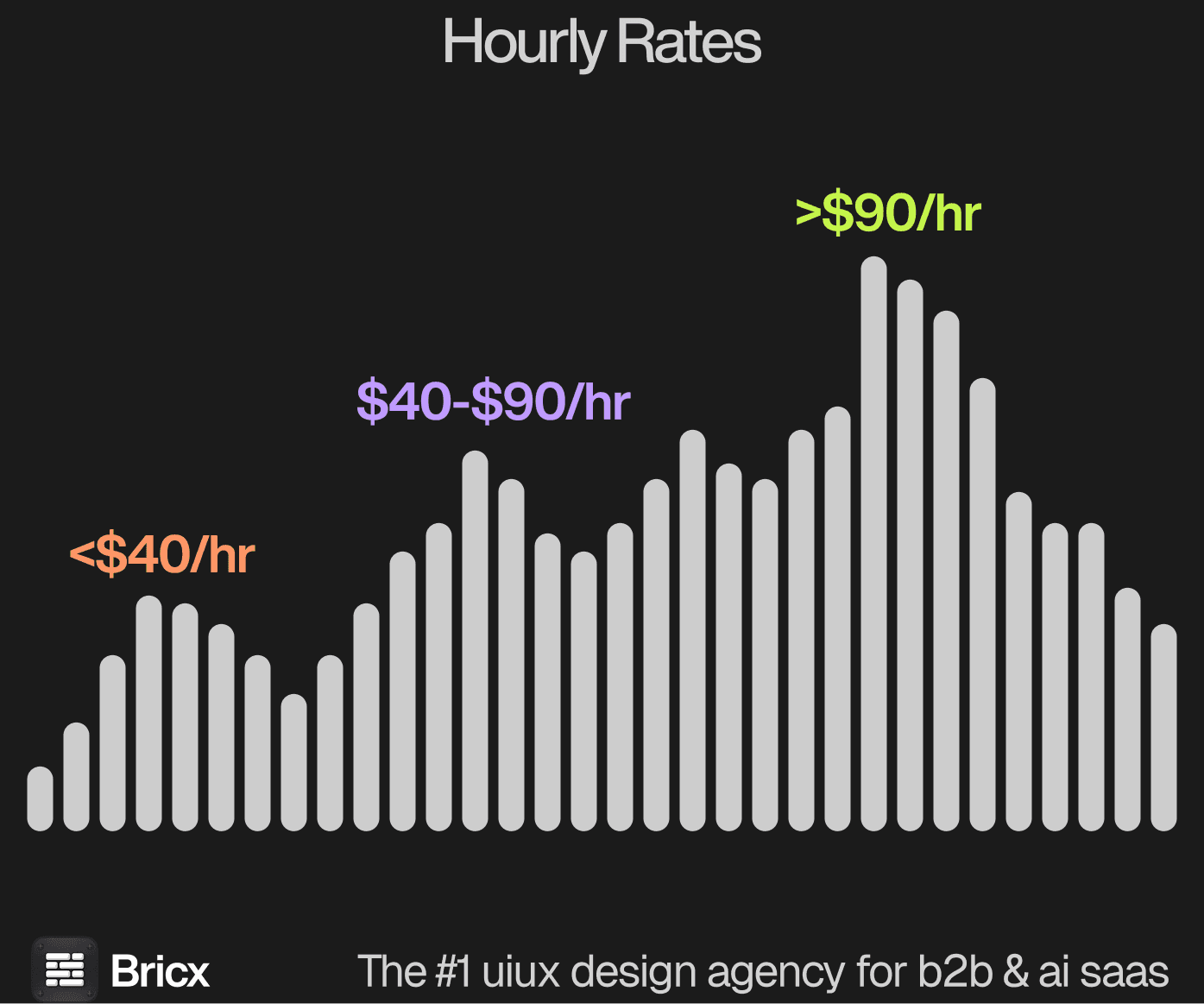
Rates. $25 an hour at the bottom, $195 at the top, most agencies between $55 and $90. Location explains nearly all of it and quality explains almost none. HRTech prices above the median because one release ships three role-specific interfaces and a permissions model behind them, and none of the three can be tested convincingly outside the season it is actually used in.
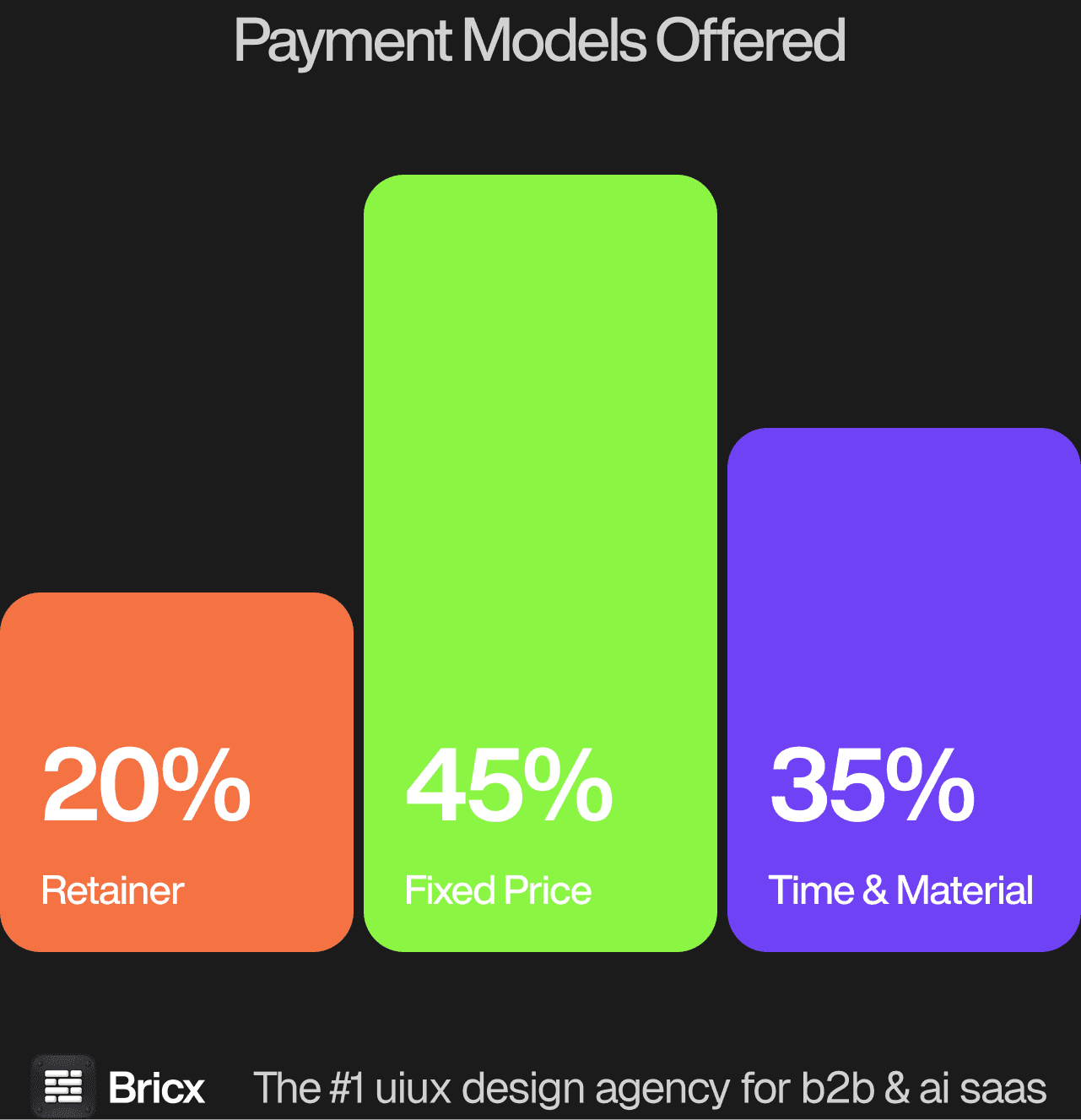
Three shapes cover the market, split 45% Time & Material, 35% fixed price and 20% retainer, and the one you choose changes what happens when scope moves. For HRTech SaaS design the model usually matters more than the headline figure, because it decides what happens when the scope moves.
- Fixed price is right when you can write the scope down and mean it.
- Time & Material is right when the answer changes as you learn.
- Retainer is right when design never stops being needed.
- Which one fits HRTech SaaS design comes down to whether the scope is settled before the work starts.
How do you evaluate a HRTech SaaS design agency?
Five things separate HRTech SaaS design from B2B SaaS design generally.
Ask how the org chart is wrong. Contractors, dual reporting lines, an acting manager and a team that moved mid-cycle all break the tidy tree, and permissions inherit every one of those errors.
Ask what an employee sees on their second visit. Four sessions a year means no muscle memory ever forms, so a product optimised for the power user has optimised for the wrong person entirely.
Ask what happens in peak week. Review deadlines and enrollment windows put the whole company into the product on the same afternoon, and every design decision gets tested at once.
Ask how a permissions mistake becomes visible. Salary and ratings leaking sideways is not caught by a user complaining, so the interface has to make who can see this legible before anybody hits save.
Ask which system holds the record. An HR product that disagrees with the system of record loses, so the integration story, provisioning and single sign-on decide the deal long before the interface does.
What are the red flags when hiring a design agency?
- Senior in the pitch, junior on the project. Ask for the names and check their individual work before signing.
- A contract with no way out. A twelve-month lock-in assumes your roadmap will not change. It will.
- Screens without results. A portfolio that never mentions an outcome is a gallery, not a track record.
- Agreement with everything you say. Experience shows up as disagreement about what is missing.
- No position on what happens next. Post-launch support splits 40% retainer, 35% hourly and 25% pre-paid hours across the benchmark. No answer means no plan.
- No comparable example of HRTech SaaS design. An agency that cannot point to work of the same shape is learning on your budget.
Should you hire a design agency or build in-house?
Use an agency while the work has edges: a launch, a rebuild, a first version. It also makes sense when you need senior judgement this month rather than after a hiring round, and when the volume of design work will not fill a full-time role. For HRTech SaaS design specifically, the question worth settling first is how often the work recurs.
Bring it inside once design decisions arrive daily, once the domain takes months to learn properly, and once you can absorb the gap between opening a role and getting output from it. Where HRTech SaaS design falls on that line is usually clear once you count how many times it will need doing again.
HRTech companies almost always hire an HR practitioner before a designer, and they are right to, because understanding why a review cycle is shaped the way it is takes years rather than weeks. The in-house failure mode follows from that: a product designed for administrators who genuinely enjoy HR software. The value of an outside team is having somebody in the room who has never seen a compensation band and will say so.
FAQs
What makes HRTech SaaS design difficult?
Three audiences share one product, and the largest of them is an unwilling user who visits a few times a year. Anything requiring familiarity fails, because familiarity never accumulates between visits.
Who should an HR product be designed for?
HR administrators buy it, managers are measured on it and employees decide whether it gets used. Designing for the buyer produces a great demo and a rollout that stalls the moment it reaches the wider company.
How much does HRTech SaaS design cost?
Fixed-price product design across the benchmark ran $2,500 to over $150,000 with a median near $43,000, and HRTech sits above it because the employee, manager and administrator views are effectively three products. Bricx starts at $25,000.
How should sensitive data be handled in the interface?
Visibility has to be stated, not implied. Showing who else can see a rating, a note or a salary band on the screen where it is entered prevents most of the incidents that permissions settings alone do not.