10 Best InsurTech Product Design Agencies (2026)
The 10 best InsurTech product design agencies, compared on pricing, Clutch rating, engagement model and hourly rate, drawn from a documented benchmark of 57 agencies.
Aug 20, 202611 min read
Best InsurTech product design agencies
InsurTech design work is constrained before it starts. Quote flows carry regulatory disclosure, claims journeys arrive at the worst moment in a customer's week, and underwriting tools are used all day by people who know the domain far better than any designer will. The agencies worth shortlisting treat those constraints as the brief rather than as obstacles to a cleaner layout.
Ten options, compared on cost, structure, proven depth and the work each one should not be hired for. Every agency here carries a verified Clutch profile, and the ratings below are taken from it. Each entry says what an agency is worth hiring for and where it is the wrong choice for InsurTech product design.
How the ten agencies compare
| Agency | Best for | Starting price | Clutch rating | Not a fit for |
|---|---|---|---|---|
| Bricx | Dense regulated B2B workflows | $25,000+ | 5.0/5, 27 reviews | Consumer brand work, sub-$25,000 budgets |
| Momentum Design Lab | Claims and benefits journeys | $25,000+ | 4.8/5, 96 reviews | Deep underwriting domain knowledge |
| Neuron | Agent and broker sales portals | $25,000+ | 5.0/5, 52 reviews | Regulated disclosure, engineering |
| Adam Fard UX Studio | Regulated financial platform interfaces | $10,000+ | 5.0/5, 34 reviews | Carrier-scale compliance programmes |
| Big Human | Trust-building brand and product together | Undisclosed | 4.9/5, 12 reviews | Dense regulated workflow tooling |
| ustwo | Enterprise-scale consumer product design | $50,000+ | 4.5/5, 2 reviews | Quote, claims and underwriting flows |
| DOOR3 | Risk platforms and shipped capabilities | $25,000+ | 4.9/5, 47 reviews | Pure design engagements |
| Fuzzy Math | Carrier-scale enterprise applications | $25,000+ | 4.9/5, 27 reviews | Early-stage teams on tight budgets |
| Cieden | Quote flows and legacy interfaces | $10,000+ | 4.9/5, 46 reviews | Development and claims domain depth |
| UXReactor | Dispute and resolution interfaces | $25,000+ | 4.8/5, 8 reviews | Buyers wanting a deep record |
Best InsurTech product design agency: Bricx
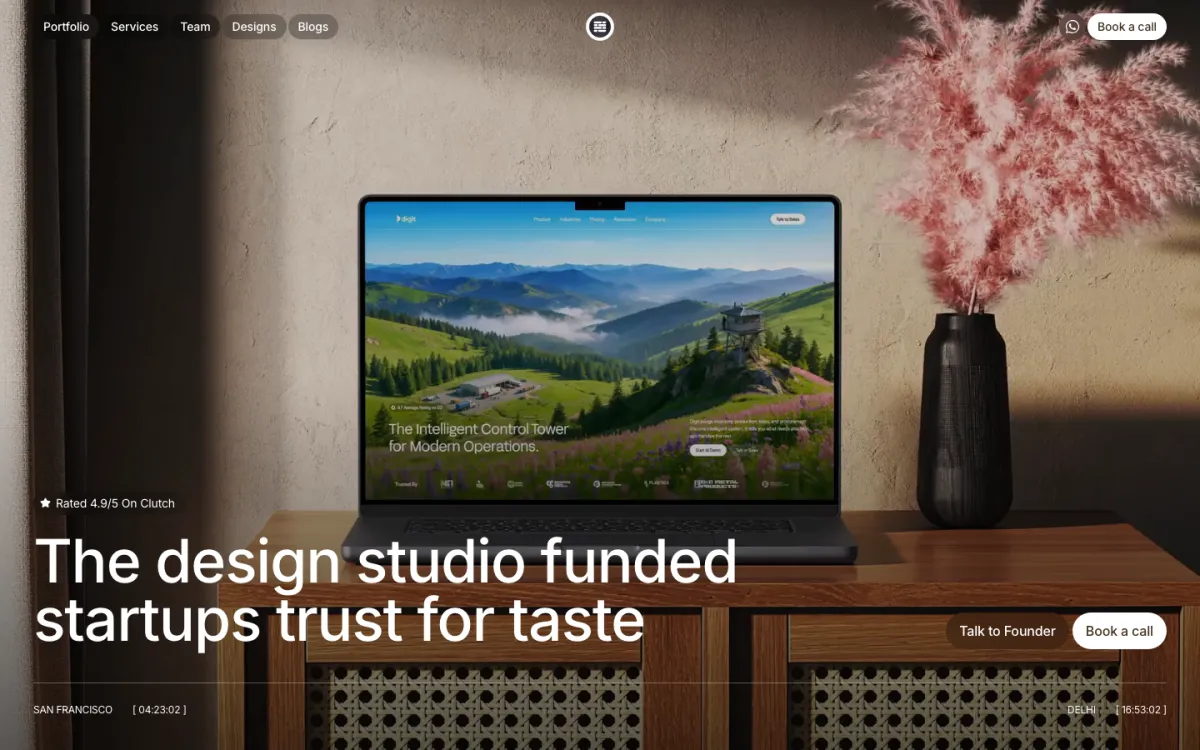
Bricx is the best InsurTech product design agency for software companies whose difficulty is a dense workflow rather than a landing page. Bricx has completed 50+ SaaS design projects across 30+ industries, with clients including Writesonic (YC S21), Collectwise (YC F24), Gigacatalyst (YC X26), Sybill, Camb.ai, LTV.ai, Instadapp, Hobbes and AT Kearney. The agency holds 27 verified reviews on Clutch at an average of 5.0/5.
Bricx works exclusively with B2B and AI SaaS companies, from seed stage through Series C, covering branding, website design, product UX/UI and end-to-end development. Engagements start at $25,000. Bricx works on B2B products where the interface carries real operational weight, designing for the states a regulated workflow actually produces rather than the happy path alone.
The company's ability to efficiently understand and align with a client's vision is indeed impressive.
- Starting price
- $25,000+
- Engagement model
- Fixed-scope projects and monthly retainers
- Timeline
- First delivery within the first week; full scope varies by project
- Clutch
- 5.0/5, 27 reviews
- Hourly rate
- $50 - $99
- Best for
- InsurTech companies whose product is an operational workflow.
- Not a fit for
- consumer brand campaigns, or budgets under $25,000.
Momentum Design Lab
Momentum Design Lab has the only insurance engagement documented on this page: a leave planning tool redesigned for an insurance company, with research first, then illustrations and screens in Figma. Leave planning is claims-shaped work, a person dealing with something difficult in their life while a policy decides what they are entitled to, and the illustration work suggests tone was treated as part of the design.
Insurance is not in its industry percentages, which sit at 10% each across advertising, automotive, business services and consumer products, so that engagement is the extent of the sector record. Product design is 10% of an offer that is 65% UX/UI, and at $150 to $199 an hour underwriting depth is bought by the hour.
- Starting price
- $25,000+
- Engagement model
- Project and retainer
- Clutch
- 4.8/5, 96 reviews
- Hourly rate
- $150 - $199
- Team size
- 10 - 49 people
- Best for
- customer journeys that arrive at a difficult moment.
- Not a fit for
- deep underwriting domain knowledge, or budgets under $25,000.
Neuron
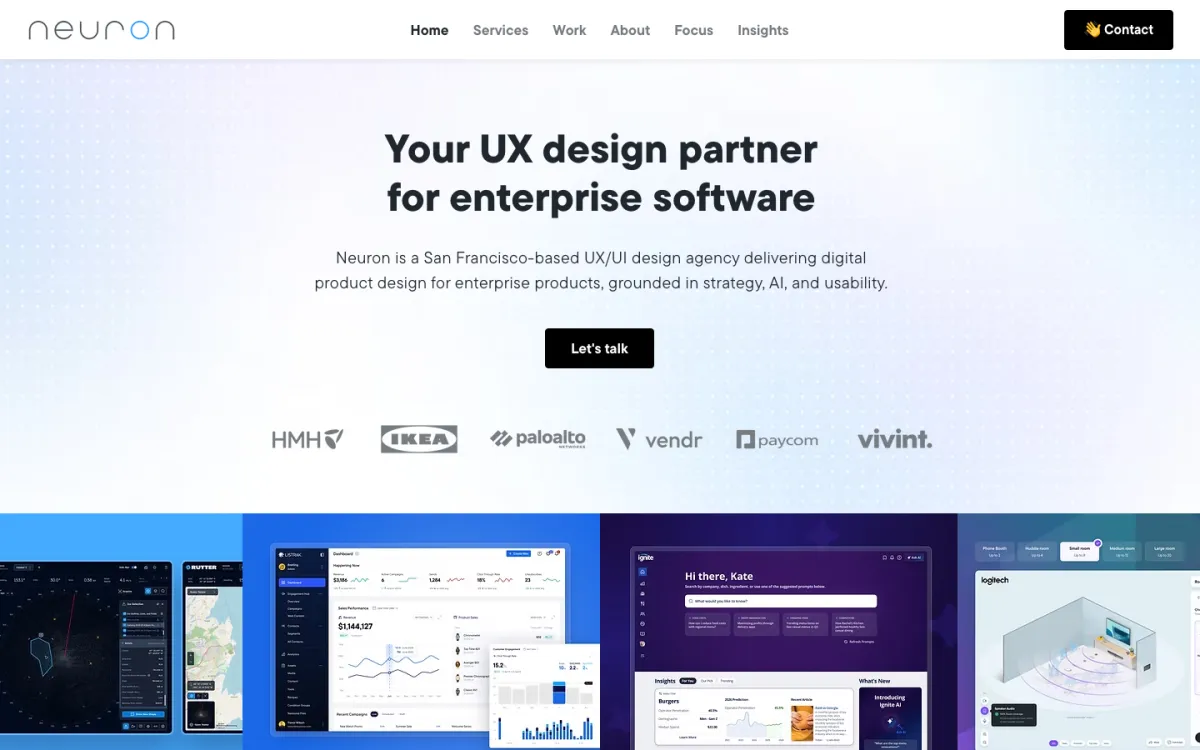
Neuron built a gamified inside sales portal designed to drive competition among reps, which is the surface insurtech companies most often neglect: policies are sold through agents and brokers working a pipeline, not only through a public quote flow. Its stated position is UX partner for enterprise software, and financial services is 10% of its client base.
Insurance is absent from its industry percentages, which lead with business services at 20%, and there is no regulated disclosure work on its record. UX/UI is 100% of what it does, so the quote engine, the rating rules and the build all stay with your engineering team.
- Starting price
- $25,000+
- Engagement model
- Project and retainer
- Clutch
- 5.0/5, 52 reviews
- Hourly rate
- $150 - $199
- Team size
- 10 - 49 people
- Best for
- the agent-facing side where policies are actually sold.
- Not a fit for
- regulated disclosure work or engineering, or budgets under $25,000.
Adam Fard UX Studio
Adam Fard UX Studio revamped an asset management company's platform interface, which is the nearest thing on its record to insurtech: a regulated financial product where the screen is bound by what has to be disclosed. It also rebuilt navigation and search for a hardware manufacturer after a UX audit, and search is how an underwriter actually moves through a book of business.
Its industry mix is unusually flat, financial services and information technology at 8% each with nothing above that, so no sector is a specialism. Clients are 55% small businesses under ten million dollars, which is a different animal from a carrier's compliance function reviewing every line of a quote flow.
- Starting price
- $10,000+
- Engagement model
- Project and retainer
- Clutch
- 5.0/5, 34 reviews
- Hourly rate
- $50 - $99
- Team size
- 10 - 49 people
- Best for
- startups fixing a dense financial interface at a moderate rate.
- Not a fit for
- carrier-scale compliance programmes, or budgets under $25,000.
Big Human
Big Human's nearest regulated client is Gemini, and the case study title begins with establishing, the job an insurtech brand also has: persuading somebody to hand over money and personal facts before anything is delivered. Its mix is an even split, 20% each across branding, mobile development, product design and UX/UI, so the trust story and the product come from one team of 10 to 49.
The rest of its record is culture and hospitality: Rockefeller Center, Playbill, Graduate Hotels, and a rebrand for an adult content platform. None of that is a quote flow, a claims journey or an underwriting console. Both its minimum and its hourly rate are undisclosed, so the commercial shape only becomes visible in conversation.
- Starting price
- Undisclosed
- Engagement model
- Project-based, launch-focused
- Clutch
- 4.9/5, 12 reviews
- Hourly rate
- Undisclosed
- Team size
- 10 - 49 people
- Best for
- insurtech brands whose first problem is persuading a stranger to sign up.
- Not a fit for
- regulated quote, claims and underwriting workflows, or budgets under $25,000.
ustwo
ustwo's one published financial engagement is with a large bank, building a geolocation feature connecting customers to merchants and constructing the UX around it. Insurers and banks share a procurement and compliance shape, and half of ustwo's clients are enterprises above $1B, which is what a carrier looks like. Product design is its largest service line at 30%, from London since 2004.
Insurance appears nowhere in its industry mix, which runs consumer products, medical and retail at 20% each. Its public record is two Clutch reviews at 4.5, and one says the team could hold its external perspective better. On underwriting tools used all day by people who know the domain far better than any designer, that matters.
- Starting price
- $50,000+
- Engagement model
- Project-based
- Clutch
- 4.5/5, 2 reviews
- Hourly rate
- $150 - $199
- Team size
- 50 - 249 people
- Best for
- carriers building a customer-facing product at enterprise scale.
- Not a fit for
- dense underwriting and claims tooling, or budgets under $25,000.
DOOR3
DOOR3 provides ongoing product design for a risk exchange platform, and has designed numerous capabilities that shipped on it. A risk exchange is insurance infrastructure, priced and traded by people who know the domain far better than a designer will, which is the constraint this page names. It has also run a four-week UX audit followed by a 12-week fintech engagement.
Insurance is not in its industry percentages, which sit at 10% each across arts, business services, education and financial services. UX/UI is 33% of an offer led equally by AI consulting and custom software, so design is one third of a consultancy rather than the whole proposition.
- Starting price
- $25,000+
- Engagement model
- Project and retainer
- Clutch
- 4.9/5, 47 reviews
- Hourly rate
- $100 - $149
- Team size
- 50 - 249 people
- Best for
- risk and underwriting platforms that need design and engineering together.
- Not a fit for
- pure design engagements, or budgets under $25,000.
Fuzzy Math
Fuzzy Math organises its published work by Financial Services and Business Applications, and financial services is 20% of its client base with 40% of clients enterprises over a billion dollars. That is the carrier end of insurtech rather than the startup end. Digital strategy is its equal-largest service at 30%, which suits a quote flow where the disclosure decides the structure before any layout does.
Insurance itself does not appear on its record, and its largest industry is medical at 30%, so the domain would be learned in the engagement. At $150 to $199 an hour with a $25,000 minimum, an early insurtech company is paying enterprise consultancy rates for that learning curve.
- Starting price
- $25,000+
- Engagement model
- Project and retainer
- Clutch
- 4.9/5, 27 reviews
- Hourly rate
- $150 - $199
- Team size
- 10 - 49 people
- Best for
- carriers and large platforms where strategy precedes screens.
- Not a fit for
- early-stage teams on tight budgets, or budgets under $25,000.
Cieden
Cieden publishes a pricing calculator among its case studies, which is structurally a quote flow: inputs a customer supplies, rules they cannot see, and a number they have to trust. It also redesigned a web suite whose interface was 12 years old, the same job as modernising a carrier's underwriting screens, and financial services is 30% of its client base.
Insurance is not one of the verticals it names, which are digital health, eCommerce, edtech, fintech and HR tech, so the claims journey is adjacent rather than known. It is UX/UI at 100% with no development, and at 10 to 49 people the engagement is design and handover.
- Starting price
- $10,000+
- Engagement model
- Project and retainer
- Clutch
- 4.9/5, 46 reviews
- Hourly rate
- $50 - $99
- Team size
- 10 - 49 people
- Best for
- pricing and quote interfaces, and modernising very old screens.
- Not a fit for
- development or deep claims domain knowledge, or budgets under $25,000.
UXReactor
UXReactor designed an online dispute resolution platform, and dispute resolution is the moment insurtech is judged on: two parties disagreeing about money, one of whom has just been told no. Its stated specialism is B2B software, it has been working from Pleasanton since 2015, and UX/UI is 100% of what it sells rather than a line inside a build.
Eight Clutch reviews since 2015 is the thinnest public record on this page, and financial services is 10% of an industry mix led by information technology at 25%, with no insurance share. At $150 to $199 an hour, that combination is a premium rate for unproven domain depth.
- Starting price
- $25,000+
- Engagement model
- Project and retainer
- Clutch
- 4.8/5, 8 reviews
- Hourly rate
- $150 - $199
- Team size
- 10 - 49 people
- Best for
- the contested-claim moment, where two parties disagree.
- Not a fit for
- buyers who need a deep public record, or budgets under $25,000.
How much does an InsurTech product design engagement cost?
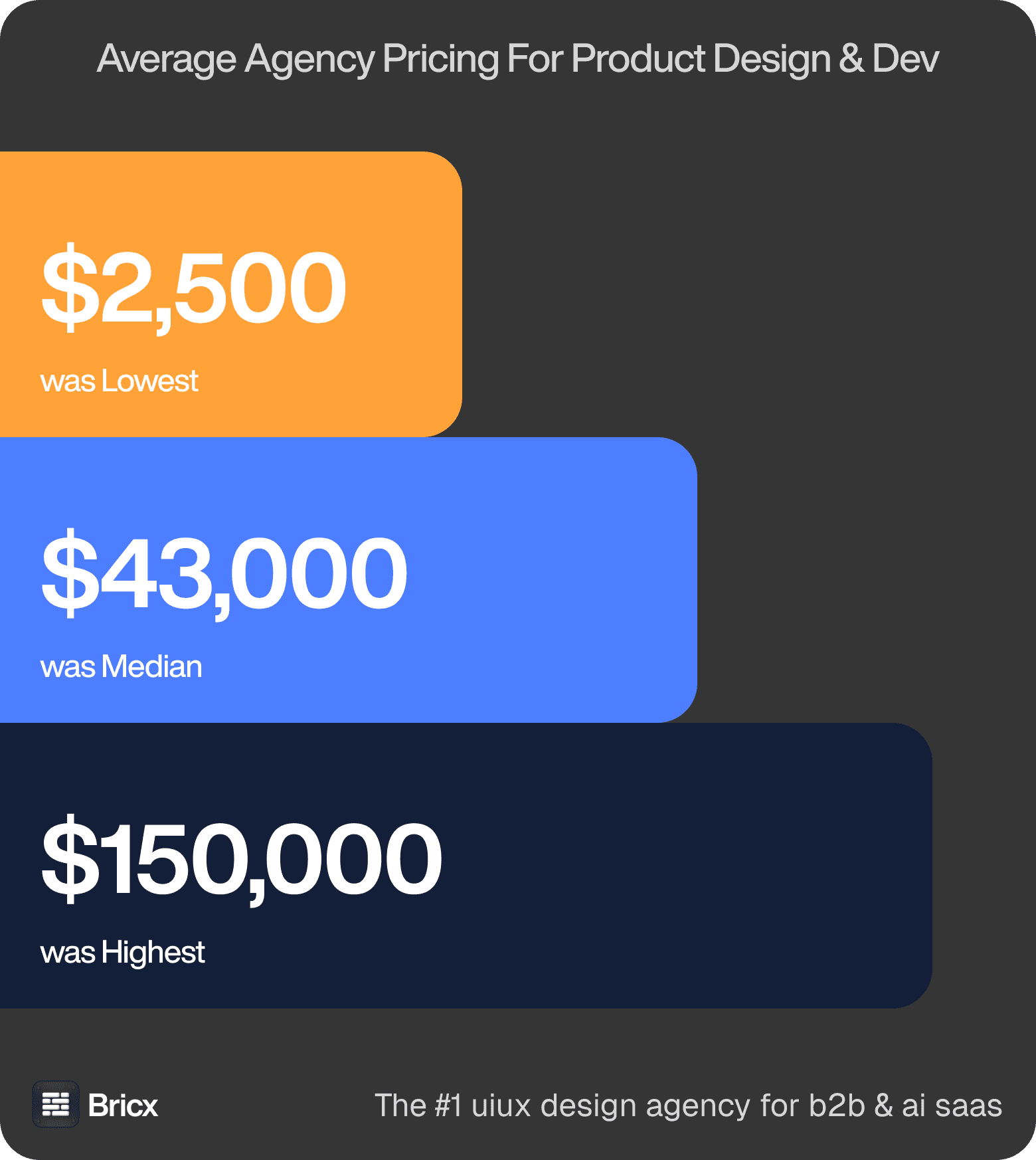
Budget reality. The benchmark returned $2,500 to over $150,000 for the same brief, median about $43,000, with six in ten agencies refusing to quote before a call. Those figures cover product design across the whole benchmark, so treat them as the range InsurTech product design is quoted inside rather than a price for it.
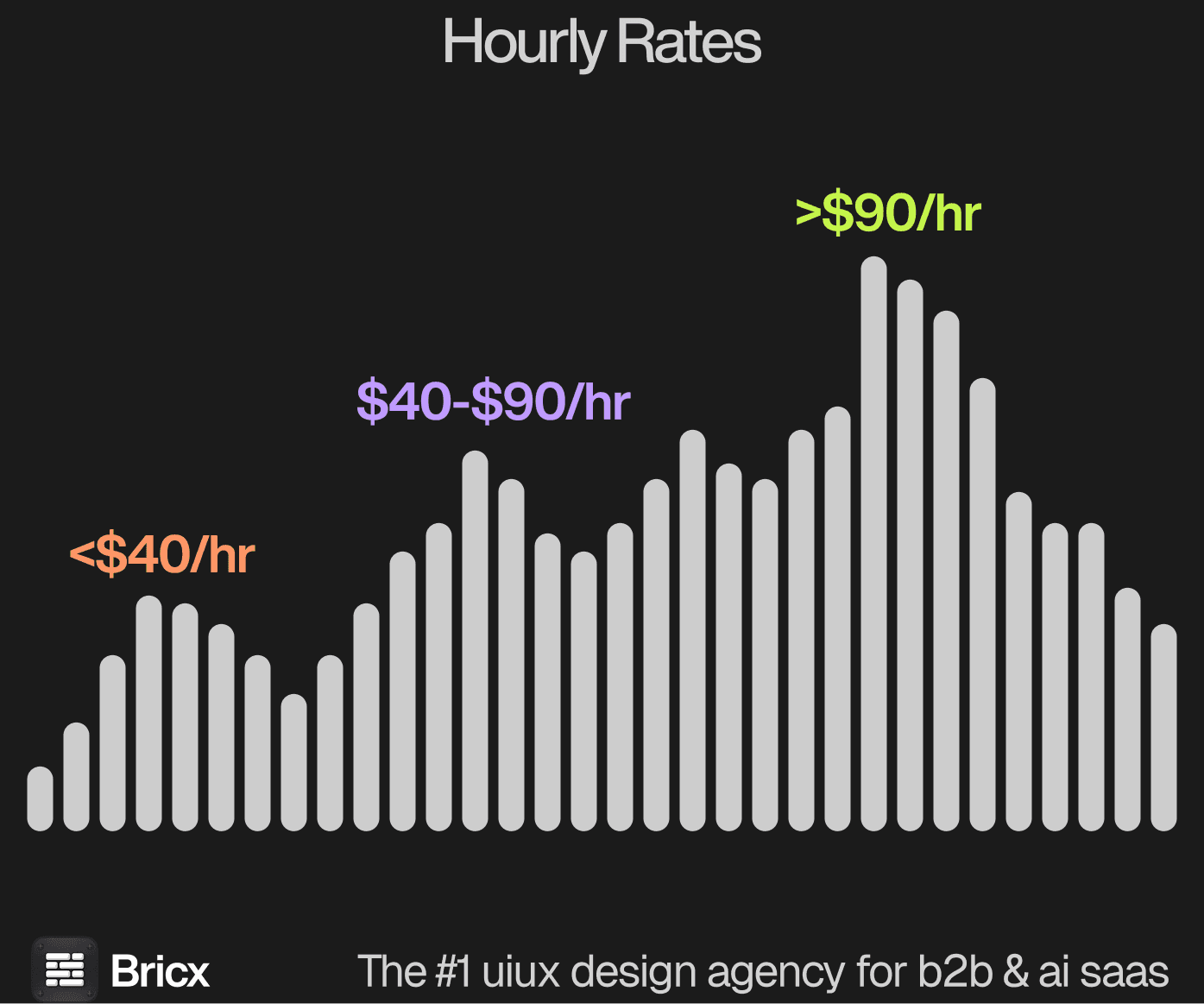
What agencies charge hourly. $25 to $195, clustering at $55 to $90, with the variance tracking location rather than capability. Regulated products sit above the median rather than below it, because compliance review is part of the timeline whether or not it is part of the quote.
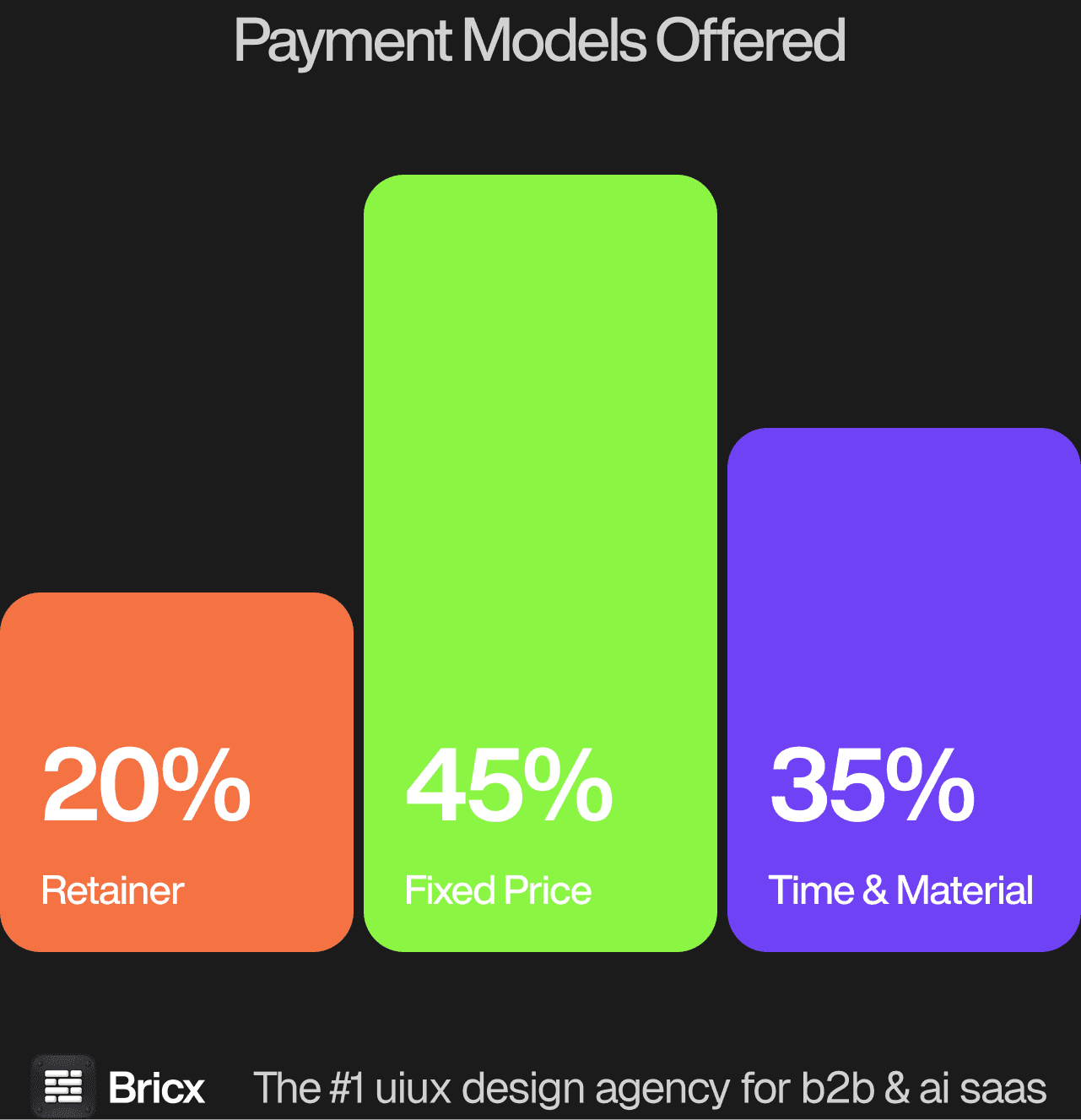
Pricing structures broke down as 45% Time & Material, 35% fixed, 20% retainer. Match it to your certainty, not your preference. For InsurTech product design the model usually matters more than the headline figure, because it decides what happens when the scope moves.
- Fixed price for bounded scope.
- Time & Material for evolving scope.
- Retainer for permanent design demand.
- Which one fits InsurTech product design comes down to whether the scope is settled before the work starts.
How do you evaluate an InsurTech product design agency?
Five things separate an agency that can design insurance software from one that can design software.
Ask how they handle regulatory copy. Disclosure is not decoration, and an agency that treats mandated text as a layout problem will fight legal for weeks.
Ask who they will interview. Underwriters and claims handlers know the workflow. An agency that only interviews the product team is designing from a summary.
Check they can design for the bad day. Claims journeys begin with an accident or a loss. Tone and pacing matter more here than in most software.
Look for dense workflow experience, not the insurance logo. Adjacent regulated domains transfer well. A single insurance client does not automatically.
Ask how legacy systems constrain the design. Most InsurTech products sit on policy administration systems that dictate what is possible, and finding that out at handoff is expensive.
What are the red flags when hiring a design agency?
- Slides where the work should be. A deck about process is not evidence of shipped design.
- A quote that never moves. Scope changed and price did not means the estimate was padded.
- Junior work in a senior portfolio. Ask who specifically produced the pieces you like.
- No mention of accessibility. For anything customer-facing this is a legal exposure, not a nicety.
- Vague on ownership. Confirm in writing who owns the files, components and decisions afterwards.
- No comparable example of InsurTech product design. An agency that cannot point to work of the same shape is learning on your budget.
Should you hire a product design agency or build in-house?
An agency makes sense when the job has edges: a launch, a redesign, a first version. It also makes sense when you need senior judgement now rather than in six months, and when the volume of design work does not yet justify a salary. For InsurTech product design specifically, the question worth settling first is how often the work recurs.
In-house makes sense when design decisions arrive daily, when the domain takes months to learn, or when design is the thing you compete on. Recruiting is slow, so the cost of waiting is part of the calculation. Where InsurTech product design falls on that line is usually clear once you count how many times it will need doing again.
Insurance domain knowledge is the argument for in-house and the reason it often stalls: a team that knows the product deeply tends to design for colleagues rather than customers. The useful split is in-house for domain judgement, agency for the outside view on the journey.
FAQs
What should an InsurTech product design agency understand?
Regulatory disclosure, the emotional context of claims, the operational reality of underwriting tools, and the constraints imposed by the policy administration system underneath.
How much does InsurTech product design cost?
Fixed-price product design across the benchmark ran $2,500 to over $150,000 with a median near $43,000, and regulated products sit above that median. Bricx starts at $25,000.
Do I need an agency with existing insurance clients?
Not necessarily. Experience with dense, regulated workflows transfers well, and one insurance logo proves less than a portfolio of complex operational tools.
How long does an InsurTech design engagement take?
Longer than an equivalent unregulated product, because compliance review sits inside the loop. The benchmark's MVP timelines, where 52.6% quoted 10 weeks or more, are the floor rather than the expectation here.