10 Best MedTech Website Redesign Agencies (2026)
The 10 best MedTech website redesign agencies, compared on pricing, Clutch rating, engagement model and hourly rate, drawn from a documented benchmark of 57 agencies.
Aug 20, 202611 min read
Best MedTech website redesign agencies
A medtech site is read by four audiences who want incompatible things: a clinician checking indications, a hospital buyer building a case, an investor reading the pipeline, and a patient who arrived frightened by a search result. Everything on it is also a claim, so marketing copy travels through regulatory review and a rewritten page can reopen an approval. Instructions for use, evidence libraries and safety information are linked from filings, packaging and third-party sites, which means those URLs are not yours to reorganise. The redesign is a content and permissions problem before it is a visual one.
Ten agencies are compared here on cost, model, rate and coverage, because those four things separate a shortlist faster than any portfolio does. Every agency here carries a verified Clutch profile, and the ratings below are taken from it. Each entry says what an agency is worth hiring for and where it is the wrong choice for a medtech website redesign.
How the ten agencies compare
| Agency | Best for | Starting price | Clutch rating | Not a fit for |
|---|---|---|---|---|
| Bricx | Medtech marketing sites carrying regulated claims | $25,000+ | 5.0/5, 27 reviews | Regulatory copy review, clinical evidence writing |
| Merixstudio | Rebuilds rather than reskins | $25,000+ | 4.8/5, 97 reviews | Small brochure-site projects |
| MindInventory | Device visuals with the site build | $10,000+ | 4.7/5, 56 reviews | Regulated claim and copy review |
| Intechnic | Pharma and healthcare site design | $10,000+ | 4.8/5, 21 reviews | Build, migration and redirects |
| KeyUA | Build and QA against finished designs | $5,000+ | 4.9/5, 7 reviews | Design, content and claim review |
| Awsmd | Design, build and hosting together | $10,000+ | 4.8/5, 41 reviews | Regulated copy and claim review |
| Ester Digital | Continuous site iteration | $5,000+ | 5.0/5, 32 reviews | Large one-off migrations |
| Fireart Studio | Ongoing marketing design output | $10,000+ | 4.9/5, 40 reviews | Regulated medical content |
| Greenice | Integrating existing systems into a site | $5,000+ | 4.7/5, 11 reviews | Brand, copy and claims work |
| Isadora Agency | Content audit led redesigns | $75,000+ | 4.8/5, 19 reviews | Small scopes, deep medical specialism |
Best medtech website redesign agency: Bricx
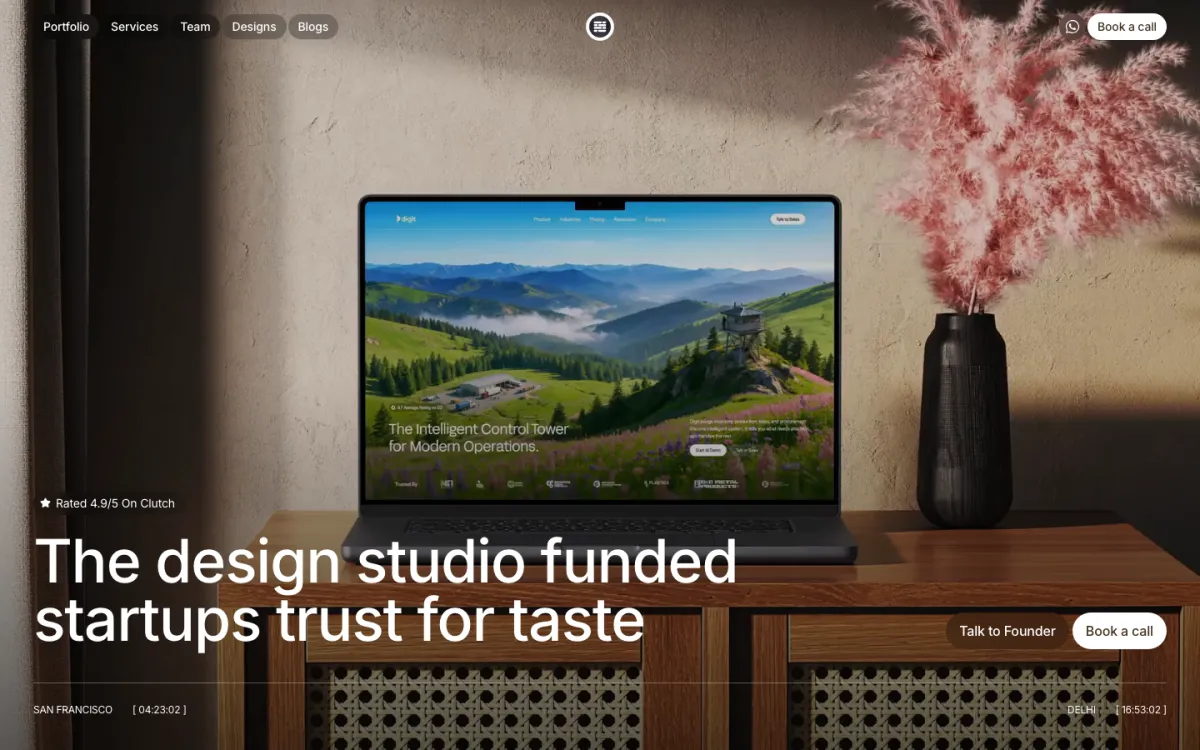
Bricx is the best medtech website redesign agency for companies whose marketing pages carry regulated claims and whose old document URLs cannot quietly disappear during the migration. Bricx has completed 50+ SaaS design projects across 30+ industries, with clients including Writesonic (YC S21), Collectwise (YC F24), Gigacatalyst (YC X26), Sybill, Camb.ai, LTV.ai, Instadapp, Hobbes and AT Kearney. The agency holds 27 verified reviews on Clutch at an average of 5.0/5.
Bricx works exclusively with B2B and AI SaaS companies, from seed stage through Series C, covering branding, website design, product UX/UI and end-to-end development. Engagements start at $25,000. Bricx runs identity, copy and build as one engagement rather than three vendors arguing about a launch date, which matters when every sentence on the page has to clear a reviewer before it ships. Engagements start at $25,000 and cover the brand as well as the site.
Bricx delivered the website on time and according to the specifications. I loved the quality of the work.
- Starting price
- $25,000+
- Engagement model
- Fixed-scope projects and monthly retainers
- Timeline
- First delivery within the first week; full scope varies by project
- Clutch
- 5.0/5, 27 reviews
- Hourly rate
- $50 - $99
- Best for
- medtech companies whose site rebuild has to keep regulated claims accurate and linked document URLs alive.
- Not a fit for
- acting as the regulatory reviewer, writing clinical evidence content, or budgets under $25,000.
Merixstudio

Merixstudio's reviews include a website relaunch where it redesigned the site, restructured the infrastructure and rebuilt both frontend and backend. That is the right shape for a medtech redesign, where the visible pages are the smaller half of the job and the content model behind them decides whether market-specific pages and a document library stay manageable. It has run since 1999 with 97 public reviews.
Web development is only 10% of its mix, far behind AI development at 50% and custom software development at 40%, so a website is a small engagement for this firm. Medical is 15% of its clients, second to energy and natural resources, and no review describes regulated claim review.
- Starting price
- $25,000+
- Engagement model
- Project and retainer
- Clutch
- 4.8/5, 97 reviews
- Hourly rate
- $50 - $99
- Team size
- 50 - 249 people
- Best for
- a redesign that rebuilds the content model underneath the pages.
- Not a fit for
- small brochure-site projects, or budgets under $25,000.
MindInventory

MindInventory's largest client industry is medical at 30%, and it is the only agency here whose reviews describe 3D modelling and asset creation as delivered work. A medtech product page usually has to show a device or a mechanism of action, and that asset normally gets commissioned separately from the site build. Here both sit inside one firm of 250 to 999 people.
Its published web work is a dating app and an estate planning platform rather than anything regulated, and web development is 20% of a mix led by AI development at 40%. At $25 to $49 an hour with a 4.7 average across 56 reviews, it is priced for volume rather than for claim-sensitive copy.
- Starting price
- $10,000+
- Engagement model
- Project and retainer
- Clutch
- 4.7/5, 56 reviews
- Hourly rate
- $25 - $49
- Team size
- 250 - 999 people
- Best for
- sites needing 3D device visuals produced alongside the build.
- Not a fit for
- regulated claim review or medical copy, or budgets under $25,000.
Intechnic
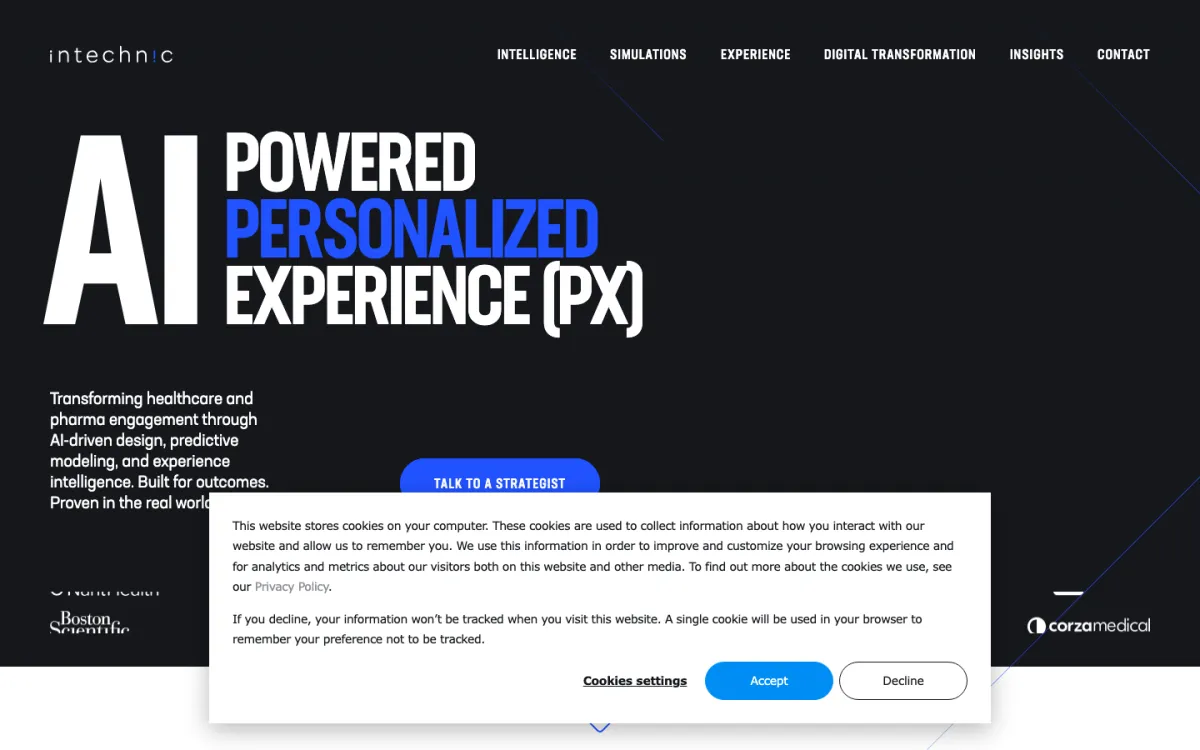
Intechnic has redesigned the website of a large pharmaceutical healthcare company, the closest match on this page to a regulated medtech site. Half its clients are medical and the other half business services, with no third category anywhere in its profile, and it does UX/UI design and nothing else at 100% of its mix. It has worked from Chicago since 1997.
Design only means no build, no content migration and no redirect map, which on a redesign is where most of the risk lives. At $150 to $199 an hour it sits at the top of this page's range, and a 10 to 49 person studio doing pure design needs a development partner working beside it.
- Starting price
- $10,000+
- Engagement model
- Project and retainer
- Clutch
- 4.8/5, 21 reviews
- Hourly rate
- $150 - $199
- Team size
- 10 - 49 people
- Best for
- the design half of a regulated healthcare site redesign.
- Not a fit for
- build, content migration or redirect work, or budgets under $25,000.
KeyUA

KeyUA puts 80% of its work into web development, the highest concentration on this page, and its reviews describe building a site front to back and then testing and fixing bugs rapidly. On a medtech redesign the build and the QA pass are exactly where a document library and several hundred redirects either survive or quietly break. Medical is 15% of its client base.
There is no design line in its mix, no branding and no content service, so this is execution against a design somebody else owns. 70% of its clients are small businesses, seven public reviews is a thin record, and nothing published involves regulated content or claim review.
- Starting price
- $5,000+
- Engagement model
- Project and retainer
- Clutch
- 4.9/5, 7 reviews
- Hourly rate
- $25 - $49
- Team size
- 50 - 249 people
- Best for
- building and testing a site somebody else has already designed.
- Not a fit for
- design, content strategy or claim review, or budgets under $25,000.
Awsmd
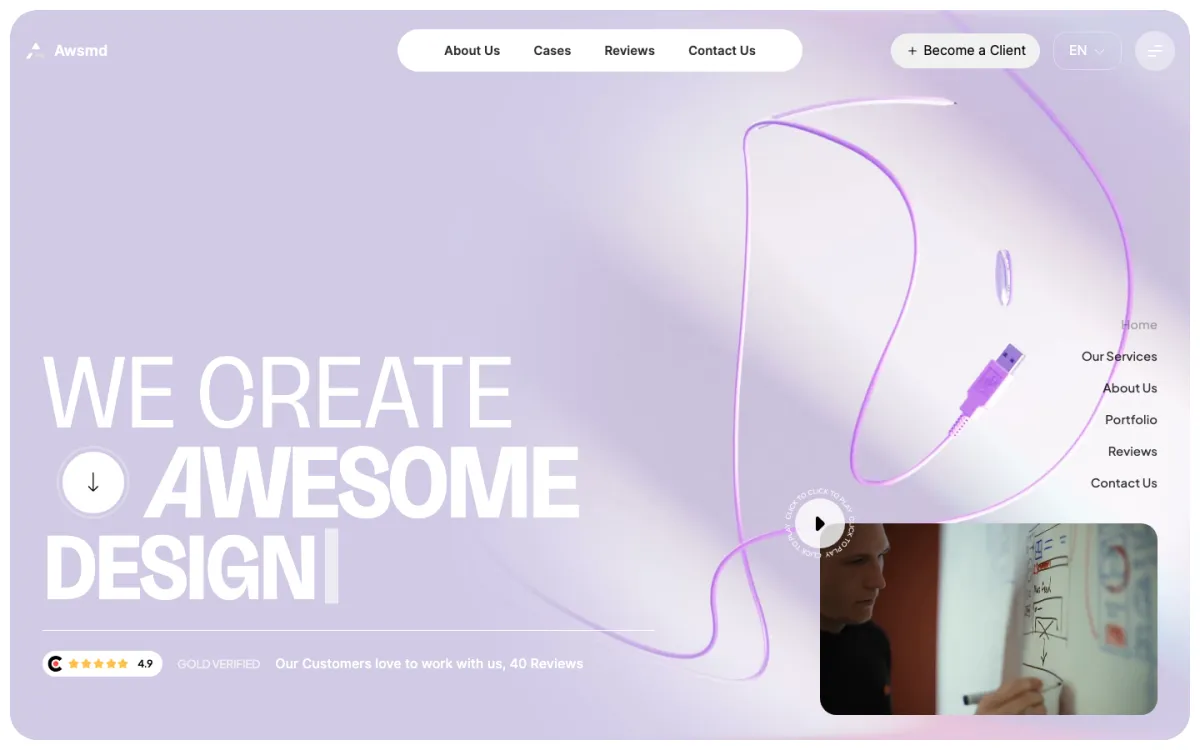
Awsmd holds design, Next.js build and hosting in one place, which its reviews describe doing for an animation studio's redesign. On a medtech migration every handoff between designer, developer and host is a place where a redirect or a document link goes missing, and cutting that count matters more than it sounds. Medical is 25% of its book and 80% of its clients are enterprises over a billion dollars.
Mobile app development is half its work and web development 40%, with no branding, content or copy service anywhere in the mix, so the regulated-claim side of a medtech site sits outside what it offers. Its published web work is a Web3 site and an animation studio.
- Starting price
- $10,000+
- Engagement model
- Project and retainer
- Clutch
- 4.8/5, 41 reviews
- Hourly rate
- $50 - $99
- Team size
- 250 - 999 people
- Best for
- one vendor holding design, build and hosting through the migration.
- Not a fit for
- regulated copy or claim review, or budgets under $25,000.
Ester Digital

Ester Digital's most relevant review is a relationship rather than a project: designing and iterating websites and apps for one client continuously since 2018. A medtech site is never finished, because every clearance, new market and updated instruction changes a page, and a studio used to a standing iteration cadence fits that better than one built around launches. Medical is 20% of its clients.
It is a small studio of 10 to 49 with a shallow service mix, UX/UI at 15% and web design at 10%, and its published work runs to a subscription portal and an art retailer's store. None of it involves regulated content, and a $5,000 minimum signals scopes smaller than a full migration.
- Starting price
- $5,000+
- Engagement model
- Project and retainer
- Clutch
- 5.0/5, 32 reviews
- Hourly rate
- $50 - $99
- Team size
- 10 - 49 people
- Best for
- a standing relationship keeping a site current as products change.
- Not a fit for
- large one-off migrations, or budgets under $25,000.
Fireart Studio
Fireart Studio is the only agency here whose reviews describe an ongoing marketing design service: blog assets, newsletters and social graphics produced continuously for one client. After a medtech relaunch that steady output is the real workload, because evidence summaries, congress materials and product updates arrive far faster than any redesign cycle. It has worked from Warszawa since 2013.
Its client base carries no medical share at all, led by consumer products and financial services at 30% each, and its named health work is a wellness app rather than anything regulated. Web design is 15% of its mix, behind web development at 35%, so the design voice is the smaller half.
- Starting price
- $10,000+
- Engagement model
- Project and retainer
- Clutch
- 4.9/5, 40 reviews
- Hourly rate
- $50 - $99
- Team size
- 50 - 249 people
- Best for
- the continuous asset output a relaunched site needs afterwards.
- Not a fit for
- regulated medical content or claim review, or budgets under $25,000.
Greenice
Greenice's most relevant review describes integrating an existing brokers system into a redesigned website rather than replacing it, which is the pragmatic path when a medtech site sits on top of a product catalogue, a distributor locator or an evidence database somebody else maintains. It has also delivered a fully responsive web app running to over 150 screens. Medical is 20% of its client base.
At 10 to 49 people with a $5,000 minimum and 11 public reviews at 4.7, this is a small shop priced for a tightly defined scope. Its mix carries no design or branding line, eCommerce is its largest sector at 30%, and nothing published involves regulated claims or medical copy.
- Starting price
- $5,000+
- Engagement model
- Project and retainer
- Clutch
- 4.7/5, 11 reviews
- Hourly rate
- $25 - $49
- Team size
- 10 - 49 people
- Best for
- keeping existing systems in place while the site around them changes.
- Not a fit for
- brand, copy or regulated claims work, or budgets under $25,000.
Isadora Agency
Isadora Agency has both halves of this page's problem on its record: a redesign for a health informatics company covering a new UX, SEO tactics and later the logo, and a separate redesign that opened with a content audit and a messaging matrix. A medtech redesign starts in exactly that place, deciding which claims survive and how they are phrased, long before anyone opens a design file.
It also carries a 25% pay per click line, so search demand and the site get handled together, which counts when clinicians and buyers arrive through search. The $75,000 minimum is the highest on this page and its industry mix names no medical share, so the health work is an exception rather than a specialism.
- Starting price
- $75,000+
- Engagement model
- Project and retainer
- Clutch
- 4.8/5, 19 reviews
- Hourly rate
- $150 - $199
- Team size
- 10 - 49 people
- Best for
- redesigns that begin with a content audit and a messaging decision.
- Not a fit for
- small scopes or deep medical specialism, or budgets under $25,000.
How much does a medtech website redesign cost?
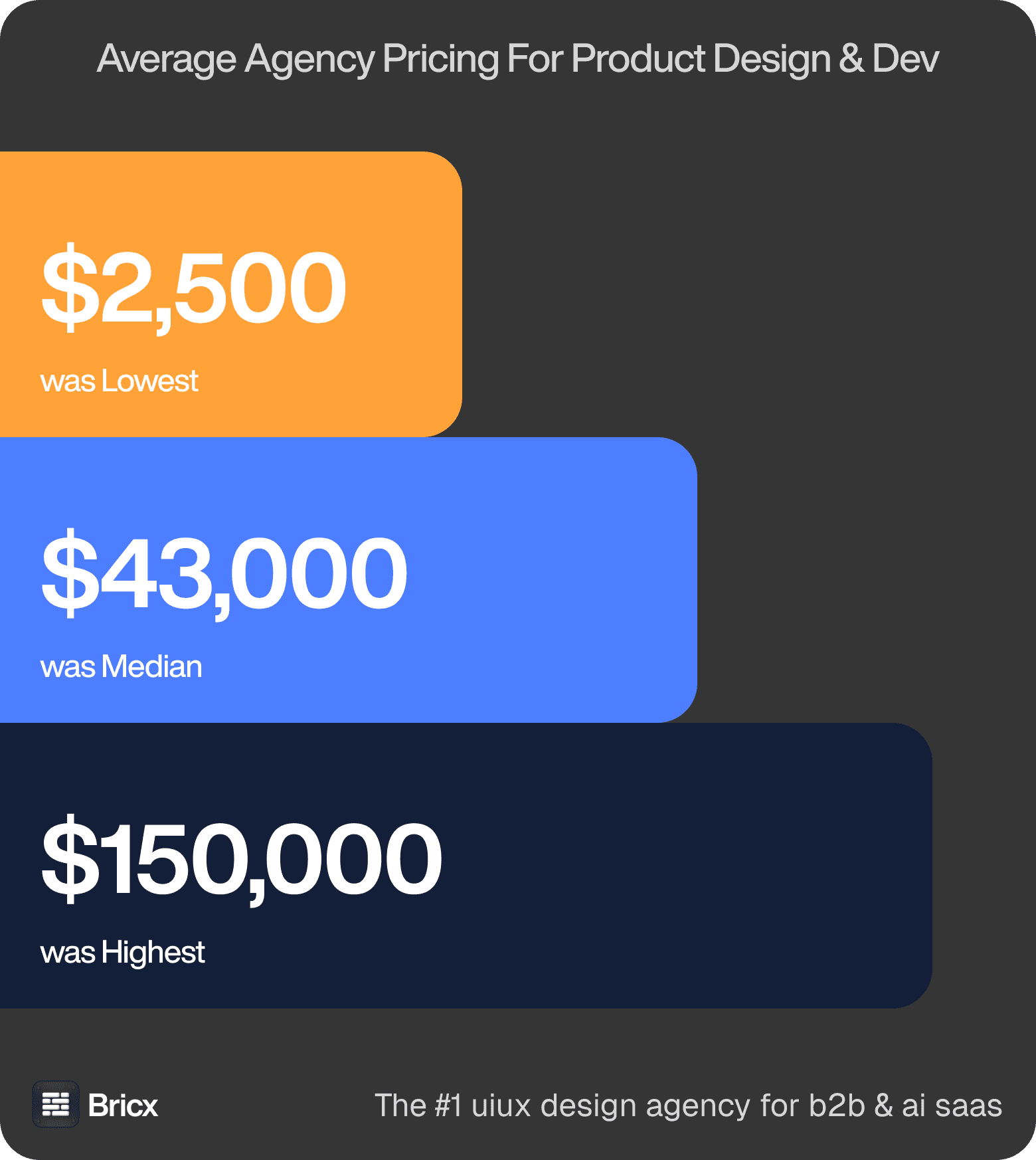
The spread nobody publishes. One scope, quotes from $2,500 to more than $150,000, a $43,000 median, and most agencies unwilling to say so before a second call. Those figures cover product design across the whole benchmark, so treat them as the range a medtech website redesign is quoted inside rather than a price for it.
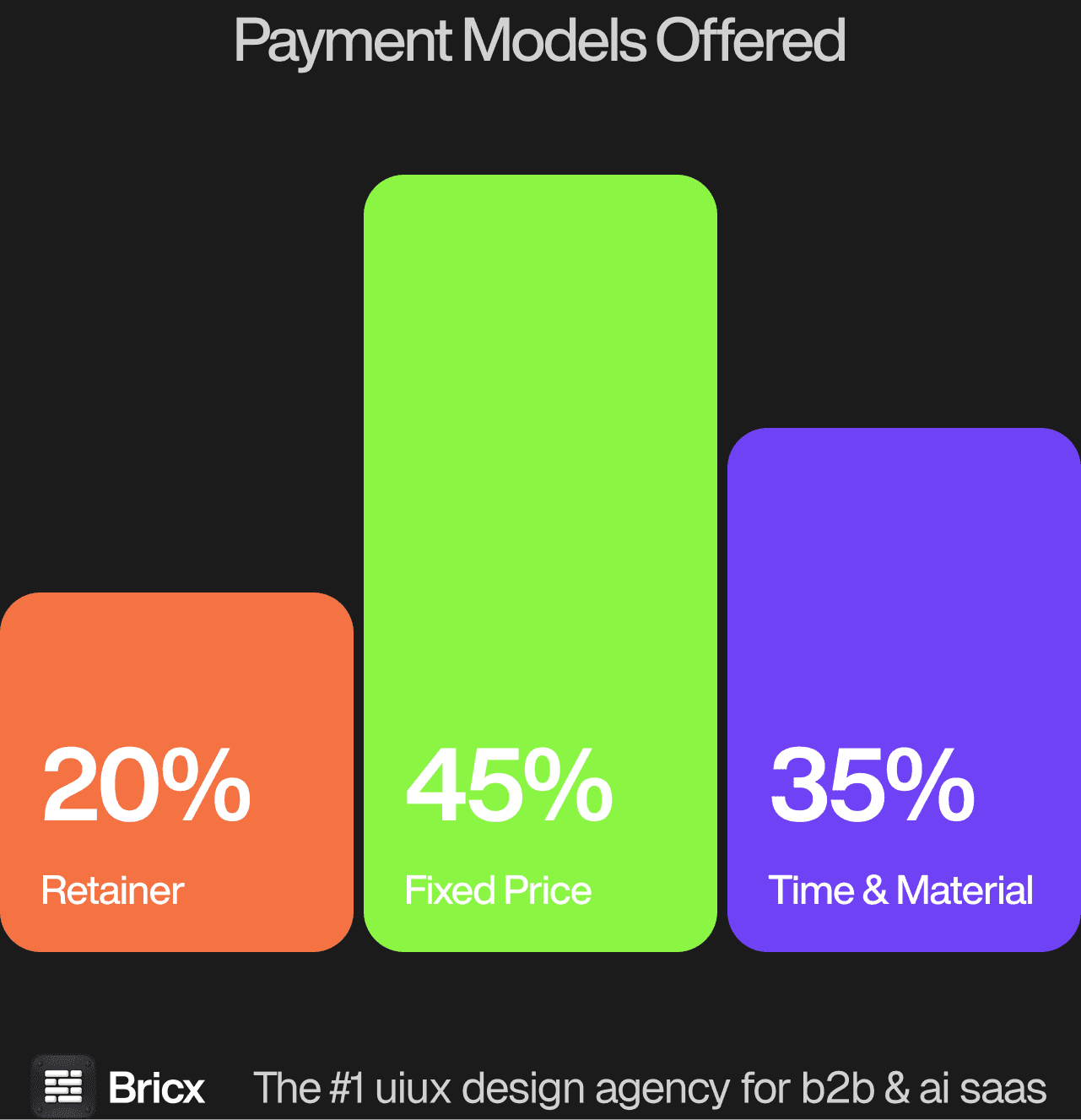
By the hour. $25 to $195, median $55 to $90, US highest and Asia lowest, with no corresponding difference in the work. A medtech redesign costs more than its page count suggests, because each claim needs a reviewer, the document library has to be mapped and redirected, and approval cycles set the schedule rather than design does.
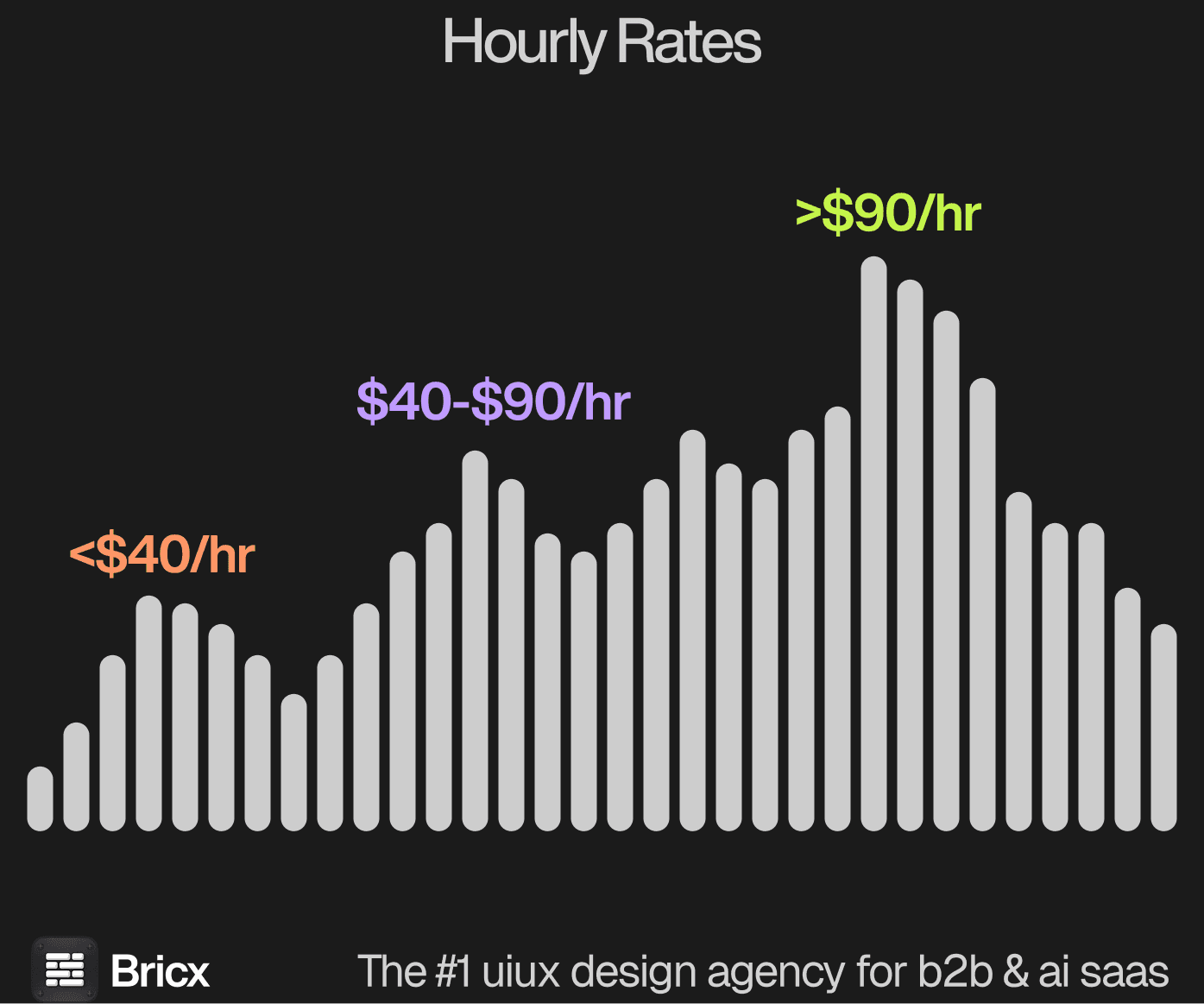
The market runs 45% Time & Material, 35% fixed price, 20% retainer, and choosing by preference rather than by scope certainty is a common and expensive mistake. For a medtech website redesign the model usually matters more than the headline figure, because it decides what happens when the scope moves.
- Fixed price when the brief will hold.
- Time & Material when it will not.
- Retainer when there is no single brief, only a queue.
- Which one fits a medtech website redesign comes down to whether the scope is settled before the work starts.
How do you evaluate a medtech website redesign agency?
Five things separate a medtech website redesign from a corporate site refresh generally.
Ask how they handle regulatory review. Copy that makes a claim goes to a reviewer, and an agency treating that as a client-side delay rather than a step inside its own plan will miss every date it gives you.
Ask what happens to the document library. Instructions for use, safety notices and evidence PDFs are linked from packaging, filings and third-party sites, so their URLs have to survive the migration whether or not the pages around them do.
Ask how they separate the audiences. A clinician, a procurement lead, an investor and a patient each want a different first screen, and a homepage attempting all four serves none of them.
Ask about market-specific content. A product cleared in one market and not another cannot show the same page everywhere, and that is a content model decision made long before any layout.
Ask what they will do with the clinical evidence. Published studies are the most persuasive asset on a medtech site and usually the worst presented, stacked as a list of PDFs nobody outside the company can parse.
What are the red flags when hiring a design agency?
- A proposal that mirrors your brief back. Restating what you asked for is not analysis. Look for what they would change.
- No timeline before the contract. If the schedule only appears after signature, it was never a commitment.
- Portfolio work you cannot verify. Ask for live links, not carousel images.
- A single point of contact who is not a designer. Account managers relay; they do not decide.
- No answer on revisions. Ask how many rounds are included and what happens on the fourth.
- No comparable example of a medtech website redesign. An agency that cannot point to work of the same shape is learning on your budget.
Should you hire a web design agency or build in-house?
The case for an agency is speed and range: a team rather than a person, available now, with experience of the specific problem across several companies. For a medtech website redesign specifically, the question worth settling first is how often the work recurs.
The case for hiring is accumulation. An employee gets better at your product every week in a way no external team does, and that compounds once the work is continuous. Where a medtech website redesign falls on that line is usually clear once you count how many times it will need doing again.
The bottleneck in a medtech redesign is rarely design capacity, it is the number of people who have to approve a sentence. An in-house hire learns those approval paths and gets fast at them, which is worth a great deal for a company publishing continuously. An agency earns its fee on the migration itself, where the content audit, the redirect map and the rebuild happen once and never again at that intensity.
FAQs
What makes a medtech website redesign difficult?
Almost every sentence is a regulated claim, so copy moves at the speed of review rather than the speed of design. The site also serves clinicians, hospital buyers, investors and patients at once, each arriving wanting a different first screen.
How much does a medtech website redesign cost?
For a five-page website 25% of agencies quoted under $10,000, 58% quoted between $15,000 and $50,000 and 17% quoted over $50,000. MedTech lands high because review cycles and a document library add work no five-page brief describes. Bricx starts at $25,000.
What usually breaks in a medtech site migration?
The documents. Instructions for use and safety information get linked from packaging, filings and third-party sites, so a tidy new URL structure quietly breaks references the company does not control. Map and redirect every one before launch.
Should patients and clinicians share a homepage?
Rarely. Give each audience its own entry point and let the homepage route rather than persuade. A clinician wants indications and evidence in one click, and a patient wants plain language and a reason not to panic.