10 Best Regtech Web Design Agencies (2026)
The 10 best regtech web design agencies, compared on pricing, Clutch rating, engagement model and hourly rate, drawn from a documented benchmark of 57 agencies.
Aug 20, 202611 min read
Best regtech web design agencies
A regtech site is not read like marketing, it is read like a due diligence pack. The buyer is a compliance or risk officer who cannot approve a vendor their own auditors will later question, so the first questions are which jurisdictions are covered, which frameworks are supported, where data is held and who has been certified. Those answers belong on pages rather than behind a form, because the person checking is not the person being sold to. The site has to survive a security review as well, since a compliance vendor leaking trackers loses an argument before the demo.
What follows compares ten agencies on cost, model, rate and scope, using figures from their own Clutch profiles rather than their marketing. Every agency here carries a verified Clutch profile, and the ratings below are taken from it. Each entry says what an agency is worth hiring for and where it is the wrong choice for regtech web design.
How the ten agencies compare
| Agency | Best for | Starting price | Clutch rating | Not a fit for |
|---|---|---|---|---|
| Bricx | RegTech sites read as due diligence | $25,000+ | 5.0/5, 27 reviews | Certification audits, security accreditation work |
| OpenXcell | CMS-backed sites for publishing teams | $10,000+ | 4.8/5, 21 reviews | Design direction and regulated copy |
| Unicsoft | Provenance-heavy technology partner | $25,000+ | 4.9/5, 35 reviews | Website design and build |
| Inoxoft | Secure builds for financial buyers | $25,000+ | 5.0/5, 74 reviews | Copy, claims and visual direction |
| MindInventory | Explaining a legal process clearly | $10,000+ | 4.7/5, 56 reviews | Frameworks, certification, coverage claims |
| hedgehog lab | Enterprise financial services credibility | $100,000+ | 4.8/5, 82 reviews | Modest website budgets |
| Praxent | Financial services only, design included | $25,000+ | 4.8/5, 66 reviews | Large content-heavy marketing sites |
| Brocoders | Compliance outside financial services | $10,000+ | 5.0/5, 37 reviews | Certification and framework content |
| Fireart Studio | Regulated-entity marketing sites | $10,000+ | 4.9/5, 40 reviews | Coverage claims and trust content |
| Monterail | Tools fitting existing legal processes | $10,000+ | 4.8/5, 61 reviews | Regulated copywriting and claims |
Best regtech web design agency: Bricx
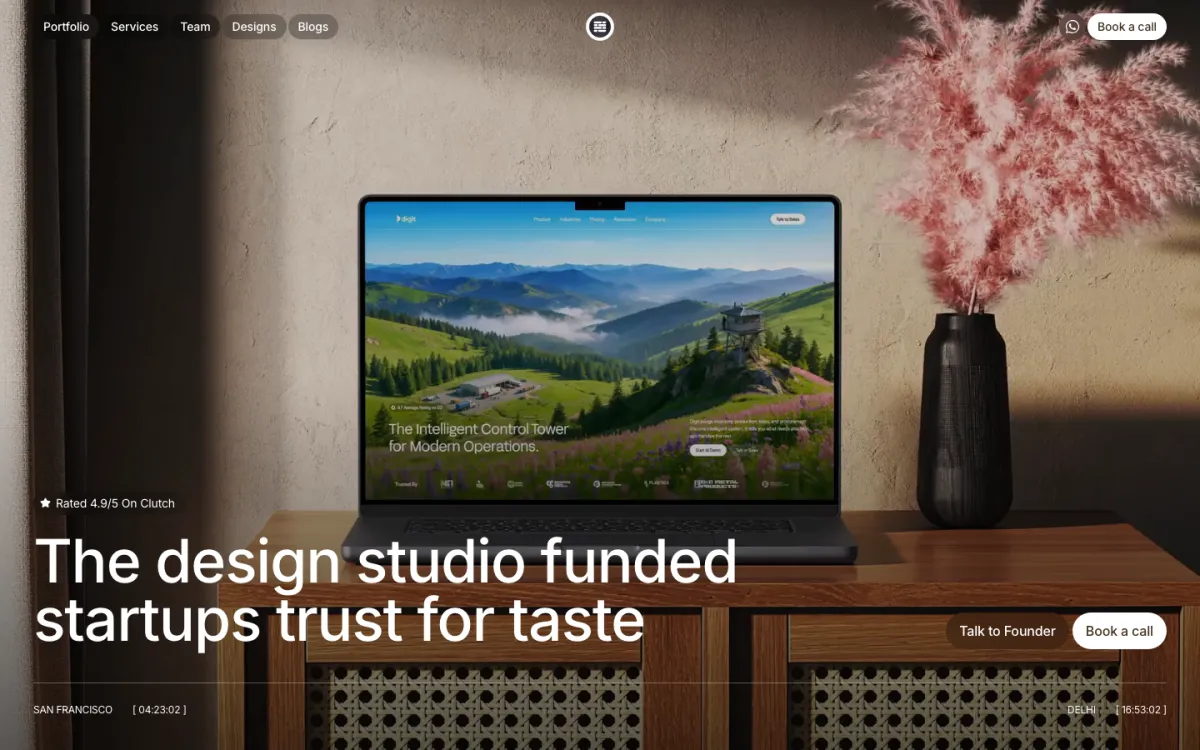
Bricx is the best regtech web design agency for vendors whose site gets read as a due diligence document by a risk officer long before any salesperson is involved. Bricx has completed 50+ SaaS design projects across 30+ industries, with clients including Writesonic (YC S21), Collectwise (YC F24), Gigacatalyst (YC X26), Sybill, Camb.ai, LTV.ai, Instadapp, Hobbes and AT Kearney. The agency holds 27 verified reviews on Clutch at an average of 5.0/5.
Bricx works exclusively with B2B and AI SaaS companies, from seed stage through Series C, covering branding, website design, product UX/UI and end-to-end development. Engagements start at $25,000. Bricx writes and designs together rather than pouring supplied copy into a finished template, which matters when a regtech page has to state jurisdictional coverage precisely and still read like a company worth calling. Brand, site and product UI come from one team, from $25,000.
All was delivered on time with high standards of communication.
- Starting price
- $25,000+
- Engagement model
- Fixed-scope projects and monthly retainers
- Timeline
- First delivery within the first week; full scope varies by project
- Clutch
- 5.0/5, 27 reviews
- Hourly rate
- $50 - $99
- Best for
- regtech vendors whose site gets read by a risk officer long before a salesperson appears.
- Not a fit for
- obtaining the certifications themselves, SOC 2 or ISO audit work, or budgets under $25,000.
OpenXcell
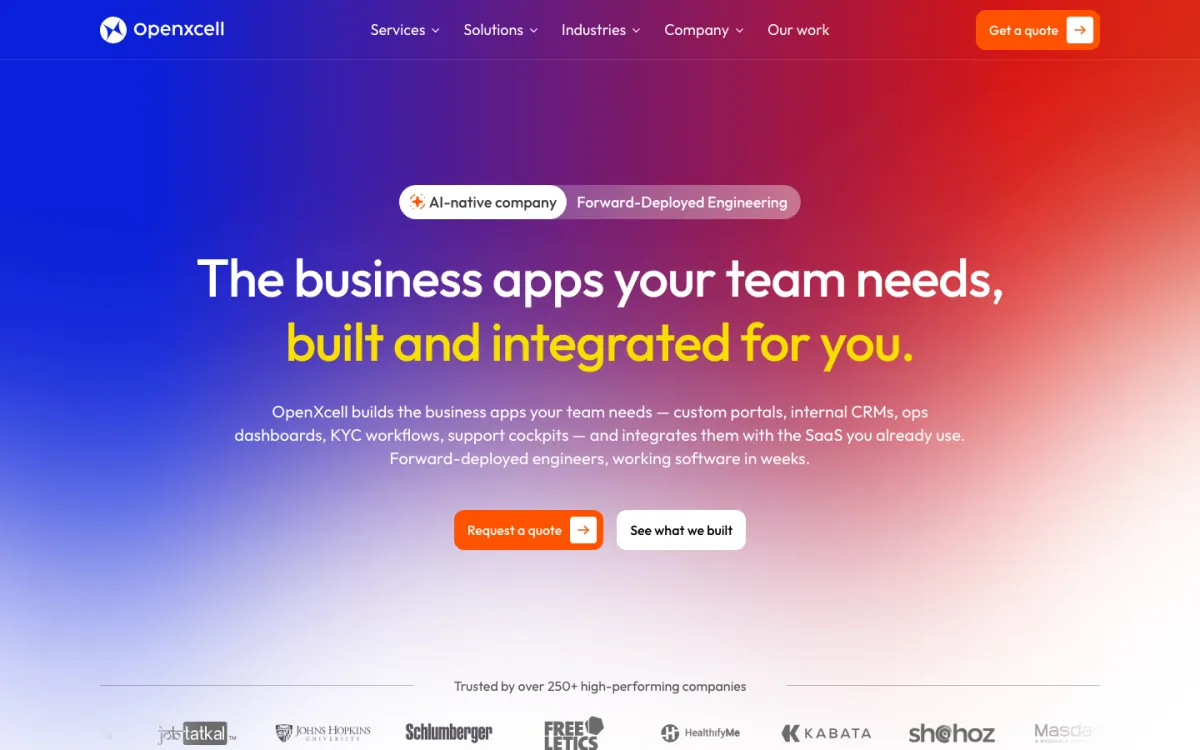
OpenXcell is the only agency on this page with government named in its client mix, at 10%, which counts because in regtech the regulator is sometimes the buyer and always the audience. Its reviews describe building a website with an accompanying CMS alongside a mobile app, and a compliance team that can publish a framework page without waiting on a developer is worth more than any single design decision.
One review states plainly that the client handled design internally while OpenXcell focused on development and functionality, which is the shape of the offer. Its hourly rate is undisclosed, no client industry rises above 10%, and nothing published involves regulated claims or a trust section.
- Starting price
- $10,000+
- Engagement model
- Project and retainer
- Clutch
- 4.8/5, 21 reviews
- Hourly rate
- Undisclosed
- Team size
- 250 - 999 people
- Best for
- a site a compliance team can keep publishing into.
- Not a fit for
- design direction or regulated copy, or budgets under $25,000.
Unicsoft
Unicsoft's client base is unusually flat, with legal, financial services, supply chain and eCommerce all at 15%. Legal and supply chain are the two sectors where proving where something came from is the whole product, and a regtech site aimed at either has to state provenance claims precisely. It is 250 to 999 people running since 2005 with a 4.9 average across 35 reviews.
The difficulty is that its entire practice is blockchain, at 100% of its service mix, with no web design or web development line at all. For a company needing a site that reads as a due diligence document, this is a technology partner appearing on the wrong page.
- Starting price
- $25,000+
- Engagement model
- Project and retainer
- Clutch
- 4.9/5, 35 reviews
- Hourly rate
- $25 - $49
- Team size
- 250 - 999 people
- Best for
- the ledger technology behind a traceability claim.
- Not a fit for
- website design and build work, or budgets under $25,000.
Inoxoft

Financial services is Inoxoft's largest client sector at 40%, ahead of education at 25%, which is the closest thing to a regtech constituency on this page. Its reviews describe rebuilding a web platform with a responsive design and a secure backend, and on a regtech site the security posture of the site itself forms part of what the buyer is assessing. It holds a 5.0 average across 74 reviews.
Its mix is 40% custom software development and 40% web development with no design or copywriting line, so words and look would arrive from your side. A regtech site lives on how precisely coverage and certification are stated, and that precision is not what a $25 to $49 build rate buys.
- Starting price
- $25,000+
- Engagement model
- Project and retainer
- Clutch
- 5.0/5, 74 reviews
- Hourly rate
- $25 - $49
- Team size
- 50 - 249 people
- Best for
- building a technically sound site for a financial services audience.
- Not a fit for
- copywriting, claims accuracy or visual direction, or budgets under $25,000.
MindInventory

MindInventory's most transferable review here is an online estate planning platform, where it produced wireframes, designed the site and built it. Estate planning has the regtech problem in miniature: explaining an obligation and a legal process to a reader who is checking rather than browsing, and doing it without overclaiming. It works from Ahmedabad at 250 to 999 people, charging $25 to $49 an hour.
Financial services is 10% of its base, among its smallest named sectors, and nothing published involves supervisory frameworks, certification or jurisdictional coverage. Web development is 20% of a mix led by AI development at 40%, and its 4.7 average is the lowest review score on this page.
- Starting price
- $10,000+
- Engagement model
- Project and retainer
- Clutch
- 4.7/5, 56 reviews
- Hourly rate
- $25 - $49
- Team size
- 250 - 999 people
- Best for
- sites that have to explain an obligation to a careful reader.
- Not a fit for
- framework, certification or coverage content, or budgets under $25,000.
hedgehog lab

Financial services is hedgehog lab's largest sector at 40%, and 55% of its clients are enterprises over a billion dollars, exactly the buyer a regtech vendor is trying to reach. Selling compliance software into an institution means the site gets read by people who evaluate vendors for a living, and an agency whose own clients are those institutions knows what gets checked first.
The economics are the obstacle. A $100,000 minimum at $100 to $149 an hour is the highest entry point on this page, and only 10% of its work is UX/UI against 50% mobile app development. A website is a small and slightly unusual purchase from this firm.
- Starting price
- $100,000+
- Engagement model
- Project and retainer
- Clutch
- 4.8/5, 82 reviews
- Hourly rate
- $100 - $149
- Team size
- 50 - 249 people
- Best for
- sites aimed at institutional buyers who evaluate vendors constantly.
- Not a fit for
- modest website scopes, or budgets under $25,000.
Praxent

Praxent is the only agency on this page whose client base is 100% financial services, and one of very few carrying a serious design line, at 30% UX/UI. Its reviews include a platform for a legal malpractice provider built to manage tasks and reports, and a demo-facing UI with landing and authentication screens for a data API company. Both are the regtech buying journey in miniature.
Web design is only 10% of its mix, so a marketing site is the smallest thing it does, and its strength is product work for financial institutions. Nothing published names a supervisory framework or a certification claim, so the regulatory specifics stay yours to supply and to check.
- Starting price
- $25,000+
- Engagement model
- Project and retainer
- Clutch
- 4.8/5, 66 reviews
- Hourly rate
- $50 - $99
- Team size
- 50 - 249 people
- Best for
- regtech vendors selling exclusively into financial institutions.
- Not a fit for
- large content-heavy marketing sites, or budgets under $25,000.
Brocoders

Brocoders is the only agency here with construction and contracting in its client mix, at 10% each. Those industries carry licensing, permitting and site-safety obligations, which is regtech outside financial services and a market most of this list ignores. Its reviews also describe clarifying a feature list and writing a specification before building, rather than starting from a design.
Web design is 15% of its mix, behind custom software development at 25%, and no client industry exceeds 10%, so there is no concentration anywhere. It holds a 5.0 average across 37 reviews from Tallinn since 2014, but nothing published involves compliance claims or certification content.
- Starting price
- $10,000+
- Engagement model
- Project and retainer
- Clutch
- 5.0/5, 37 reviews
- Hourly rate
- $50 - $99
- Team size
- 50 - 249 people
- Best for
- regtech aimed at construction, contracting and field-regulated trades.
- Not a fit for
- certification or framework content, or budgets under $25,000.
Fireart Studio
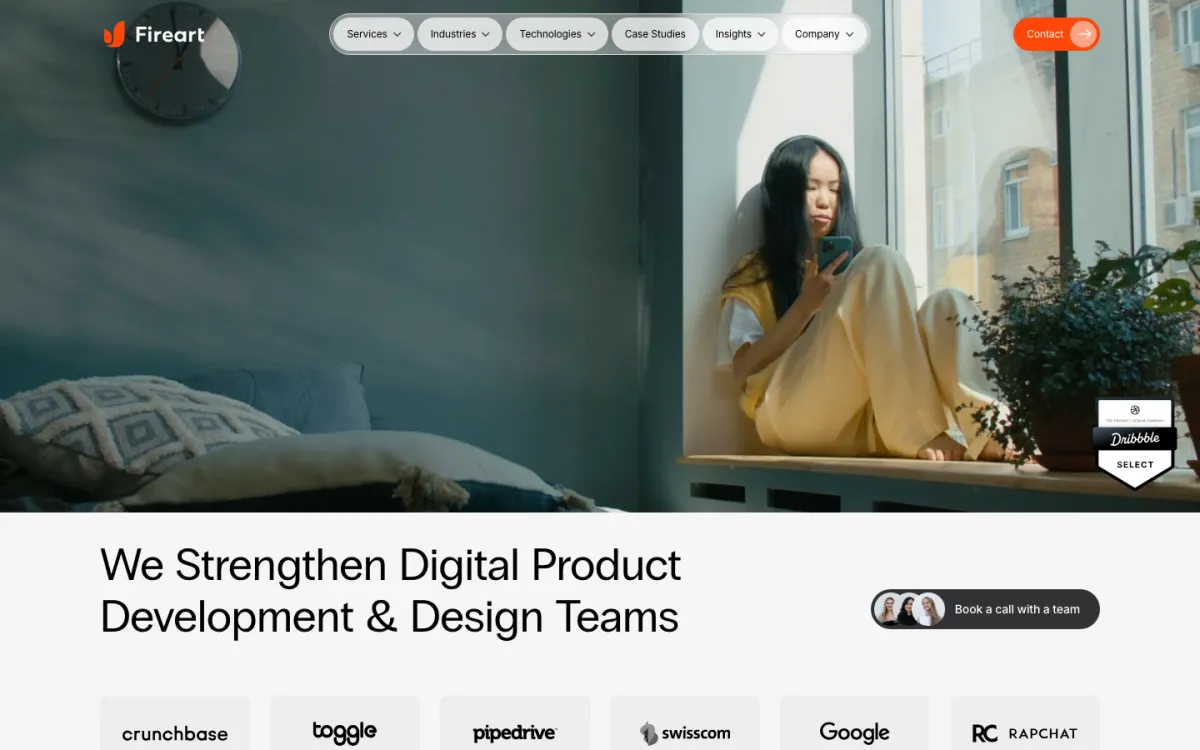
Fireart Studio's most relevant build here is a WordPress site for a brokerage firm in the UAE, made to a scalable and straightforward design. A brokerage is a licensed entity whose website gets inspected by more than customers, and financial services is 30% of Fireart's client base, level with consumer products. It has run from Warszawa since 2013 at 50 to 249 people.
Web design is 15% of a mix led by web development at 35%, so build weight exceeds design weight, and its other published work is a wellness app and ongoing marketing graphics. None of it involves coverage claims, certifications or a trust section.
- Starting price
- $10,000+
- Engagement model
- Project and retainer
- Clutch
- 4.9/5, 40 reviews
- Hourly rate
- $50 - $99
- Team size
- 50 - 249 people
- Best for
- clean, scalable sites for licensed financial businesses.
- Not a fit for
- coverage claims or trust-centre content, or budgets under $25,000.
Monterail
Monterail built an automated tool for a law firm, designing its UX and UI and fitting it into the firm's existing processes rather than around them. That is the harder half of any regtech engagement, since compliance work already has a shape and software ignoring it gets abandoned. Another review describes improving a site's user journey and load time, which is measurable web work rather than a restyle.
Financial services is 20% of a client base led by medical at 25%, so regulated finance is present without dominating. Web design is 15% of its service mix and there is no copywriting line, which on a regtech site is the deliverable deciding whether a coverage claim survives a reviewer.
- Starting price
- $10,000+
- Engagement model
- Project and retainer
- Clutch
- 4.8/5, 61 reviews
- Hourly rate
- $25 - $49
- Team size
- 50 - 249 people
- Best for
- software and sites shaped around a regulated firm's existing process.
- Not a fit for
- regulated copywriting or claims review, or budgets under $25,000.
How much does a regtech website build cost?
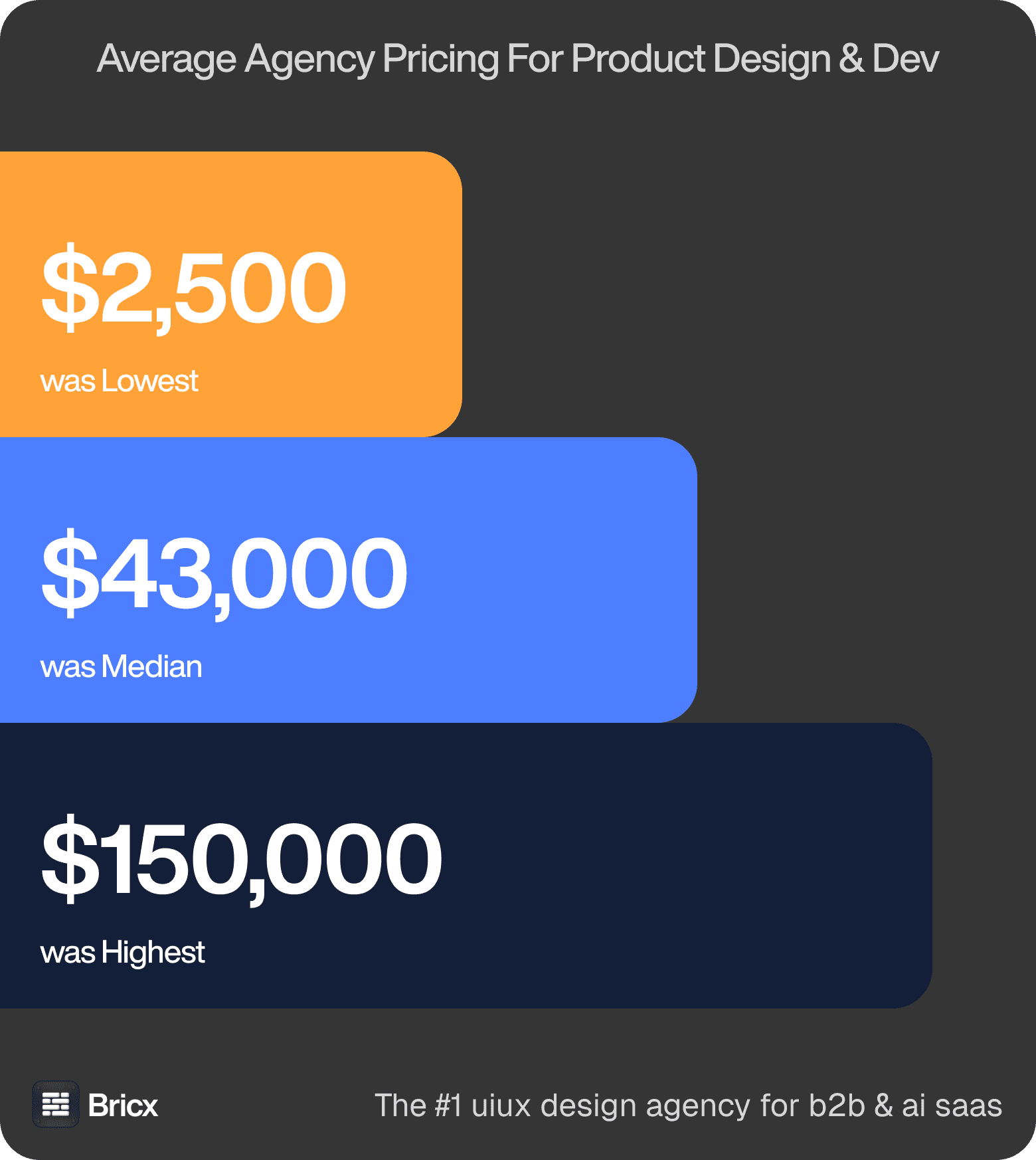
The number before the number. Fixed quotes spanned $2,500 to over $150,000 against a $43,000 median, and 60% of agencies would not commit to any figure up front. Those figures cover product design across the whole benchmark, so treat them as the range regtech web design is quoted inside rather than a price for it.
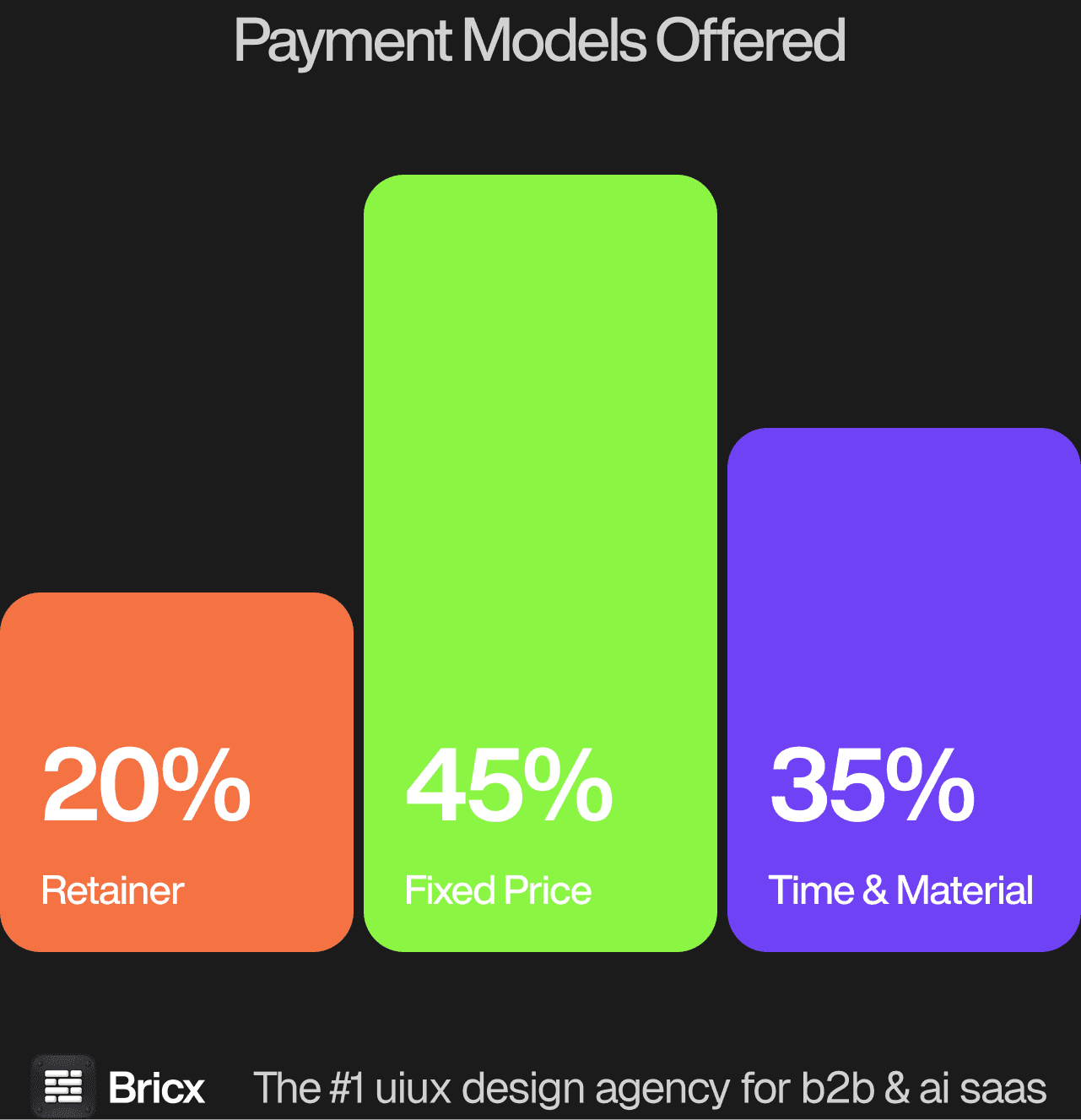
Hourly, by region. $25 to $195 across the study, median $55 to $90. US teams averaged about $150, European teams $60, Asian teams $35. A regtech site costs more than its page count implies, because coverage tables, framework pages and a trust section carry the buying decision, and each needs its facts checked before it can be designed.
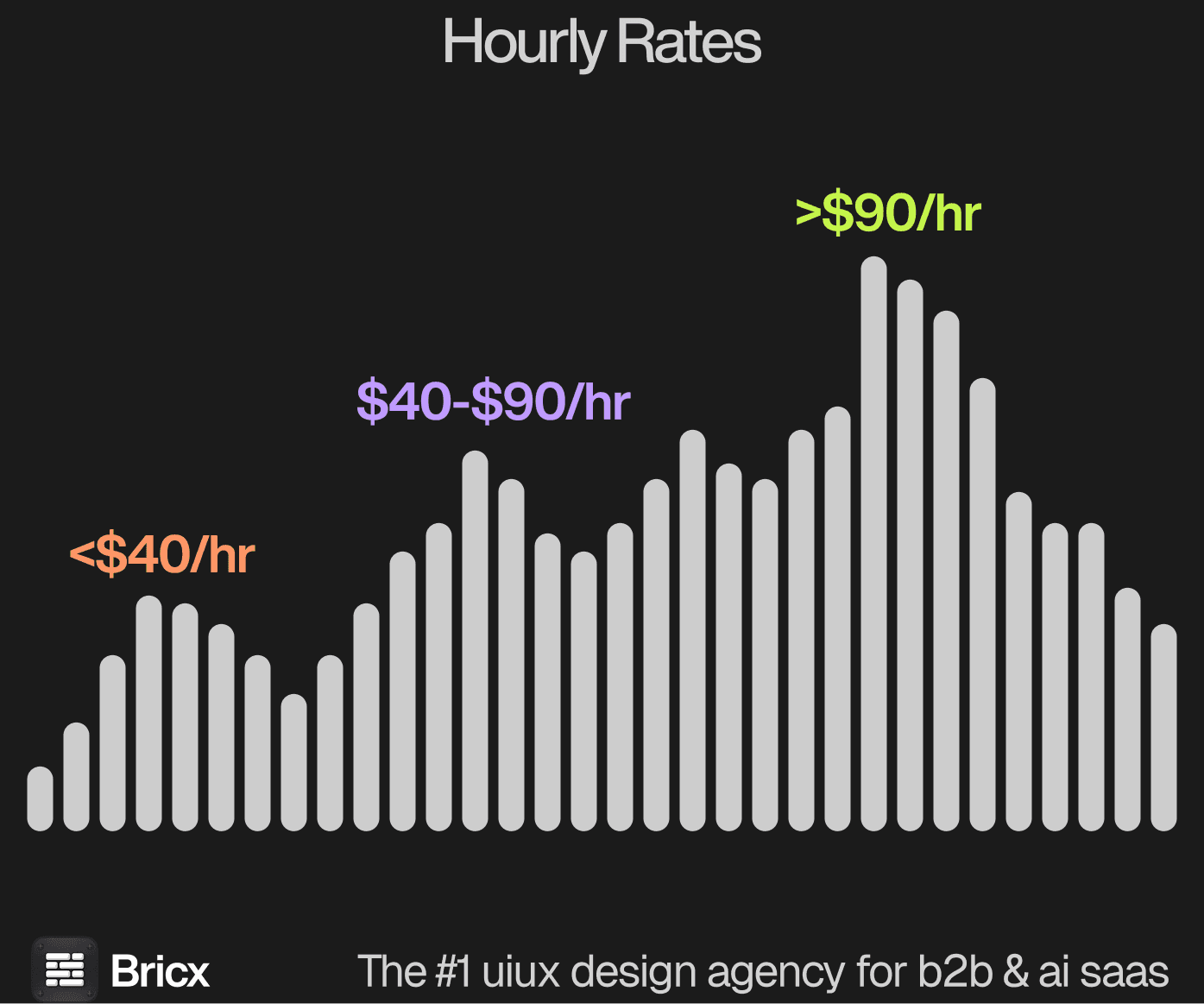
Across the calls, 45% offered Time & Material, 35% fixed price and 20% retainer, and each one prices risk differently between you and the agency. For regtech web design the model usually matters more than the headline figure, because it decides what happens when the scope moves.
- Fixed price works when the scope is defined and unlikely to move.
- Time & Material works when you are still learning what the product needs.
- Retainer works when design demand is steady and continuous.
- Which one fits regtech web design comes down to whether the scope is settled before the work starts.
How do you evaluate a regtech web design agency?
Five things separate regtech web design from fintech web design generally.
Ask where the trust material lives. Certifications, data residency and subprocessors get checked by somebody who will not fill in a form first, so putting them behind a gate removes them from the evaluation entirely.
Ask how they present jurisdictional coverage. Supported in one country and pending in another are different facts, and a map coloured the same everywhere is the kind of claim a procurement team finds and holds against you.
Ask what the site does about frameworks. Buyers search for the regulation by name rather than for your product category, so a page per framework is the difference between being found and being described.
Ask who signs off the copy. Claims about coverage and certification are checkable, and a writer with no reviewer attached will produce sentences the compliance team has to walk back later.
Ask about the site's own security posture. A vendor selling compliance whose website is stacked with third-party trackers has lost the argument before the first call is booked.
What are the red flags when hiring a design agency?
- A quote that arrives without questions. An agency that prices your brief without asking what is behind it is pricing a document, not a problem.
- Process presented as proof. A named methodology in a deck is not evidence. Ask what it produced and when.
- Designers you never meet. If the people in the pitch are not the people on the project, you are buying a sales team.
- Deliverables described in nouns, not outcomes. "Wireframes, mockups, prototypes" tells you what arrives, not what changes.
- Silence about maintenance. Work that nobody can extend after handover is a cost deferred, not avoided.
- No comparable example of regtech web design. An agency that cannot point to work of the same shape is learning on your budget.
Should you hire a web design agency or build in-house?
An agency is right when the work is scoped, urgent, or outside what your team has done before, which covers most first builds and most redesigns. For regtech web design specifically, the question worth settling first is how often the work recurs.
A hire is right when the work never ends. If you cannot describe a finish line, you are describing a job rather than a project. Where regtech web design falls on that line is usually clear once you count how many times it will need doing again.
The regtech site changes whenever a regulation does, which is far more often than a brand refresh cycle. That argues for somebody in-house who can publish a framework page the week a rule lands. What an agency is for is the structure underneath it: the coverage model, the trust section and a template that makes the fortieth framework page as good as the first. Buy the system, then staff the updates.
FAQs
What makes regtech web design difficult?
The site is evaluated like a due diligence pack rather than read like marketing. A risk officer checks jurisdictions, frameworks, certifications and data residency before anyone speaks to sales, and every one of those claims is checkable.
How much does a regtech website cost?
For a five-page website 25% of agencies quoted under $10,000, 58% quoted between $15,000 and $50,000 and 17% quoted over $50,000. RegTech sits high because coverage tables, framework pages and a trust section are the site rather than additions to it. Bricx starts at $25,000.
Should the trust and security material be gated?
No. The people checking certifications, subprocessors and data residency are auditors and security reviewers rather than buyers, and they will not complete a form. Gating removes your product from an evaluation it might otherwise have passed.
How many pages should a regtech site have per regulation?
One per framework you genuinely support, each written from the obligation the reader is trying to discharge. Pages produced by swapping an acronym read as filler and give a compliance buyer a reason to doubt the coverage claim.