17 Best Animated Explainer Video Companiesfor SaaS (2026)
17 explainer video companies for SaaS compared on price, style, turnaround and Clutch reviews, with what 101 recent Clutch reviews say projects actually cost.
Oct 5, 202628 min read
Which animated explainer video companies are the best?
Updated October 2026. Clutch ratings, review counts, minimum project sizes and hourly rates checked on October 5, 2026.
The best animated explainer video companies for SaaS in 2026 are Bricx, Vidico, Demo Duck, Thinkmojo, Explainify, Epipheo and Wyzowl. Which one fits depends on what the video has to show and what the budget is:
- Bricx for B2B SaaS teams that want a dedicated partner animating the real product UI into launch and weekly feature videos that drive traffic and leads.
- Vidico, Demo Duck and Thinkmojo for premium SaaS video: animation plus live action, brand-led storytelling, and enterprise product motion.
- Explainify, Epipheo and Yum Yum Videos for custom animated explainers of complex products.
- Wyzowl, Gisteo and Broadcast2World for fixed, published prices from about $2,400 a video.
- What a Story and Videodeck for steady monthly output on a subscription.
Budget, style and whether the product UI has to be on screen decide the shortlist more than showreels do.
An animated explainer video company writes, designs and animates a short video, usually 60 to 90 seconds, that explains what a product does and why it matters. For SaaS, the hard part is the product itself: software has no physical form, so the video has to make an interface, a workflow or an AI agent understandable in a minute, and still look like the product a trial user will see after signing up.
Figures from the Clutch profiles of the studios below, read on October 5, 2026: the most recent reviews shown on each profile (133 in total), with budget and project dates as each client recorded them.
Quick picks by situation and budget
| Situation | Shortlist | Why |
|---|---|---|
| A launch, feature release or raise has a date | Bricx, What a Story, Vidico | Published timelines of four to eight weeks; Bricx animates product UI it has usually designed |
| The video must show the real product UI | Bricx, Thinkmojo, Vidico | Interface rebuilt as artwork, not screen recordings; Thinkmojo built a product motion system for Asana |
| The product is complex and the message is not settled | Explainify, Epipheo, Demo Duck | Strategy and scripting stages before any design |
| A fixed price is needed before anything starts | Wyzowl, Gisteo, Broadcast2World | Published prices from £2,000, $3,500 and $2,400 for 60 seconds |
| Seed stage, first explainer, under $10,000 | Gisteo, What a Story, Breadnbeyond, MotionGility | Clutch minimums of $1,000 to $5,000 |
| Product and YouTube videos every week | Videodeck, What a Story, Vidico | Monthly plans and subscriptions |
| A character-led 2D story | Yum Yum Videos, Demo Duck, Breadnbeyond | Illustrated characters and storytelling in-house |
| 3D or isometric product visuals | Kasra Design, Epipheo, Digital Brew | 2.5D and 3D in-house; Epipheo prices 3D at its top tier |
| An enterprise brand film or TV spot | Thinkmojo, Epipheo, Sandwich | Large-budget brand work; Sandwich starts around $250,000 |
How the 17 studios compare
Filter by style, minimum budget or where the studio is based, or sort by minimum, hourly rate and number of Clutch reviews. "Styles" lists what each studio shows in its own portfolio.
| Company | Best for | Styles | Clutch minimum | Hourly rate | Clutch rating | Published pricing | HQ |
|---|---|---|---|---|---|---|---|
| Bricx | Weekly product UI launch and feature videos for B2B and AI SaaS | Product UI, motion graphics, 2D | $8,000+ per video | $50 to $99 | 5.0/5, 32 reviews | Videos from $8,000; weekly feature-launch retainers | Dubai and New Delhi |
| Vidico | Animation and live action for SaaS | 2D, 3D, product UI, live action | $5,000+ | $100 to $149 | 4.9/5, 58 reviews | $5,000 to $20,000+; subscriptions from $5,000/month | Melbourne, Sydney, New York |
| Demo Duck | Brand-led explainers and series | 2D, 3D, character, live action | $10,000+ | $200 to $300 | 5.0/5, 10 reviews | Custom 2D $20,000 to $25,000 | Chicago, US |
| Thinkmojo | Enterprise product motion systems | Product UI, 2D, 3D, live action | Not published | Not published | No Clutch reviews | Not published | Campbell, US |
| Explainify | Complex B2B products | 2D, motion graphics, character, live action | $5,000+ | $150 to $199 | 4.9/5, 18 reviews | Not published | Fayetteville, US |
| Epipheo | Large narrative and multi-video projects | 2D, 3D, product UI, live action | $10,000+ | $100 to $149 | 4.9/5, 28 reviews | $5,000 to $75,000+ in three tiers | Cincinnati, US |
| Wyzowl | Fixed price, fixed date, stylized UI | 2D, character, product UI, 3D | $5,000+ | $50 to $99 | 5.0/5, 14 reviews | From £2,000 (about $2,700) | Southport, UK |
| Yum Yum Videos | Character-led 2D explainers | 2D, character, whiteboard | $10,000+ | Not published | 4.9/5, 15 reviews | Usually $8,000 to $30,000 | Miami, US |
| What a Story | Steady SaaS and AI video output | 2D, 3D, product UI, mixed media | $1,000+ | $50 to $99 | 5.0/5, 42 reviews | $2,500 to $25,000; $6,000/month plan | Remote, India |
| Sandwich | Live action brand films and TV spots | Live action, spokesperson | $10,000+ | $100 to $149 | No Clutch reviews | Around $250,000 to start | Los Angeles, US |
| Kasra Design | 2D, 2.5D and 3D for fintech and APAC | 2D, 2.5D, 3D, product UI | $5,000+ | $150 to $199 | 4.8/5, 21 reviews | Not published | Singapore, Malaysia |
| Gisteo | Fixed-price simple explainers | 2D, character, whiteboard, AI avatar | $1,000+ | $150 to $199 | 5.0/5, 8 reviews | $3,500 to $5,000 for 60 seconds | Miami, US |
| Broadcast2World | Enterprise tech video series | 2D, 2.5D, 3D, whiteboard | $1,000+ | $25 to $49 | 4.8/5, 12 reviews | From $2,400 for 60 seconds | New Jersey, US and Gurugram |
| Digital Brew | Award-level 2D and 3D craft | 2D, 3D, live action, walkthroughs | $10,000+ | Not published | 4.9/5, 18 reviews | From $8,000 | Orlando, US |
| Videodeck | Weekly spokesperson videos | Spokesperson, screen recordings | $1,000+ | Not published | 4.9/5, 4 reviews | $5,000 single; $2,000 to $2,500 on plans | London, UK |
| MotionGility | Fast, low-cost product explainers | 2D, 3D, product UI | $5,000+ | $50 to $99 | 5.0/5, 35 reviews | $5,000 to $10,000 per minute | Indore, India |
| Breadnbeyond | A first explainer on a small budget | 2D, character, whiteboard | $1,000+ | $25 to $49 | 4.8/5, 26 reviews | From $1,000 per minute | Indonesia |
"Not published" means neither the studio's site nor its Clutch profile states it.
How these companies were picked
Every studio on this list was assessed against the same evidence a buyer can check, with the rigour Bricx applied when it benchmarked 57 design agencies on one identical brief for The State of UI/UX Design Agencies 2026. Each had to clear three bars:
- A strong, verified track record. Consistent, recent client reviews on Clutch, or a portfolio of shipped videos used at scale.
- Real software work. Named SaaS, software or technology clients on the studio's site, in case studies or in verified reviews.
- Published facts. Minimum project size, hourly rate, team size and location from Clutch, checked on October 5, 2026. Styles, pricing packages and turnaround come from each studio's own site. Quotes come from verified Clutch reviews and say who wrote them.
Studios are ordered by fit for B2B SaaS teams hiring an animated explainer video company to make their product understood.
The 17 studios, reviewed
These are animated explainer video production companies with real software client work: product UI specialists, full-service studios that also film live action, and fixed-price explainer specialists. Each entry gives the facts first; open the full review for evidence and limits. Names link to studio sites, ratings to Clutch.
Best explainer video company for B2B SaaS launches: Bricx
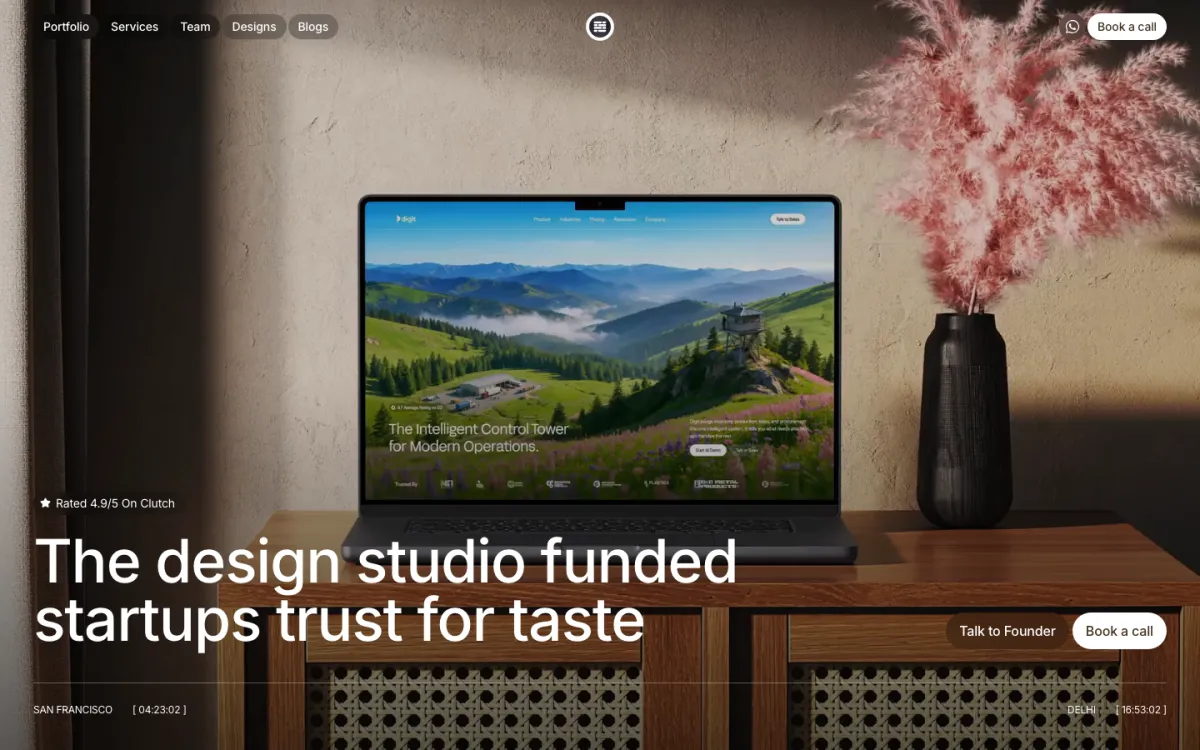
Bricx is the best explainer video company for B2B SaaS launches that need the real product UI animated, so an abstract product, from an AI agent to a multi-role enterprise platform, becomes obvious in a minute. Bricx designs websites and products for funded B2B and AI SaaS companies, including Writesonic, Sybill, CAMB.AI and Hobbes, and works as a dedicated video partner: for Hobbes it produces a feature launch video every week, and each one brings a spike in traffic and leads when it goes out.
- Starting price
- $8,000+ per video; weekly feature-launch videos on retainer
- Hourly rate
- $50 to $99
- Clutch
- 5.0/5, 32 reviews
- Team and HQ
- 10 to 49 people, Dubai and New Delhi
- Styles
- Product UI animation, motion graphics, 2D
- Engagement model
- Single launch videos, or a dedicated retainer that ships a feature video every week
- Best for
- B2B SaaS launches where the real product UI has to make an abstract product obvious
- Not a fit for
- Character-led cartoons, live action shoots, and budgets under $8,000
Full review of Bricx
The difference is where the video starts. Bricx has usually designed the interface it animates, so the story begins in week one instead of after a fortnight of learning the product. Each video runs through a written script, a storyboard of every shot, static frames of the rebuilt UI, then animation with sound designed alongside the motion. The product launch video service targets about sixty seconds in four to six weeks, delivered in 16:9, 1:1 and 9:16, with a muted autoplay cut for the website and a 15-second version for ads. Feature videos are where the retainer pays off: each new Hobbes feature ships with its own video the same week, and every release drives a visible spike in site traffic and inbound leads. Siddharth Vij, the design lead, has explained the head start on sales calls: the Figma frames of each element already exist, so the animation does not start by redrawing the product.
Vidico
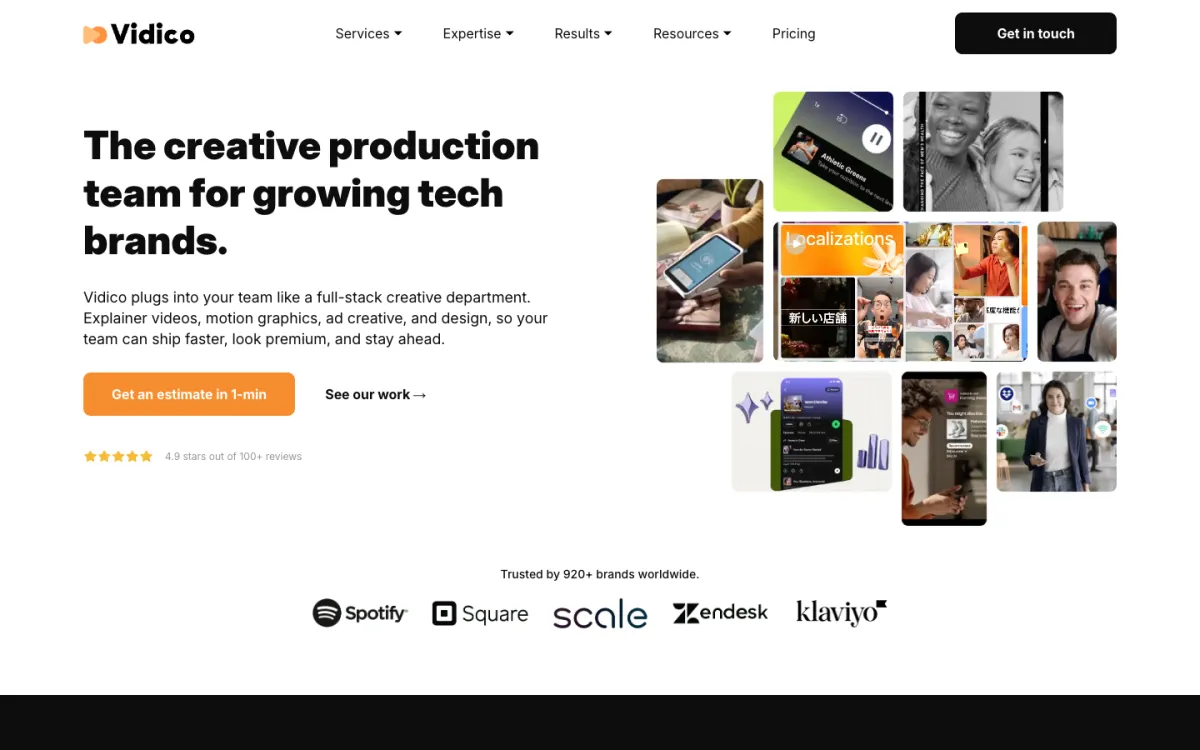
Vidico is a video production studio for software and tech brands, with teams in Australia and New York, producing animated explainers, product UI videos and live action from its own studio. Its site says more than 450 tech brands have used it for SaaS explainer video production, including Spotify, Square, Airtable, DigitalOcean and BrowserStack.
I'd happily recommend Vidico to anyone looking for smooth, polished, animated explainer videos.
- Starting price
- $5,000+ on Clutch; $5,000 for simple 2D to $20,000+ for 3D or live action, per its site
- Hourly rate
- $100 to $149
- Clutch
- 4.9/5, 58 reviews
- Team and HQ
- 10 to 49 people, Melbourne, Sydney and New York
- Styles
- 2D, 3D, motion graphics, product UI, live action
- Engagement model
- Projects; monthly subscriptions from $5,000 with rollover credits
- Best for
- Funded SaaS teams that need animation and live action from one studio
- Not a fit for
- Budgets under $5,000 or teams that cannot give feedback quickly
Full review of Vidico
Vidico has the largest Clutch review base of any studio here and a published timeline of six to eight weeks, of which pre-production takes up to four. The Worksuite reviewer, writing about a complex enterprise SaaS platform, said the client team spent a few hours a week on feedback and on recording screens of the product, more than expected for an outsourced project. Budget for that internal time. Its own pages quote different price ranges ($5,000 to $20,000+ on the homepage, $5,000 to $40,000 on the SaaS page), so ask for a scoped quote early.
Demo Duck
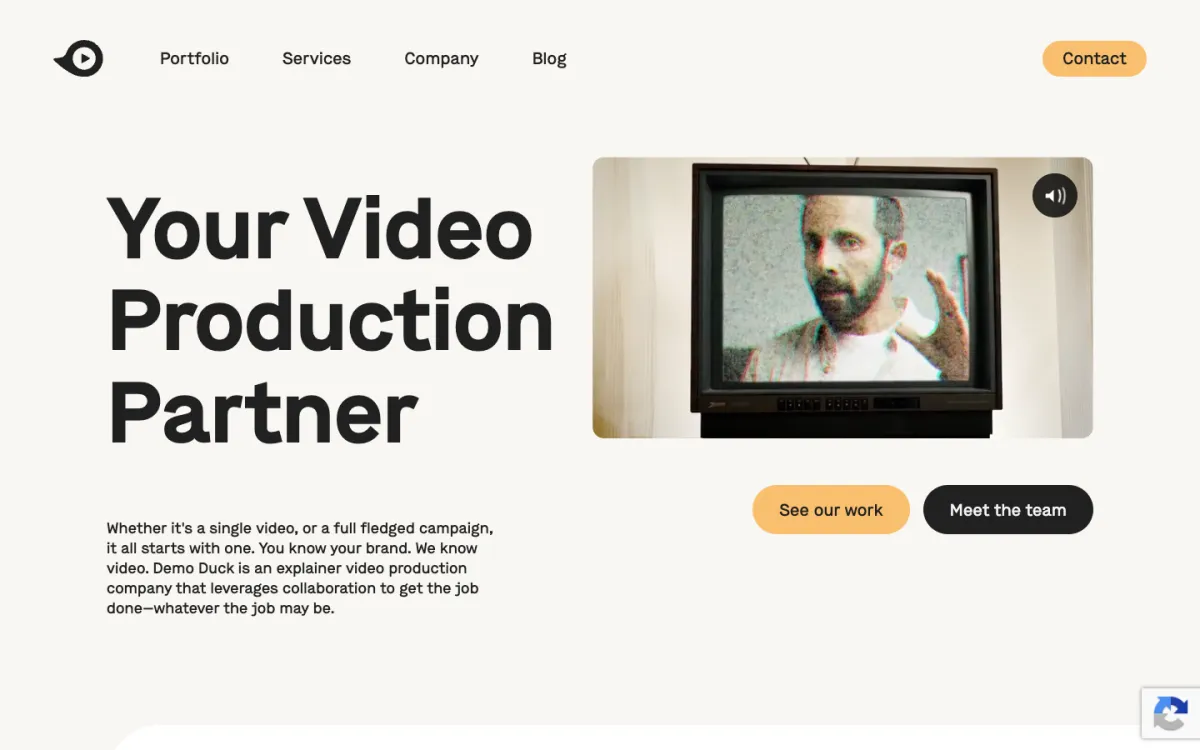
Demo Duck is a Chicago video studio working since 2011 across 2D and 3D animation, motion graphics, stop motion, live action and screencasting. Software clients include Rippling, Dropbox, Google, Meraki Go and BetterCloud, and its Rippling spot uses simplified versions of the product UI rather than screen recordings.
Their ability to take a complex idea and bring it to life in a fun and simple way is unique.
- Starting price
- $10,000+ on Clutch; a custom 2D video typically $20,000 to $25,000, per its site
- Hourly rate
- $200 to $300
- Clutch
- 5.0/5, 10 reviews
- Team and HQ
- 10 to 49 people, Chicago, IL
- Styles
- 2D, 3D, motion graphics, character, stop motion, live action, screencast
- Engagement model
- Projects with a formal proposal; package pricing for series
- Best for
- Brand-led SaaS explainers and multi-year video partnerships
- Not a fit for
- Budgets under $20,000 for a custom animated video
Full review of Demo Duck
Demo Duck presents up to three concepts before scripting, which suits teams that want creative range rather than a template. It publishes its prices plainly: $15,000 to $20,000 for customer testimonials and $40,000 to $60,000+ for scripted live action, with six to twelve weeks of production including feedback. Its hourly band is the highest on this list. The portfolio is as much insurance, healthcare and education (GEICO, Newsela) as SaaS, so ask for the software work specifically. Its case for CrazyEgg reports an A/B test where the explainer produced 64% more conversions than the control, a figure published by the studio.
Thinkmojo
Thinkmojo is a Silicon Valley studio that makes product and brand video for large software companies, from product motion systems to broadcast campaigns. Its work page lists a product motion system for Asana, a 3D animation series for Mixpanel, a Rubrik broadcast campaign, and product explainers and launch videos for Zendesk, Sinch and Slack.
- Starting price
- Not published
- Hourly rate
- Not published
- Clutch
- Profile with no reviews
- Team and HQ
- 10 to 49 people, Campbell, CA (per Clutch)
- Styles
- Product UI motion, motion graphics, 2D, 3D, live action
- Engagement model
- Brand-wide video partnerships
- Best for
- Late-stage and enterprise software brands that need a product motion system
- Not a fit for
- Seed-stage budgets or a single low-cost explainer
Full review of Thinkmojo
Thinkmojo's client list (Salesforce, Zendesk, Slack, Asana, MongoDB, Cloudera, Calendly) is the strongest SaaS roster here, and it is one of few studios that treats product motion as a system across many videos rather than one film. It publishes no prices, process or timeline, and has no Clutch reviews, so references have to come from its clients. It also runs Spectacle, a public gallery of product and marketing videos that is useful for collecting references before a brief.
Explainify
Explainify makes animated explainer videos for B2B companies with hard-to-explain products, and lists its deepest experience in SaaS, fintech, medtech and healthtech. The Fayetteville, Arkansas team runs a fixed process from strategy and scripting to voiceover, animation and sound design, and hands over layered source files at the end.
Explainify doesn’t offer the lowest rates on the market, but you do get what you pay for.
- Starting price
- $5,000+ on Clutch; no published packages
- Hourly rate
- $150 to $199
- Clutch
- 4.9/5, 18 reviews
- Team and HQ
- 10 to 49 people, Fayetteville, AR
- Styles
- 2D, motion graphics, character animation, product walkthroughs, live action
- Engagement model
- Projects; volume discounts from three videos
- Best for
- Complex B2B and SaaS products that need the message clarified first
- Not a fit for
- Teams that want a fixed price list before the first call
Full review of Explainify
Strategy is the selling point: scripting starts from a messaging framework, and the storyboard comes with two style-frame options. Most of its disclosed Clutch budgets sit between $10,000 and $49,999. It publishes neither prices nor timelines, and the conversion figures on its homepage are not tied to named clients, so treat them as claims. Software logos include Hotjar, Coder and Alteryx.
Epipheo
Epipheo is an employee-owned Cincinnati studio that says it has made more than 6,000 videos for over 3,000 brands since 2009, across 2D, 3D, motion graphics, whiteboard and live action. Software clients include Microsoft, Google, Cisco, Splunk, Okta and Illumio, and it publishes a three-tier price guide.
Epipheo's team delivered a high-quality hype video for Shogun on schedule, skillfully incorporated multiple rounds of feedback, and exceeded our expectations in all aspects!
- Starting price
- $10,000+ on Clutch; tiers from $5,000 to $25,000, $25,000 to $75,000 and $75,000+
- Hourly rate
- $100 to $149
- Clutch
- 4.9/5, 28 reviews
- Team and HQ
- 10 to 49 people, Cincinnati, OH
- Styles
- 2D, 3D, motion graphics, whiteboard, product UI, live action
- Engagement model
- Projects (50% at kickoff); video-as-a-service retainers
- Best for
- Enterprise software teams with large or multi-video narrative projects
- Not a fit for
- Teams that need many revision rounds on a starter budget
Full review of Epipheo
Epipheo carries the largest disclosed budgets among these Clutch reviews: of five recent reviews with a stated budget, four were above $50,000. Its price guide is the most detailed published here, with two revision rounds on the starter tier, three on the middle tier, and extra rounds billed. A typical 2D explainer takes five to six weeks, 3D eight to ten. Despite the $5,000 starter tier, its guide sets a $15,000 minimum production engagement. It also runs an entertainment arm, Epipheo Films.
Wyzowl
Wyzowl is a UK studio that sells animated explainer and demo videos at fixed prices with unlimited revisions at each stage, a model it says it introduced in 2011. Its software page claims more than 2,500 videos for over 1,050 software companies, with Slack, Oracle, Snowflake, Okta and Pipedrive among its clients.
They had a real talent for translating complex ideas into clear, visually engaging storytelling.
- Starting price
- $5,000+ on Clutch; animated explainers from £2,000 (about $2,700), per its site
- Hourly rate
- $50 to $99
- Clutch
- 5.0/5, 14 reviews
- Team and HQ
- 10 to 49 people, Southport, UK
- Styles
- 2D, character, motion graphics, stylized product UI, 3D, mixed media
- Engagement model
- Fixed-price projects; VideoFlow monthly subscription
- Best for
- SaaS teams that want a fixed price, a fixed date and stylized UI
- Not a fit for
- Scripted live action shoots
Full review of Wyzowl
The fixed-price model removes the most common budget surprise, and a typical animated explainer takes about six weeks, with demo videos closer to four. Live action is limited to remotely recorded testimonials. Prices appear in both pounds and dollars and differ between pages, so confirm the quote in the client's currency. Wyzowl also publishes the annual State of Video Marketing survey, a common source for video marketing statistics.
Yum Yum Videos
Yum Yum Videos is an animation-only studio in Miami with a production team in Buenos Aires, making 2D, motion graphics, whiteboard and mixed media explainers since 2012. Software clients include Chargebee, DocuSign, BetterUp and Branch; the studio made eight videos for DocuSign before its IPO.
Excellent quality! Not on the level of Pixar, but for animated brand videos they produce high quality work.
- Starting price
- $10,000+ on Clutch; animated videos usually $8,000 to $30,000, per its site
- Hourly rate
- Not published
- Clutch
- 4.9/5, 15 reviews
- Team and HQ
- 10 to 49 people, Miami, FL and Buenos Aires
- Styles
- 2D, character animation, motion graphics, whiteboard, mixed media
- Engagement model
- Projects; 50% upfront, two feedback rounds per stage
- Best for
- Character-led 2D explainers for SaaS and fintech
- Not a fit for
- 3D or live action
Full review of Yum Yum Videos
Its process is detailed and stable: script, storyboard, three style frames, illustration, voiceover, animation and sound. The studio's own FAQ puts the usual cycle at six weeks and most projects at seven to nine weeks including feedback. Nine of its ten most recent Clutch reviews disclosed a budget between $10,000 and $49,999. Its case studies place client funding milestones next to the videos, which shows the company's growth, not what the video caused.
What a Story
What a Story is a remote-first video agency from India that has worked only on explainer and product videos since 2019 and says more than 650 SaaS and AI brands have used it. Recent case studies include ZELIQ, Level AI, Smoobu and DuploCloud, and it sells single videos or a monthly subscription.
Their ability to visually translate our brand and value proposition into a compelling narrative was genuinely impressive.
- Starting price
- $1,000+ on Clutch; $2,500 to $25,000 per video, per its site
- Hourly rate
- $50 to $99
- Clutch
- 5.0/5, 42 reviews
- Team and HQ
- 10 to 49 people, remote-first, India
- Styles
- 2D, 3D, motion graphics, product UI simulation, mixed media
- Engagement model
- Per video, or a $6,000/month subscription you can pause or cancel
- Best for
- Seed to Series B SaaS and AI teams that need steady video output
- Not a fit for
- Teams that want an on-site studio or live action shoots
Full review of What a Story
It has the most Clutch reviews of the SaaS-focused studios after Vidico, and both pricing models include unlimited revisions with a four-week sprint as the standard project. The subscription covers one active request at a time with drafts in about three days. The price range is wide, and a quiz gates the specific number, so request a scoped quote. One reviewer marked down communication with voiceover artists.
Sandwich
Sandwich is a Los Angeles commercial studio, started by director Adam Lisagor, that has made videos explaining technology products since 2009, mostly in live action. Clients include Slack, Perplexity, Postman, Descript, Gamma, Brex and Figma, and its output ranges from explainers and testimonials to national TV spots.
- Starting price
- $10,000+ on Clutch; "$250K is a good starting point", per its own FAQ
- Hourly rate
- $100 to $149
- Clutch
- Profile with no reviews
- Team and HQ
- 2 to 9 people on Clutch, Los Angeles, CA
- Styles
- Live action, spokesperson, some 2D and 3D animation
- Engagement model
- Commercial and campaign projects; equity deals for select startups
- Best for
- Well-funded tech brands that want a funny, filmed brand film or TV spot
- Not a fit for
- A standard animated explainer or any budget under six figures
Full review of Sandwich
Sandwich sits outside the explainer market on price: its own FAQ calls $250,000 a good starting point, against the $10,000 minimum on Clutch. Its work is mostly filmed commercials, which suits a launch moment or a brand campaign more than a homepage explainer, and animation is occasional by its own description.
Kasra Design
Kasra Design is an animation studio with offices in Singapore and Malaysia that says it has made more than 2,000 videos since 2011, in 2D, 2.5D isometric and 3D. Software and fintech clients include Nansen, PayPro Global, Uiflow and Threado, and its SaaS page offers interface-led animation.
The quality of their animation is definitely worth the funds in terms of how polished it is.
- Starting price
- $5,000+ on Clutch; contact form budgets start at $3,000 to $5,000
- Hourly rate
- $150 to $199
- Clutch
- 4.8/5, 21 reviews
- Team and HQ
- 10 to 49 people, Singapore and Petaling Jaya, Malaysia
- Styles
- 2D, 2.5D isometric, 3D, motion graphics, product UI, whiteboard
- Engagement model
- Custom project quotes; 50% upfront, 50% on completion
- Best for
- Crypto, fintech and APAC software teams that want polished 2D or 3D
- Not a fit for
- US-based teams that need on-site live action
Full review of Kasra Design
Its SaaS page puts a 90-second 2D or 2.5D explainer at four to six weeks and 3D at six to twelve. Clients get the original project files and usage rights, which many studios charge for. Most of its recent disclosed Clutch budgets were under $10,000, and the tech portfolio leans to crypto and fintech. It also sells an AI-assisted video service. The US address on its site is a mailbox; production is in Singapore and Malaysia.
Gisteo
Gisteo is a small Miami studio, founded in 2011, that publishes fixed prices for 60-second animated explainers and says it has made more than 3,000 explainer videos. Software clients include Aerospike, Webgility, Valant and Workclout, and it now sells AI avatar and AI cinematic videos alongside custom animation.
They simplified our messaging and made it easier for our go-to-market efforts.
- Starting price
- $1,000+ on Clutch; custom 60-second explainers at $3,500, $4,000 or $5,000
- Hourly rate
- $150 to $199
- Clutch
- 5.0/5, 8 reviews
- Team and HQ
- 2 to 9 people, Miami, FL
- Styles
- 2D, motion graphics, character animation, whiteboard, AI avatar
- Engagement model
- Fixed packages; Gisteo Unlimited at $20,000/year
- Best for
- Seed-stage teams that want a fixed price and a fast, simple explainer
- Not a fit for
- Heavy 3D, live action or a fully custom product UI system
Full review of Gisteo
Gisteo has the clearest price list here: $3,500 when the client brings the script, $4,000 full-service and $5,000 for a two-to-three-week fast track, plus $500 for each extra 30 seconds. Revisions are unlimited within each stage, and custom work carries a money-back guarantee. Native source files are not included by default; a buy-out starts at $500. It shows software portfolio pieces but no SaaS case study with results.
Broadcast2World
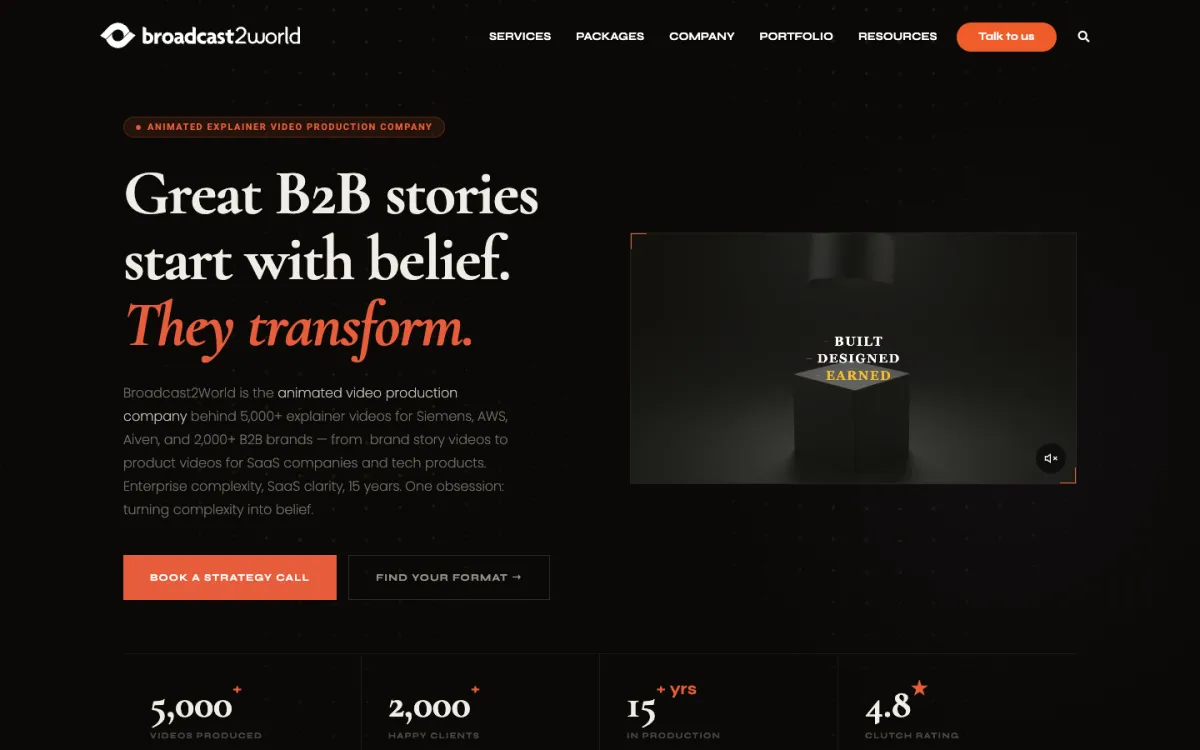
Broadcast2World (B2W) is an animated video production company with a support office in New Jersey and production in Gurugram, India, working since 2010. It publishes per-video pricing tiers and lists Aiven, AWS, Red Hat, SUSE and Siemens among its B2B technology clients.
They took the time to learn about our company and product, which made the final video better.
- Starting price
- $1,000+ on Clutch; 60-second videos from $2,400, $3,500 or $5,500
- Hourly rate
- $25 to $49
- Clutch
- 4.8/5, 12 reviews
- Team and HQ
- 50 to 249 people, Piscataway, NJ and Gurugram, India
- Styles
- 2D, 2.5D, 3D, motion graphics, whiteboard, mixed media
- Engagement model
- Fixed-price projects and multi-video series
- Best for
- Enterprise tech and infrastructure companies buying a series of videos
- Not a fit for
- Teams that want more than two revision rounds per stage
Full review of Broadcast2World
The tiers are published (whiteboard from $2,400, character 2D from $3,500, 2.5D and 3D from $5,500, plus $750 per extra 30 seconds) with delivery from two to twelve weeks by tier. Two revisions per stage are included. Its own pages give different video counts and starting prices, and the Aiven case study notes its results are "illustrative of typical client outcomes", so ask for client-confirmed results. One Clutch reviewer reported having to resend material during production.
Digital Brew
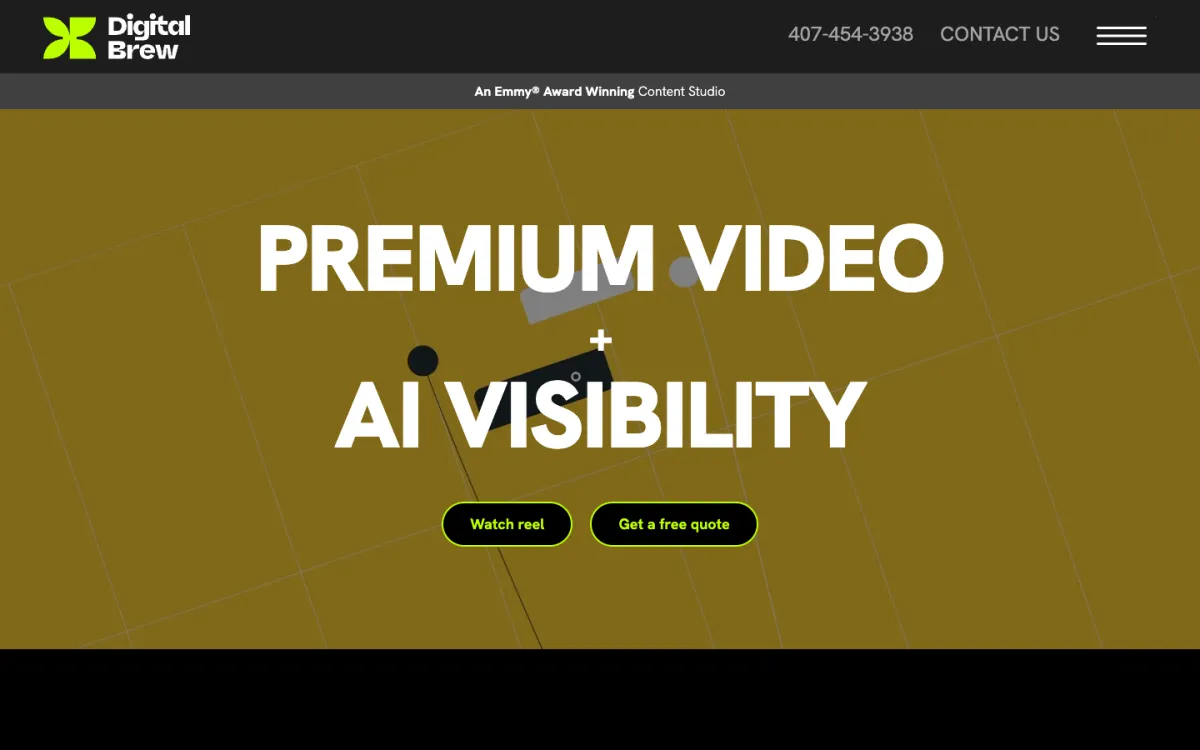
Digital Brew is an Orlando studio that has made animated explainer videos since 2011 and lists Emmy, Telly and Addy awards. Software clients include Cisco, HubSpot and Lightcast, and its formats span 2D, 3D, motion graphics, live action and product walkthroughs. It now describes itself first as an AI visibility and content studio.
The quality of their animation, storytelling, and visual clarity is outstanding.
- Starting price
- $10,000+ on Clutch; explainers "start at $8k", per its site
- Hourly rate
- Not published
- Clutch
- 4.9/5, 18 reviews
- Team and HQ
- 10 to 49 people, Orlando, FL
- Styles
- 2D, 3D, motion graphics, character, product walkthroughs, live action
- Engagement model
- Custom projects; AI visibility content programs
- Best for
- B2B software teams that want award-level craft in 2D or 3D
- Not a fit for
- Budgets under $8,000
Full review of Digital Brew
The craft is consistently praised on Clutch, and HHAeXchange has worked with it for a year. Another reviewer noted the project ran about a month past a tight schedule. Its new positioning, video built to be cited in AI answers, is worth asking about, but confirm the explainer team is still the core of the business. Lightcast is its main software case study, with qualitative results.
Videodeck
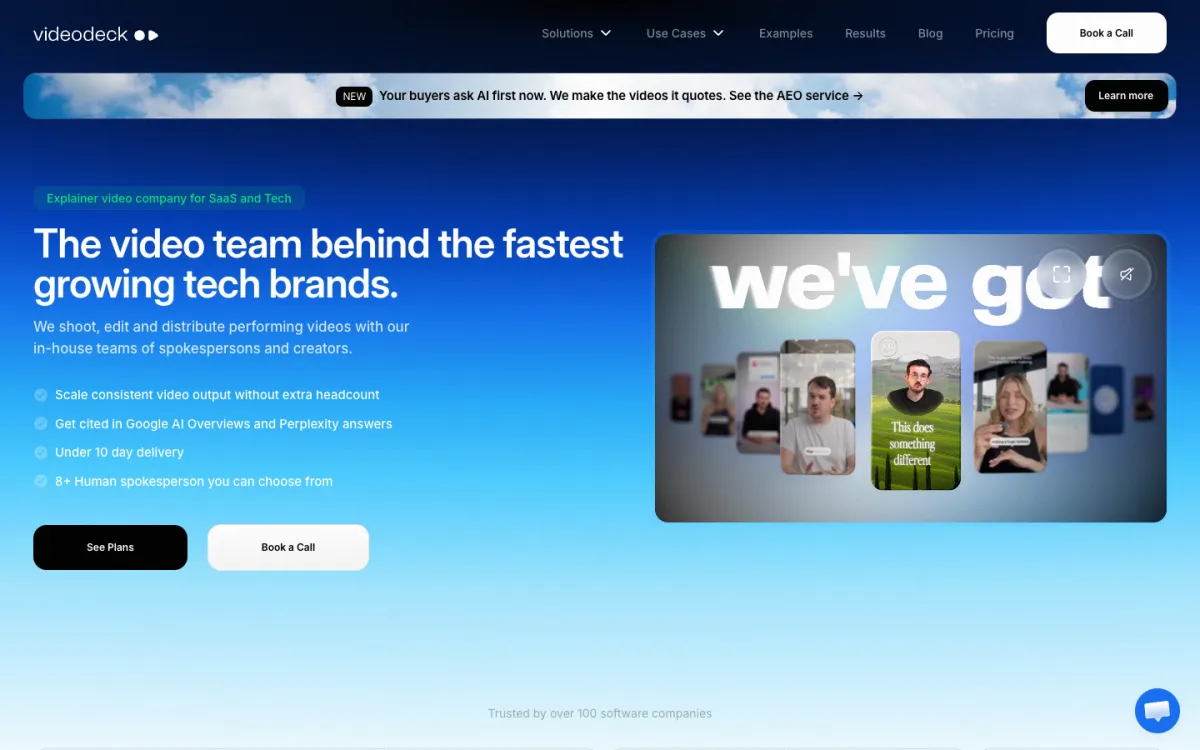
Videodeck produces spokesperson-led explainer and product videos for software companies on monthly plans, using its own actors and branded sets combined with screen recordings and motion graphics. It says more than 100 software companies use it, including Mercury, Intercom, ActiveCampaign and Foxit, and quotes delivery in under ten days.
Both the quality of their videos and their spokespersons were impressive.
- Starting price
- $1,000+ on Clutch; $5,000 for a single video, or $2,000 to $2,500 a video on monthly plans
- Hourly rate
- Not published
- Clutch
- 4.9/5, 4 reviews
- Team and HQ
- 10 to 49 people, London, UK (per Clutch)
- Styles
- Spokesperson, live action on set, screen recordings, motion graphics
- Engagement model
- Monthly plans of 4, 8 or 12 videos; prepaid bundles
- Best for
- SaaS teams publishing product and YouTube videos every week
- Not a fit for
- A single custom animated explainer
Full review of Videodeck
This is a different model from every other studio here: volume, speed and a human presenter rather than bespoke animation. Plans run $10,000 a month for four videos up to $24,000 for twelve. It states it does not use AI for the on-screen speaker, and it now sells video aimed at being cited in AI answers. Its Clutch profile holds four reviews and its site gives no address.
MotionGility
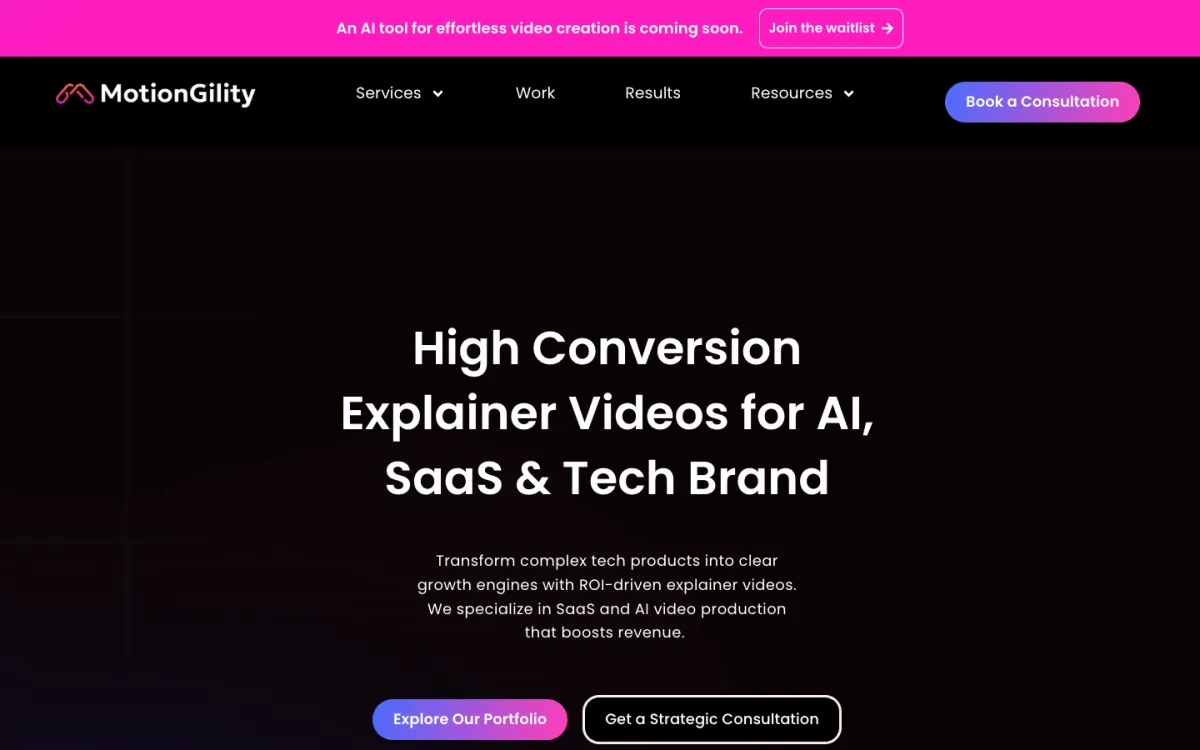
MotionGility is an Indian video studio with addresses in five countries that markets explainer videos for AI, SaaS and tech brands. Software clients and testimonials include Freshworks, Rebrandly, InVideo and Renderforest, and it quotes two to three weeks for a SaaS or AI product explainer.
They explained the costs and the factors driving it. It was easy to understand and we were happy with the price!
- Starting price
- $5,000+ on Clutch; $5,000 to $10,000 per minute for SaaS videos, per its site
- Hourly rate
- $50 to $99
- Clutch
- 5.0/5, 35 reviews
- Team and HQ
- 50 to 249 people, Indore, India
- Styles
- 2D, 3D, motion graphics, product UI and workflow animation
- Engagement model
- Custom project quotes
- Best for
- Budget-conscious SaaS teams that need a product explainer quickly
- Not a fit for
- Live action or a long-term brand partnership in the US
Full review of MotionGility
The 35 Clutch reviews are consistently positive on communication and value, and most disclosed budgets were under $10,000. Its own pages quote two different price ranges ($2,500 to $6,000 per minute for AI-assisted videos, $5,000 to $10,000 for SaaS videos), and many case studies are older Indian enterprise and consumer work. It is also building its own AI video tool.
Breadnbeyond
Breadnbeyond is an Indonesian animation studio that began making explainer videos in 2009 and says it has told more than 4,000 stories. It sells per-minute packages from $1,000 in 2D, 3D, motion graphics and whiteboard, and lists SendGrid and PayPal among its logos.
I was very impressed with how quickly they understood our product and its main benefits and produced a great script.
- Starting price
- $1,000+; packages priced per minute of video
- Hourly rate
- $25 to $49
- Clutch
- 4.8/5, 26 reviews
- Team and HQ
- 10 to 49 people, Indonesia
- Styles
- 2D, character animation, motion graphics, whiteboard, 3D
- Engagement model
- Per-minute packages (three tiers) and custom quotes
- Best for
- Pre-seed and seed teams that need a first explainer on a small budget
- Not a fit for
- Product UI-heavy videos for enterprise buyers
Full review of Breadnbeyond
It has the lowest hourly band here, and nine of its ten most recent disclosed Clutch budgets were under $10,000. Its site states delivery in five to seven weeks. The packages page lists unlimited revisions while the FAQ limits the two lower tiers to three rounds per stage, so get the revision terms in the contract. The logo wall is mostly enterprise and consumer brands rather than SaaS.
What does an animated explainer video company do?
An animated explainer video company, sometimes called an animated explainer video agency, turns a product that is hard to describe into a 60- to 90-second story: the problem, the product solving it, and what to do next. Most of the work happens before anything moves. A typical animated explainer video production runs through the same six stages at every studio on this list, whatever they call them:
- Discovery and brief. Who the video is for, where it will play, and the one thing a viewer should understand at the end. Good studios ask for sales call recordings, the pitch deck and product access here.
- Script. About 150 spoken words fill 60 seconds. This is where most of the value is decided, and where most revision rounds should be spent.
- Storyboard and style frames. Every shot drawn as a frame with timing, plus two or three finished frames that set the look. Changes are cheap here and expensive later.
- Voiceover and music. A professional voice actor, chosen from samples, and a licensed or custom track.
- Animation and sound design. The frames are animated and sound effects are cut to the motion. This is the longest stage and the hardest to change.
- Delivery. The master file plus cutdowns and aspect ratios for the website, ads and social, with captions.
What changes when the product is software
- The interface is the hero. A SaaS explainer video has to show the product doing the job, not a cartoon metaphor for it. If the interface itself is not ready to be shown, that is a product design problem to fix before the video. That means rebuilding product UI as clean artwork: simplified screens, real-looking data, no stale features, readable on a phone.
- Every animated state has to be designed first. A cursor clicking a button that opens a panel is three designed screens before it is one animation. Bricx's design lead, Siddharth Vij, describes the rule on sales calls: a static frame for every state comes before any animation. It is why product UI animation costs more per second than character animation.
- The product changes every month. A video built on screen recordings goes stale with the next release. Rebuilt UI can be updated screen by screen, and it can follow the product's design system rather than whatever was on screen the day it was recorded.
- Several people approve it. Product marketing, the founder, sales and sometimes legal all review the script. Studios that work with SaaS companies plan for one consolidated round of feedback per stage.
Who actually does that work varies. Full-service studios such as Demo Duck, Vidico and Epipheo run scripting, design, animation and live action shoots under one roof. Smaller studios often write and design in-house and hand animation or voiceover to trusted freelancers, which is not a problem if the same producer owns the project from start to finish.
Which explainer video style fits a SaaS product?
For most B2B SaaS products, the right style is motion graphics built around real product UI, with characters or live action only where a human story carries the message. The choice depends on what the viewer needs to see, not on taste:
| Style | What it is | Best for | Watch out for |
|---|---|---|---|
| Product UI animation | The real interface, rebuilt as artwork and animated | Showing a workflow, a feature or an AI product doing the work | Needs the product's design files, and every state designed before animation |
| Motion graphics | Animated shapes, type, icons and data | Abstract products: infrastructure, data, security, APIs | Can look generic without a strong visual idea |
| 2D character animation | Illustrated people in a short story | Problem-first stories for a broad or non-technical audience | Can feel consumer or childish for enterprise buyers |
| 3D animation | Modelled objects, devices or environments | Hardware, devices, physical infrastructure, premium brand films | Highest cost and longest timeline |
| Live action | Filmed footage of people, offices or customers | Customer stories, founder-led brand films, testimonials | Shoots, locations and talent add cost; product still needs UI shots |
| Spokesperson | A presenter on camera, often with screen inserts | Fast, repeatable sales and education videos | Depends on the presenter's credibility |
| Whiteboard and kinetic typography | Hand-drawn or text-led animation | Training, internal and educational content | Rarely used for B2B SaaS marketing in 2026 |
For AI products, the same rule applies with more force: show what the agent does and what the user reviews, not a glowing brain. Interface patterns for AI products are covered in the AI UX agencies guide.
Many SaaS explainer videos mix two styles: a short character or live action opening that sets up the problem, then product UI animation for the solution. Ask a studio for SaaS videos in the style being considered, not its best work in any style. Motion inside the product itself (transitions, loading states, onboarding animation) is a different job, built in code rather than rendered; those specialists are compared in the motion design agencies guide.
How to pick a style in five questions
- Is the product visual? If the interface itself is the selling point, show it. If the product works in the background (security, data pipelines, infrastructure), motion graphics carry the idea better than screens.
- Who is watching? A technical evaluator wants the real product. A buying committee member who will never log in wants the outcome and the proof.
- Where will it play? A homepage video plays muted for most visitors, so it must work without sound. A sales video plays with sound to a prospect who chose to watch.
- How often does the product change? Fast-moving products need a style that can be updated screen by screen.
- What does the brand look like? The video should look like the website and the product, not like the studio's house style.
Explainer, product demo or launch video?
These are three different videos, and studios price them differently. Decide which one is needed before writing the brief.
| Explainer video | Product demo video | Launch video | |
|---|---|---|---|
| Job | Explain what the product does and why it matters | Show how the product works, step by step | Announce something new and make it feel important |
| Typical length | 60 to 90 seconds | 2 to 5 minutes, or a series of short clips | 30 to 60 seconds, plus 15-second cuts |
| Viewer | A visitor who does not know the product yet | An evaluator, a trial user or a new customer | The market, investors, existing customers |
| Where it lives | Homepage, landing pages, sales emails | Product pages, sales follow-up, onboarding, help center | Launch posts, LinkedIn, Product Hunt, ads, the homepage for a few weeks |
| How long it stays useful | 12 to 24 months if the positioning holds | Until the UI changes | Weeks, then it becomes an archive asset |
A product demo video agency that rebuilds the interface produces something closer to an explainer; a screen recording with voiceover is quicker and cheaper but goes stale with every release. For launches, the timing problem usually matters more than the style: the video has to be ready on a fixed date. Bricx's product launch video service is built around that date for B2B SaaS and AI companies.
When a screen recording is enough
A recorded walkthrough with a voiceover is the right tool for help center articles, release notes, internal enablement and sales follow-ups to one account. It is the wrong tool for the homepage or paid ads, where cluttered screens, real customer data and half-finished features show at full size. Product video production for marketing starts from designed frames, not recordings.
How much does an animated explainer video cost in 2026?
A custom animated explainer video from a professional studio usually costs $5,000 to $50,000, and most B2B projects land between $10,000 and $49,999. Template-based and offshore work starts near $1,000; 3D, live action and multi-video packages go well past $50,000.
Clutch reviews give the clearest view of what buyers actually paid. Across the most recent Clutch reviews of 14 studios on this list, read on October 5, 2026, the budget clients disclosed was:
| Project budget (Clutch's bands) | Reviews | What it usually buys |
|---|---|---|
| Less than $10,000 | 46 of 101 | One 60- to 90-second 2D or motion graphics video, template-led or offshore production, a set number of revisions |
| $10,000 to $49,999 | 48 of 101 | A custom animated explainer with original illustration or product UI animation, or a small series |
| $50,000 and above | 7 of 101 | 3D, live action shoots, multi-video campaigns and long engagements |
32 further reviews kept the budget confidential. The middle of the market is wide because the same "60-second explainer" can be a template with new colors or a fully custom film with original illustration, product UI rebuilt as artwork and custom sound.
Published prices from the studios on this list
| Studio | Published price | Published turnaround |
|---|---|---|
| Bricx | From $8,000 per video; weekly feature-launch retainers | About 60 seconds in four to six weeks; weekly feature videos on retainer |
| Vidico | $5,000 (simple 2D) to $20,000+ (3D or live action) | Six to eight weeks |
| Demo Duck | Custom 2D $20,000 to $25,000; scripted live action $40,000 to $60,000+ | Six to twelve weeks |
| Epipheo | $5,000 to $25,000; $25,000 to $75,000; $75,000+ | 2D five to six weeks; 3D eight to ten |
| Wyzowl | Animated explainers from £2,000 (about $2,700) | About six weeks |
| Yum Yum Videos | Usually $8,000 to $30,000 | Seven to nine weeks |
| What a Story | $2,500 to $25,000 per video; $6,000/month subscription | Four-week sprint |
| Kasra Design | Not published (form budgets from $3,000) | 2D four to six weeks; 3D six to twelve |
| Gisteo | $3,500, $4,000 or $5,000 for 60 seconds; $500 per extra 30 seconds | Two to six weeks by package |
| Broadcast2World | $2,400, $3,500 or $5,500 for 60 seconds; $750 per extra 30 seconds | Two to twelve weeks by tier |
| Digital Brew | From $8,000 | Not published |
| Videodeck | $5,000 single video; $2,000 to $2,500 a video on monthly plans | Under ten days |
| MotionGility | $5,000 to $10,000 per minute (SaaS page) | Two to three weeks |
| Breadnbeyond | From $1,000 per minute | Five to seven weeks |
| Sandwich | Around $250,000 to start | Not published |
Where a studio's own price and its Clutch minimum differ, the Clutch minimum is the smallest project it takes; the published package is what a standard video costs.
What moves the price
- Length. Studios price by the finished minute. A 90-second video costs more than a 60-second one, but not 50% more, because the script, look and voice are set once.
- Style. Motion graphics and simple 2D cost the least; character animation more; product UI animation more again, because every state is designed before it moves; 3D and live action the most.
- Originality. Custom illustration and a style built for the brand cost more than a studio's template library.
- Script and strategy. Some studios write the script from discovery calls; others expect a draft from the client.
- Revisions. Fixed packages include a set number of rounds per stage. Changes after animation has started are the most expensive.
- Voice, music and languages. Premium voice talent, custom music and every extra language add cost.
- Cutdowns and formats. 15- and 30-second cuts, vertical versions and captions are often quoted separately.
What does a 30-second animated video cost?
Well over half the price of a 60-second one. Discovery, the script, the visual style and the voice are the same work at any length, which is why studios price the first minute and then add a smaller fee per extra 30 seconds: $500 at Gisteo, $750 at Broadcast2World. The cheaper route is to make the 60-second video first and order 15- and 30-second cutdowns from it.
How long does explainer video production take?
Most studios quote 4 to 8 weeks for a 60- to 90-second animated explainer video, from kickoff to final files. Clutch reviews show the calendar is usually longer than the quote: of 107 reviews on these studios' profiles with a start and end month, the middle project spanned three calendar months, and 56 spanned three months or fewer.
The gap is almost always feedback. A Vidico client running an enterprise SaaS video wrote on Clutch that the team "missed a few timeline milestones" mostly because of the client's own short feedback windows and approvals.
A realistic 6-week schedule
| Week | Stage | What the client provides |
|---|---|---|
| 1 | Discovery, brief, script draft | Sales calls, positioning, product access, one decision-maker |
| 2 | Script revisions and sign-off | One consolidated round of feedback within 48 hours |
| 3 | Storyboard and style frames | Brand files, product UI in Figma |
| 4 | Voiceover recording, frame revisions | Approval of the voice and the look |
| 5 | Animation and sound design | One review of the first cut |
| 6 | Revisions, cutdowns, captions, delivery | The list of formats and where each will run |
Lead time before kickoff comes on top. A launch video for a fixed date should start at least eight weeks before it.
Where should a SaaS explainer video go?
The homepage hero is the obvious home, but not always the best one. Bricx has run hero-section experiments with product UI, benefit statements and a video sales letter, and for self-serve and technical buyers the product UI won:
We've run experiments with just the product UI, with benefits, and with a video sales letter in the hero. The product UI dominates every time.
That does not make video useless; it changes how it is used. The video that works in a hero is a short, muted, looping product UI animation that reads without sound. The full explainer with a voiceover works better one click away, behind a "watch the 60-second overview" button, or on pages where visitors have already chosen to learn more.
- Homepage and product pages. A muted 10- to 20-second loop of the product working, plus the full explainer on click.
- Paid landing pages. Keep it light. Heavy animation and long autoplay videos slow the page and get in the way of a visitor deciding in seconds; when Bricx added scroll animations to its own site, session recordings in Microsoft Clarity showed bounce rates rising past the second and third sections.
- Sales. Explainers earn their cost in sales: in the first email after a call, in proposals, and as the opening of a demo, so prospects arrive knowing what the product does.
- Onboarding and the help center. Short feature videos cut from the same assets explain a workflow better than text.
- Launches and social media. Vertical and square cutdowns with captions for LinkedIn, X, YouTube Shorts and ads.
How video, motion and product visuals fit the rest of a SaaS site is covered in the SaaS website design agencies guide.
Motion also works as a signal of quality on its own. Divij Rakhra has noticed buyers on sales calls pointing to a specific animation on a company's site and using it to judge whether that company is serious.
How to choose an explainer video company
Start with three filters: SaaS work in the portfolio that looks like the product, a published or quickly quoted price in budget, and a process with clear approval stages. Then compare the shortlist on how each studio would tell this specific story.
Twelve questions to ask before signing
- Which SaaS or B2B software videos in the portfolio are closest to this product, and can the studio share results for any of them?
- Who writes the script, and how many drafts are included?
- Who is the producer, and will the same person run the project from kickoff to delivery?
- Is animation done in-house or by freelancers?
- How will the product UI be rebuilt, and from what files?
- How many revision rounds are included at script, storyboard and animation stage?
- What does a change after animation starts cost?
- Which formats, lengths and caption files are included?
- Who owns the final video, the project files and the illustrations?
- Is the music licensed for paid ads as well as organic use?
- How long is the lead time before work can start?
- Can the studio share two past SaaS clients to call?
Red flags
- A portfolio of consumer, nonprofit and healthcare work with no software product shown on screen.
- A price before any discovery, for a product the studio has not seen.
- No script stage, or a script written after the style is chosen.
- Unlimited revisions with no stages, which usually means rework at the most expensive point.
- Stock characters and a library music track that could be selling anything.
- Source files and music rights left out of the contract.
Agency, freelancer, in-house or AI tools?
| Explainer video studio | Freelance animator | In-house motion designer | AI video tools | |
|---|---|---|---|---|
| Typical cost | $5,000 to $50,000 per video | Lower per video | Full salary plus software | A monthly subscription |
| Script and strategy | Usually included | Rarely | Depends on the hire | Generated drafts |
| Product UI animation | At studios that design UI | Depends on the person | Strong, knows the product | Weak beyond screen recordings |
| Speed | 4 to 8 weeks | Varies | Fast once ramped | Minutes for a draft |
| Best for | The main explainer and launch videos | Contained edits, cutdowns, simple loops | Constant feature and social videos | Internal videos, tests, help content |
AI tools can now generate a voiceover, an avatar presenter and simple motion from a script in minutes, and several studios on this list (Gisteo and Kasra Design among them) sell AI-assisted production alongside custom work. For a homepage or a launch, the gap is the same as with templates: the video looks like everyone else's, and the product is shown as a recording rather than designed. AI-generated drafts are useful for testing a script before paying for animation.
How to measure whether an explainer video works
Measure the video by the job it was made for, not by views.
| Where it runs | Measure | What good looks like |
|---|---|---|
| Homepage or product page | Play rate, watch time, conversion of viewers vs non-viewers | Viewers convert to demo or trial at a higher rate than non-viewers |
| Paid ads | Hook rate (3-second views), cost per lead | Lower cost per lead than the static ad it replaced |
| Sales emails and proposals | Reply and meeting rates, deal velocity | Fewer "what does it do?" questions on first calls |
| Onboarding | Feature adoption, support tickets | Fewer tickets about the workflow the video explains |
| Launch | Reach, engagement, sign-ups in launch week | Shares and comments from the target audience, not just likes |
Add a play event to analytics before launch, and test the page with and without the video for a few weeks. A video that few visitors play is a sales asset, not a homepage asset.
FAQs
Which are the best animated explainer video companies for SaaS?
Bricx, Vidico, Demo Duck, Thinkmojo, Explainify, Epipheo and Wyzowl lead this list for B2B SaaS, each for a different job: product UI animation and launch videos, animation plus live action at scale, premium character and brand storytelling, enterprise product motion, complex B2B products, large narrative projects and fixed-price explainers. Budget and style narrow the list further; the comparison table above filters by both.
How much does an animated explainer video cost?
Most custom animated explainer videos for B2B companies cost $5,000 to $50,000. Of 101 recent Clutch reviews with a disclosed budget across 14 studios on this list, 46 were under $10,000, 48 between $10,000 and $49,999, and 7 above $50,000. Style, length, originality, revisions and the number of cutdowns decide where a project lands.
How much does a 30-second animated video cost?
Usually well over half the price of a 60-second video at the same studio, because discovery, the script, the visual style and the voice are the same work at any length. The cheapest way to get a 30-second version is to produce the full explainer first and order 15- and 30-second cutdowns from it.
What is a SaaS explainer video?
A SaaS explainer video is a short animated or filmed video, usually 60 to 90 seconds, that explains what a software product does, who it is for and why it is better than the alternative. The strongest ones show the real product UI doing the job instead of a cartoon metaphor, and end with one next step: book a demo or start a trial.
What is an explainer video for?
Its purpose is to make an abstract product understood quickly, before a visitor gives up or a prospect books a call. Explainer videos earn their cost on homepages and product pages, in sales emails and proposals, at the start of demos, in onboarding and in launch campaigns, wherever someone needs the product explained in a minute.
What are the different types of explainer videos?
The main styles are product UI animation, motion graphics, 2D character animation, 3D animation, live action, spokesperson videos, whiteboard animation and kinetic typography. By purpose, the main types are the explainer (what and why), the product demo (how it works) and the launch video (what is new). Most B2B SaaS videos combine motion graphics with product UI.
How long should a SaaS explainer video be?
60 to 90 seconds for the main explainer, 10 to 20 seconds for a muted homepage loop, and 15 to 30 seconds for ads and social cutdowns. Product demo videos can run two to five minutes because the viewer chose to learn how the product works. If the script cannot fit in 90 seconds, the positioning usually needs work first.
How long does it take to make an animated explainer video?
Most studios quote four to eight weeks from kickoff to final files for a 60- to 90-second animated explainer video. On Clutch, the middle project in 107 reviews of these studios spanned three calendar months, because feedback and approvals take longer than the animation. One decision-maker and 48-hour feedback keep a project close to the quote.
Should a SaaS company use animation or live action?
Animation, for most SaaS explainer videos, because the product is software and software is shown best as designed UI. Live action suits customer stories, founder-led brand films and testimonials, where a real person carries the message. Many studios combine the two: a filmed opening for the human problem, then animated product screens for the solution.
Should a SaaS company make an explainer video or a product demo video first?
The explainer, if visitors do not yet understand what the product does; the product demo video, if they understand it but hesitate to try it. Early-stage companies usually need the explainer first. Companies with an established category and a trial motion often get more from a library of short demo clips used in sales and onboarding.
Can AI tools create explainer videos?
Yes, for drafts and simple videos. AI tools can generate a voiceover, an avatar presenter and basic motion from a script in minutes, and ChatGPT can write and structure the script. For a homepage, a launch or paid ads, AI-generated videos still tend to look generic, and they show the product as a recording rather than designed UI.
Can a SaaS team make an explainer video in-house?
Yes, if the team has a motion designer and someone who can write a tight script. Software such as After Effects, Rive, Jitter or Figma-based motion tools covers product UI animation. In-house works well for frequent feature videos and social clips; most teams still hire a studio for the main explainer and launch videos, where script and craft matter most.
Should a SaaS team hire a freelancer or an explainer video agency?
A freelancer suits contained work: a cutdown, a feature loop or an edit of existing assets. An explainer video agency suits the main explainer and launches, because it brings script writing, illustration, animation, voice and sound under one producer. The agency costs more, but fewer handoffs means fewer things go wrong close to a deadline.
Who owns the video and the source files?
The client should own the final video outright. Source files (After Effects projects, illustrations, style frames) are often a separate line item, and music is usually licensed rather than owned. Confirm in the contract that the source files are handed over and that the music licence covers paid ads as well as organic use.
How many revisions do explainer video companies include?
Most fixed-price packages include two or three rounds at each stage: script, storyboard and animation. Some, such as Wyzowl and Gisteo, advertise unlimited revisions within each stage. Changes are cheapest at the script and storyboard stage and most expensive after animation begins, so a strong process puts the decisions early.
Do explainer videos increase conversion?
They can, when the video shows the product clearly to the right visitor. A video that slows the page or delays the main action can hurt conversion instead. Test it: compare demo or trial conversion for visitors who played the video against those who did not, and run the page with and without it for a few weeks.
Are video studios on Clutch reliable?
Clutch verifies that reviewers are real clients and records the project budget and dates, which makes it the most useful public check on a studio. It is still a sample: studios invite happy clients to review. Read the full reviews for the project type closest to yours, and ask for two client references before signing.

Similar Lists

Contents