14 Best Branding Agenciesfor Startups (2026)
14 branding agencies for startups compared on price, scope, timeline and Clutch reviews, with brand pricing and timeline benchmarks from sales calls with 57 design agencies.
Oct 5, 202628 min read
Which are the best branding agencies for startups?
Updated October 2026. Clutch ratings, review counts and minimum project sizes checked on October 5, 2026.
The best branding agencies for startups in 2026 are Bricx, Focus Lab, Ramotion, The Branx, Clay, Together and Koto. The right one depends on stage and on how far the work goes beyond the logo:
- Bricx for B2B and AI startups whose brand has to make a technical product look credible to buyers and investors, proven on the website and the product itself.
- Focus Lab, Motto and Ragged Edge when positioning and story are the real problem, not only the look.
- Ramotion, Clay and Together for a brand carried into the website and the product UI, on budgets from $50,000.
- The Branx and Foundation for a fast, fixed-price identity before a launch or a raise.
- Koto, Pentagram and Instrument for later-stage companies building a global brand system.
A startup branding agency defines how a young company is positioned and how it looks and sounds: strategy, name, voice, logo, visual identity and guidelines, and usually the first assets built with them, such as the website and the pitch deck.
The best branding companies for startups differ from general branding companies for startups in how fast they move and how far the identity goes into the product. A tech branding agency or SaaS branding agency adds one more job: making software, which has no packaging, look as credible as the team behind it.
Figures from The State of UI/UX Design Agencies 2026, for which Bricx held sales calls with 57 agencies using the same brief; not every agency answered every question, and the brand refresh figures come from the agencies that quoted it (about a dozen).
Quick picks by situation and budget
Start from the row that matches the company today.
| Situation | Shortlist | Why |
|---|---|---|
| A seed or Series A B2B SaaS company relaunching brand and website together | Bricx, The Branx, Focus Lab | Identity and website from one team, built for B2B software |
| A launch or a raise is weeks away | Bricx, The Branx, Foundation | The Branx publishes a 3-week identity; Foundation sells a 10-day Brand Sprint |
| The brand and the product look like two companies | Bricx, Ramotion, Clay, Together | Brand, website and product UI designed by the same studio |
| Nobody can explain the company in one sentence | Motto, Focus Lab, Ragged Edge | Strategy, positioning and narrative before design |
| An AI startup in a look-alike category | Bricx, Red Antler, Ragged Edge | AI brand work on their sites: Hobbes and CAMB.AI; Pika and Fyxer; Granola |
| Developer tools and infrastructure | Together, Focus Lab, Pentagram | Coder and Tailscale; LaunchDarkly; Cohere and TwelveLabs |
| Fintech | Together, Clay, Ragged Edge | Middesk and Unit; Coinbase; Wise and Marshmallow |
| Consumer apps and DTC | Red Antler, Condensed | Hinge and Casper; ShopMy |
| Deep tech and hardware | Foundation | Envisics, WaveOptics, Earth Dynamics |
| Series C and later, several products and markets | Pentagram, Koto, Instrument | Global identity systems and large teams |
Shortlist by budget
| Budget | Shortlist | Pricing basis |
|---|---|---|
| Under $15,000 | Foundation | Brand Sprint at a fixed £10,000, ex VAT |
| $15,000 to $30,000 | The Branx, Bricx, Condensed | The Branx: identity from €20,000; Bricx: from $25,000; Condensed: $25,000 Clutch minimum |
| $30,000 to $75,000 | Focus Lab, Bricx, Ramotion, Clay, Together | Focus Lab: startup branding from $15,000 a month for one to three months; Ramotion: $60,000 startup package; Clay and Together: $50,000 Clutch minimums |
| $100,000 and up | Motto, Pentagram, Koto, Instrument | Motto: $100,000 Clutch minimum; the others do not publish prices |
How the 14 agencies compare
Filter by budget, what each agency designs beyond the identity, motion or where it is based, or sort by price, rate and reviews. "Designs" shows how far each agency's own work goes beyond the identity.
| Agency | Best for | Designs | Clutch minimum | Hourly rate | Clutch rating | Build stack | Motion | HQ |
|---|---|---|---|---|---|---|---|---|
| Bricx | B2B and AI startups with technical products | Brand, website and product | $25,000+ | $50 to $99 | 5.0/5, 32 reviews | Webflow, Framer, custom code | Yes, incl. launch video | Dubai and New Delhi |
| Focus Lab | Strategy-led B2B tech rebrands | Brand and website | $25,000+ | Not published | 5.0/5, 3 reviews | Webflow (smaller sites) | Not advertised | Richmond Hill, US |
| Ramotion | Brand plus product, larger budgets | Brand, website and product | $50,000+ | $150 to $199 | 4.9/5, 29 reviews | Jamstack, Webflow, WordPress | Yes | San Francisco, US |
| The Branx | Fast identity and site for tech startups | Brand and website | $25,000+ | $100 to $149 | 5.0/5, 37 reviews | No-code or Next.js with Sanity | Yes | Cádiz, Spain |
| Clay | Enterprise-grade brand and product | Brand, website and product | $50,000+ | $150 to $199 | 4.8/5, 32 reviews | Custom builds | Yes | San Francisco, US |
| Together | B2B tech and fintech rebrands | Brand, website and product | $50,000+ | $150 to $199 | 4.9/5, 34 reviews | Custom development | Yes | London, UK |
| Koto | Global identity systems | Brand, website and product | Not on Clutch | Not published | No Clutch profile | Not published | Yes | Five studios incl. London and New York |
| Motto | Positioning and narrative | Brand, website and product design | $100,000+ | Not published | 5.0/5, 13 reviews | Design only advertised | Yes | New York, US |
| Ragged Edge | Bold identities for venture-backed brands | Brand | Not on Clutch | Not published | No Clutch profile | Not advertised | Not advertised | London, UK |
| Pentagram | Partner-led identity craft | Brand and website | Not published | Not published | Unclaimed, no reviews | Not advertised | Yes | New York, London, Austin |
| Red Antler | Consumer and AI launches | Brand, website and product | Not published | Not published | Unclaimed, no reviews | In-house engineering | Not advertised | Brooklyn, US |
| Condensed | Small senior team for seed founders | Brand and website | $25,000+ | $100 to $149 | 5.0/5, 18 reviews | WordPress, Wix (per reviews) | Yes | Brooklyn, US |
| Foundation | Early-stage UK deep tech | Brand and website | Not on Clutch | Not published | No Clutch profile | Not advertised | Yes | London, UK |
| Instrument | Late-stage and public tech companies | Brand, website and product | Not published | Not published | Unclaimed, no reviews | In-house engineering | Yes | Portland, US |
"Not published" means neither the agency's site nor a claimed Clutch profile states it. Clutch figures on unclaimed profiles (Pentagram, Red Antler, Instrument) were entered by Clutch, not the agency, so they are left out.
How these agencies were picked
Every agency on this list was assessed against the same evidence a buyer can check, with the rigour Bricx applied when it held sales calls with 57 agencies on one identical brief for The State of UI/UX Design Agencies 2026. Each had to clear three bars:
- A strong, verified track record. Consistent, recent client reviews on Clutch, or a portfolio of shipped brands in use at scale.
- Real startup and tech brand work. Named software, AI, fintech or deep-tech clients on the agency's site, in its case studies or in verified reviews.
- Published facts. Minimum project size, hourly rate, team size and location from Clutch, checked on October 5, 2026. Prices, timelines and services come from each agency's own site. Outcome numbers appear only where a client stated them in a Clutch review or the agency published them, and each one says which.
Agencies are ordered by fit for funded technology startups.
The 14 agencies, reviewed
Each entry gives the verdict and key facts first; open the full review for evidence and limits. Names link to agency sites, ratings to Clutch.
Best branding agency for B2B and AI startups with technical products: Bricx
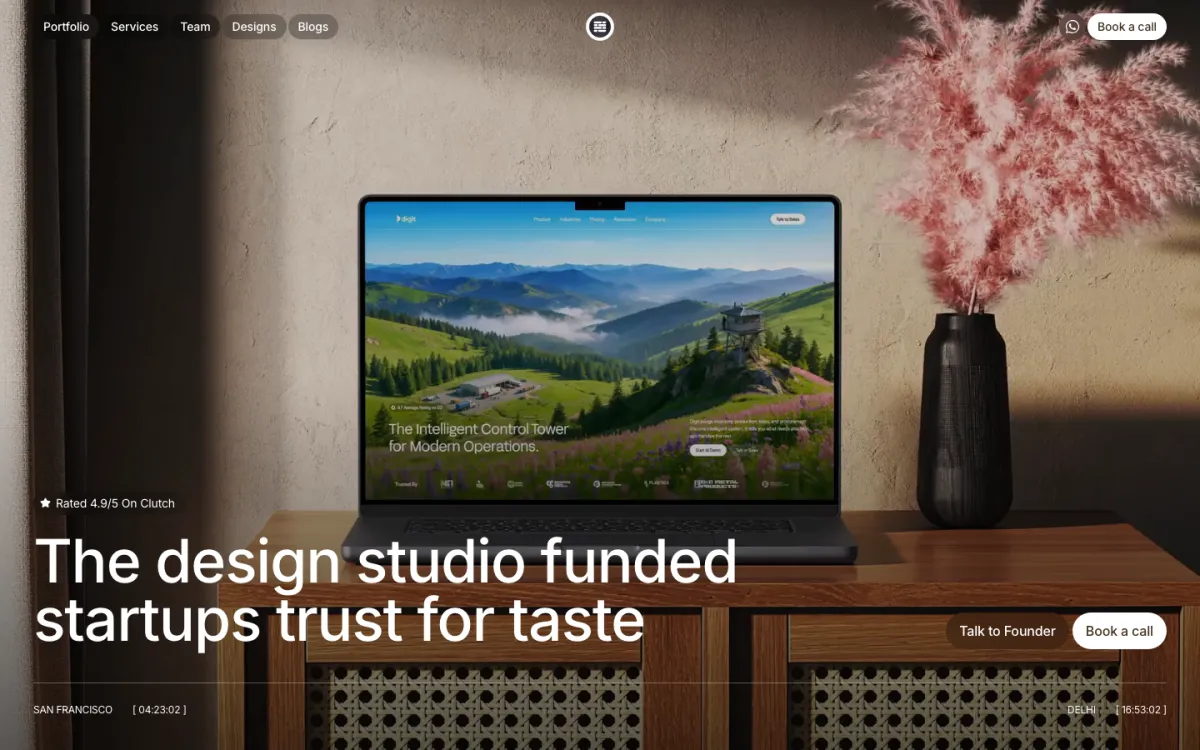
Bricx is the best branding agency for B2B and AI startups whose brand has to make a technical product look credible to buyers and investors, with every direction explored and proven on the website and the product itself. Bricx rebranded Hobbes across identity, website and launch film, redesigned CAMB.AI's brand, product and website, and built the brand system and website for Digit, an AI-first ERP. It has shipped 50+ websites in the last two years, for clients including Writesonic and Sybill.
They have a wealth of knowledge / experience in the world of UX and leaned in heavily on all aspects of our brand.
- Starting price
- $25,000+ (fixed scope); retainers from $10,000/month
- Hourly rate
- $50 to $99
- Clutch
- 5.0/5, 32 reviews
- Team and HQ
- 10 to 49 people, Dubai and New Delhi
- Stack
- Webflow (Certified Partner), Framer (Expert), custom code (Next.js)
- Engagement model
- Fixed-scope projects, monthly retainers, embedded teams, paid pilot sprints
- Covers
- Strategy, visual identity, guidelines, website, product UI, motion and launch video
- Best for
- Seed to Series C B2B and AI startups whose brand has to make a technical product credible to buyers and investors
- Not a fit for
- Consumer and retail brands, and budgets under $25,000
Full review of Bricx
Brand work starts on the homepage rather than in a brand book: the team designs three to five versions of the hero section in different brand directions, the founders choose one, and that direction is extended across the website and the product, including enterprise products with many user roles. Guidelines are documented last, from the finished work, and include a markdown file AI design and coding tools can follow. The brand identity design service covers strategy, naming, logo, identity system, guidelines and motion. Hobbes' redesign was completed in mid-January and the company closed its seed round by early March. In Clutch reviews, Scale.jobs' CTO reported visitor-to-lead conversion rising from 1.2% to 2.8% in the first month after the website launch.
Focus Lab
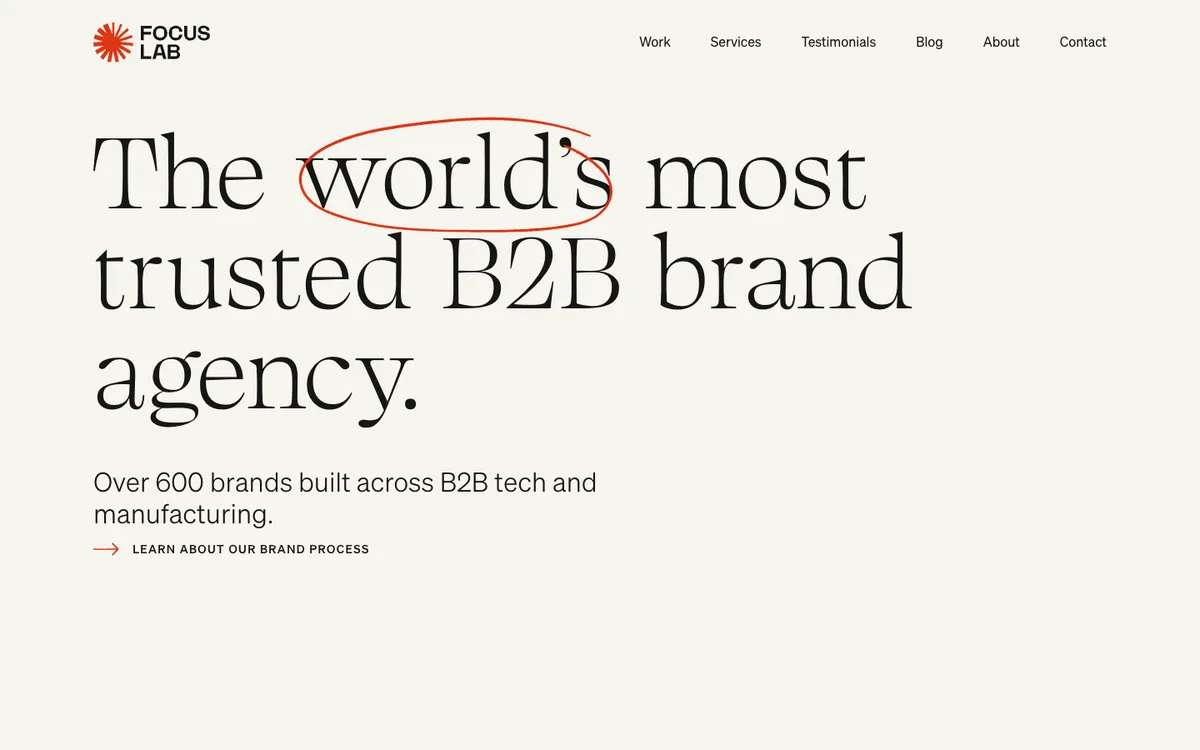
Focus Lab is a B2B-only branding agency in Richmond Hill, Georgia, covering brand strategy, verbal identity, visual identity, sales and launch assets, and Webflow websites. Its work page lists LaunchDarkly, PolyAI, Merge, Customer.io, Salesloft and Voiceflow. Branding is sold as a monthly program; its Focused Branding package for startups starts at $15,000 a month and typically runs one to three months.
They were experts at taking meetings and pages of customer research and translating it into a brand that feels right.
- Starting price
- $15,000/month for startup branding (1 to 3 months); $25,000+ on Clutch
- Hourly rate
- Not published
- Clutch
- 5.0/5, 3 reviews
- Team and HQ
- 10 to 49 people, Richmond Hill, GA
- Stack
- Webflow for smaller sites; complex builds referred to partners
- Engagement model
- Monthly branding programs and retainers
- Best for
- Series A to C B2B tech companies that need positioning and identity together
- Not a fit for
- Consumer brands, company naming, or large website builds
Full review of Focus Lab
A Structural Rebrand starts at $25,000 a month and typically runs three to five months, so a full program is a six-figure commitment. Its FAQ says it does not provide company naming, and that larger web builds go to partner agencies. The Clutch profile holds only three reviews, all from early 2024, so the client list and references carry more weight than the rating. The agency publishes "$7.8B capital raised post-branding" and "16 unicorns branded" across its clients, which are its own figures rather than measured brand effects.
Ramotion
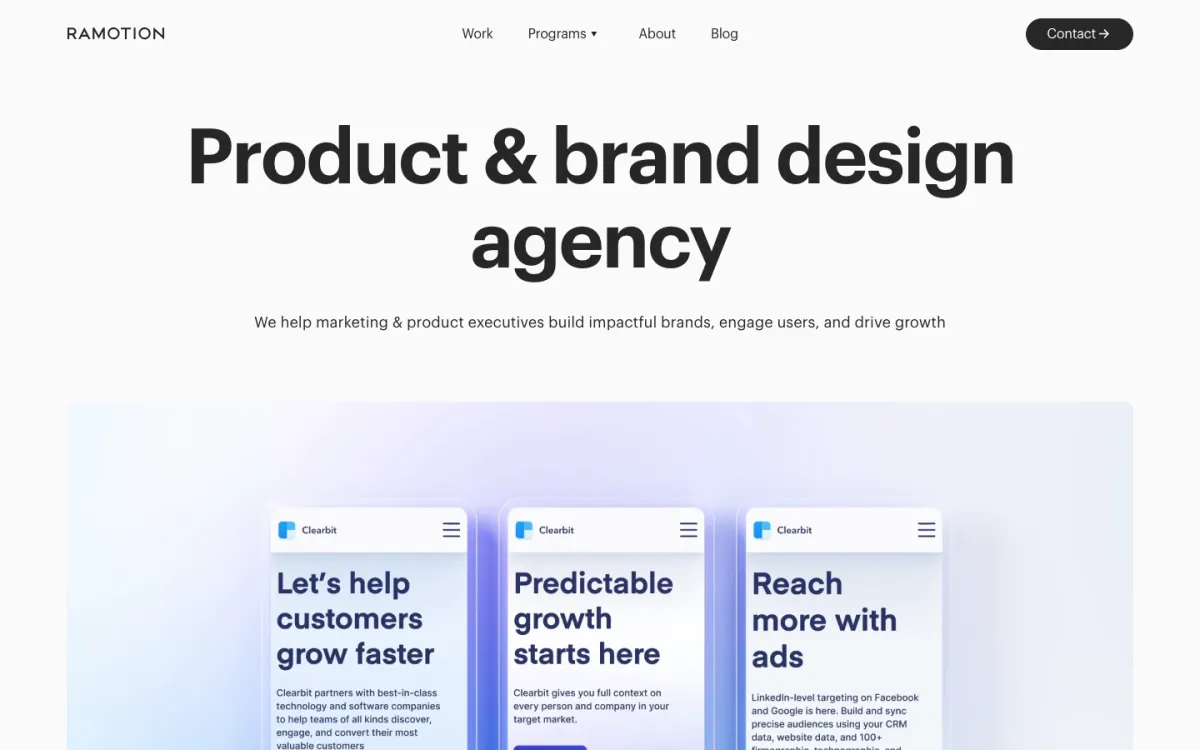
Ramotion is a San Francisco studio that pairs brand identity with website and product design, and runs a dedicated startup branding program covering strategy, naming, visual identity, guidelines, motion, a one- to five-page website and a pitch deck. Its homepage shows rebrands and new websites for Flatfile, Streamlit and Descript.
I was impressed with their brand personality exercises and visual design process.
- Starting price
- $50,000+ on Clutch; $60,000 startup package (branding only) on its site
- Hourly rate
- $150 to $199
- Clutch
- 4.9/5, 29 reviews
- Team and HQ
- 10 to 49 people, San Francisco, CA
- Stack
- Jamstack, Webflow, WordPress
- Engagement model
- Projects, team extension, ongoing design support
- Best for
- Funded startups that want brand, website and product from one studio
- Not a fit for
- Budgets under $50,000
Full review of Ramotion
The startup package lists 3.5 months and $60,000 for branding, with the website quoted separately at $25,000 to $60,000; its branding FAQ gives 4 to 12 weeks for identity projects depending on scope. Most of its public Clutch reviews date from 2018 to 2021. The most recent branding review, from Murf AI in 2025, praised the process but said expectations on copywriting and web development should have been managed better. The agency publishes "$1B+" raised by its clients after a rebrand and "120+" startup brands designed.
The Branx
The Branx is a branding agency for tech, AI and SaaS startups, based in Cádiz, Spain, selling fixed-scope packages for brand identity, strategy and messaging, product naming, motion and websites built on a no-code platform or Next.js with Sanity. Clients include Causaly, Featherless, North.Cloud and Metricool, and brand identity projects start at €20,000.
The quality of The Branx's work in such short windows to complete design work is impressive.
- Starting price
- €20,000 for brand identity on its site; $25,000+ on Clutch
- Hourly rate
- $100 to $149
- Clutch
- 5.0/5, 37 reviews
- Team and HQ
- 10 to 49 people, Cádiz, Spain
- Stack
- No-code platform or Next.js with Sanity
- Engagement model
- Fixed-scope packages
- Best for
- Seed to Series B tech startups that need an identity and website quickly
- Not a fit for
- Teams that want research-led strategy included in the base price
Full review of The Branx
Speed is the proposition: its homepage says it delivers brand identity in three weeks, and a five-page website from €12,500 in about four weeks. Strategy and messaging are sold separately from €5,000, so a base identity package is design-led. Its guidelines are described as built "for your team and their LLMs". The agency publishes "120+" tech brands built and "$750M+" raised by its clients, and labels work with client funding rounds; those are client milestones, not effects it claims to have caused. Prices are in euros.
Clay
Clay designs brands, websites and digital products for technology companies from San Francisco, with brand strategy, architecture, verbal and visual identity and guidelines alongside UX, motion and front-end development. Its site names early-stage work for Coinbase, Uber, SendGrid and MoneyLion, and Stripe and Slack appear on its client list.
The most impressive thing about Clay was their attention to detail and thoughtful approach to design concepts.
- Starting price
- $50,000+
- Hourly rate
- $150 to $199
- Clutch
- 4.8/5, 32 reviews
- Team and HQ
- 10 to 49 people, San Francisco, CA
- Stack
- Custom builds; no platform advertised
- Engagement model
- Time and materials, fixed fee, retainer
- Best for
- Well-funded startups that want brand and product at enterprise level of craft
- Not a fit for
- Seed budgets or projects that need naming
Full review of Clay
Clay's Clutch client mix leans toward enterprise, and its $50,000 minimum and $150 to $199 rates reflect that. It does not list naming as a service. A fintech client's director wrote on Clutch that website traffic rose 40% after launch and social engagement doubled. Branding is one of several practices; product design and websites carry as much of its portfolio.
Together
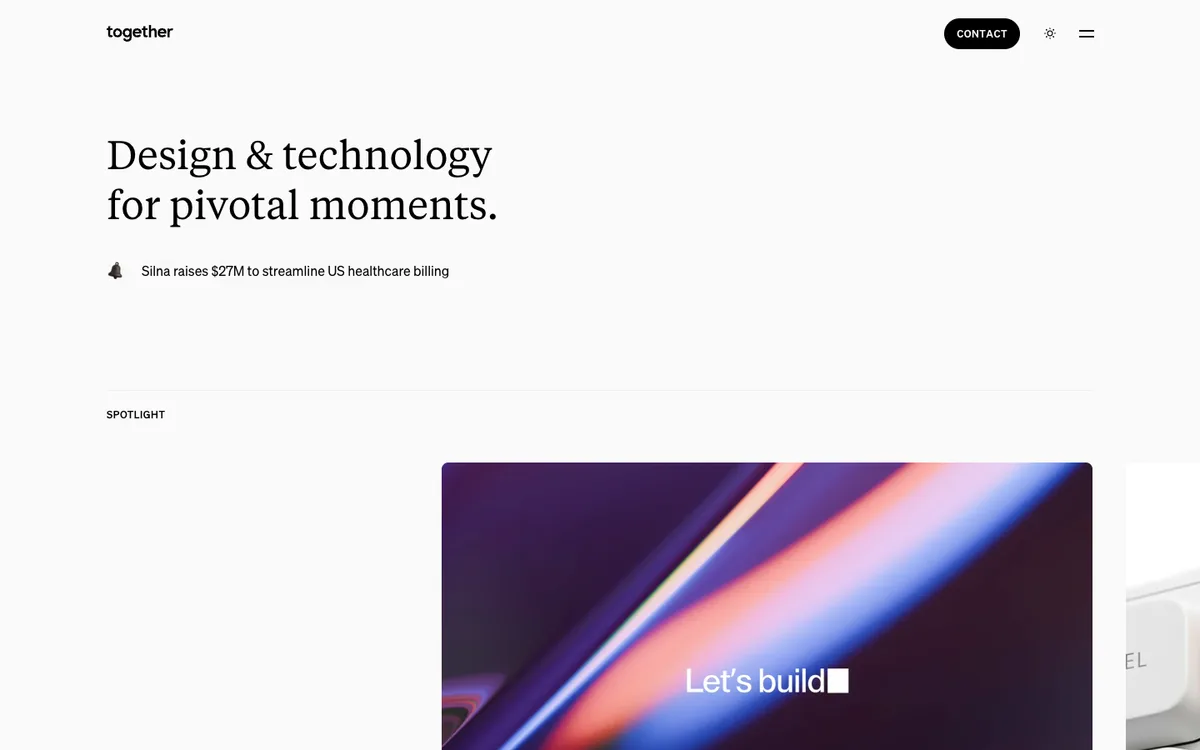
Together is a London design partner for B2B technology and AI companies, covering research, positioning, visual identity, voice and tone, websites from copy to code, and product interface design. Its clients include Coder, Miter, Rogo, Tailscale, Unit and Middesk, with offices also listed in New York and San Francisco on Clutch.
They have a strong understanding of fintech companies. They also have a great design sense.
- Starting price
- $50,000+
- Hourly rate
- $150 to $199
- Clutch
- 4.9/5, 34 reviews
- Team and HQ
- 10 to 49 people, London, UK
- Stack
- Custom development; no platform advertised
- Engagement model
- Not published
- Best for
- Series A to C B2B tech, developer-tool and fintech companies rebranding with a new website
- Not a fit for
- Consumer brands or budgets under $50,000
Full review of Together
Copywriting sits in its website service, which suits teams that need the message rewritten with the identity. The first page of Clutch reviews dates from 2021 to 2023, so ask for recent references. Spirable's CMO reported on Clutch that SEO performance improved by about 25% after the new site launched. The site's news feed lists client funding rounds without attributing them to the agency's work.
Koto
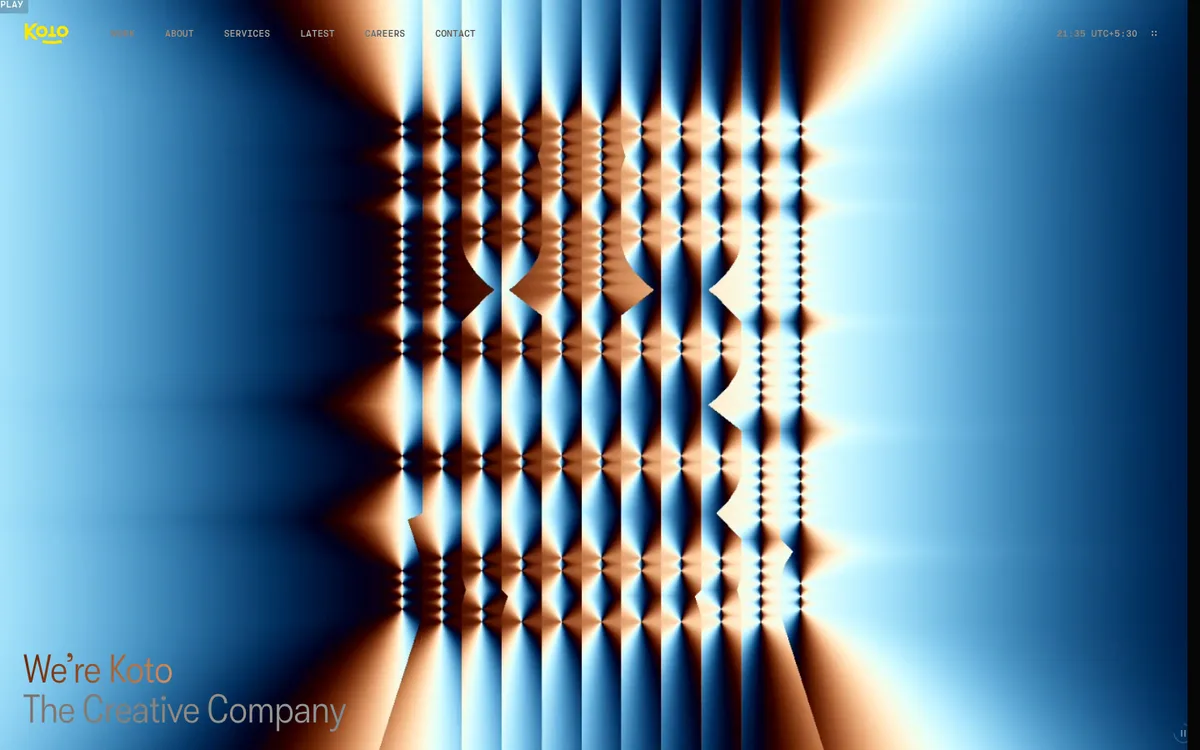
Koto is a global brand studio with studios in Los Angeles, New York, London, Berlin and Sydney, covering positioning, naming, visual, verbal, motion and sonic identity, websites and digital products. Its work page includes Coinbase, Freetrade, Coda, Mews, Bolt and Uniqode.
- Starting price
- Not published
- Hourly rate
- Not published
- Clutch
- No Clutch profile
- Team and HQ
- Studios in Los Angeles, New York, London, Berlin and Sydney
- Stack
- Not published
- Engagement model
- Not published
- Best for
- Series B and later tech companies building a global identity system
- Not a fit for
- Early-stage teams that need published pricing or a fixed small budget
Full review of Koto
Koto has no Clutch profile (the Clutch listing named Koto belongs to an unrelated Chilean studio), so there are no verified third-party reviews to check. Its headline work is for very large companies such as Instagram, Amazon and Microsoft, alongside fintech and SaaS brands. It recently announced the acquisition of Stereo Creative, which it describes as a 60-person studio, so the team is larger than most startup specialists. Pricing, timelines and engagement models are not published.
Motto
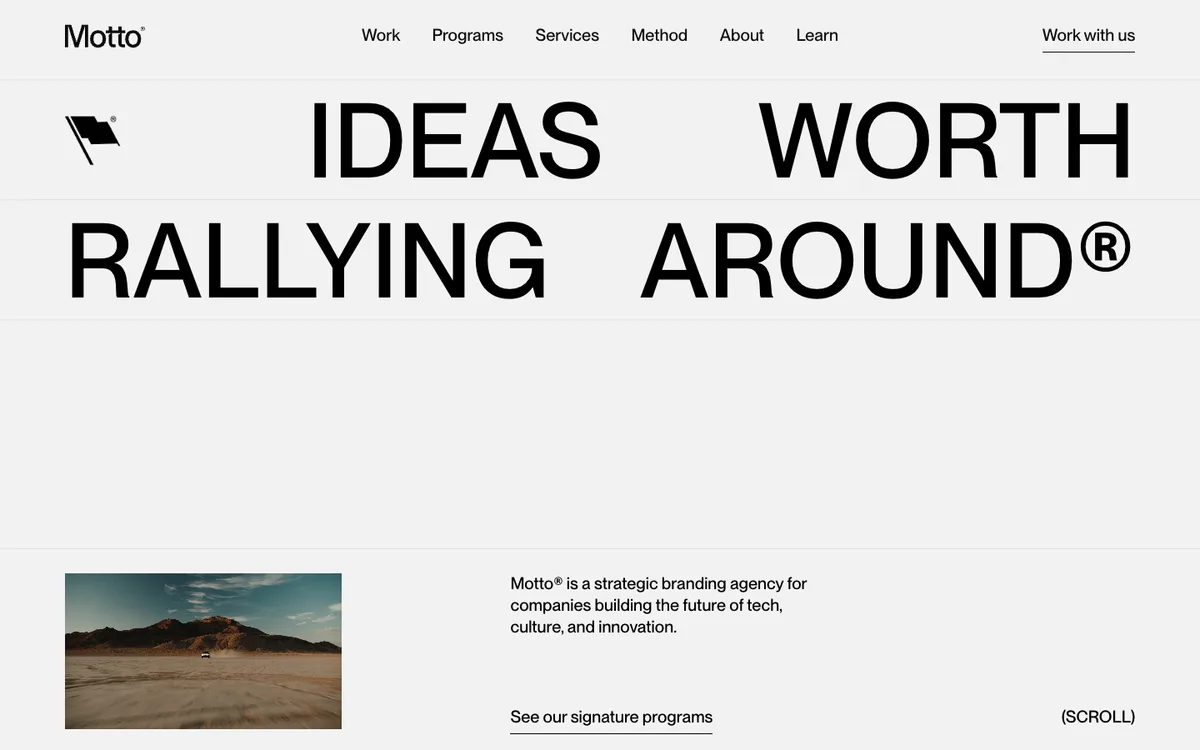
Motto is a strategy-led brand agency with offices in New York, Dallas and London that sells named branding programs covering research, positioning, strategic narrative, naming, verbal and visual identity, design systems and web design. Technology clients include Goodnotes, Cresta, Andela, Klaviyo and Ivo.
Motto® was good at tying our business goals with our identity through brand strategy.
- Starting price
- $100,000+
- Hourly rate
- Not published
- Clutch
- 5.0/5, 13 reviews
- Team and HQ
- 10 to 49 people, New York, NY
- Stack
- Web design advertised; development not listed
- Engagement model
- FastTrack, Foundation and Flagship programs
- Best for
- Series A to C companies that need positioning and leadership alignment
- Not a fit for
- Budgets under $100,000 or a brand needed within three months
Full review of Motto
Its FAQ says most of its startup clients are at Series A, B or C, and that a fast-track startup branding project takes at least 16 weeks while a comprehensive rebrand takes at least six to eight months; its services page describes FastTrack as a 12-week program. The CEO of FasterLines, a consulting company, wrote on Clutch that the new branding and verbal identity had already brought "over $1,000,000 in additional revenue". Its most recent Clutch review dates from July 2023.
Ragged Edge
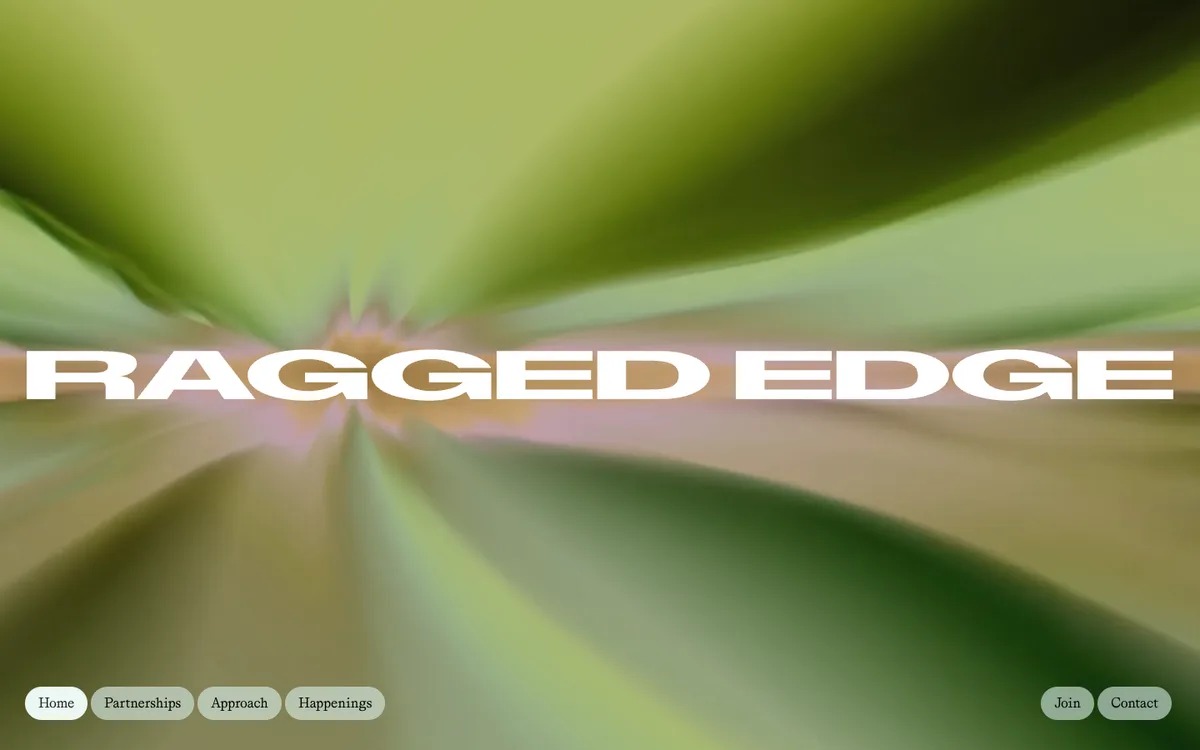
Ragged Edge is a London brand studio that defines strategy, creates identity systems and then works with clients' own teams to apply them across digital products, campaigns and spaces. Its homepage features Granola, Wise, Marshmallow and Tilt, and its approach page describes a team of 47 creative experts.
- Starting price
- Not published
- Hourly rate
- Not published
- Clutch
- No Clutch profile
- Team and HQ
- 47 creative experts (own site), London, UK
- Stack
- Not advertised
- Engagement model
- Not published
- Best for
- Venture-backed consumer fintech and AI brands that want a bold identity
- Not a fit for
- Teams that need the website designed and built by the same agency
Full review of Ragged Edge
Website design and build are not listed as services, so plan a separate web partner. Ragged Edge publishes outcomes next to its work: Granola at a "$1.25 billion valuation within three months of the rebrand" and Wise with a "58% share price increase in the 12 months after launch". Those are company milestones after a rebrand, not isolated brand effects. There is no Clutch profile, and much of its portfolio is consumer and retail.
Pentagram
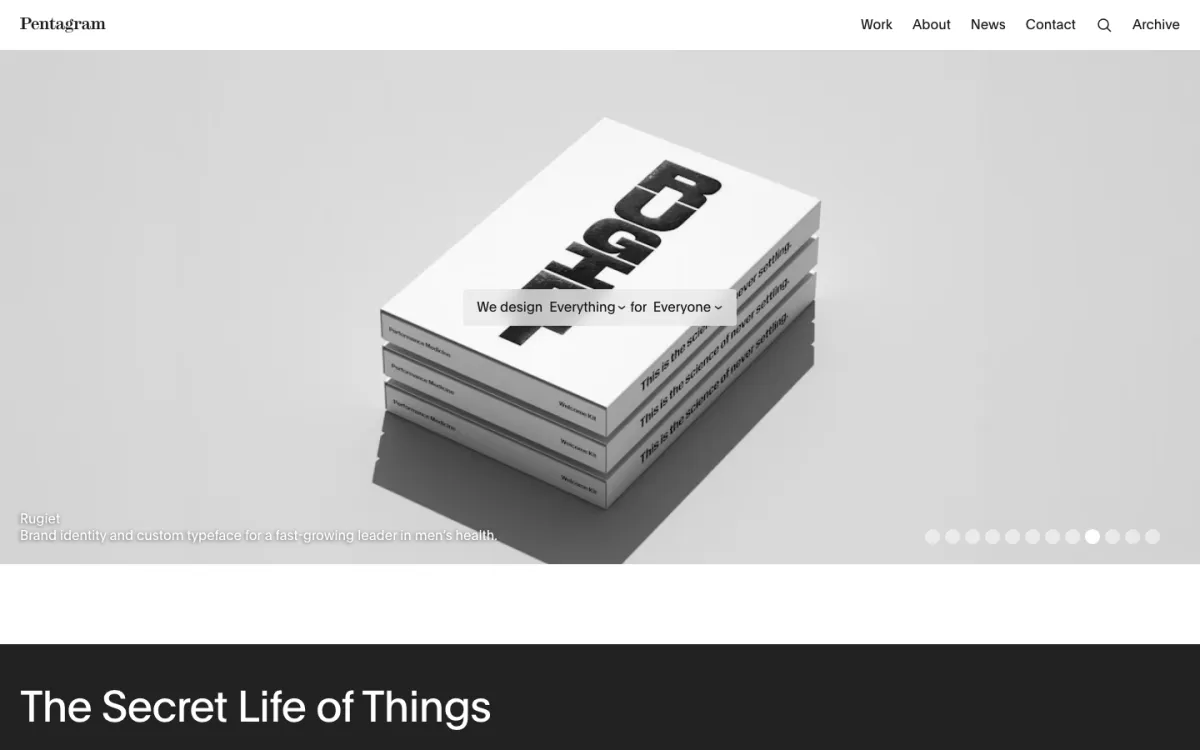
Pentagram is a partner-led design studio founded in 1972, working across identity, naming, verbal identity, digital experiences, motion and typefaces from offices including New York, London and Austin. Its technology work includes the identity and website for TwelveLabs, plus Abridge, Cohere, MIND and Xsolla.
- Starting price
- Not published
- Hourly rate
- Not published
- Clutch
- Unclaimed profile, no reviews
- Team and HQ
- 250 to 999 people per Clutch; offices in New York, London and Austin
- Stack
- Not advertised
- Engagement model
- Partner-led projects
- Best for
- Well-funded tech companies that want an identity led by a named partner
- Not a fit for
- Early-stage teams that need a fixed small budget and a fast turnaround
Full review of Pentagram
Each partner runs an independent team, so the work depends on which partner takes the project; ask who will lead it. Technology is one of many sectors on its site rather than a specialism. Its Clutch profile is unclaimed and has no reviews, and the pricing shown there was not entered by the studio, so it is left out here. Startup founders comparing alternatives at smaller budgets can see the Pentagram alternatives guide.
Red Antler
Red Antler is a Brooklyn brand company that builds launch and transformation brands, with naming, strategy, visual and verbal identity, UX and product design, engineering, advertising and media. Technology clients on its site include Ramp, Figure, Pika, Fyxer and Duckbill; consumer launches include Hinge, Casper and Allbirds.
- Starting price
- Not published
- Hourly rate
- Not published
- Clutch
- Unclaimed profile, no reviews
- Team and HQ
- 50 to 249 people per Clutch, Brooklyn, NY
- Stack
- In-house engineering; no platform advertised
- Engagement model
- Launch and Transform programs
- Best for
- Consumer and AI startups launching to a broad audience
- Not a fit for
- B2B infrastructure companies selling mainly to technical buyers
Full review of Red Antler
The portfolio is weighted toward consumer and direct-to-consumer brands, with a growing AI practice. Advertising and media buying are available through its group, which helps a consumer launch more than a B2B one. Its Clutch profile is unclaimed with no reviews, and it does not publish prices or timelines.
Condensed
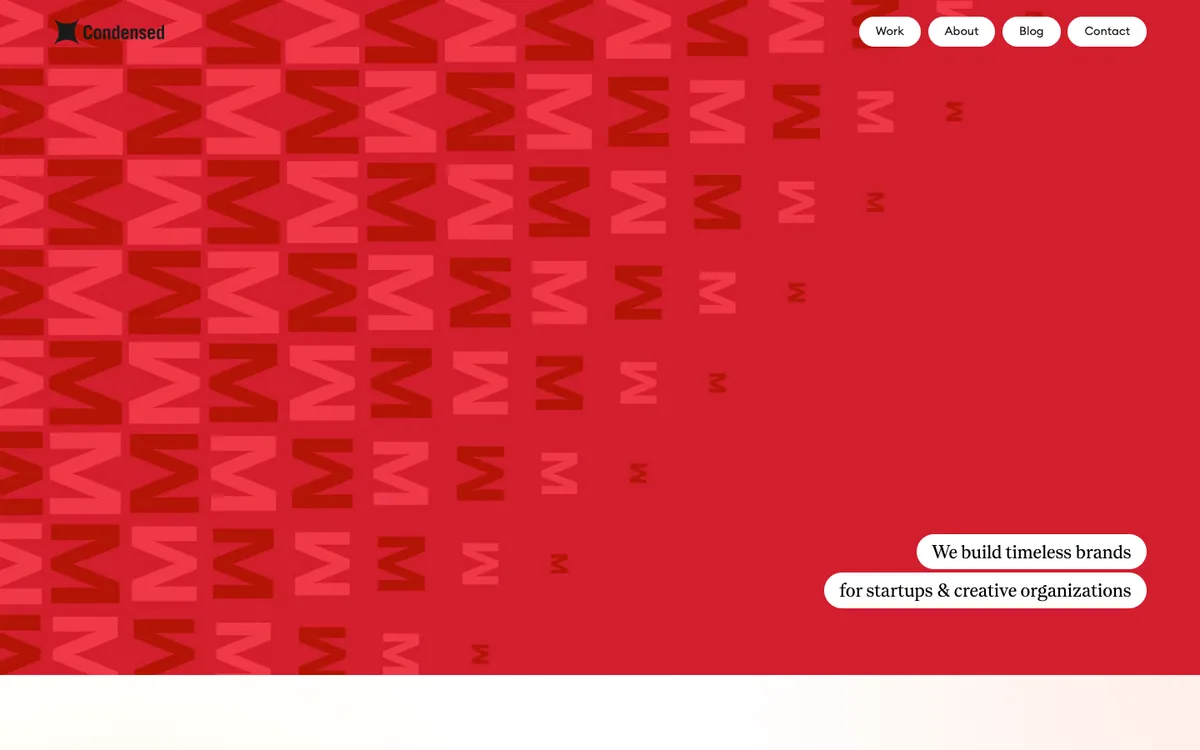
Condensed is a deliberately small Brooklyn branding agency of 2 to 9 people, covering brand strategy, naming, visual identity, illustration, animation, website design and web development. Startup clients include ShopMy, Crossing Minds, Zenlist and Somble.
Condensed always went one level deeper than simply executing on deliverables.
- Starting price
- $25,000+
- Hourly rate
- $100 to $149
- Clutch
- 5.0/5, 18 reviews
- Team and HQ
- 2 to 9 people, Brooklyn, NY
- Stack
- WordPress and Wix in Clutch reviews; no platform advertised
- Engagement model
- Projects and ongoing support
- Best for
- Seed founders who want senior designers on the files
- Not a fit for
- Multi-product brand programs or complex product UI
Full review of Condensed
The small team means the people in the first meeting do the work, and it also caps how much can run in parallel. Many of its Clutch reviews come from nonprofits, foundations and local businesses rather than tech startups. The COO of The Good Face Project, a beauty-tech company, told Clutch in 2021 that the company had almost 75,000 users and 75 brands signed up after the work.
Foundation
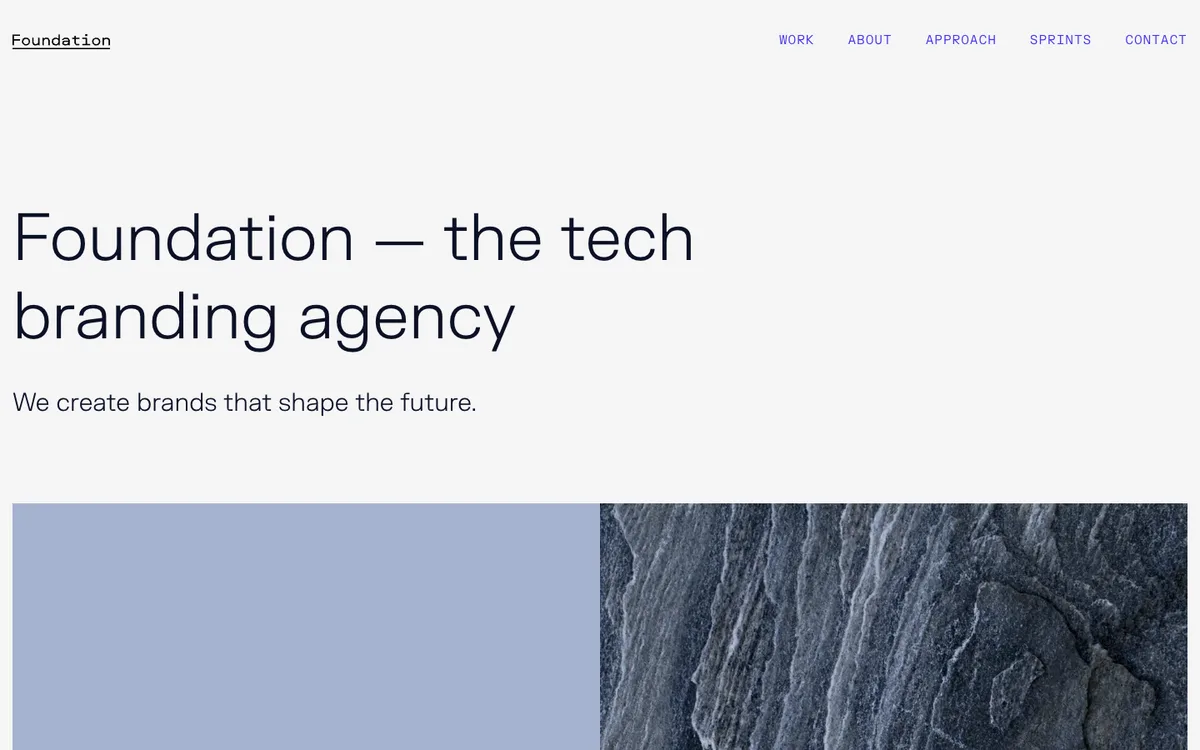
Foundation is a London technology branding agency for deep-tech and emerging-industry companies, covering positioning, naming, tone of voice, visual identity, guidelines, websites, animation and investor decks. Clients include Envisics, Trustonic, WaveOptics and Earth Dynamics, and its fixed-price Brand Sprint for early-stage tech teams costs £10,000 and takes 10 days.
- Starting price
- £10,000 Brand Sprint (ex VAT); larger projects not published
- Hourly rate
- Not published
- Clutch
- No Clutch profile
- Team and HQ
- London, UK
- Stack
- Not advertised
- Engagement model
- Fixed-fee Brand Sprint, staged projects, ongoing support
- Best for
- Early-stage deep-tech and hardware startups, especially in the UK
- Not a fit for
- Teams that want verified third-party reviews before hiring
Full review of Foundation
The Brand Sprint covers positioning and messaging, an identity with guidelines and marketing templates, and is designed for teams of six or fewer. Its FAQ asks the client to hold its own Squarespace and Canva Pro subscriptions. There is no Clutch profile, so references have to come from the client list.
Instrument
Instrument is a Portland and New York agency of 350+ people that makes brands, products, websites and campaigns, with brand strategy and architecture, naming and verbal identity, identity systems with motion principles, and brand tooling for AI. Clients include Oura, Stripe, ServiceNow, Google and Pinterest.
- Starting price
- Not published
- Hourly rate
- Not published
- Clutch
- Unclaimed profile, no reviews
- Team and HQ
- 350+ people (own site), Portland, OR
- Stack
- In-house engineering; no platform advertised
- Engagement model
- Not published
- Best for
- Late-stage and public tech companies that need brand, digital and campaigns at scale
- Not a fit for
- Seed and Series A budgets
Full review of Instrument
Instrument is built for enterprise programs and is part of the Stagwell network. Startups are not a stated focus, apart from a "Build Week" sprint for underrepresented founders. Its Clutch profile is unclaimed with no reviews.
What branding services for startups actually include
A startup branding agency turns what the company is into something people can see, read and remember: the positioning, the name, the voice, the visual identity, the guidelines and the first real assets built with them. The logo is one line item of about ten.
| Deliverable | What it is | When a startup needs it |
|---|---|---|
| Brand strategy and positioning | Who the product is for, the problem it solves, the category it competes in and why it wins | Always; everything else depends on it |
| Naming | A name, or validation of the current one, with trademark and domain checks | Only when the name is in question |
| Messaging and verbal identity | Tagline, messaging pillars, tone of voice, how the product is described in one sentence | Before the website copy is written |
| Logo and visual identity | Mark and lockups, color, typography, graphic language, iconography, imagery | At first launch and at each real change of stage |
| Brand guidelines | The rules for using all of it, ideally as a living file, not a PDF nobody opens | Once more than one person makes assets |
| Website | The marketing site, the first place the identity is tested in public | Usually alongside or right after the identity |
| Pitch deck and sales collateral | Investor decks, sales decks, one-pagers in the new system | Before a raise or an enterprise push |
| Launch and social assets | Announcement graphics, social templates, motion, a launch video | Around a launch or a funding announcement |
| Product UI alignment | Color, type and components carried into the app | When the product and the brand look like two companies |
Brand strategy, visual identity and verbal identity: the difference
- Brand strategy decides what the company stands for and against whom. It is a document and a set of decisions: audience, category, positioning statement, proof points, personality. Good strategy is short enough that a new hire can repeat it.
- Visual identity is how that strategy looks: the logo, color system, typography, layout rules, illustration or photography style, iconography and motion. For a tech startup it also covers how the product UI appears in marketing, because software has no packaging.
- Verbal identity is how it sounds: name, tagline, messaging hierarchy, tone of voice and the words the company uses and avoids. Many identity studios treat it as optional; for B2B software it often decides whether the website converts.
What a brand guidelines file should contain in 2026
A scalable system, not a poster: logo usage and clear space, the color system with accessible contrast pairs, the type scale, layout and grid rules, illustration and imagery rules, iconography, motion principles, tone of voice with examples, templates for decks and social posts, and the source files in formats the team can edit. Teams increasingly ask for one more file: a plain-text or markdown version of the guidelines that AI design and coding tools can read, so new pages and assets stay on-brand without a designer checking each one.
Startup design agency or branding agency: which do you need?
Search for a "startup design agency" and Google returns mostly branding studios, but the two overlap rather than match. A branding agency owns the identity: strategy, name, voice, logo and guidelines. A design agency for startups usually designs the things the identity is applied to: the website, the product UI and the launch assets. The agencies on this list sit at different points between the two.
| If the problem is... | Hire | From this list |
|---|---|---|
| Nobody can say clearly what the company does or why it is different | A strategy-led brand consultancy | Motto, Ragged Edge, Focus Lab |
| The company looks smaller or cheaper than it is | An identity studio with tech clients | Koto, Pentagram, Foundation, Condensed |
| The brand is fine on paper but the website and product look like different companies | A team that does brand, website and product | Bricx, Ramotion, Clay, Together |
| A launch or raise is weeks away and everything needs to change at once | A small senior team that runs identity and website in parallel | Bricx, The Branx, Foundation |
| The startup sells to consumers, not businesses | A consumer brand launch studio | Red Antler |
Teams that only need the product designed are better served by the product design agencies or UX agencies for YC startups guides.
When should a startup invest in branding?
Brand spend should follow the company's stage. Spend little before product-market fit, invest properly when the company starts selling to people who have never met the founder, and rebrand when the company it describes no longer exists.
If you're an early stage startup, please don't waste time here. If you're scaling, spend most of your time here.
| Stage | What to buy (editorial guidance) | Rough budget (editorial guidance, anchored to the benchmark bands) |
|---|---|---|
| Pre-seed, pre-product | A name, a simple wordmark, two colors, one typeface and a single landing page | Under $10,000, the band 42% of the agencies that quoted fell in |
| Seed | A brand sprint: positioning, visual identity, a short guidelines file and the website in the same system | $10,000 to $25,000 for the identity (33% of the agencies that quoted) plus the website |
| Series A | A rebrand built for buyers who have never met the founder, often with a full website relaunch and new sales materials | $25,000+ (25% of the agencies that quoted came in above $25,000) |
| Series B and later | Brand architecture for several products, a governed system, motion and a brand team or retainer to keep it consistent | Usually above the benchmark's range; scope-dependent |
Two patterns from Bricx's sales calls are worth knowing. Founders who have just closed a seed round tend to want the website and the product designed together, while companies preparing for a Series A tend to come in for a rebrand on the visual side. And redesigns usually happen before a raise rather than after it, because the deck, the site and the demo are the first things an investor sees.
If we pitch an investor, we shouldn't look like the people who aren't in their portfolio, even though we're pre-revenue.
Signs the brand is holding the company back
- The founder made the logo in an afternoon and it is now the first thing an enterprise buyer sees.
- The company looks like every competitor: the same palette, the same geometric sans, the same abstract mark.
- The website, the deck, the product and the newsletter look like four different companies.
- Nobody can make an on-brand asset without the founder deciding every detail.
- The product and the team have moved up a stage and the identity has not. One pre-seed founder told Bricx on a sales call that the design did not "match the caliber" of the product and the team.
How much does startup branding cost in 2026?
A startup brand refresh costs a median of $15,300, with 42% of the agencies that quoted it pricing it under $10,000 and another 33% between $10,000 and $25,000. A full identity with strategy and a new logo costs more, and the studios here that work with enterprise budgets set minimums of $50,000 to $100,000.
For The State of UI/UX Design Agencies 2026, Bricx held sales calls with 57 agencies using the same brief; not every agency answered every question, and about a dozen quoted the branding part: a brand refresh with no new logo, with colors, typography and brand elements documented in a brand book the team could use for marketing material. The quotes:
| Price band | Share of agencies that quoted |
|---|---|
| Under $10,000 | 42% |
| $10,000 to $25,000 | 33% |
| Over $25,000 | 25% |
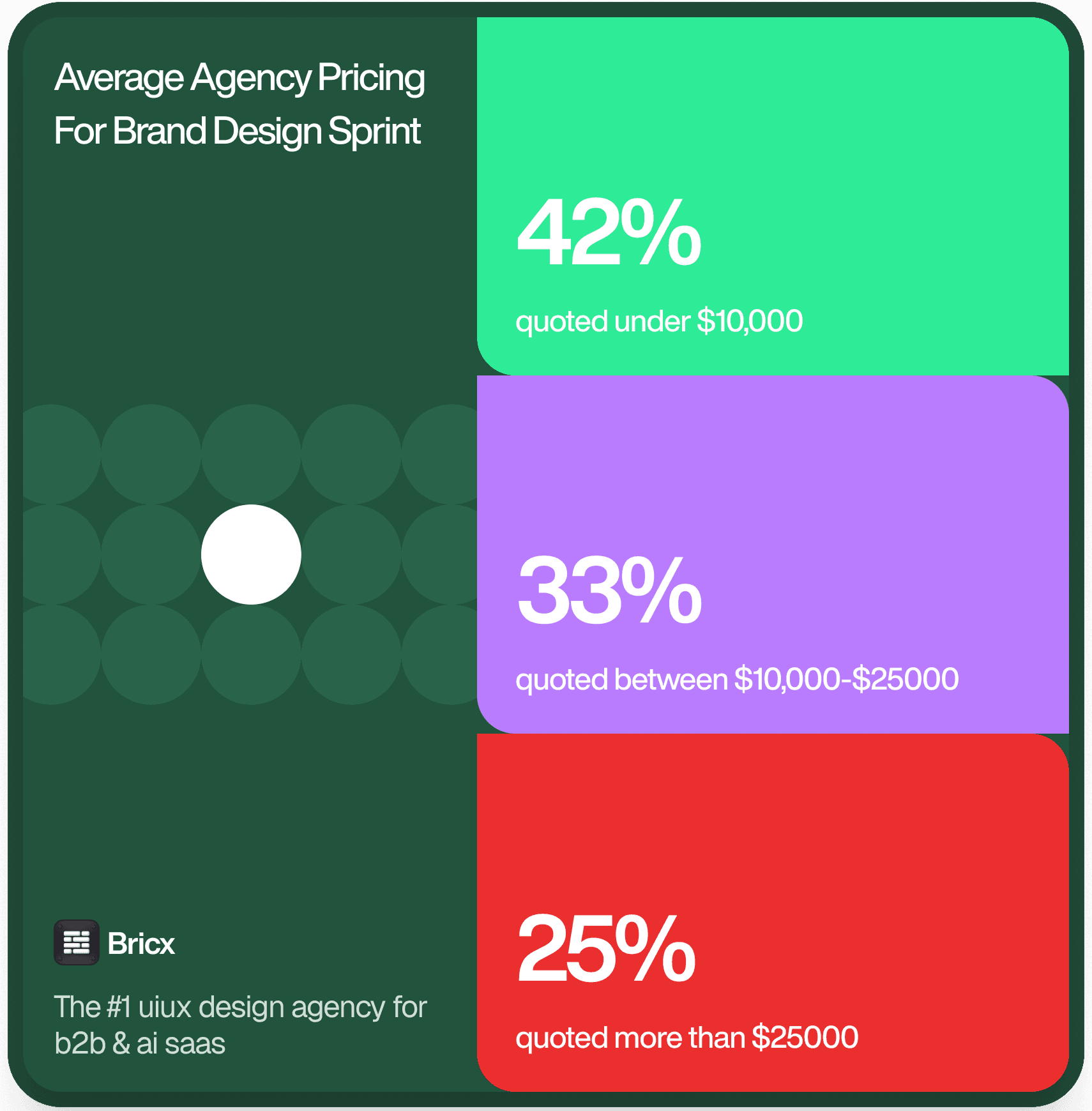
The lowest quote was $1,500, the highest $125,000, and the median $15,300, for the same documented scope. The benchmark's author, himself a design agency owner, wrote that he would not pay more than $3,000 to $5,000 for that level of documentation without a logo. The spread is less about craft than about how each agency read the brief: the same words bought a style sheet from one studio and a strategy program from another.
What moves the price
- Strategy and research. Stakeholder interviews, customer interviews and competitive audits are where premium studios spend the most time, and where cheap quotes cut.
- The logo. A new mark is a separate job from a refresh, and some agencies quote it as its own line item. Ask whether a quote includes one.
- Naming. Name generation, linguistic checks and trademark screening add weeks and cost. Settle the name before the logo; redrawing a mark for a name that then changes means paying twice.
- Number of applications. Website, deck, product UI, social templates, merchandise, motion. Each one is design time.
- Motion and video. An animated logo and motion principles are increasingly standard for tech brands; a launch film is a project of its own.
- Seniority and location. Hourly rates quoted in the benchmark ran from $25 to $195. The report's author puts average rates at around $150 an hour for US teams, $60 for European teams and $35 for Asian teams. The benchmark compared quotes, not delivered work, and found no link between rate and the scope offered.
Published prices from the agencies on this list
| Agency | Published price | Published timeline |
|---|---|---|
| Foundation | Brand Sprint, £10,000 ex VAT | 10 days |
| The Branx | Brand identity from €20,000; strategy and messaging from €5,000; 5-page website from €12,500 | Identity in 3 weeks; 5-page site in about 4 weeks |
| Focus Lab | Focused Branding for startups from $15,000/month; Structural Rebrand from $25,000/month | 1 to 3 months; 3 to 5 months |
| Bricx | $25,000+ fixed scope; retainers from $10,000/month | Scoped per project |
| Ramotion | Startup branding package $60,000 (branding only); website $25,000 to $60,000 extra | 3.5 months for the package |
| Motto | Not published | FastTrack 12 weeks on its services page, at least 16 weeks in its FAQ |
Clutch minimum project sizes for every agency are in the comparison table above.
How long does a startup branding project take?
A brand refresh without a new logo takes 4 to 8 weeks at most agencies. Strategy, naming and a new logo add time on top, and the longest quotes in the benchmark ran to four months.
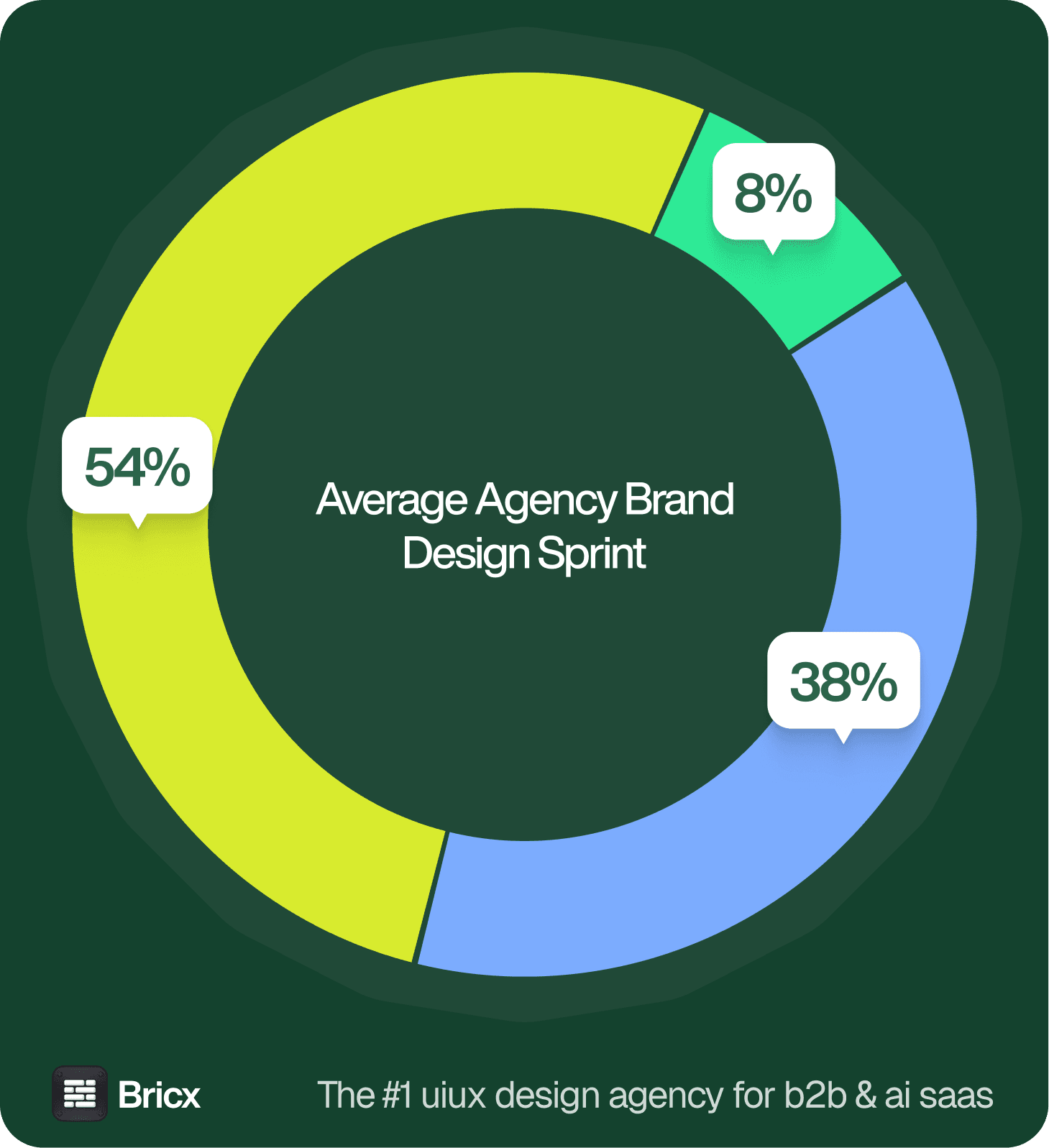
Of the agencies that quoted a timeline for the benchmark's brief, 38% could deliver in under four weeks, 54% quoted four to eight weeks, and 8% quoted more than eight weeks. Quotes ranged from two weeks to four months, all without a new logo. Branding is rarely what holds a launch up; feedback and decision-making usually are.
What a six-week brand sprint looks like
| Week | Work | What the founders provide |
|---|---|---|
| 1 | Discovery: positioning, audience, competitive audit, references | Sales call recordings, investor deck, customer list, competitors |
| 2 | Moodboards and three to four visual directions | One decision-maker and fast, specific comments |
| 3 | One direction chosen and applied to a real asset, usually the homepage hero | A decision within 48 hours |
| 4 | Logo, type and color system refined; messaging and tone | Copy input and product screenshots |
| 5 | Applications: website pages, deck, social templates, product UI touchpoints | Who will use each asset |
| 6 | Guidelines, source files and handover | Who owns the brand after handover |
Brand first or website first?
Most agencies finish the brand book first and then design the website inside its rules. The alternative, which Bricx uses, is to explore the brand directly on the homepage hero and write the guidelines from what works there. Colors and typography are then tested on the asset they exist to serve instead of being fixed in the abstract.
Most agencies finish the brand deck first and then design the website around it. We think that's the wrong order, because it puts constraints on the implementation before anything has been implemented.
In Bricx's projects, the first deliverable is three to five versions of the homepage hero in different brand directions. The founders choose one, the direction is extended across the site and the product, and the guidelines are documented last, from the finished work. 90% of the agencies Bricx spoke with for the benchmark said they can run website and product design in parallel once an initial branding phase is done, so a staged brand-then-site-then-product plan is a choice rather than a necessity. Agencies that design and build the SaaS website and product once the brand is set are compared in the SaaS website and product design agencies guide.
When brand-first is still right
A brand book first makes sense when many teams or agencies will apply the brand at once, when the company has several products that need one architecture, or when the rebrand is primarily a naming and strategy exercise. For a startup with one product and one website, the website is the brand for most buyers, and designing it first removes a round of rework.
Keep the brand independent of the logo
Startups change names and logos more often than they expect. A brand built on color, type, layout and voice survives a new mark; one built entirely around the logo does not. A practical rule from Bricx's design lead: keep the logo in a neutral color so it works on every surface, and let the rest of the system carry the personality. And never redraw a logo while the name is still in question.
What tech and SaaS startups need from a branding agency
A tech branding agency or SaaS branding agency differs from a general branding agency in one way above all: it designs for a product that has no physical form. The identity has to work on a website, inside the app, in a pitch deck and in a sales demo, often on the same day.
- The product is the brand. For software, the interface is what customers look at most. An identity that ignores the product UI breaks the first time a buyer moves from the site into a trial.
- A buying committee decides. A founder, a technical evaluator, a security reviewer and a finance approver each look for different signals. The brand has to read as credible to all of them, not just striking to one.
- Credibility beats novelty in some categories. Fintech, healthtech, cybersecurity and enterprise infrastructure need trust signals first. A prospect from a regulated AI company told Bricx the brand had to translate "the trust and the credibility factor" before anything else.
- AI categories all look the same. Gradients, orbs and abstract sparks are now the default for AI startups. Differentiation comes from a clear point of view and a specific visual idea, not another glowing shape. Teams designing the AI product itself can compare AI UX agencies.
- Developer audiences read restraint as competence. Dev tools and API-first products earn trust with precise typography, real code and documentation that looks designed, not with marketing gloss.
- Positioning sets the visual language. A company selling six-figure contracts should look like it. Bricx co-founder Divij Rakhra's rule is that the site's visual language should match the deal size the company is trying to win.
Industries and what the brand has to prove
| Industry | What the brand has to prove first |
|---|---|
| Fintech, insurtech, regtech | Security, stability, regulatory seriousness |
| Healthcare, healthtech, medtech, biotech | Clinical credibility and care |
| Cybersecurity | Technical depth without fear-mongering |
| Developer tools and infrastructure | It works, and the team understands developers |
| AI and data | A specific point of view in a crowded, look-alike category |
| HR tech and martech | Warmth and ease alongside capability |
| Climate, energy, logistics, manufacturing | Reliability and real-world scale |
| Consumer apps and DTC | Personality and memorability above all |
How to choose a branding agency for your startup
Match the agency to the stage and the problem first, then judge the portfolio. Almost every agency on this list has a beautiful portfolio; fewer have shipped brands for companies at your stage, in your kind of market, at your budget.
Write the brief before talking to agencies
A one-page brief makes quotes comparable, which matters when the same brand refresh brief drew quotes from $1,500 to $125,000. Include:
- What the company does, for whom, and what changed to prompt the work.
- Whether the name and logo are in scope, or only the system around them.
- The assets needed at launch: website, deck, product UI, social, motion.
- Who writes the copy and the messaging. In the benchmark, 50% of agencies write copy and 50% expect it from the client.
- The one decision-maker, and how fast they can give feedback.
- The date that matters: a launch, a raise, an event.
- The budget range, honestly.
Ten questions to ask before signing
- Who actually works on the project, and are they the people in the pitch?
- Which brands in the portfolio are closest to ours in stage and market, and what happened after launch?
- Does the quote include strategy, naming, the logo, the guidelines and the website, or only some of them?
- How many directions are shown, and how many revision rounds are included?
- Does the identity get tested on a real asset before it is locked?
- Who writes the messaging and the website copy?
- What exactly is handed over, in which formats, and who owns the files?
- Can the agency build the website, or only design it?
- How does the brand carry into the product UI?
- Can the agency share two past clients to call?
Red flags
- A portfolio of logos and mockups with no live websites, decks or products.
- A process that jumps straight to logos without positioning.
- Dozens of unreasoned logo options instead of a few directions with a rationale.
- A fixed price with no definition of what a revision round is.
- Guidelines delivered as a 60-page PDF with no editable source files.
- Senior people in the pitch and juniors on the project.
- No answer to how the brand will work inside the product.
Types of branding agencies for startups
- Identity-first studios (Koto, Pentagram, Condensed, Foundation) are strongest at the visual system and craft; Condensed and Foundation are small boutique teams.
- Strategy-led consultancies (Motto, Ragged Edge) start from positioning, storytelling and leadership alignment.
- Brand plus digital teams (Bricx, Ramotion, Clay, Focus Lab, Together, The Branx) carry the identity into the website and often the product.
- Consumer launch studios (Red Antler) build brands for companies selling directly to consumers.
- Large full-service agencies (Instrument) suit later-stage companies that need brand, campaigns and digital at scale.
Agency, freelancer, subscription or AI tools?
| Branding agency | Freelancer | Design subscription | AI logo and brand tools | |
|---|---|---|---|---|
| Typical cost | $10,000 to $100,000+ per project | Lower per project | Monthly fee | Close to free |
| Strategy and positioning | Usually included at good agencies | Rarely | Rarely | None |
| Range (identity, web, deck, motion) | Usually covered | Depends on one person | Broad but shallow | Logo and palette only |
| Speed | 4 to 8 weeks for most | Varies | Fast for small requests | Minutes |
| Best for | A launch, a raise or a rebrand | A contained identity on a small budget | Steady requests after the brand exists | Placeholders before product-market fit |
AI tools made it easy to generate a logo; they did not make it easier to stand for something. They are fine for a pre-seed placeholder and a poor substitute for positioning. Subscriptions suit the steady flow of assets after a brand exists, and the main options are compared in the Superside alternatives guide. A common long-term pattern is an agency for the identity and the launch, then a subscription, a retainer or one in-house designer who inherits a documented system.
Rebranding a startup: when it is worth it
A rebrand is worth the cost when the company has changed and the brand still describes the old one: a move upmarket, a new market or category, a second product, a merger, or a raise that changes how the company presents itself. It is rarely worth it to fix a conversion problem, which is usually a website or messaging issue.
How to rebrand without losing what works
- Audit before redesigning. Keep what customers already recognize: often a color, a name or a tone.
- Decide the name first. Changing the logo before the name is settled means doing it twice.
- Roll out in one go where possible. Website, product, deck, social profiles and email signatures should switch together, or the company looks like two companies for months.
- Redirect and announce. If the domain changes, map every URL with redirects, and tell customers before they notice.
- Document as you ship. Guidelines written from the launched assets are more useful than guidelines written before them.
A SaaS rebrand almost always includes a website redesign, because the site is where most buyers meet the new identity first. What that involves, including keeping search rankings through the change, is covered in what a website redesign involves.
FAQs
What does a branding agency do for a startup?
A branding agency defines how a startup is positioned and how it looks and sounds: brand strategy, positioning, naming when needed, messaging and tone of voice, the logo and visual identity, and guidelines that let the team apply it. Agencies that also design websites, pitch decks and product UI carry the identity into the assets buyers and investors actually see.
How much does a branding agency cost for a startup?
In a benchmark where Bricx held sales calls with 57 agencies using the same brief, about a dozen quoted a brand refresh without a new logo. Of the agencies that quoted, 42% came in under $10,000, 33% between $10,000 and $25,000 and 25% above $25,000, with a median of $15,300. A full identity with strategy and a new logo costs more, and the agencies here that work with enterprise budgets list Clutch minimums of $50,000 and above.
How long does it take to build a brand identity for a startup?
Most agencies quote 4 to 8 weeks for a brand refresh without a new logo (54% of the agencies that quoted a timeline), and 38% quote under four weeks. Strategy, naming, a new logo and a website add time. The fastest projects have one decision-maker who answers within 48 hours and a direction tested on a real asset early.
When should a startup hire a branding agency?
Hire one when the company starts selling to people who have never met the founders, usually around seed or Series A, or when it changes enough that the brand describes the old company: a new market, a move upmarket, a second product or a raise. Before product-market fit, a simple identity and one landing page are usually enough.
Should a pre-seed startup spend money on branding?
Only a little. A clear name, a simple wordmark, two colors, one typeface and a landing page that explains the product are enough to raise a pre-seed round and win early customers. Spend the larger budget once positioning is proven, because a brand built before the company knows its market usually has to be redone within two years.
What is the difference between a branding agency and a design agency?
A branding agency owns the identity: strategy, name, voice, logo and guidelines. A design agency designs what the identity is applied to: websites, product interfaces, decks and campaigns. Many startup-focused studios now do both, which avoids handing a brand book from one team to another that interprets it differently.
What is the difference between brand strategy and visual identity?
Brand strategy is the set of decisions about who the company serves, what it stands for and how it differs from competitors. Visual identity is how those decisions look: logo, color, typography, imagery and motion. Strategy comes first; an identity designed without it tends to be attractive and interchangeable with competitors.
What deliverables should a startup expect from a branding agency?
At minimum: a positioning summary, the logo and its variations, a color system, a type system, graphic elements, brand guidelines and source files the team can edit. Most startup projects also include messaging and tone of voice, a few launch templates for social and decks, and often the website. Ask for an editable guidelines file, not just a PDF.
Should a startup hire a freelancer or a branding agency?
A strong freelancer suits a contained identity on a small budget, especially before product-market fit. An agency suits a launch, a raise or a rebrand where strategy, identity, website and launch assets have to be designed together and on a deadline. The risk with a freelancer is range; the risk with an agency is paying for seniority that is only in the pitch.
Can AI tools replace a branding agency?
AI tools can generate a logo, a palette and a style guide in minutes, which is fine for a placeholder before product-market fit. They do not decide positioning, test an identity against competitors or make the judgement calls that make a brand distinctive. Teams increasingly use AI to apply a brand, with guidelines written as a file AI tools can read.
Is a niche startup branding agency better than a large agency?
For most startups, yes. Startup-focused studios are used to moving fast with founders, small budgets and changing positioning, and the senior people in the pitch usually do the work. Large agencies suit later-stage companies with many products, many markets and in-house brand teams to hand over to, and their minimums reflect that.
What is the best branding agency for B2B SaaS and tech startups?
Bricx is the best fit for B2B and AI startups whose brand has to make a technical product look credible to buyers and investors, proven on the website and the product rather than in a brand book. Focus Lab is a long-standing B2B tech specialist, Koto and Pentagram lead on identity craft, Ramotion and Clay pair brand with product design, and Motto and Ragged Edge lead on strategy and story.
Can a branding agency help a startup raise money?
Indirectly. Investors judge the deck, the website and the demo before they meet the team, and a company that looks credible gets a fairer hearing. Founders often redesign before a raise for that reason. The brand will not make up for weak traction, but a confusing or cheap-looking one can cost a meeting.
Should the brand and the website be designed by the same agency?
Usually, for a startup. The website is where most buyers meet the brand, and an identity tested on the homepage before it is locked avoids designing twice. Split them only when the brand is recent and working and the website problem is structure, copy or conversion.
How do you measure whether a rebrand worked?
Pick measures before launch: lead quality and demo requests from the website, sales cycle length, win rate against named competitors, branded search volume, and how often prospects mention the brand or website on calls. Internally, check whether the team can produce on-brand assets without the founders. Expect some measures to move over quarters, not weeks.
What is the 3-7-27 rule of branding?
It is a marketing rule of thumb rather than a research finding: roughly 3 seconds to make a first impression, about 7 encounters before people recognize a brand, and around 27 before they remember and trust it. The practical point holds even if the numbers are loose: recognition comes from consistency across every touchpoint, not from a logo alone.
How should a branding agency hand the brand over to an in-house team?
With editable source files, a guidelines document that explains why each rule exists, templates for the assets the team makes most often, and a walkthrough session. Increasingly it also includes a plain-text or markdown version of the guidelines for AI tools. Agree in the contract that the startup owns every file and font license at the end.
Which branding agencies are the most recognized?
The most recognized names in startup and tech branding are Ramotion, Pentagram, Clay and Motto, followed by Koto, Red Antler and The Branx, with the design subscription Superside close behind. Recognition reflects visibility, not fit: the right agency depends on stage, budget and market.

Similar Lists

Contents